
Ecosystems are living things evolution transformation levels of
- Slides: 19
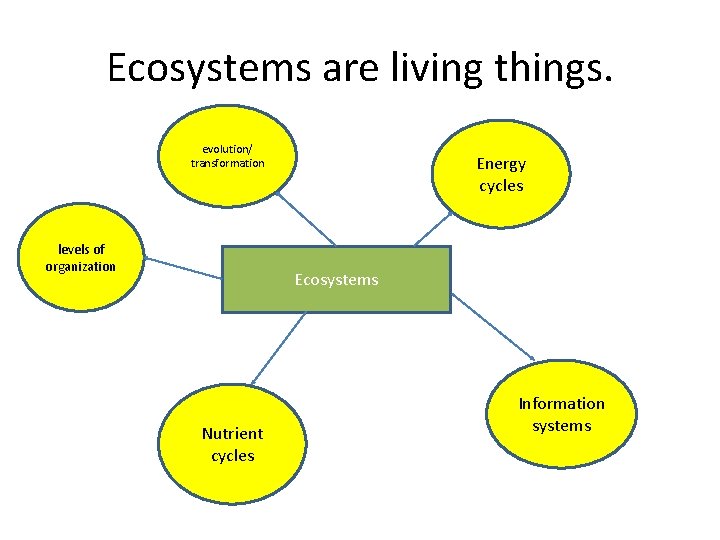
Ecosystems are living things. evolution/ transformation levels of organization Energy cycles Ecosystems Nutrient cycles Information systems
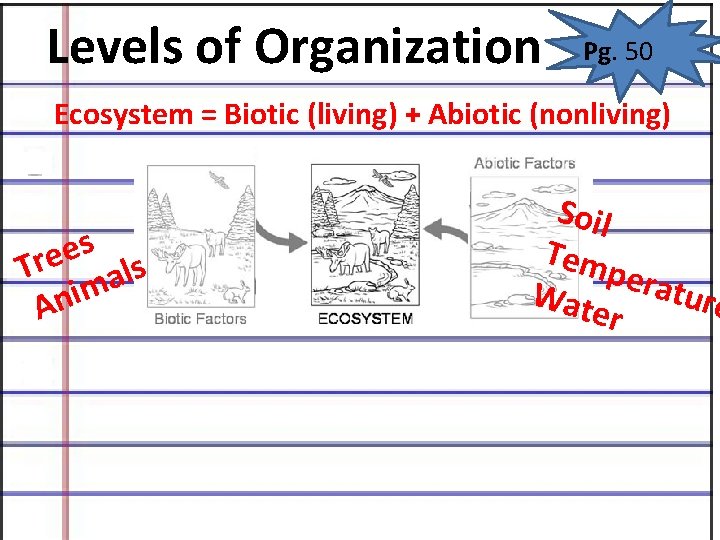
Levels of Organization Pg. 50 Ecosystem = Biotic (living) + Abiotic (nonliving) s e Tre als m i n A Soil Tem pera ture Wat er
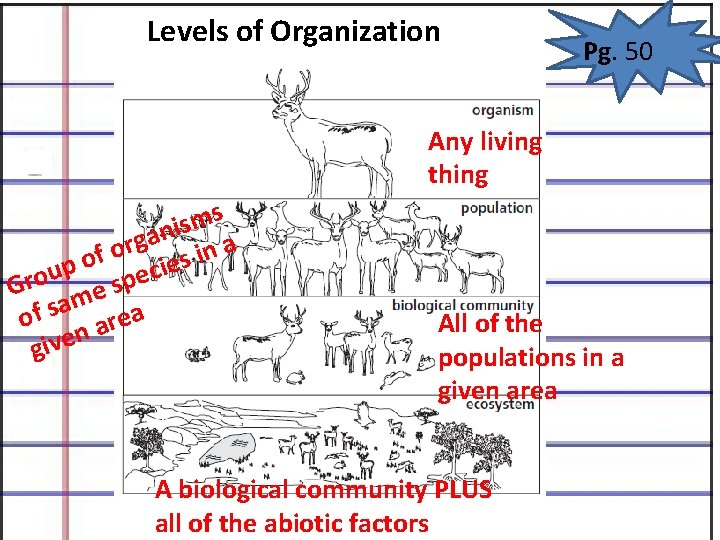
Levels of Organization Pg. 50 Any living thing s m s i n a g r a o n i f o s e p i c u Gro me spe a of s area n e v i g All of the populations in a given area A biological community PLUS all of the abiotic factors
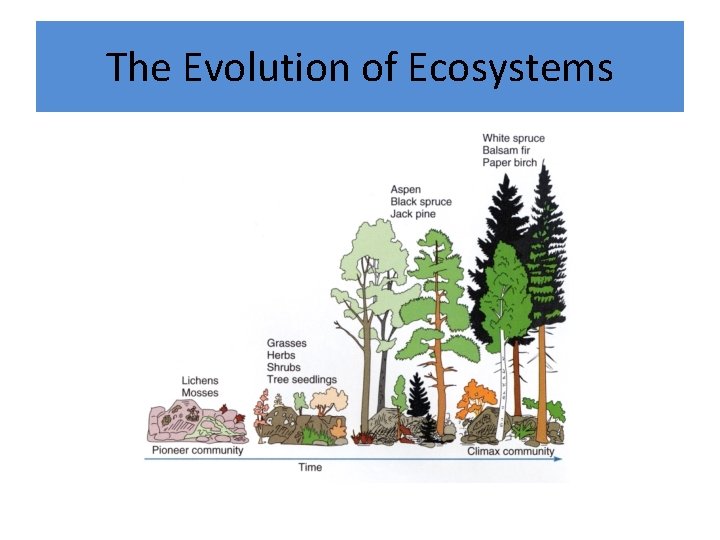
The Evolution of Ecosystems
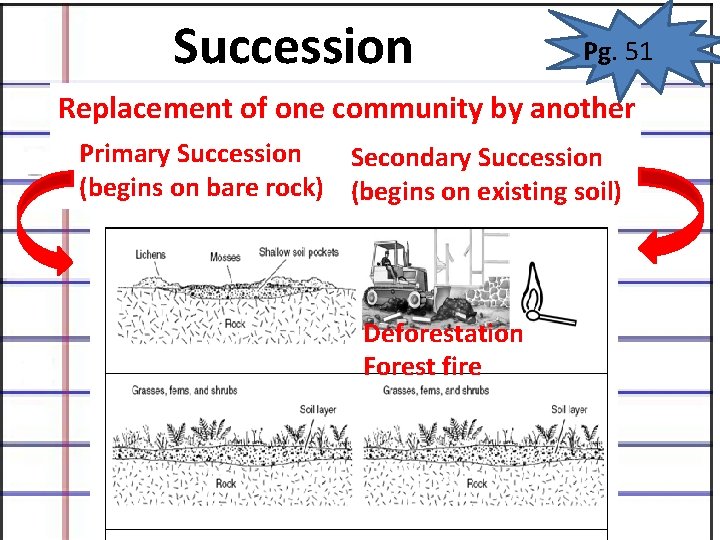
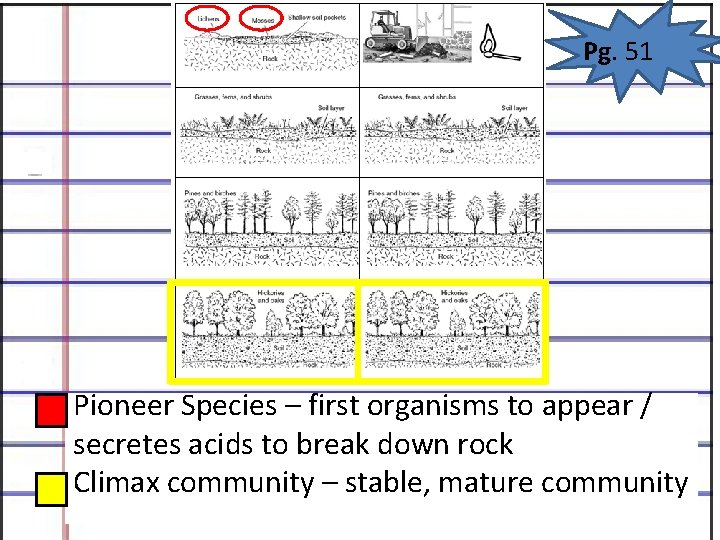
Succession Pg. 51 Replacement of one community by another Primary Succession Secondary Succession (begins on bare rock) (begins on existing soil) Deforestation Forest fire
Pg. 51 Pioneer Species – first organisms to appear / secretes acids to break down rock Climax community – stable, mature community
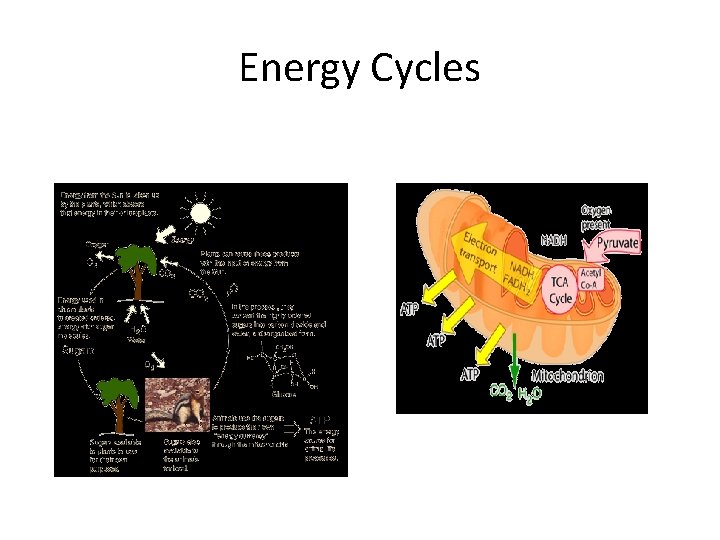
Energy Cycles
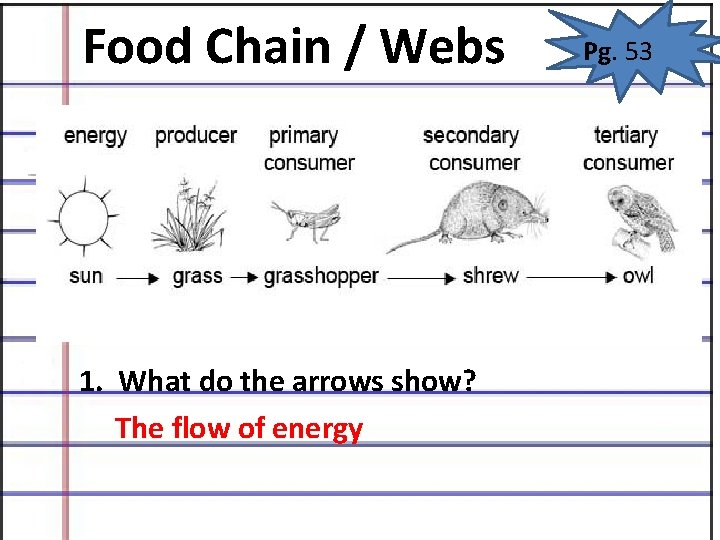
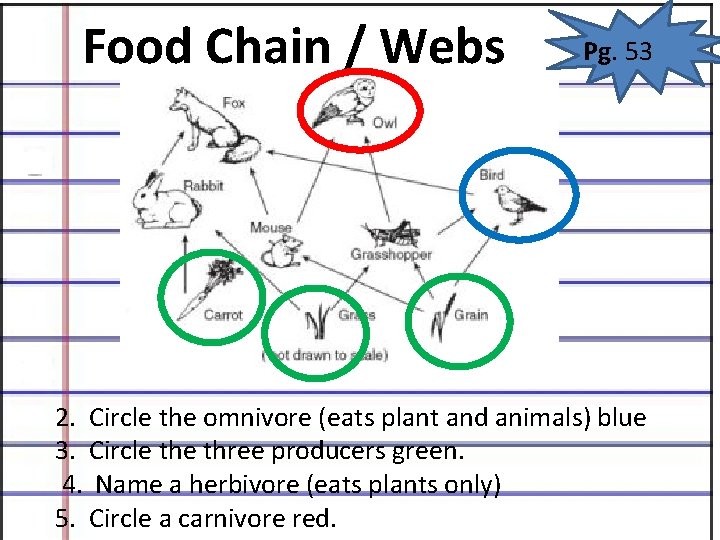
Food Chain / Webs 1. What do the arrows show? The flow of energy Pg. 53
Food Chain / Webs Pg. 53 2. Circle the omnivore (eats plant and animals) blue 3. Circle three producers green. 4. Name a herbivore (eats plants only) 5. Circle a carnivore red.
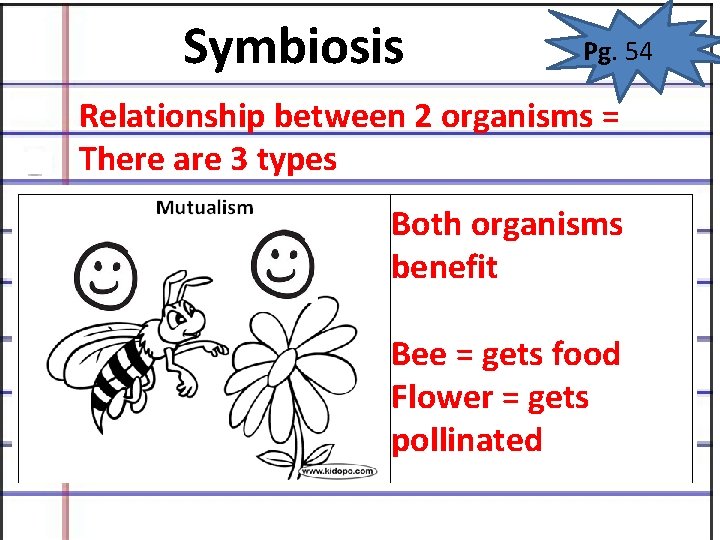
Symbiosis Pg. 54 Relationship between 2 organisms = There are 3 types Both organisms benefit Bee = gets food Flower = gets pollinated
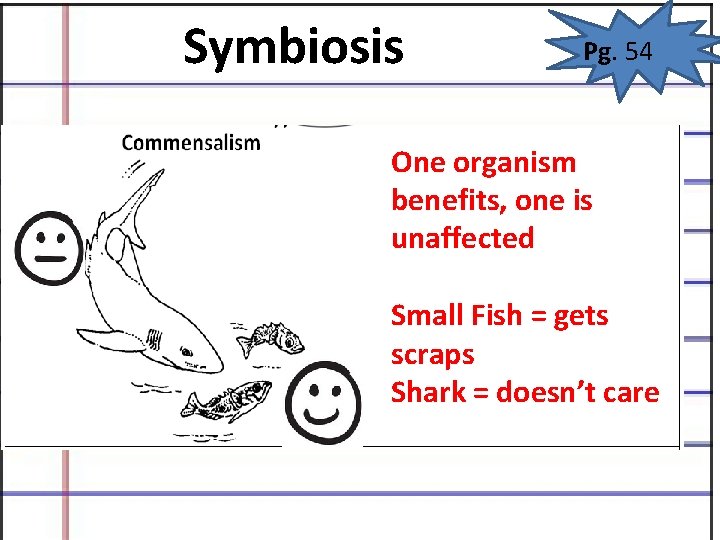
Symbiosis Pg. 54 One organism benefits, one is unaffected Small Fish = gets scraps Shark = doesn’t care
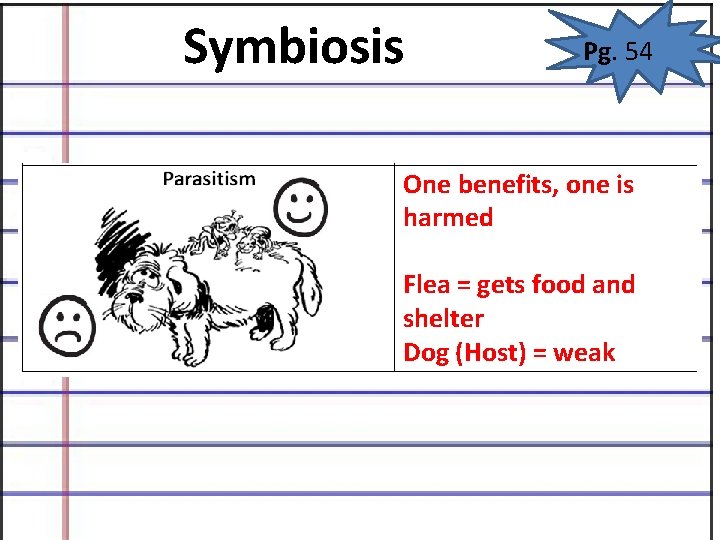
Symbiosis Pg. 54 One benefits, one is harmed Flea = gets food and shelter Dog (Host) = weak
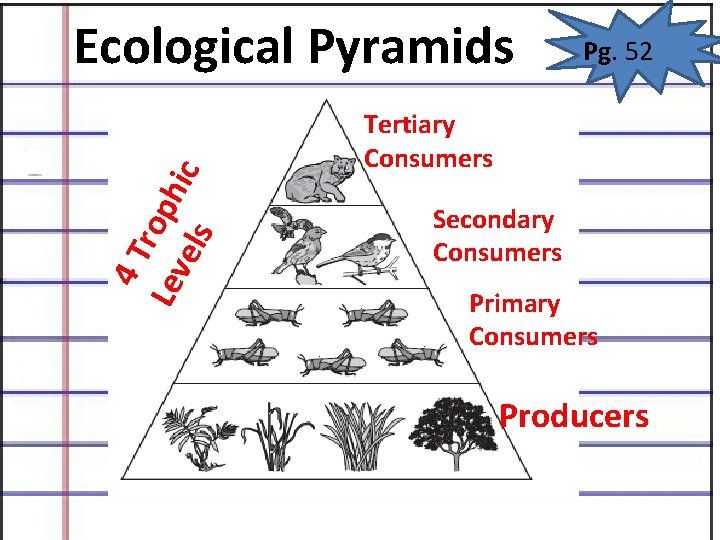
4 T r Lev oph els ic Ecological Pyramids Pg. 52 Tertiary Consumers Secondary Consumers Primary Consumers Producers
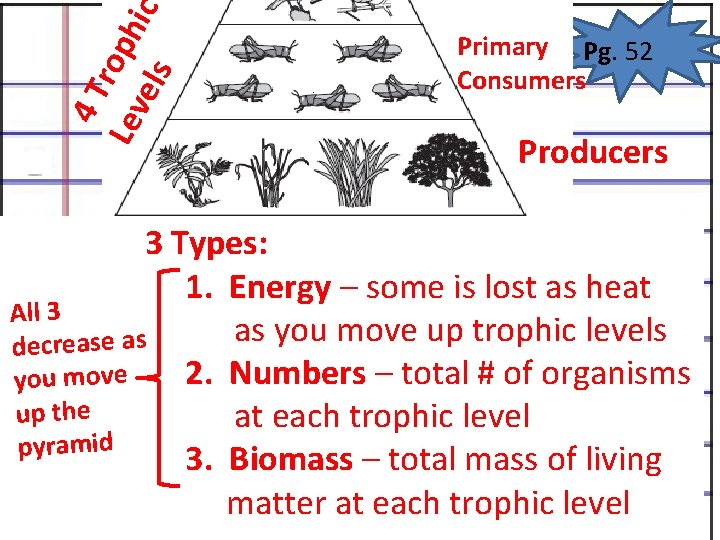
4 T Lev roph els ic Primary Pg. 52 Consumers Producers 3 Types: 1. Energy – some is lost as heat All 3 as you move up trophic levels decrease as 2. Numbers – total # of organisms you move up the at each trophic level pyramid 3. Biomass – total mass of living matter at each trophic level
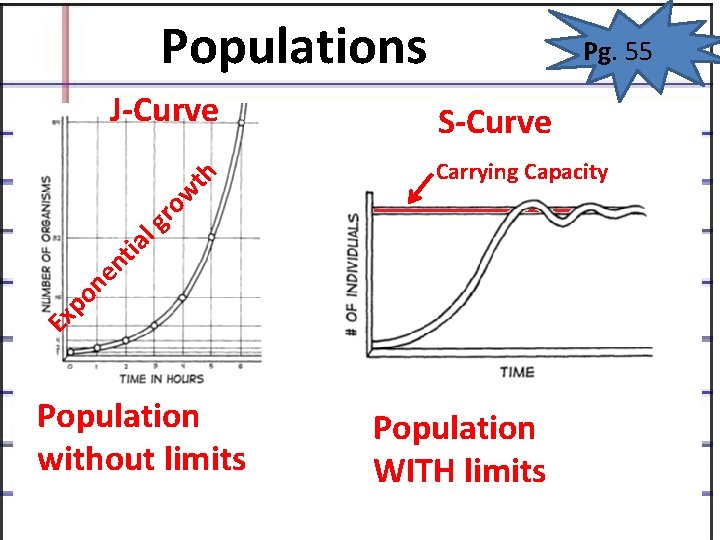
Populations S-Curve Carrying Capacity Ex po n en tia l gr ow th J-Curve Pg. 55 Population without limits Population WITH limits
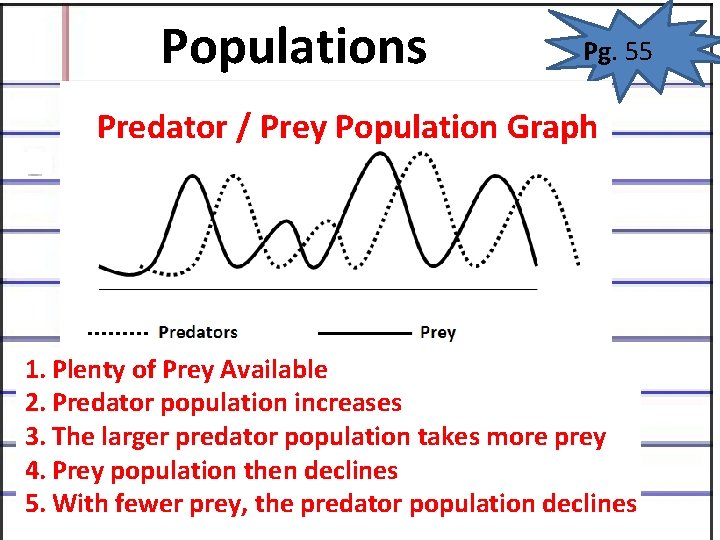
Populations Pg. 55 Predator / Prey Population Graph 1. Plenty of Prey Available 2. Predator population increases 3. The larger predator population takes more prey 4. Prey population then declines 5. With fewer prey, the predator population declines
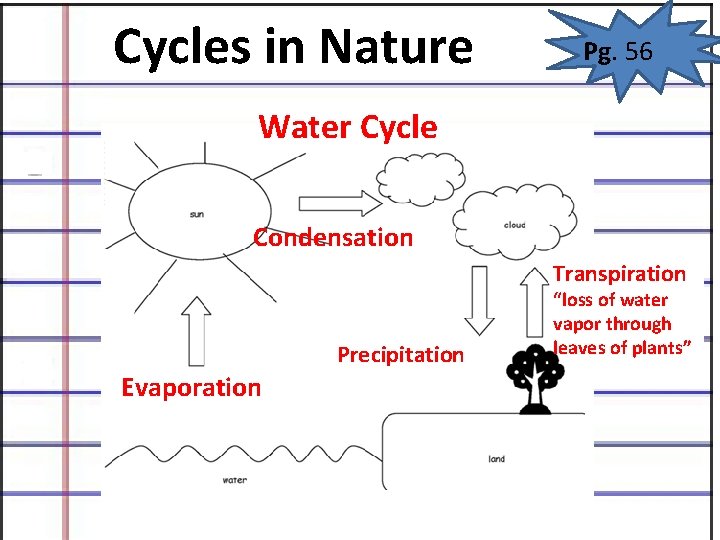
Cycles in Nature Pg. 56 Water Cycle Condensation Transpiration Precipitation Evaporation “loss of water vapor through leaves of plants”
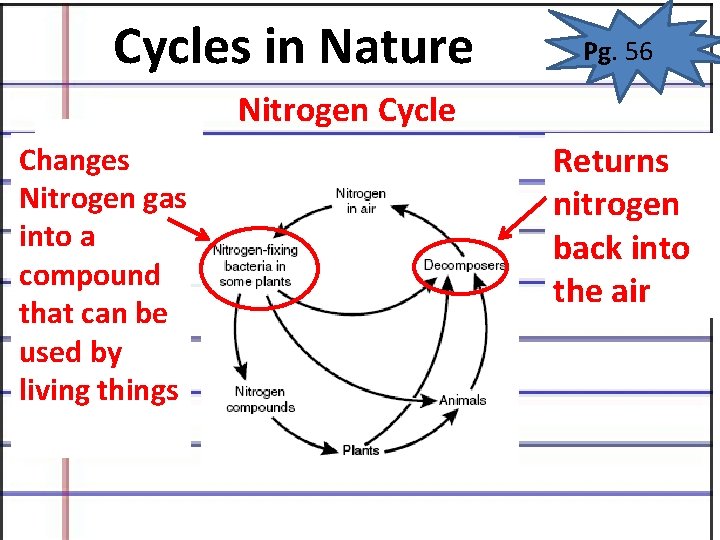
Cycles in Nature Pg. 56 Nitrogen Cycle Changes Nitrogen gas into a compound that can be used by living things Returns nitrogen back into the air
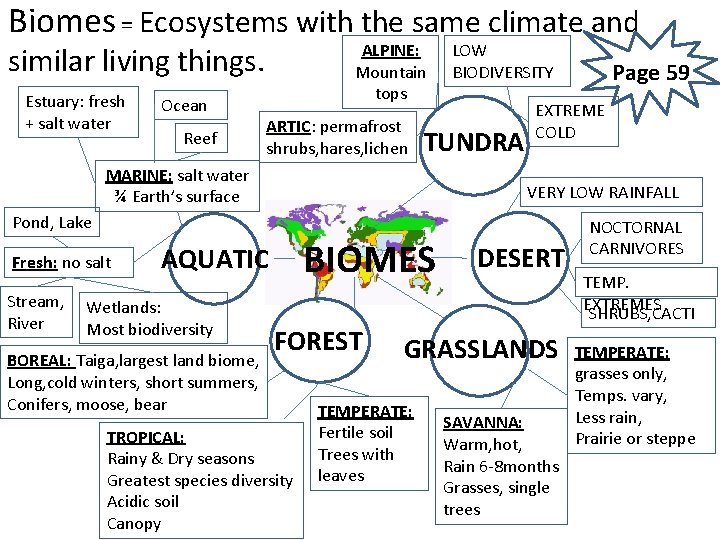
Biomes = Ecosystems with the same climate and ALPINE: Mountain tops similar living things. Estuary: fresh + salt water Ocean Reef ARTIC: permafrost shrubs, hares, lichen LOW BIODIVERSITY TUNDRA MARINE: salt water ¾ Earth’s surface EXTREME COLD VERY LOW RAINFALL Pond, Lake Fresh: no salt Stream, River BIOMES AQUATIC Wetlands: Most biodiversity BOREAL: Taiga, largest land biome, Long, cold winters, short summers, Conifers, moose, bear Page 59 FOREST TROPICAL: Rainy & Dry seasons Greatest species diversity Acidic soil Canopy DESERT GRASSLANDS TEMPERATE: Fertile soil Trees with leaves SAVANNA: Warm, hot, Rain 6 -8 months Grasses, single trees NOCTORNAL CARNIVORES TEMP. EXTREMES SHRUBS, CACTI TEMPERATE: grasses only, Temps. vary, Less rain, Prairie or steppe