
Ecosystems and Primate Niches Niche concept There a

- Slides: 25
Ecosystems and Primate Niches
Niche concept There a number of definitions, but they all posit a relationship between an animal, its’ behavioral and physical attributes, its food resources, environmental tolerances, and predators.
Dimensions of a Niche Where in an ecosystem an organism is found. What an organism eats. When an organism is active.
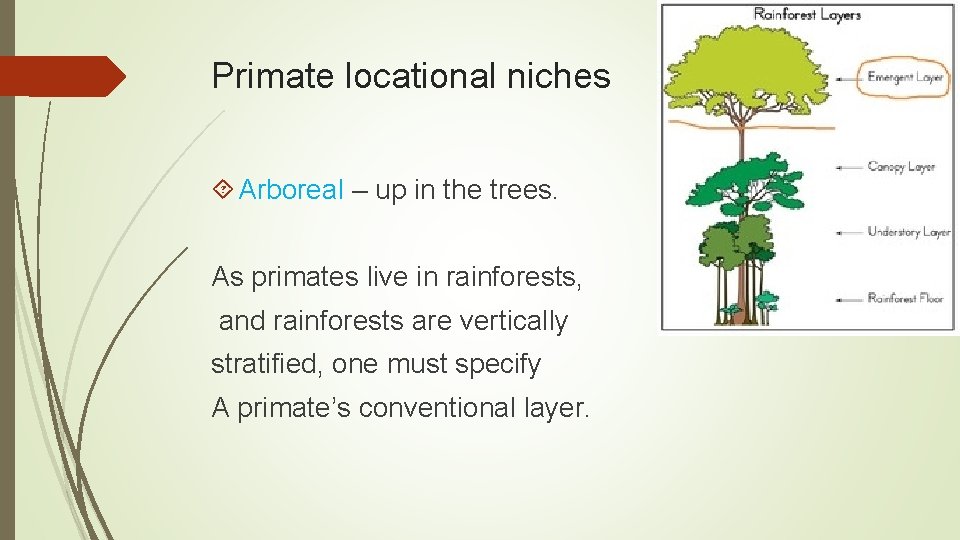
Primate locational niches Arboreal – up in the trees. As primates live in rainforests, and rainforests are vertically stratified, one must specify A primate’s conventional layer.
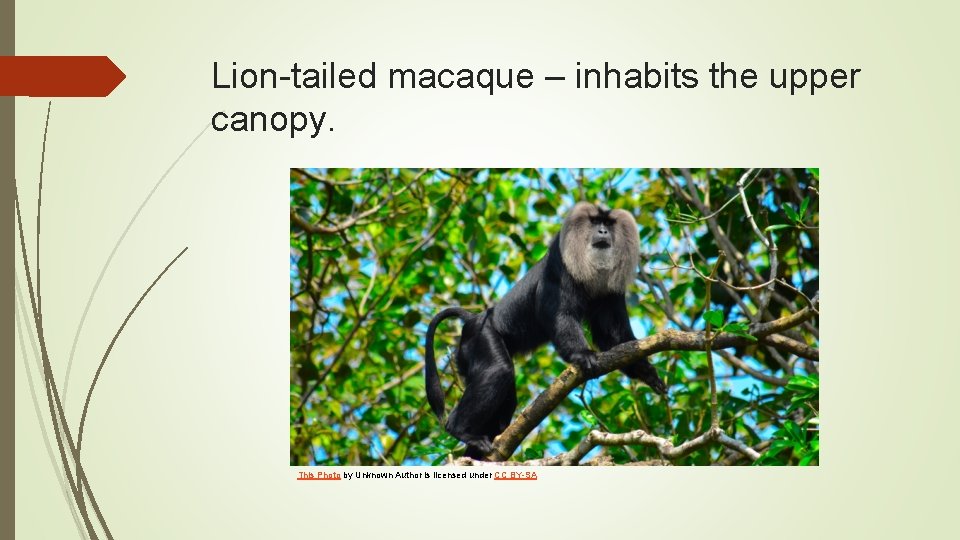
Lion-tailed macaque – inhabits the upper canopy. This Photo by Unknown Author is licensed under CC BY-SA
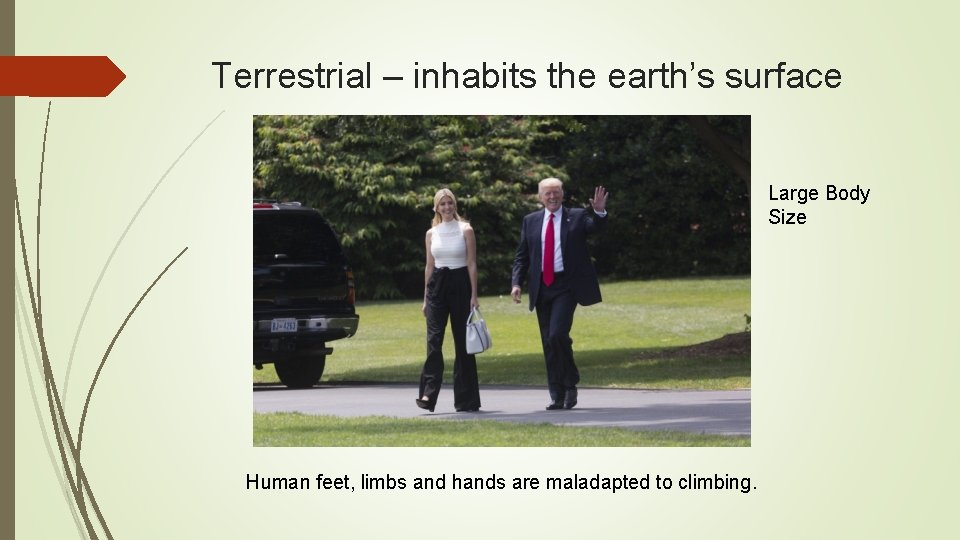
Terrestrial – inhabits the earth’s surface Large Body Size Human feet, limbs and hands are maladapted to climbing.
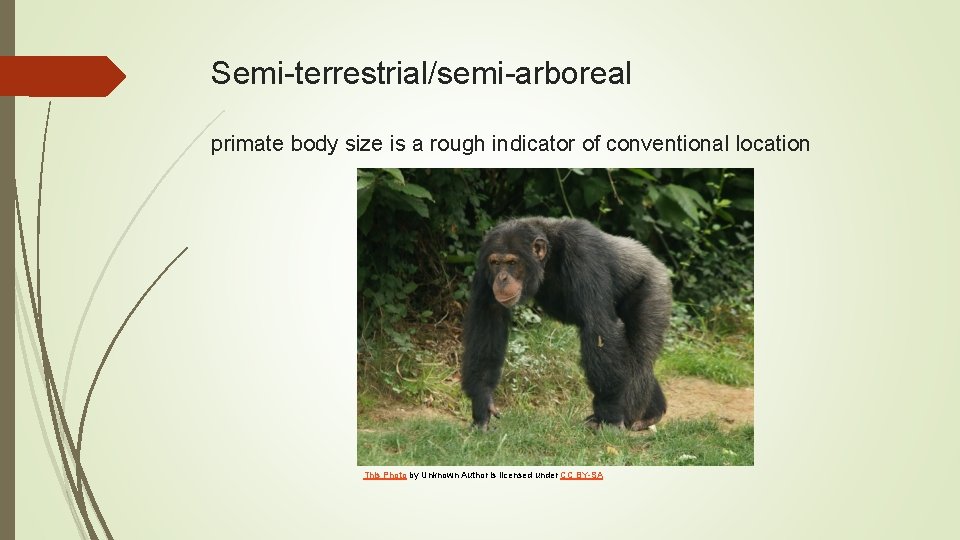
Semi-terrestrial/semi-arboreal primate body size is a rough indicator of conventional location This Photo by Unknown Author is licensed under CC BY-SA
Primate Activity Time: terminology Diurnal – active during the day. Nocturnal – active during the night. Crepuscular – active at dawn and dusk. Cathemeral – activity time varies.
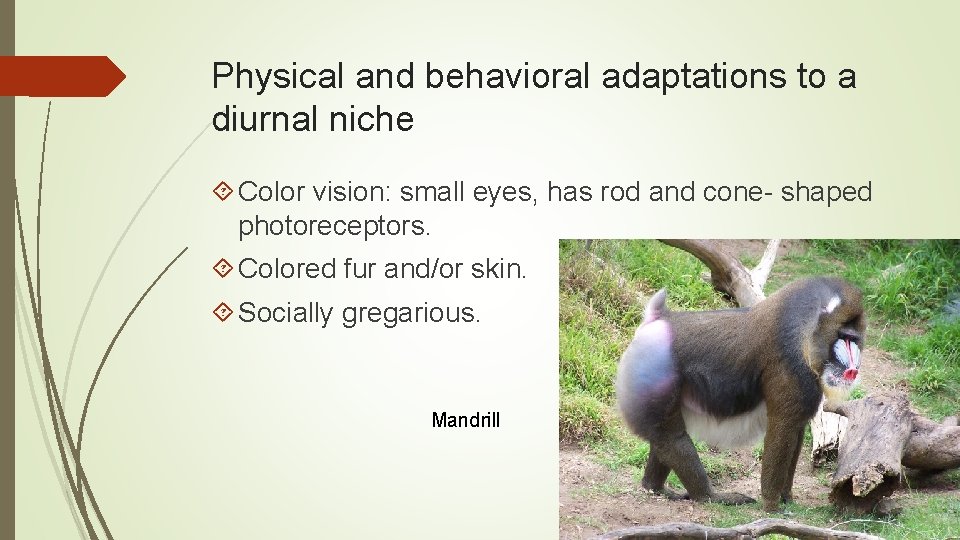
Physical and behavioral adaptations to a diurnal niche Color vision: small eyes, has rod and cone- shaped photoreceptors. Colored fur and/or skin. Socially gregarious. Mandrill
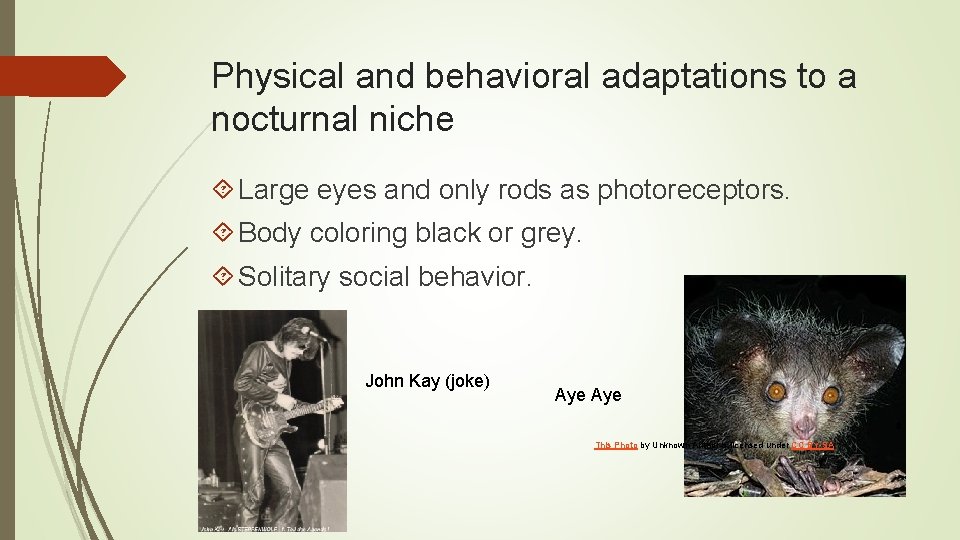
Physical and behavioral adaptations to a nocturnal niche Large eyes and only rods as photoreceptors. Body coloring black or grey. Solitary social behavior. John Kay (joke) Aye This Photo by Unknown Author is licensed under CC BY-SA
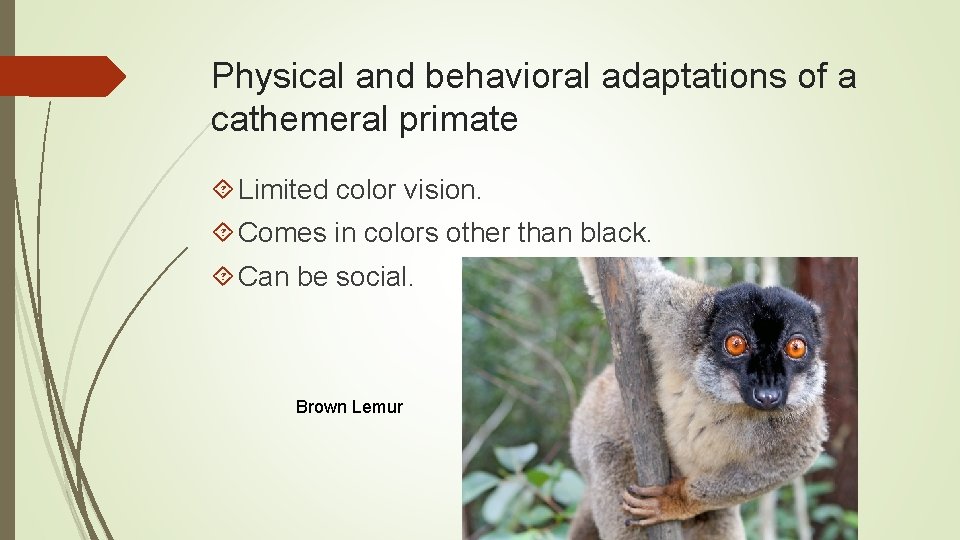
Physical and behavioral adaptations of a cathemeral primate Limited color vision. Comes in colors other than black. Can be social. Brown Lemur
Primate Dietary Niches: terminology Omnivore – eats everything. Herbivore – eats vegetation. Folivore – eats leaves. Frugivore – eats fruit. Gummivore – eats tree sap. Insectivore – eats insects.
Primate diets: a word of caution As regards diet, primates are generalists and opportunists. Therefore, when a dietary niche term is applied to a primate, it is characterizing the central tendency of the diet, in so far that this tendency exerts selective forces that leads to physical and behavioral adaptations.
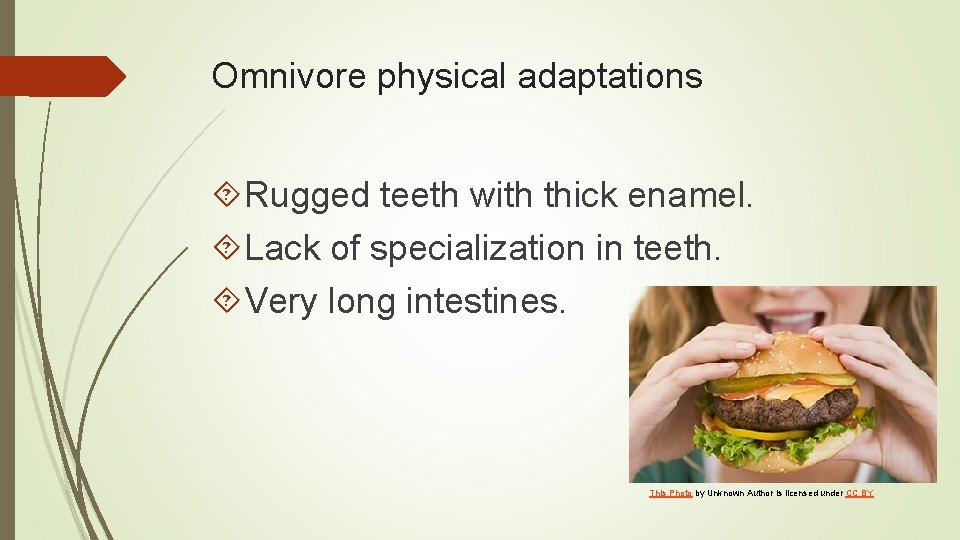
Omnivore physical adaptations Rugged teeth with thick enamel. Lack of specialization in teeth. Very long intestines. This Photo by Unknown Author is licensed under CC BY
The Herbivore Diet Nutrients in plants are locked in cellulose, a very strong fibrous substance that resists digestion –think cotton. Grass, plant stems and leaves are nutrient-poor. These facts require an herbivore to possess physical traits to break down plant material, and to consume high volumes of material. Herbivores are therefore typically large, not terribly active, and have a low basal metabolic rate (BMR). The BMR is the amount of energy expended while at rest.
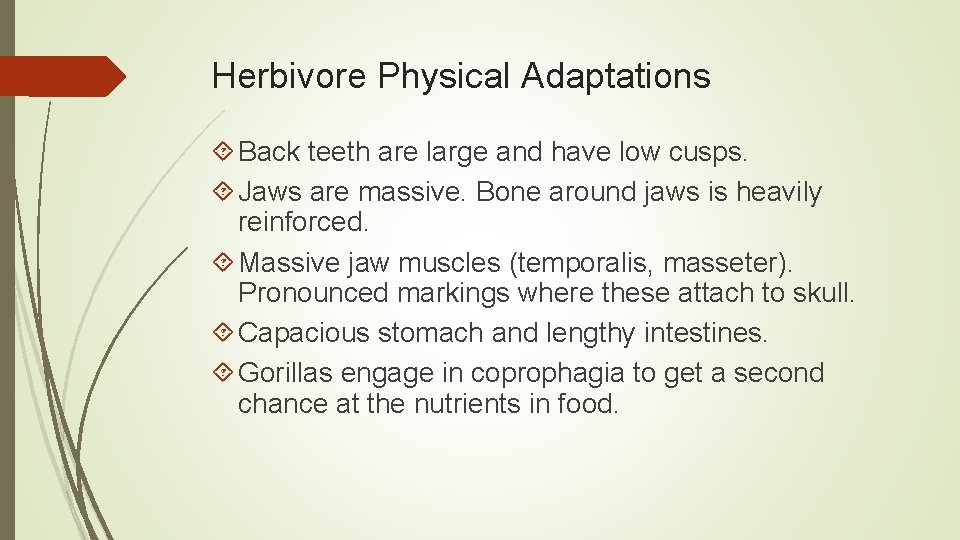
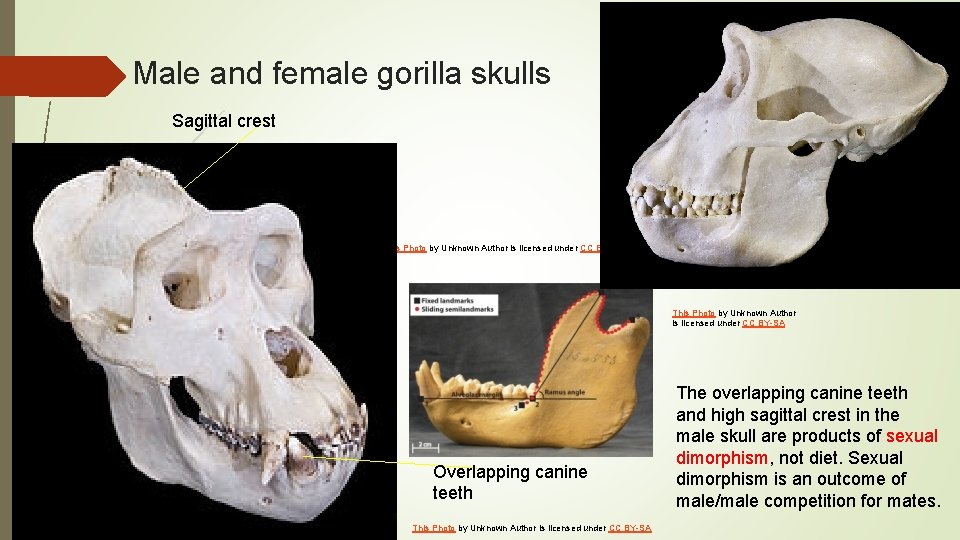
Herbivore Physical Adaptations Back teeth are large and have low cusps. Jaws are massive. Bone around jaws is heavily reinforced. Massive jaw muscles (temporalis, masseter). Pronounced markings where these attach to skull. Capacious stomach and lengthy intestines. Gorillas engage in coprophagia to get a second chance at the nutrients in food.
Male and female gorilla skulls Sagittal crest This Photo by Unknown Author is licensed under CC BYSA This Photo by Unknown Author is licensed under CC BY-SA Overlapping canine teeth This Photo by Unknown Author is licensed under CC BY-SA The overlapping canine teeth and high sagittal crest in the male skull are products of sexual dimorphism, not diet. Sexual dimorphism is an outcome of male/male competition for mates.
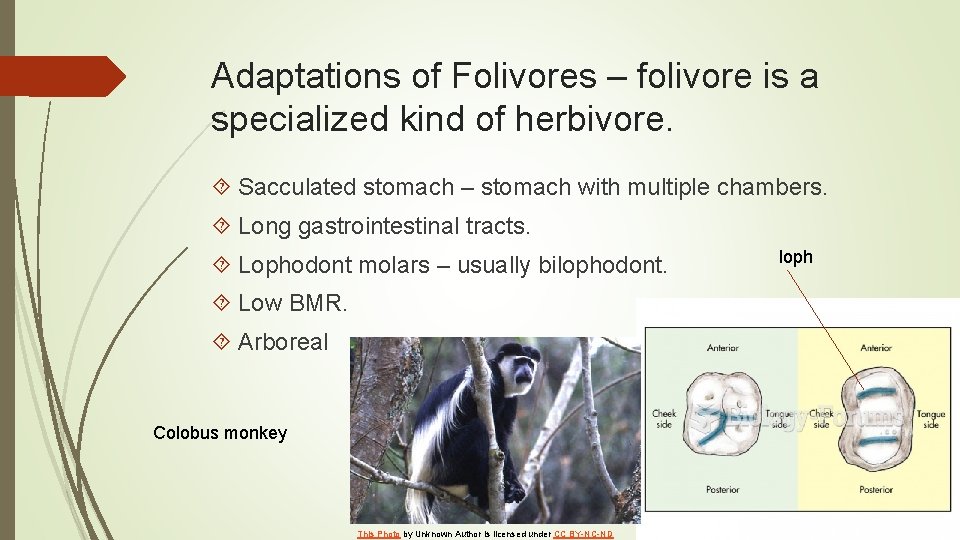
Adaptations of Folivores – folivore is a specialized kind of herbivore. Sacculated stomach – stomach with multiple chambers. Long gastrointestinal tracts. Lophodont molars – usually bilophodont. Low BMR. Arboreal Colobus monkey This Photo by Unknown Author is licensed under CC BY-NC-ND loph
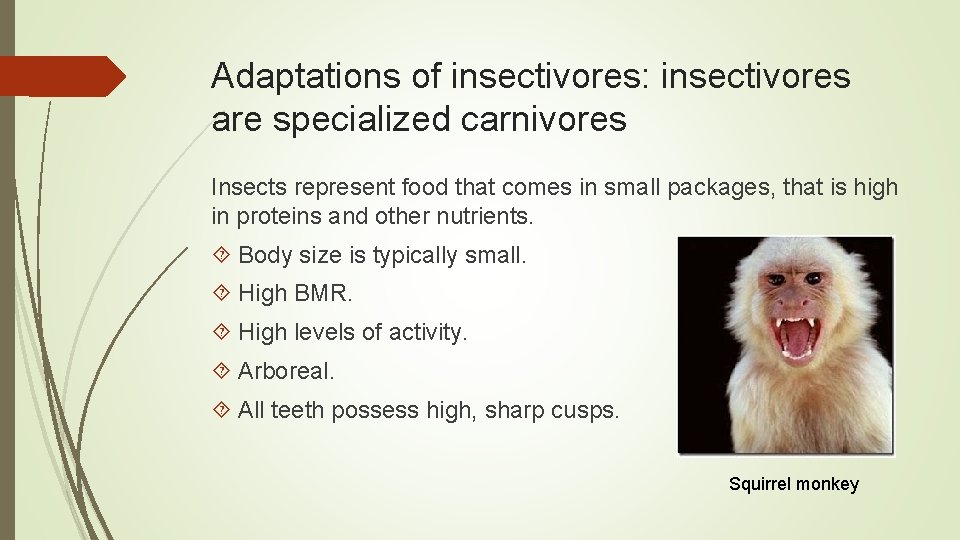
Adaptations of insectivores: insectivores are specialized carnivores Insects represent food that comes in small packages, that is high in proteins and other nutrients. Body size is typically small. High BMR. High levels of activity. Arboreal. All teeth possess high, sharp cusps. Squirrel monkey
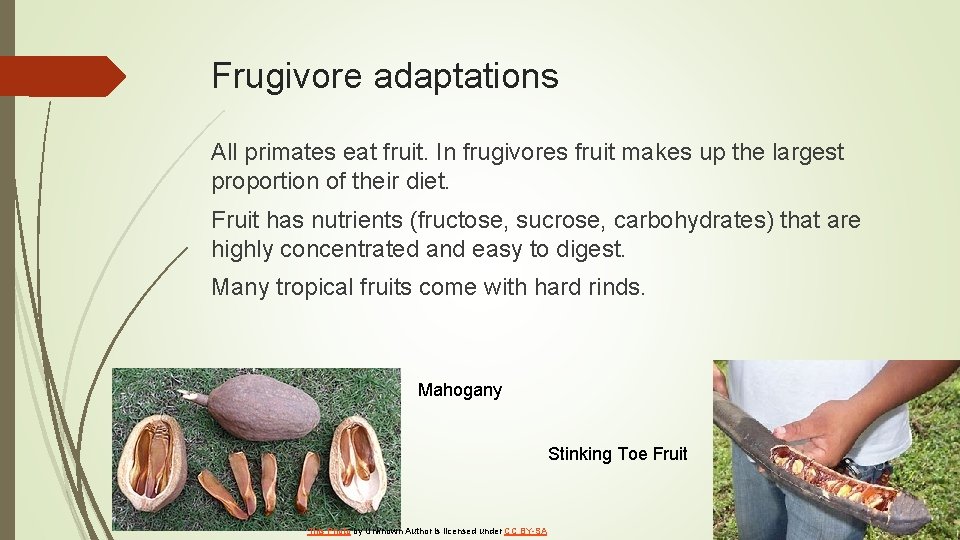
Frugivore adaptations All primates eat fruit. In frugivores fruit makes up the largest proportion of their diet. Fruit has nutrients (fructose, sucrose, carbohydrates) that are highly concentrated and easy to digest. Many tropical fruits come with hard rinds. Mahogany Stinking Toe Fruit This Photo by Unknown Author is licensed under CC BY-SA
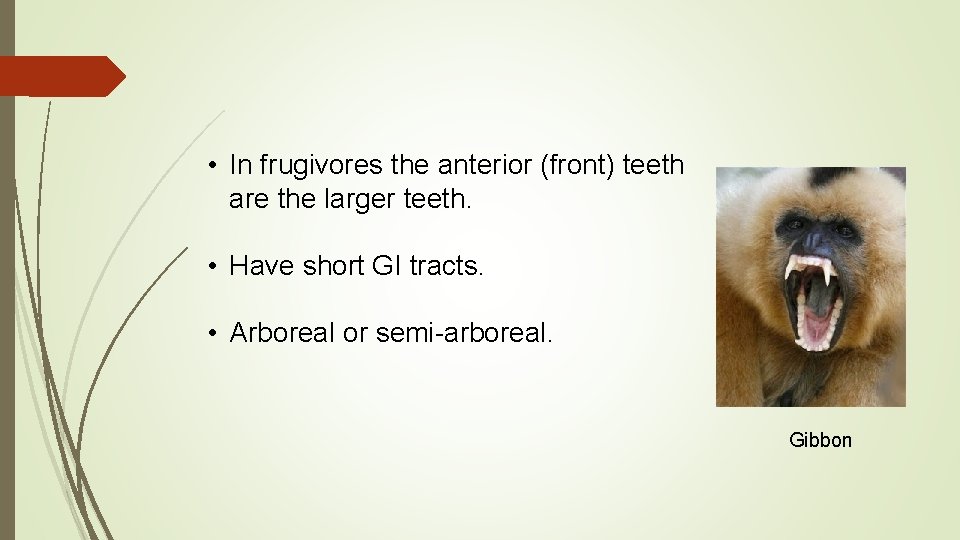
• In frugivores the anterior (front) teeth are the larger teeth. • Have short GI tracts. • Arboreal or semi-arboreal. Gibbon
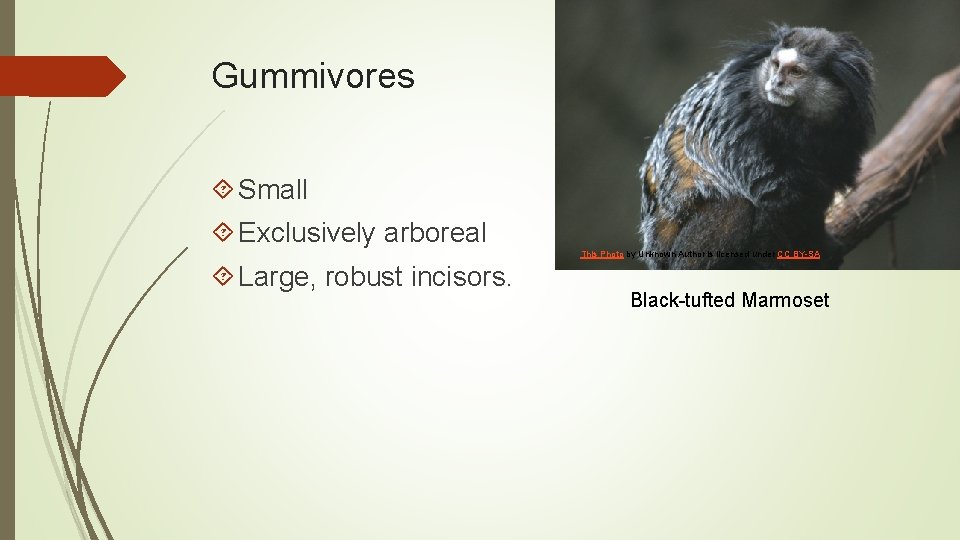
Gummivores Small Exclusively arboreal This Photo by Unknown Author is licensed under CC BY-SA Large, robust incisors. Black-tufted Marmoset
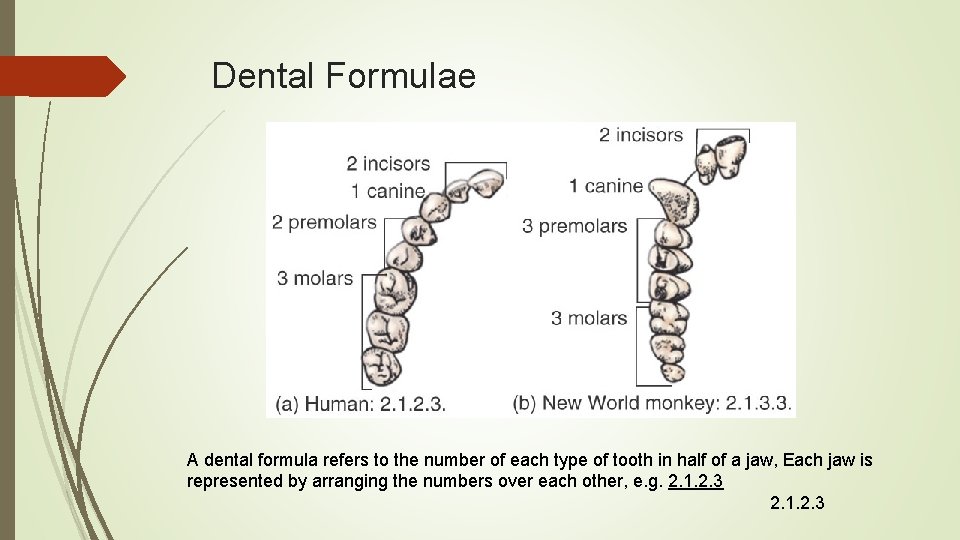
Dental Formulae A dental formula refers to the number of each type of tooth in half of a jaw, Each jaw is represented by arranging the numbers over each other, e. g. 2. 1. 2. 3
Dental formulas and affinity Humans, apes, and old world monkeys the have same dental formula: 2. 1. 2. 3 That is taken as evidence that they all share a common ancestor. New World Monkeys tend to have the dental formula 2. 1. 3. 3 This dental formula is also seen in the Strepsirrhines.
Dental Reduction Since the Strepsirrhines and New World Monkeys are thought to be anatomically closer to the prehistoric primates of the Eocene, there has been a long-term trend of dental reduction. Dental reduction may be related to greater tendency toward vertical posture, and consequent shortening of the muzzle. Some modern human populations are at the cutting edge of this trend with a formula of 2. 1. 2. 2. Cultural and sexual forces may be a work here. 2. 1. 2. 2.