
Ecosystems and Biological Communities Chapter 4 How Organisms
Ecosystems and Biological Communities Chapter 4

How Organisms Interact in Communities • Species evolve in response to one another – Coevolution: • Back-and-forth evolutionary adjustments between interacting members of an ecosystem. • Predator Vs. Prey – Predation: » Act of an organism feeding on another.
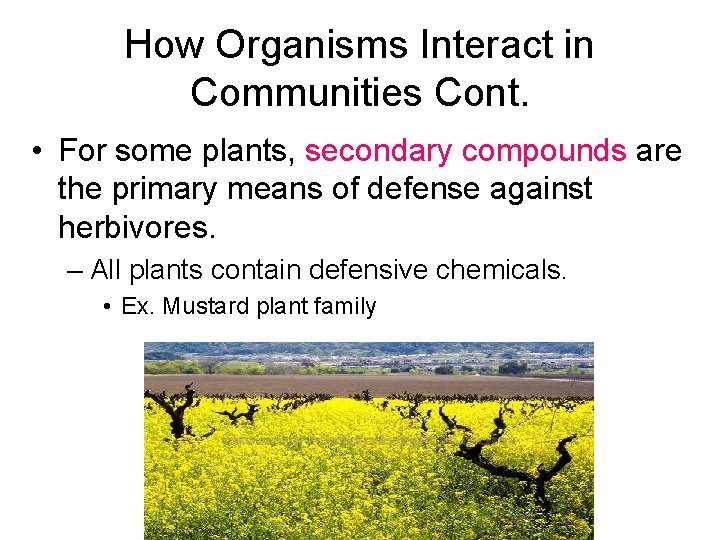
How Organisms Interact in Communities Cont. • For some plants, secondary compounds are the primary means of defense against herbivores. – All plants contain defensive chemicals. • Ex. Mustard plant family
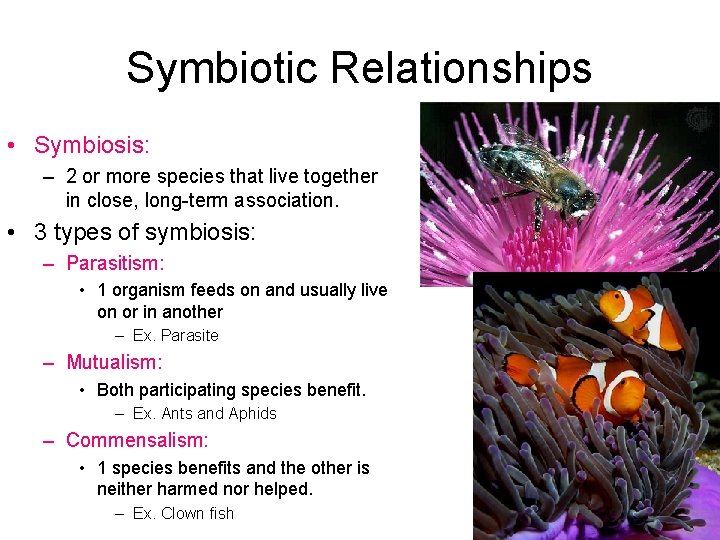
Symbiotic Relationships • Symbiosis: – 2 or more species that live together in close, long-term association. • 3 types of symbiosis: – Parasitism: • 1 organism feeds on and usually live on or in another – Ex. Parasite – Mutualism: • Both participating species benefit. – Ex. Ants and Aphids – Commensalism: • 1 species benefits and the other is neither harmed nor helped. – Ex. Clown fish
How Competition Shapes Communities • Resources (in short supply) for which species compete include: – – – Food Nesting sites Living space Light Mineral nutrients Water • Competition: – When 2 species use the same resource • Competitive exclusion: – Elimination of a competing species.
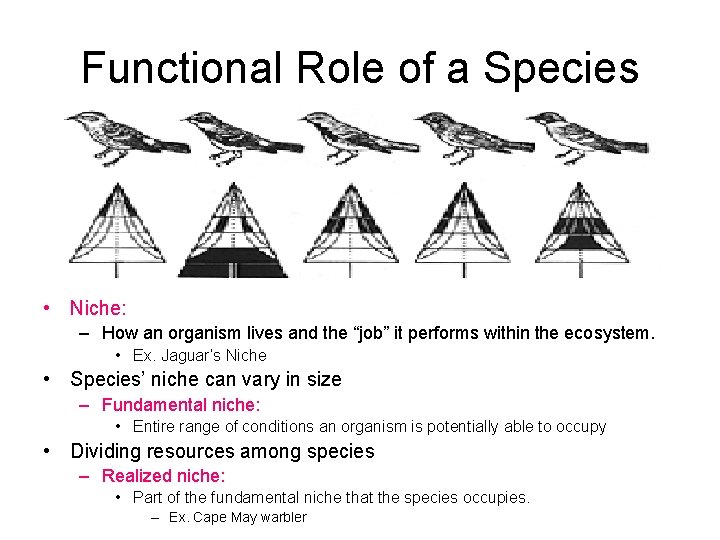
Functional Role of a Species • Niche: – How an organism lives and the “job” it performs within the ecosystem. • Ex. Jaguar’s Niche • Species’ niche can vary in size – Fundamental niche: • Entire range of conditions an organism is potentially able to occupy • Dividing resources among species – Realized niche: • Part of the fundamental niche that the species occupies. – Ex. Cape May warbler

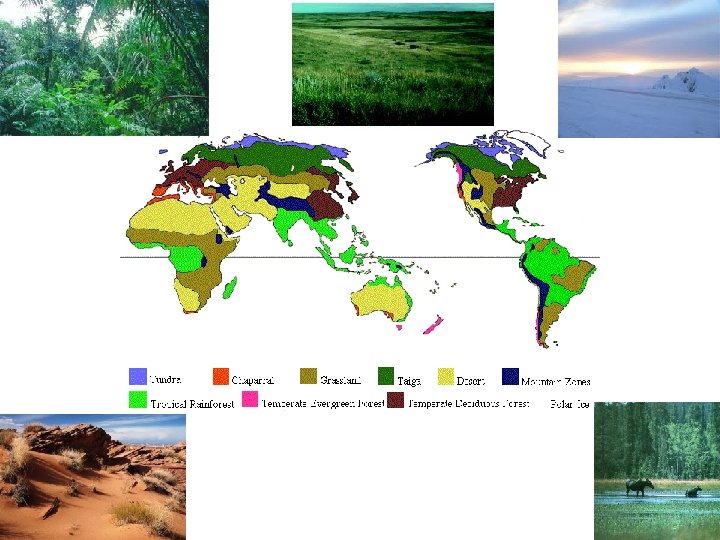
Major Biological Communities • Climate largely determines where species live. – Prevailing weather conditions in a given area. • Temperature and Moisture – Most organisms are adapted to live within a particular range of temperatures. • (Not too hot & Not too cold) – All organisms require water. – Temp. and moisture help determine biological communities • Biome: – Major biological community that occurs over a large area of land
7 Major Biomes • 1. Tropical Rain Forest – Lots of rain, large number of species, and high primary productivity • 2. Deserts – Very little rain and vegetation is sparse • 3. Savannas – Dry climate (grassland), wider fluctuation in temp. , and animals only active during rainy season • 4. Temperate Deciduous Forests – Mild climates and plentiful rain to promote forest growth • 5. Temperate Grasslands – Moderate climates and temperate grasslands that are productive for Ag. • 6. Taiga – Cold, wet climates promote the growth of coniferous forests. • 7. Tundra – Almost permanent ice surrounding.

Aquatic Communities • Freshwater communities: – Ex. Lakes, ponds, streams, rivers – 3 Lake Zones: • Littoral zone: – Shallow zone near the shore • Limnetic zone: – Farther from the shore but close to the surface • Profundal zone: – Deep-water zone, below the limits of effective light diffusion • Marine communities: – Ex. Ocean – 3 Marine zones: • Shallow ocean waters • Open sea surface • Deep-sea waters
- Slides: 10