
Ecosystems All ecosystems contain many food chains Each



- Slides: 18
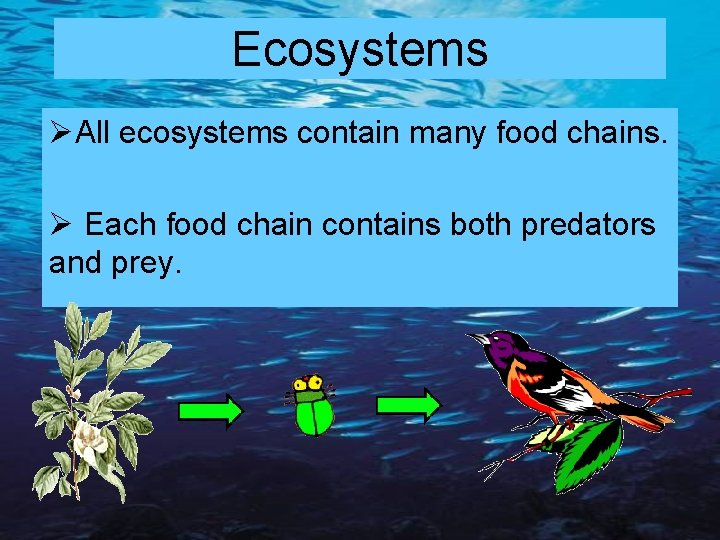
Ecosystems ØAll ecosystems contain many food chains. Ø Each food chain contains both predators and prey.
Ecosystems An ecosystem is a community of living organisms (plants, animals and microbes) in conjunction with the nonliving components of their environment (things like air, water and mineral soil), interacting as a system.
ØIn order for animals to live they need energy. ØSome animals get the energy they need from eating plants and other vegetation. ØSome animals get their energy from eating other animals. ØSome animals eat both plants and other animals.
ØNearly all food webs start with a green plant. ØGreen plants are called producers because they produce their own food.
ØPrimary, secondary, tertiary v. Herbivore - plant eater v. Carnivore - meat eater v. Omnivore - mixed plant/animal diet
ØAnimals that eat ONLY plants. ØHerbivores have evolved to eat plants. ØThey need a lot of energy to stay alive. ØMany have to eat all day long to get enough energy. ØThey have specialized teeth and stomachs to enable them to get the energy they need from plants.
Manatee • A manatee is a mammal that lives in the water. • They are herbivores. • They eat 150 pounds of plants each day! • Manatees live in ocean waters off the coast of Florida.
ØAn animal that gets its food from eating other animals ØCarnivores have evolved to eat meat. ØThey have specialized teeth and stomachs to enable them to get the energy they need from the bodies of other animals.
ØAnimals that eat both plants and other animals ØMany will eat the eggs of other animals ØOmnivores have teeth and stomachs that enable them to eat and digest both plants and meat (animals).
ØSome omnivores are scavengers which means they eat dead animals. ØMost will eat plants that produce fruit and vegetables and will eat both the fruit and vegetables. ØHumans are omnivores
ØFood webs show what eats what in order to gain the energy it needs to live. ØFood webs use arrows to show what eats what. Eaten by:
Food chains that overlap are called FOOD WEBS.
ØAnimals that are hunted and eaten by other animals ØSome prey animals are herbivores. ØSome omnivores and carnivores are also prey to other animals.
Ø Animals that hunt and eat other animals Ø Some animals are predators and prey. Ø This means they eat some animals but are eaten by others. Ø The top predator that is prey to no other animal is called an apex predator.
The Biotic Components of Ecosystems Ø Producers (autotrophs) - Photosynthesis Ø Consumers (heterotrophs) -Aerobic respiration Ø Decomposers
Red-tailed hawk Producer to primary consumer Gambel's quail Yucca Jack rabbit Agave Collared lizard Prickly pear cactus Darkling beetle Bacteria Fungi Kangaroo rat Secondary to higher-level consumer All producers and consumers to decomposers Roadrunner Diamondback rattlesnake Primary to secondary consumer
Writing Activity Write a paragraph describing how a food web works. Use the information you have learned in this lesson. Be sure to tell about animals that are both predators and prey.