
Ecosystems 1 Energy Flow 2 Chemical cycles water
- Slides: 19
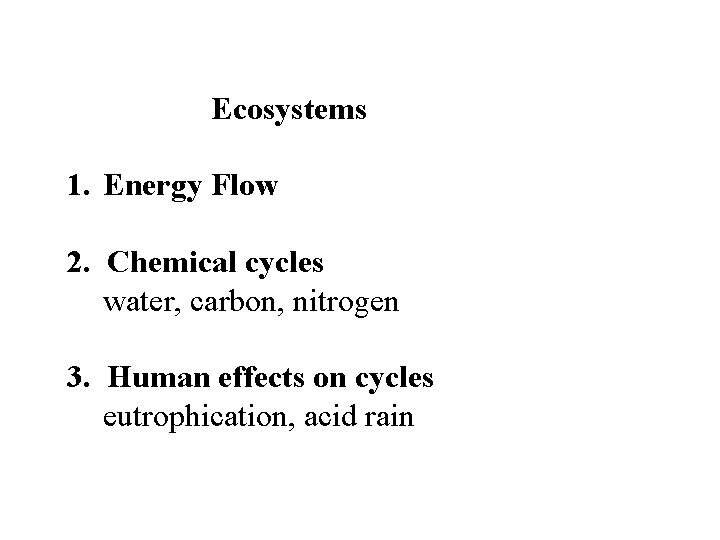
Ecosystems 1. Energy Flow 2. Chemical cycles water, carbon, nitrogen 3. Human effects on cycles eutrophication, acid rain
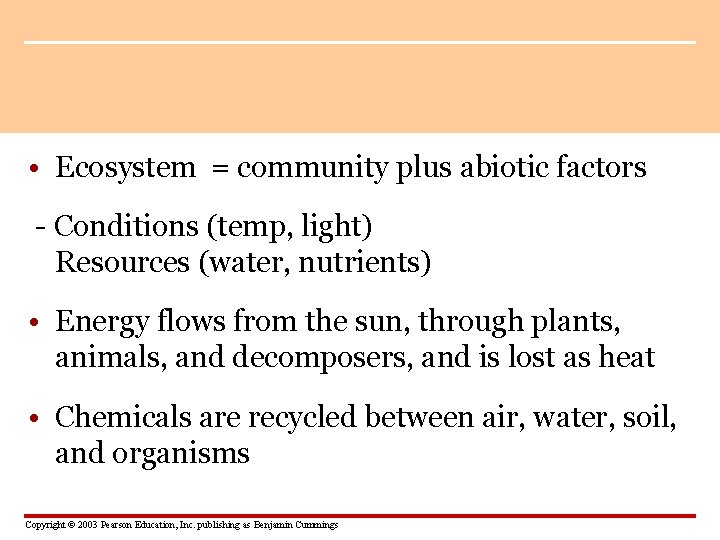
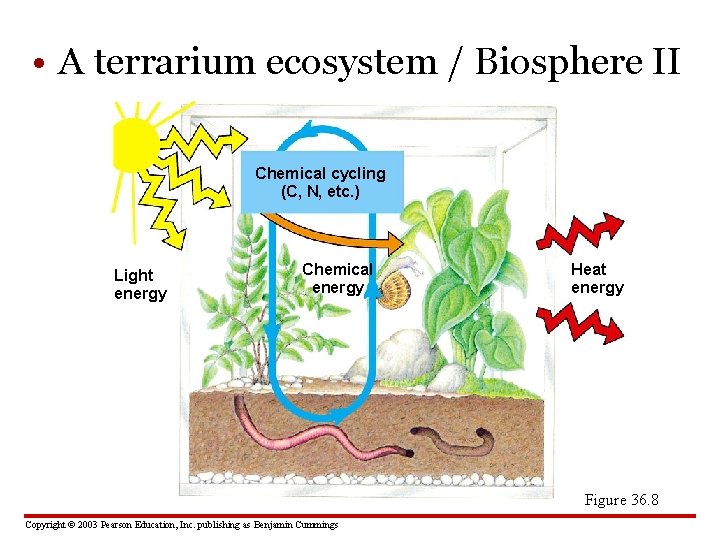
• Ecosystem = community plus abiotic factors - Conditions (temp, light) Resources (water, nutrients) • Energy flows from the sun, through plants, animals, and decomposers, and is lost as heat • Chemicals are recycled between air, water, soil, and organisms Copyright © 2003 Pearson Education, Inc. publishing as Benjamin Cummings
• A terrarium ecosystem / Biosphere II Chemical cycling (C, N, etc. ) Light energy Chemical energy Heat energy Figure 36. 8 Copyright © 2003 Pearson Education, Inc. publishing as Benjamin Cummings
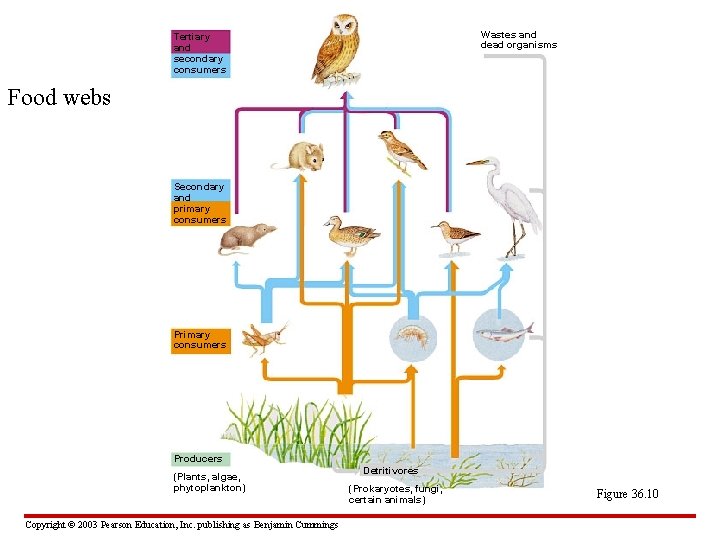
Wastes and dead organisms Tertiary and secondary consumers Food webs Secondary and primary consumers Producers (Plants, algae, phytoplankton) Copyright © 2003 Pearson Education, Inc. publishing as Benjamin Cummings Detritivores (Prokaryotes, fungi, certain animals) Figure 36. 10
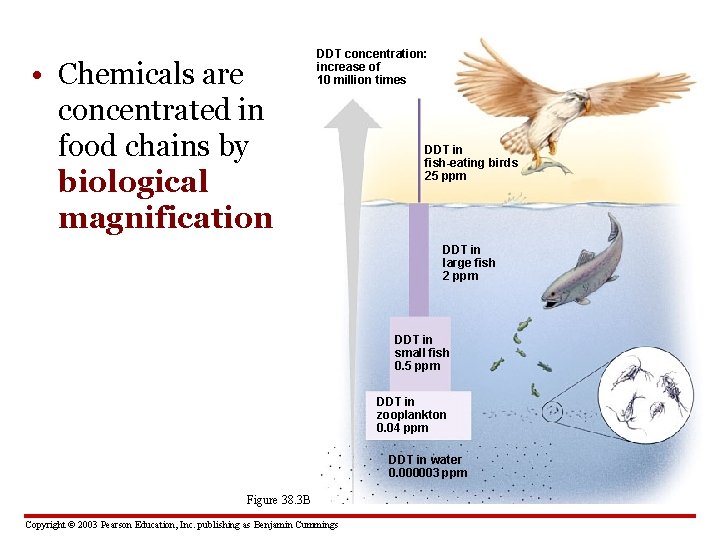
• Chemicals are concentrated in food chains by biological magnification DDT concentration: increase of 10 million times DDT in fish-eating birds 25 ppm DDT in large fish 2 ppm DDT in small fish 0. 5 ppm DDT in zooplankton 0. 04 ppm DDT in water 0. 000003 ppm Figure 38. 3 B Copyright © 2003 Pearson Education, Inc. publishing as Benjamin Cummings
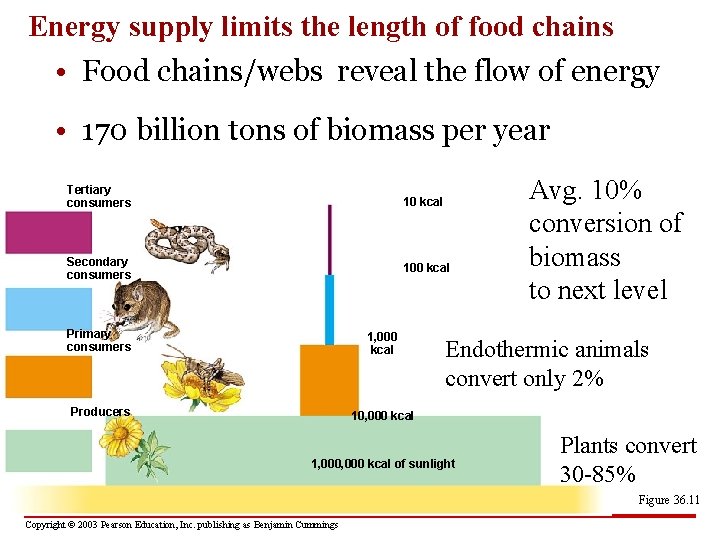
Energy supply limits the length of food chains • Food chains/webs reveal the flow of energy • 170 billion tons of biomass per year Tertiary consumers 10 kcal Secondary consumers 100 kcal Primary consumers 1, 000 kcal Producers 10, 000 kcal Avg. 10% conversion of biomass to next level Endothermic animals convert only 2% 1, 000 kcal of sunlight Plants convert 30 -85% Figure 36. 11 Copyright © 2003 Pearson Education, Inc. publishing as Benjamin Cummings
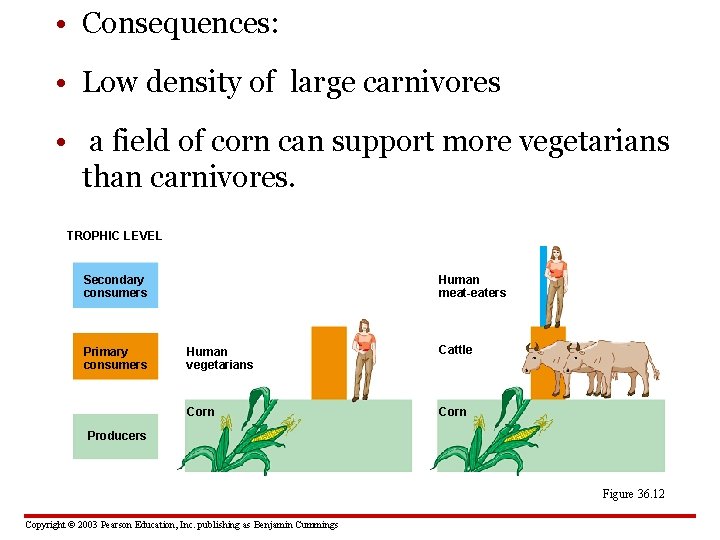
• Consequences: • Low density of large carnivores • a field of corn can support more vegetarians than carnivores. TROPHIC LEVEL Secondary consumers Primary consumers Human meat-eaters Human vegetarians Cattle Corn Producers Figure 36. 12 Copyright © 2003 Pearson Education, Inc. publishing as Benjamin Cummings
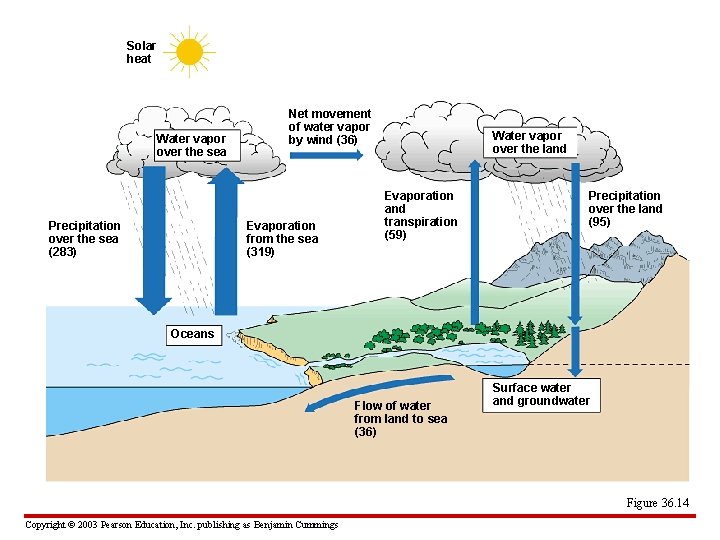
Chemicals are recycled between organic matter and abiotic reservoirs – Water cycle - Carbon cycle – Nitrogen cycle Copyright © 2003 Pearson Education, Inc. publishing as Benjamin Cummings
Solar heat Water vapor over the sea Precipitation over the sea (283) Net movement of water vapor by wind (36) Evaporation from the sea (319) Water vapor over the land Evaporation and transpiration (59) Precipitation over the land (95) Oceans Flow of water from land to sea (36) Surface water and groundwater Figure 36. 14 Copyright © 2003 Pearson Education, Inc. publishing as Benjamin Cummings
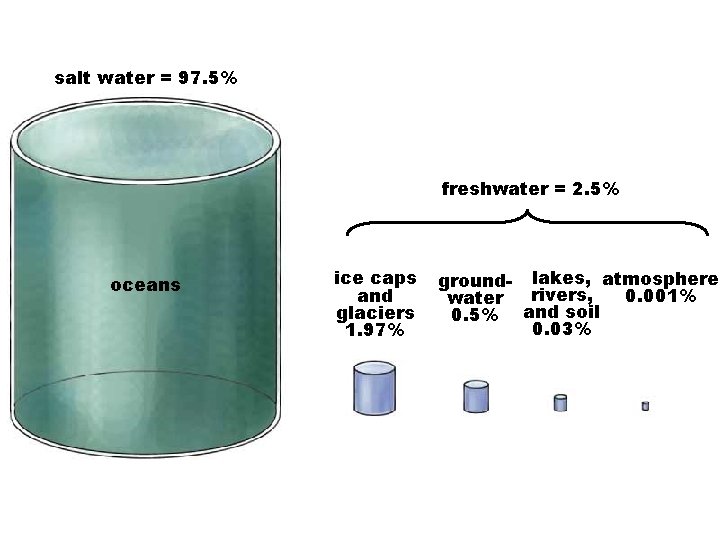
salt water = 97. 5% freshwater = 2. 5% oceans ice caps and glaciers 1. 97% ground- lakes, atmosphere rivers, 0. 001% water 0. 5% and soil 0. 03%
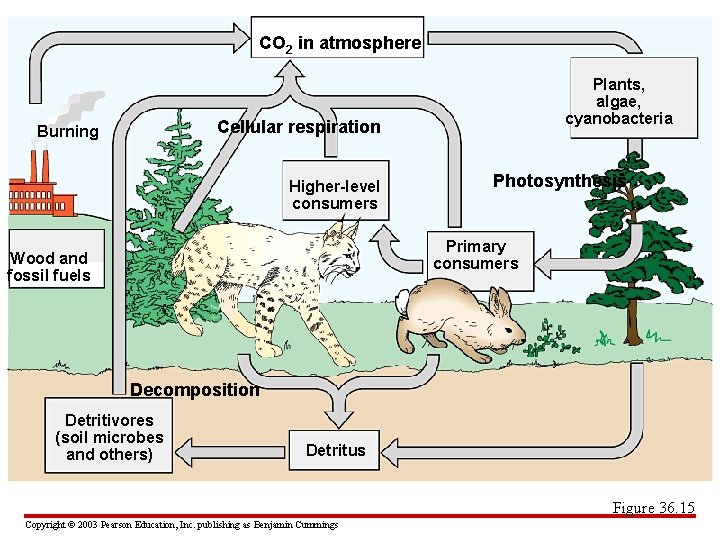
Carbon cycle • Carbon is taken from the atmosphere by photosynthesis – used to make organic molecules returned to the atmosphere by cellular respiration, decomposers Copyright © 2003 Pearson Education, Inc. publishing as Benjamin Cummings
CO 2 in atmosphere Plants, algae, cyanobacteria Cellular respiration Burning Higher-level consumers Photosynthesis Primary consumers Wood and fossil fuels Decomposition Detritivores (soil microbes and others) Detritus Figure 36. 15 Copyright © 2003 Pearson Education, Inc. publishing as Benjamin Cummings
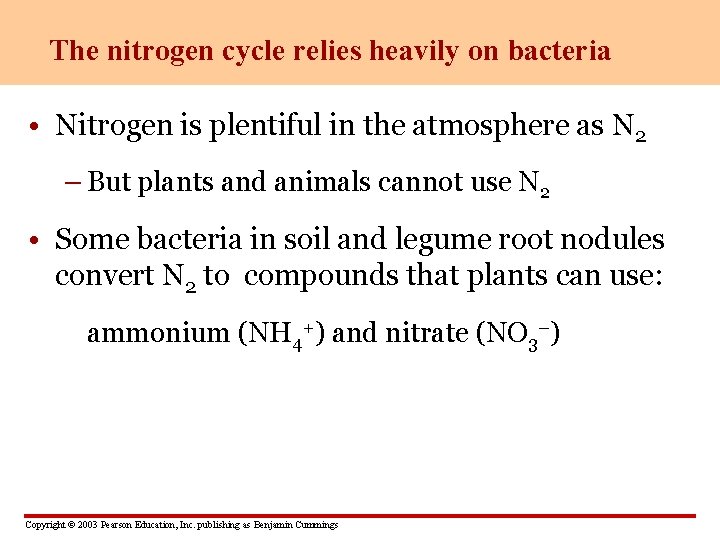
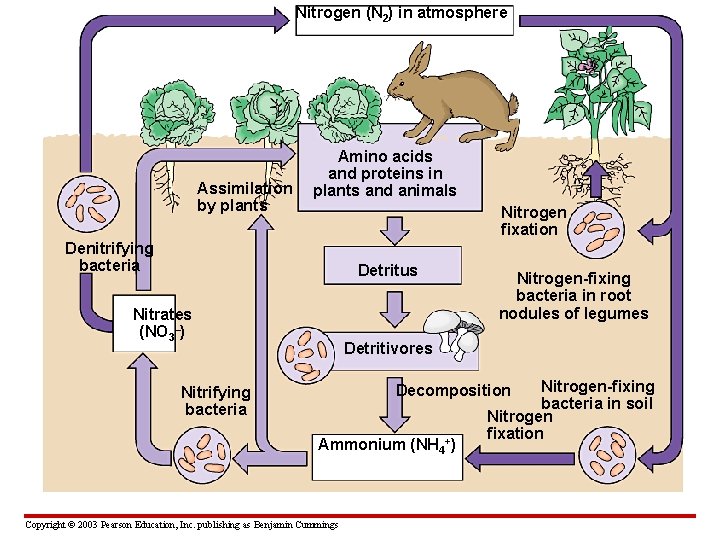
The nitrogen cycle relies heavily on bacteria • Nitrogen is plentiful in the atmosphere as N 2 – But plants and animals cannot use N 2 • Some bacteria in soil and legume root nodules convert N 2 to compounds that plants can use: ammonium (NH 4+) and nitrate (NO 3–) Copyright © 2003 Pearson Education, Inc. publishing as Benjamin Cummings
Nitrogen (N 2) in atmosphere Assimilation by plants Amino acids and proteins in plants and animals Nitrogen fixation Denitrifying bacteria Detritus Nitrates (NO 3–) Nitrogen-fixing bacteria in root nodules of legumes Detritivores Nitrogen-fixing bacteria in soil Nitrogen fixation Decomposition Nitrifying bacteria Ammonium (NH 4+) Copyright © 2003 Pearson Education, Inc. publishing as Benjamin Cummings
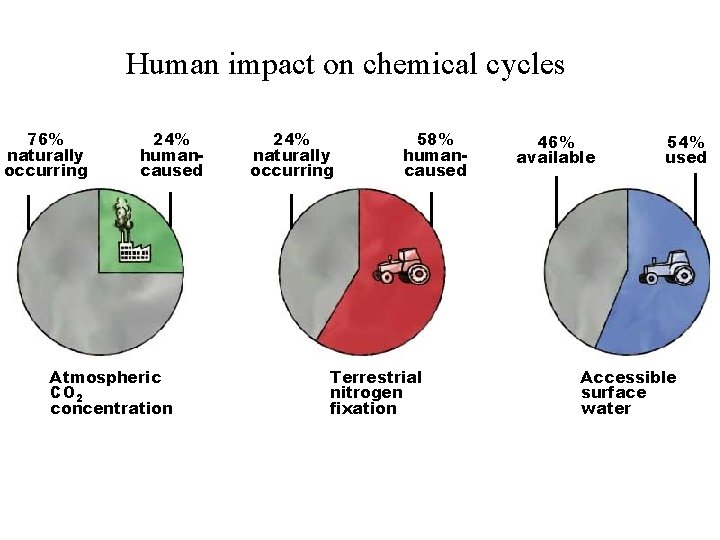
Human impact on chemical cycles 76% naturally occurring 24% humancaused Atmospheric CO 2 concentration 24% naturally occurring 58% humancaused Terrestrial nitrogen fixation 46% available 54% used Accessible surface water
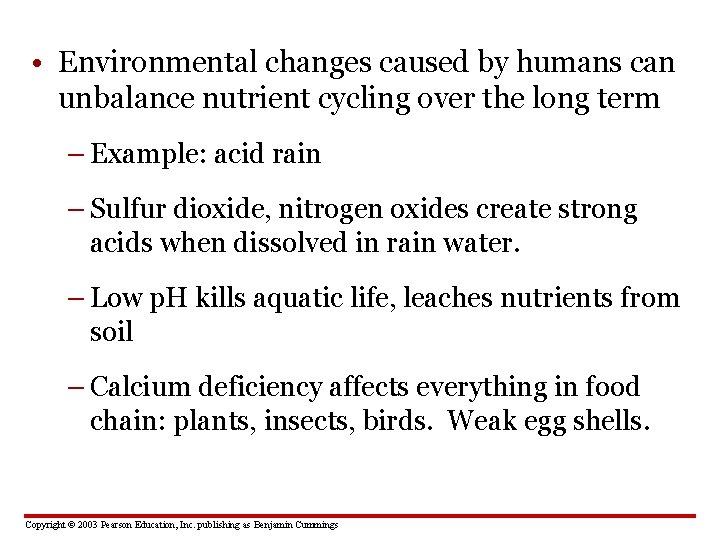
• Environmental changes caused by humans can unbalance nutrient cycling over the long term – Example: acid rain – Sulfur dioxide, nitrogen oxides create strong acids when dissolved in rain water. – Low p. H kills aquatic life, leaches nutrients from soil – Calcium deficiency affects everything in food chain: plants, insects, birds. Weak egg shells. Copyright © 2003 Pearson Education, Inc. publishing as Benjamin Cummings
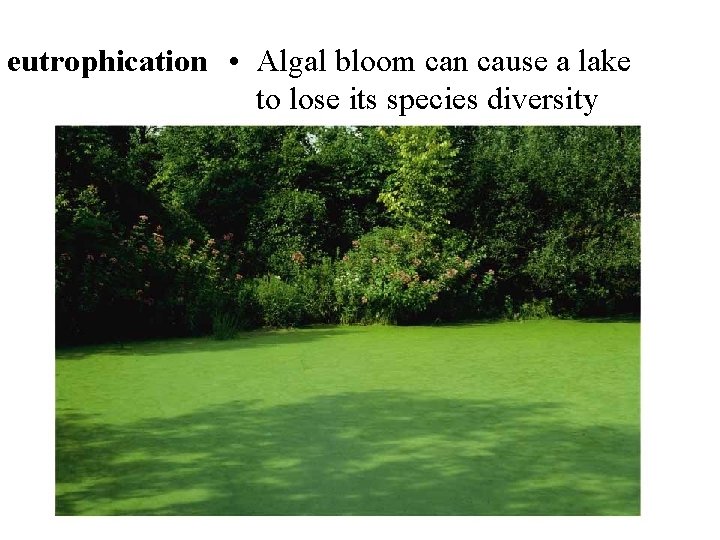
eutrophication • Algal bloom can cause a lake to lose its species diversity
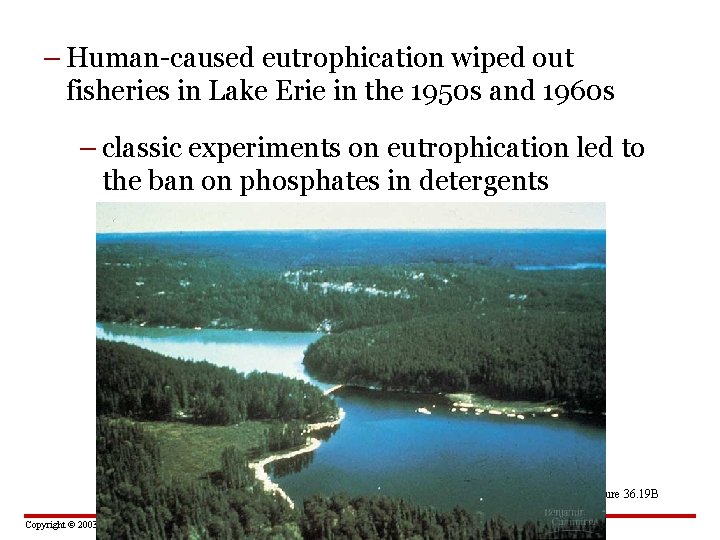
– Human-caused eutrophication wiped out fisheries in Lake Erie in the 1950 s and 1960 s – classic experiments on eutrophication led to the ban on phosphates in detergents Figure 36. 19 B Copyright © 2003 Pearson Education, Inc. publishing as Benjamin Cummings
What are the limits to human alteration of chemical cycles and habitats? • What should the limits be? • How do we set priorities for what we value in the natural world? Aesthetic, economic, conservation, humans Copyright © 2003 Pearson Education, Inc. publishing as Benjamin Cummings