
Ecosystem Structure The Nature of Ecology The study
- Slides: 51
Ecosystem Structure
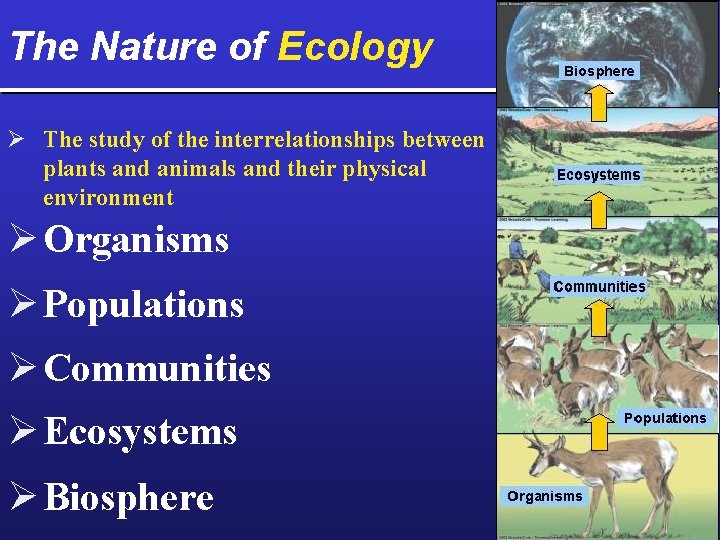
The Nature of Ecology Ø The study of the interrelationships between plants and animals and their physical environment Ø Organisms Ø Populations Ø Communities Ø Ecosystems Ø Biosphere
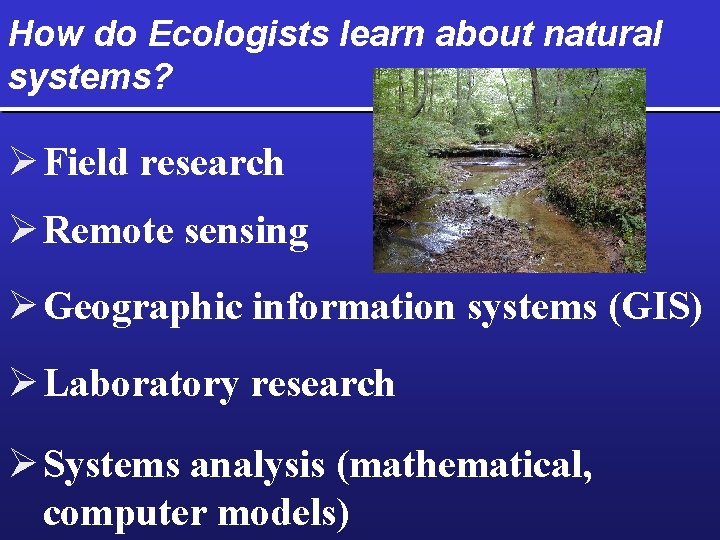
How do Ecologists learn about natural systems? Ø Field research Ø Remote sensing Ø Geographic information systems (GIS) Ø Laboratory research Ø Systems analysis (mathematical, computer models)
Matter: anything that has mass and occupies space Ø Elements Ø Compounds Ø Molecules Ø Mixtures
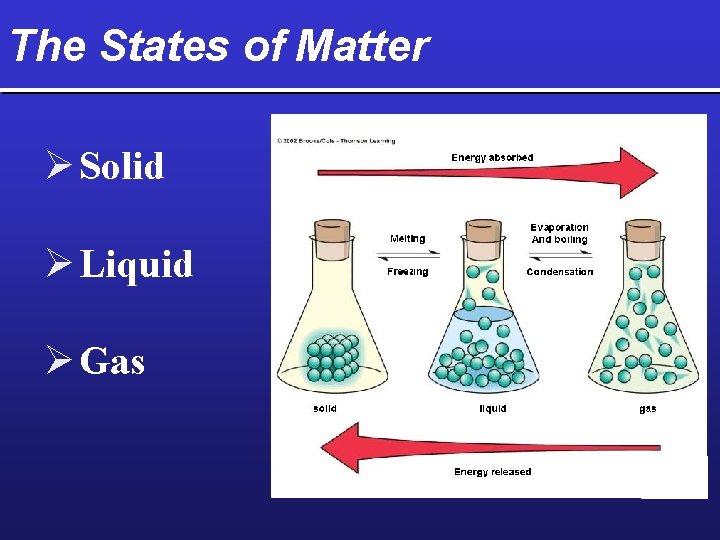
The States of Matter Ø Solid Ø Liquid Ø Gas
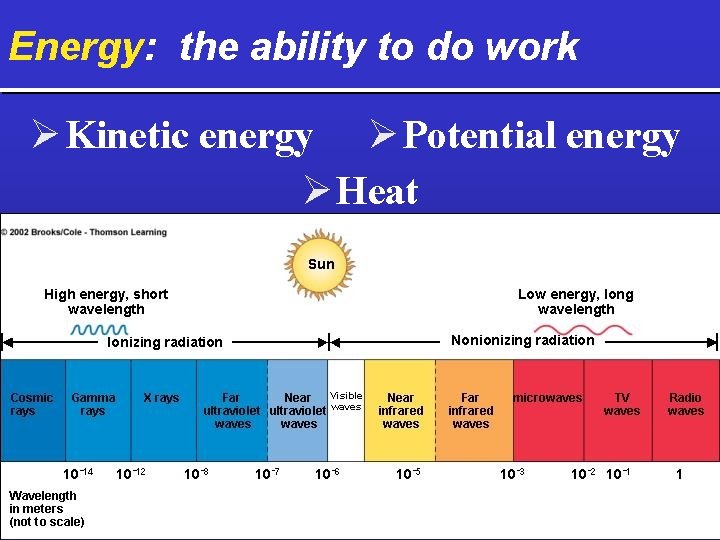
Energy: the ability to do work Ø Kinetic energy Ø Potential energy Ø Heat
The Law of Conservation of Matter Ø Matter cannot be created nor destroyed Ø Matter only changes form Ø There is no “away”
Laws Governing Energy Changes First Law of Thermodynamics (Energy) Ø Energy is neither created nor destroyed Ø Energy only changes form Ø You can’t get something for nothing ENERGY IN = ENERGY OUT
Laws Governing Energy Changes Second Law of Thermodynamics Ø In every transformation, some energy is converted to heat (lower quality) Ø You cannot break even in terms of energy quality
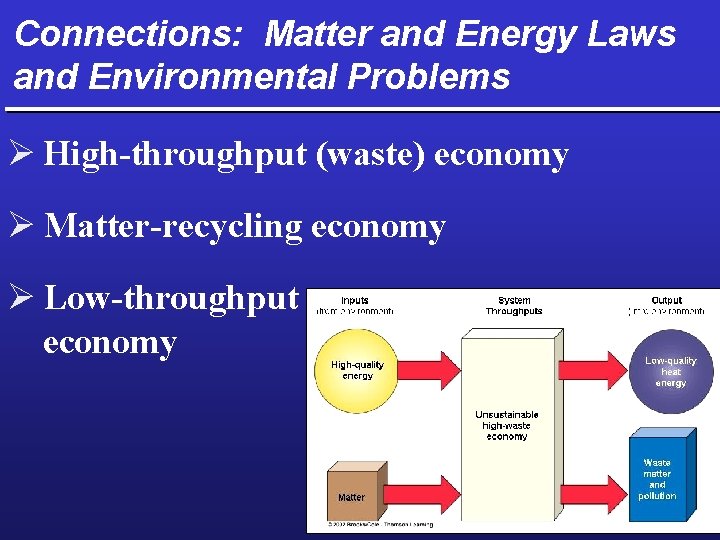
Connections: Matter and Energy Laws and Environmental Problems Ø High-throughput (waste) economy Ø Matter-recycling economy Ø Low-throughput economy
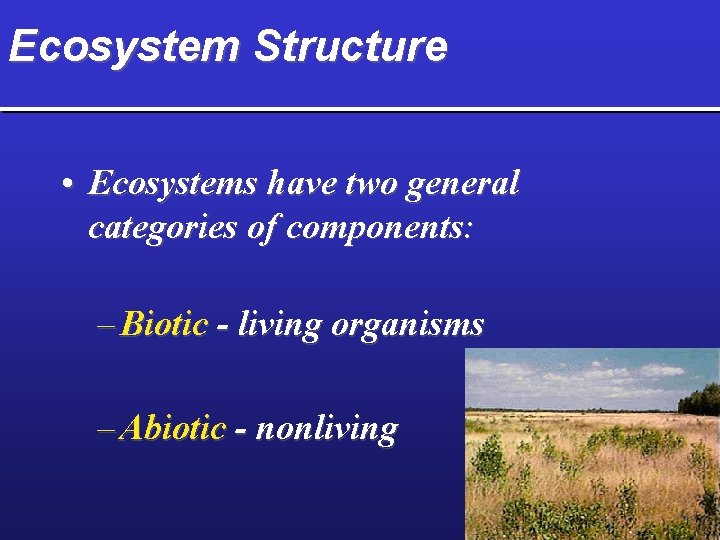
Ecosystem Structure • Ecosystems have two general categories of components: – Biotic - living organisms – Abiotic - nonliving
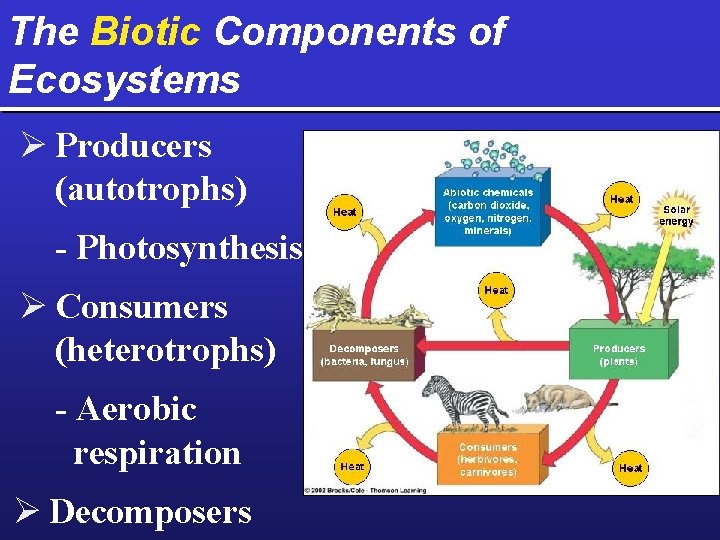
The Biotic Components of Ecosystems Ø Producers (autotrophs) - Photosynthesis Ø Consumers (heterotrophs) - Aerobic respiration Ø Decomposers
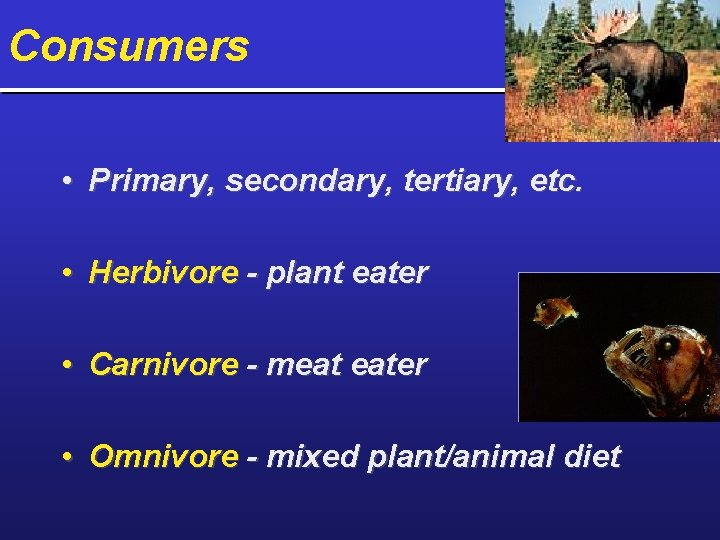
Consumers • Primary, secondary, tertiary, etc. • Herbivore - plant eater • Carnivore - meat eater • Omnivore - mixed plant/animal diet
The Abiotic Components of Ecosystems 1) Outside energy source 2) Physical factors that determine weather, climate 3) Chemicals essential for life
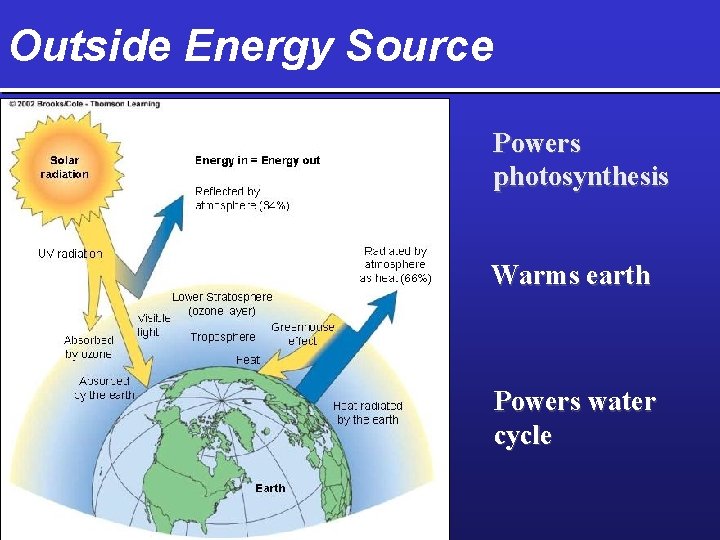
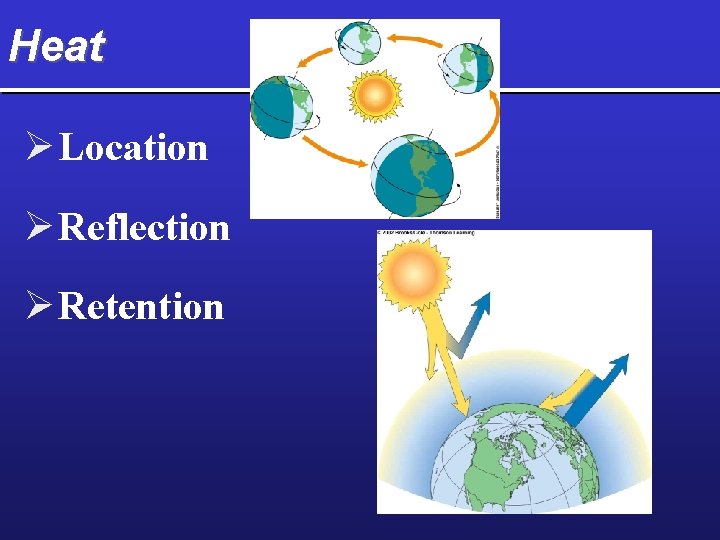
Outside Energy Source Powers photosynthesis Warms earth Powers water cycle
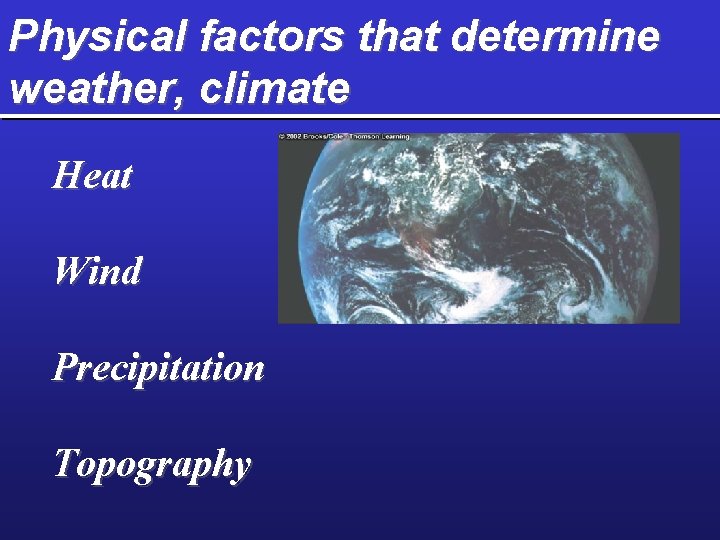
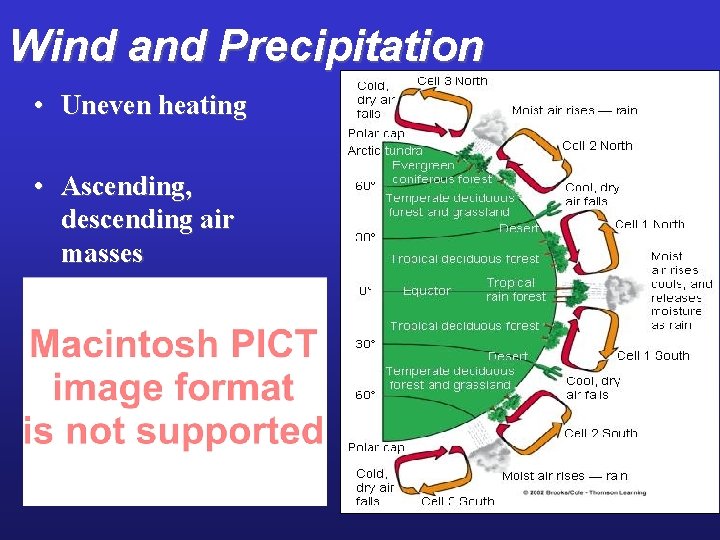
Physical factors that determine weather, climate Heat Wind Precipitation Topography
Heat Ø Location Ø Reflection Ø Retention
Wind and Precipitation • Uneven heating • Ascending, descending air masses
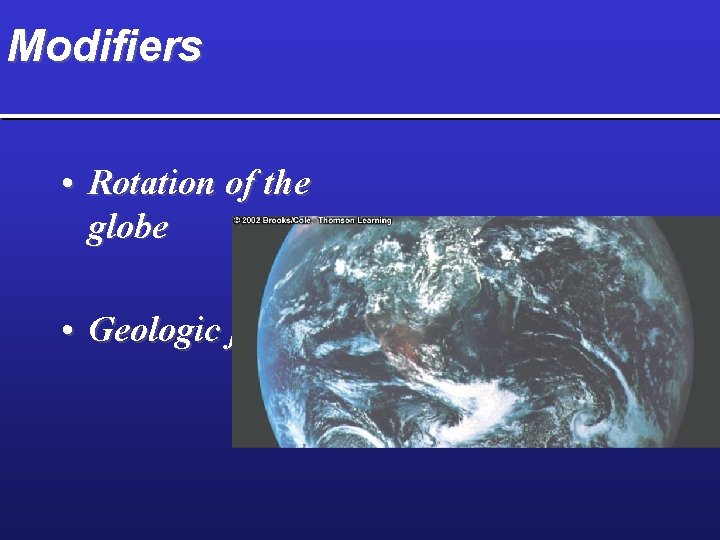
Modifiers • Rotation of the globe • Geologic features
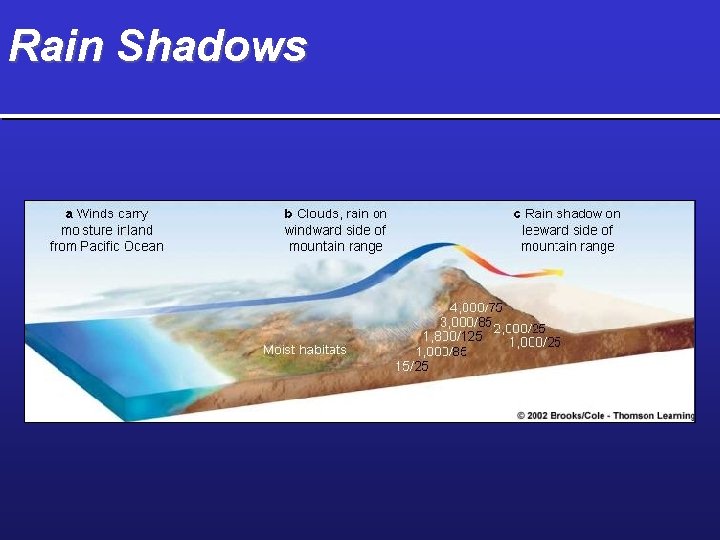
Rain Shadows
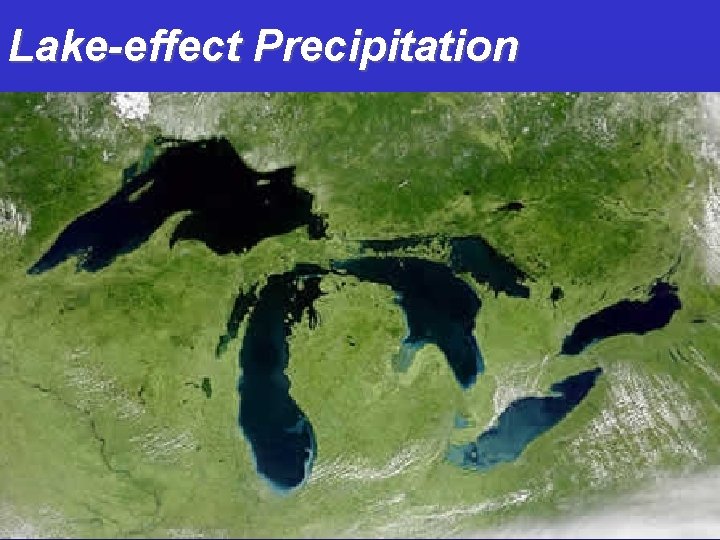
Lake-effect Precipitation
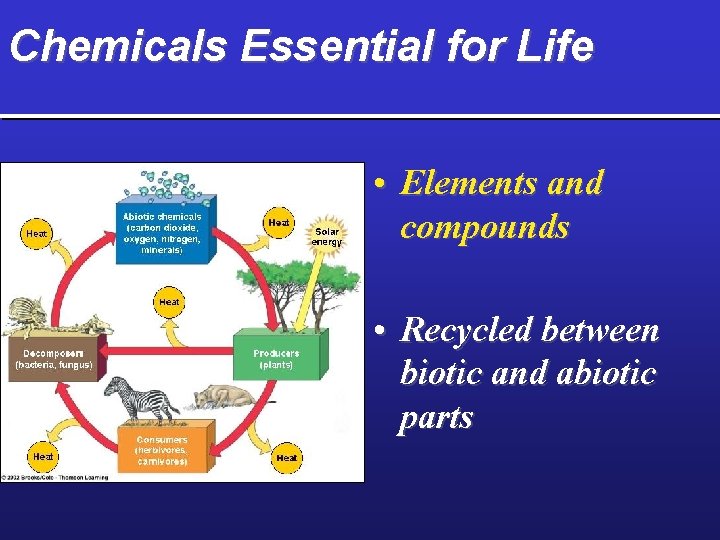
Chemicals Essential for Life • Elements and compounds • Recycled between biotic and abiotic parts
Organic vs. Inorganic • Organic compounds made by living things – e. g. , proteins, fats, DNA • Inorganic compounds produced by biotic or abiotic processes – e. g. , water, carbon dioxide
Limiting Factor Principle • Too much or too little of any abiotic factor can limit or prevent growth of a population, even if all other factors are optimal for that population. • Single factor most over-abundant or deficient in an ecosystem determines presence/absence of specific plants/animals.
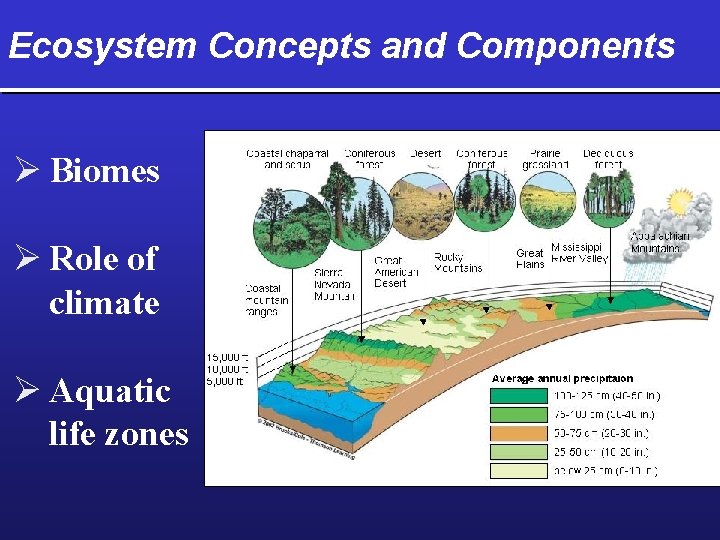
Ecosystem Concepts and Components Ø Biomes Ø Role of climate Ø Aquatic life zones
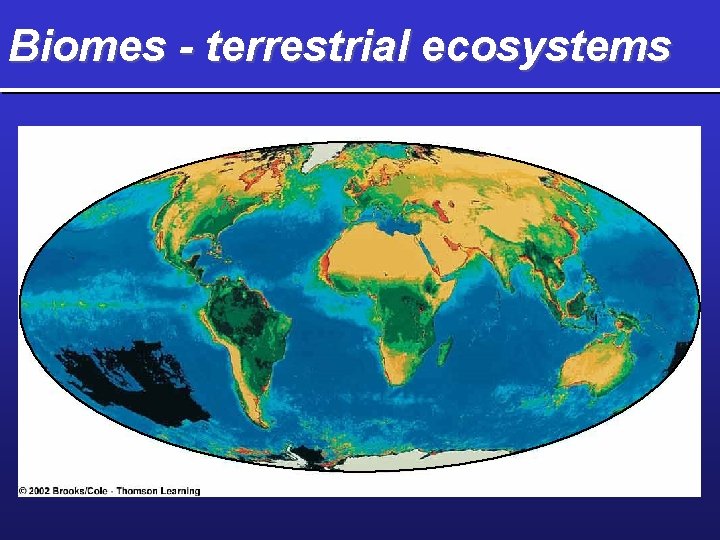
Biomes - terrestrial ecosystems
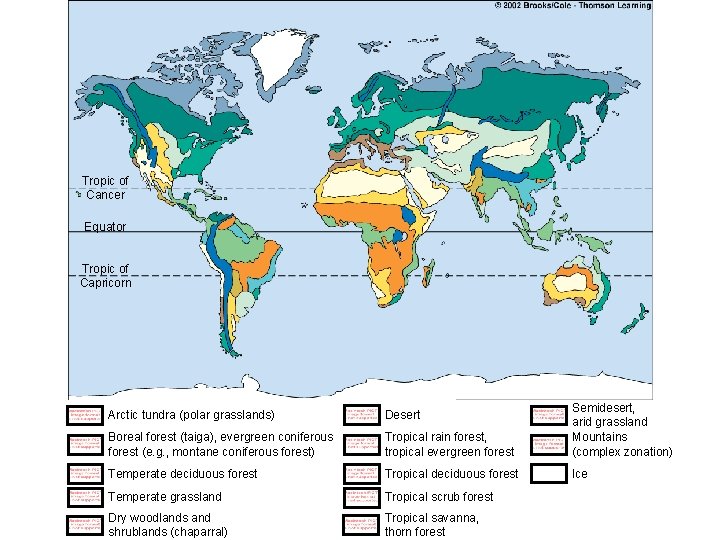
Tropic of Cancer Equator Tropic of Capricorn Arctic tundra (polar grasslands) Desert Boreal forest (taiga), evergreen coniferous forest (e. g. , montane coniferous forest) Tropical rain forest, tropical evergreen forest Semidesert, arid grassland Mountains (complex zonation) Temperate deciduous forest Tropical deciduous forest Ice Temperate grassland Tropical scrub forest Dry woodlands and shrublands (chaparral) Tropical savanna, thorn forest
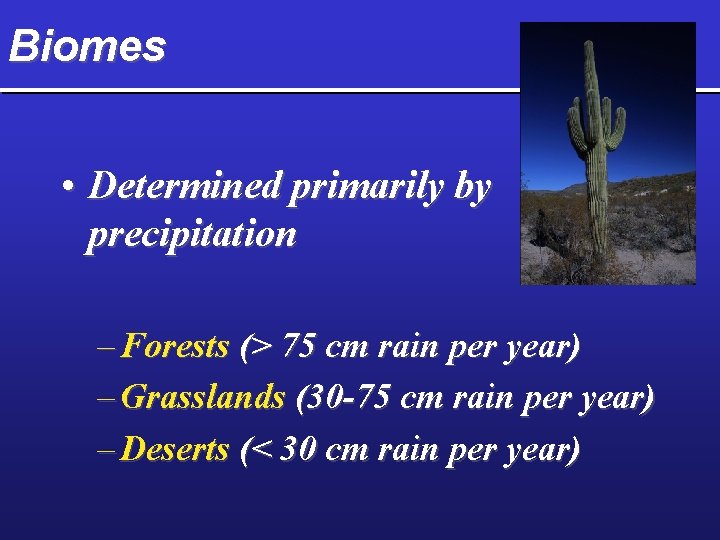
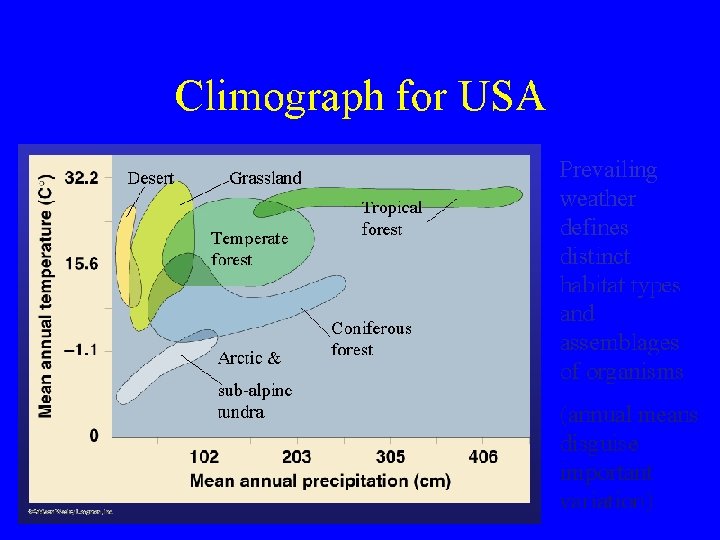
Biomes • Determined primarily by precipitation – Forests (> 75 cm rain per year) – Grasslands (30 -75 cm rain per year) – Deserts (< 30 cm rain per year)
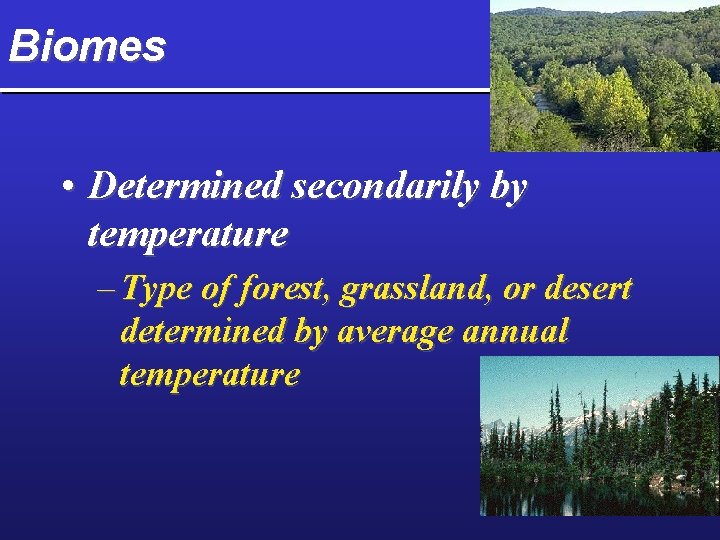
Biomes • Determined secondarily by temperature – Type of forest, grassland, or desert determined by average annual temperature
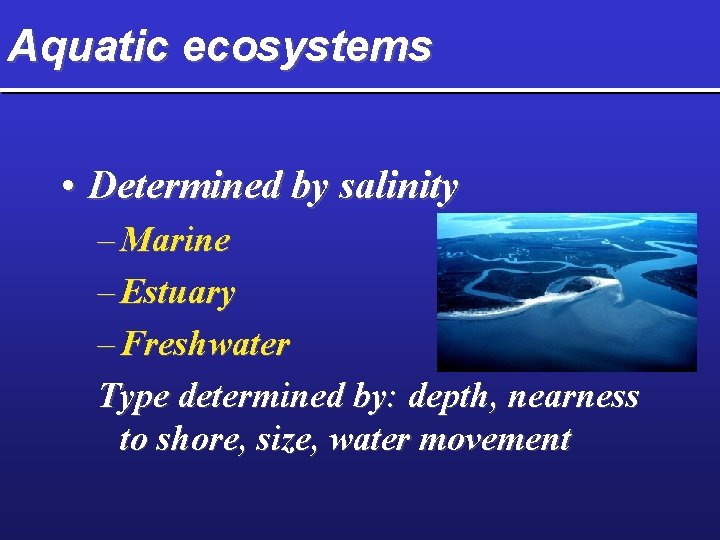
Aquatic ecosystems • Determined by salinity – Marine – Estuary – Freshwater Type determined by: depth, nearness to shore, size, water movement
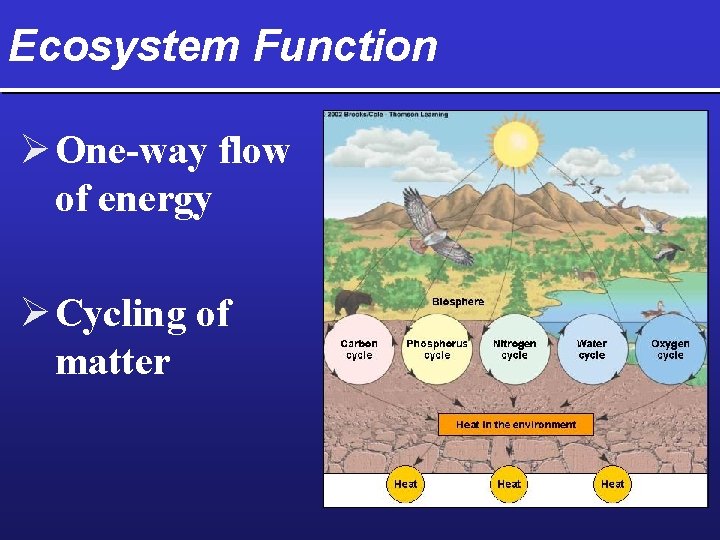
Ecosystem Function Ø One-way flow of energy Ø Cycling of matter
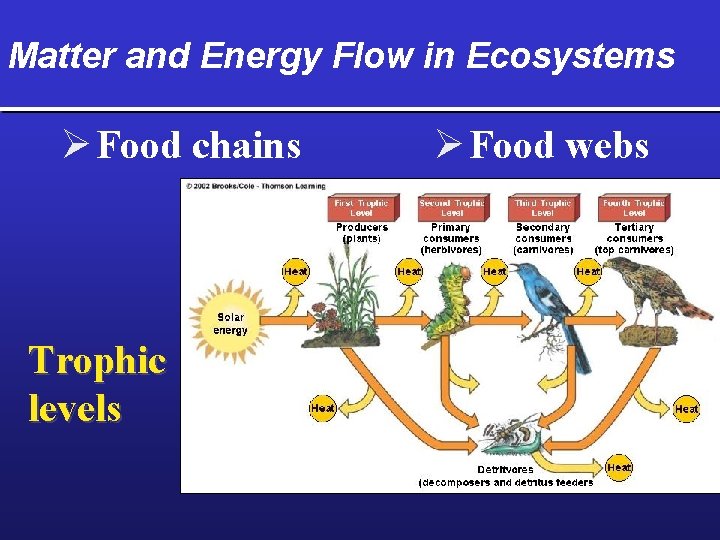
Matter and Energy Flow in Ecosystems Ø Food chains Trophic levels Ø Food webs
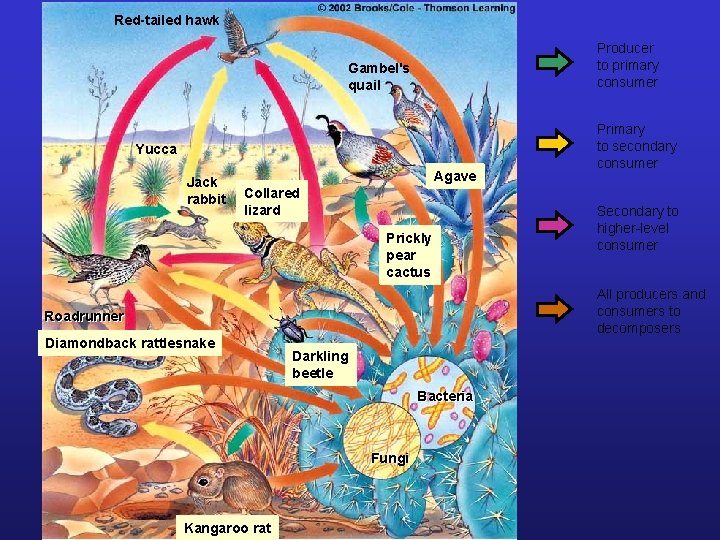
Red-tailed hawk Producer to primary consumer Gambel's quail Yucca Jack rabbit Agave Collared lizard Prickly pear cactus Darkling beetle Bacteria Fungi Kangaroo rat Secondary to higher-level consumer All producers and consumers to decomposers Roadrunner Diamondback rattlesnake Primary to secondary consumer
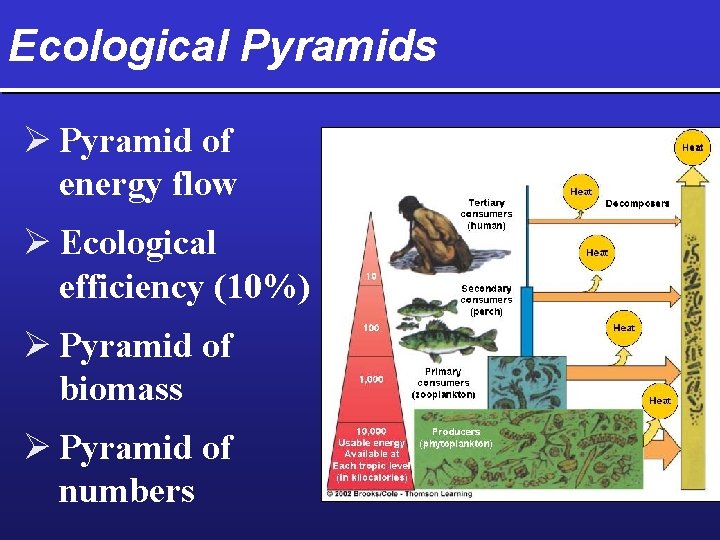
Ecological Pyramids Ø Pyramid of energy flow Ø Ecological efficiency (10%) Ø Pyramid of biomass Ø Pyramid of numbers
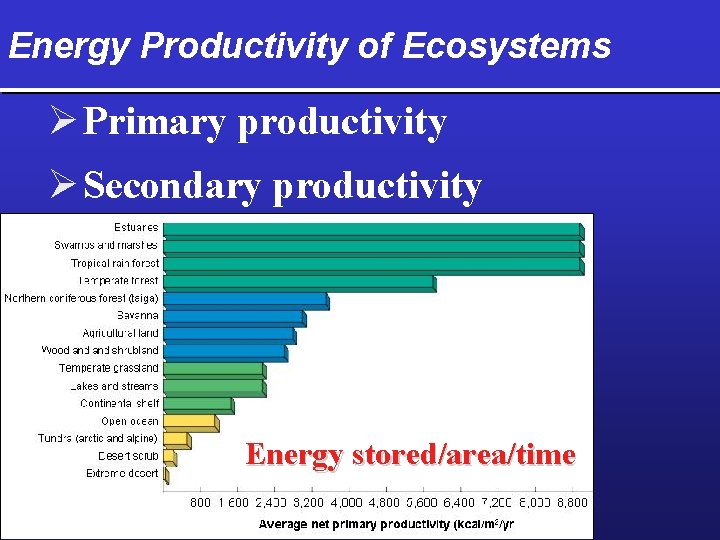
Energy Productivity of Ecosystems Ø Primary productivity Ø Secondary productivity Energy stored/area/time
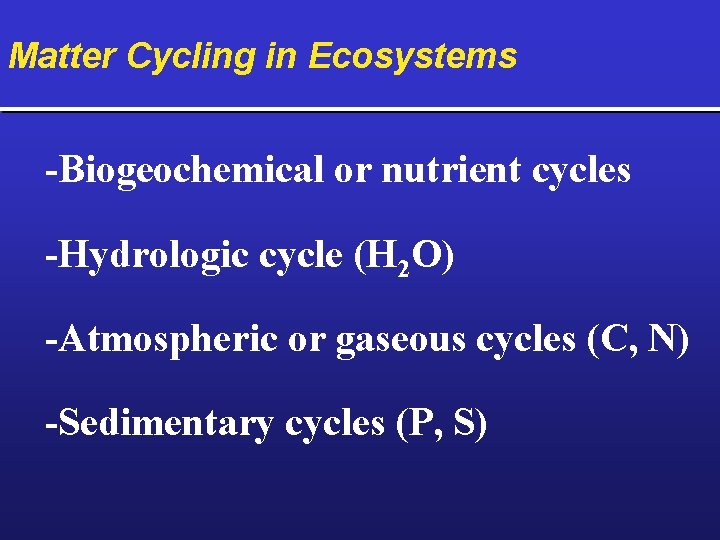
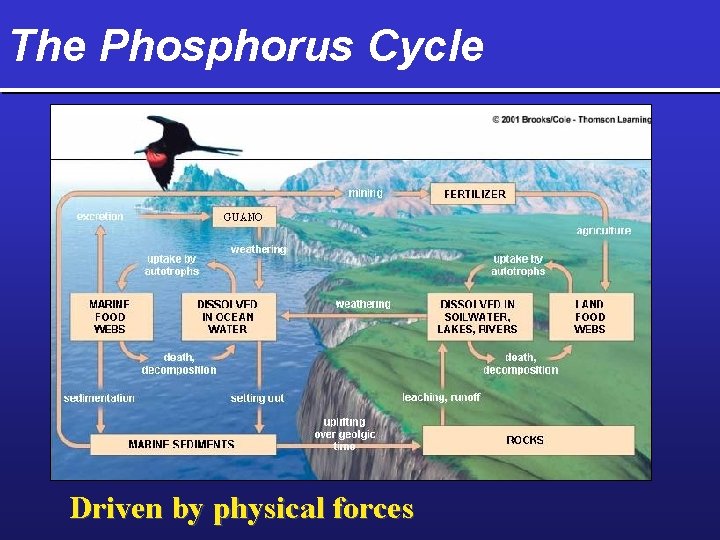
Matter Cycling in Ecosystems -Biogeochemical or nutrient cycles -Hydrologic cycle (H 2 O) -Atmospheric or gaseous cycles (C, N) -Sedimentary cycles (P, S)
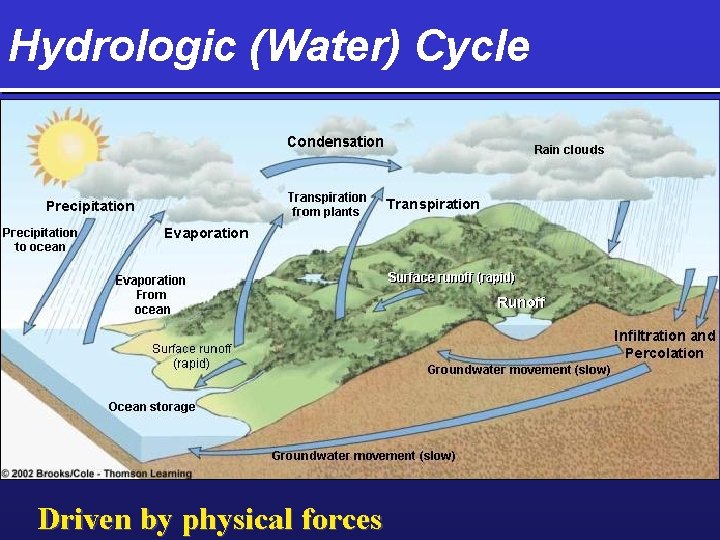
Hydrologic (Water) Cycle Driven by physical forces
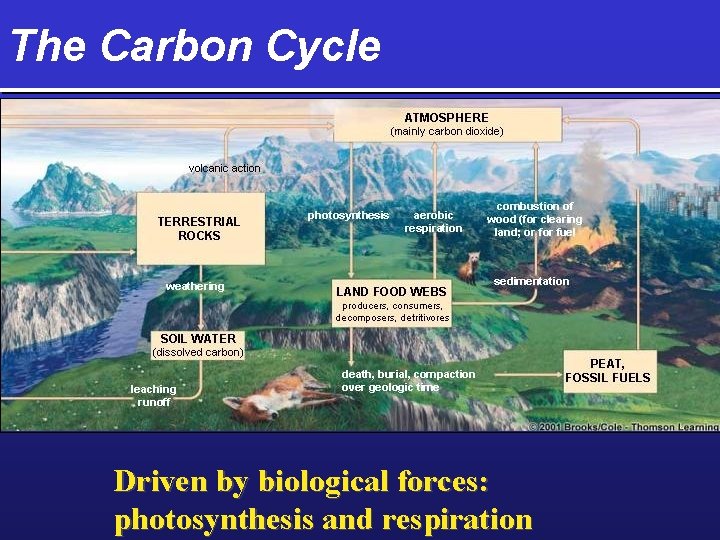
The Carbon Cycle Driven by biological forces: photosynthesis and respiration
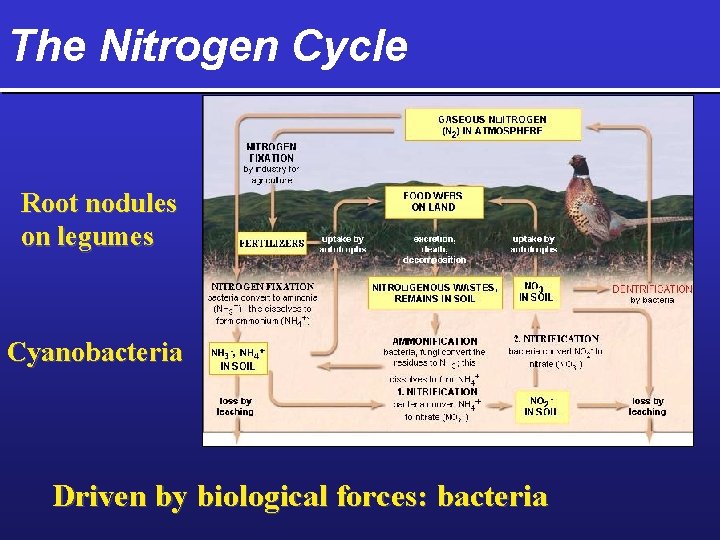
The Nitrogen Cycle Root nodules on legumes Cyanobacteria Driven by biological forces: bacteria
The Phosphorus Cycle Driven by physical forces
Community Change Ecological succession - gradual replacement of one kind of community of organisms by another over time -Initiated by disturbance
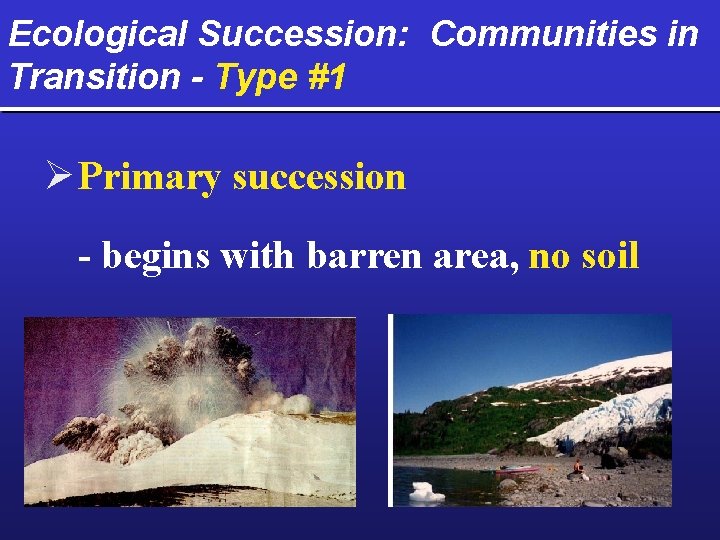
Ecological Succession: Communities in Transition - Type #1 Ø Primary succession - begins with barren area, no soil
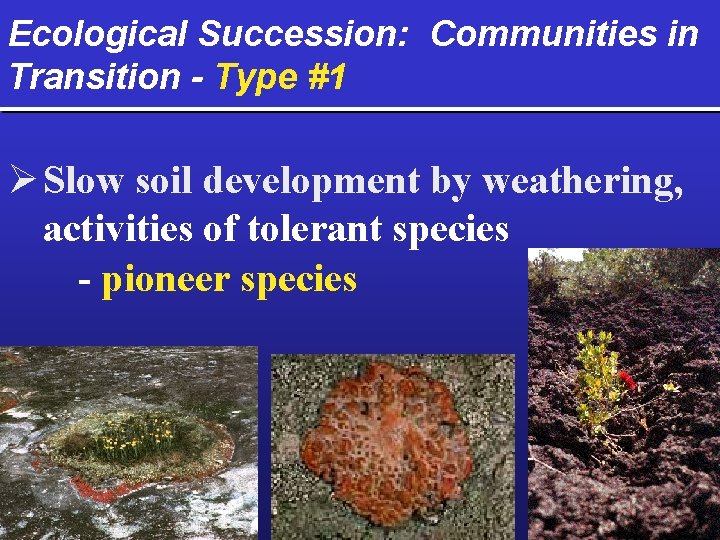
Ecological Succession: Communities in Transition - Type #1 Ø Slow soil development by weathering, activities of tolerant species - pioneer species
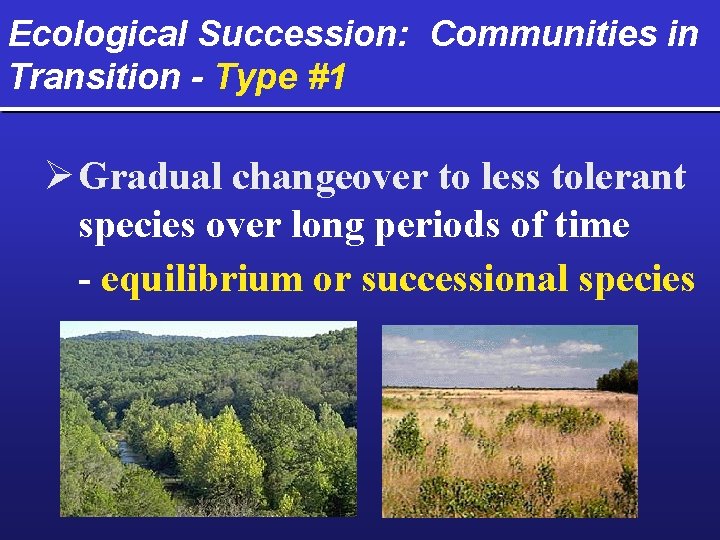
Ecological Succession: Communities in Transition - Type #1 Ø Gradual changeover to less tolerant species over long periods of time - equilibrium or successional species
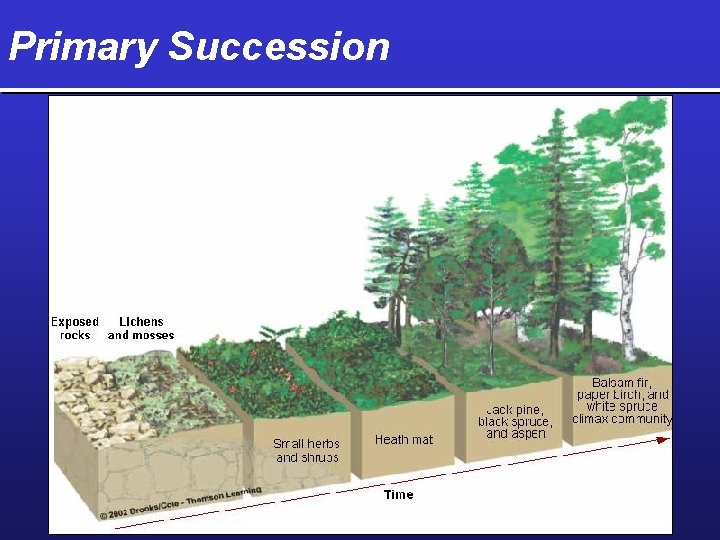
Primary Succession
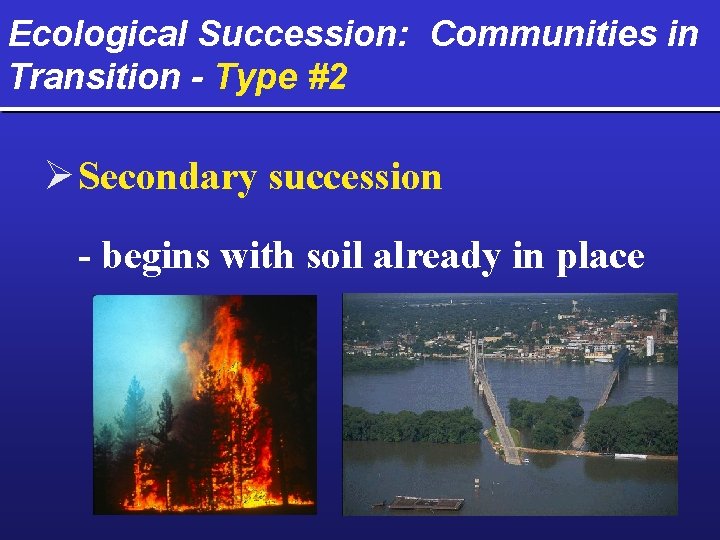
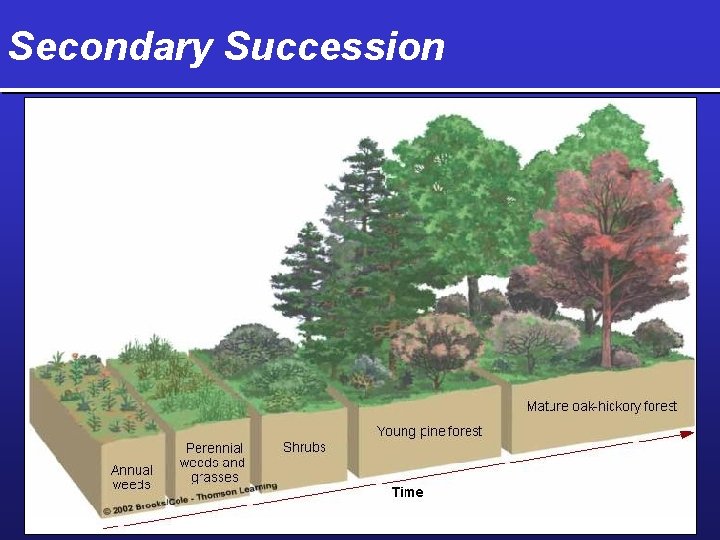
Ecological Succession: Communities in Transition - Type #2 Ø Secondary succession - begins with soil already in place
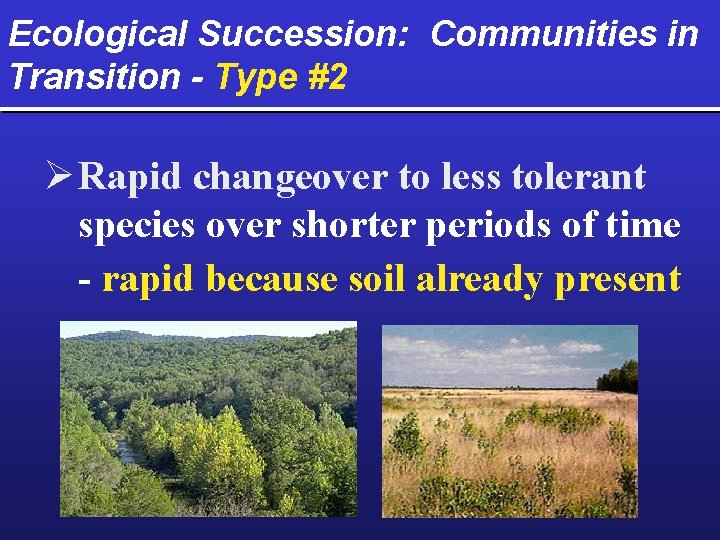
Ecological Succession: Communities in Transition - Type #2 Ø Rapid changeover to less tolerant species over shorter periods of time - rapid because soil already present
Secondary Succession
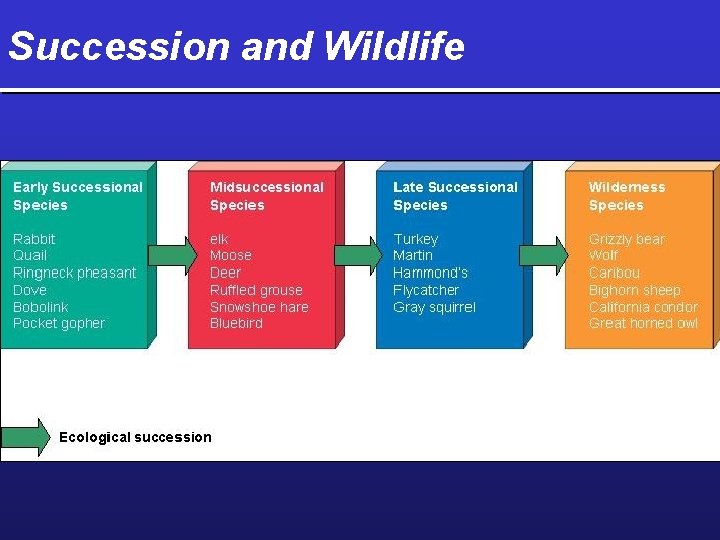
Succession and Wildlife
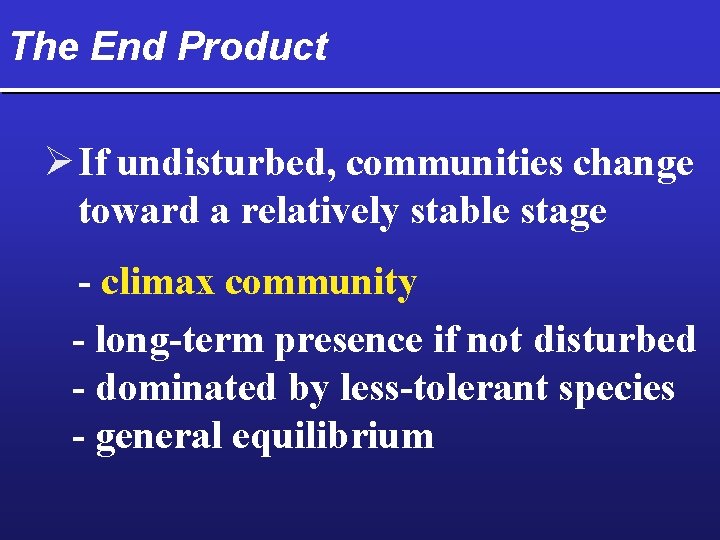
The End Product Ø If undisturbed, communities change toward a relatively stable stage - climax community - long-term presence if not disturbed - dominated by less-tolerant species - general equilibrium