
ECOSYSTEM SNAPSHOT DESERTS FEATURED POPULATION ROADRUNNERS ANIMAL FACTS
- Slides: 8
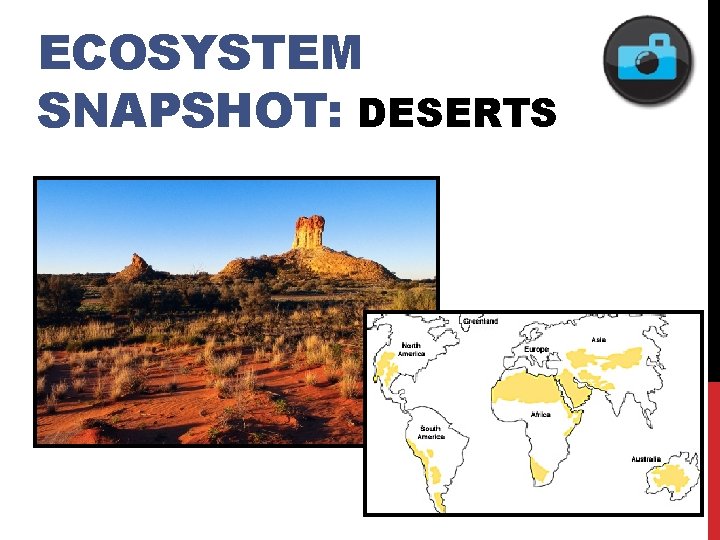
ECOSYSTEM SNAPSHOT: DESERTS
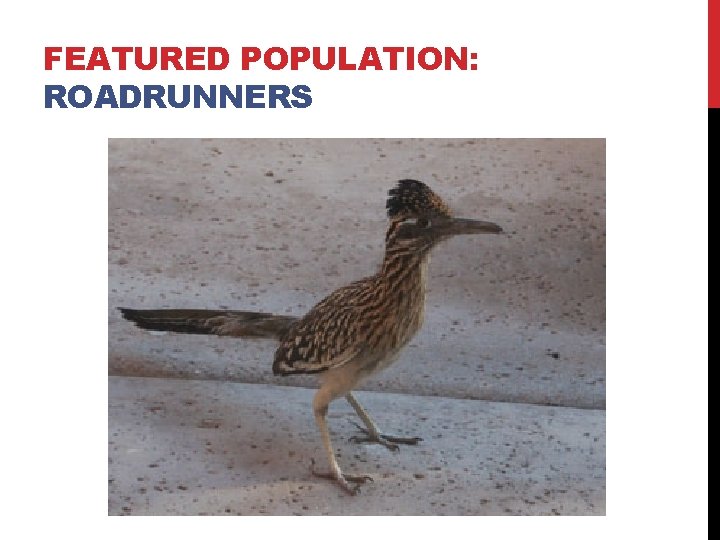
FEATURED POPULATION: ROADRUNNERS
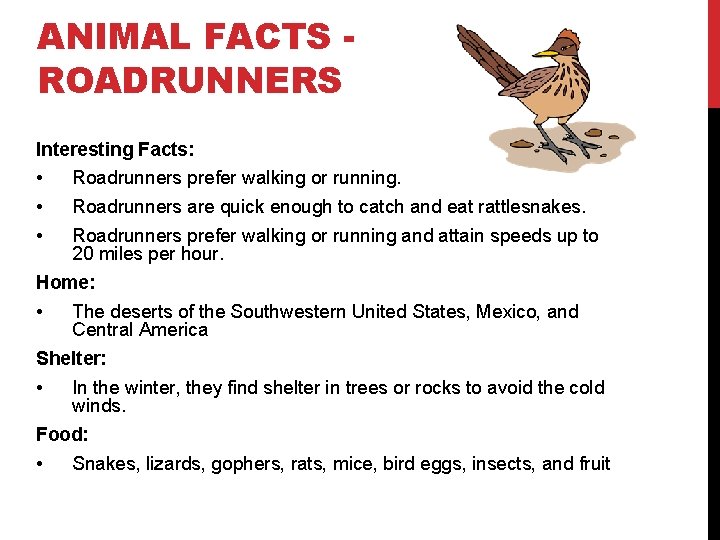
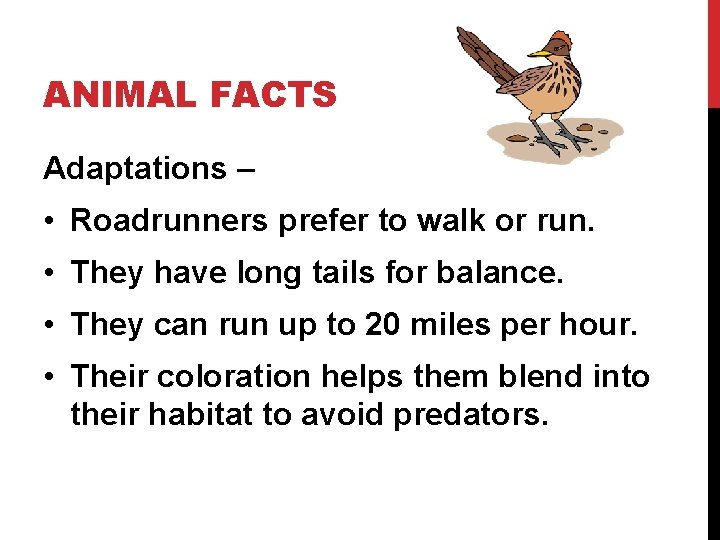
ANIMAL FACTS ROADRUNNERS Interesting Facts: • • • Roadrunners prefer walking or running. Roadrunners are quick enough to catch and eat rattlesnakes. Roadrunners prefer walking or running and attain speeds up to 20 miles per hour. Home: • The deserts of the Southwestern United States, Mexico, and Central America Shelter: • In the winter, they find shelter in trees or rocks to avoid the cold winds. Food: • Snakes, lizards, gophers, rats, mice, bird eggs, insects, and fruit
ROADRUNNERS: BASIC NEEDS Basic Needs • • air water shelter food Shelter • trees • rocks Food • snakes, lizards, gophers, rats, mice, bird eggs, insects, and fruit
ANIMAL FACTS Adaptations – • Roadrunners prefer to walk or run. • They have long tails for balance. • They can run up to 20 miles per hour. • Their coloration helps them blend into their habitat to avoid predators.
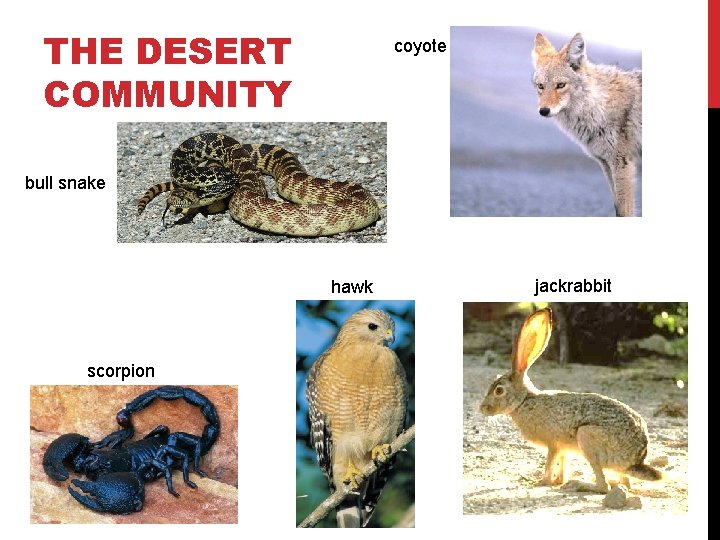
THE DESERT COMMUNITY coyote bull snake hawk scorpion jackrabbit
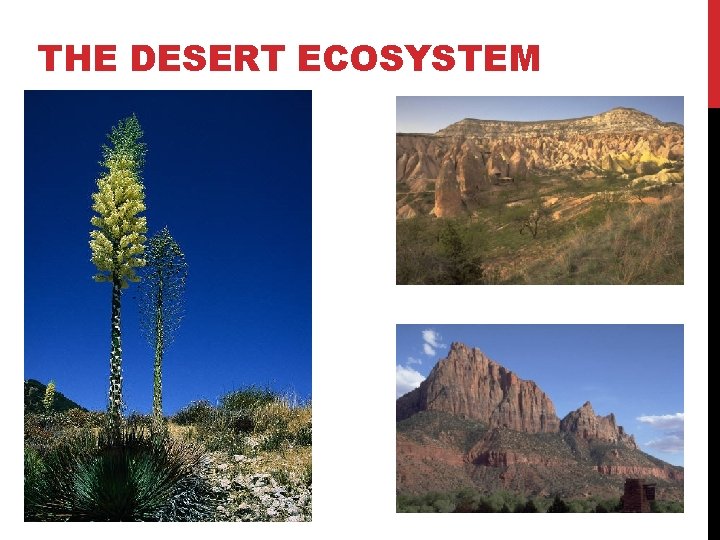
THE DESERT ECOSYSTEM
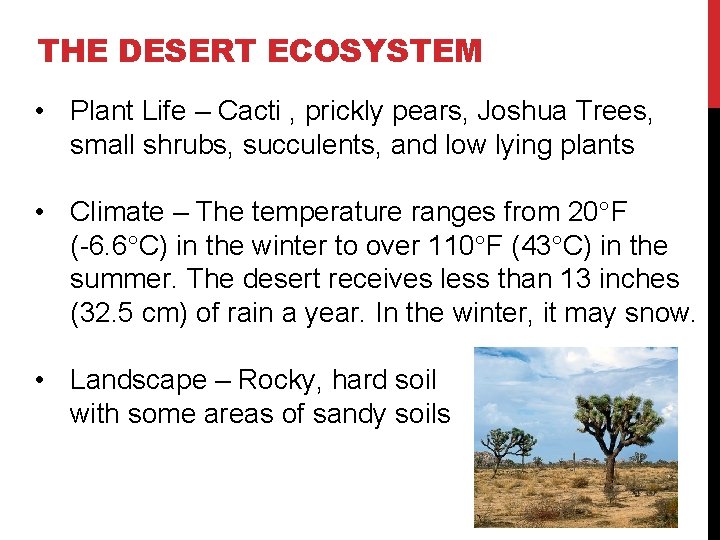
THE DESERT ECOSYSTEM • Plant Life – Cacti , prickly pears, Joshua Trees, small shrubs, succulents, and low lying plants • Climate – The temperature ranges from 20 F (-6. 6 C) in the winter to over 110 F (43 C) in the summer. The desert receives less than 13 inches (32. 5 cm) of rain a year. In the winter, it may snow. • Landscape – Rocky, hard soil with some areas of sandy soils