
Ecosystem Processes ECOSYSTEM DEFINITION Populations and communities of
- Slides: 10
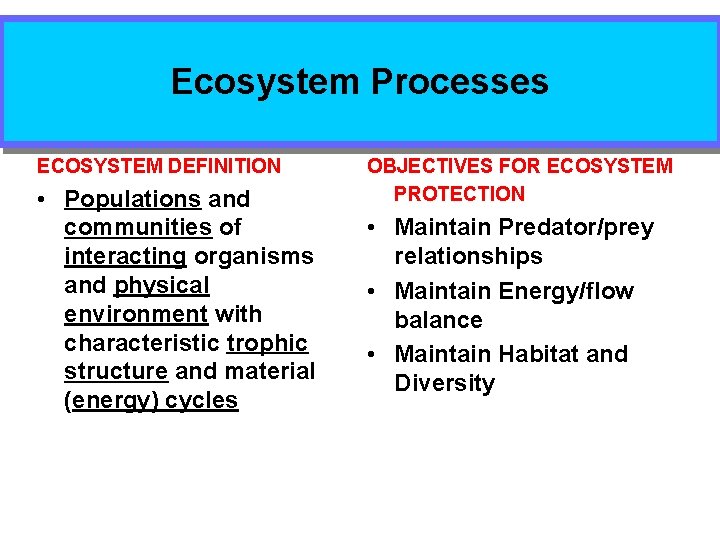
Ecosystem Processes ECOSYSTEM DEFINITION • Populations and communities of interacting organisms and physical environment with characteristic trophic structure and material (energy) cycles OBJECTIVES FOR ECOSYSTEM PROTECTION • Maintain Predator/prey relationships • Maintain Energy/flow balance • Maintain Habitat and Diversity
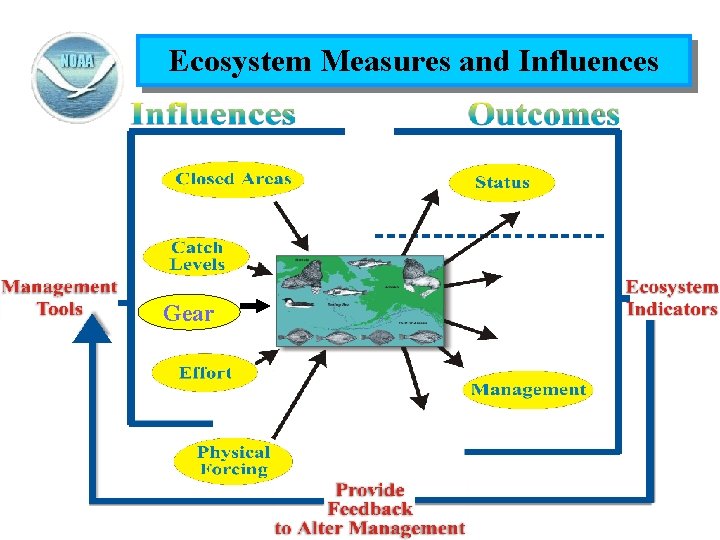
Ecosystem Measures and Influences Gear
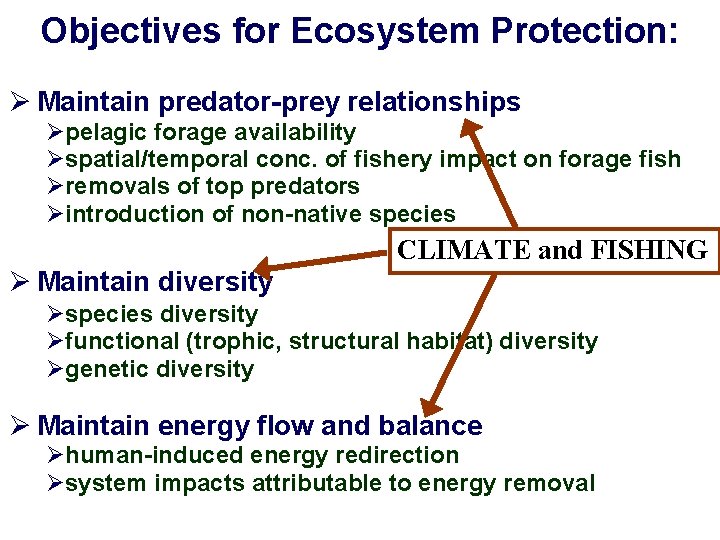
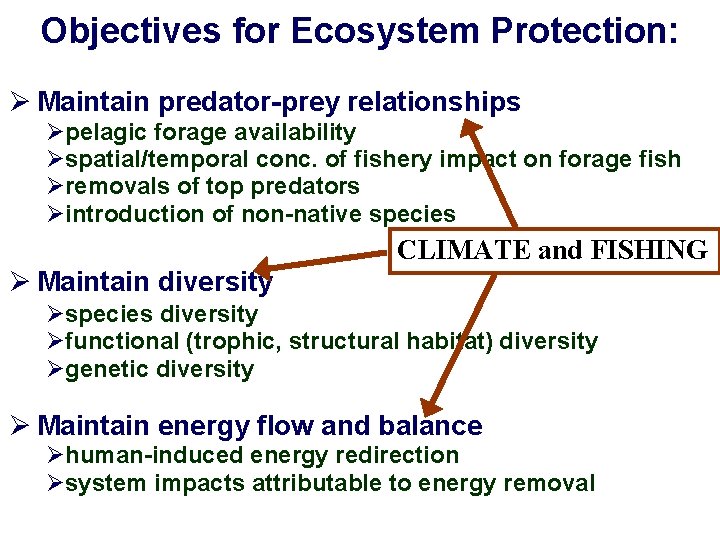
Objectives for Ecosystem Protection: Ø Maintain predator-prey relationships Øpelagic forage availability Øspatial/temporal conc. of fishery impact on forage fish Øremovals of top predators Øintroduction of non-native species CLIMATE and FISHING Ø Maintain diversity Øspecies diversity Øfunctional (trophic, structural habitat) diversity Øgenetic diversity Ø Maintain energy flow and balance Øhuman-induced energy redirection Øsystem impacts attributable to energy removal
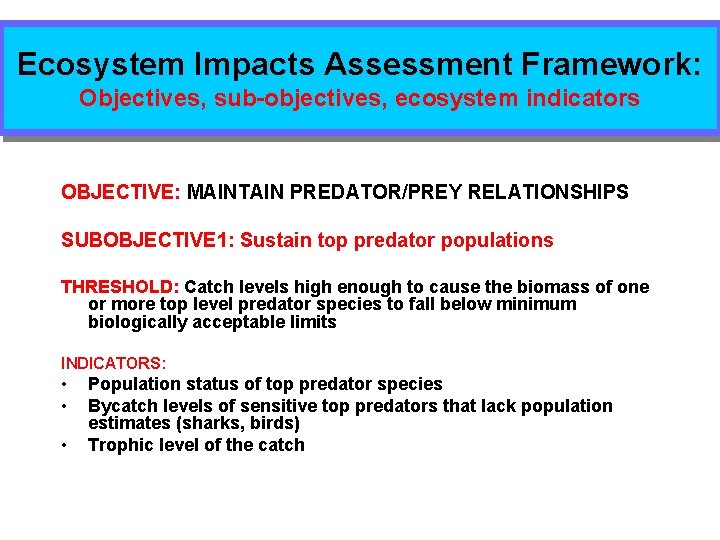
Ecosystem Impacts Assessment Framework: Objectives, sub-objectives, ecosystem indicators OBJECTIVE: MAINTAIN PREDATOR/PREY RELATIONSHIPS SUBOBJECTIVE 1: Sustain top predator populations THRESHOLD: Catch levels high enough to cause the biomass of one or more top level predator species to fall below minimum biologically acceptable limits INDICATORS: • • • Population status of top predator species Bycatch levels of sensitive top predators that lack population estimates (sharks, birds) Trophic level of the catch
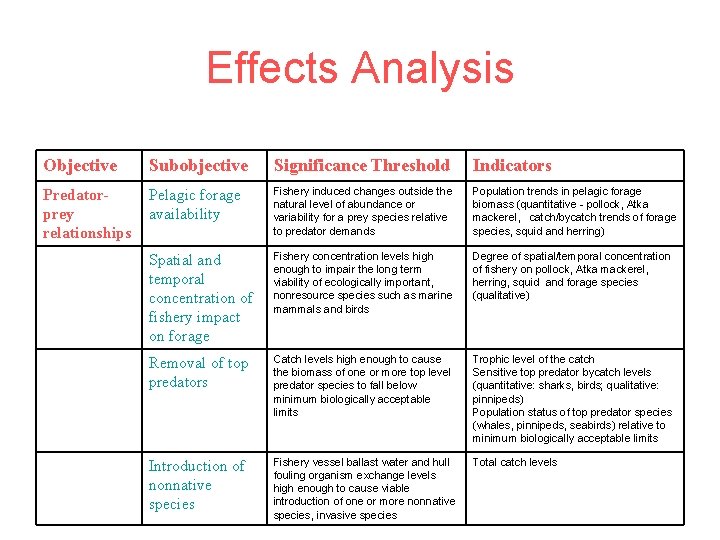
Effects Analysis Objective Subobjective Significance Threshold Indicators Predatorprey relationships Pelagic forage availability Fishery induced changes outside the natural level of abundance or variability for a prey species relative to predator demands Population trends in pelagic forage biomass (quantitative - pollock, Atka mackerel, catch/bycatch trends of forage species, squid and herring) Spatial and temporal concentration of fishery impact on forage Fishery concentration levels high enough to impair the long term viability of ecologically important, nonresource species such as marine mammals and birds Degree of spatial/temporal concentration of fishery on pollock, Atka mackerel, herring, squid and forage species (qualitative) Removal of top predators Catch levels high enough to cause the biomass of one or more top level predator species to fall below minimum biologically acceptable limits Trophic level of the catch Sensitive top predator bycatch levels (quantitative: sharks, birds; qualitative: pinnipeds) Population status of top predator species (whales, pinnipeds, seabirds) relative to minimum biologically acceptable limits Introduction of nonnative species Fishery vessel ballast water and hull fouling organism exchange levels high enough to cause viable introduction of one or more nonnative species, invasive species Total catch levels
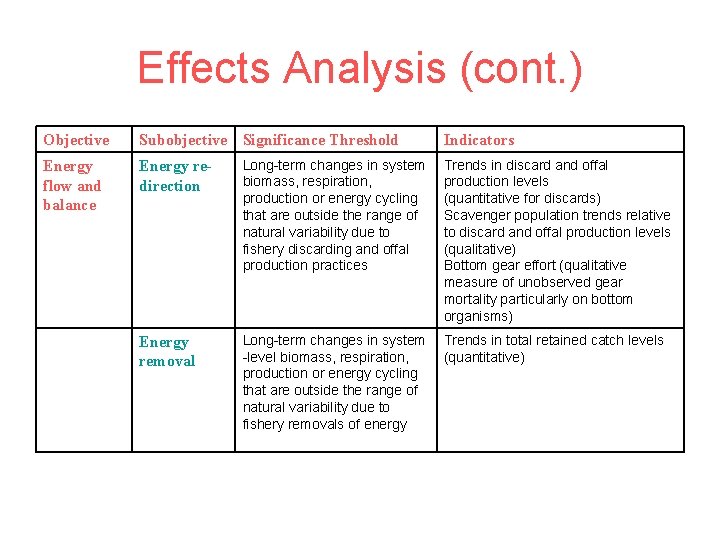
Effects Analysis (cont. ) Objective Subobjective Significance Threshold Indicators Energy flow and balance Energy redirection Long-term changes in system biomass, respiration, production or energy cycling that are outside the range of natural variability due to fishery discarding and offal production practices Trends in discard and offal production levels (quantitative for discards) Scavenger population trends relative to discard and offal production levels (qualitative) Bottom gear effort (qualitative measure of unobserved gear mortality particularly on bottom organisms) Energy removal Long-term changes in system -level biomass, respiration, production or energy cycling that are outside the range of natural variability due to fishery removals of energy Trends in total retained catch levels (quantitative)
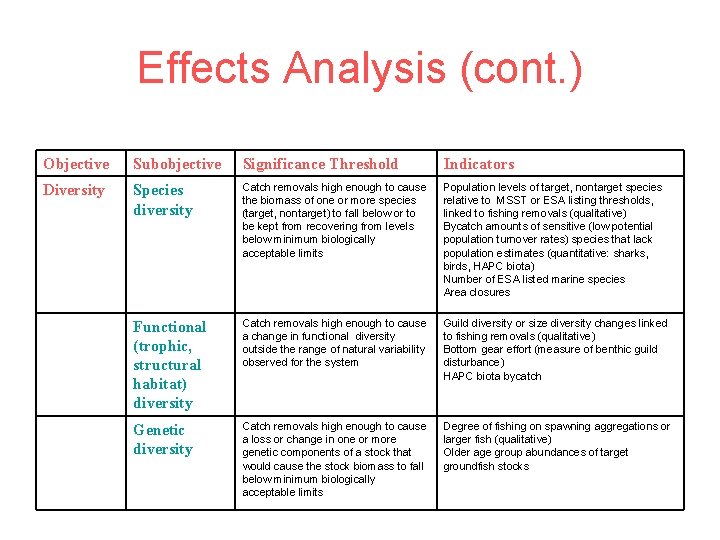
Effects Analysis (cont. ) Objective Subobjective Significance Threshold Indicators Diversity Species diversity Catch removals high enough to cause the biomass of one or more species (target, nontarget) to fall below or to be kept from recovering from levels below minimum biologically acceptable limits Population levels of target, nontarget species relative to MSST or ESA listing thresholds, linked to fishing removals (qualitative) Bycatch amounts of sensitive (low potential population turnover rates) species that lack population estimates (quantitative: sharks, birds, HAPC biota) Number of ESA listed marine species Area closures Functional (trophic, structural habitat) diversity Catch removals high enough to cause a change in functional diversity outside the range of natural variability observed for the system Guild diversity or size diversity changes linked to fishing removals (qualitative) Bottom gear effort (measure of benthic guild disturbance) HAPC biota bycatch Genetic diversity Catch removals high enough to cause a loss or change in one or more genetic components of a stock that would cause the stock biomass to fall below minimum biologically acceptable limits Degree of fishing on spawning aggregations or larger fish (qualitative) Older age group abundances of target groundfish stocks
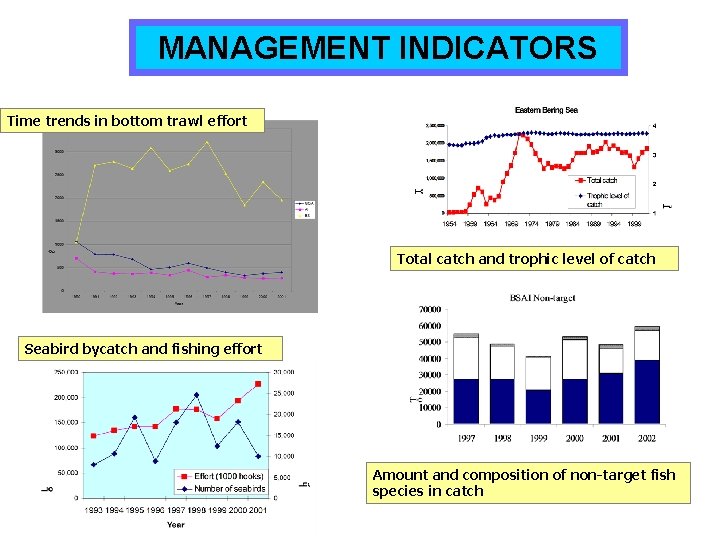
MANAGEMENT INDICATORS Time trends in bottom trawl effort Total catch and trophic level of catch Seabird bycatch and fishing effort Amount and composition of non-target fish species in catch
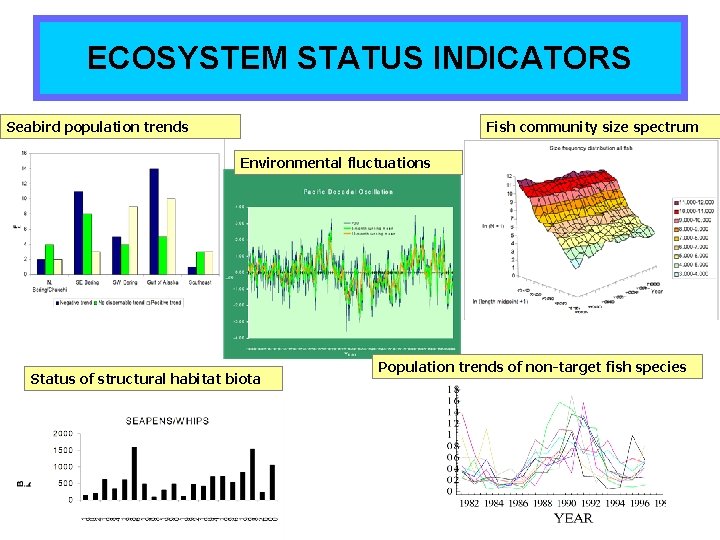
ECOSYSTEM STATUS INDICATORS Seabird population trends Fish community size spectrum Environmental fluctuations Status of structural habitat biota Population trends of non-target fish species
Objectives for Ecosystem Protection: Ø Maintain predator-prey relationships Øpelagic forage availability Øspatial/temporal conc. of fishery impact on forage fish Øremovals of top predators Øintroduction of non-native species CLIMATE and FISHING Ø Maintain diversity Øspecies diversity Øfunctional (trophic, structural habitat) diversity Øgenetic diversity Ø Maintain energy flow and balance Øhuman-induced energy redirection Øsystem impacts attributable to energy removal