
ECOSYSTEM Presented By Dr Swati Dixit 1 Concept
ECOSYSTEM Presented By: Dr. Swati Dixit 1
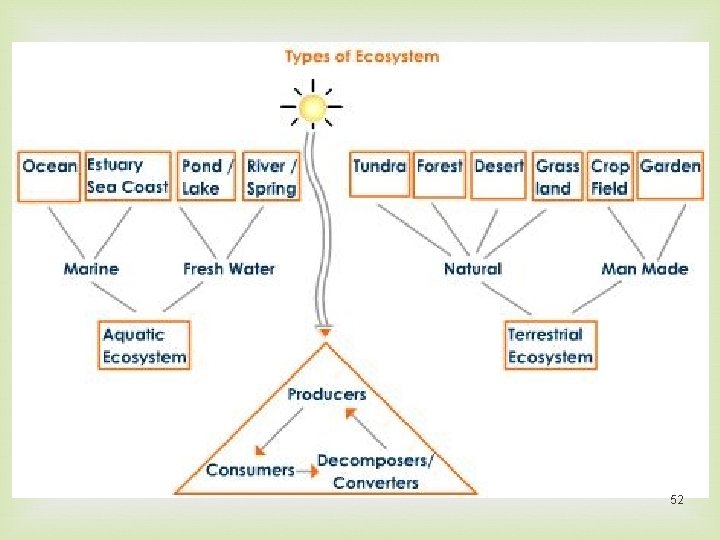
Concept of Ecosystem There are many supporting systems like Forests, oceans, grasslands, deserts which have structural components and functions. They all have living organisms interacting with their surroundings exchanging matter and energy. The word Ecology was coined by Earnest Haeckel in 1869 from Greek Words: Oikos (Home) + Logos(study) So ecology is study of organisms in their natural home interacting with the biotic and abiotic components (Surroundings) 2
What is Ecosystem? ? ? An Ecosystem is a self regulating group of biotic communities of species interacting with one another with their non-living environment exchanging energy and matter. Therefore Ecology can be termed as--“Study Of Ecosystems” 3
Continue…. . Ecosystem is a unit or a system which is composed of no. of sub-units They may exchange energy & matter from outside – is an Open Ecosystem; or isolated from outside in a closed one. The Closed once are generally artificial. Eg. Biosphere 2, in Oracle, Arizona Life on earth is sustained by the flow of energy from sun & cycling of nutrients 4
Characteristics of an Ecosystem Structure of ecosystem Biotic Structure Abiotic Structure Functions of Ecosystem Trophic Structure Food Chains Food Web Ecological Pyramids Energy Flow Nutrient Flow Ecological Succession Types of Ecosystems 5

Structure of Ecosystems 6
Biotic Components A) Producers- they produce their own food either by process of Photosynthesis or by Chemical Process Plants produce food by Photosynthesis(using sun, CO 2 and water) in presence of Chlorophyll. Thus they are also called as Autotrophs There are some micro-organisms which produce organic matter to some extent by oxidation of certain chemicals in absence of sunlight. They are called as Chemosynthetic or Chemotrophs 7
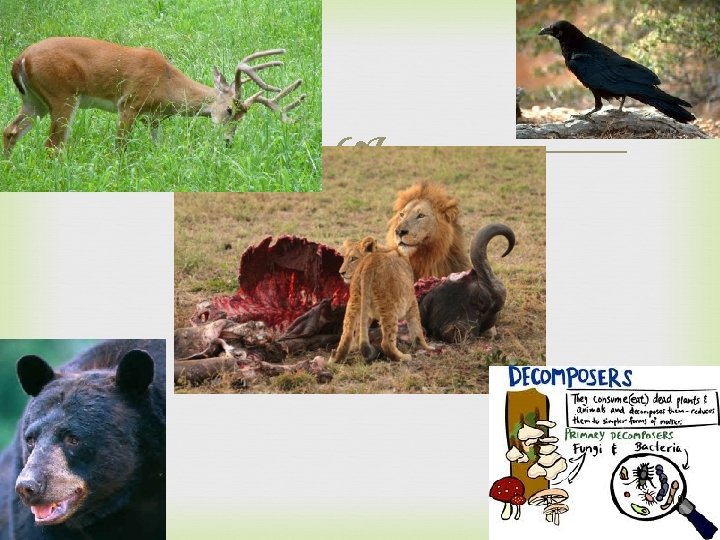
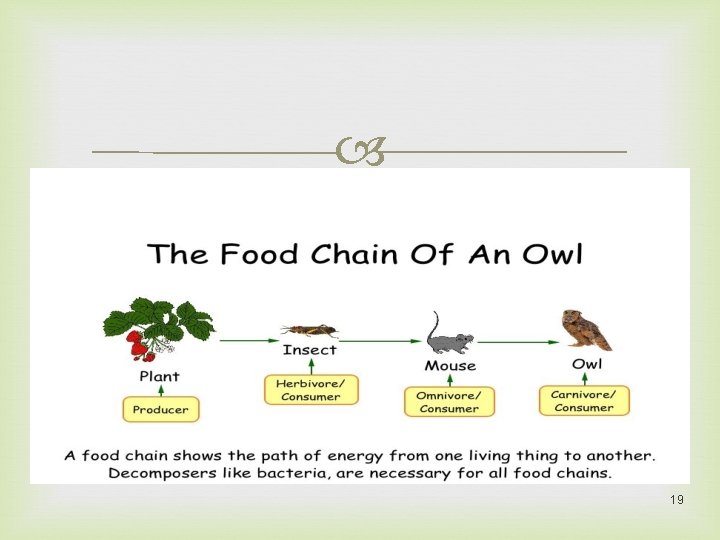
Biotic Components B) Consumers : All organisms which get their food by feeding on other organisms are called as Consumers Herbivores- Feed on producers (plant eaters)also called as Primary Consumers Carnivores- Feed on other consumers If they feed on Herbivores- Secondary Consumers – eg frog If they feed on Carnivores – tertiary Carnivores/ Consumers- eg. Snake, Big Fish Omnivores- They feed on plants and animals- Man, many birds, fox Detrivores- They feed on parts of dead organisms, wastes of living organisms. Also known as Saprotrophs or Detritus feeders 8
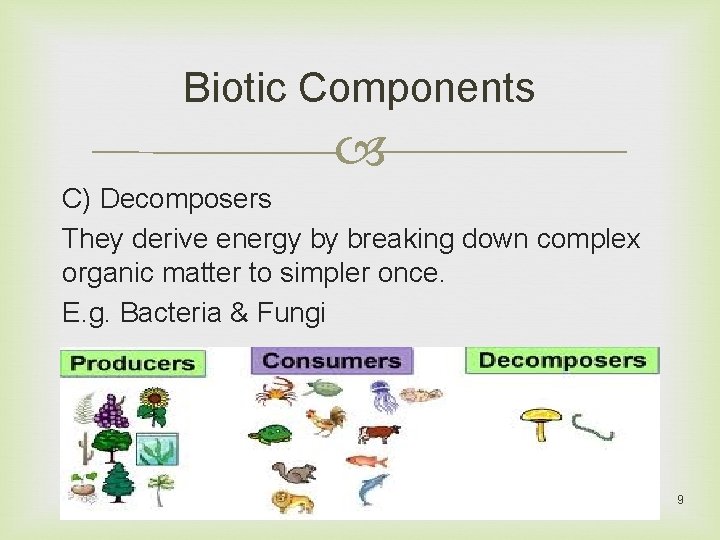
Biotic Components C) Decomposers They derive energy by breaking down complex organic matter to simpler once. E. g. Bacteria & Fungi 9
10
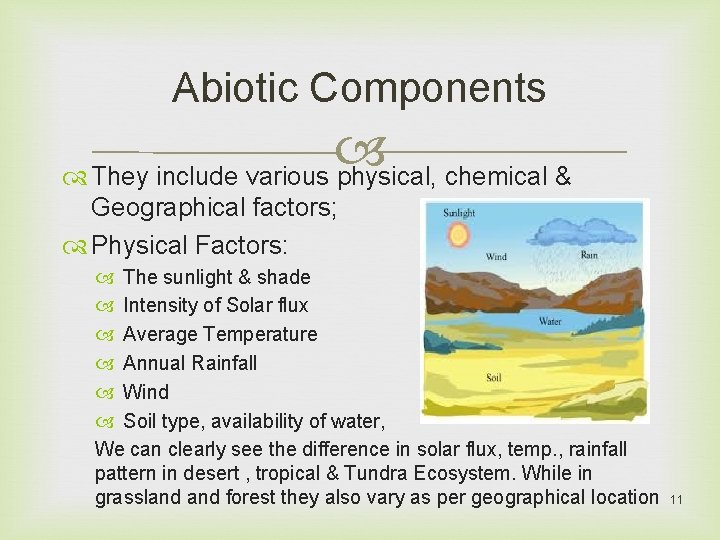
Abiotic Components They include various physical, chemical & Geographical factors; Physical Factors: The sunlight & shade Intensity of Solar flux Average Temperature Annual Rainfall Wind Soil type, availability of water, We can clearly see the difference in solar flux, temp. , rainfall pattern in desert , tropical & Tundra Ecosystem. While in grassland forest they also vary as per geographical location 11
Abiotic Components Chemical Factors They include availability of nutrients like Nitrogen, Phosphorus, Carbon, Hydrogen, potassium, Oxygen, sulphur, levels of toxic substances, salts causing salinity influence the function of ecosystem. Geographical Factors Latitude, Longitude and altitude 12

Nutrient Cycling & Energy Flow 13
Functions of Ecosystems: Trophic structure In ecosystems energy and matter exchange occurs in a definite pattern. Nutrients and energy move along food chain Producers, consumers are arranged in a specific manner and their interaction along with population size is called as Trophic structure and the level as Trophic Level. And the amount of living matter at each level is called Standing Crop or Standing Biomass 14
Food chain The sequence of eating and being eaten is known as food chain. Someone is the food of other. Two major food chains Grazing- Starts from producers that is green plants – terrestrial, marine, pond ecosystem Detritus- Starts with dead organic matter- Mangrove Ecosystem 15
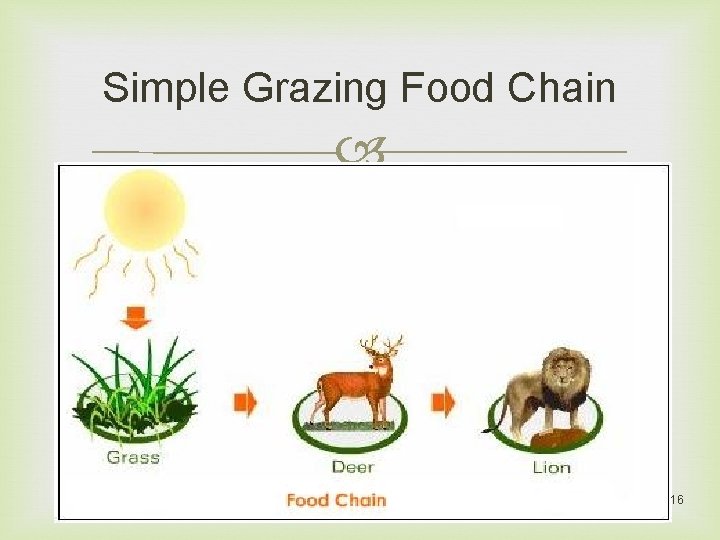
Simple Grazing Food Chain 16

Grazing food chain Terrestrial Food Chain 17
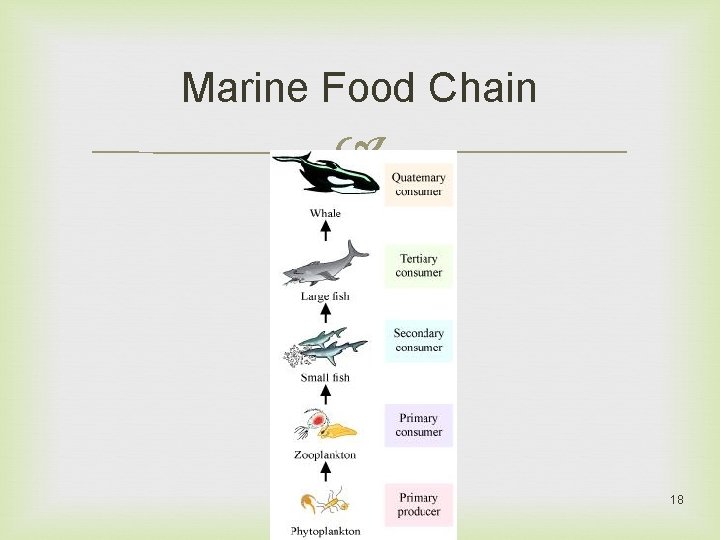
Marine Food Chain 18
19

Detritus food chain 20
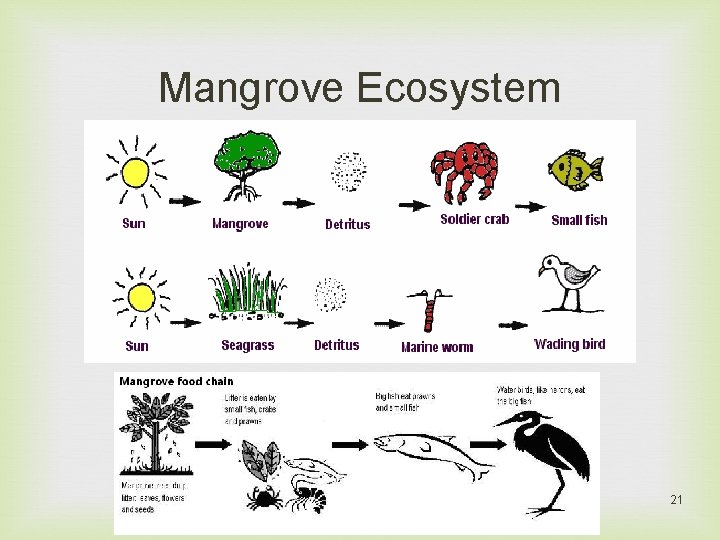
Mangrove Ecosystem 21

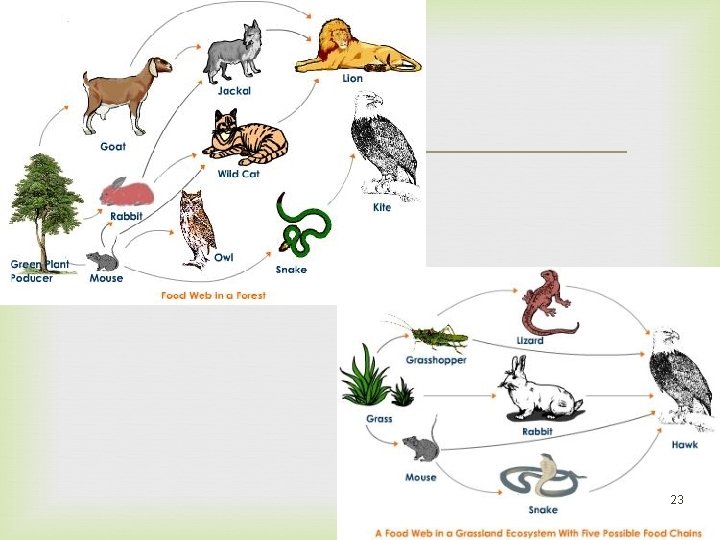
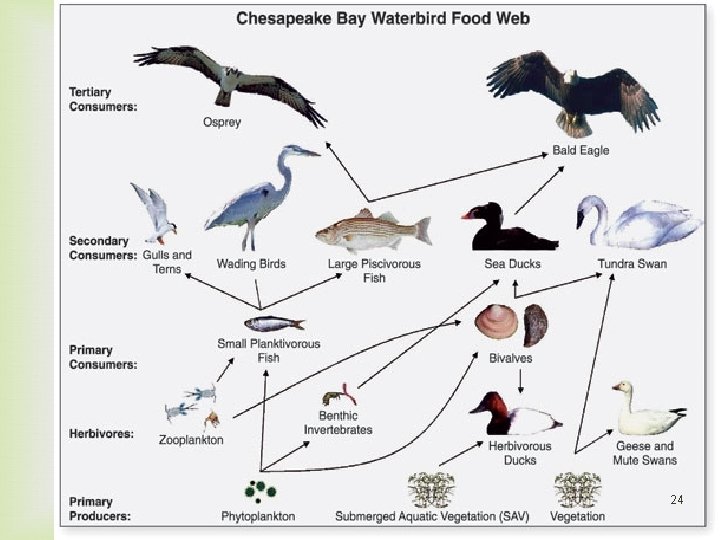
Food web No food chain is isolated. Organisms act at various levels in different food chains. Feed on more than one type of organism. Form a Complex Food Web. Thus, “Food Web - is a network of food chains where different types of organisms are connected at different trophic levels” so that there a no. of options of eating and being eaten at each trophic level 22
23
24
Significance: Food chain and Food Web Energy and nutrient flow Maintain population of different species and thus maintain Ecological Balance Bio magnification: a rather harmful phenomenon. Eg: build up of DDT in higher animals. (Case Study- Pesticides - Diclofenac in Vultures. ) 25
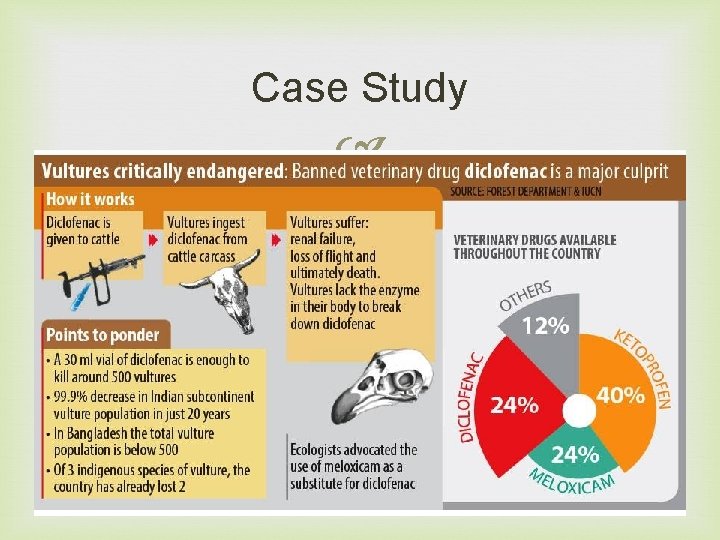
Case Study 26
Ecological Pyramids Graphic representation of trophic structure and function of ecosystem Starts with producers at the base and consumers at successive levels towards apex is called as an “Ecological Pyramid” They are of 3 Types: Pyramids of Numbers Pyramids of Biomass Pyramid of Energy 27
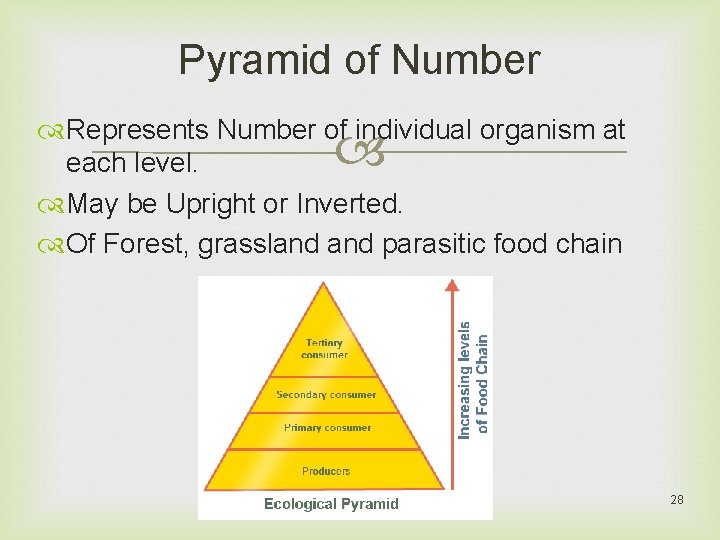
Pyramid of Number Represents Number of individual organism at each level. May be Upright or Inverted. Of Forest, grassland parasitic food chain 28

Upright – Grassland & Pond 29 Inverted- Parasitic food Chain Narrow Pyramid- Forest
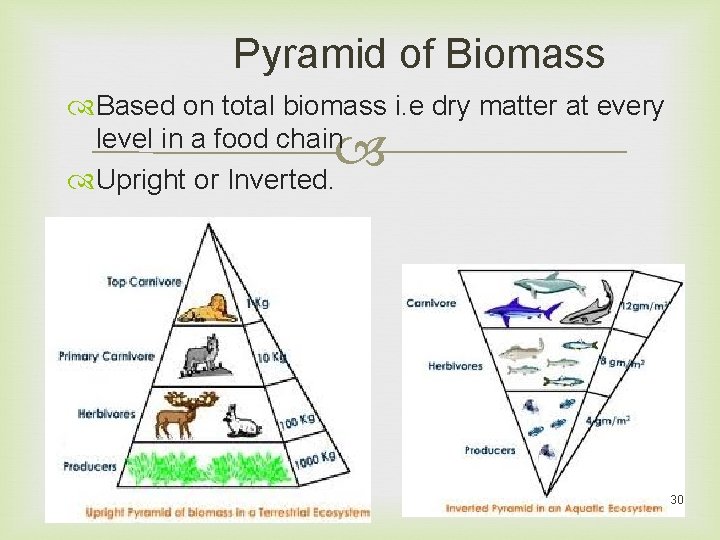
Pyramid of Biomass Based on total biomass i. e dry matter at every level in a food chain Upright or Inverted. 30
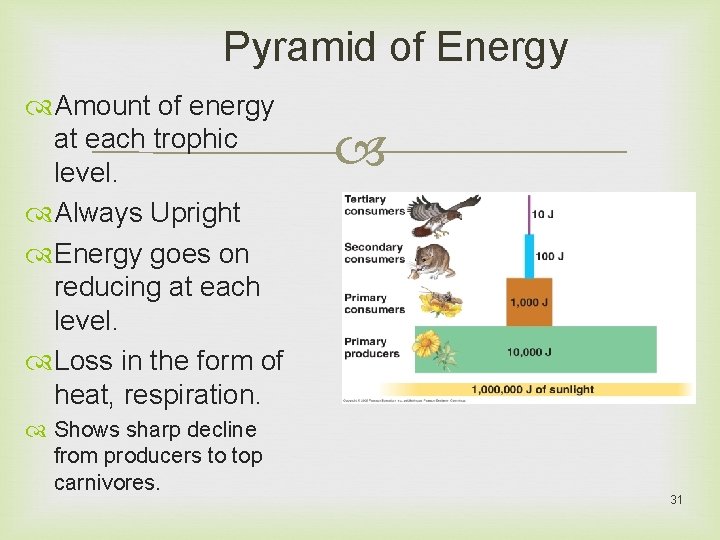
Pyramid of Energy Amount of energy at each trophic level. Always Upright Energy goes on reducing at each level. Loss in the form of heat, respiration. Shows sharp decline from producers to top carnivores. 31
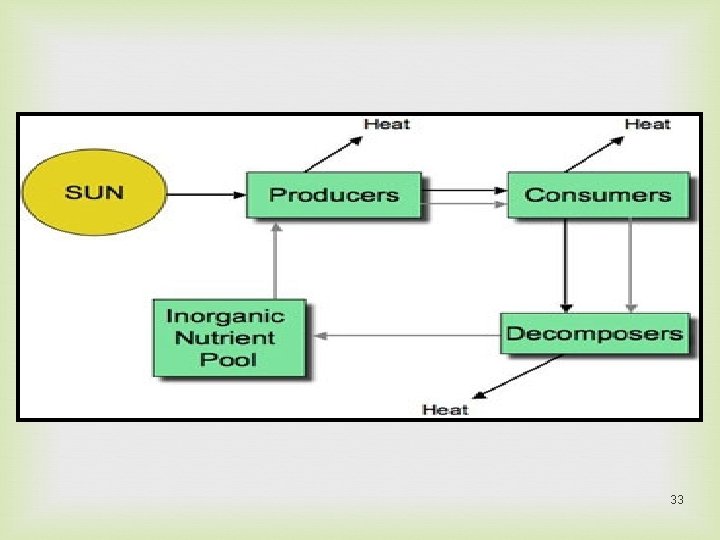
Energy Flow Energy flow in an ecosystem is Unidirectional Source of energy is sun Plants convert this energy into chemical energy Energy is lost in body functions like respiration Available passes to next trophic level Follows two laws of thermodynamics 1 st Law: Energy can neither be created nor destroyed, it can be converted from one form to another 2 nd Law: energy dissipates as it is used. Energy flow models: explain the flow of energy 32
33

Universal energy flow model Explained by ecologist E. P. Odum Says, as flow of energy takes place there is a gradual decrease in energy. Thus less energy is available at each trophic level. Loss occurs by use in locomotion, excretion, respiration Rest is stored as biomass and passes further 34
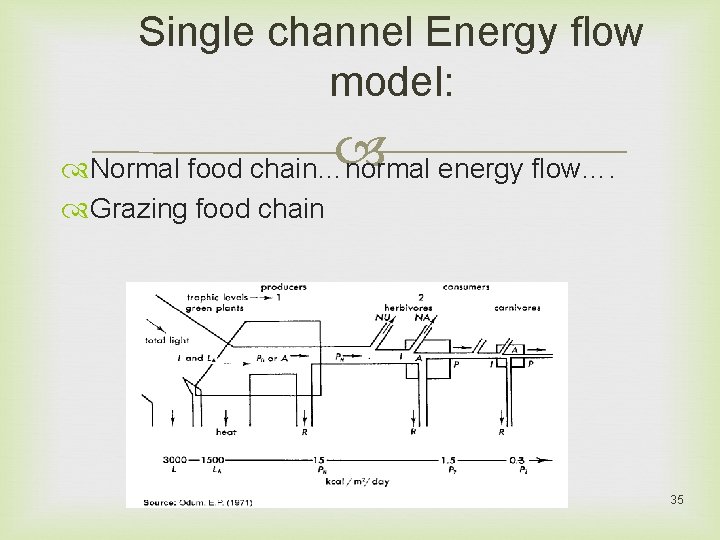
Single channel Energy flow model: Normal food chain…normal energy flow…. Grazing food chain 35
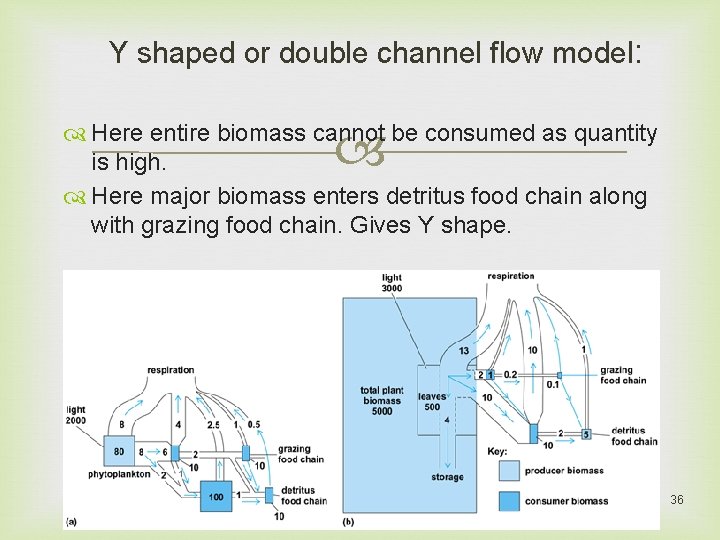
Y shaped or double channel flow model: Here entire biomass cannot be consumed as quantity is high. Here major biomass enters detritus food chain along with grazing food chain. Gives Y shape. 36
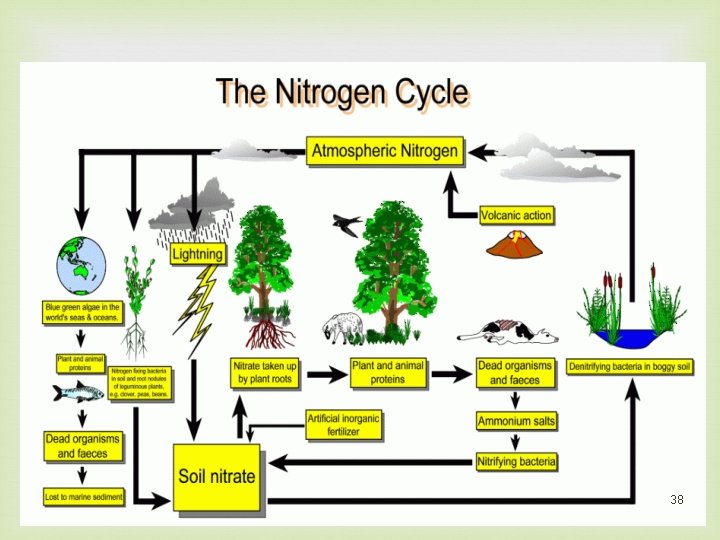
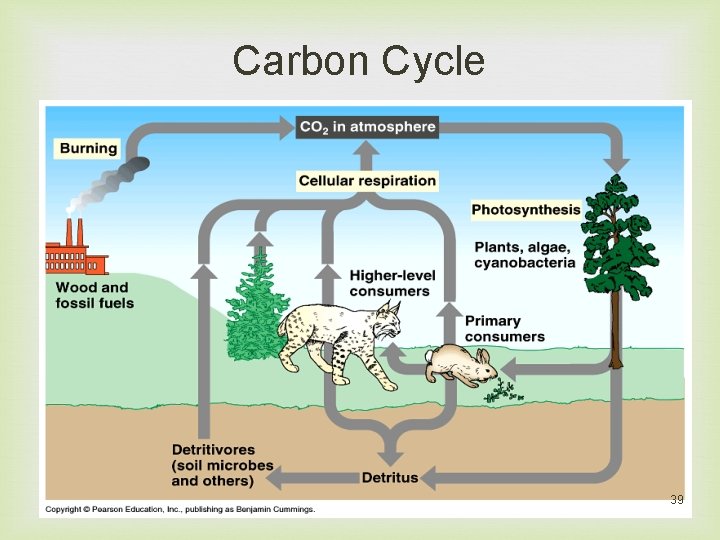
Nutrient Cycling Nutrients are important functional attribute. These nutrients are available to biotic components through natural resources Nutrients if not returned back would end up and not be available for future use. These nutrients are thus cycled through BIOGEOCHEMICAL cycles. Nutrients are decomposed, converted by microorganisms and ready to use again. . thus cycle continues. Water, Oxygen, Nitrogen, Carbon. 37
38
Carbon Cycle 39
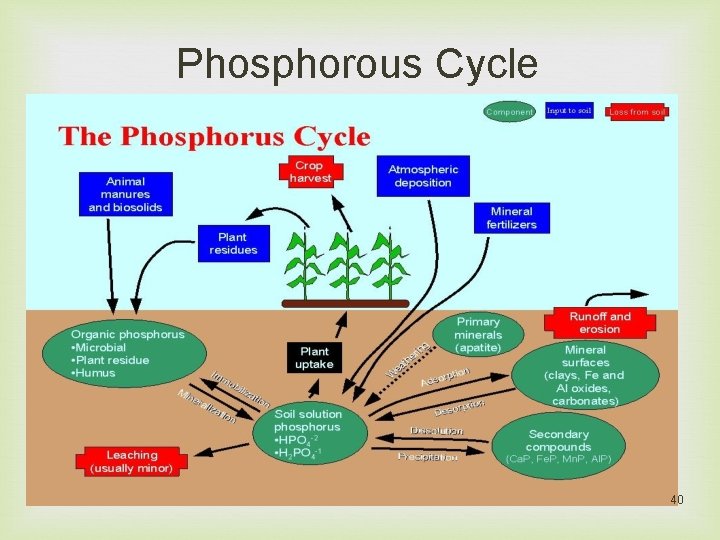
Phosphorous Cycle 40
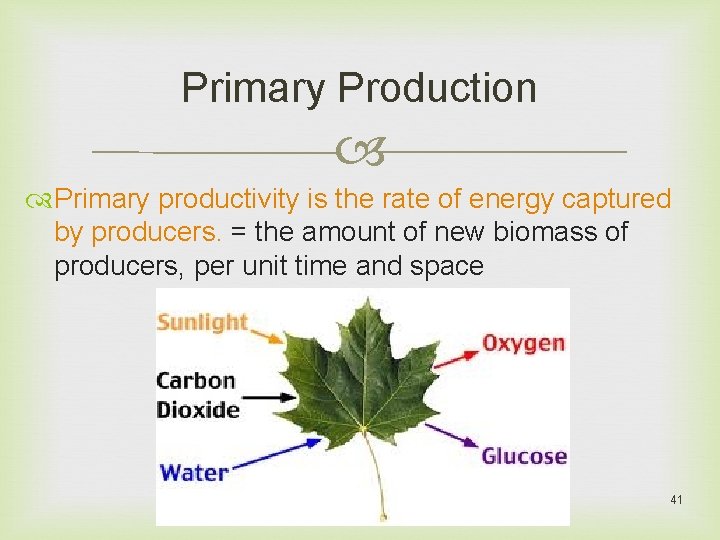
Primary Production Primary productivity is the rate of energy captured by producers. = the amount of new biomass of producers, per unit time and space 41
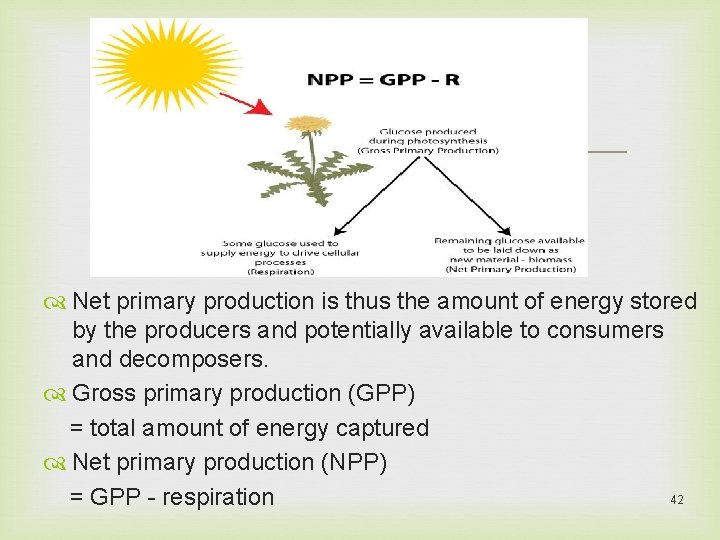
Net primary production is thus the amount of energy stored by the producers and potentially available to consumers and decomposers. Gross primary production (GPP) = total amount of energy captured Net primary production (NPP) 42 = GPP - respiration
Secondary Production Secondary productivity is the rate of production of new biomass by consumers, i. e. , the rate at which consumers convert organic material into new biomass of consumers. Note that secondary production simply involves the repackaging of energy previously captured by producers--no additional energy is introduced/produced into the food chain. 43
Ecosystem Regulation All ecosystems regulate and maintain themselves under a set of environmental conditions If stress---- tries to resist and maintain balance is known as Homeostasis Tolerance and resistance possible only within a min and max range If stress is too high then balance lost and ecosystems collapse. 44
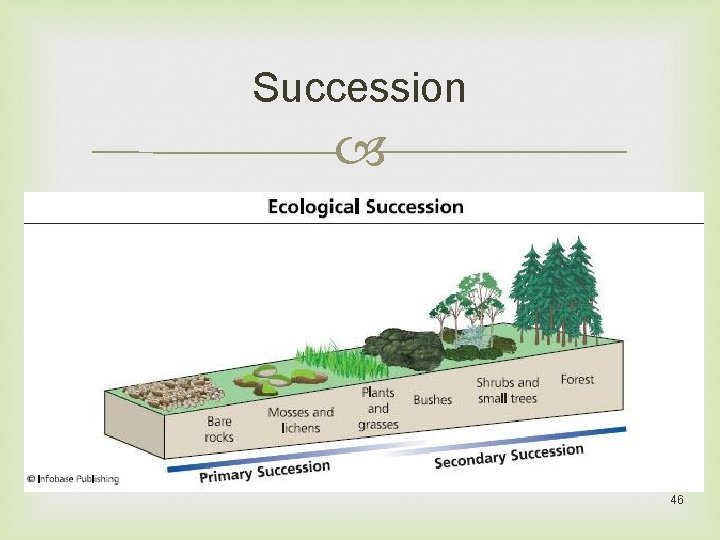
Ecological Sucession An orderly process of changes in the community structure and function with time mediated through modifications in the physical environment and ultimately culminating in a stabilized ecosystem Whole sequence of communities which are transitory are known as Seral Stages Ecological Succession starting from different Substrata or areas are named differently: Hydrach / Hydrosere – starting from water or pond Mesarch- Starting from adequate moist area Xerach/Xerosere – Starting in dry area or areas with less moisture They Can also be of following types: Lithosere- Starting on bare Rock Psammosere- Starting on sand Halosere- Starting on saline soil 45
Succession 46
Process of Succession Nudation- It is a development of bare area without any life form. Invasion- Successful establishment of one or more species by migration or dispersal leading to establishment /ecesis. These are called Pioneer Species Competition and co-action- As the no. of individuals increase there developes a competition for space, water, nutition. The competion is Inter. Specific (within different Species) or Intra –Specific (within the same species) 47
Process of Succession Reaction – The living organisms grow, use water & nutrients from substratum having strong influence on Environment which is modified to a large extent – is reaction Stabilization- the succession ultimately culminates in a stable community called as Climax, which is in equilibrium with environment 48

Succession : Seral stages 49
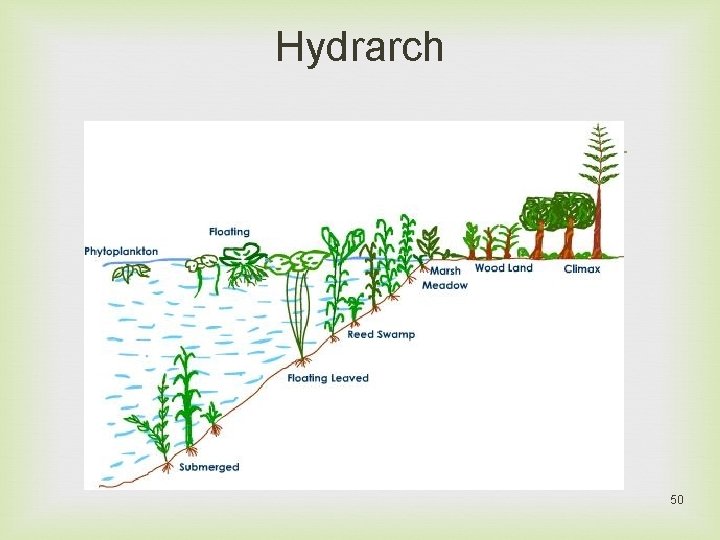
Hydrarch 50
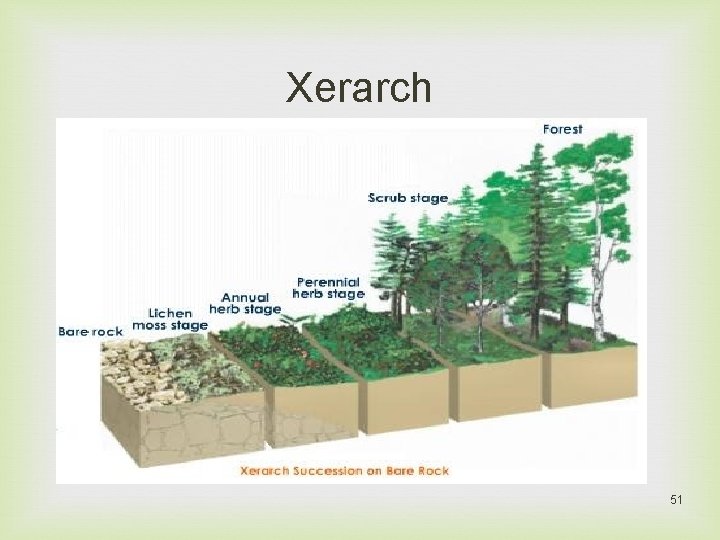
Xerarch 51
52
Major Ecosystems Forest ecosystems Desert Ecosystems Grassland Ecosystems Aquatic Ecosystems 53
Forest Ecosystems 54
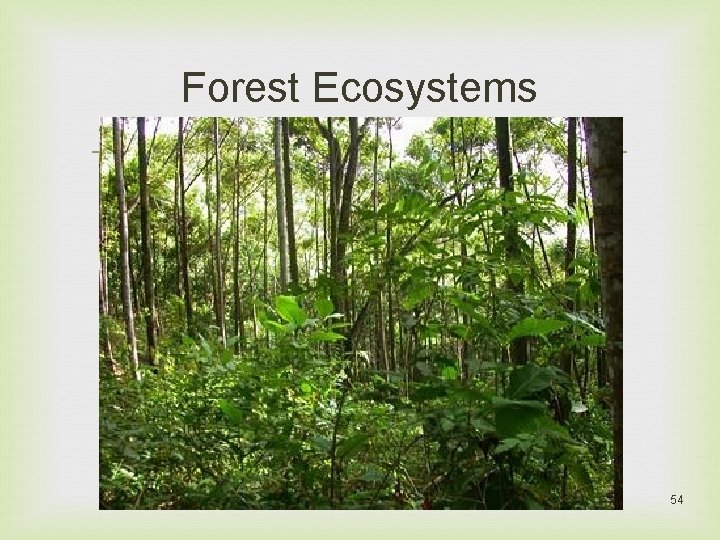
Forest Occupy roughly 40 % of the land. The different components of forest ecosystem are as follows: Abiotic Components: These are organic & inorganic substances present in the soil and atmosphere. In addition to minerals present in forest we find the dead organic debris, moreover light condition are different due to complex stratification in the plants. Biotic Components: Producers: These are mainly trees that show much species and greater degree of stratification. Besides trees there also present shrubs, and ground vegetation. Consumers: Primary Consumers: These are herbivores that include animals feeding on tree leaves, ants, beetles, grass hoppers, etc. , and large elephants, deers, squirrels, etc. 55
Continue. . Secondary Consumers: These are carnivores, like snakes, birds, lizards, fox, etc. feeding on herbivores. Tertiary consumers: These are top carnivores like lion tiger, etc. that eat carnivores of secondary level. Decomposers: These are wide variety of micro organisms including, fungi, bacteria. Also present are epiphytes, lianas Extremely diverse and productive 56
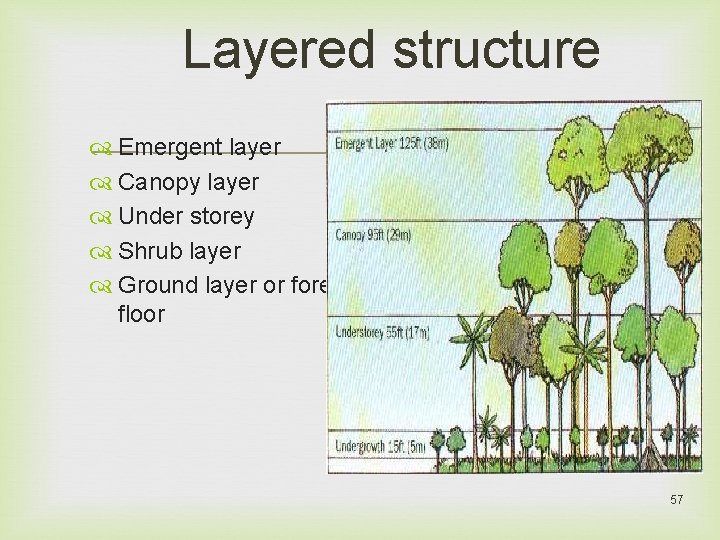
Layered structure Emergent layer Canopy layer Under storey Shrub layer Ground layer or forest floor 57
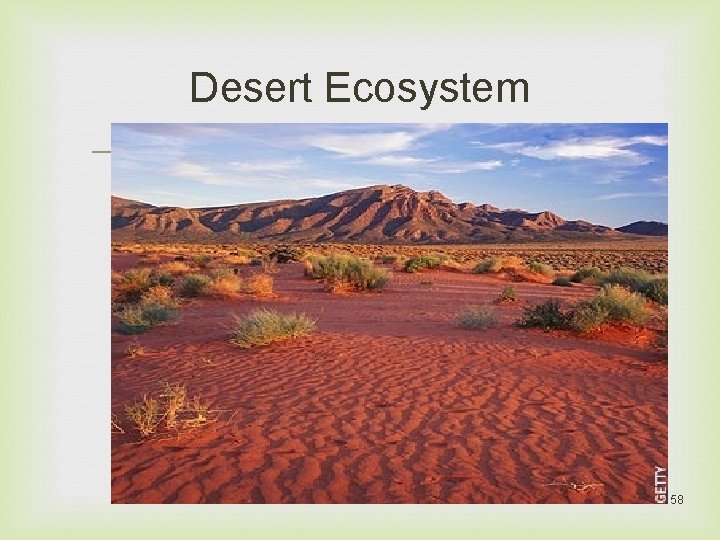
Desert Ecosystem 58
Desert occupy 17 % of land. Abiotic components include, light, temperature, minerals. Biotic Components: Producers : These are shrubs, especially bushes, some grasses, and few trees. E. g. Cacti, Xerophytes, mosses Consumers: The most common animals are reptiles, and insects, there are some rodents, and birds, and above all ship of desert camels, feed on tender plants. Decomposers: These are very few as due to poor vegetation the amount of dead organic matter is less. They are some fungi and bacteria. 59
Types Tropical deserts: high heat, very dry Eg : Sahara, Thar desert Temperate desert: day temperatures very hot in summer and nights very cool in winter Eg: Mojave in Southern California Cold deserts: Cold winters and warm summers Eg : Gobi desert in China 60
Grassland Ecosystem 61
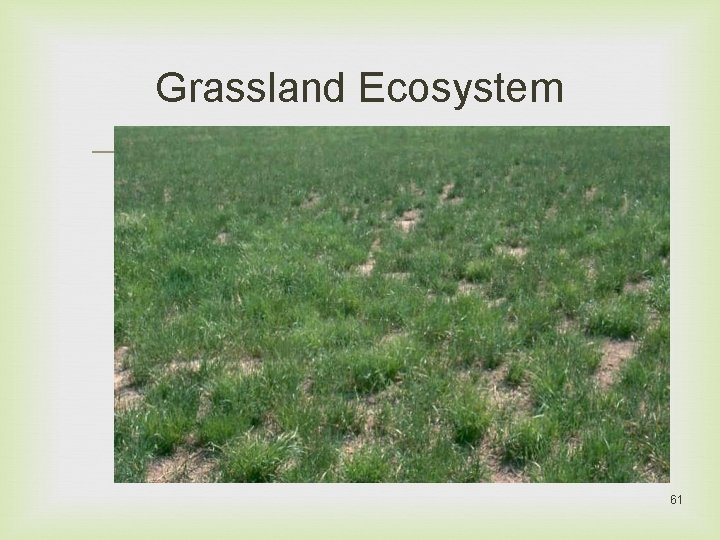
Grassland occupy comparatively fewer area roughly 19 % of the earth’s surface. Abiotic Components: These are nutrients present in soil, and aerial environment, thus the elements like, phosphates, sulphates, water, carbon dioxide, present in soil and in air. Moreover some trace elements are also present. Biotic Components: Producers: They are mainly grasses as species of Cynadon, Desmodium, besides them a few shrubs also contribute some primary production. 62
Consumers: Primary Consumers: The herbivores feeding on grasses are grazing animals, as cows, goats, rabbit, etc. besides them there are some insects as termites, millipedes that feed on grasses. Secondary Consumers: These are carnivores feeding on herbivores these include, animals like, fox, jackals, snakes, frogs, birds. Tertiary Consumers: Some times hawks, vultures, feeding on secondary consumer, thus occupy tertiary consumers. Decomposers: The microbes active in the decay of dead organic matter of different form are fungi and some bacteria 63
Aquatic ecosystems 64
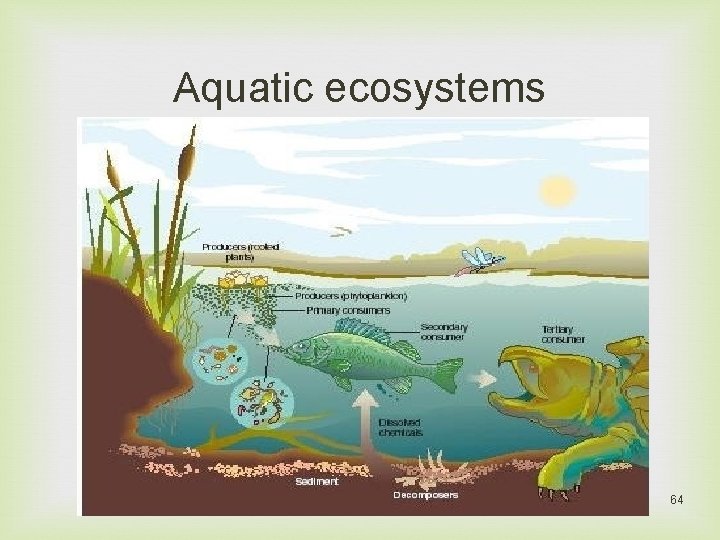
Pond Ecosystem Producers are of following type Macrophytes: these are large rooted plants, which include partly or completely submerged hydrophytes, e. g. : Hydrilla, Trapha, Typha. Phytoplankton: These are minute floating or submerged lower plants e. g. : algae. Consumers: They are heterotrophs which depends for their nutrition on the organic food manufactured by producers. 65
Primary Consumers: Benthos: These are animals associated with living plants , detrivores and some other microorganisms Zooplanktons: These are chiefly rotifers, protozoans, they feed on phytoplankton Secondary Consumers: They are the Carnivores which feed on herbivores, these are chiefly insect and fish, most insects & water beetles, they feed on zooplanktons. Tertiary Consumers: These are some large fish as game fish, turtles, which feed on small fish and thus become tertiary consumers. Decomposers: They are also known as micro-consumers. They decompose dead organic matter of both producers and animal to simple form. Thus they play an important role in the return of minerals again to the pond ecosystem, they are chiefly bacteria, & fungi. 66
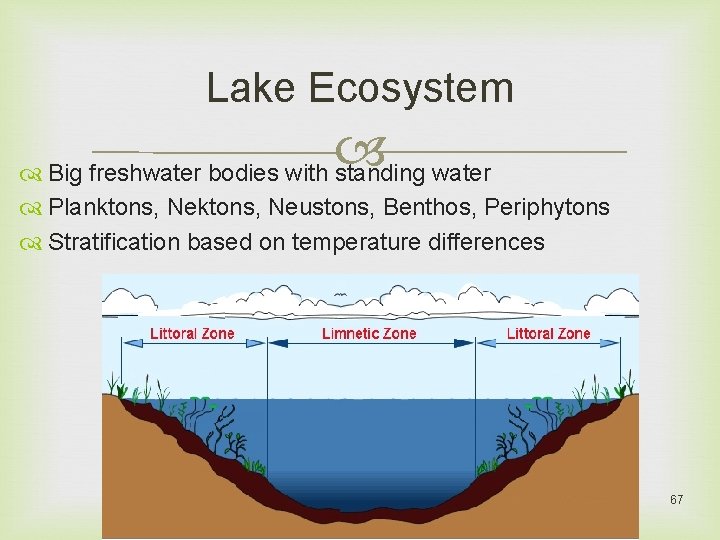
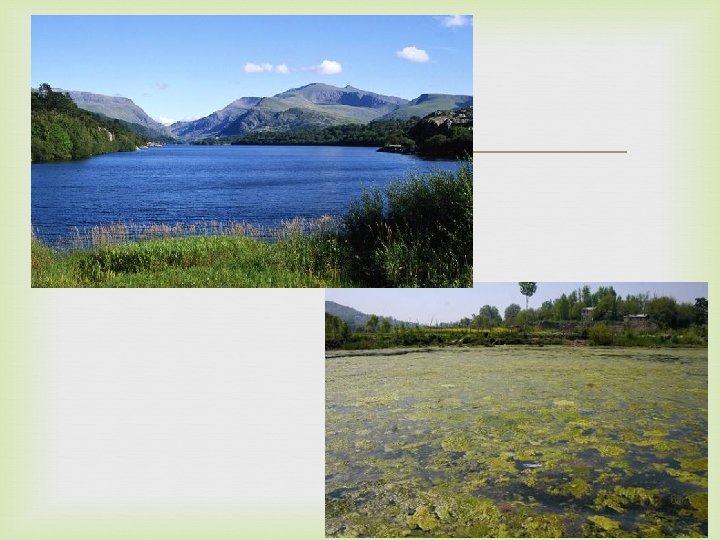
Lake Ecosystem Big freshwater bodies with standing water Planktons, Neustons, Benthos, Periphytons Stratification based on temperature differences 67
68
69
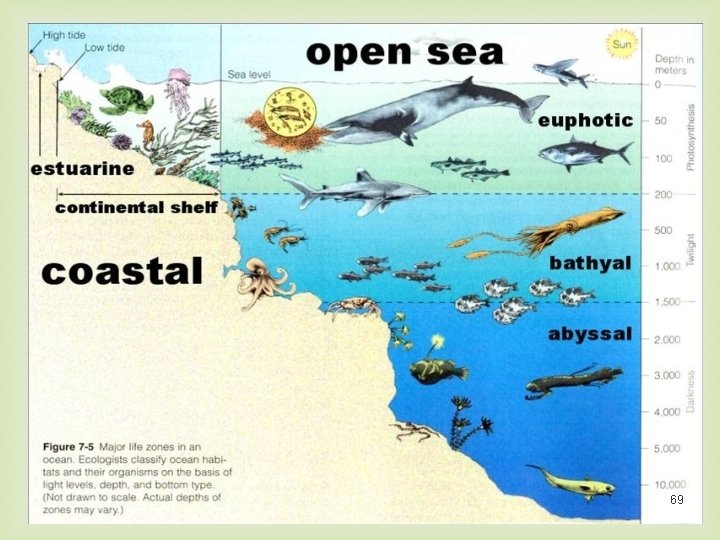
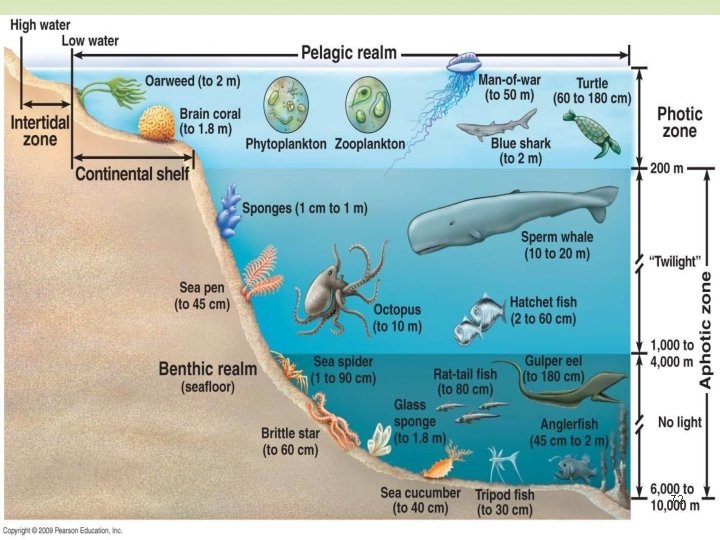
Ocean Ecosystems Ocean Ecosystem are more stable than pond ecosystem, they occupy 70 % of the earth surface. Abiotic Components: Dissolved oxygen, light, temperature, minerals. Biotic Components: Producers: These are autotrophs and are also known Primary producers. They are mainly, some microscopic algae (phyto- planktons) besides them there are mainly, seaweeds, as brown and red algae also contribute to primary production. 70
Consumers: They are all heterotrophic macro consumers Primary Consumer: The herbivores, that feed on producers are shrimps, Molluscs, fish, etc. Secondary Consumers: These are carnivores fish as Herring, Shad, Mackerel, feeding on herbivores. Tertiary Consumers: These includes, other carnivores fishes like, Cod, Halibut, Sea Turtle, Sharks etc. Decomposers: The microbes active in the decay of dead organic matter of producers, and animals are chiefly, bacteria and some fungi. 71
72
73
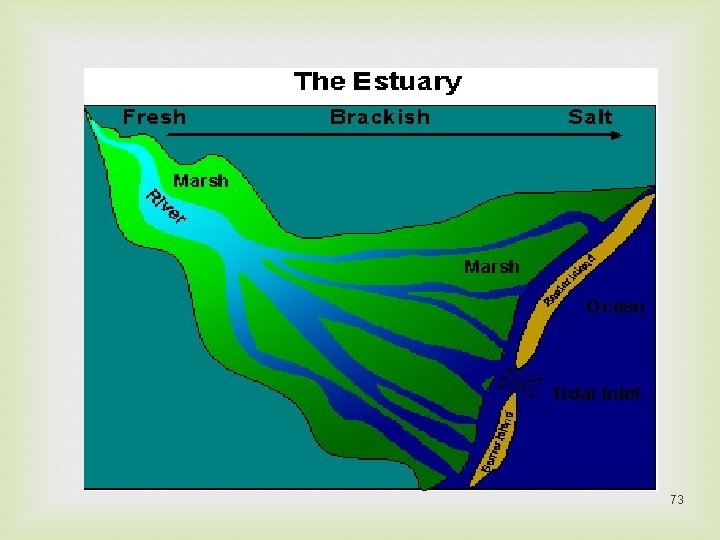
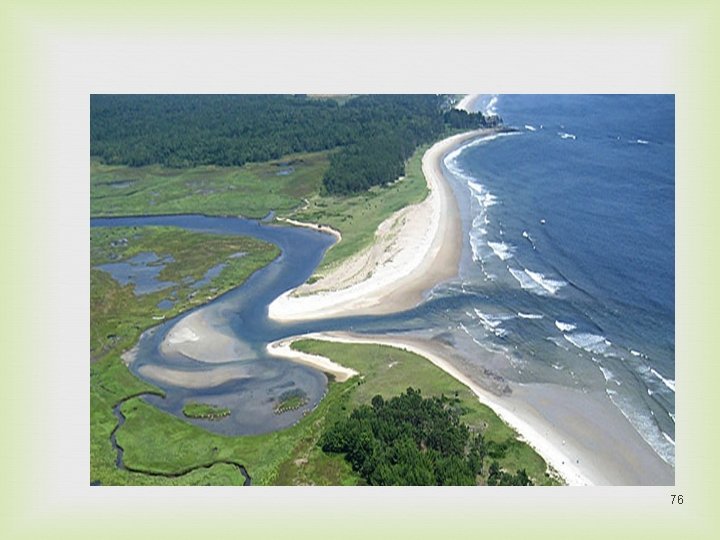
Estuarine ecosystems An estuary is a partially enclosed body of water along the coast where fresh water from river and streams meet and mix with salt water from oceans. This Ecosystems are considered as most fertile ecosystem. Abiotic Components: Nutrients such as phosphorus and nitrogen, temperature, light, salinity, p. H. This ecosystem experience wide daily and seasonal fluctuations in temperature and Salinity level because of variation in freshwater in flow. 74
Biotic Components: Producers: Phytoplankton's - these micro-organisms manufacture food by photosynthesis and absorb nutrients such as phosphorous and nitrogen, besides them, mangroves, sea grass, weeds, and salt marshes. Consumers: Primary consumers, Zooplanktons that feed on Phytoplankton, besides them some small microorganisms that feed on producers. Secondary Consumer: Include worms, shellfish, small fish, feeding on Zooplanktons Tertiary Consumer : Fishes, turtles, crabs, starfishes feeding on secondary consumers. Decomposers: Fungi & Bacteria are the chief microbes active in decay of dead organic matter. 75
76
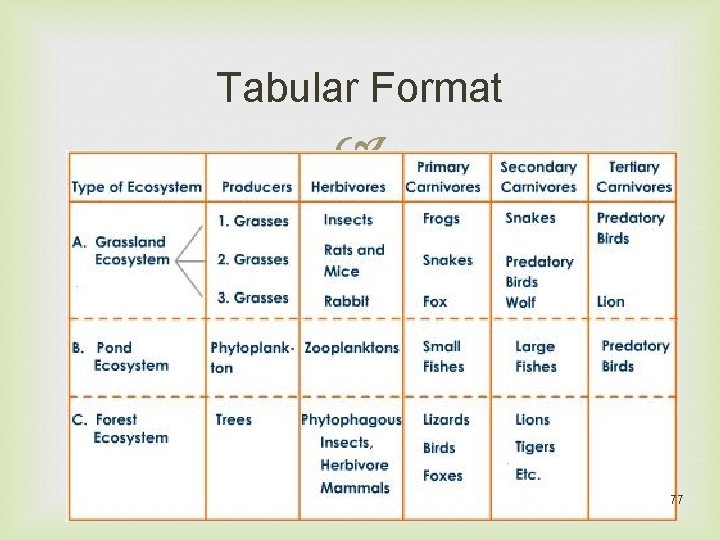
Tabular Format 77

Thank You 78
- Slides: 78