
Ecosystem Interactions energy and dynamics Headwaters Science Institute

- Slides: 24
Ecosystem Interactions, energy and dynamics Headwaters Science Institute
Ecology is a science. What does that mean? What do Ecologists do?
Key Terms • Species • Population • Community • Ecosystem
Subfields of Ecology Organismal Ecology Population Ecology Community Ecology Ecosystem Ecology Landscape Ecology
Ecosystem Ecology Ecosystems Ecology is the study of the interactions between organisms, with each other, and with their environment. Why are interactions between organisms important? Why do organisms usually interact?
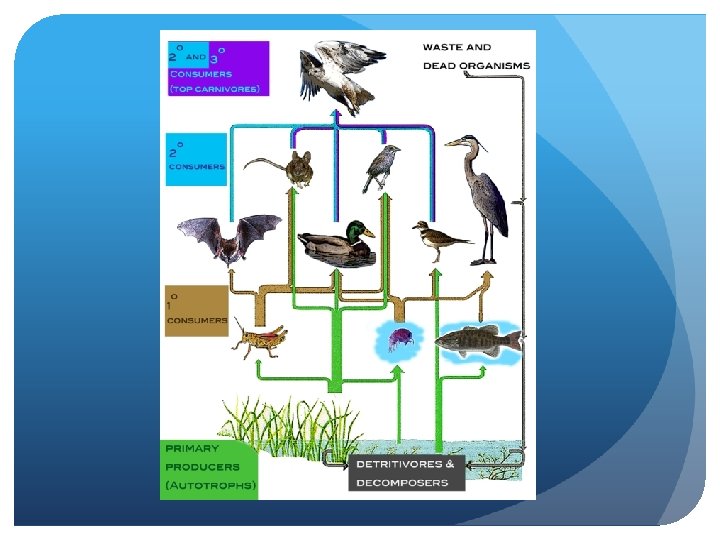
Food Chain primary (1 o) producers primary (1 o) consumers secondary (2 o) consumers tertiary (3 o) consumers quaternary (4 o) consumers Decomposers Give an example of each.
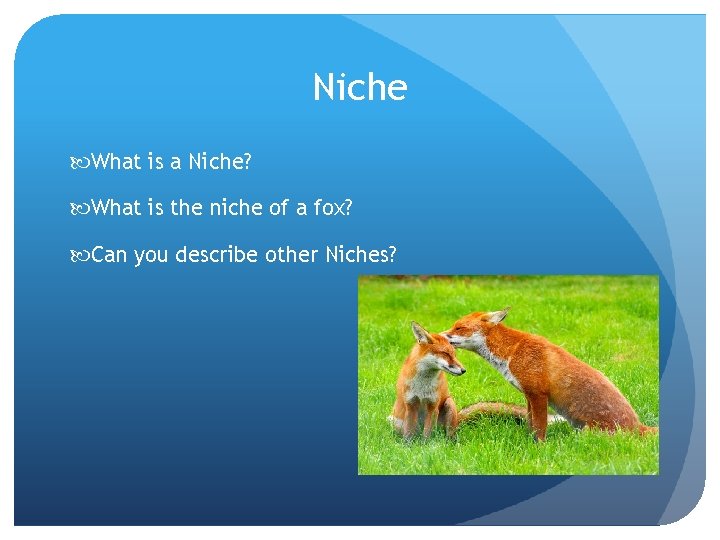
Niche What is a Niche? What is the niche of a fox? Can you describe other Niches?
Predator-Prey Interactions What is predation? Host-parasite Herbivore-Plant Carnivore Give an example of each Why are these relationships important in ecosystems? How do you think the population on one of the two affects the other?
Factors that Promote Population Stability What things can keep populations balanced between predators and their prey? What happens when the deer population becomes large? What happens whens if the fox overeat the hares in one area? Do you think they can ever eat all of them? What type of defenses to prey evolve?
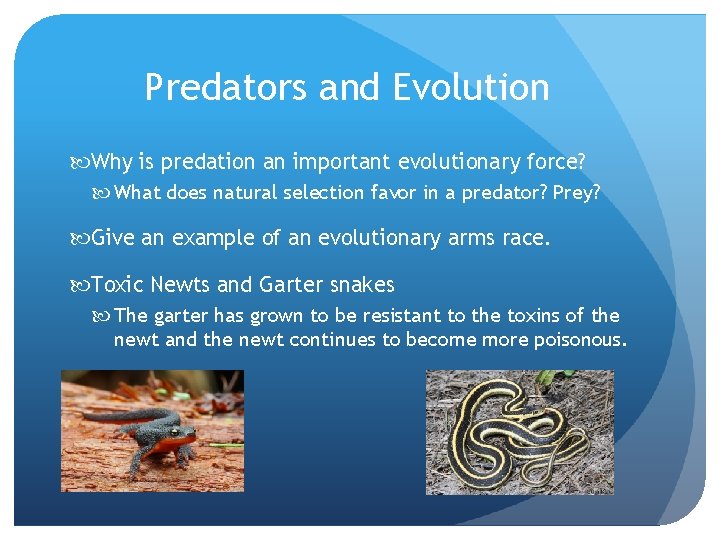
Predators and Evolution Why is predation an important evolutionary force? What does natural selection favor in a predator? Prey? Give an example of an evolutionary arms race. Toxic Newts and Garter snakes The garter has grown to be resistant to the toxins of the newt and the newt continues to become more poisonous.
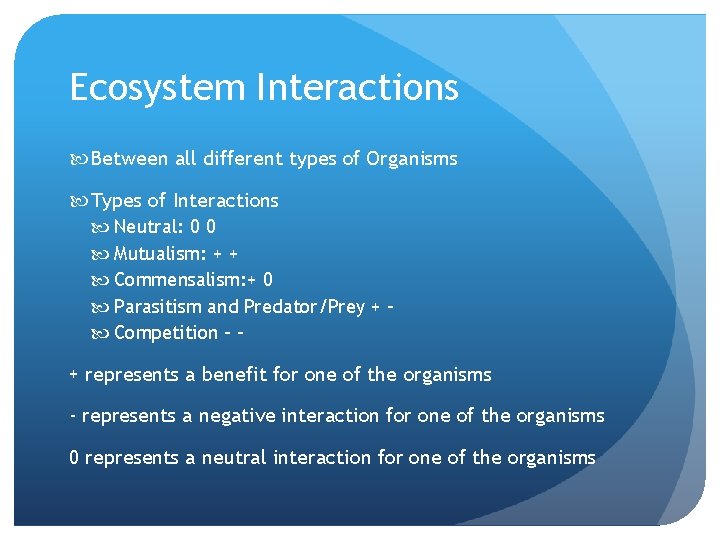
Ecosystem Interactions Between all different types of Organisms Types of Interactions Neutral: 0 0 Mutualism: + + Commensalism: + 0 Parasitism and Predator/Prey + Competition - + represents a benefit for one of the organisms - represents a negative interaction for one of the organisms 0 represents a neutral interaction for one of the organisms
Competitive Interactions Inter vs Intra specific competition What do species compete over? What can happen when a new species is introduced to an environment?
Predator/Prey Give an example of a Predator/Prey relationship Is there anything that eats the predator? What happens if the population of one of the animals changes drastically? Can animals change foraging behavior as a reaction to predators close by? Hypothesis: Animals will move to feed in protected area when predators are nearby.
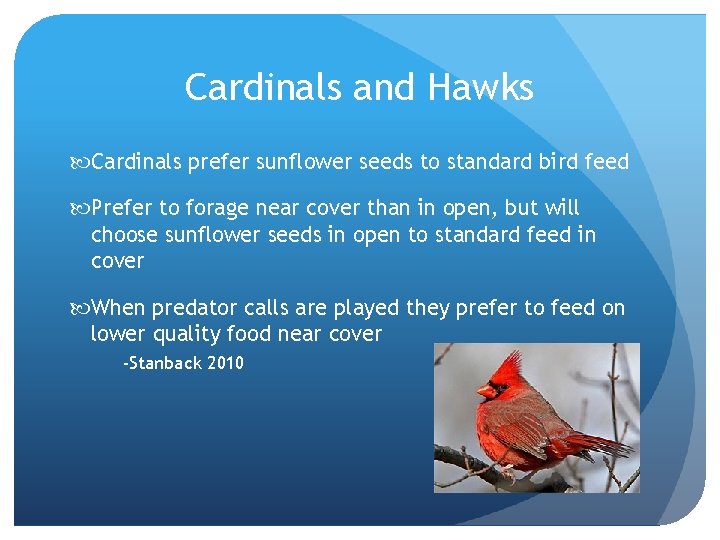
Cardinals and Hawks Cardinals prefer sunflower seeds to standard bird feed Prefer to forage near cover than in open, but will choose sunflower seeds in open to standard feed in cover When predator calls are played they prefer to feed on lower quality food near cover -Stanback 2010
Host-Parasite What type of interaction is a host parasite relationship? Do parasites usually kill their host? Ecotoparsite: lives on the outside Endoparasite: Lives on the inside
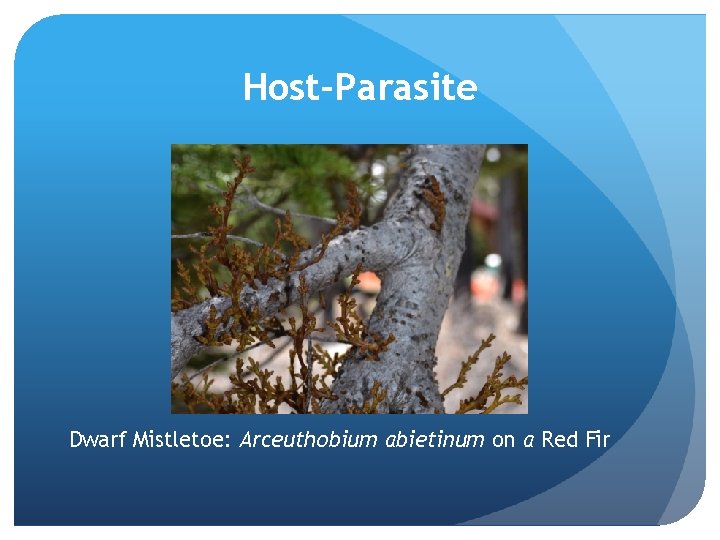
Host-Parasite Dwarf Mistletoe: Arceuthobium abietinum on a Red Fir
Dwarf Mistletoe and Conifers Dwarf mistletoe is a parasitic plant Infects conifer trees Create brooms on the tree Species specific parasite Mimic trees growth hormones to get water and nutrients Live a long time before they kill a tree Seeds Dispersed in the fall launch via hydrostatic pressure (up to 50 mph) Travel about 30 ft
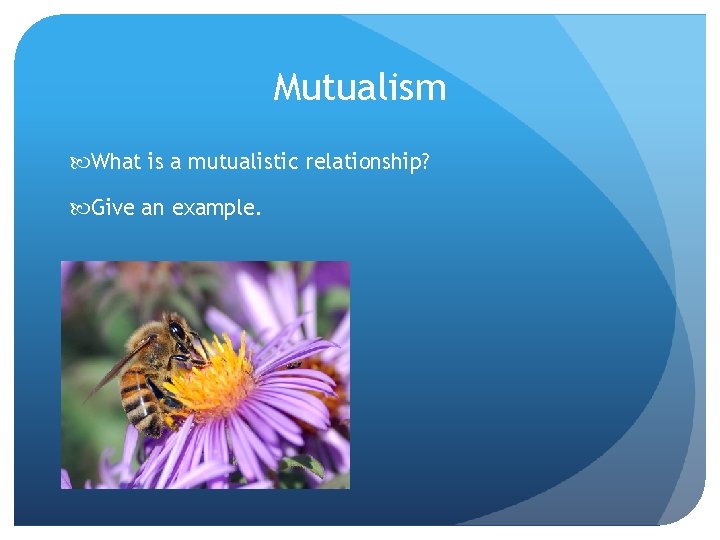
Mutualism What is a mutualistic relationship? Give an example.
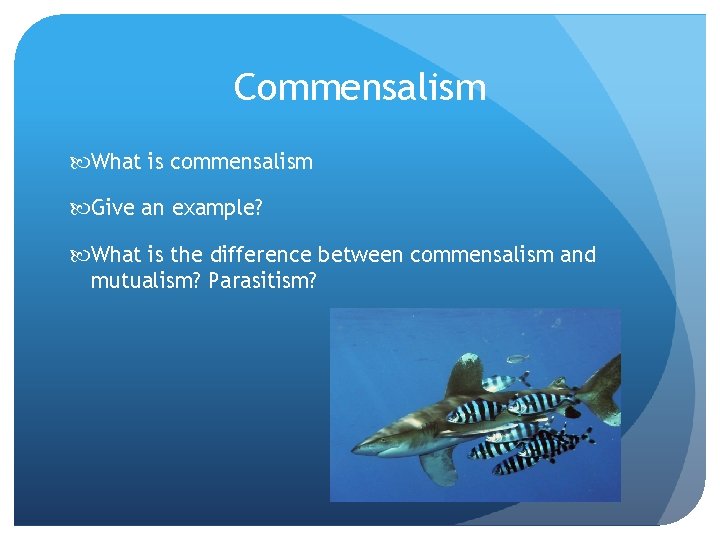
Commensalism What is commensalism Give an example? What is the difference between commensalism and mutualism? Parasitism?
Territories Within Species competition for resources Food Shelter How do resources affect territory size of an animal? Hypothesis Animals adjust territory size to the density of the critical resource (usually food) so the territory contains enough to satisfy their requirements
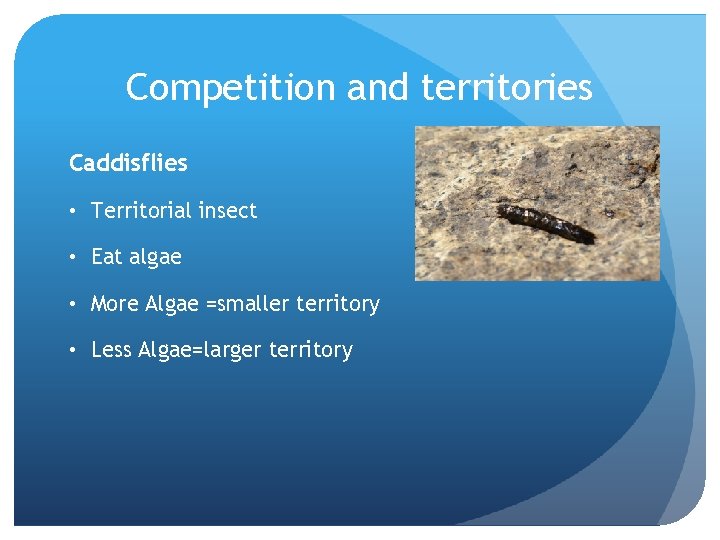
Competition and territories Caddisflies • Territorial insect • Eat algae • More Algae =smaller territory • Less Algae=larger territory
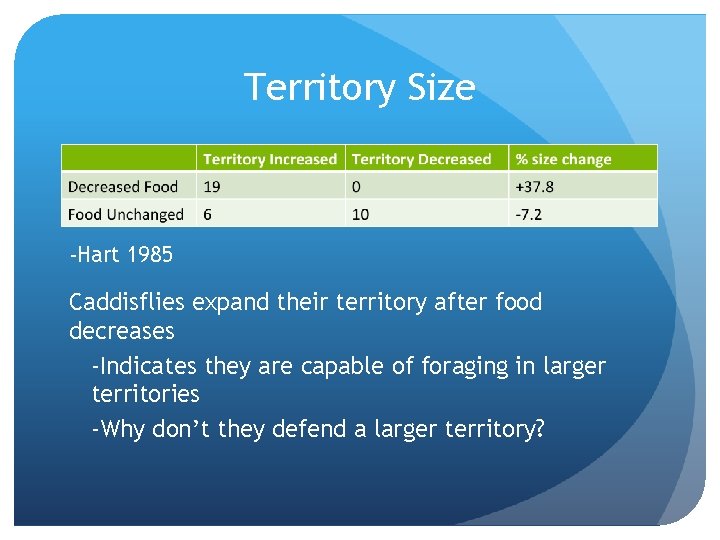
Territory Size -Hart 1985 Caddisflies expand their territory after food decreases -Indicates they are capable of foraging in larger territories -Why don’t they defend a larger territory?
What do you know? What questions can we ask about ecosystem ecology?