
Ecoregions under Climate Change A Global Risk Assessment
Ecoregions under Climate Change A Global Risk Assessment Presenter Chris Zganjar Spatial Data Analyses Chris Zganjar, Barry Baker, Earl Saxon Multivariate Cluster Analyses Bill Hargrove, Forrest Hoffman Special Thanks Robert Hijmans
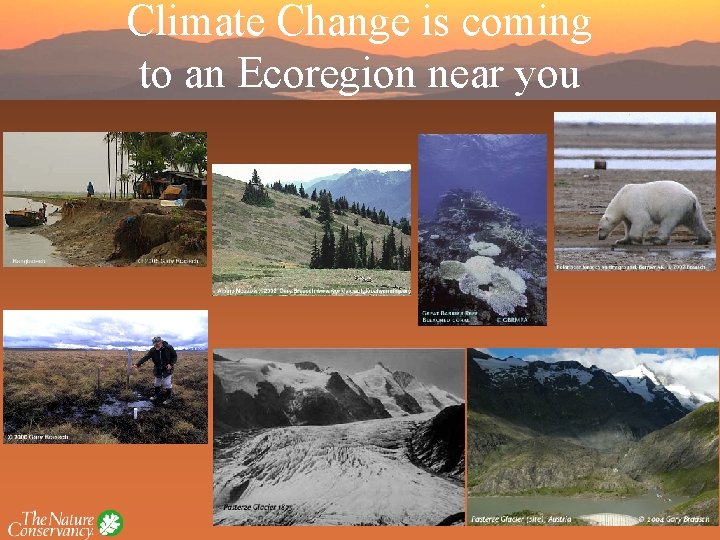
Climate Change is coming to an Ecoregion near you
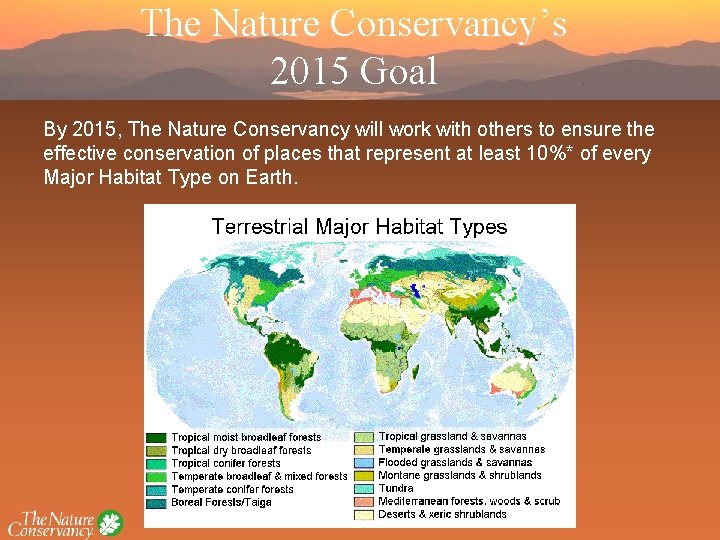
The Nature Conservancy’s 2015 Goal By 2015, The Nature Conservancy will work with others to ensure the effective conservation of places that represent at least 10%* of every Major Habitat Type on Earth.
Where, When, and How Much? Can we identify areas of potential refugia? Can we identify areas of severe environmental change?
Topics • Multivariate Clustering • Magnitude of Environmental Change • Applications

Topics • Multivariate Clustering • Magnitude of Environmental Change • Applications
Classifying Earth’s Systems Bailey Omernik Holdridge Each framework uses different sets of criteria to address different purposes. Köppen Thorntwaite Walter and Box
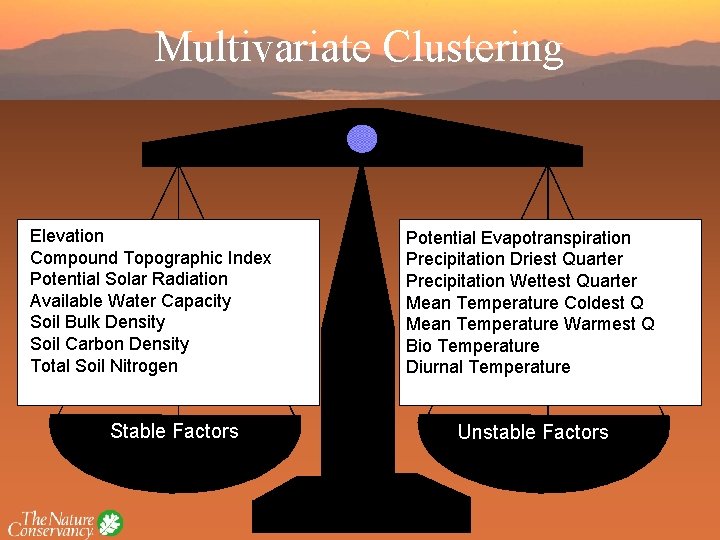
Multivariate Clustering Elevation Compound Topographic Index Potential Solar Radiation Available Water Capacity Soil Bulk Density Soil Carbon Density Total Soil Nitrogen Stable Factors Potential Evapotranspiration Precipitation Driest Quarter Precipitation Wettest Quarter Mean Temperature Coldest Q Mean Temperature Warmest Q Bio Temperature Diurnal Temperature Unstable Factors
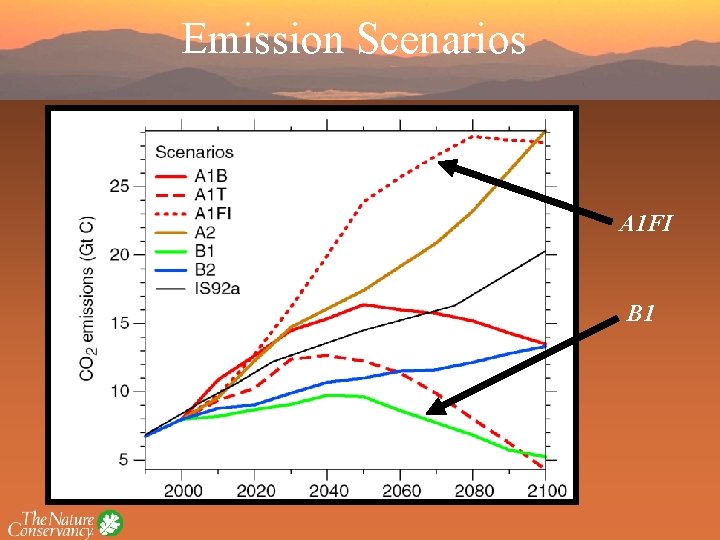
Emission Scenarios A 1 FI B 1
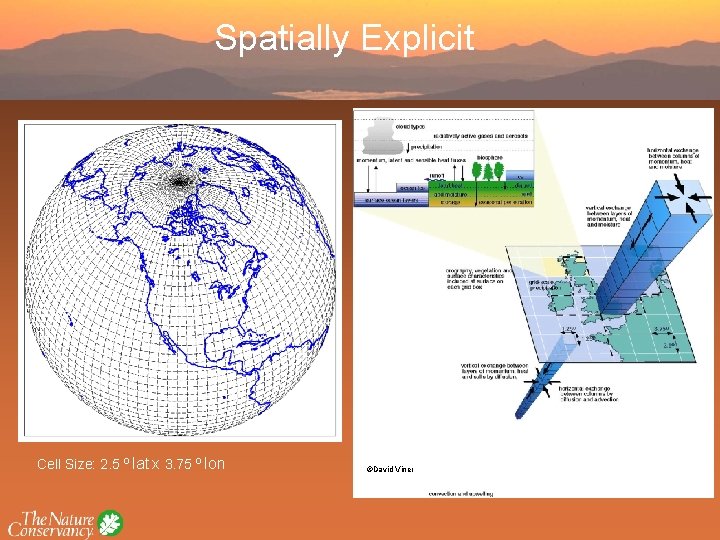
Spatially Explicit Cell Size: 2. 5 o lat x 3. 75 o lon ©David Viner http: //www. metoffice. gov. uk/
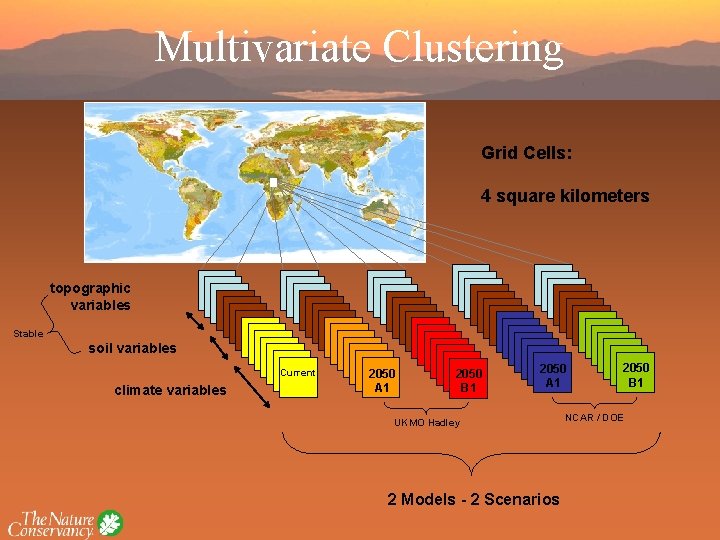
Multivariate Clustering Grid Cells: 4 square kilometers topographic variables Stable soil variables Current climate variables 2050 A 1 2050 B 1 2050 A 1 UKMO Hadley 2 Models - 2 Scenarios 2050 B 1 NCAR / DOE
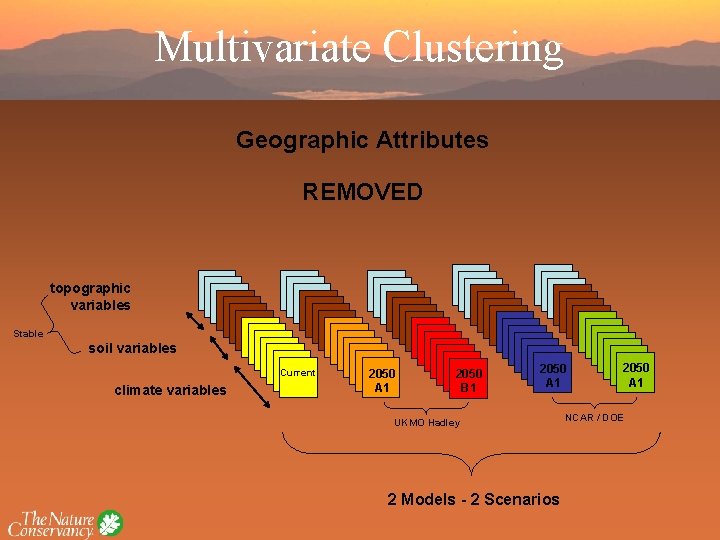
Multivariate Clustering Geographic Attributes REMOVED topographic variables Stable soil variables Current climate variables 2050 A 1 2050 B 1 2050 A 1 UKMO Hadley 2 Models - 2 Scenarios 2050 A 1 NCAR / DOE
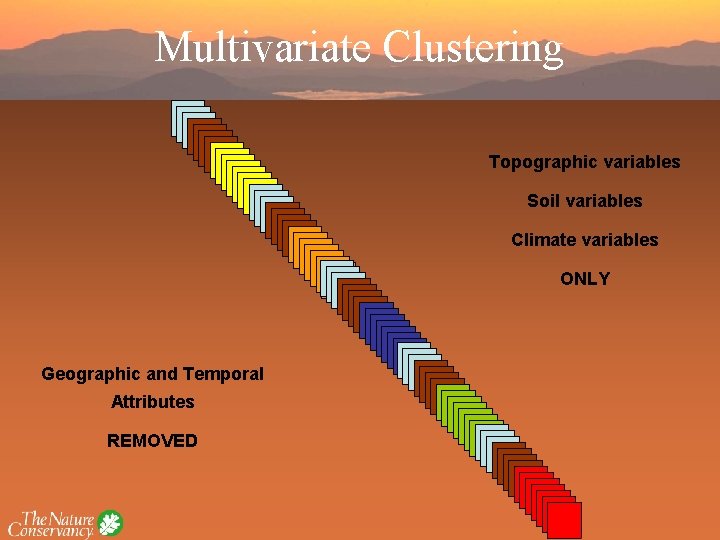
Multivariate Clustering Topographic variables Soil variables Climate variables ONLY Geographic and Temporal Attributes REMOVED
Data, Data
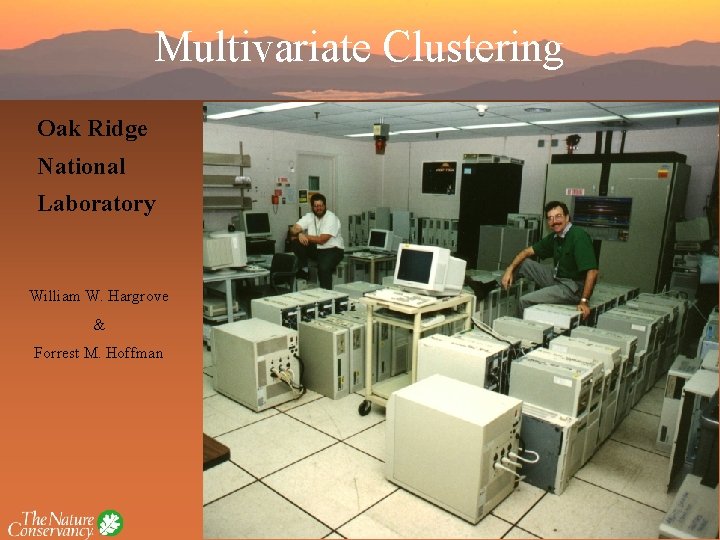
Multivariate Clustering Oak Ridge National Laboratory William W. Hargrove & Forrest M. Hoffman
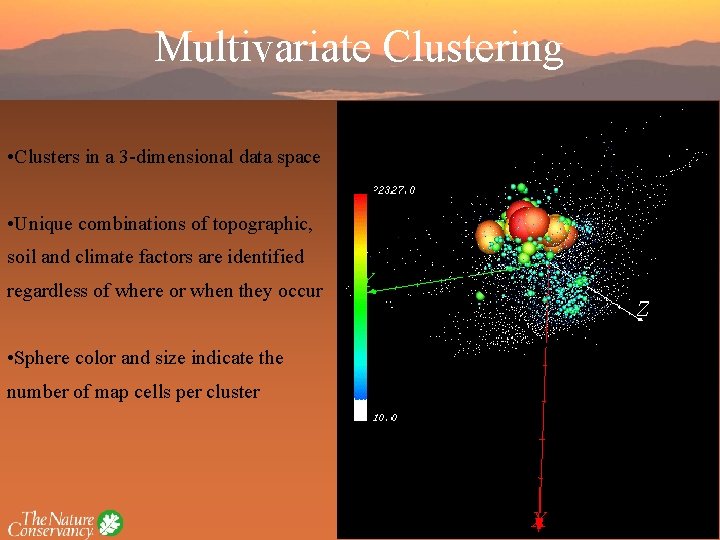
Multivariate Clustering • Clusters in a 3 -dimensional data space • Unique combinations of topographic, soil and climate factors are identified regardless of where or when they occur • Sphere color and size indicate the number of map cells per cluster
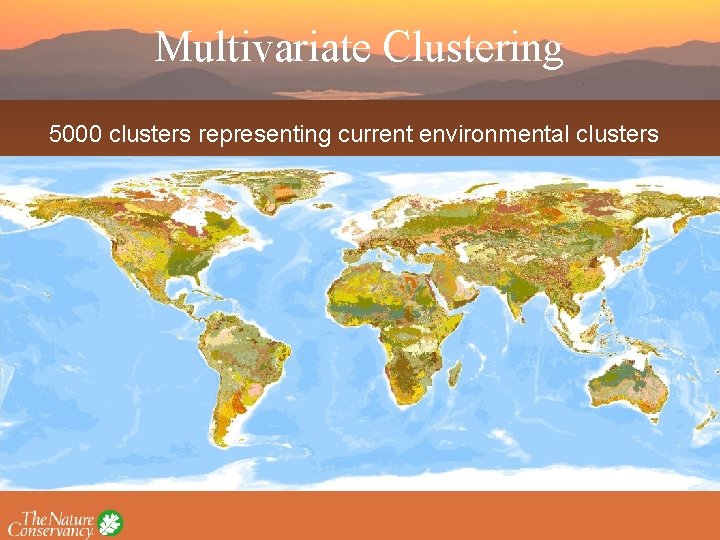
Multivariate Clustering 5000 clusters representing current environmental clusters
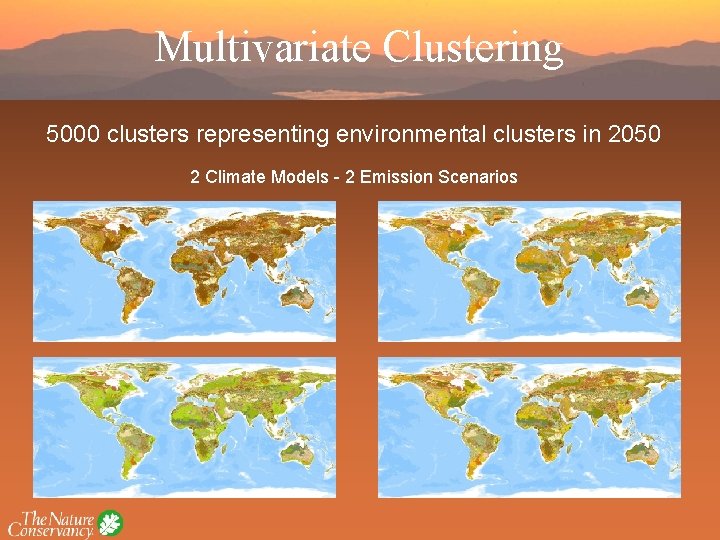
Multivariate Clustering 5000 clusters representing environmental clusters in 2050 2 Climate Models - 2 Emission Scenarios
Topics • Multivariate Clustering • Magnitude of Environmental Change • Applications
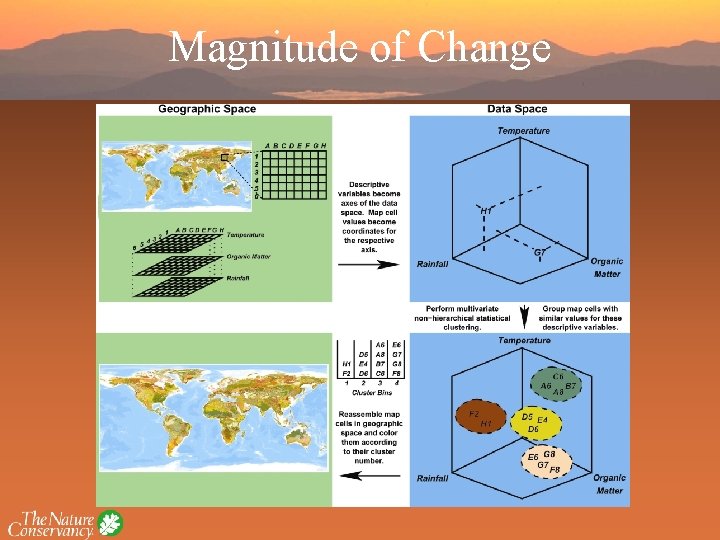
Magnitude of Change
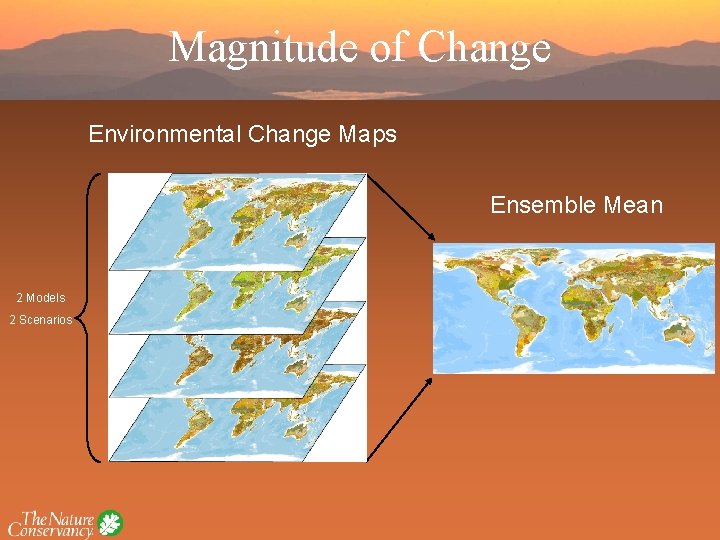
Magnitude of Change Environmental Change Maps Ensemble Mean 2 Models 2 Scenarios
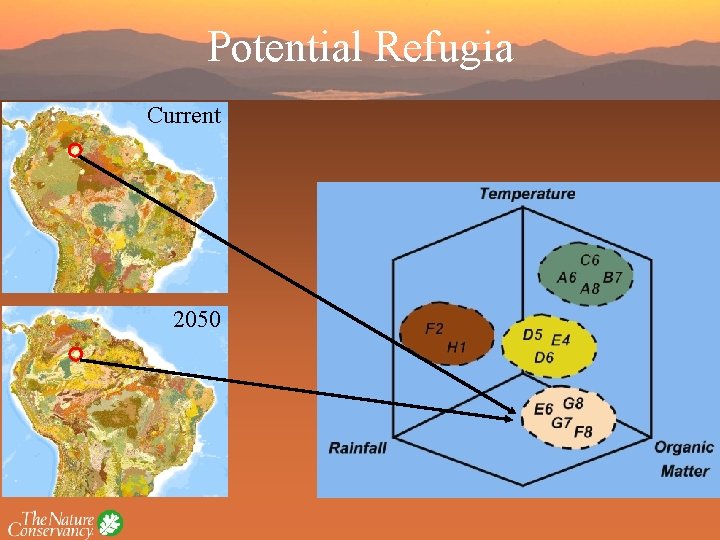
Potential Refugia Current 2050
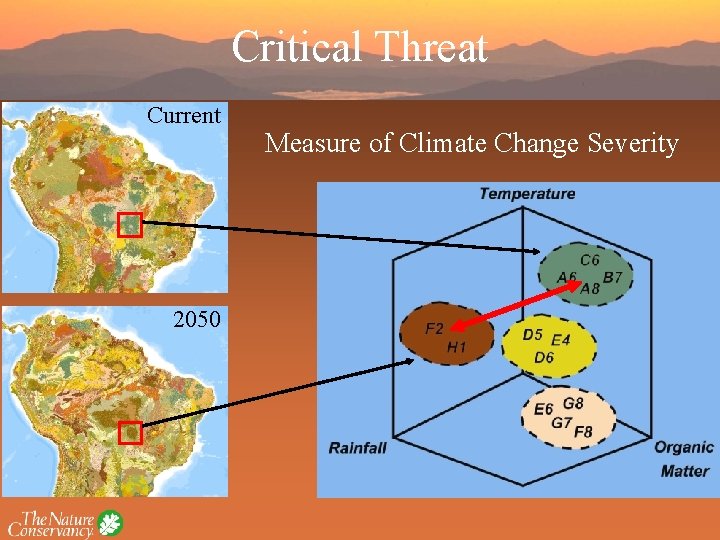
Critical Threat Current 2050 Measure of Climate Change Severity

Topics • Multivariate Clustering • Magnitude of Environmental Change • Applications
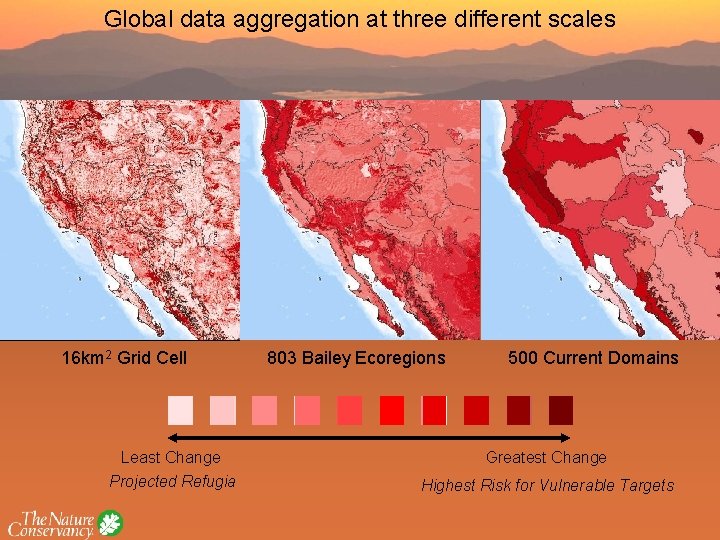
Global data aggregation at three different scales 16 km 2 Grid Cell 803 Bailey Ecoregions 500 Current Domains Least Change Greatest Change Projected Refugia Highest Risk for Vulnerable Targets
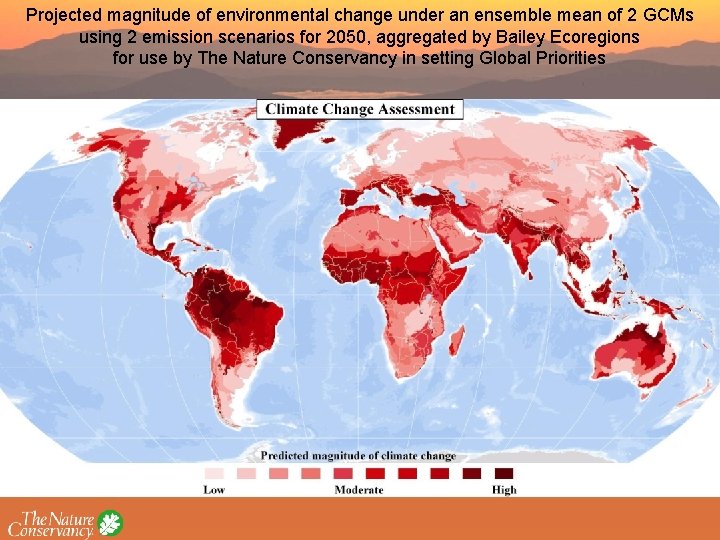
Projected magnitude of environmental change under an ensemble mean of 2 GCMs using 2 emission scenarios for 2050, aggregated by Bailey Ecoregions for use by The Nature Conservancy in setting Global Priorities
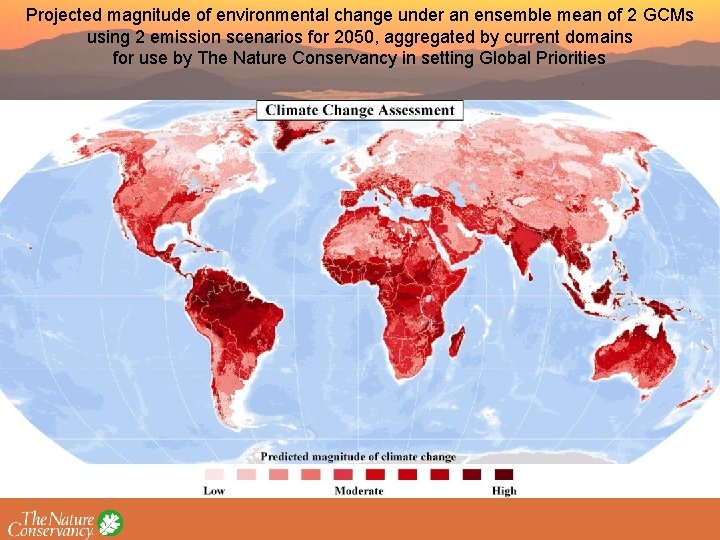
Projected magnitude of environmental change under an ensemble mean of 2 GCMs using 2 emission scenarios for 2050, aggregated by current domains for use by The Nature Conservancy in setting Global Priorities
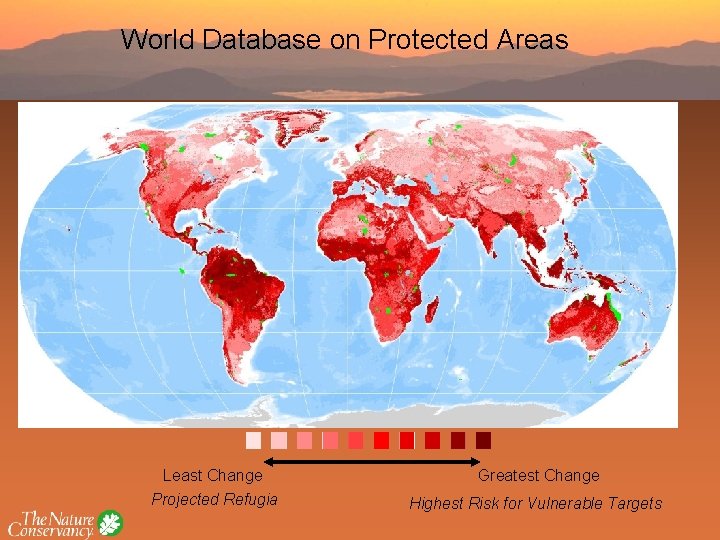
World Database on Protected Areas Least Change Greatest Change Projected Refugia Highest Risk for Vulnerable Targets
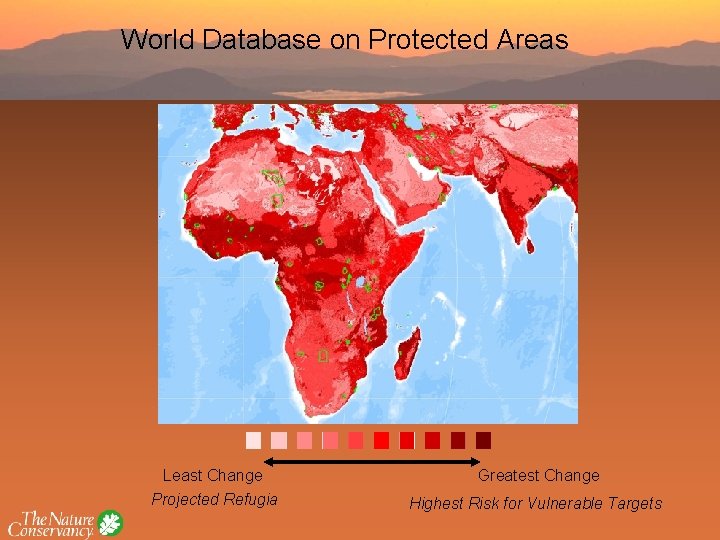
World Database on Protected Areas Least Change Greatest Change Projected Refugia Highest Risk for Vulnerable Targets
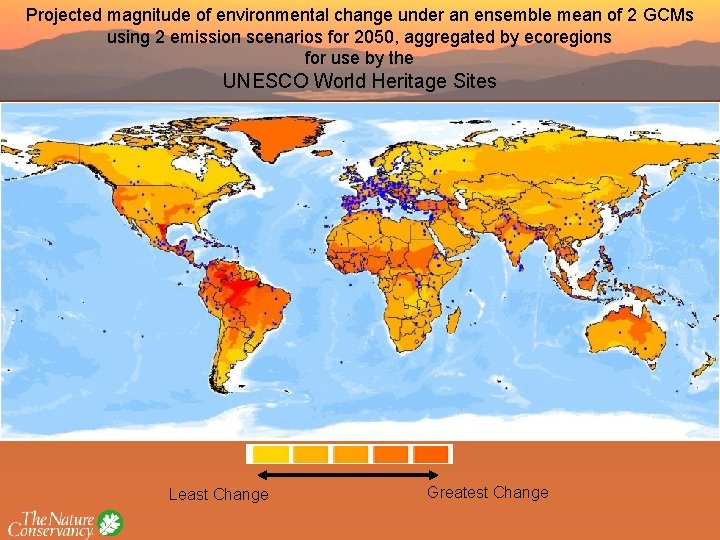
Projected magnitude of environmental change under an ensemble mean of 2 GCMs using 2 emission scenarios for 2050, aggregated by ecoregions for use by the UNESCO World Heritage Sites Least Change Greatest Change
Where, When, and How Much? Can we identify areas of potential refugia? Yes, We recommend early action to effectively conserve large areas in ecoregions with lowest projected magnitude of change Can we identify areas of severe environmental change? Yes, We recommend and long-term management action to protect the most vulnerable conservation targets in areas of greatest projected magnitude of environmental change.

Thank you!
- Slides: 32