
Ecoregion Conceptual Model 1 Purpose of the model
- Slides: 10
Ecoregion Conceptual Model 1. Purpose of the model 2. Spatial and Temporal Boundaries 3. Multi-level Structure
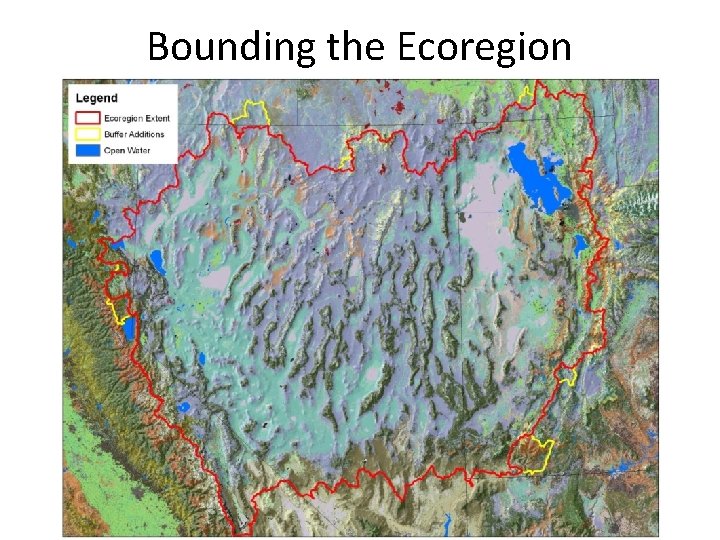
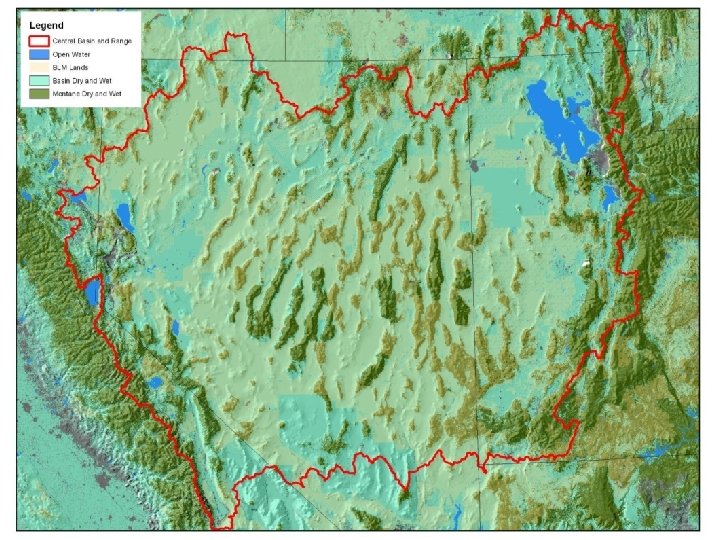
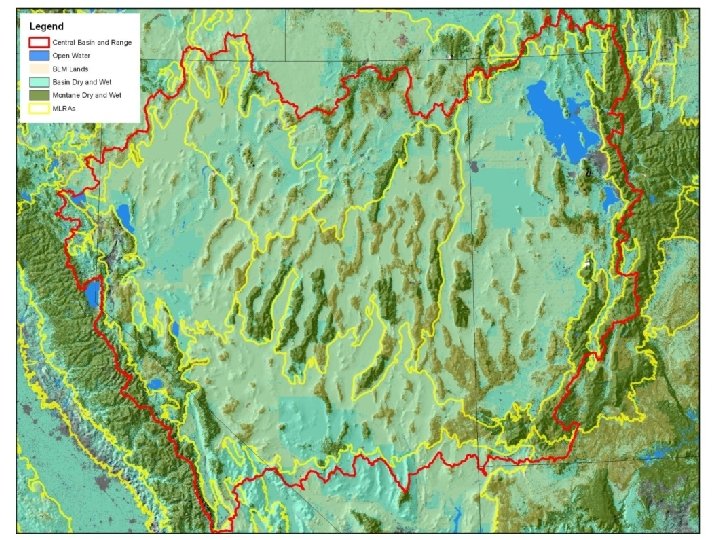
Bounding the Ecoregion
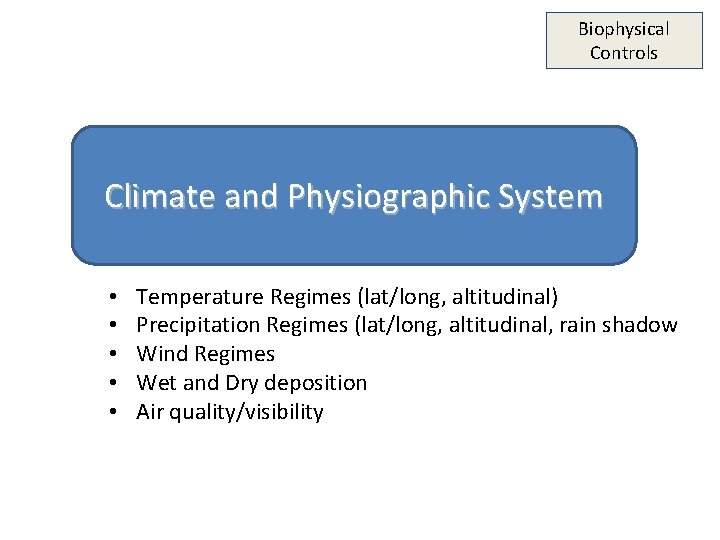
Biophysical Controls Climate and Physiographic System • • • Temperature Regimes (lat/long, altitudinal) Precipitation Regimes (lat/long, altitudinal, rain shadow Wind Regimes Wet and Dry deposition Air quality/visibility
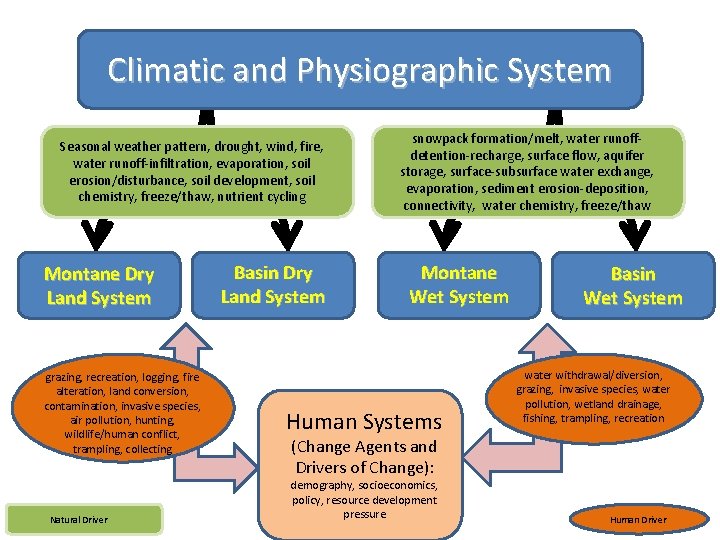
Climatic and Physiographic System Seasonal weather pattern, drought, wind, fire, water runoff-infiltration, evaporation, soil erosion/disturbance, soil development, soil chemistry, freeze/thaw, nutrient cycling Montane Dry Land System grazing, recreation, logging, fire alteration, land conversion, contamination, invasive species, air pollution, hunting, wildlife/human conflict, trampling, collecting Natural Driver Basin Dry Land System snowpack formation/melt, water runoffdetention-recharge, surface flow, aquifer storage, surface-subsurface water exchange, evaporation, sediment erosion-deposition, connectivity, water chemistry, freeze/thaw Montane Wet System Human Systems Basin Wet System water withdrawal/diversion, grazing, invasive species, water pollution, wetland drainage, fishing, trampling, recreation (Change Agents and Drivers of Change): demography, socioeconomics, policy, resource development pressure Human Driver
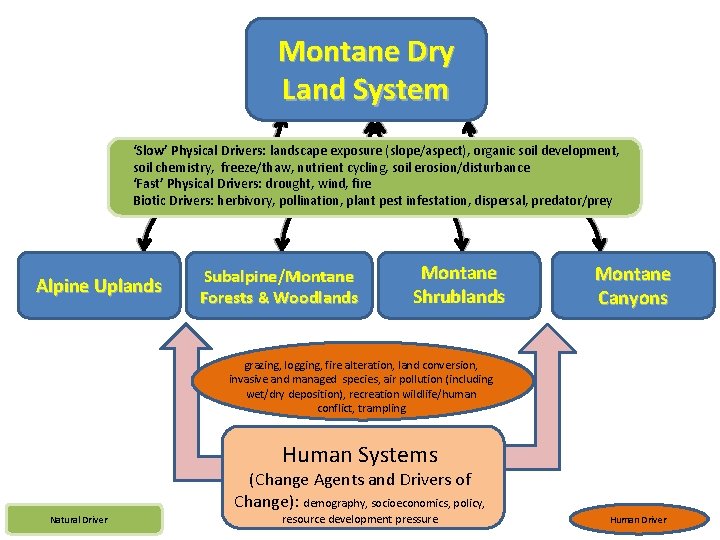
Montane Dry Land System ‘Slow’ Physical Drivers: landscape exposure (slope/aspect), organic soil development, soil chemistry, freeze/thaw, nutrient cycling, soil erosion/disturbance ‘Fast’ Physical Drivers: drought, wind, fire Biotic Drivers: herbivory, pollination, plant pest infestation, dispersal, predator/prey Alpine Uplands Subalpine/Montane Forests & Woodlands Montane Shrublands Montane Canyons grazing, logging, fire alteration, land conversion, invasive and managed species, air pollution (including wet/dry deposition), recreation wildlife/human conflict, trampling Human Systems (Change Agents and Drivers of Change): demography, socioeconomics, policy, Natural Driver resource development pressure Human Driver
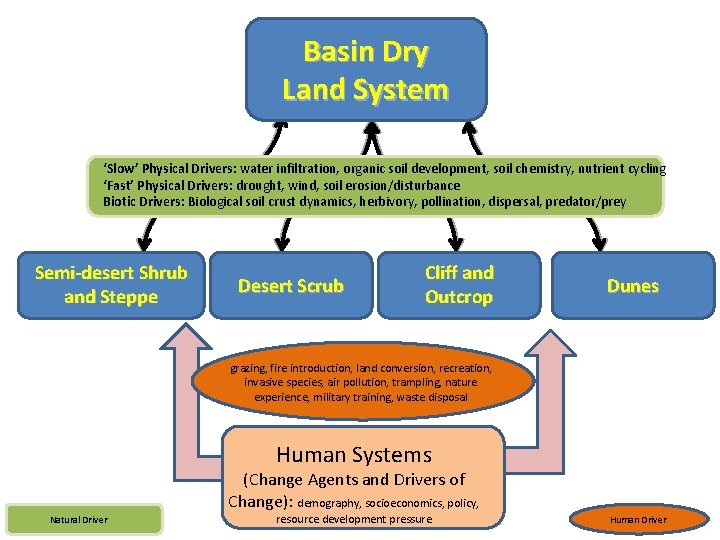
Basin Dry Land System ‘Slow’ Physical Drivers: water infiltration, organic soil development, soil chemistry, nutrient cycling ‘Fast’ Physical Drivers: drought, wind, soil erosion/disturbance Biotic Drivers: Biological soil crust dynamics, herbivory, pollination, dispersal, predator/prey Semi-desert Shrub and Steppe Desert Scrub Cliff and Outcrop Dunes grazing, fire introduction, land conversion, recreation, invasive species, air pollution, trampling, nature experience, military training, waste disposal Human Systems (Change Agents and Drivers of Change): demography, socioeconomics, policy, Natural Driver resource development pressure Human Driver
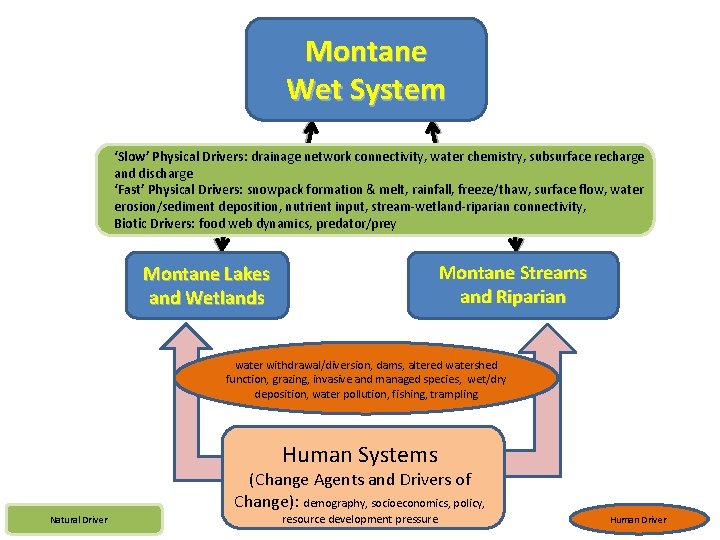
Montane Wet System ‘Slow’ Physical Drivers: drainage network connectivity, water chemistry, subsurface recharge and discharge ‘Fast’ Physical Drivers: snowpack formation & melt, rainfall, freeze/thaw, surface flow, water erosion/sediment deposition, nutrient input, stream-wetland-riparian connectivity, Biotic Drivers: food web dynamics, predator/prey Montane Streams and Riparian Montane Lakes and Wetlands water withdrawal/diversion, dams, altered watershed function, grazing, invasive and managed species, wet/dry deposition, water pollution, fishing, trampling Human Systems (Change Agents and Drivers of Change): demography, socioeconomics, policy, Natural Driver resource development pressure Human Driver
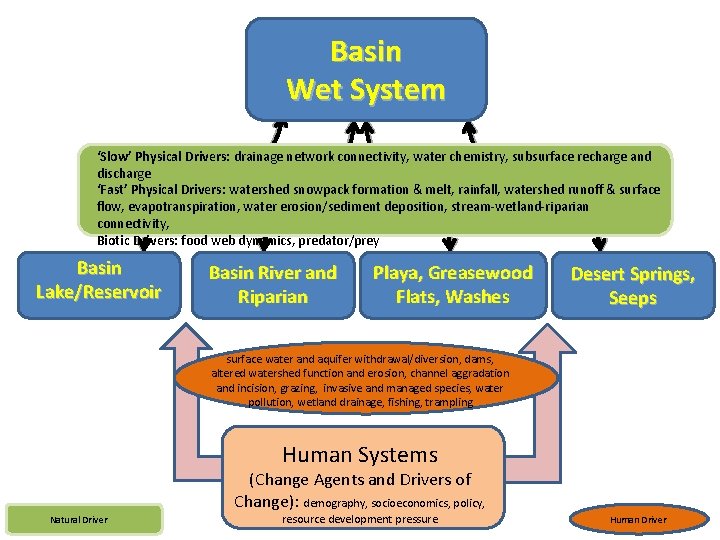
Basin Wet System ‘Slow’ Physical Drivers: drainage network connectivity, water chemistry, subsurface recharge and discharge ‘Fast’ Physical Drivers: watershed snowpack formation & melt, rainfall, watershed runoff & surface flow, evapotranspiration, water erosion/sediment deposition, stream-wetland-riparian connectivity, Biotic Drivers: food web dynamics, predator/prey Basin Lake/Reservoir Basin River and Riparian Playa, Greasewood Flats, Washes Desert Springs, Seeps surface water and aquifer withdrawal/diversion, dams, altered watershed function and erosion, channel aggradation and incision, grazing, invasive and managed species, water pollution, wetland drainage, fishing, trampling Human Systems (Change Agents and Drivers of Change): demography, socioeconomics, policy, Natural Driver resource development pressure Human Driver