
Economy Asia China India Japan North Korea China
- Slides: 24
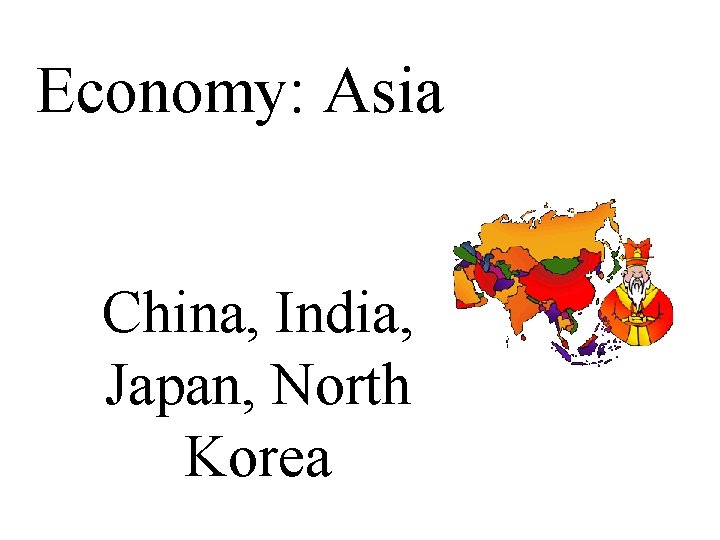
Economy: Asia China, India, Japan, North Korea
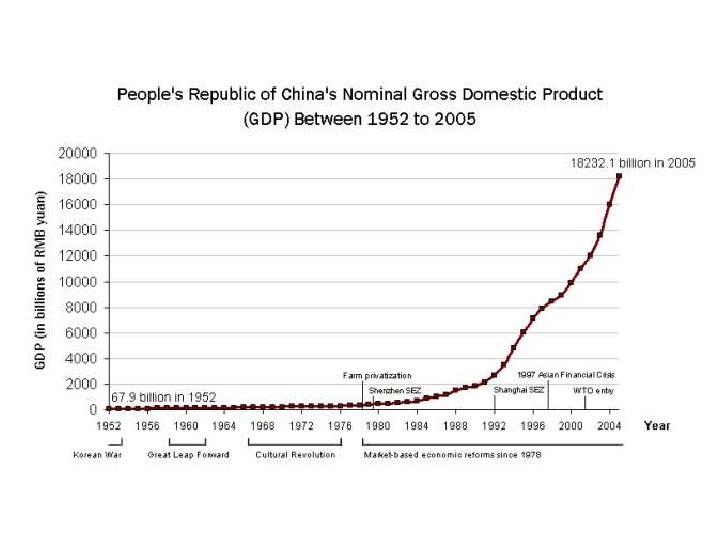
China • Calls itself a socialist market economy • Was a command economy moving to a mixed market economy – A. China’s economy has grown in the last 25 years
China Human Capital • Has improved education system, number of college students has grown, getting engineering degrees • Studies show engineering degrees = a growing economy • China has also invested in technical schools to train workers
China’s Capital Investment • Money has been used to help with manufacturing • Manufacturing is half of China’s GDP • Government helps fund small business • Private business is the fastest growing part of economy
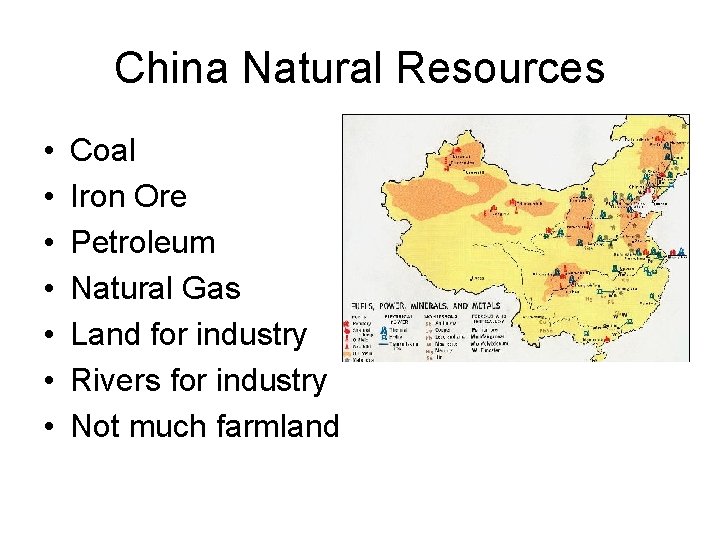
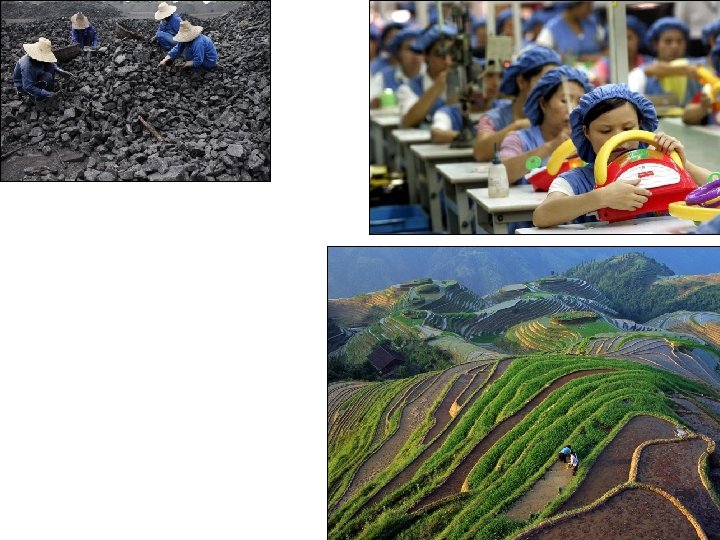
China Natural Resources • • Coal Iron Ore Petroleum Natural Gas Land for industry Rivers for industry Not much farmland
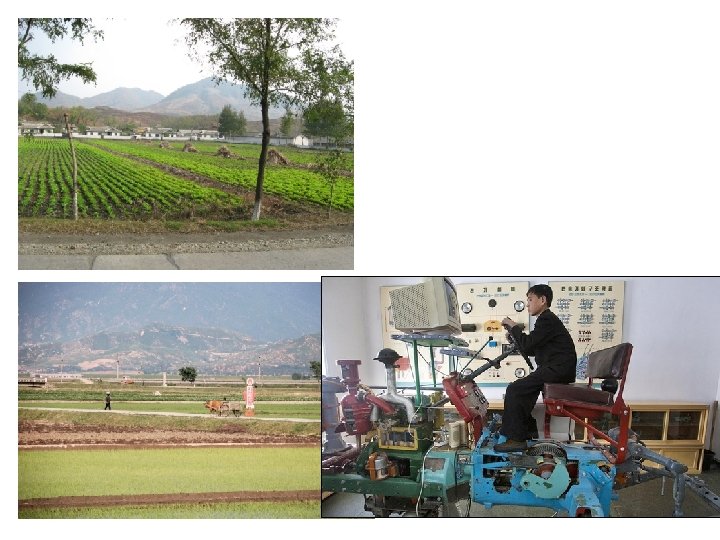
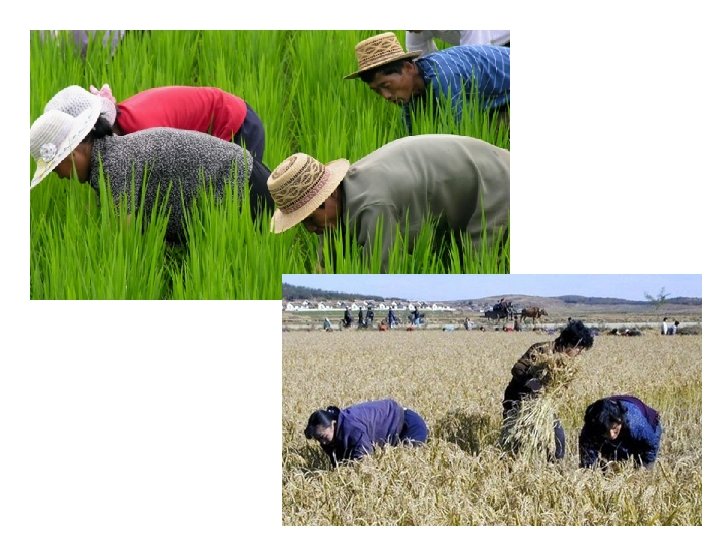
North Korea Command Economy – Government controls all the resources and decides what is to be produced – Farmers work on cooperatives - up to 300 families share the work Economy is not growing – Government is making reforms – Massive food aid from other countries has been needed to avoid starvation
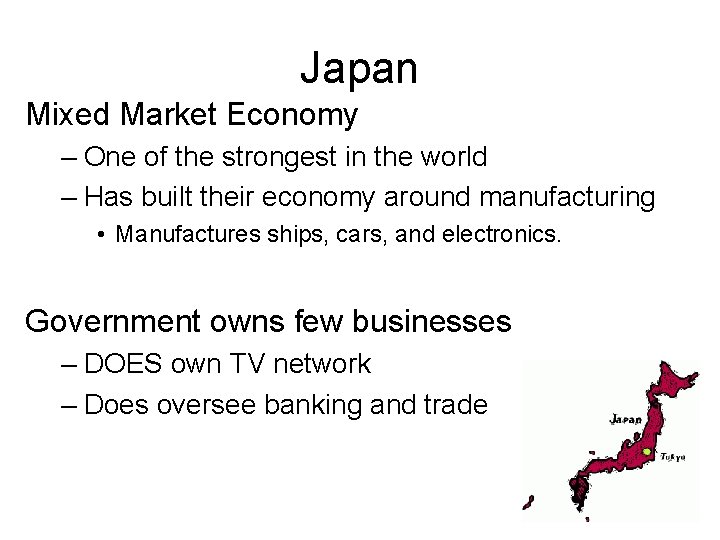
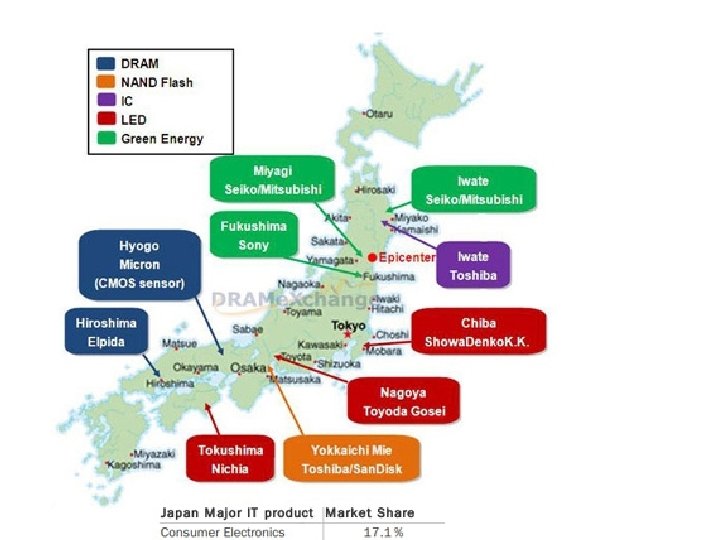
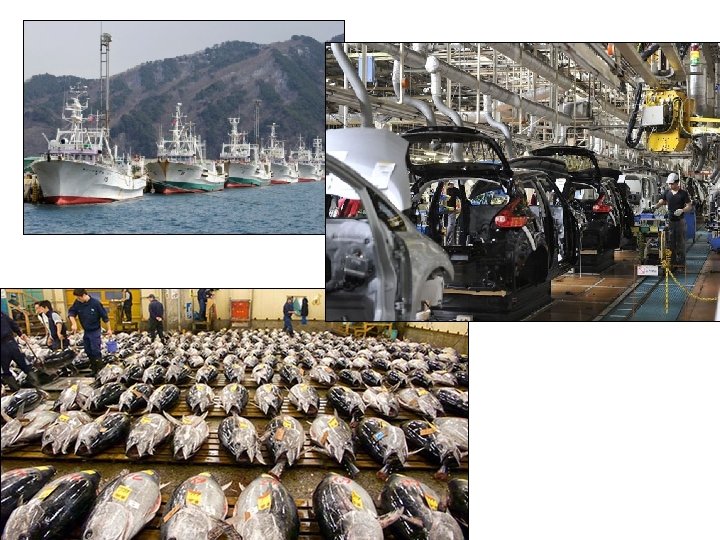
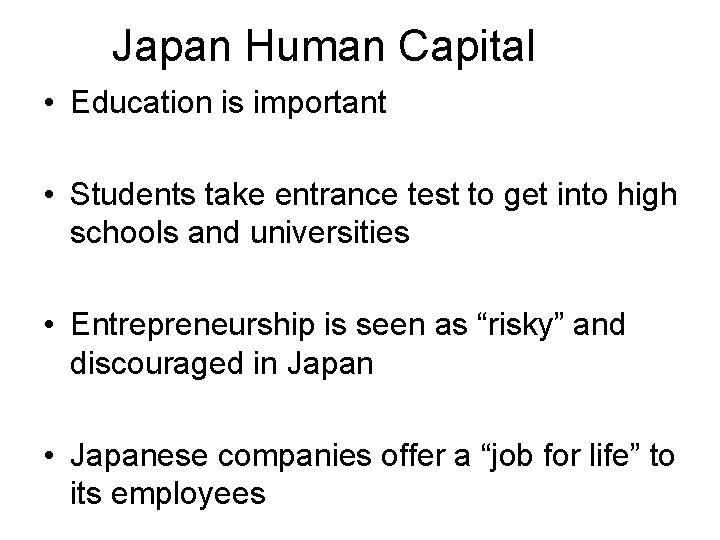
Japan Mixed Market Economy – One of the strongest in the world – Has built their economy around manufacturing • Manufactures ships, cars, and electronics. Government owns few businesses – DOES own TV network – Does oversee banking and trade
Japan Human Capital • Education is important • Students take entrance test to get into high schools and universities • Entrepreneurship is seen as “risky” and discouraged in Japan • Japanese companies offer a “job for life” to its employees
Japan Capital • Country has a history of investing in new technology • Tax breaks are given to individuals and corporations who have had high rates of savings • Savings have been used for new factories and machinery
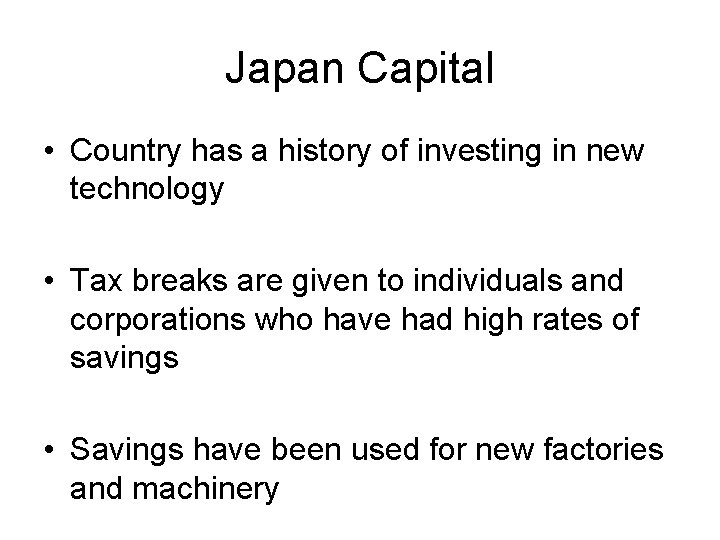
Japan Natural Resources • Very little farmland natural resources • Imports raw materials needed for industry • Fishing industry is large in Japan • Country uses its educated workforce and capital investment to overcome lack of natural resources
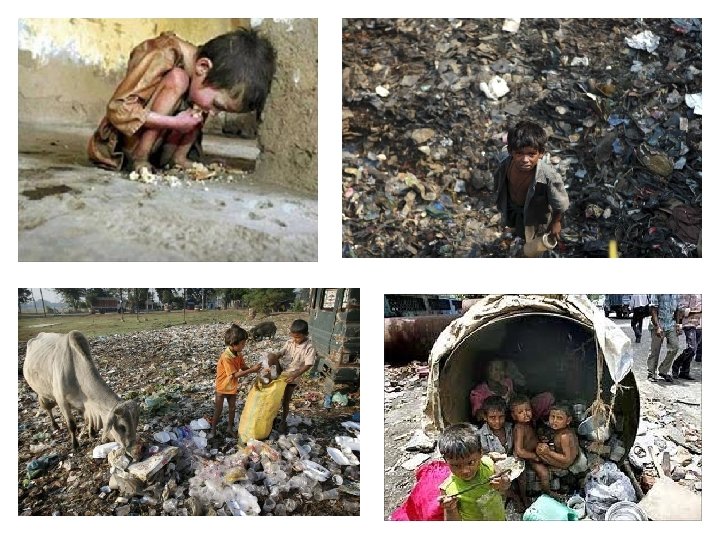
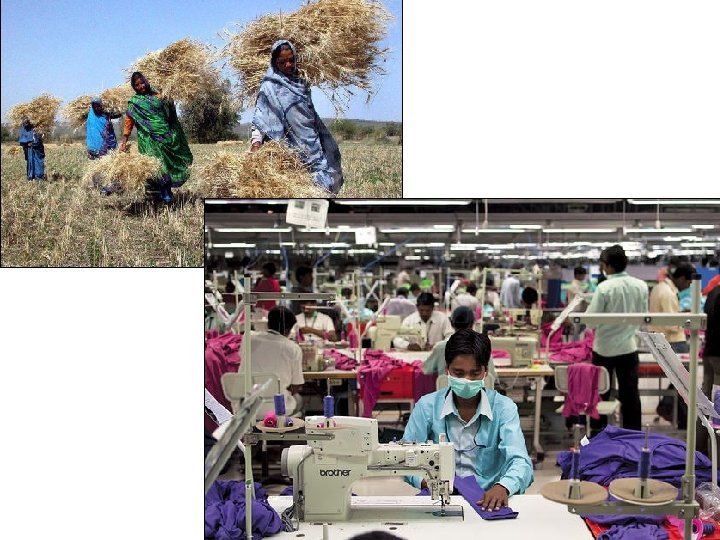
India 1947 - Set up a command economy – Government controlled industries and production 1991 - becoming more of a mixed economy – Reforms have been good for economy, but millions still live in extreme poverty
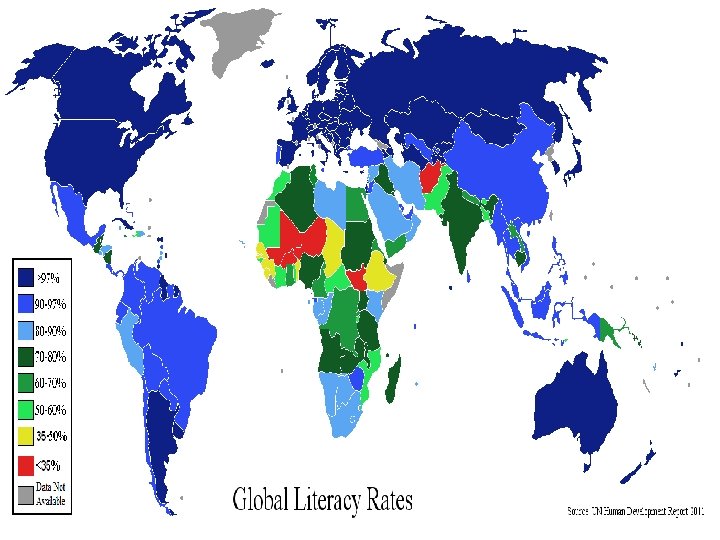
India Human Capital • Number of schools has grown • Overall literacy rate is 60%, but 95% for children 10 -14 years old • India’s government supports new business owners • People work in information technology • Government provides training and facilities
India Capital Investment • Neglected to invest in country’s infrastructure • Terrible road construction • Frequent power outages • Airports, railways, and power plants have suffered
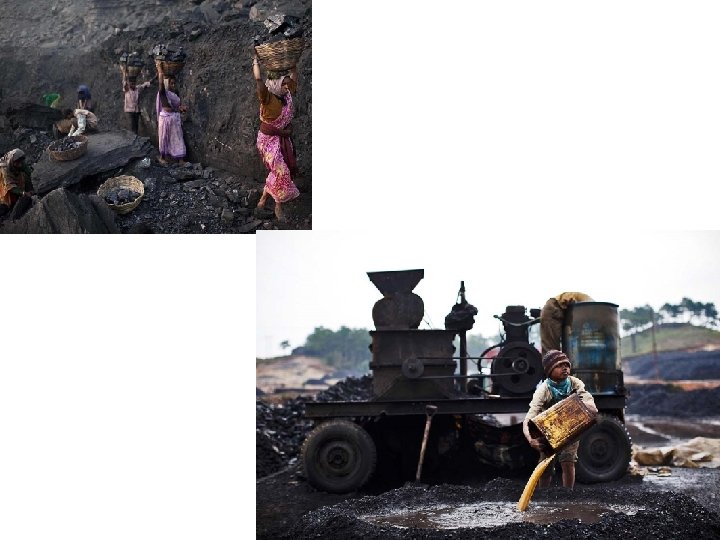
India Natural Resources • Has very fertile land • Good water supply • Important crops – rice and wheat • Forests • Coal Reserves