
Economics Overview Economic Systems of Ownership Resources Allocation
- Slides: 7
Economics Overview Economic Systems of Ownership
Resources: Allocation and Ownership ALLOCATION: WHO determines WHAT will be PRODUCED with available RESOURCES OWNERSHIP: WHO RECEIVES the BENEFITS of the RESOURCES and WHO has the RIGHT to SELL them
Different Types of Resource Allocation › Traditional: Based on what has been done historically; longstanding › Market: Individuals make the decisions about what will be produced › Command: Government determines what will be produced
Different forms of Ownership › Capitalist: Individuals Own Resources › MARKET › Socialist: State Owns Resources › COMMAND › Communal: People Own Collectively › i. e. Coops (don’t confuse with Soviet “Communism” where everything was state controlled)
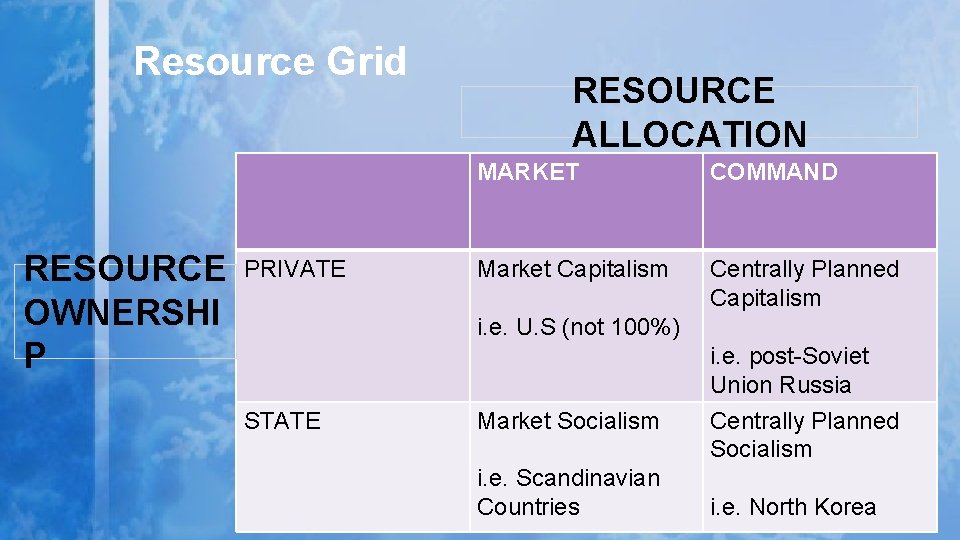
Resource Grid RESOURCE OWNERSHI P PRIVATE RESOURCE ALLOCATION MARKET COMMAND Market Capitalism Centrally Planned Capitalism i. e. U. S (not 100%) STATE Market Socialism i. e. Scandinavian Countries i. e. post-Soviet Union Russia Centrally Planned Socialism i. e. North Korea
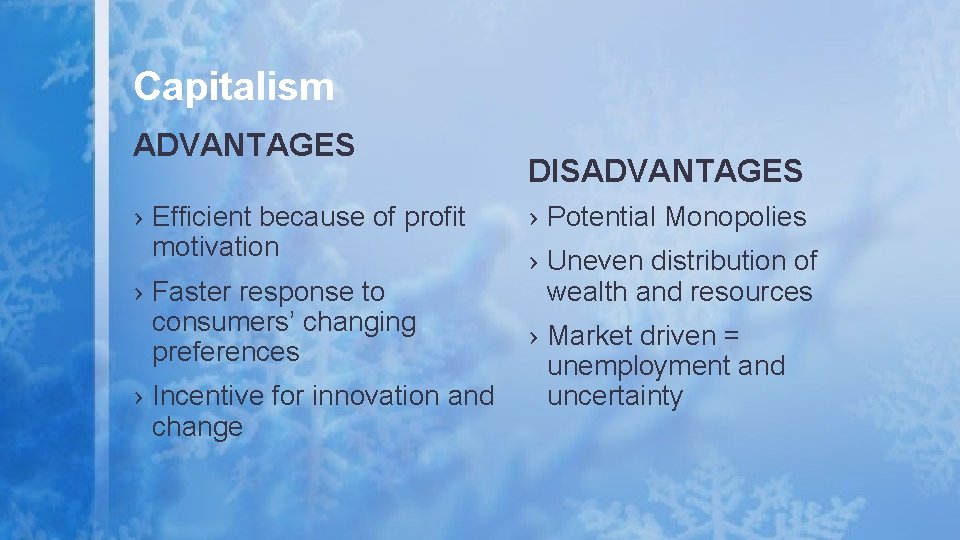
Capitalism ADVANTAGES › Efficient because of profit motivation › Faster response to consumers’ changing preferences › Incentive for innovation and change DISADVANTAGES › Potential Monopolies › Uneven distribution of wealth and resources › Market driven = unemployment and uncertainty
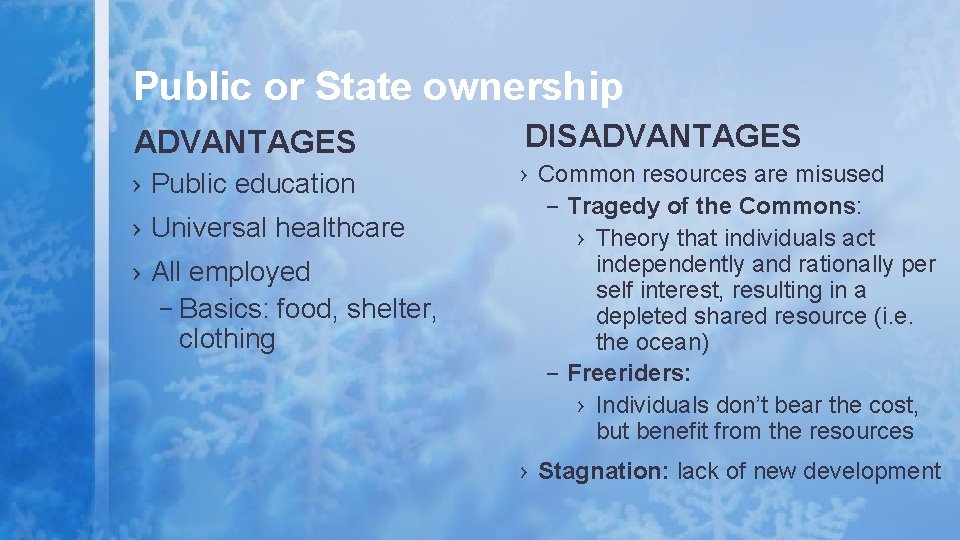
Public or State ownership ADVANTAGES › Public education › Universal healthcare › All employed – Basics: food, shelter, clothing DISADVANTAGES › Common resources are misused – Tragedy of the Commons: › Theory that individuals act independently and rationally per self interest, resulting in a depleted shared resource (i. e. the ocean) – Freeriders: › Individuals don’t bear the cost, but benefit from the resources › Stagnation: lack of new development