
ECONOMICS NOTES Chapter 1 What is the basic
ECONOMICS NOTES • Chapter 1
What is the basic economic problem? SCARCITY
Scarcity • Scarcity exists because of unlimited wants and needs with limited resources available
How can we deal with scarcity? 1. 2. 3. 4. 5. Legally Rationing Substitution Trade Locate other Sources Create Alternatives
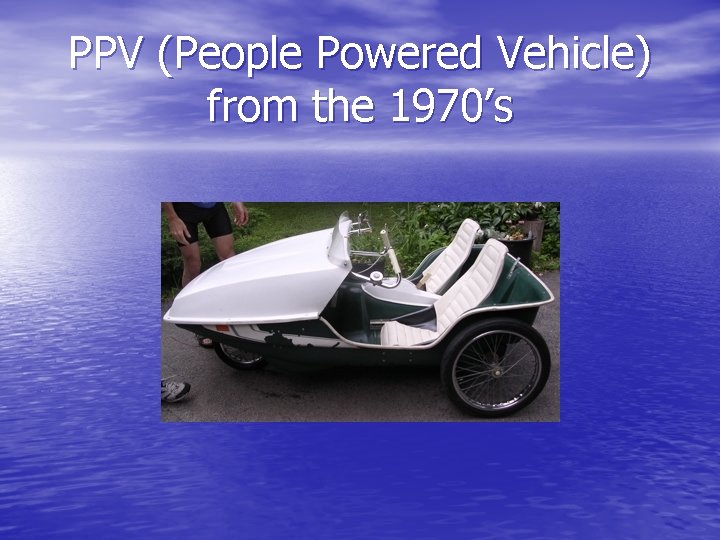
PPV (People Powered Vehicle) from the 1970’s
Illegal 1. 2. 3. Theft Blackmarket Counterfeit
• Economics – The Study of how goods and services are produced, distributed and consumed • Good – tangible products • Service – intangible items of value • ex. - haircut, oil change, education • Production – creation of goods and services
Basic Economic Questions: • What? To produce • How? To produce it • For Whom? Who benefits from the production
Factors of Production – resources necessary for production to take place • • Land – natural resource ex. Tree in the forest, coal in the ground Labor – human resource ex. Person cutting down the tree Capital – man made resource ex. The tree after it is cut down Entrepreneurship – organizational resource ex. The person who decides what trees are cut, hires the workers, and oversees the production.
• Financial Capital – money used to buy products • Capital goods – tools, equipment or other manufactured goods used to produce other goods/services.
• Model – tool used by economists to make predictions ex charts, graphs, diagrams • Data – factual information • Predictions – educated guesses based on data * the more data, the more accurate the predictions
• Division of Labor – dividing up jobs into specific tasks ex assembly Line • which leads to • Specialization – becoming skilled at a specific task ex. Teacher, electrician, auto mechanics etc. • Which leads to • Specialized Capital – tools used for a specific task ex. X-ray machine, hydraulic lift • Wealth – accumulation of goods and/or resources
• Economic Interdependence – economic activities in one part of the country or world affects what happens elsewhere, work in your specialty and you are dependent on others to provide your other needs. • Income – flow of value • You do not have to have a high income to become wealthy, and if you have a high income it does not guarantee that you will be wealthy
Trade-Off – giving up one thing in exchange for something else • Opportunity Cost – the value of the item you • • give up when a choice or decision is made Example – Next year you have the choice of going to work or going to college. If you choose to go to college, what is your opportunity cost? – The money you would earn working. • If you choose to work instead, what is your opportunity cost? – The increased earnings you will have in the future.
Rational Choice – giving up something of lesser value in exchange for something of greater value • Utility – usefulness of an item
Market – where products and resources are bought and sold • Factor Market – where the 4 factors of production are bought and sold • Product Market – Market where all final goods/services are bought and sold
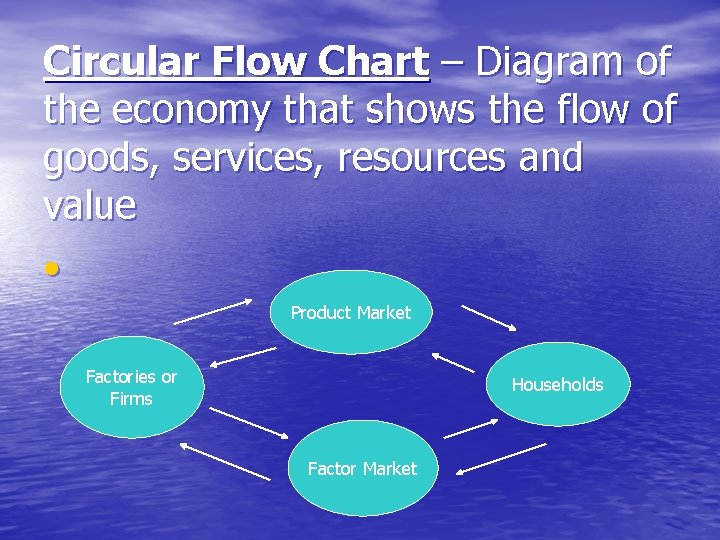
Circular Flow Chart – Diagram of the economy that shows the flow of goods, services, resources and value • Product Market Factories or Firms Households Factor Market
What is missing? Where else would your money go? Banks, government, other countries in trade
Graphs: • X axis is the horizontal axis • Y axis is the vertical axis • A graph is a model not reality, because it can not include all of the factors.
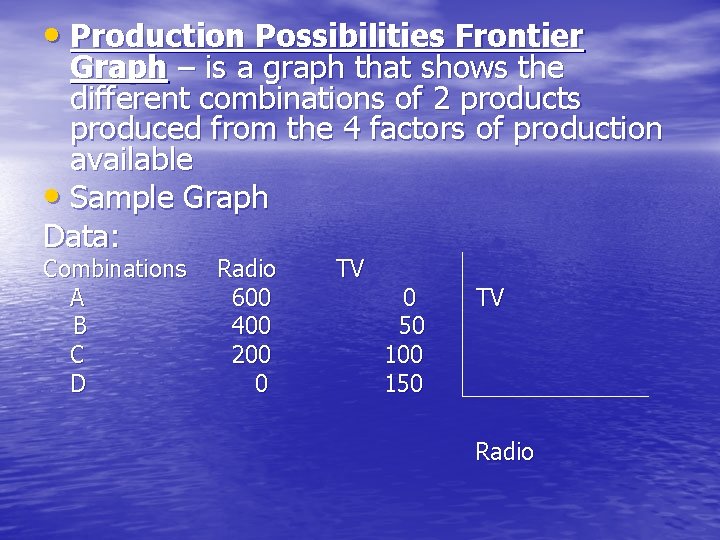
• Production Possibilities Frontier Graph – is a graph that shows the different combinations of 2 products produced from the 4 factors of production available • Sample Graph Data: Combinations A B C D Radio 600 400 200 0 TV 0 50 100 150 TV Radio
• If production appears inside the production possibilities frontier (pt p) this means? • – the firm is not using all of it’s factors of production OR – it is not using it’s resources efficiently • Production represented by the curve is at maximum efficiency • Production can not take place outside the frontier at this time. In order for production to take place outside the frontier in would require. . . • – More resources Or – New technology
Decision Making Process: • The 5 steps include: • Define the problem • list alternatives (choices) • List Criteria (priorities or what is important to • • you) Evaluate (+means it meets the criteria, - means it does not) Make a decision

Sample: What college should I attend?
- Slides: 23