
Economics in the Industrial revolution EQ How did




- Slides: 12
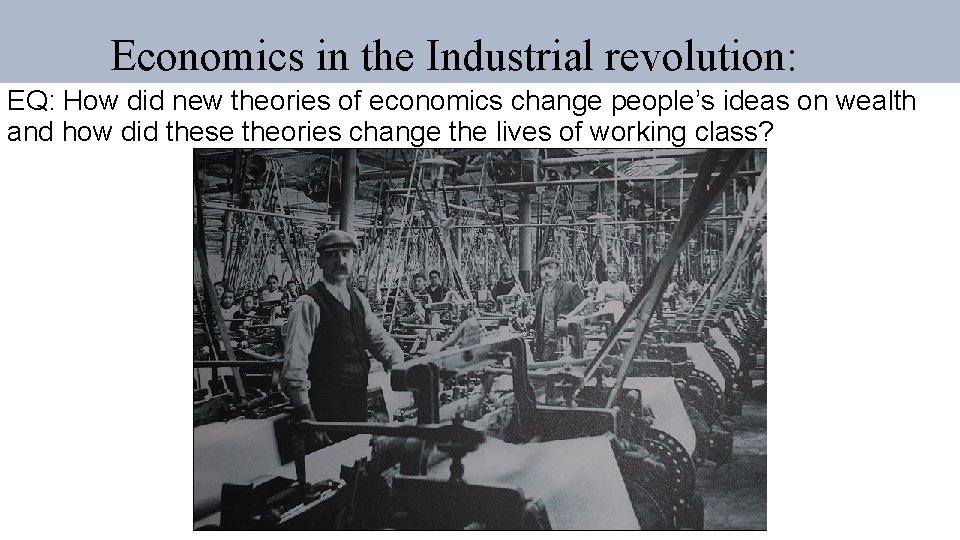
Economics in the Industrial revolution: EQ: How did new theories of economics change people’s ideas on wealth and how did these theories change the lives of working class?
The Lifestyle of the Average Person in 1800 Europe • Worked as laborers (physical labor) • Made about enough money to support 1 -2 persons (if male) • Lived in small apartments with their families • Married by age 17 • Had between 6 -14 children • Uneducated
The Working Life of the Average Person in 1800 Europe • 14 -16 hours per day • 6 days per week (Sunday for Church) • No chance for promotion • No safety • No job security • Could be fired for no reason • No benefits • No retirement • Mind-Numbingly boring work
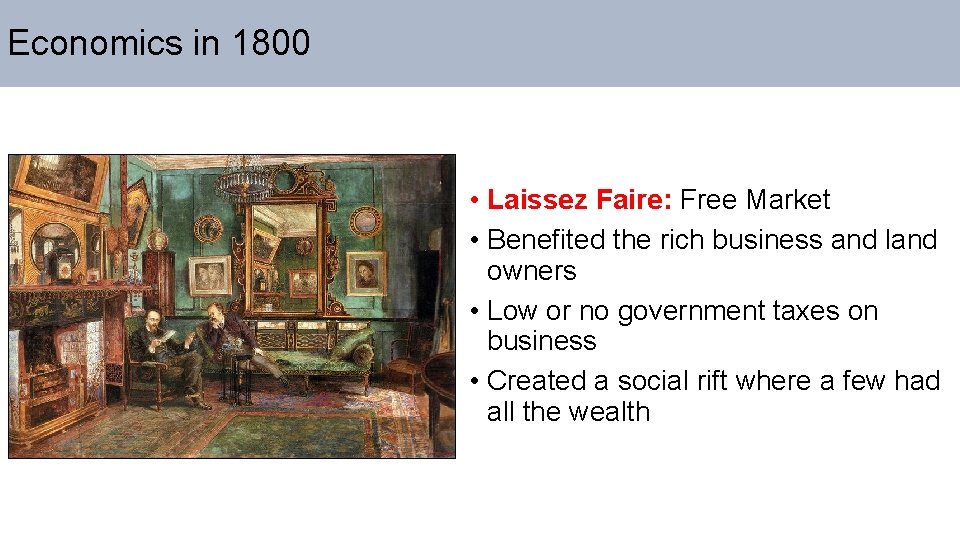
Economics in 1800 • Laissez Faire: Free Market • Benefited the rich business and land owners • Low or no government taxes on business • Created a social rift where a few had all the wealth
WHAT TO DO? ? ?
Organization of Labor • Starting in the early 1800’s unions were formed • Collective bargaining: a process of negotiation between employers and a group of employees aimed at reaching agreements to regulate working conditions. • Strikes were carried out to gain rights and raises • Eventually improved the lives of workers
Government Regulations • Factory Act of 1833: Workdays for children 9 -16 years old limited to 8 hours, 13 -18 limited to 12 hours. Children under 13 must receive education for 2 hours per workday, paid for by the worker. • Mines Act of 1842: women, girls, and boys under the age of 10 prohibited from underground work. • Factory Act of 1844: workday for women and children aged 8 -13 limited to 6. 5 hours a day. Children must receive a minimum of 3 hours of education each day. Women forbidden
Growing Middle Class • Middle Class: In between rich and poor with some disposable income • Contributing to the Rise of the Middle Class -Collective Bargaining -Labor Laws -Education -Increased Wages
Luddites • Attacked Machines and factories -Machines caused unemployment • Attacked wealthy business owners • Disagreed with the disparity of wealth created by the factory movement
Socialism • An economic system that attempts to re-distribute the wealth -Higher taxes -Social Programs -Labor and Business regulations or control -Works, but not liked by all
Capitalism • An economic system that is based on private ownership of business and profit motive -Lower/No taxes -Few/No Social Programs -lack of wealth distribution -Works, but not liked by all
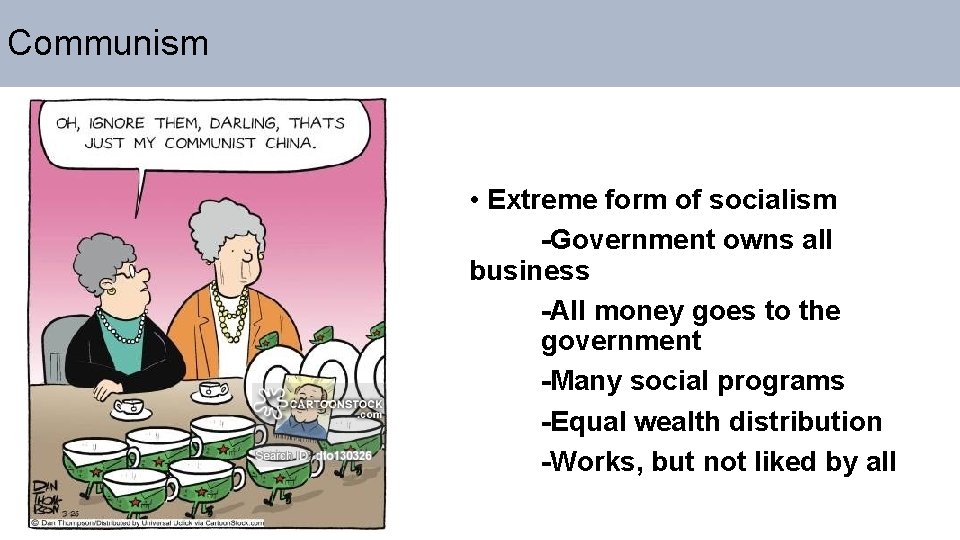
Communism • Extreme form of socialism -Government owns all business -All money goes to the government -Many social programs -Equal wealth distribution -Works, but not liked by all