
ECONOMICS CHAPTER 3 SECTION 4 PROVIDING A SAFETY
- Slides: 17
ECONOMICS CHAPTER 3 SECTION 4: PROVIDING A SAFETY NET
INCOME AND POVERTY • In a market economy, income depends primarily on earnings, which depend on the value of each person’s contribution to production.
WHY HOUSEHOLD INCOMES DIFFER • The median income of households is the middle income when incomes are ranked from lowest to highest.
• The main reason household incomes differ is that the number of household members who are working differs. • At every age, people with more education earn more on average. • Those with a professional degree earn about four times as much as those with only a high school education.
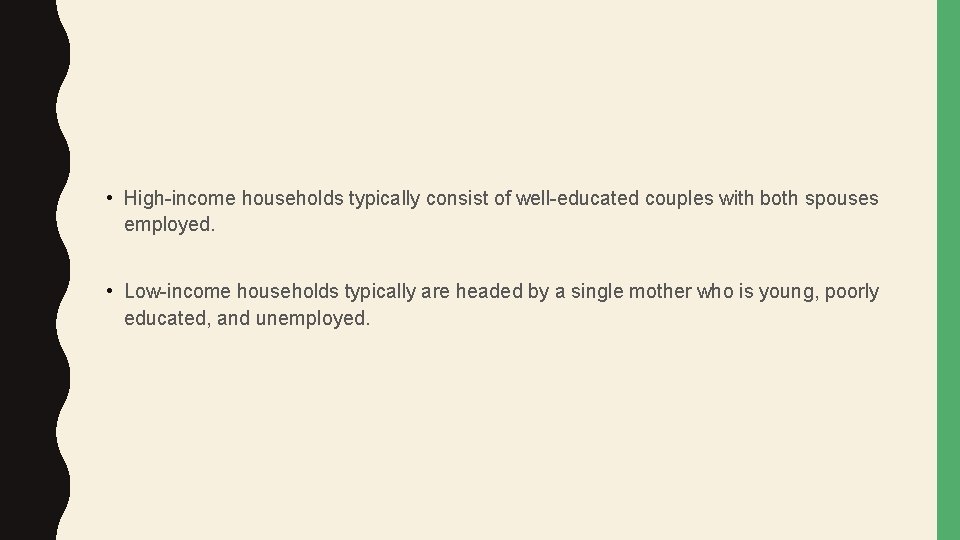
• High-income households typically consist of well-educated couples with both spouses employed. • Low-income households typically are headed by a single mother who is young, poorly educated, and unemployed.
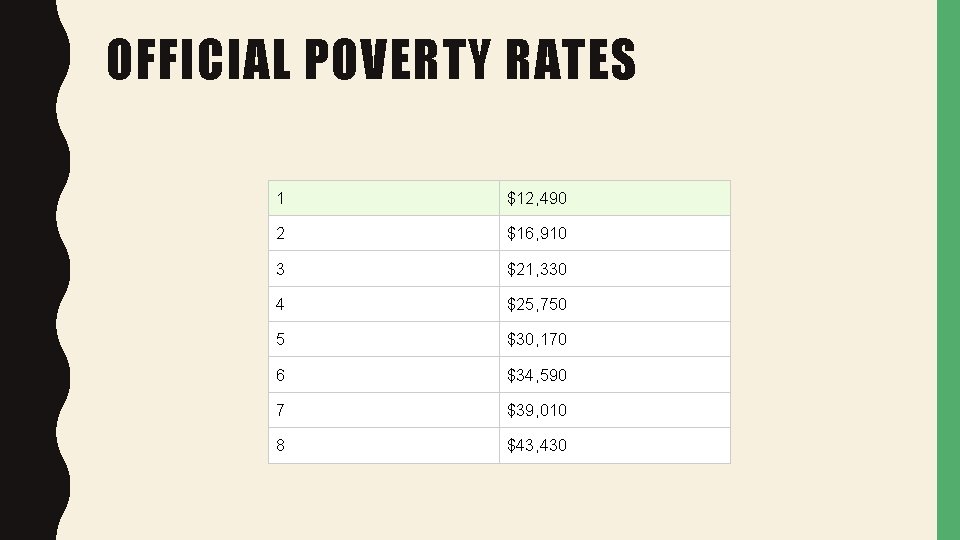
OFFICIAL POVERTY RATES 1 $12, 490 2 $16, 910 3 $21, 330 4 $25, 750 5 $30, 170 6 $34, 590 7 $39, 010 8 $43, 430
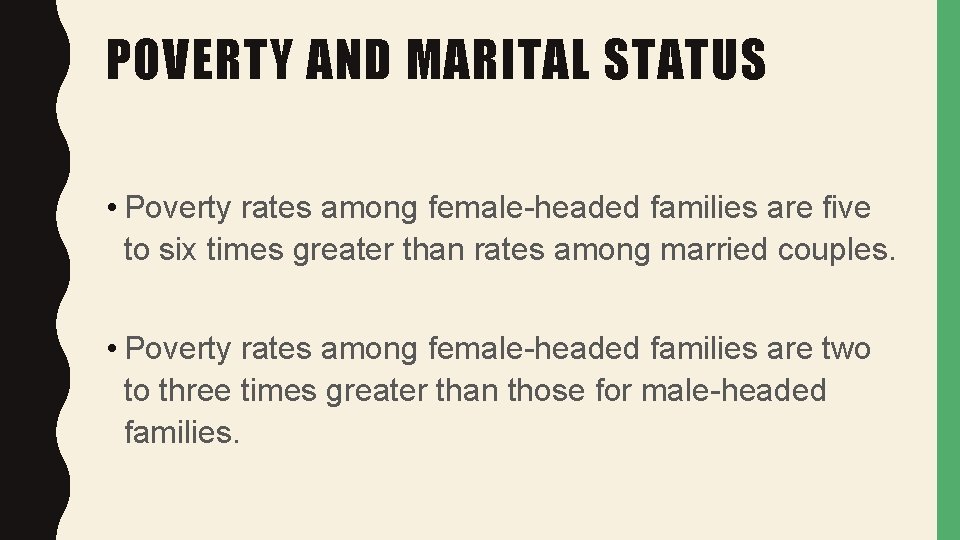
POVERTY AND MARITAL STATUS • Poverty rates among female-headed families are five to six times greater than rates among married couples. • Poverty rates among female-headed families are two to three times greater than those for male-headed families.
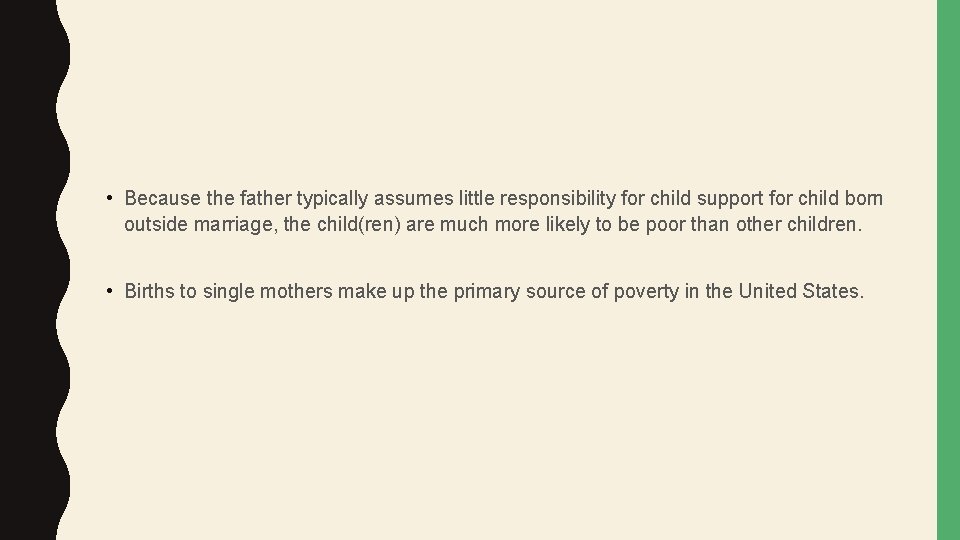
• Because the father typically assumes little responsibility for child support for child born outside marriage, the child(ren) are much more likely to be poor than other children. • Births to single mothers make up the primary source of poverty in the United States.
PROGRAMS TO HELP THE POOR • Social insurance programs are designed to help make up for the lost income of people who worked but are now retired, temporarily employed, or unable to work because of disability or work-related injury.
• Social Security, established during the Great Depression of the 1930 s, provides retirement income for those with a work history and a record of making payments to the program.
• Medicare provides health insurance for shortterm medical care, mostly to these age 65 and older, regardless of income.
INCOME-ASSISTANCE PROGRAMS • Welfare Programs provide money and in-kind assistance to poor people. • In-kind assistance is help in the form of goods and services.
• Means-tested program – A household’s income and assets must fall below a certain level to qualify for benefits.
CASH TRANSFER PROGRAMS • Temporary Assistance for Needy Families (TANF) – Provides cash to poor families with dependent children.
• Supplemental Security Income (SSI) –Provides cash to the elderly poor and the disabled.
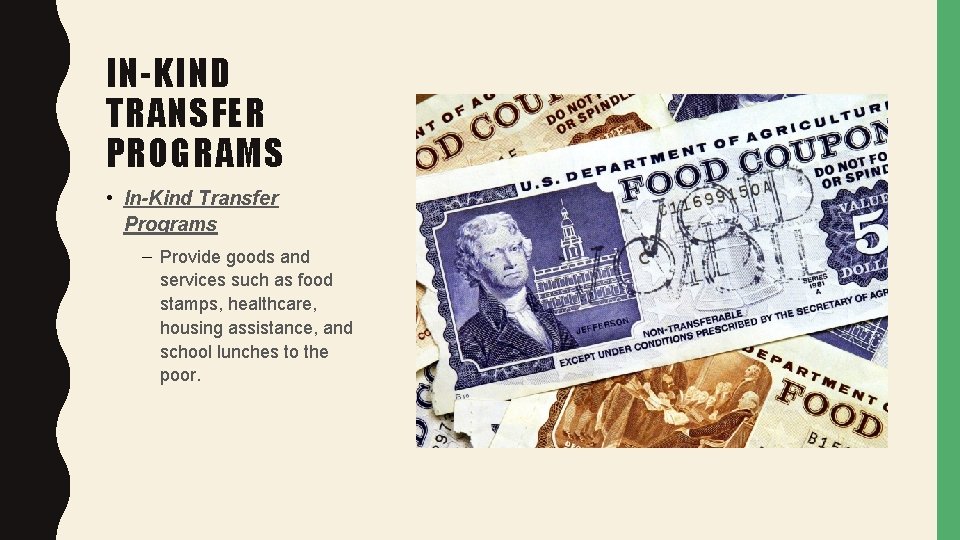
IN-KIND TRANSFER PROGRAMS • In-Kind Transfer Programs – Provide goods and services such as food stamps, healthcare, housing assistance, and school lunches to the poor.
• Earned- Income Tax Credit – Supplements wages of the working poor. – Instead of paying income tax, a family could receive around 4, 000 dollars if they are under the poverty level.