
Economic Systems Chapter 2 Lesson 1 Economies Based
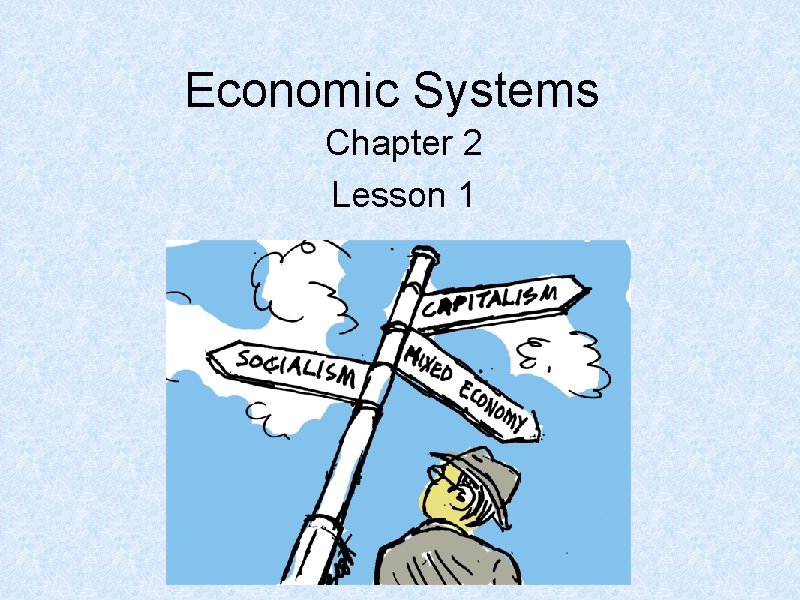
Economic Systems Chapter 2 Lesson 1
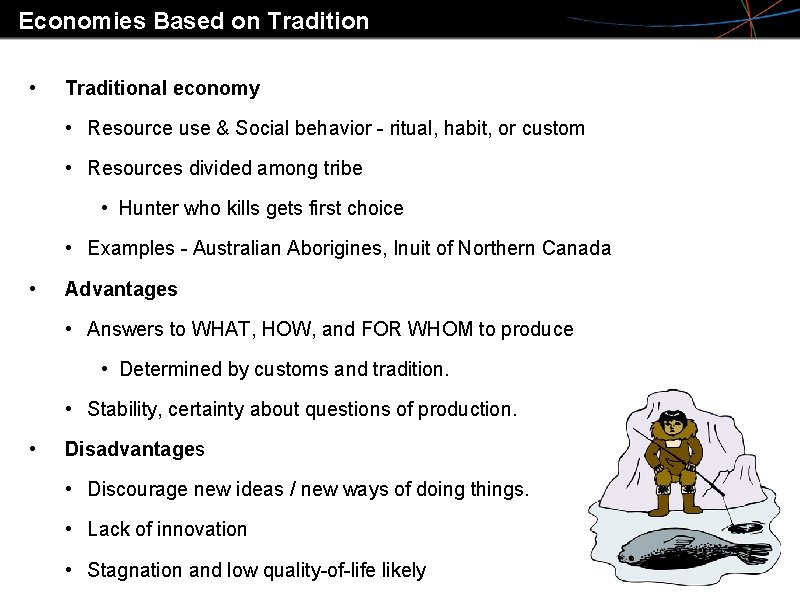
Economies Based on Tradition • Traditional economy • Resource use & Social behavior - ritual, habit, or custom • Resources divided among tribe • Hunter who kills gets first choice • Examples - Australian Aborigines, Inuit of Northern Canada • Advantages • Answers to WHAT, HOW, and FOR WHOM to produce • Determined by customs and tradition. • Stability, certainty about questions of production. • Disadvantages • Discourage new ideas / new ways of doing things. • Lack of innovation • Stagnation and low quality-of-life likely
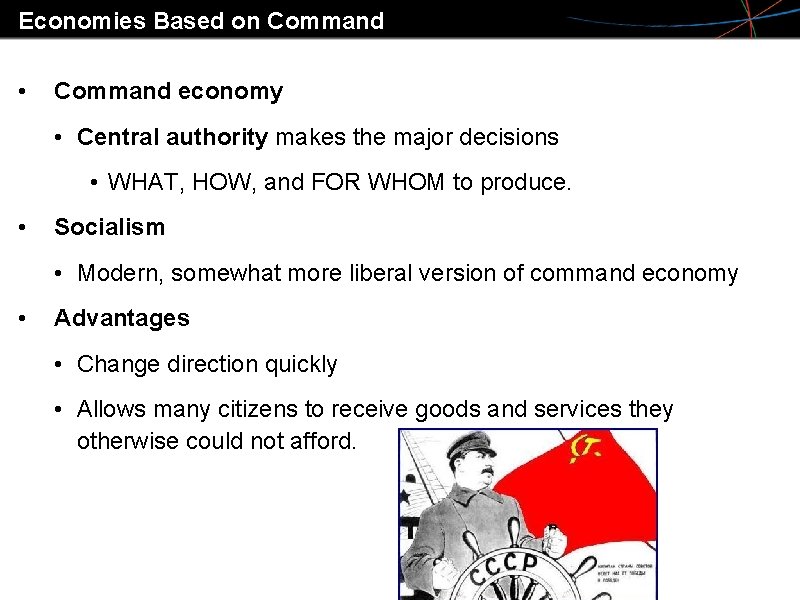
Economies Based on Command • Command economy • Central authority makes the major decisions • WHAT, HOW, and FOR WHOM to produce. • Socialism • Modern, somewhat more liberal version of command economy • Advantages • Change direction quickly • Allows many citizens to receive goods and services they otherwise could not afford.
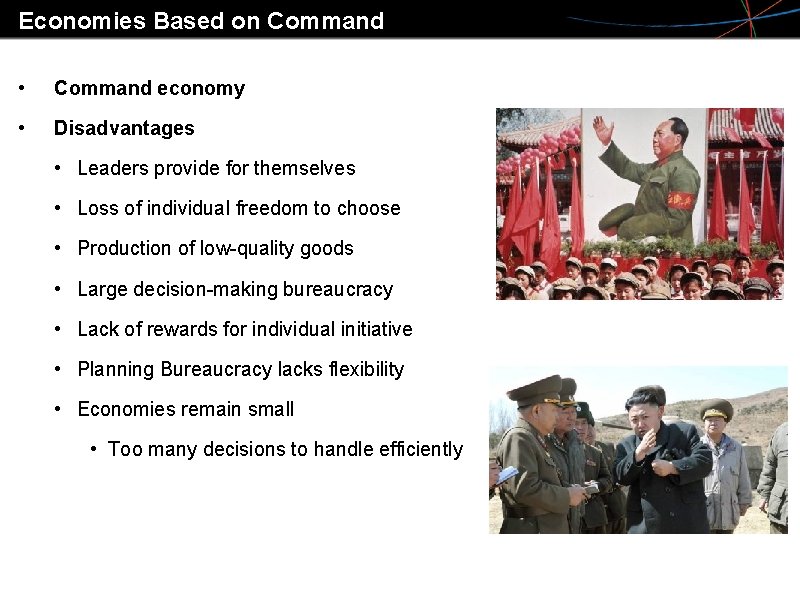
Economies Based on Command • Command economy • Disadvantages • Leaders provide for themselves • Loss of individual freedom to choose • Production of low-quality goods • Large decision-making bureaucracy • Lack of rewards for individual initiative • Planning Bureaucracy lacks flexibility • Economies remain small • Too many decisions to handle efficiently
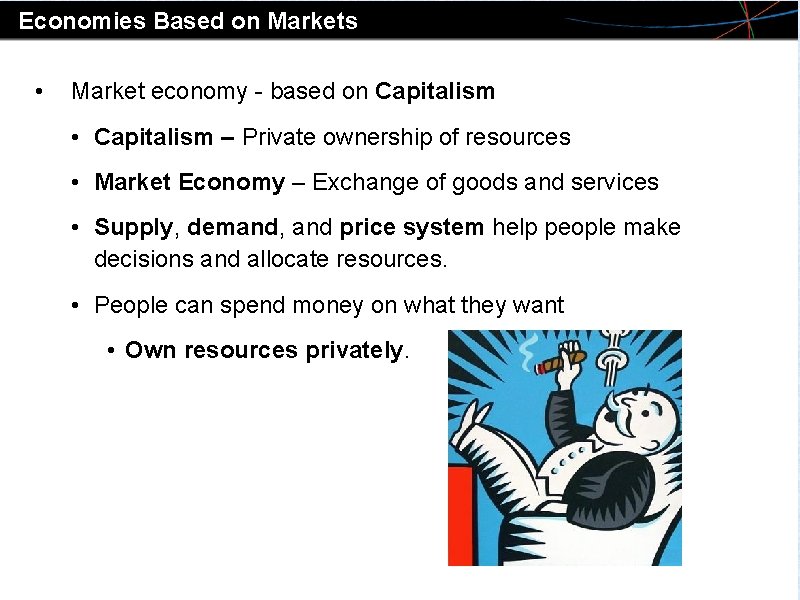
Economies Based on Markets • Market economy - based on Capitalism • Capitalism – Private ownership of resources • Market Economy – Exchange of goods and services • Supply, demand, and price system help people make decisions and allocate resources. • People can spend money on what they want • Own resources privately.
Economies Based on Markets • Advantages • High degree of individual freedom • Adjusts gradually to change • Small degree of government interference • Decentralized decision making • Variety of goods and services • High degree of customer satisfaction • Incentive to take care of private property • Disadvantages • Not providing for basic needs of everyone • Shortage of some services • High degree of uncertainty
- Slides: 6