
ECONOMIC STABILIZATION POLICIES Keynesian Economics versus Supply Side
ECONOMIC STABILIZATION POLICIES Keynesian Economics versus Supply Side Economics
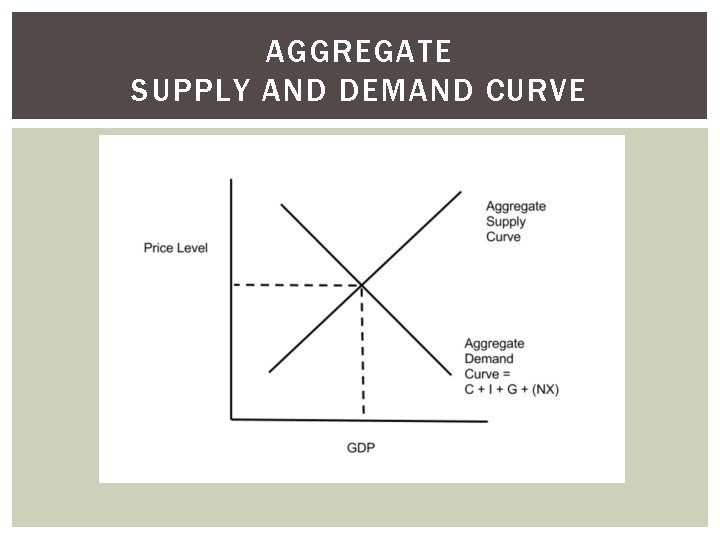
AGGREGATE SUPPLY AND DEMAND CURVE
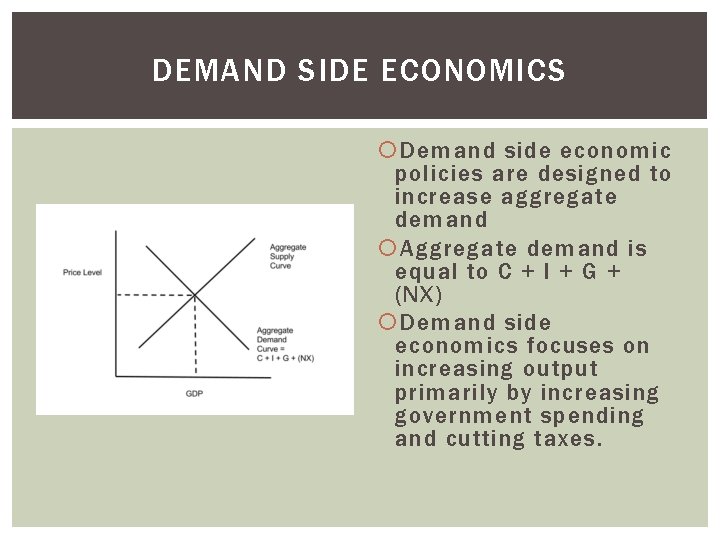
DEMAND SIDE ECONOMICS Demand side economic policies are designed to increase aggregate demand Aggregate demand is equal to C + I + G + (NX) Demand side economics focuses on increasing output primarily by increasing government spending and cutting taxes.
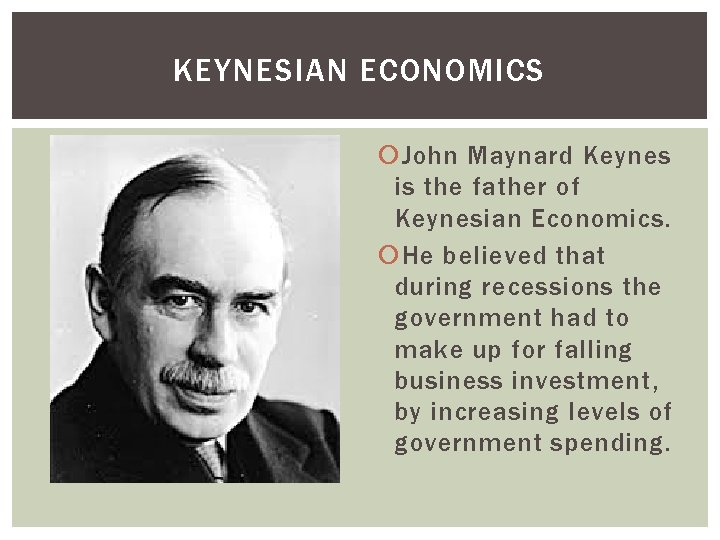
KEYNESIAN ECONOMICS John Maynard Keynes is the father of Keynesian Economics. He believed that during recessions the government had to make up for falling business investment, by increasing levels of government spending.
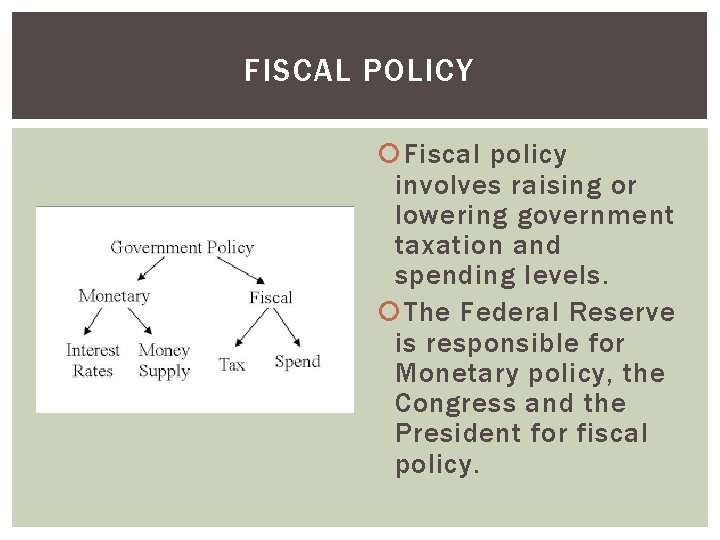
FISCAL POLICY Fiscal policy involves raising or lowering government taxation and spending levels. The Federal Reserve is responsible for Monetary policy, the Congress and the President for fiscal policy.
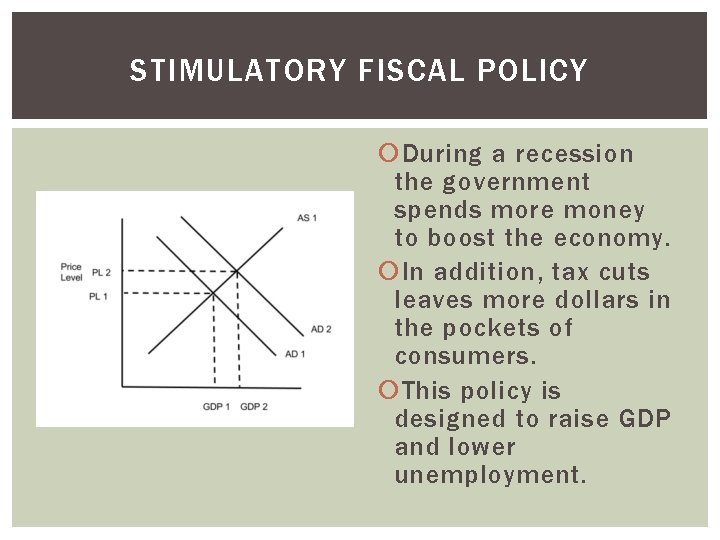
STIMULATORY FISCAL POLICY During a recession the government spends more money to boost the economy. In addition, tax cuts leaves more dollars in the pockets of consumers. This policy is designed to raise GDP and lower unemployment.
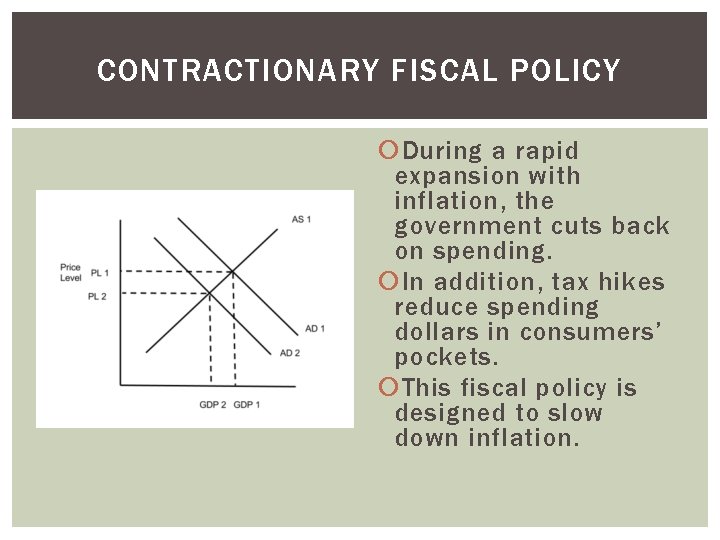
CONTRACTIONARY FISCAL POLICY During a rapid expansion with inflation, the government cuts back on spending. In addition, tax hikes reduce spending dollars in consumers’ pockets. This fiscal policy is designed to slow down inflation.
SUPPLY SIDE ECONOMICS Supply side economics became popular with the Reagan Administration in the 1980’s. Supply side economics focused on shrinking government spending and lowering taxes for business and individuals
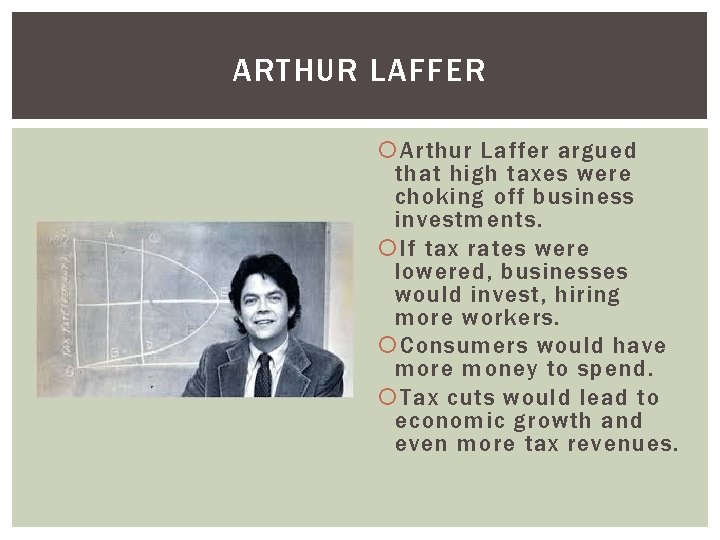
ARTHUR LAFFER Arthur Laffer argued that high taxes were choking off business investments. If tax rates were lowered, businesses would invest, hiring more workers. Consumers would have more money to spend. Tax cuts would lead to economic growth and even more tax revenues.
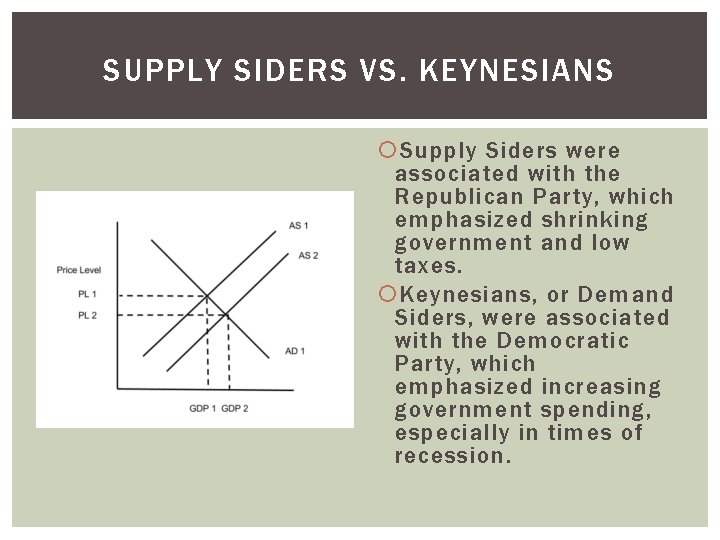
SUPPLY SIDERS VS. KEYNESIANS Supply Siders were associated with the Republican Party, which emphasized shrinking government and low taxes. Keynesians, or Demand Siders, were associated with the Democratic Party, which emphasized increasing government spending, especially in times of recession.
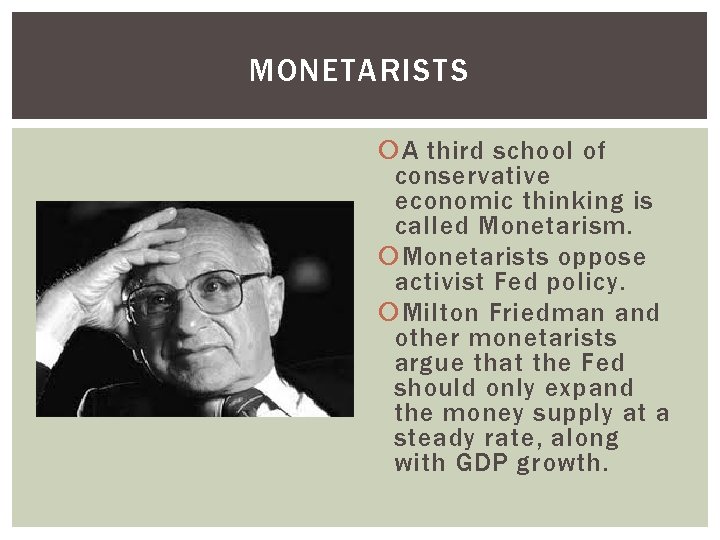
MONETARISTS A third school of conservative economic thinking is called Monetarism. Monetarists oppose activist Fed policy. Milton Friedman and other monetarists argue that the Fed should only expand the money supply at a steady rate, along with GDP growth.
- Slides: 11