
Economic Sectors Created by David Welshman HHM How
Economic Sectors Created by : David Welshman – HHM
How the marketplace is organized Economic activity may be classified into various categories, according to purpose. When considering business ownership the classifications public & private are typically used. Also classified according to what type of economic good is produced. (primary, secondary, tertiary, quaternary)
Business Ownership: Private Sector usually composed of organizations that are privately owned and not part of the government. corporations (both profit and non-profit), partnerships, and charities. retail stores, credit unions, & local businesses will operate in the private sector.
Business Ownership: Public Sector composed of organizations that are owned and operated by the government (federal, provincial, or municipal governments, depending on where you live). educational bodies, health care bodies, police and prison services, and local and central government bodies and their departments
What is Produced: Industry Types When looking at what is actually produced for us, it is important to distinguish between the main types of industries Primary Secondary Tertiary Quaternary

What is Produced: Primary This involves the extraction or harvesting of resources directly from the Earth Includes the production of raw material and basic foods. Examples include farming, mining and logging. (They do not process the products at all rather send it off to factories to make a profit).
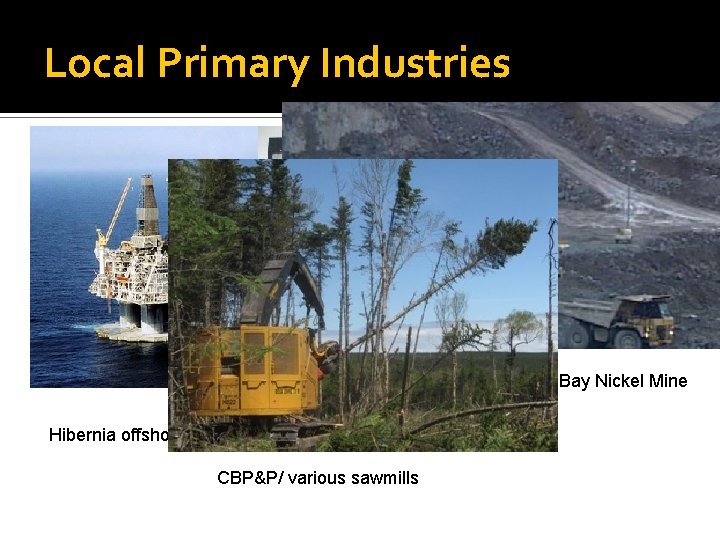
Local Primary Industries Voisey’s Bay Nickel Mine Hibernia offshore oil Fishery (Traditional) CBP&P/ various sawmills
What is Produced: Secondary This group is involved in the processing of finished products from primary industries All of manufacturing, processing, and construction lies within this sector This includes all factories—those that refine metals, produce furniture, or pack farm products such as meat.
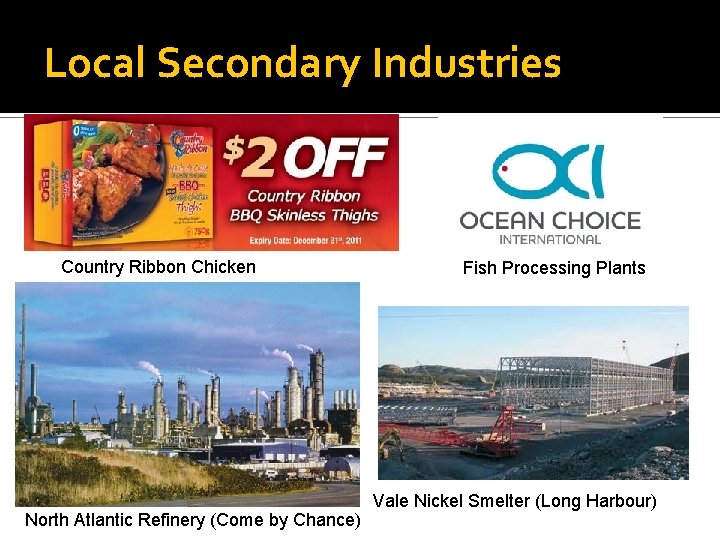
Local Secondary Industries Country Ribbon Chicken North Atlantic Refinery (Come by Chance) Fish Processing Plants Vale Nickel Smelter (Long Harbour)
Local Secondary Industries Made Right Here…. NTV series hosted by Danielle Butt which provides brief profiles of local manufacturing companies and the products that they produce http: //ntv. ca/? cat=26
What is Produced: Tertiary Known as the service industry provides services to the general population & to businesses In 2005, over 75% of Canadians worked here Examples include retail/wholesales, entertainment, education, health care, tourism, garages,
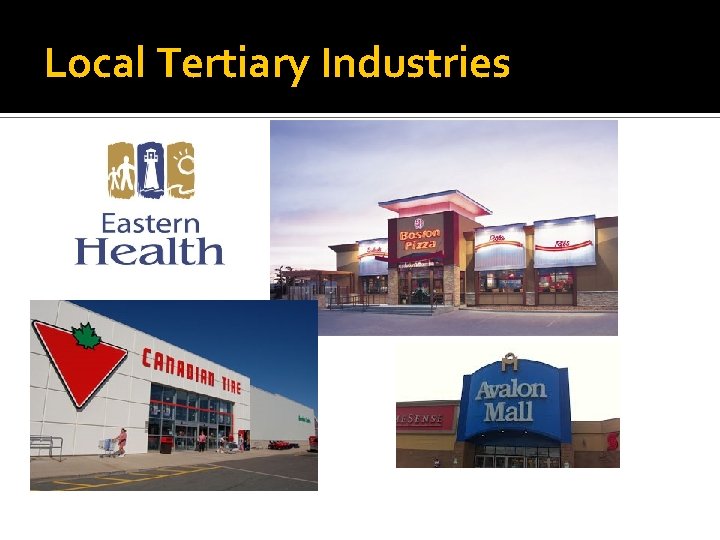
Local Tertiary Industries
What is Produced: Quaternary Is service based like the tertiary sector, but it entails the use of high technology to produce, retrieve, store and distribute information. Research & Development (R&D) Using computers to develop information- processing software. Using computers to analyze city traffic flows to provide information on suitable locations for new businesses.
Local Quaternary Industries simulators for survival craft Hibernia invests 12 million in MUN ROV tech/applications
A Quick Review http: //video. about. com/geography/What-is- an-Economic-Sector. htm We have been introduced to the idea of a 5 th sector – the Quinary Sector (branching from the quaternary) – however, for the purposes of this course, it will not be necessary to pursue this further than knowing it is recognized.
The 4 Sectors of Industry are interrelated. An individual industry will often use more than one sector in order to produce products. On the next slide we will see an example of how the four sectors relate together in the production of cotton clothes, part of the fashion industry. 16
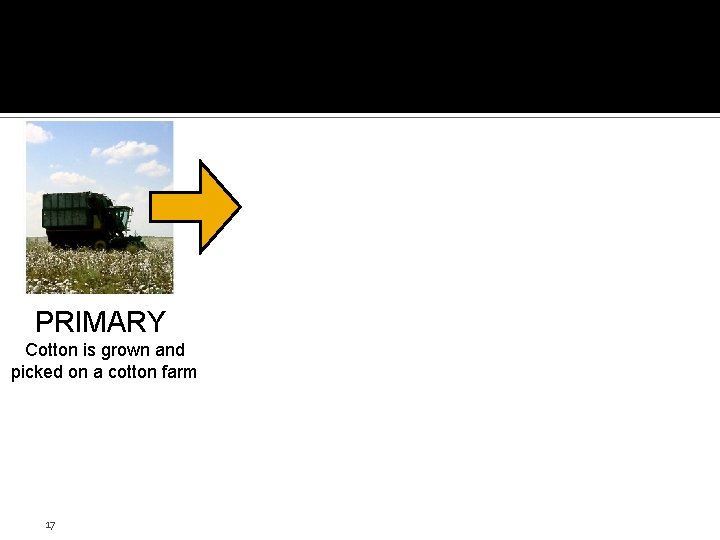
COTTON IN THE FASHION INDUSTRY. . . PRIMARY Cotton is grown and picked on a cotton farm 17
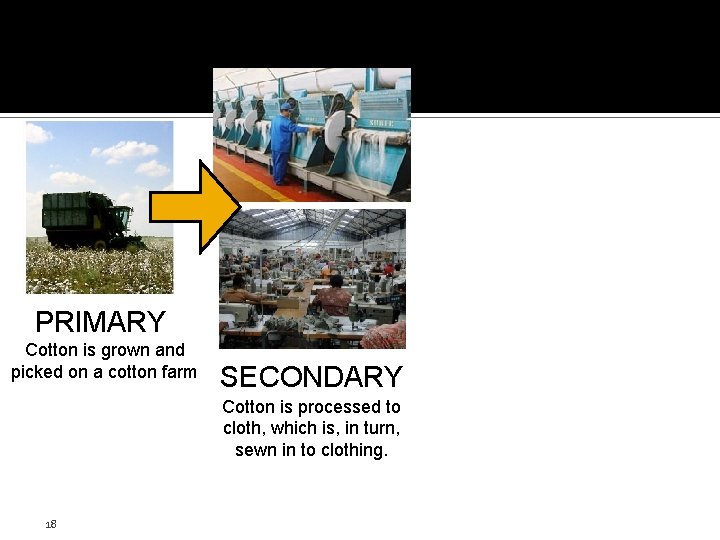
COTTON IN THE FASHION INDUSTRY. . . PRIMARY Cotton is grown and picked on a cotton farm SECONDARY Cotton is processed to cloth, which is, in turn, sewn in to clothing. 18
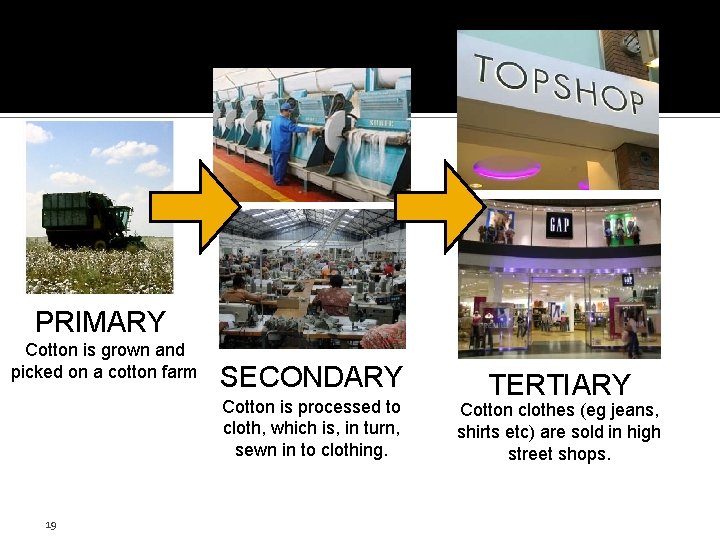
COTTON IN THE FASHION INDUSTRY. . . PRIMARY Cotton is grown and picked on a cotton farm SECONDARY Cotton is processed to cloth, which is, in turn, sewn in to clothing. 19 TERTIARY Cotton clothes (eg jeans, shirts etc) are sold in high street shops.
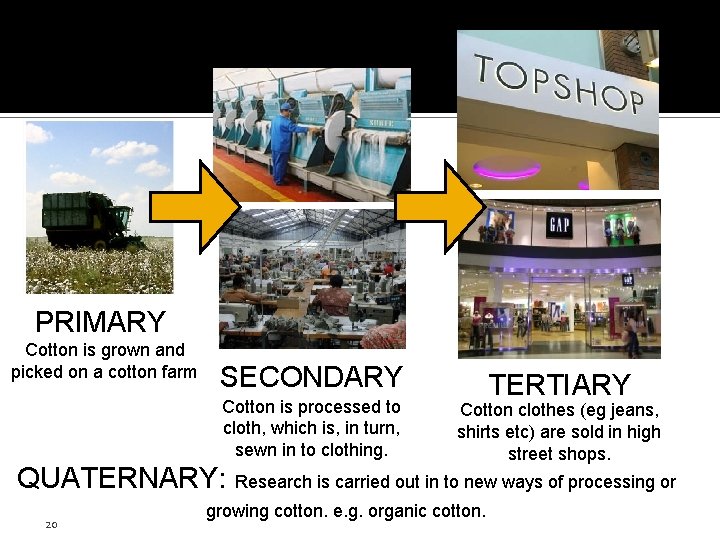
COTTON IN THE FASHION INDUSTRY. . . PRIMARY Cotton is grown and picked on a cotton farm SECONDARY Cotton is processed to cloth, which is, in turn, sewn in to clothing. TERTIARY Cotton clothes (eg jeans, shirts etc) are sold in high street shops. QUATERNARY: Research is carried out in to new ways of processing or 20 growing cotton. e. g. organic cotton.
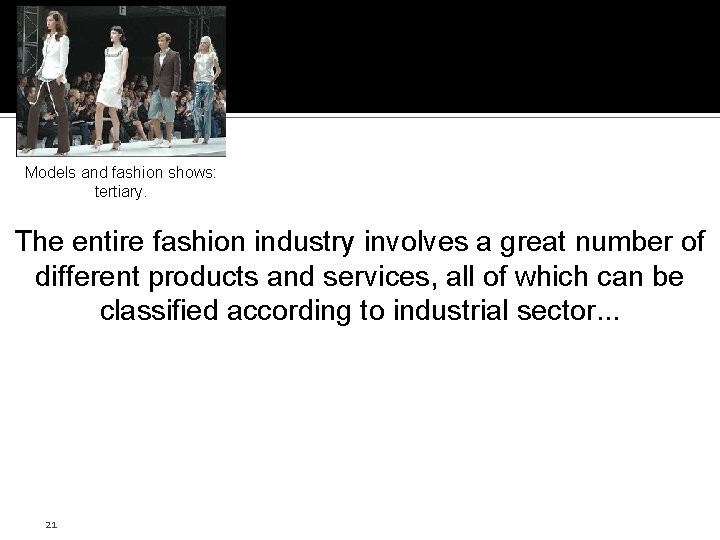
Models and fashion shows: tertiary. The entire fashion industry involves a great number of different products and services, all of which can be classified according to industrial sector. . . 21
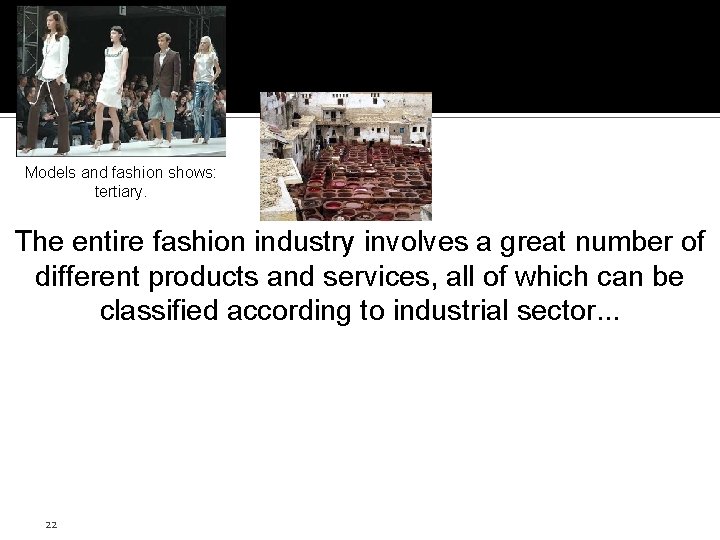
Leather manufacture in a tannery: secondary Models and fashion shows: tertiary. The entire fashion industry involves a great number of different products and services, all of which can be classified according to industrial sector. . . 22
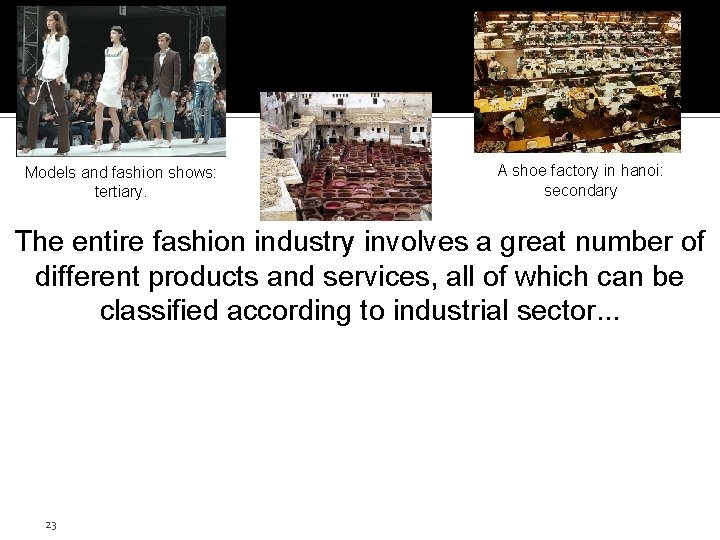
Leather manufacture in a tannery: secondary Models and fashion shows: tertiary. A shoe factory in hanoi: secondary The entire fashion industry involves a great number of different products and services, all of which can be classified according to industrial sector. . . 23
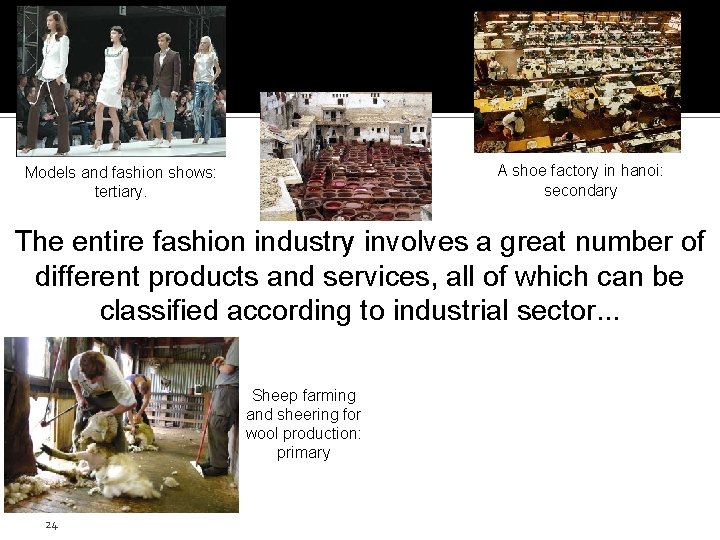
Leather manufacture in a tannery: secondary A shoe factory in hanoi: secondary Models and fashion shows: tertiary. The entire fashion industry involves a great number of different products and services, all of which can be classified according to industrial sector. . . Sheep farming and sheering for wool production: primary 24
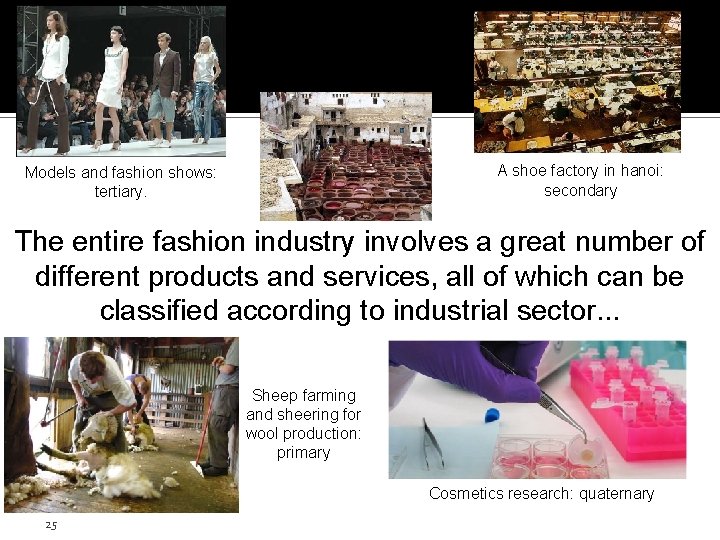
Leather manufacture in a tannery: secondary A shoe factory in hanoi: secondary Models and fashion shows: tertiary. The entire fashion industry involves a great number of different products and services, all of which can be classified according to industrial sector. . . Sheep farming and sheering for wool production: primary Cosmetics research: quaternary 25
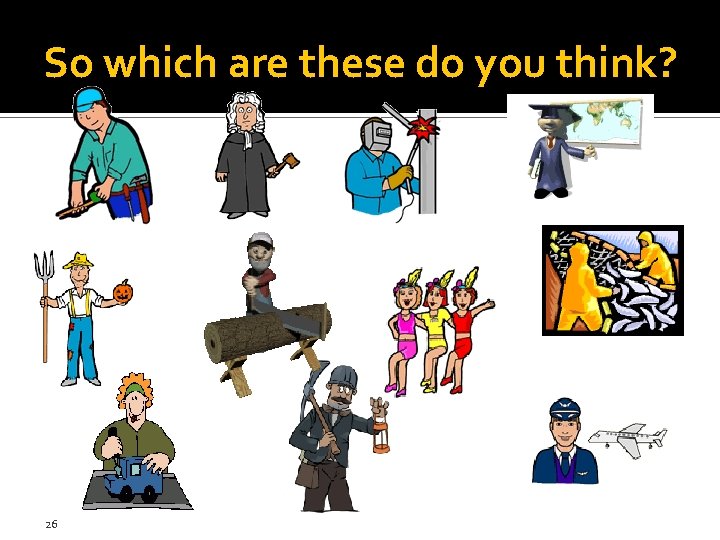
So which are these do you think? 26
Websites to visit Statistics Canada: http: //www 5. statcan. gc. ca/cansim/homeaccueil? lang=eng Industry Canada: GDP and Sectors http: //www. ic. gc. ca/eic/site/cis-sic. nsf/eng/h_00013. html#vla 2 b to see the GDP associated with various sectors GDP (gross domestic product) – measure of economic activity for a period of time. GDP is useful to analyze in that it can help identify trends, and therefore opportunities for new ventures.
- Slides: 27