
ECONOMIC PRINCIPLE 1 PEOPLE FACE TRADEOFFS Scarcity exists

- Slides: 20
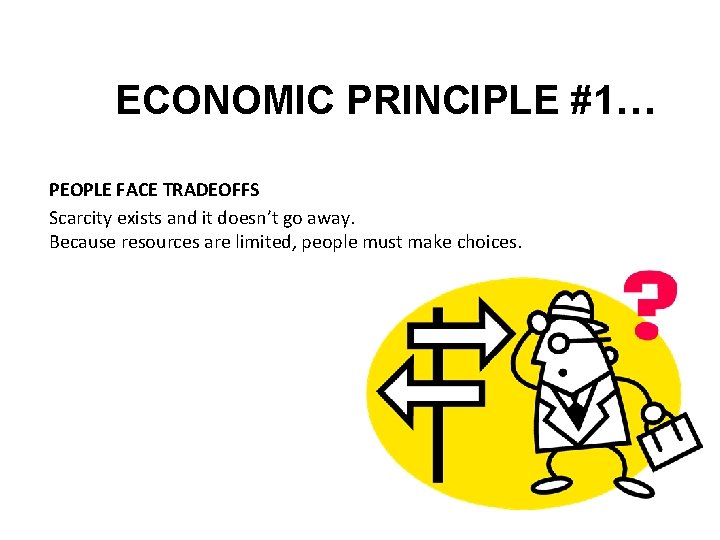
ECONOMIC PRINCIPLE #1… PEOPLE FACE TRADEOFFS Scarcity exists and it doesn’t go away. Because resources are limited, people must make choices.
SCARCITY ISN’T OPTIONAL Fact: Resources ARE limited Land (natural resources) Labor (human effort) Capital (buildings, machines, & technology) Entrepreneurship (willingness to risk) Time Fact: Human desires are boundless
WHY CAN’T WE HAVE ALL WE WANT? Available resources are limited Land (57, 506, 000 sq mi. & not even all habitable!) Labor (6. 7 billion souls x 24 hrs a day) Capital (less than ∞, trust me) Entrepreneurship (not everybody is Bill Gates) Human desires are boundless : 6. 7 billion & increasing
SCARCITY CHOICE Although we cannot have it ALL… …we still can have SOME. So: What shall we have? How much of it? How shall we produce it? Who will get it?
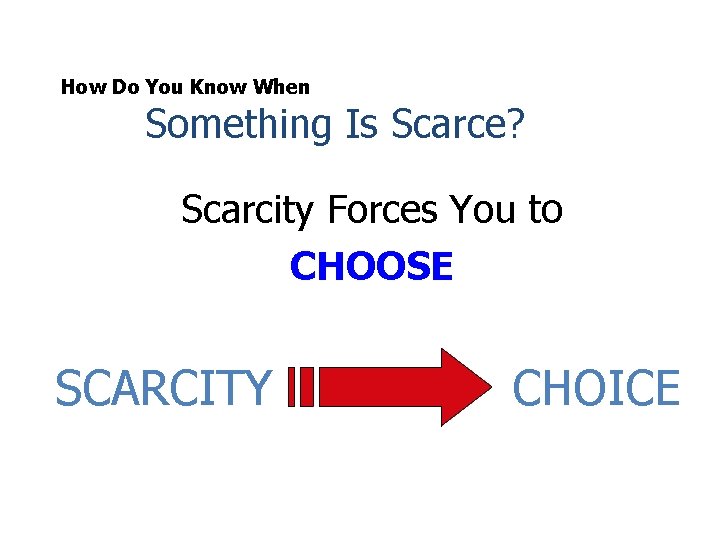
How Do You Know When Something Is Scarce? Scarcity Forces You to CHOOSE SCARCITY CHOICE
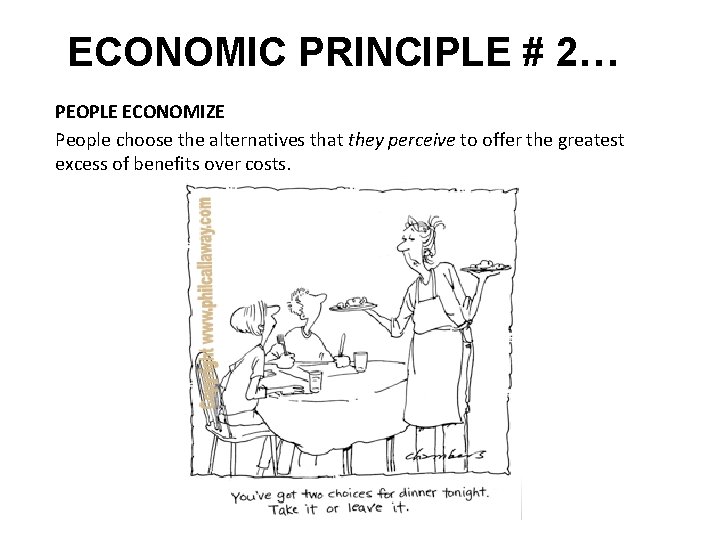
ECONOMIC PRINCIPLE # 2… PEOPLE ECONOMIZE People choose the alternatives that they perceive to offer the greatest excess of benefits over costs.
SCARCITY IS: EVEN IN THE FACE OF ABUNDANCE. . . What’s scarce when you’re in the Mall of America? at the all-you-can-eat buffet?
IT’S TIME FOR… Who gets the Happy Meal?
ECONOMIC PRINCIPLE # 3… ALL CHOICES INVOLVE COSTS The opportunity cost of a choice is the foregone alternative, the (benefits of the) alternative that was given up.
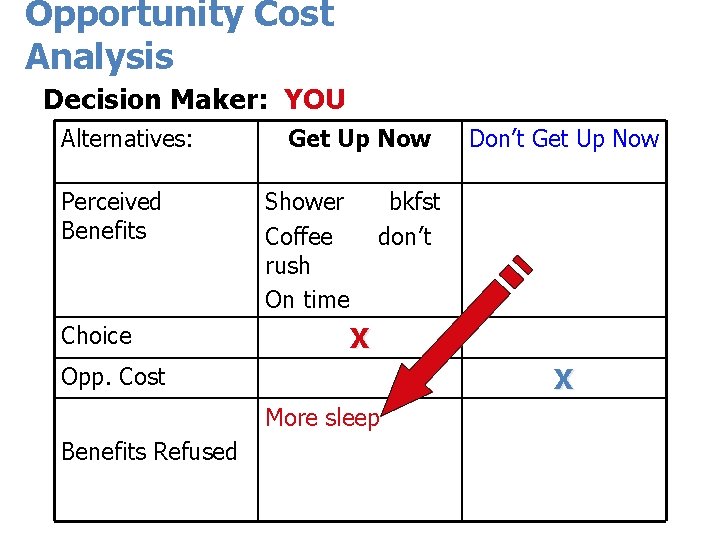
OPPORTUNITY COST ANALYSIS What was the 1 st decision you made this morning?
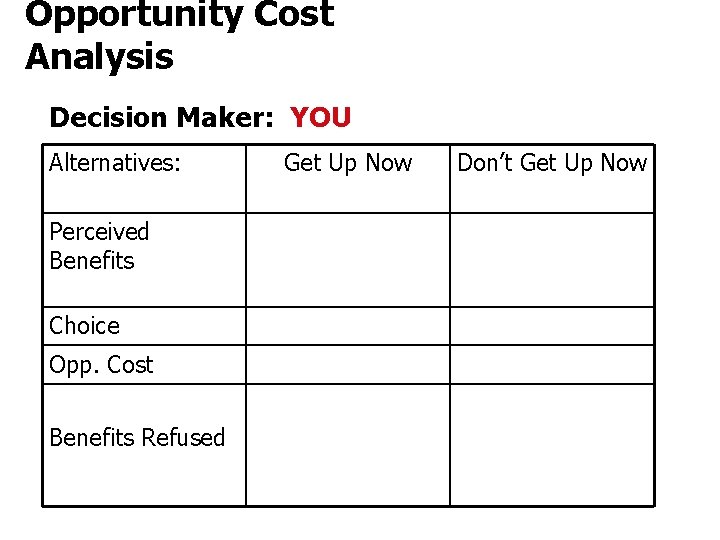
Opportunity Cost Analysis Decision Maker: YOU Alternatives: Perceived Benefits Choice Opp. Cost Benefits Refused Get Up Now Don’t Get Up Now
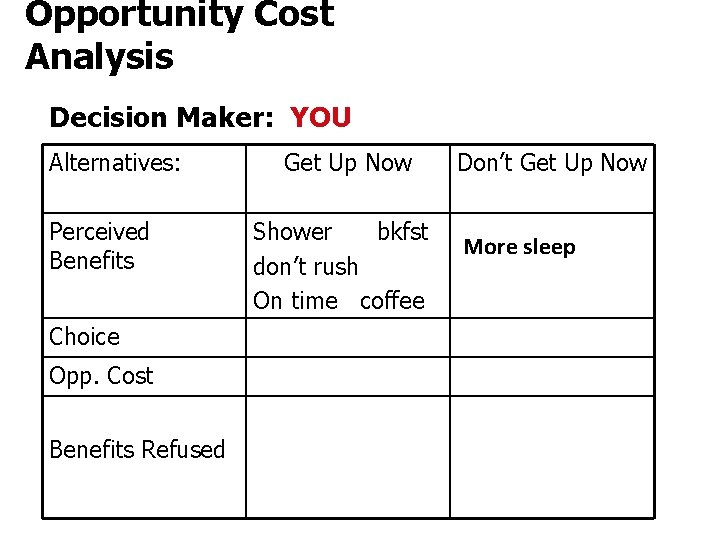
Opportunity Cost Analysis Decision Maker: YOU Alternatives: Perceived Benefits Choice Opp. Cost Benefits Refused Get Up Now Shower bkfst don’t rush On time coffee Don’t Get Up Now More sleep
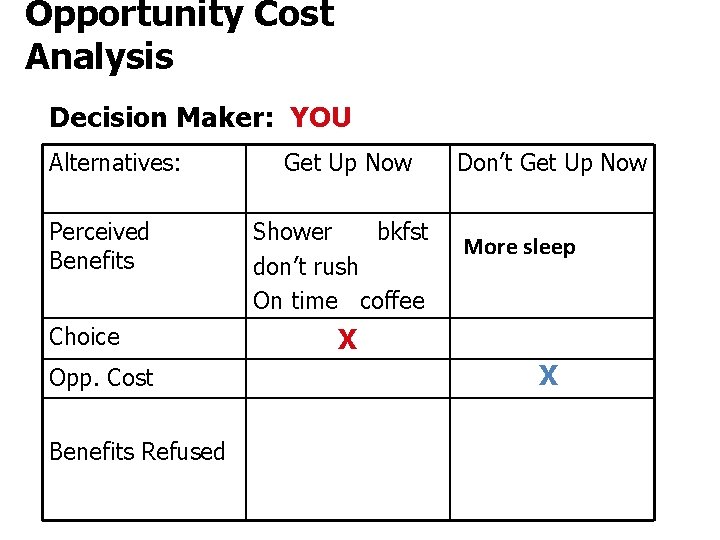
Opportunity Cost Analysis Decision Maker: YOU Alternatives: Perceived Benefits Choice Opp. Cost Benefits Refused Get Up Now Shower bkfst don’t rush On time coffee Don’t Get Up Now More sleep X X
Opportunity Cost Analysis Decision Maker: YOU Alternatives: Perceived Benefits Choice Get Up Now Shower Coffee rush On time bkfst don’t X X Opp. Cost More sleep Benefits Refused Don’t Get Up Now
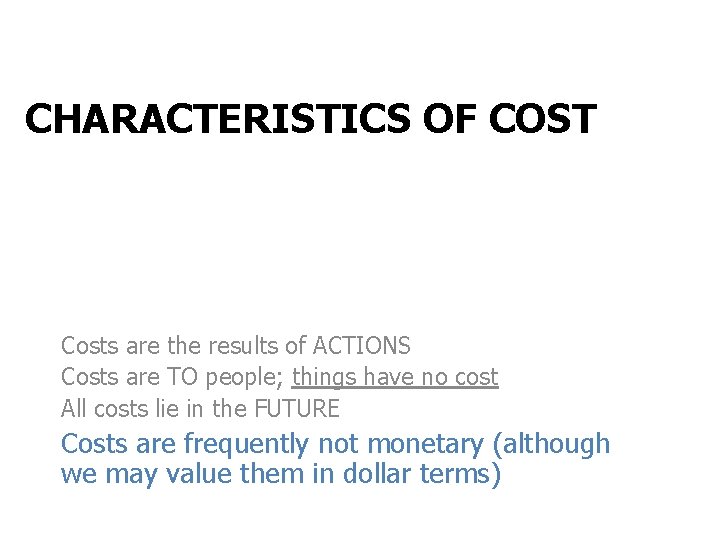
CHARACTERISTICS OF COST Costs are the results of ACTIONS Costs are TO people; things have no cost All costs lie in the FUTURE Costs are frequently not monetary (although we may value them in dollar terms)
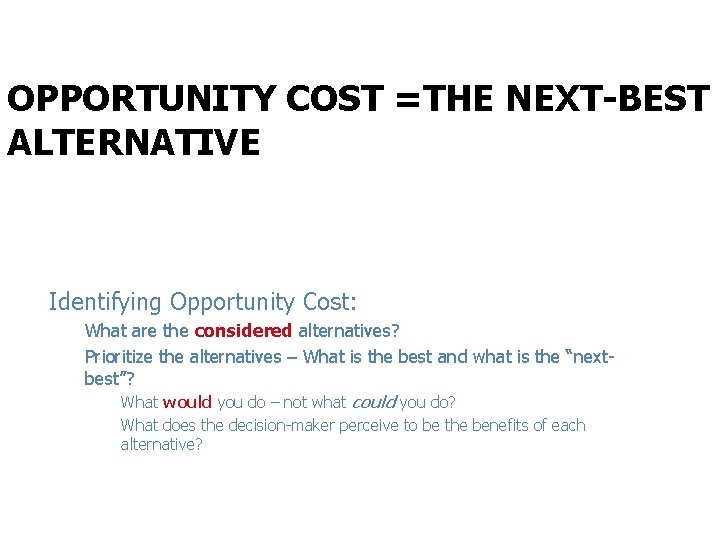
OPPORTUNITY COST =THE NEXT-BEST ALTERNATIVE Identifying Opportunity Cost: What are the considered alternatives? Prioritize the alternatives – What is the best and what is the “nextbest”? What would you do – not what could you do? What does the decision-maker perceive to be the benefits of each alternative?
Because people’s values differ, the opportunity cost of the same decision may differ from person to person.
PEOPLE’S CHOICES ARE ALWAYS RATIONAL Rational choice = choosing the alternative that has the greatest excess of benefits over costs.
If ALL choices are rational, then the challenge is to understand the decision-maker’s perception of costs
Things to remember: • Opportunity cost isn’t EVERYTHING you give up, just the most valued (or “next best”) thing. • Opportunity cost helps explain all human behavior, not just behavior in businesses or markets.