
Economic Notes Chapter 3 Types of Business Organization
Economic Notes Chapter 3
Types of Business Organization Ø Ø Ø Single Proprietorship – Business owned by one person, easiest to organize, most common type of business Ex. Hair salons, auto shop, restaurants, etc Partnership – 2 or more owners, least common type of business Ex. Doctor, dentist, law offices Corporation – Business owned by stock holders, most protected type of business, most difficult to organize l Ex. GM, Apple, Exxon, Disney, etc.
Business Terms: Ø Liability – financial responsibility Ø Unlimited Liability – total financial responsibility up to and including private property and accounts Ø Limited Liability – financial responsibility is limited to your investment Ø Limited Life – business is limited to the life of the owner
Ø Unlimited Life – business continues as long as it is making a profit Ø Stock – share of ownership in a corporation Ø Rent – payment for the use of someone’s property Ø Interest – payment for the use of someone’s money Ø Prime Rate – the best interest rate, reserved for the best customers
Ø Bond – an I. O. U. , a promise to pay back the amount of the bond at a specific time with a specific rate of interest Ø Dividends – a share of the corporations profit paid to stockholders Ø Capital Gain – investment earnings, the amount of money you made in an investment Ø Ex. Purchase a house for $100, 000 and sell it for $140, 000 and you have $40, 000 in capital gains
Ø Charter – a government document that gives permission to create a corporation Ø Principal – the amount borrowed Ø Gross Income – total income earned Ø Net Income – earnings after taxes and expenses Ø Depreciation – the loss in value an item experiences over time
Merger – combining two or more businesses to form a single firm Ø Horizontal merger – combines firms from the same industry Ø Ex. The NFL and AFL The NHL and the WHA Ø Vertical Merger – combines firms that perform different steps in the production process Ø Ex. Farm industry, canning factory, trucking company, warehouse and retail store all join together
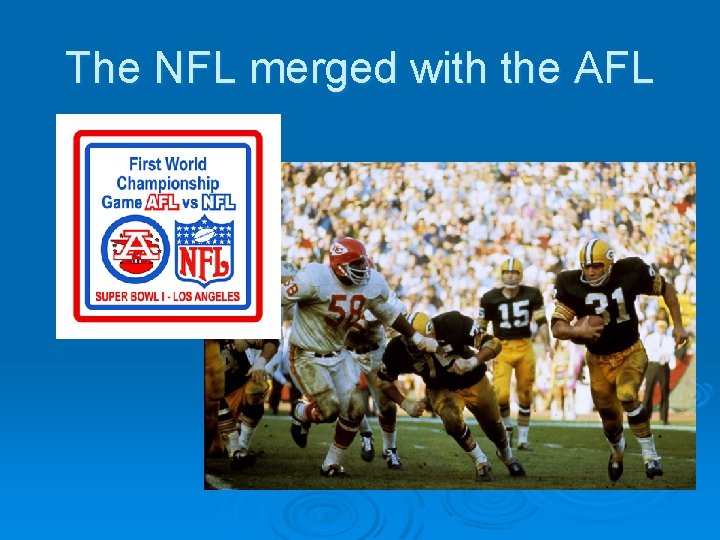
The NFL merged with the AFL
The NHL merged with the WHA
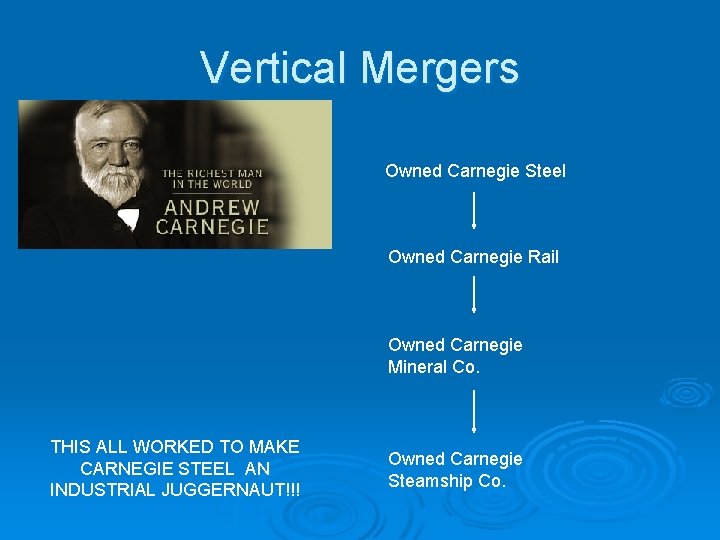
Vertical Mergers Owned Carnegie Steel Owned Carnegie Rail Owned Carnegie Mineral Co. THIS ALL WORKED TO MAKE CARNEGIE STEEL AN INDUSTRIAL JUGGERNAUT!!! Owned Carnegie Steamship Co.
Ø Conglomerate – a firm that has at least four businesses, each making unrelated products Ex. R. J. Reynolds owns a shipping company, Kentucky Fried Chicken, Del Monte and a Winery Ø Diversification – business interests in many different areas Ø Multinational – a corporation that has manufacturing or service operations in a number of different countries Ø Ex. General Motors, Union Carbide, Nabisco, Mitsubishi, Sony, etc. Ø
Advantages to Single Proprietorships Ø* Ø* Ø* Easy to organize Flexible You are the Boss

Disadvantage to a Single Proprietorship Unlimited Liability Ø* Limited Life Ø* You have all of the responsibility Ø*
Advantages to a Partnership Ø* Share the work Ø * Share the Cost Ø * Specialization
Disadvantages to a partnership Ø Unlimited liability Ø Limited life Ø Disagreements Ø Less flexibility
Advantages to a Corporation Ø Limited liability Ø Unlimited life Ø Specialization Ø Ability to sell stock
Disadvantages to a Corporation Ø *Corporate taxes Ø Less flexibility Ø More difficult to organize
- Slides: 17