
Economic Growth Dematerialization What is Economic Growth Who
- Slides: 12
Economic Growth & Dematerialization What is Economic Growth? Who benefits from it? Where did it come from? How can it be stopped or changed? Can we go from Growth to Development?
Industrialism: Accumulation • Production-for-production’s-sake • Invisibility of key factors • Centralization of production, massive upfront investment • Focus on labour productivity : resources substitute for human energy • Cog-labour: humans as component parts • Regulation: controls as limits • Scarcity-based: role of waste since WWII • Globalization: free trade & intellectual property
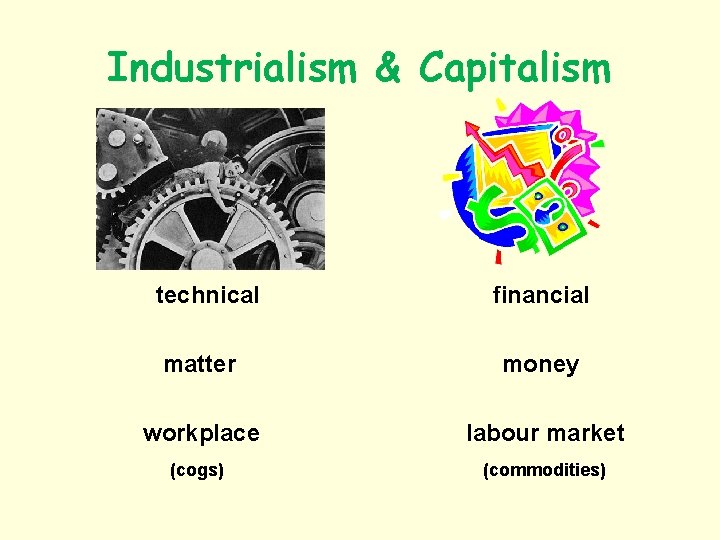
Industrialism & Capitalism technical financial matter money workplace labour market (cogs) (commodities)
Questions • can financial and material accumulation be severed? • does the profit-motive need to be the main economic driver? • does use-value always need to be a spin-off, side-effect, byproduct, or trickle-down of monetary accumulation? • can markets be driven by social & environmental values?
Markets and Material Connection between needs, wealth & markets. the Invisible Hand: worked. . . 1. for an economy focused on meeting primary needs— simplicity. 2. in a situation of relative scarcity 3. in the absence of sophisticated information technology
Class Society. . . based in relative scarcity: 1. control of scarce resources &. . . 2. monopoly of high culture. . . by a minority.
The Threat of Abundance • Productivity boom of the Roaring Twenties – output outdistances worker wages • Crisis of effective demand & structural overproduction: Great Depression as a reaction to potential abundance. • White-collar work, universal education: the threat to cultural monopoly. – increasingly social character of production; rise of industrial unionism
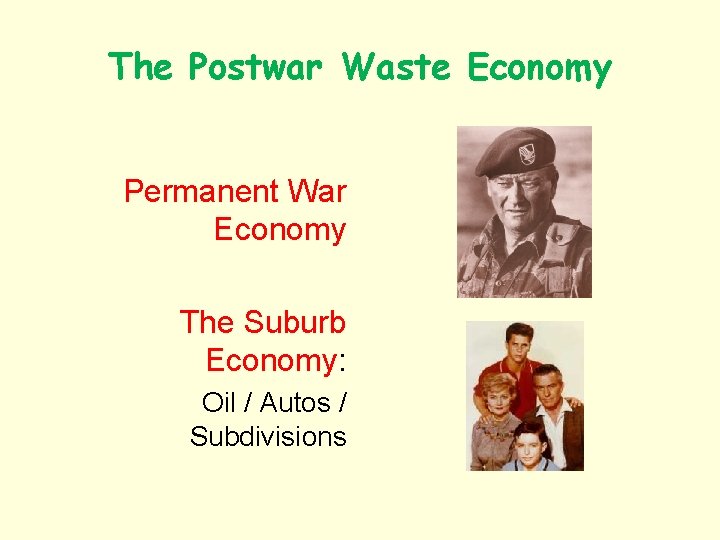
Propping Up Effective Demand after WW II • The Waste Economy: suburbanization, permanent war economy. The artificial reproduction of scarcity. The Effluent Society. • The Paper Economy: planned inflation and the establishment of the debt-based economy. The economic treadmill.
The Postwar Waste Economy Permanent War Economy The Suburb Economy: Oil / Autos / Subdivisions
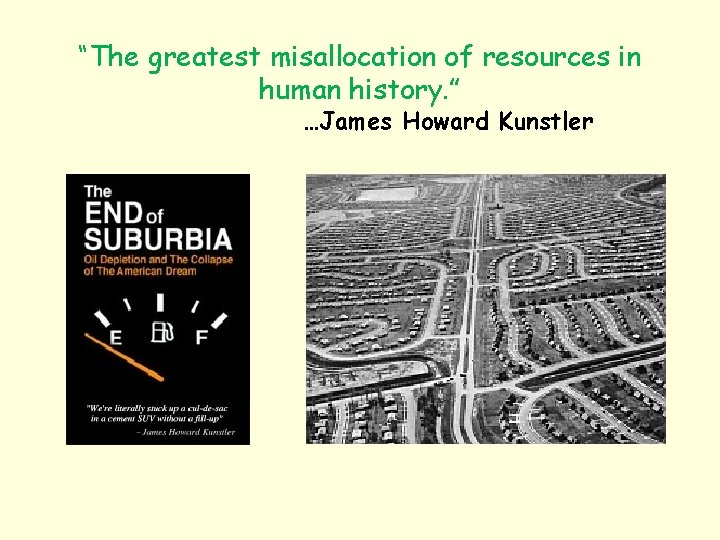
“The greatest misallocation of resources in human history. ” …James Howard Kunstler
The Next Phase (post-1980) : Casino Capitalism • 70 s: Costs of waste come due • Rise of the Info economy: – new source of effective demand: producer services – new sources of empty wealth creation: in effect redistributing real wealth from poor to rich. Financialization of the Economy: diversion of information revolution into new forms of waste.
Living in De-Material World Redesign not controls Direct focus on human (& environmental) need The Service Economy: Extended Producer Responsibility (EPR) encouraging provision of services not stuff. Servicizing (voluntary EPR). The “Lake Economy”: economic biomimicry: sectoral orientation: regenerative food, energy, manufacturing, c ommunications. New forms of economic security Conscious support of the Commons Disarming the autonomous power of money Building a community/ecosystem base: localization.