
ECONOMIC GEOGRAPHY ECONOMY What is an economy How
- Slides: 22
ECONOMIC GEOGRAPHY
ECONOMY What is an economy? How do economies change? How does the role of government change in economies around the world?
TYPES OF ECONOMIC SYSTEMS • Traditional economy • Command/Communism economy • Market/free enterprise/capitalism economy • Mixed/socialism economy
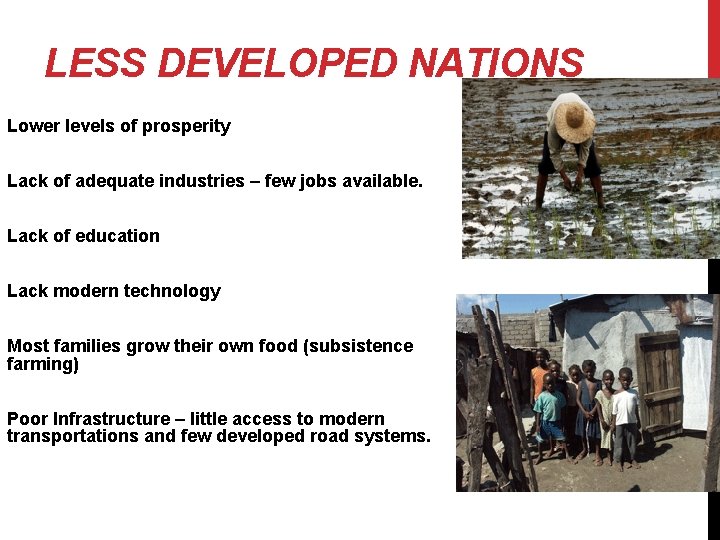
Traditional economy • Subsistence farming • Little Income Earned Subsistence agriculture is self-sufficiency farming. The farmers focus on growing enough food to feed themselves and their families. The typical subsistence farm has a range of crops and animals needed by the family to feed and clothe themselves during the year.
Command/Communism economy • Total government control; Communism Government Communism is a political theory derived from Karl Marx, advocating class war and leading to a society in which all property is publicly owned and each person works and is paid according to their abilities and needs.
Market/free enterprise/capitalism economy • Consumers control; Democracy government Capitalism is an economic and political system in which a country's trade and industry are controlled by private owners for profit, rather than by the state.
Mixed Economy Consumer demand with limitations on what can be made and sold (laws prohibit people from engaging in behaviors that are considered harmful, such as drugs and child labor).
SOCIALISM Socialist: the government collects a larger percent of taxes in order to supply citizens with services, such as education, medicine, and roads.
ELEMENTS OF AN ECONOMY
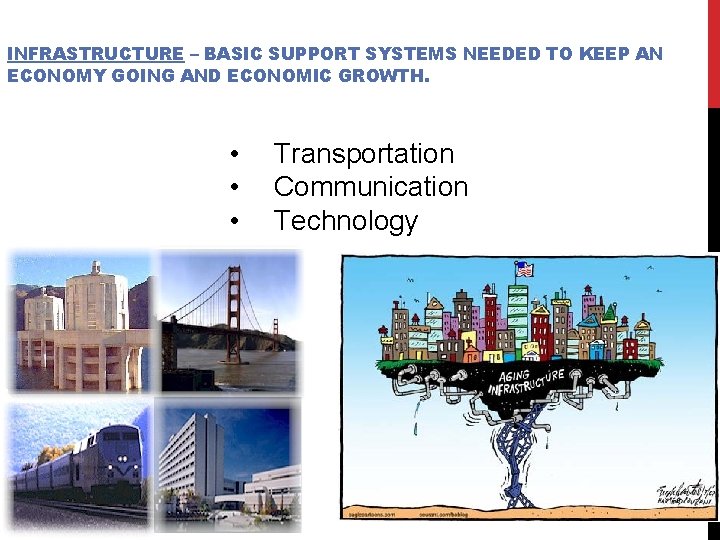
INFRASTRUCTURE – BASIC SUPPORT SYSTEMS NEEDED TO KEEP AN ECONOMY GOING AND ECONOMIC GROWTH. • • • Transportation Communication Technology
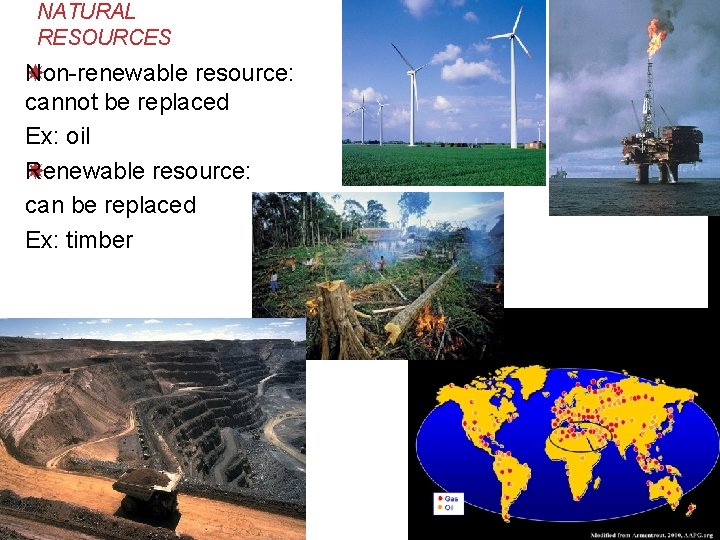
NATURAL RESOURCES on-renewable resource: N cannot be replaced Ex: oil Renewable resource: can be replaced Ex: timber
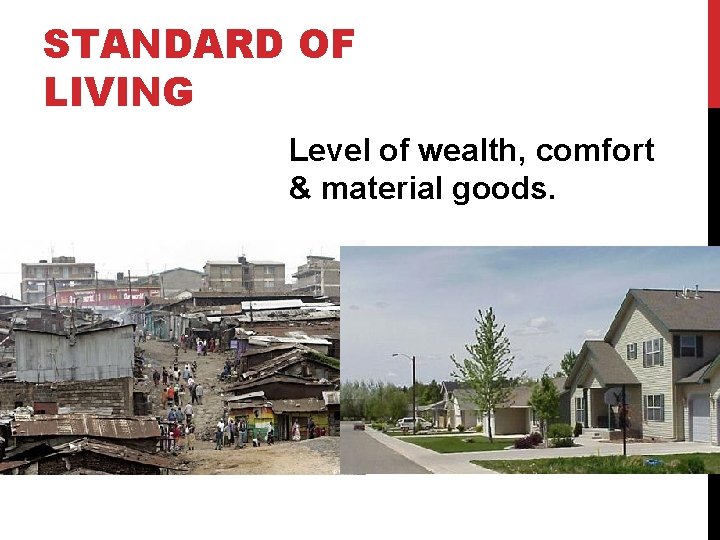
STANDARD OF LIVING Level of wealth, comfort & material goods.
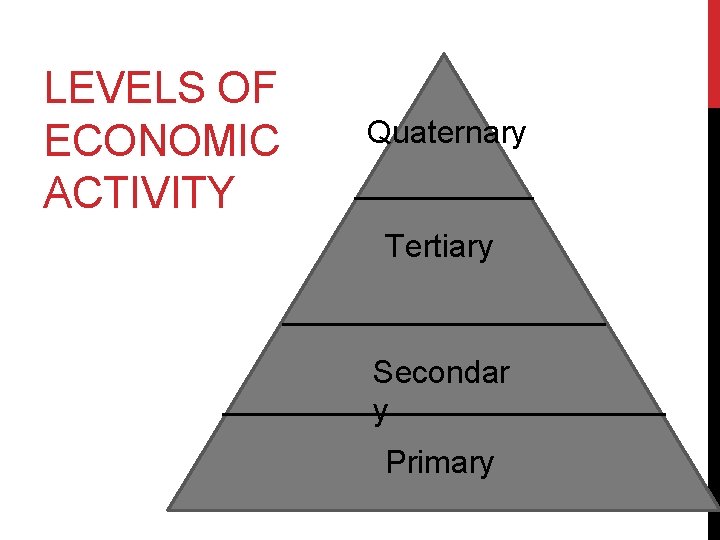
LEVELS OF ECONOMIC ACTIVITY Quaternary Tertiary Secondar y Primary
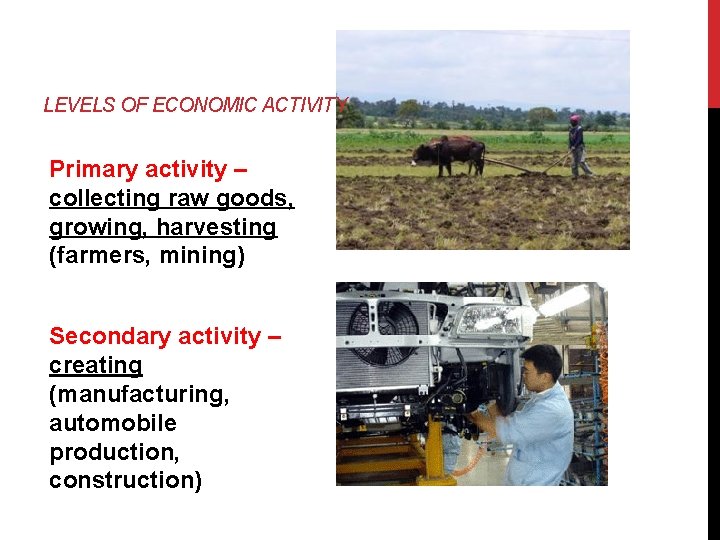
LEVELS OF ECONOMIC ACTIVITY Primary activity – collecting raw goods, growing, harvesting (farmers, mining) Secondary activity – creating (manufacturing, automobile production, construction)
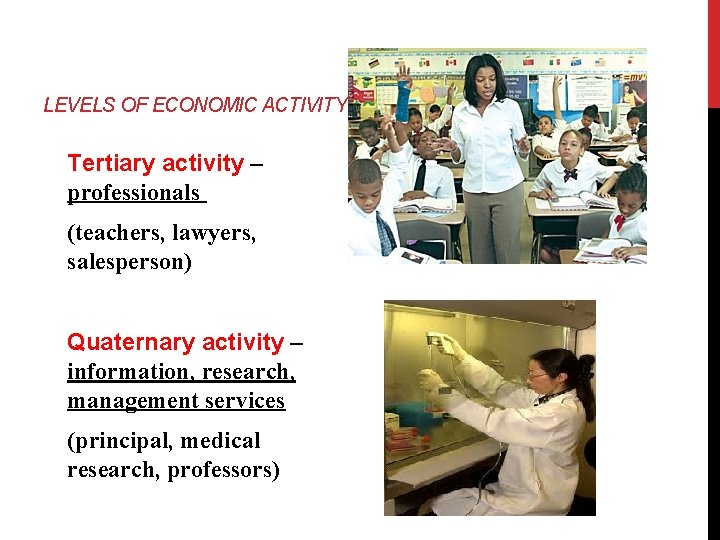
LEVELS OF ECONOMIC ACTIVITY Tertiary activity – professionals (teachers, lawyers, salesperson) Quaternary activity – information, research, management services (principal, medical research, professors)
STRONG ECONOMIES Have stable infrastructure. Transform resources into goods (industry). Have a high per capita income. Have many different types of professions (varied economy).
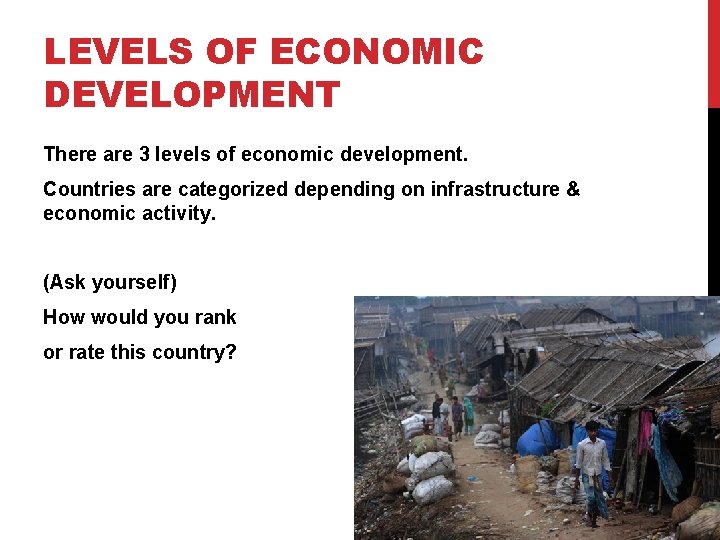
LEVELS OF ECONOMIC DEVELOPMENT There are 3 levels of economic development. Countries are categorized depending on infrastructure & economic activity. (Ask yourself) How would you rank or rate this country?
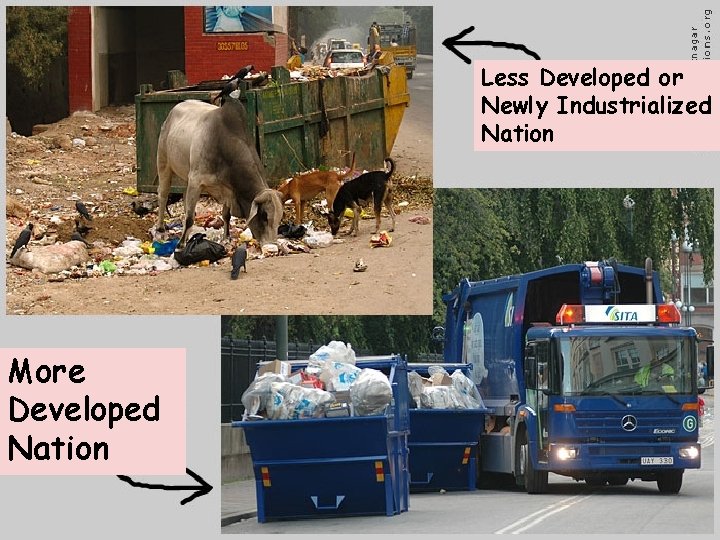
LESS DEVELOPED NATIONS Lower levels of prosperity Lack of adequate industries – few jobs available. Lack of education Lack modern technology Most families grow their own food (subsistence farming) Poor Infrastructure – little access to modern transportations and few developed road systems.
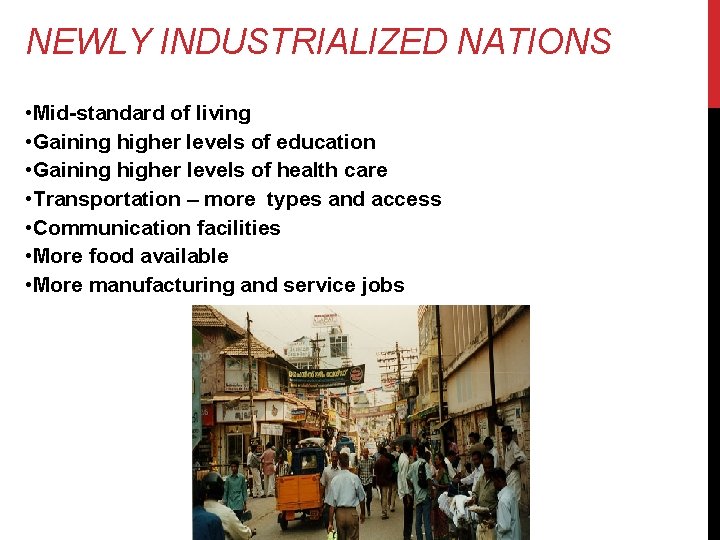
NEWLY INDUSTRIALIZED NATIONS • Mid-standard of living • Gaining higher levels of education • Gaining higher levels of health care • Transportation – more types and access • Communication facilities • More food available • More manufacturing and service jobs
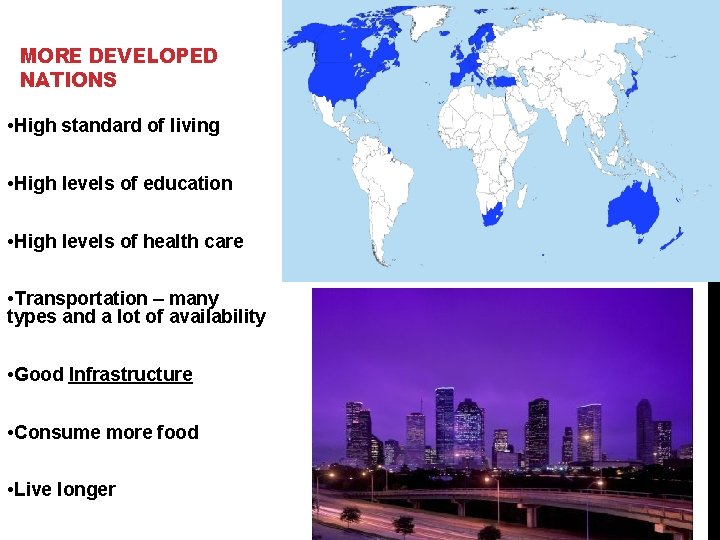
MORE DEVELOPED NATIONS • High standard of living • High levels of education • High levels of health care • Transportation – many types and a lot of availability • Good Infrastructure • Consume more food • Live longer
Less Developed or Newly Industrialized Nation More Developed Nation
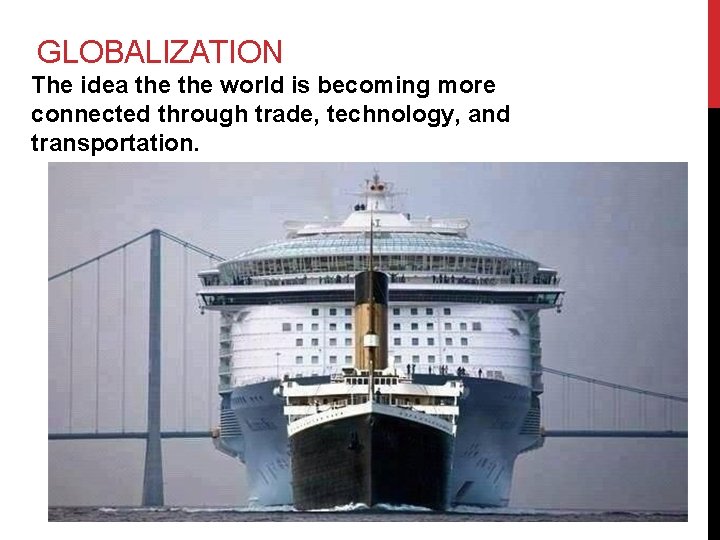
GLOBALIZATION The idea the world is becoming more connected through trade, technology, and transportation.