
ECONOMIC GEOGRAPHY Economic Geography of South Africa ECONOMIC

- Slides: 22
ECONOMIC GEOGRAPHY Economic Geography of South Africa
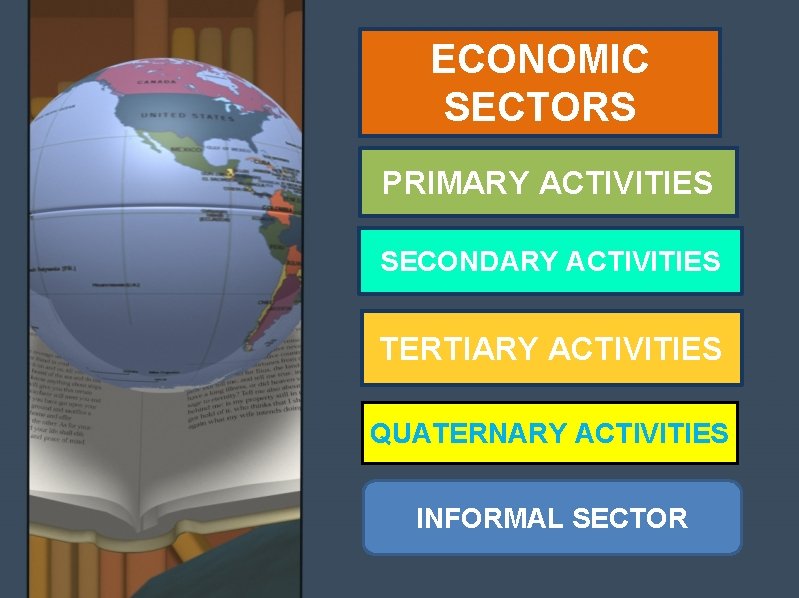
ECONOMIC SECTORS PRIMARY ACTIVITIES SECONDARY ACTIVITIES TERTIARY ACTIVITIES QUATERNARY ACTIVITIES INFORMAL SECTOR
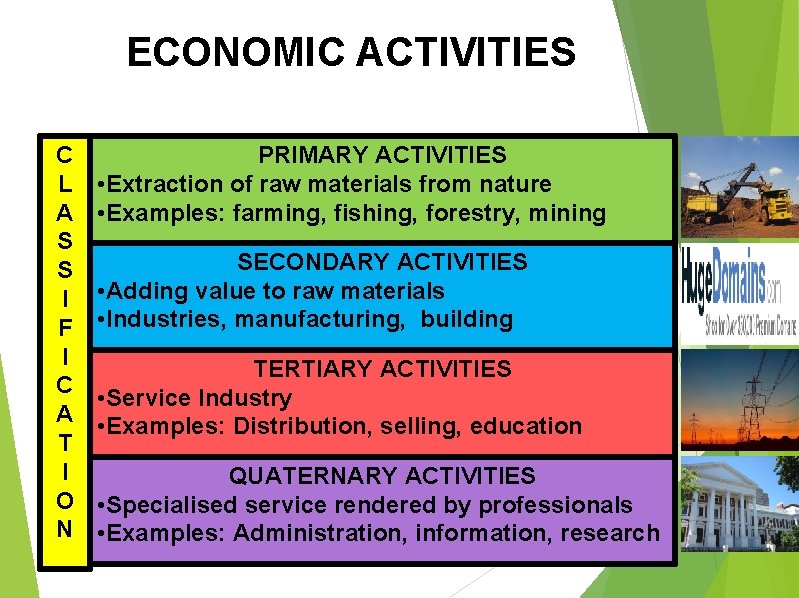
ECONOMIC ACTIVITIES C L A S S I F I C A T I O N PRIMARY ACTIVITIES • Extraction of raw materials from nature • Examples: farming, fishing, forestry, mining SECONDARY ACTIVITIES • Adding value to raw materials • Industries, manufacturing, building TERTIARY ACTIVITIES • Service Industry • Examples: Distribution, selling, education QUATERNARY ACTIVITIES • Specialised service rendered by professionals • Examples: Administration, information, research
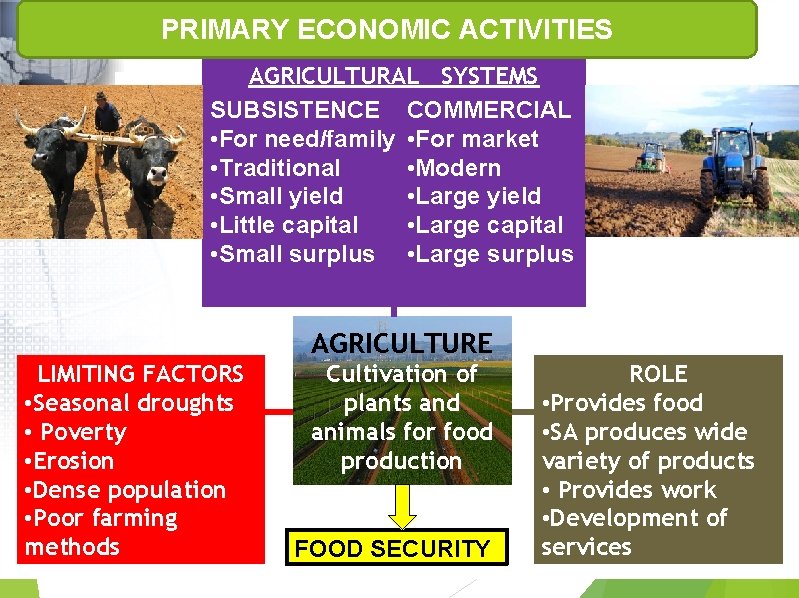
PRIMARY ECONOMIC ACTIVITIES AGRICULTURAL SYSTEMS SUBSISTENCE COMMERCIAL • For need/family • For market • Traditional • Modern • Small yield • Large yield • Little capital • Large capital • Small surplus • Large surplus AGRICULTURE LIMITING FACTORS • Seasonal droughts • Poverty • Erosion • Dense population • Poor farming methods Cultivation of plants and animals for food production FOOD SECURITY ROLE • Provides food • SA produces wide variety of products • Provides work • Development of services
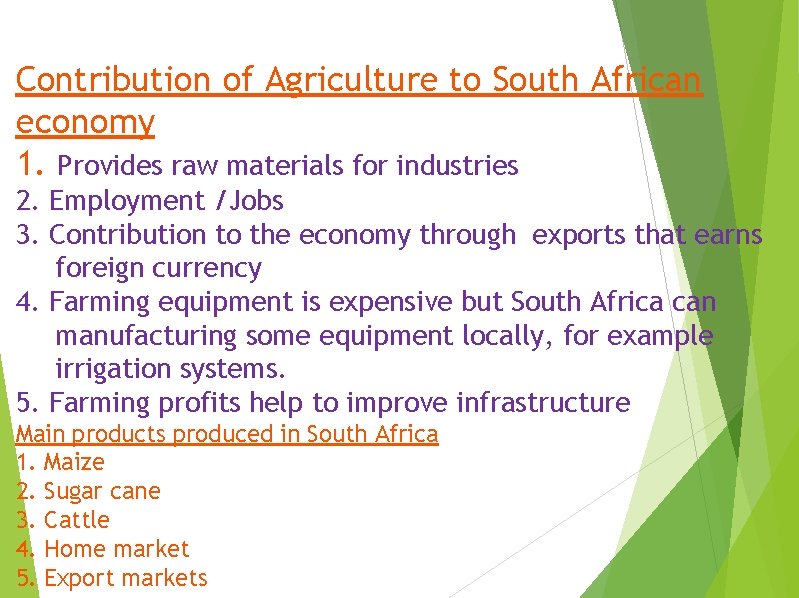
Contribution of Agriculture to South African economy 1. Provides raw materials for industries 2. Employment /Jobs 3. Contribution to the economy through exports that earns foreign currency 4. Farming equipment is expensive but South Africa can manufacturing some equipment locally, for example irrigation systems. 5. Farming profits help to improve infrastructure Main products produced in South Africa 1. Maize 2. Sugar cane 3. Cattle 4. Home market 5. Export markets
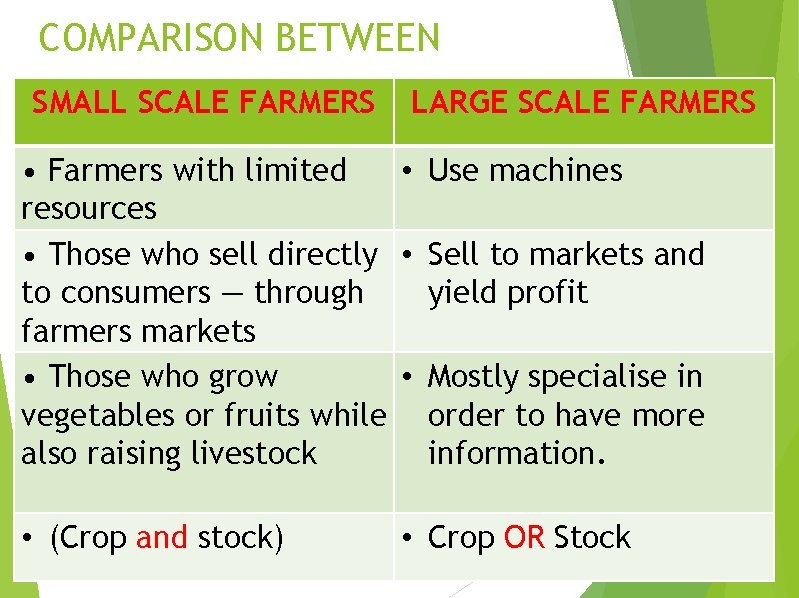
COMPARISON BETWEEN SMALL SCALE FARMERS LARGE SCALE FARMERS • Farmers with limited • Use machines resources • Those who sell directly • Sell to markets and to consumers — through yield profit farmers markets • Those who grow • Mostly specialise in vegetables or fruits while order to have more also raising livestock information. • (Crop and stock) • Crop OR Stock
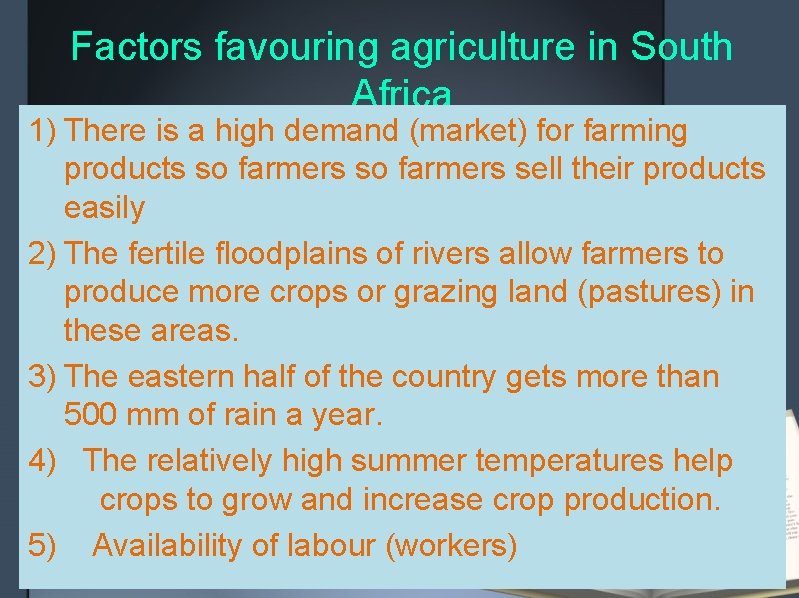
Factors favouring agriculture in South Africa 1) There is a high demand (market) for farming products so farmers sell their products easily 2) The fertile floodplains of rivers allow farmers to produce more crops or grazing land (pastures) in these areas. 3) The eastern half of the country gets more than 500 mm of rain a year. 4) The relatively high summer temperatures help crops to grow and increase crop production. 5) Availability of labour (workers)
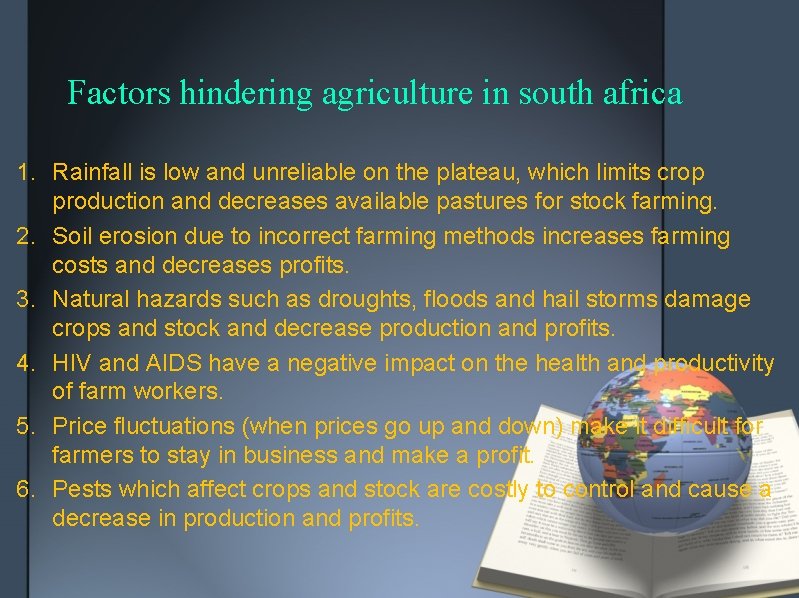
Factors hindering agriculture in south africa 1. Rainfall is low and unreliable on the plateau, which limits crop production and decreases available pastures for stock farming. 2. Soil erosion due to incorrect farming methods increases farming costs and decreases profits. 3. Natural hazards such as droughts, floods and hail storms damage crops and stock and decrease production and profits. 4. HIV and AIDS have a negative impact on the health and productivity of farm workers. 5. Price fluctuations (when prices go up and down) make it difficult for farmers to stay in business and make a profit. 6. Pests which affect crops and stock are costly to control and cause a decrease in production and profits.
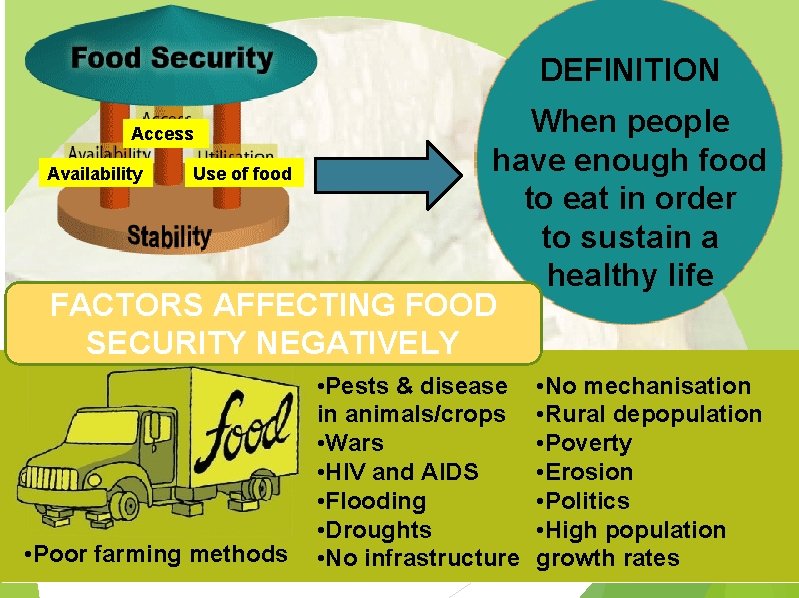
DEFINITION When people have enough food Availability Use of food to eat in order to sustain a healthy life FACTORS AFFECTING FOOD SECURITY NEGATIVELY Access • Poor farming methods • Pests & disease in animals/crops • Wars • HIV and AIDS • Flooding • Droughts • No infrastructure • No mechanisation • Rural depopulation • Poverty • Erosion • Politics • High population growth rates
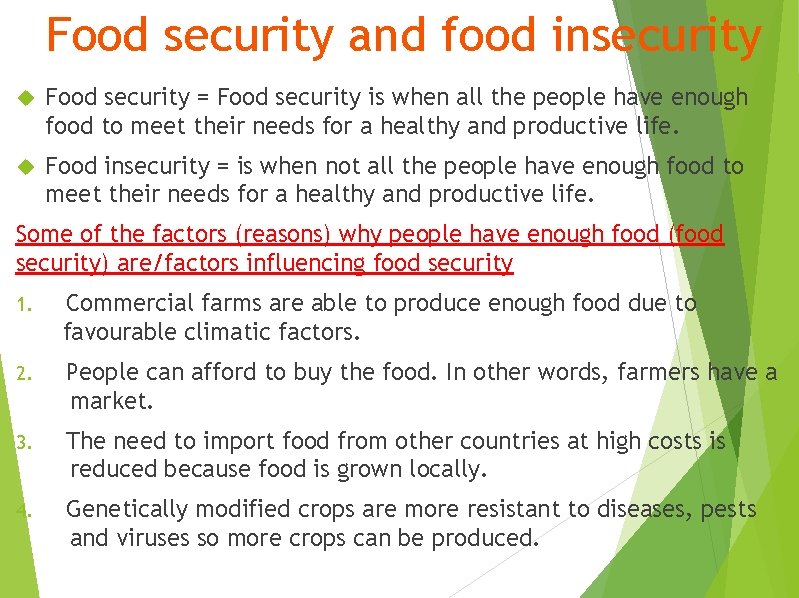
Food security and food insecurity Food security = Food security is when all the people have enough food to meet their needs for a healthy and productive life. Food insecurity = is when not all the people have enough food to meet their needs for a healthy and productive life. Some of the factors (reasons) why people have enough food (food security) are/factors influencing food security 1. Commercial farms are able to produce enough food due to favourable climatic factors. 2. People can afford to buy the food. In other words, farmers have a market. 3. The need to import food from other countries at high costs is reduced because food is grown locally. 4. Genetically modified crops are more resistant to diseases, pests and viruses so more crops can be produced.
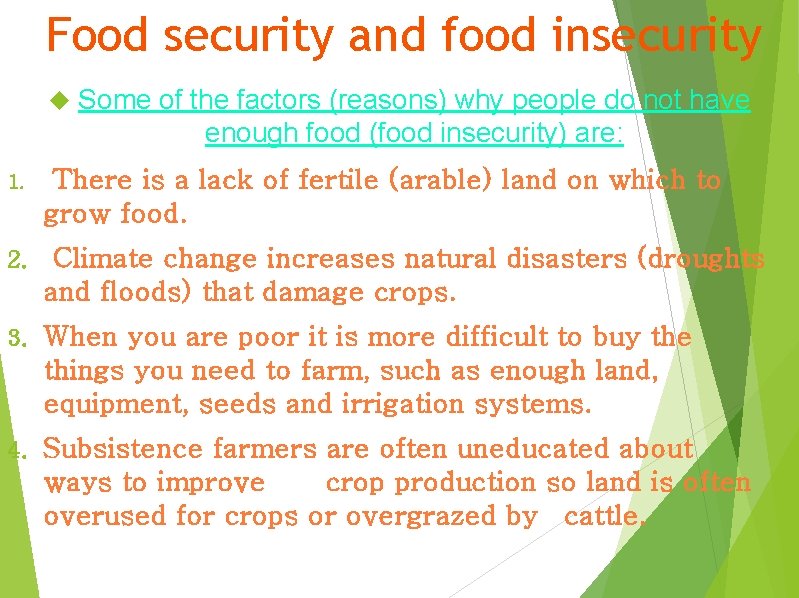
Food security and food insecurity Some of the factors (reasons) why people do not have enough food (food insecurity) are: 1. There is a lack of fertile (arable) land on which to grow food. 2. Climate change increases natural disasters (droughts and floods) that damage crops. 3. When you are poor it is more difficult to buy the things you need to farm, such as enough land, equipment, seeds and irrigation systems. 4. Subsistence farmers are often uneducated about ways to improve crop production so land is often overused for crops or overgrazed by cattle.
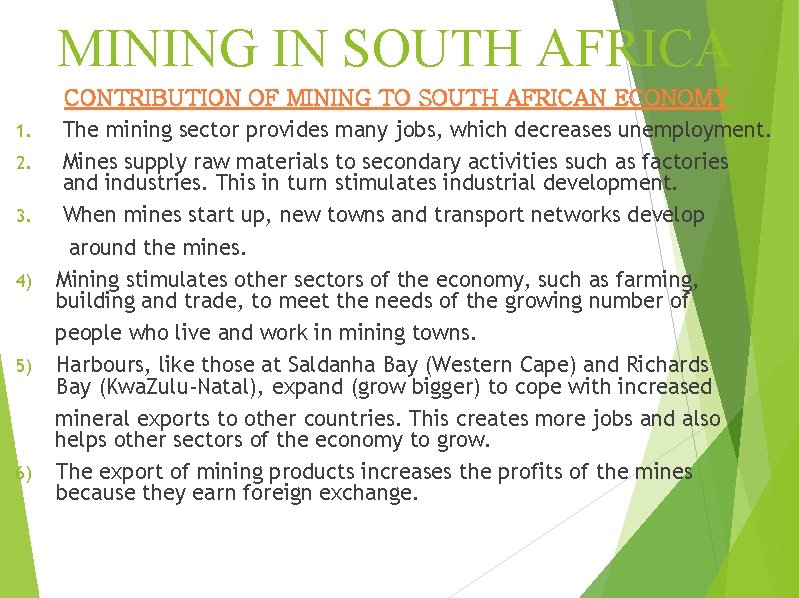
MINING IN SOUTH AFRICA 1. 2. 3. 4) 5) 6) CONTRIBUTION OF MINING TO SOUTH AFRICAN ECONOMY The mining sector provides many jobs, which decreases unemployment. Mines supply raw materials to secondary activities such as factories and industries. This in turn stimulates industrial development. When mines start up, new towns and transport networks develop around the mines. Mining stimulates other sectors of the economy, such as farming, building and trade, to meet the needs of the growing number of people who live and work in mining towns. Harbours, like those at Saldanha Bay (Western Cape) and Richards Bay (Kwa. Zulu-Natal), expand (grow bigger) to cope with increased mineral exports to other countries. This creates more jobs and also helps other sectors of the economy to grow. The export of mining products increases the profits of the mines because they earn foreign exchange.
MINING. . . Importance of Mining to South Africa 1. 2. 3. 4. 5. 6. 7. 8. Large contribution to the GDP Multiplier Effect: additional economic development in response to a new or expanding part of the economy Exports of processed and unprocessed mineral products Mines are a large source of employment Mining attracts foreign investment Improvement and construction of infrastructure Development of link industries (supplies materials or equipment to another industry, or is dependent on another industry for materials and equipment) Growth of local industry
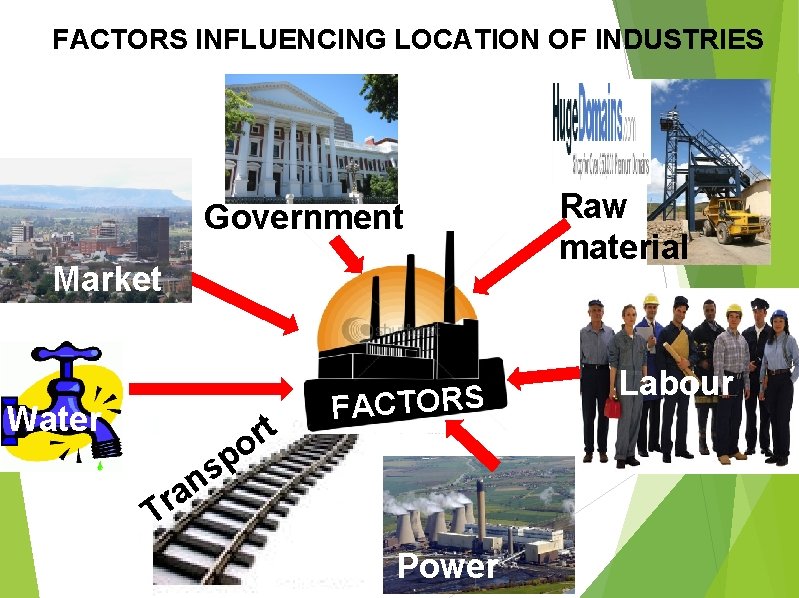
FACTORS INFLUENCING LOCATION OF INDUSTRIES Government Market Water t r o T FACTORS p s n a r Power Raw material Labour
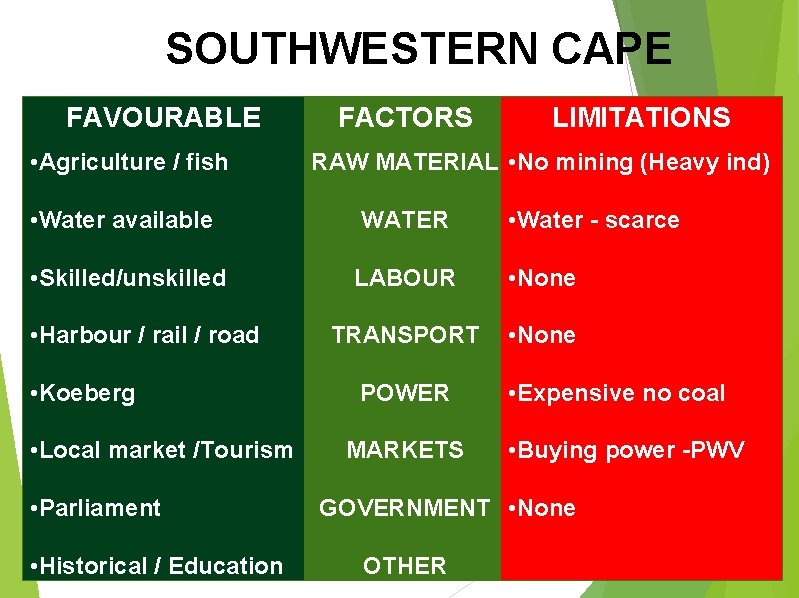
SOUTHWESTERN CAPE FAVOURABLE • Agriculture / fish FACTORS LIMITATIONS RAW MATERIAL • No mining (Heavy ind) • Water available WATER • Skilled/unskilled LABOUR • None TRANSPORT • None • Harbour / rail / road • Koeberg • Local market /Tourism • Parliament • Historical / Education POWER MARKETS • Water - scarce • Expensive no coal • Buying power -PWV GOVERNMENT • None OTHER
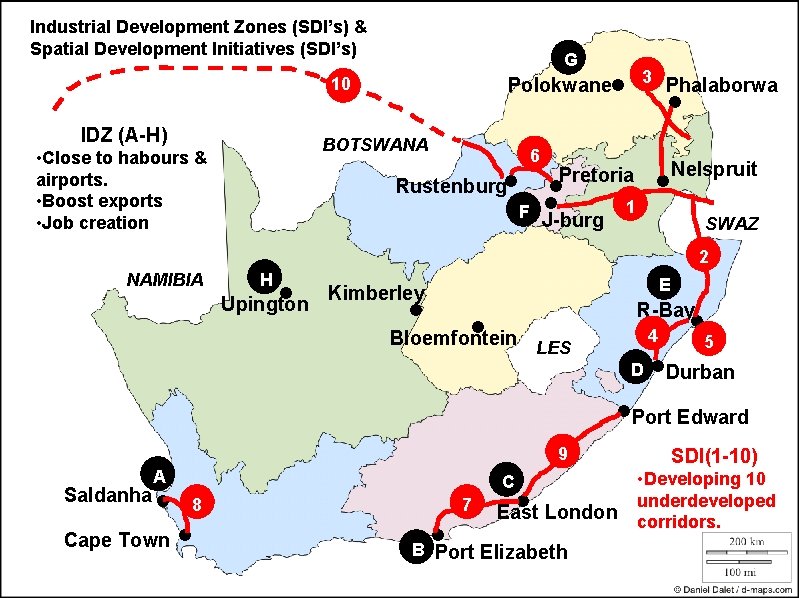
Industrial Development Zones (SDI’s) & Spatial Development Initiatives (SDI’s) G 10 IDZ (A-H) BOTSWANA • Close to habours & airports. • Boost exports • Job creation NAMIBIA • • 3 Phalaborwa Polokwane 6 • • • J-burg Rustenburg 1 F H • Upington • Pretoria Nelspruit SWAZ 2 E Kimberley • • Bloemfontein • R-Bay 4 LES D 5 • Durban • Port Edward 9 Saldanha A • Cape Town C 8 • • 7 • East London B Port Elizabeth SDI(1 -10) • Developing 10 underdeveloped corridors.
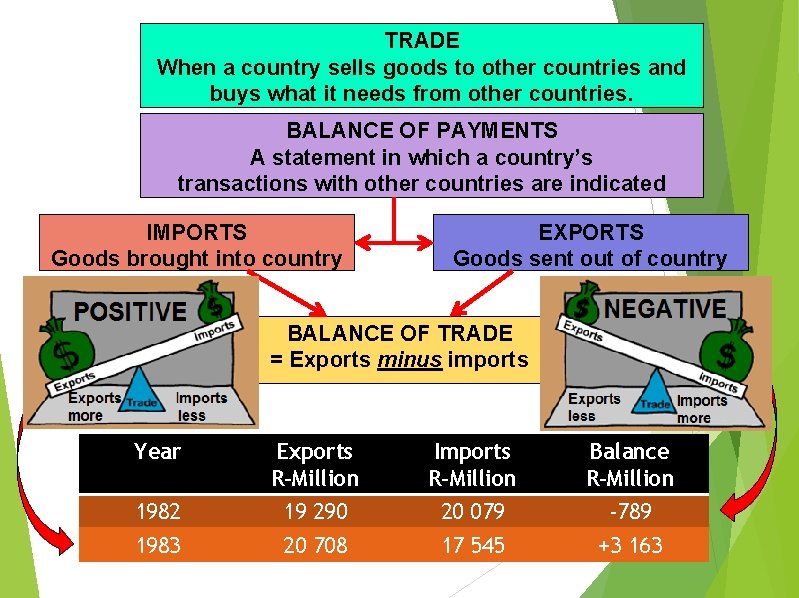
TRADE When a country sells goods to other countries and buys what it needs from other countries. BALANCE OF PAYMENTS A statement in which a country’s transactions with other countries are indicated IMPORTS Goods brought into country EXPORTS Goods sent out of country BALANCE OF TRADE = Exports minus imports Year Exports R-Million Imports R-Million Balance R-Million 1982 19 290 20 079 -789 1983 20 708 17 545 +3 163
GLOBALISATION
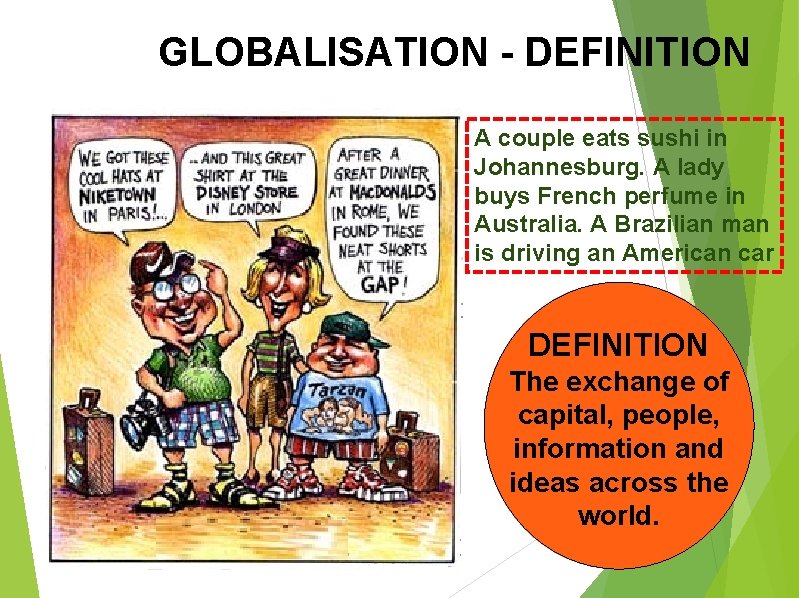
GLOBALISATION - DEFINITION A couple eats sushi in Johannesburg. A lady buys French perfume in Australia. A Brazilian man is driving an American car DEFINITION The exchange of capital, people, information and ideas across the world.
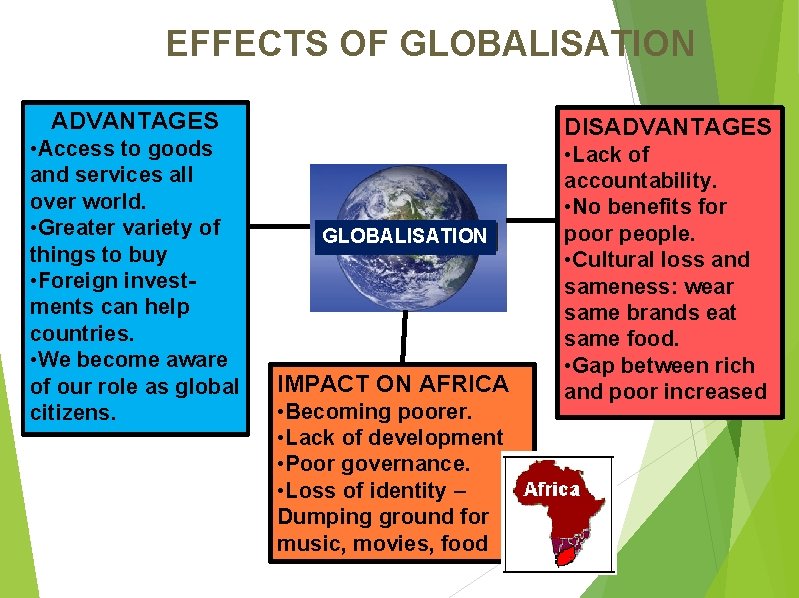
EFFECTS OF GLOBALISATION ADVANTAGES • Access to goods and services all over world. • Greater variety of things to buy • Foreign investments can help countries. • We become aware of our role as global citizens. DISADVANTAGES GLOBALISATION IMPACT ON AFRICA • Becoming poorer. • Lack of development • Poor governance. • Loss of identity – Dumping ground for music, movies, food • Lack of accountability. • No benefits for poor people. • Cultural loss and sameness: wear same brands eat same food. • Gap between rich and poor increased
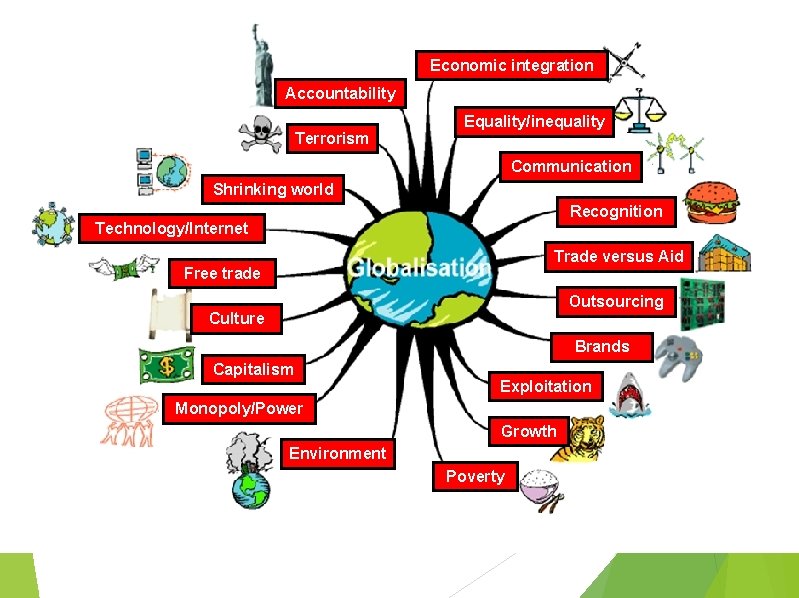
Economic integration Accountability Terrorism Equality/inequality Communication Shrinking world Recognition Technology/Internet Trade versus Aid Free trade Outsourcing Culture Brands Capitalism Exploitation Monopoly/Power Growth Environment Poverty
Thank you for paying attention