
ECONOMIC GEOGRAPHY 1 PRIMARY SECTOR The primary sector
- Slides: 13
ECONOMIC GEOGRAPHY
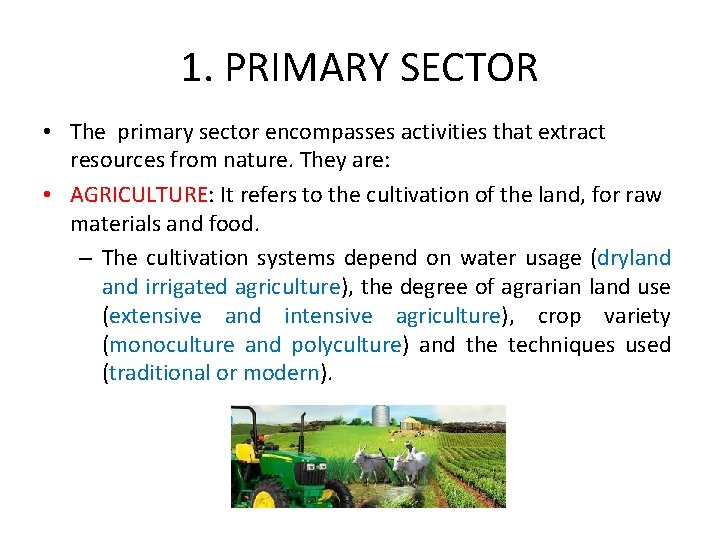
1. PRIMARY SECTOR • The primary sector encompasses activities that extract resources from nature. They are: • AGRICULTURE: It refers to the cultivation of the land, for raw materials and food. – The cultivation systems depend on water usage (dryland irrigated agriculture), the degree of agrarian land use (extensive and intensive agriculture), crop variety (monoculture and polyculture) and the techniques used (traditional or modern).
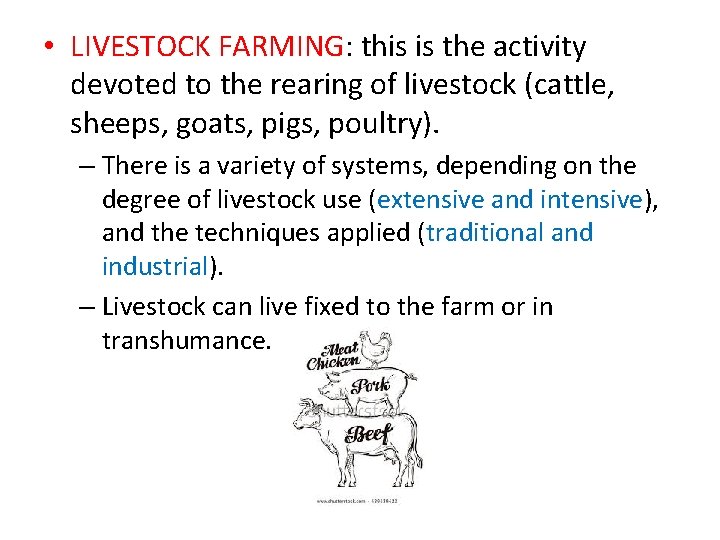
• LIVESTOCK FARMING: this is the activity devoted to the rearing of livestock (cattle, sheeps, goats, pigs, poultry). – There is a variety of systems, depending on the degree of livestock use (extensive and intensive), and the techniques applied (traditional and industrial). – Livestock can live fixed to the farm or in transhumance.
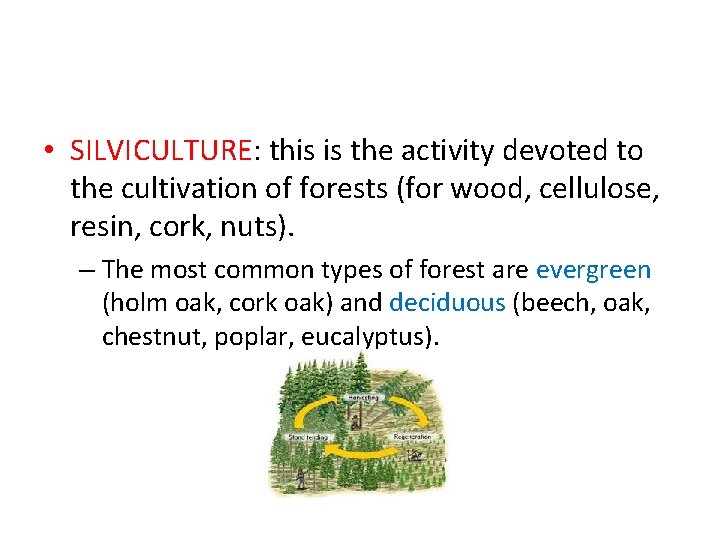
• SILVICULTURE: this is the activity devoted to the cultivation of forests (for wood, cellulose, resin, cork, nuts). – The most common types of forest are evergreen (holm oak, cork oak) and deciduous (beech, oak, chestnut, poplar, eucalyptus).
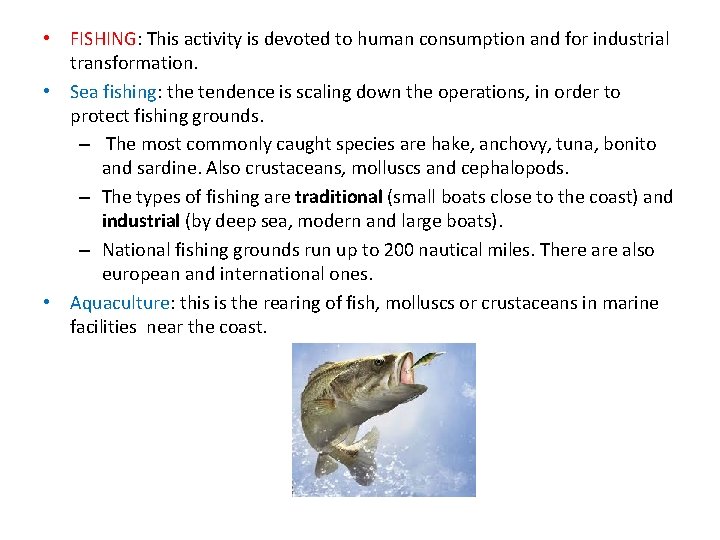
• FISHING: This activity is devoted to human consumption and for industrial transformation. • Sea fishing: the tendence is scaling down the operations, in order to protect fishing grounds. – The most commonly caught species are hake, anchovy, tuna, bonito and sardine. Also crustaceans, molluscs and cephalopods. – The types of fishing are traditional (small boats close to the coast) and industrial (by deep sea, modern and large boats). – National fishing grounds run up to 200 nautical miles. There also european and international ones. • Aquaculture: this is the rearing of fish, molluscs or crustaceans in marine facilities near the coast.
2. SECONDARY SECTOR • The main activities of this sector include those which transform the raw materials from primary sector. • These are mining, energy production and industrial production.
• MINING: This is an activity dedicated to locating, extracting and refining minerals and rocks. – Gold, silver, iron, copper, limestone, sandstone, slate, etc. are the main industrial rocks, which are used in the chemical and construction industries. – In Spain this activity has lost its past importance.
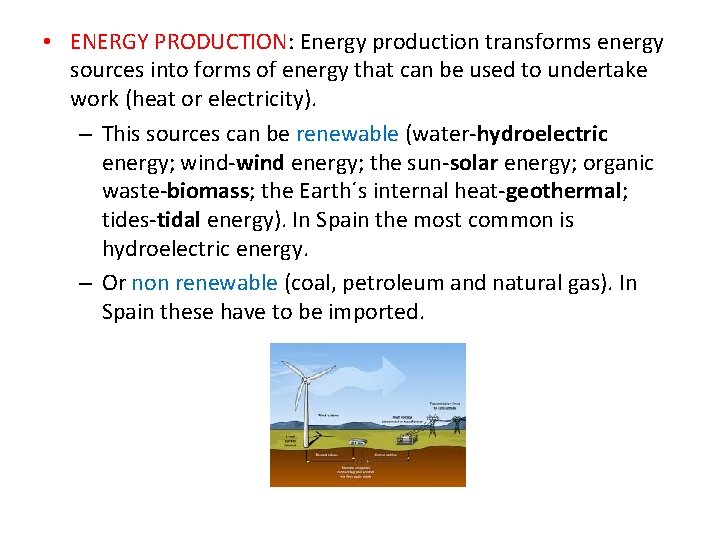
• ENERGY PRODUCTION: Energy production transforms energy sources into forms of energy that can be used to undertake work (heat or electricity). – This sources can be renewable (water-hydroelectric energy; wind-wind energy; the sun-solar energy; organic waste-biomass; the Earth´s internal heat-geothermal; tides-tidal energy). In Spain the most common is hydroelectric energy. – Or non renewable (coal, petroleum and natural gas). In Spain these have to be imported.
• INDUSTRIAL PRODUCTION: This activity transforms raw materials into manufactured or semifinished products. – In Spain the main industries are the iron and steel, the automotive, the ship building, the chemical, the textile and the food processing industries. – The main industrial areas are Madrid, Catalonia, Ebro Valley, Valencian Community and the Cantabrian Coast.
3. TERTIARY SECTOR • TRADE consists of the buying and selling of goods in exchange for money. – Domestic trade: it is based on small establishments and large-scale retailers (hypermarkets, department stores and shopping centres). – Foreign trade: Spain buys machinery and energy, and sells machinery, cars and foodstuffs. The trade balance is the difference between the purchases and sales.
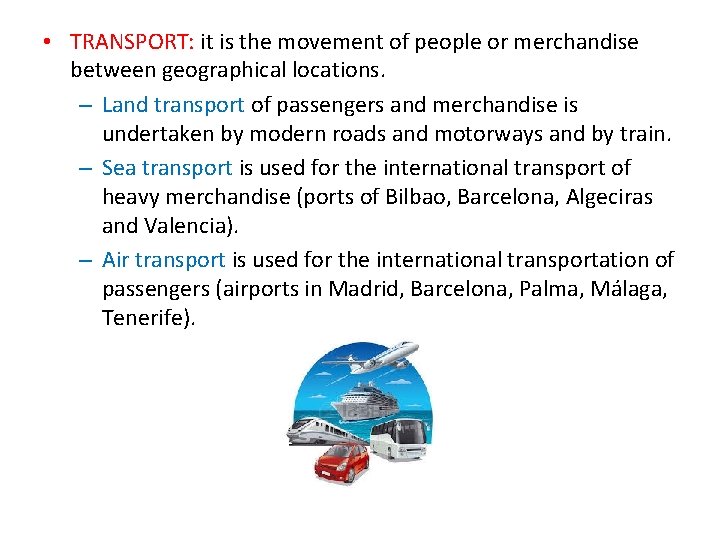
• TRANSPORT: it is the movement of people or merchandise between geographical locations. – Land transport of passengers and merchandise is undertaken by modern roads and motorways and by train. – Sea transport is used for the international transport of heavy merchandise (ports of Bilbao, Barcelona, Algeciras and Valencia). – Air transport is used for the international transportation of passengers (airports in Madrid, Barcelona, Palma, Málaga, Tenerife).
• TOURISM: it is a journey taken for leisure purposes that lasts for less than a year. – Spain receives a high number of tourists due to its many attractions (beach holidays, rural stays, cultural tours, business events). – Foreign tourists come from Germany, Britain and France.
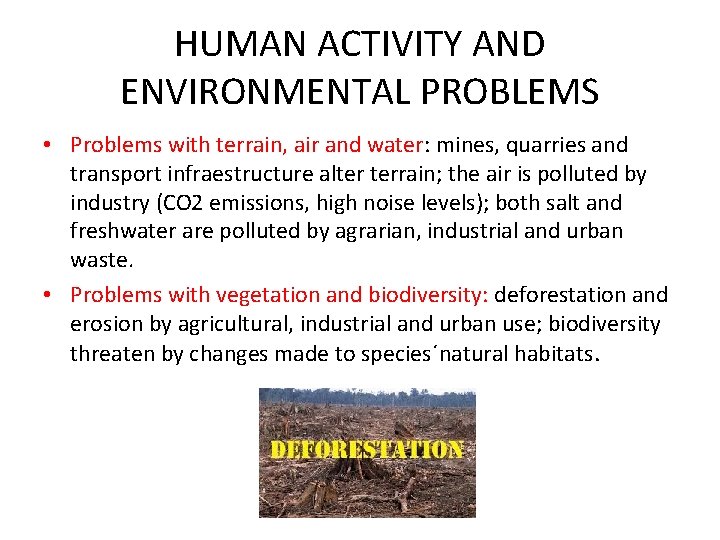
HUMAN ACTIVITY AND ENVIRONMENTAL PROBLEMS • Problems with terrain, air and water: mines, quarries and transport infraestructure alter terrain; the air is polluted by industry (CO 2 emissions, high noise levels); both salt and freshwater are polluted by agrarian, industrial and urban waste. • Problems with vegetation and biodiversity: deforestation and erosion by agricultural, industrial and urban use; biodiversity threaten by changes made to species´natural habitats.