
ECONOMIC FUNDAMENTALS SCARCITY PRICING SUPPLY DEMAND POWER POINT
- Slides: 17
ECONOMIC FUNDAMENTALS: SCARCITY & PRICING SUPPLY & DEMAND POWER POINT 5
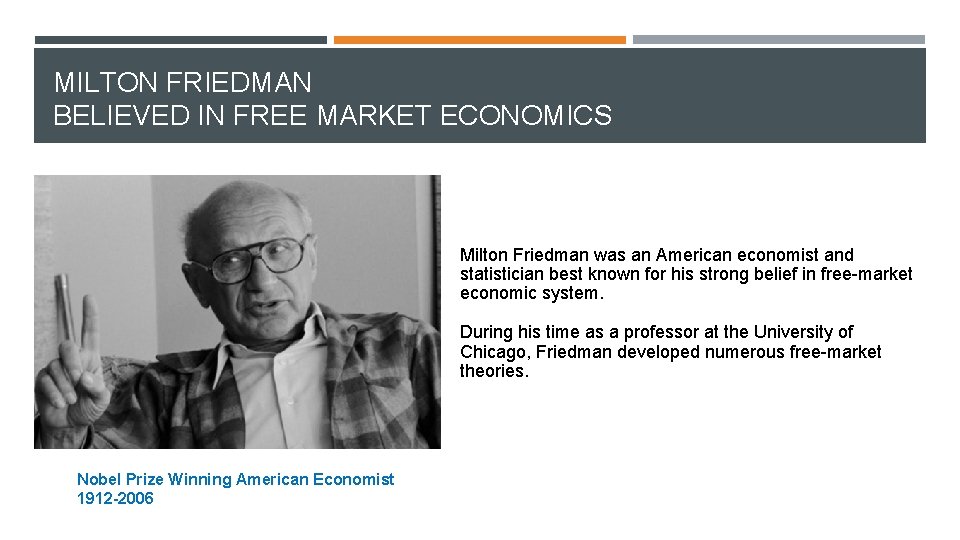
MILTON FRIEDMAN BELIEVED IN FREE MARKET ECONOMICS Milton Friedman was an American economist and statistician best known for his strong belief in free-market economic system. During his time as a professor at the University of Chicago, Friedman developed numerous free-market theories. Nobel Prize Winning American Economist 1912 -2006 X
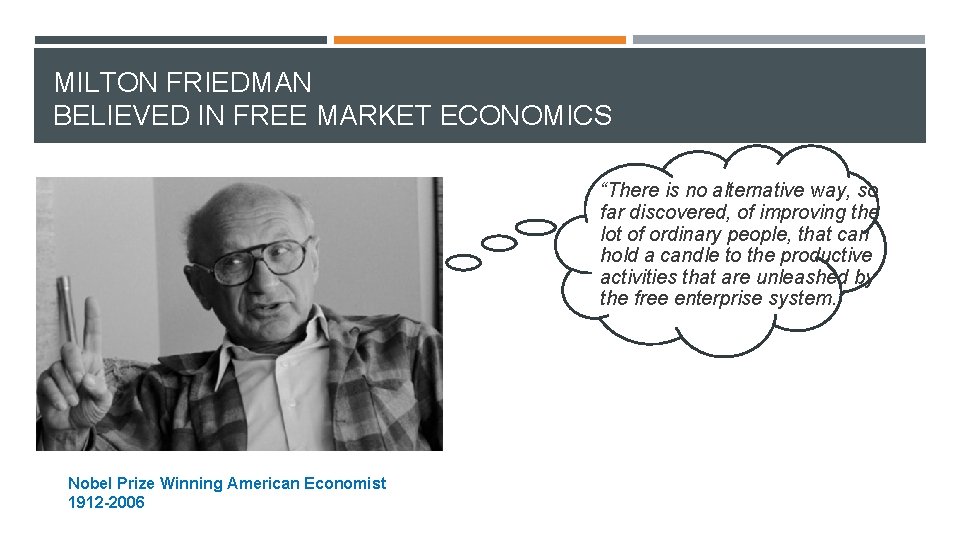
MILTON FRIEDMAN BELIEVED IN FREE MARKET ECONOMICS “There is no alternative way, so far discovered, of improving the lot of ordinary people, that can hold a candle to the productive activities that are unleashed by the free enterprise system. ” Nobel Prize Winning American Economist 1912 -2006 X
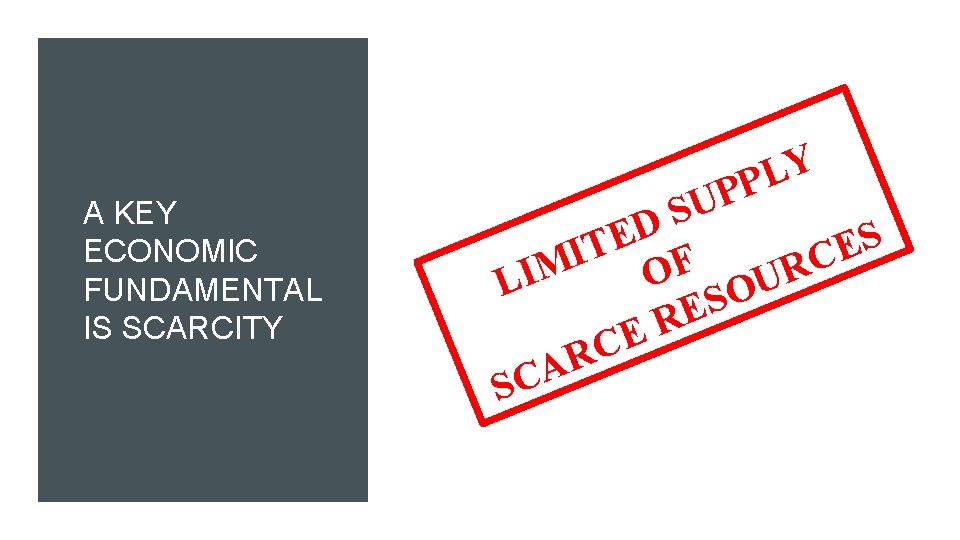
A KEY ECONOMIC FUNDAMENTAL IS SCARCITY Y L P P U S D E S T E I C F M R I O OU L S E R E C R A C S
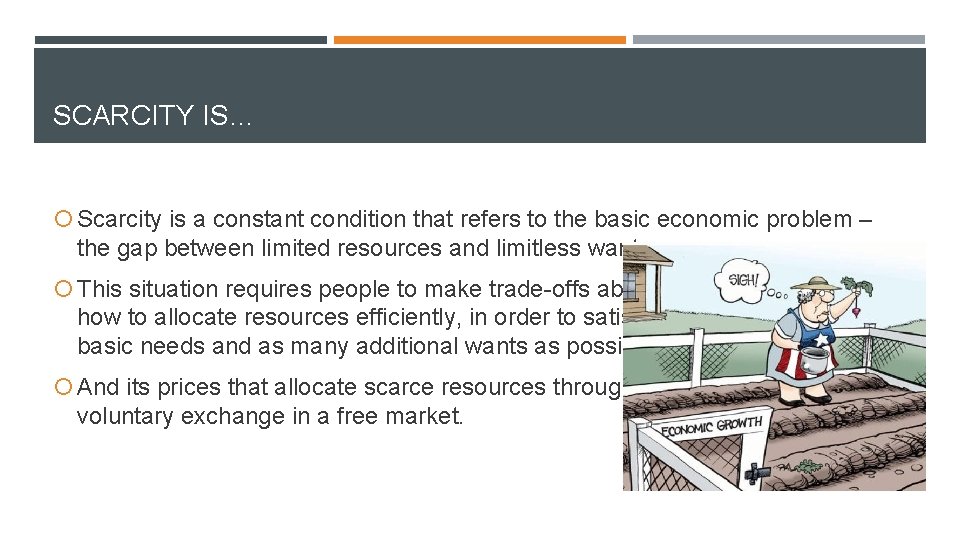
SCARCITY IS… Scarcity is a constant condition that refers to the basic economic problem – the gap between limited resources and limitless wants. This situation requires people to make trade-offs about how to allocate resources efficiently, in order to satisfy basic needs and as many additional wants as possible. And its prices that allocate scarce resources through voluntary exchange in a free market. X
THE ALLOCATION OF SCARCE RESOURCES IS IMPORTANT… How scarce resources ('factors of production') are distributed among producers, and how scarce goods and services are distributed among consumers plays a key role in our economic system. The 3 factors of production: [] LAND – NATURAL RESOURCES [] CAPITAL – ITEMS USED TO PRODUCE GOODS & SERVICES [] LABOR – THE WORK PUT INTO PRODUCING GOODS & SERIVCES X
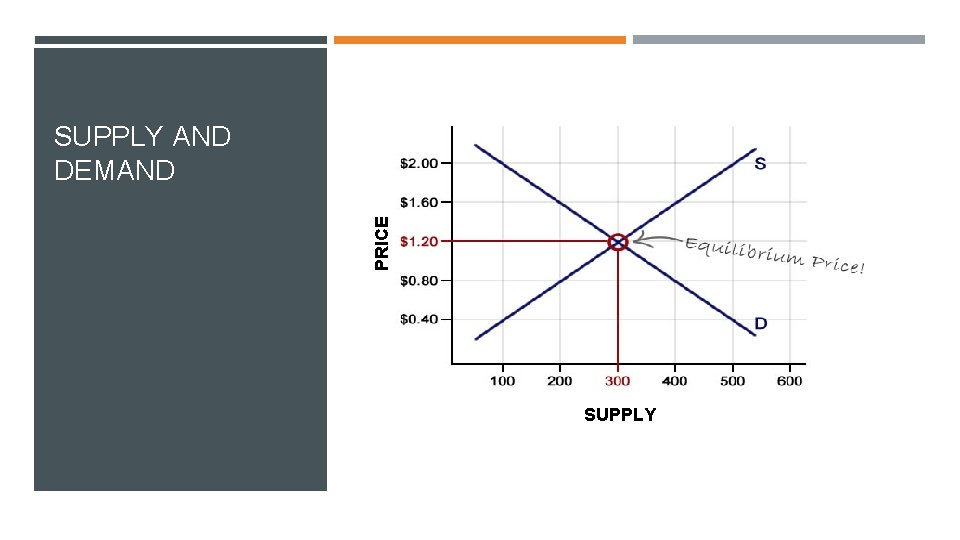
SCARCE ITEMS ARE ALLOCATED IN A FREE MARKET BY PRICES… In economics, a price mechanism is the way goods or services are allocated. A price mechanism, where there is voluntary exchange – coordinates buyers and sellers. This is best illustrated by the supply and demand curve. X
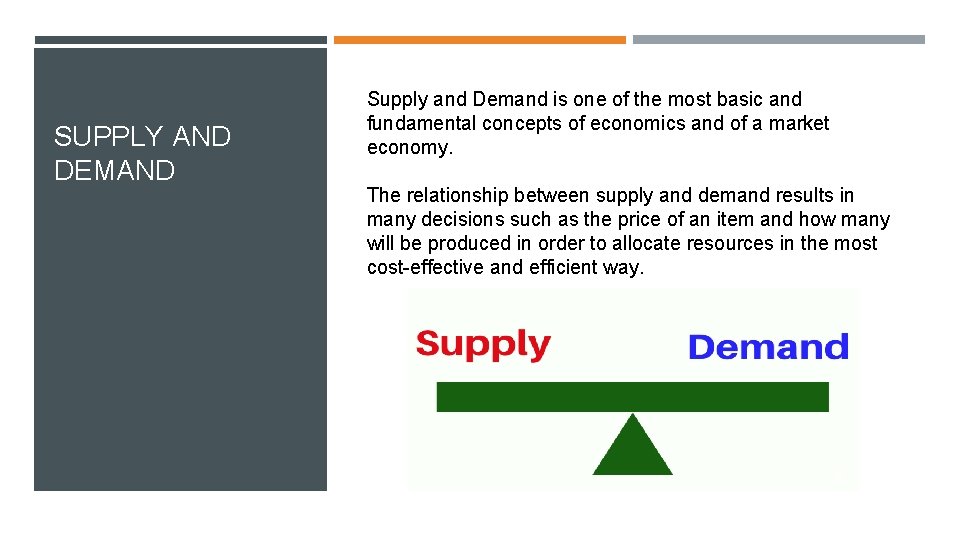
SUPPLY AND DEMAND Supply and Demand is one of the most basic and fundamental concepts of economics and of a market economy. The relationship between supply and demand results in many decisions such as the price of an item and how many will be produced in order to allocate resources in the most cost-effective and efficient way. X
PRICE SUPPLY AND DEMAND SUPPLY
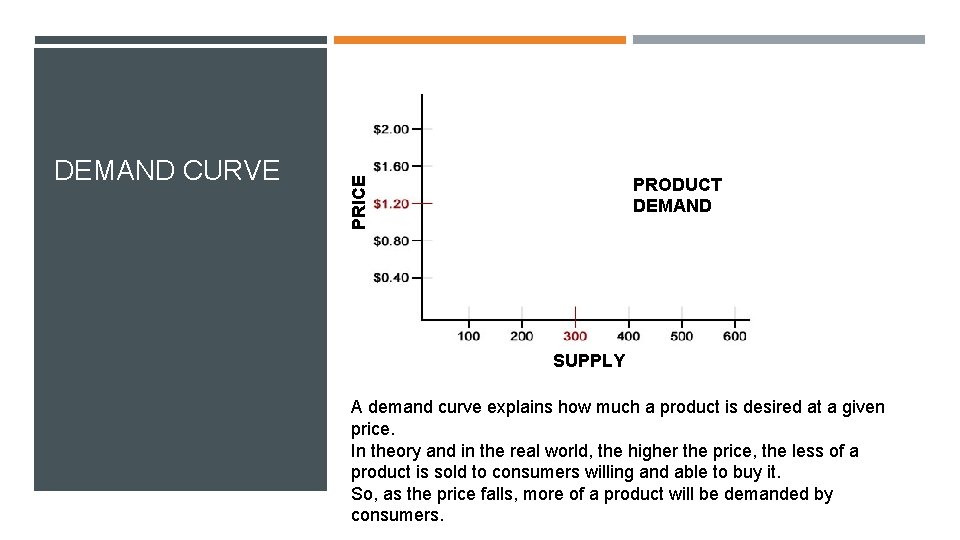
PRODUCT DEMAND PRICE DEMAND CURVE X SUPPLY A demand curve explains how much a product is desired at a given price. In theory and in the real world, the higher the price, the less of a product is sold to consumers willing and able to buy it. So, as the price falls, more of a product will be demanded by consumers.
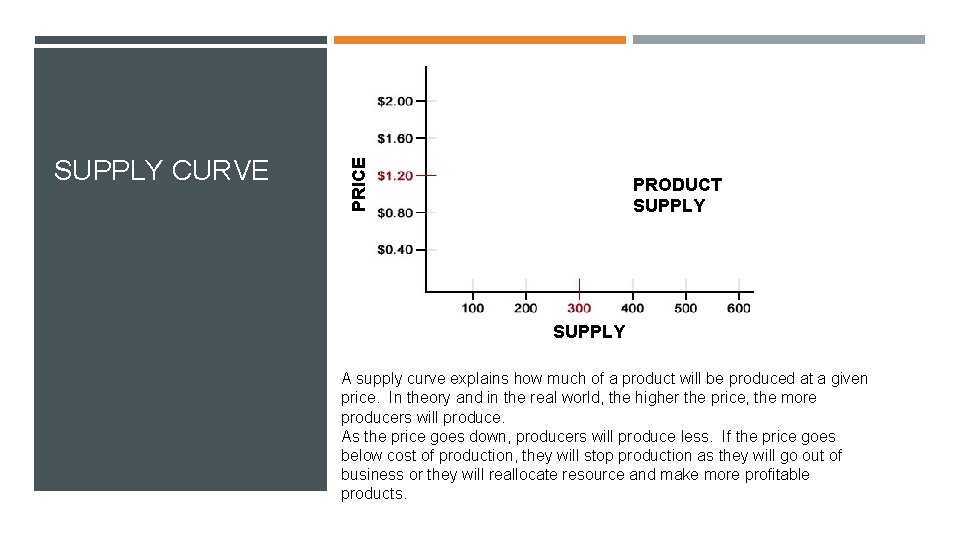
PRICE SUPPLY CURVE PRODUCT SUPPLY A supply curve explains how much of a product will be produced at a given price. In theory and in the real world, the higher the price, the more producers will produce. As the price goes down, producers will produce less. If the price goes below cost of production, they will stop production as they will go out of business or they will reallocate resource and make more profitable X products.
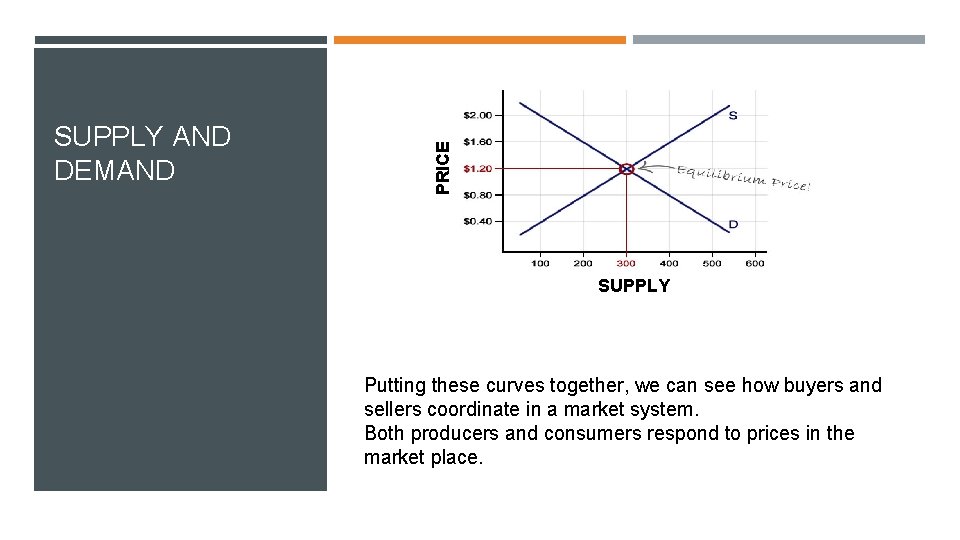
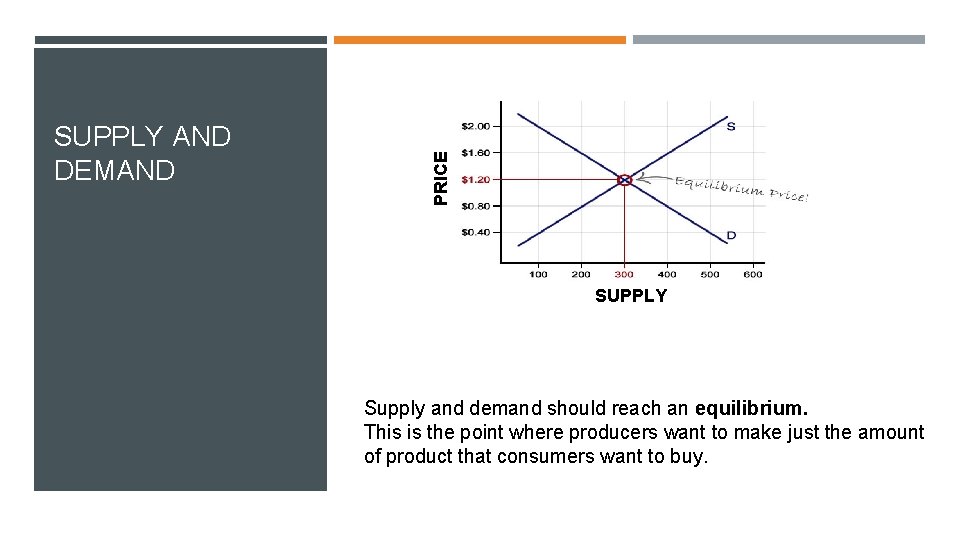
PRICE SUPPLY AND DEMAND SUPPLY Putting these curves together, we can see how buyers and sellers coordinate in a market system. Both producers and consumers respond to prices in the market place.
PRICE SUPPLY AND DEMAND SUPPLY Supply and demand should reach an equilibrium. This is the point where producers want to make just the amount of product that consumers want to buy.
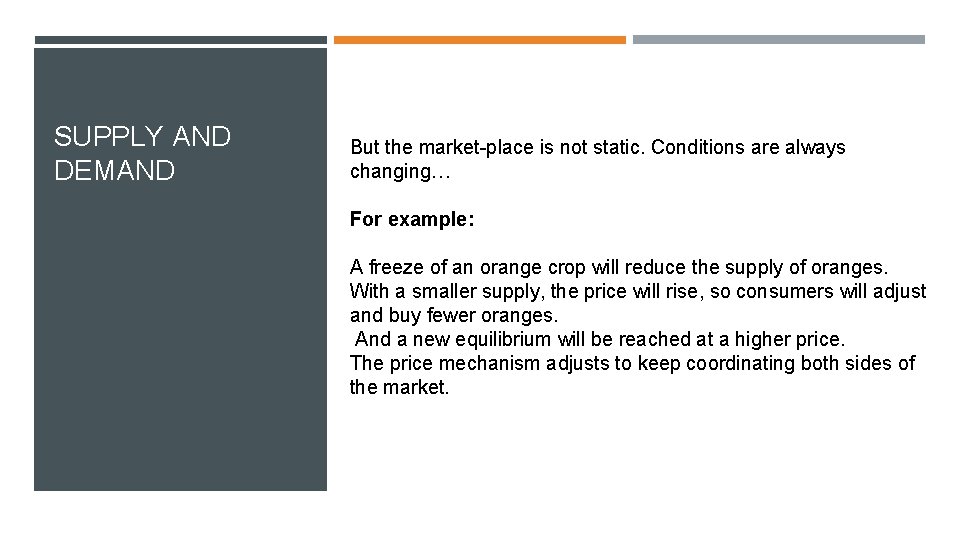
SUPPLY AND DEMAND But the market-place is not static. Conditions are always changing… For example: A freeze of an orange crop will reduce the supply of oranges. With a smaller supply, the price will rise, so consumers will adjust and buy fewer oranges. And a new equilibrium will be reached at a higher price. The price mechanism adjusts to keep coordinating both sides of the market. X
Sometimes, the government dictates prices to keep them low and more affordable. This disrupts the balance of supply and demand, and results in shortages at the set price. PRICE CONTROLS When prices are set artificially low more is demanded than is available, so there is a shortage. If the forced price is below production cost, production will be stopped in a price-controlled market – so a business won’t fail. This is when “Black Markets” arise. Goods are sold outside of the regulated market at prices that work for producers. So the black market becomes a true supply and demand market-place X
PEOPLE VOTE WITH THEIR POCKETBOOKS: To summarize… People have limited resources to get the things they want. They must make trade-offs based on what they can afford so they vote for products with their pocketbooks. Prices are determined in a free market by Supply & Demand. The higher the price, the more products will be produced and the less consumers will demand. Supply & demand will eventually evolve into a state of equilibrium – where things even out and the supply is equal to the demand. X
PLEASE CONTINUE WITH PP 6 TO LEARN MORE ABOUT THE TYPES OF ECONOMIC SYSTEMS…