
Economic Commission for Europe Energy Efficiency Development up
- Slides: 20
Economic Commission for Europe Energy Efficiency Development up to 2030 Gianluca Sambucini Warsaw, 22 -23 November 2005
Energy Efficiency Development l l Energy Efficiency Development up to 2030 (International Energy Agency’s analysis) UNECE Energy Efficiency 21 Project
EE Development up to 2030 l l l Objective: assess the prospects to 2030 for energy markets Different scenarios: reference scenario, alternative policy scenario Results: importance of governments policies and commitments in the energy field Source: International Energy Agency
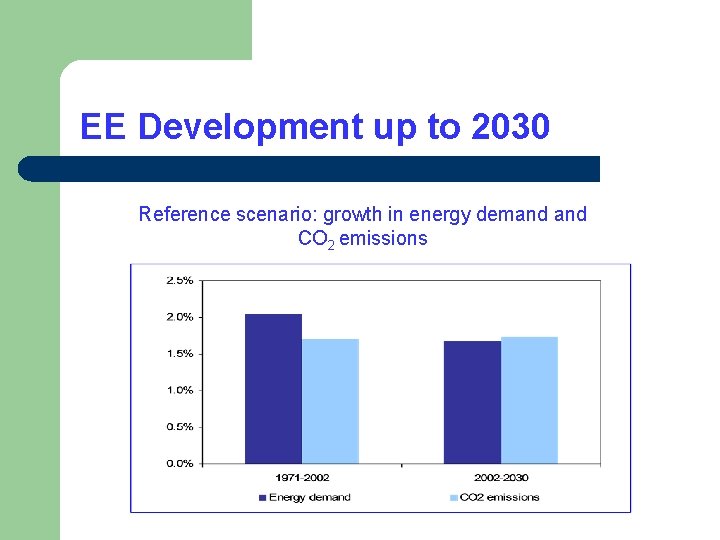
EE Development up to 2030 Reference scenario l l Ø Ø Ø Hyp: no reforms and investments to change current supply/consumption trends Projections for 2002 -2030: raise of global energy demand increase in the use of fossil fuels augment of carbon dioxide emissions
EE Development up to 2030 Reference scenario: growth in energy demand CO 2 emissions
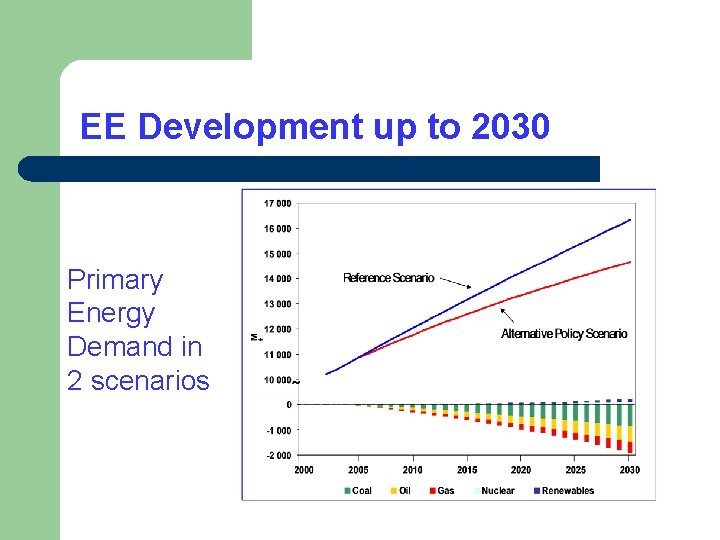
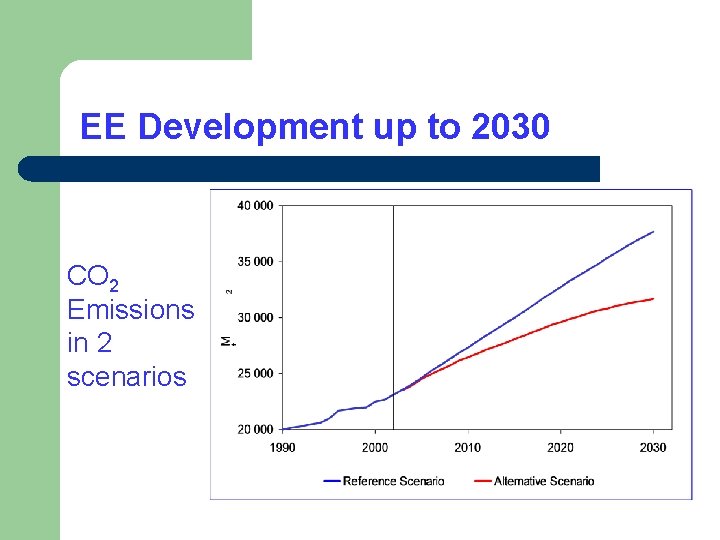
EE Development up to 2030 Alternative policy scenario l Hyp: governments undertake actions for a sustainable energy path l Projections for 2002 -2030 (compared to Reference Scenario): Ø Lower level of global energy demand Ø Reduction in the use of fossil fuels Ø Lower level of carbon emissions
EE Development up to 2030 Primary Energy Demand in 2 scenarios
EE Development up to 2030 CO 2 Emissions in 2 scenarios
EE Development up to 2030 l Results: Importance of energy reforms and investments in the energy field: Ø Energy security policies Ø Investments in cleaner technologies, energy efficiency, renewable resources
UNECE- Energy Efficiency 21 Project l l l Launched in 1991 - 4 three-year phases Enhance East-West Trade and Co-operation Improve Capacities and Networking Policy Reforms Financing Energy Efficiency Investments
Energy Efficiency 21 General Objective Enhance regional cooperation on energy efficiency market formation and investment project development to reduce greenhouse gas emissions in economies in transition
Energy Efficiency 21 l l l Regular Budget and Trust Fund US$ 200, 000 per year US$ 2 million UN Foundation & Partners US$ 1. 75 million UN General Assembly € 400, 000 European Commission – SAVE RENEUER USAID and USDOE
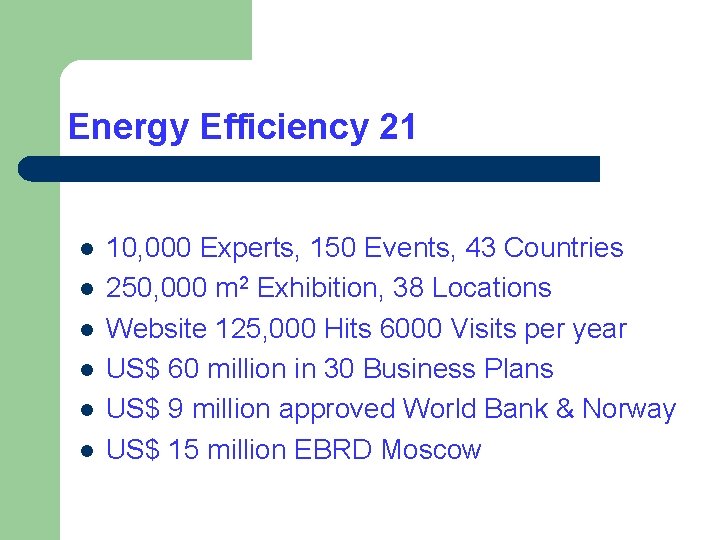
Energy Efficiency 21 l l l 10, 000 Experts, 150 Events, 43 Countries 250, 000 m 2 Exhibition, 38 Locations Website 125, 000 Hits 6000 Visits per year US$ 60 million in 30 Business Plans US$ 9 million approved World Bank & Norway US$ 15 million EBRD Moscow
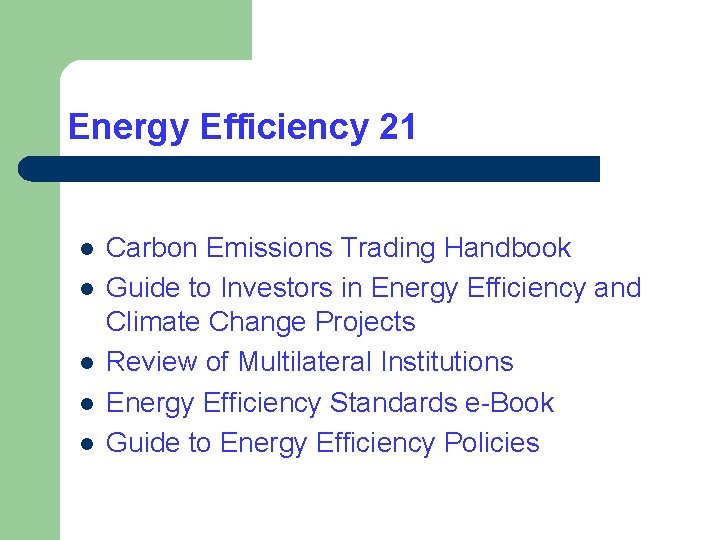
Energy Efficiency 21 l l l Carbon Emissions Trading Handbook Guide to Investors in Energy Efficiency and Climate Change Projects Review of Multilateral Institutions Energy Efficiency Standards e-Book Guide to Energy Efficiency Policies
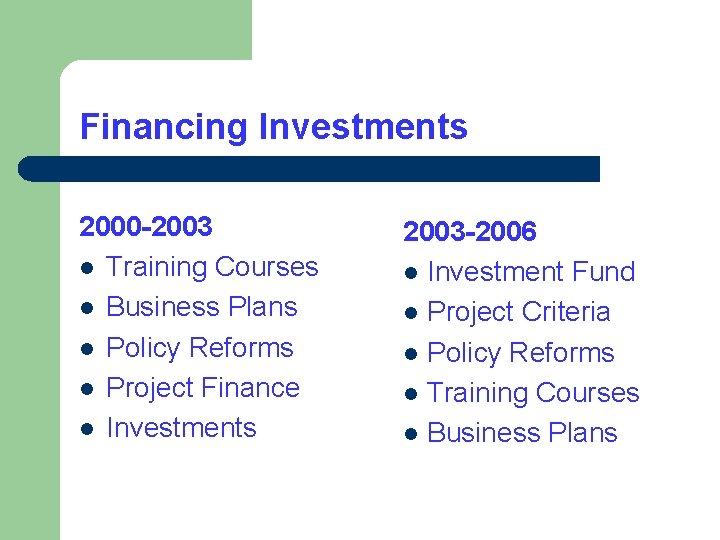
Financing Investments 2000 -2003 l Training Courses l Business Plans l Policy Reforms l Project Finance l Investments 2003 -2006 l Investment Fund l Project Criteria l Policy Reforms l Training Courses l Business Plans
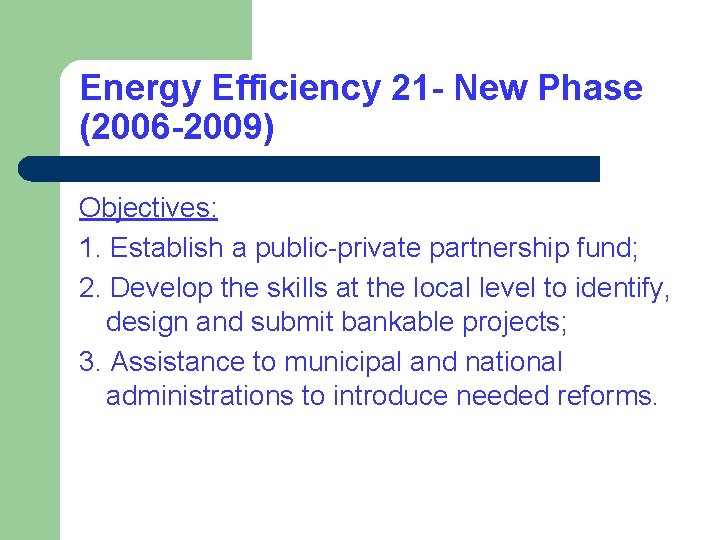
Energy Efficiency 21 - New Phase (2006 -2009) Objectives: 1. Establish a public-private partnership fund; 2. Develop the skills at the local level to identify, design and submit bankable projects; 3. Assistance to municipal and national administrations to introduce needed reforms.
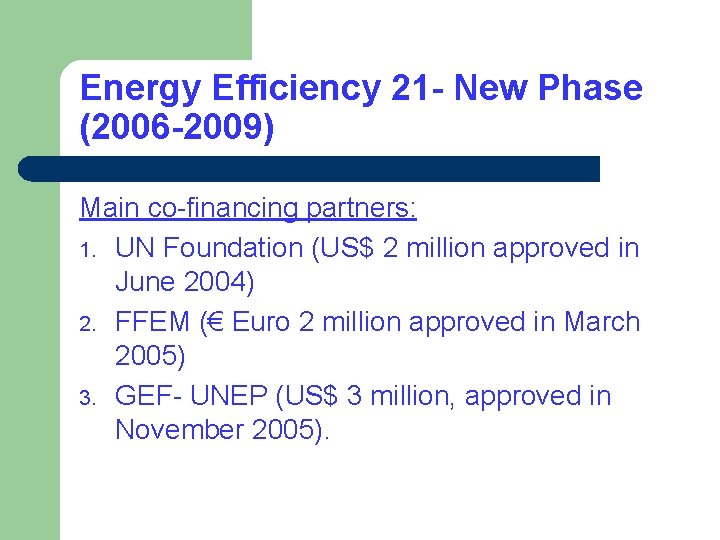
Energy Efficiency 21 - New Phase (2006 -2009) Main co-financing partners: 1. UN Foundation (US$ 2 million approved in June 2004) 2. FFEM (€ Euro 2 million approved in March 2005) 3. GEF- UNEP (US$ 3 million, approved in November 2005).
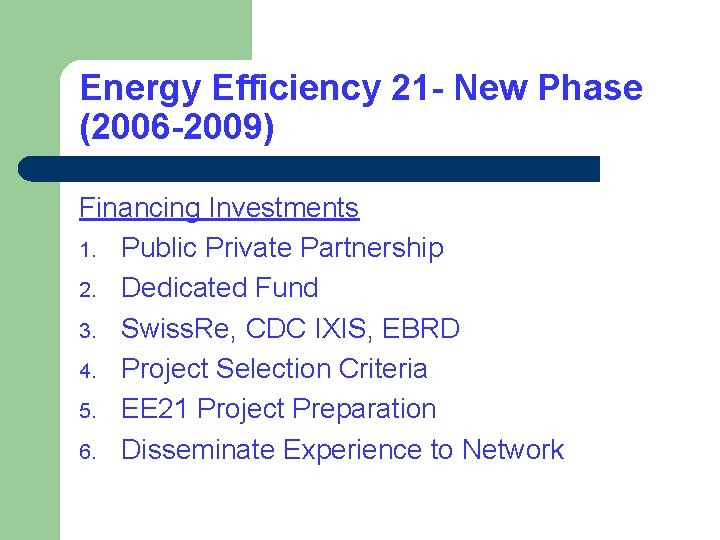
Energy Efficiency 21 - New Phase (2006 -2009) Financing Investments 1. Public Private Partnership 2. Dedicated Fund 3. Swiss. Re, CDC IXIS, EBRD 4. Project Selection Criteria 5. EE 21 Project Preparation 6. Disseminate Experience to Network
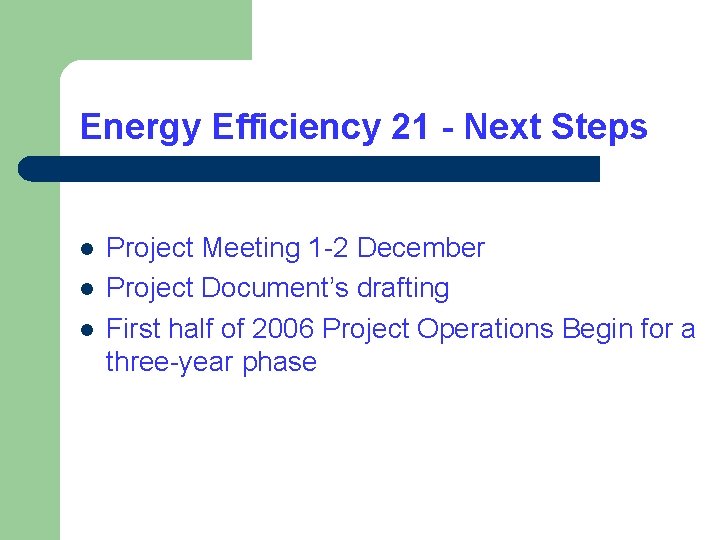
Energy Efficiency 21 - Next Steps l l l Project Meeting 1 -2 December Project Document’s drafting First half of 2006 Project Operations Begin for a three-year phase
EE 21 - contacts Gianluca Sambucini Energy Efficiency 21 (EE 21) United Nations Economic Commission for Europe Palais des Nations Bureau 348 CH - 1211 Geneva 10, Switzerland Tel: +41 (0)22 917 1175; Fax: +41 (0)22 917 0178 E-mail: gianluca. sambucini@unece. org; Web sites: www. unece. org/ie/, www. ee-21. net