
ECommerce Section 321 Entry Type 86 Andrew Park




- Slides: 23
E-Commerce: Section 321, Entry Type 86 Andrew Park, Customs Broker Licensed by CBP LA총영사관 공익관세사
E-Commerce • E-Commerce is a business model that lets firms and individuals buy and sell things over the internet. • CBP defines E-Commerce as high-volume, low-value shipments entering the port limits of the United States.
Low-value shipment • Not higher than $800 • The Trade Facilitation and Trade Enforcement Act of 2015 (TFTEA) • Signed into law on February 24, 2016 • De minimis value has increased from $200 to $800 • To streamline and facilitate the movement of trade
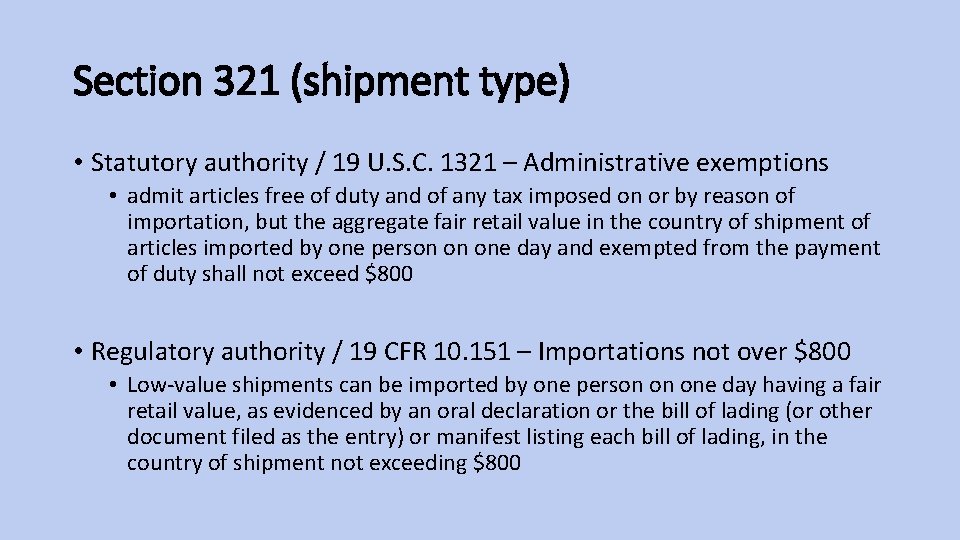
Section 321 (shipment type) • Statutory authority / 19 U. S. C. 1321 – Administrative exemptions • admit articles free of duty and of any tax imposed on or by reason of importation, but the aggregate fair retail value in the country of shipment of articles imported by one person on one day and exempted from the payment of duty shall not exceed $800 • Regulatory authority / 19 CFR 10. 151 – Importations not over $800 • Low-value shipments can be imported by one person on one day having a fair retail value, as evidenced by an oral declaration or the bill of lading (or other document filed as the entry) or manifest listing each bill of lading, in the country of shipment not exceeding $800
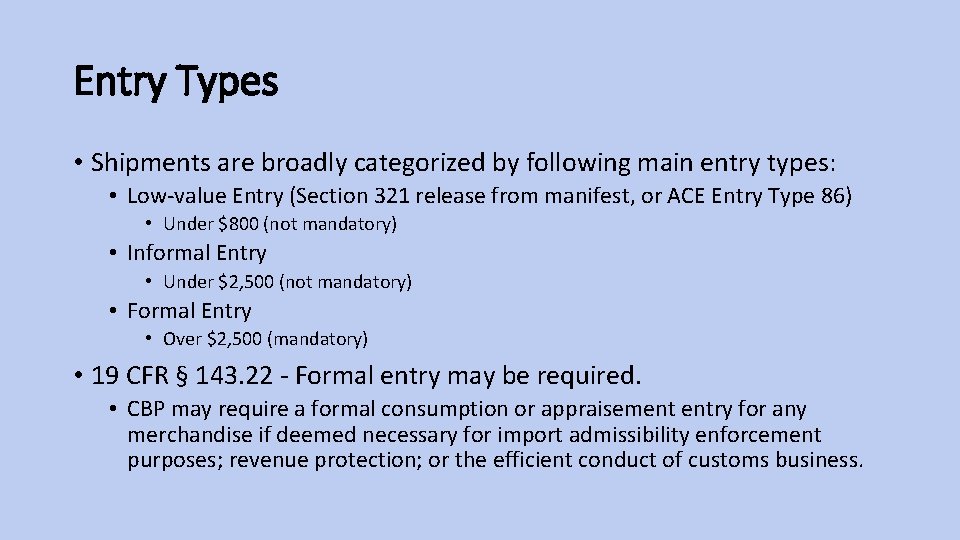
Entry Types • Shipments are broadly categorized by following main entry types: • Low-value Entry (Section 321 release from manifest, or ACE Entry Type 86) • Under $800 (not mandatory) • Informal Entry • Under $2, 500 (not mandatory) • Formal Entry • Over $2, 500 (mandatory) • 19 CFR § 143. 22 - Formal entry may be required. • CBP may require a formal consumption or appraisement entry for any merchandise if deemed necessary for import admissibility enforcement purposes; revenue protection; or the efficient conduct of customs business.
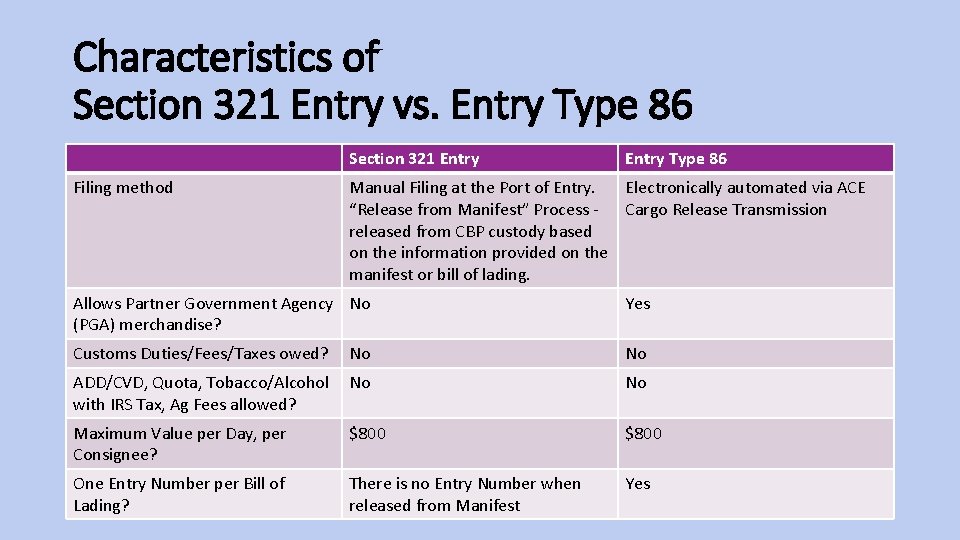
Characteristics of Section 321 Entry vs. Entry Type 86 Section 321 Entry Filing method Entry Type 86 Manual Filing at the Port of Entry. Electronically automated via ACE “Release from Manifest” Process - Cargo Release Transmission released from CBP custody based on the information provided on the manifest or bill of lading. Allows Partner Government Agency No (PGA) merchandise? Yes Customs Duties/Fees/Taxes owed? No ADD/CVD, Quota, Tobacco/Alcohol with IRS Tax, Ag Fees allowed? No Maximum Value per Day, per Consignee? $800 One Entry Number per Bill of Lading? There is no Entry Number when released from Manifest Yes
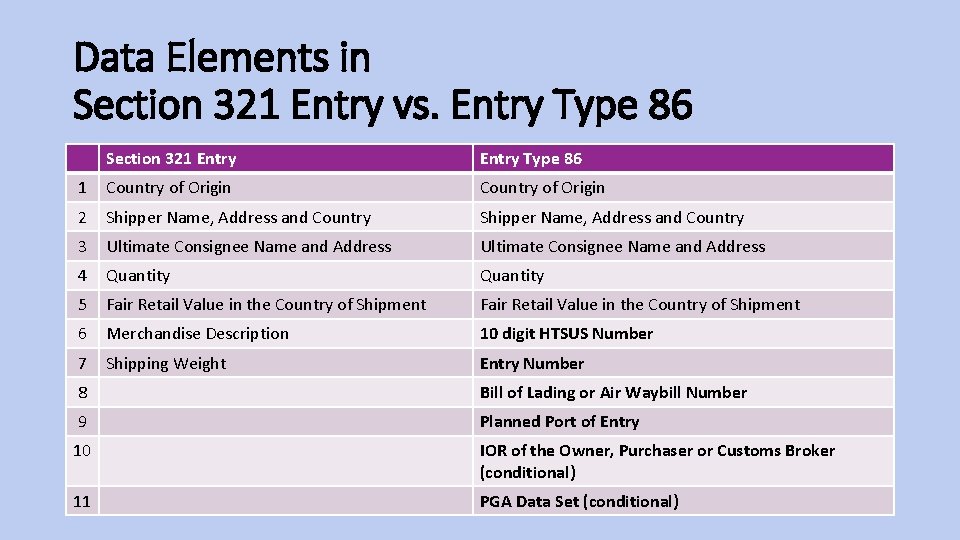
Data Elements in Section 321 Entry vs. Entry Type 86 1 Section 321 Entry Type 86 Country of Origin 2 Shipper Name, Address and Country 3 Ultimate Consignee Name and Address 4 Quantity 5 Fair Retail Value in the Country of Shipment 6 Merchandise Description 10 digit HTSUS Number 7 Shipping Weight Entry Number 8 Bill of Lading or Air Waybill Number 9 Planned Port of Entry 10 IOR of the Owner, Purchaser or Customs Broker (conditional) 11 PGA Data Set (conditional)
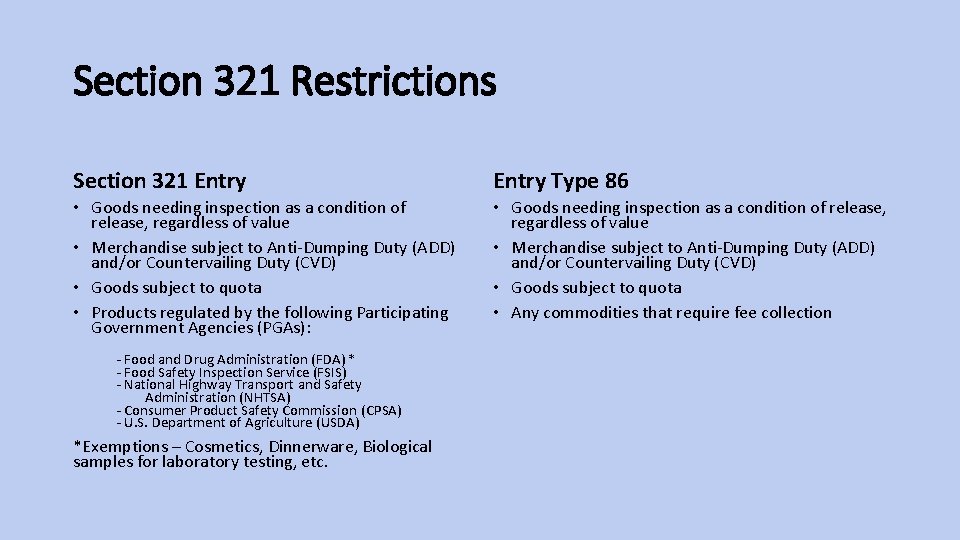
Section 321 Restrictions Section 321 Entry Type 86 • Goods needing inspection as a condition of release, regardless of value • Merchandise subject to Anti-Dumping Duty (ADD) and/or Countervailing Duty (CVD) • Goods subject to quota • Products regulated by the following Participating Government Agencies (PGAs): • Goods needing inspection as a condition of release, regardless of value • Merchandise subject to Anti-Dumping Duty (ADD) and/or Countervailing Duty (CVD) • Goods subject to quota • Any commodities that require fee collection - Food and Drug Administration (FDA) * - Food Safety Inspection Service (FSIS) - National Highway Transport and Safety Administration (NHTSA) - Consumer Product Safety Commission (CPSA) - U. S. Department of Agriculture (USDA) *Exemptions – Cosmetics, Dinnerware, Biological samples for laboratory testing, etc.
Top 10 Most Asked Questions about Section 321 & Entry Type 86
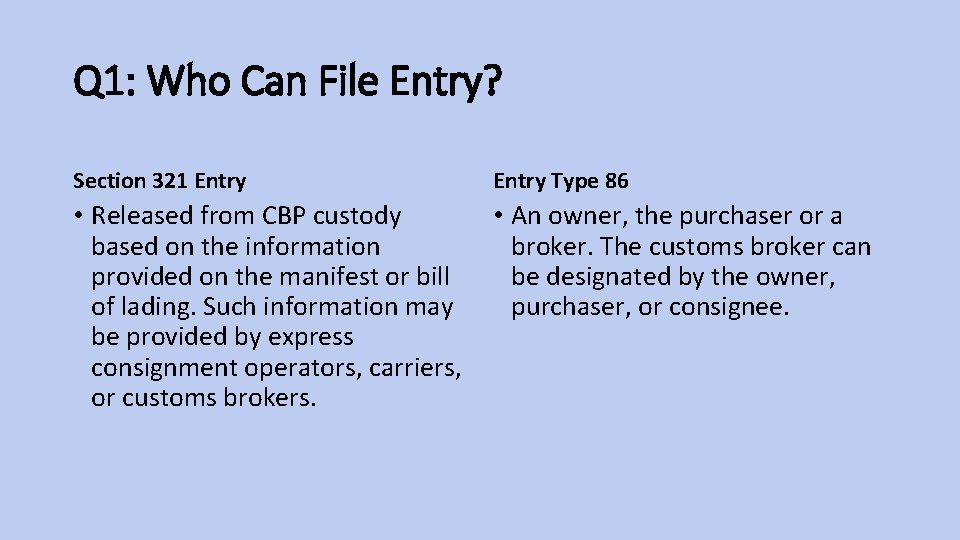
Q 1: Who Can File Entry? Section 321 Entry Type 86 • Released from CBP custody • An owner, the purchaser or a based on the information broker. The customs broker can provided on the manifest or bill be designated by the owner, of lading. Such information may purchaser, or consignee. be provided by express consignment operators, carriers, or customs brokers.
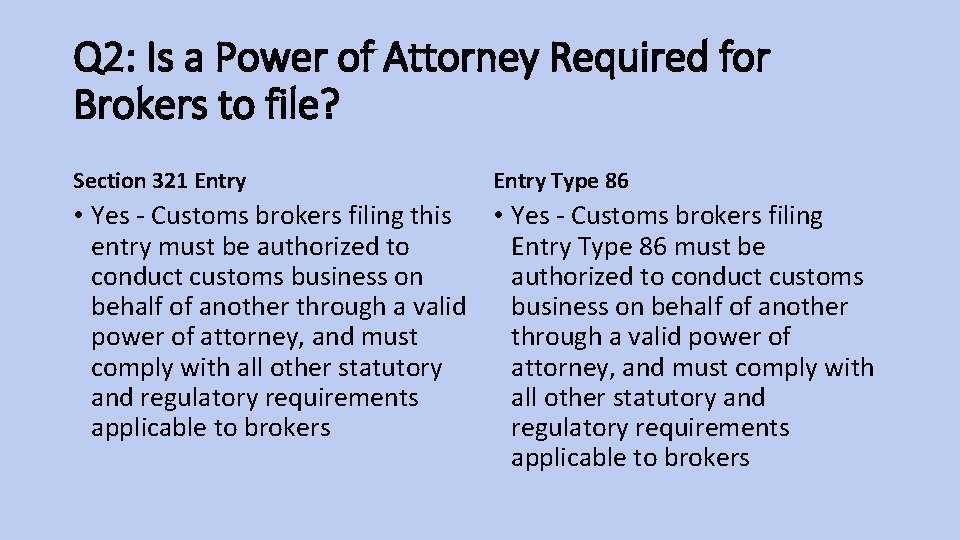
Q 2: Is a Power of Attorney Required for Brokers to file? Section 321 Entry Type 86 • Yes - Customs brokers filing this • Yes - Customs brokers filing entry must be authorized to Entry Type 86 must be conduct customs business on authorized to conduct customs behalf of another through a valid business on behalf of another power of attorney, and must through a valid power of comply with all other statutory attorney, and must comply with and regulatory requirements all other statutory and applicable to brokers regulatory requirements applicable to brokers
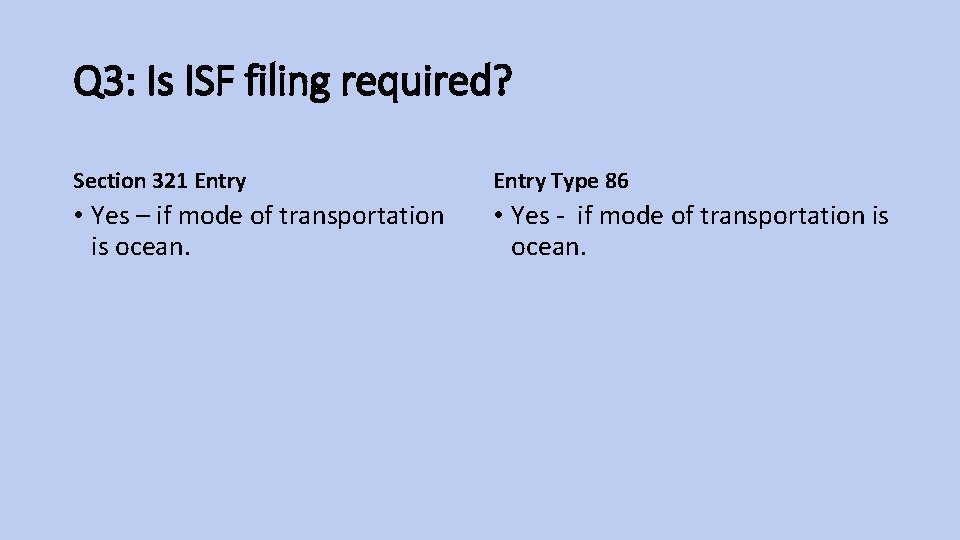
Q 3: Is ISF filing required? Section 321 Entry Type 86 • Yes – if mode of transportation is ocean. • Yes - if mode of transportation is ocean.
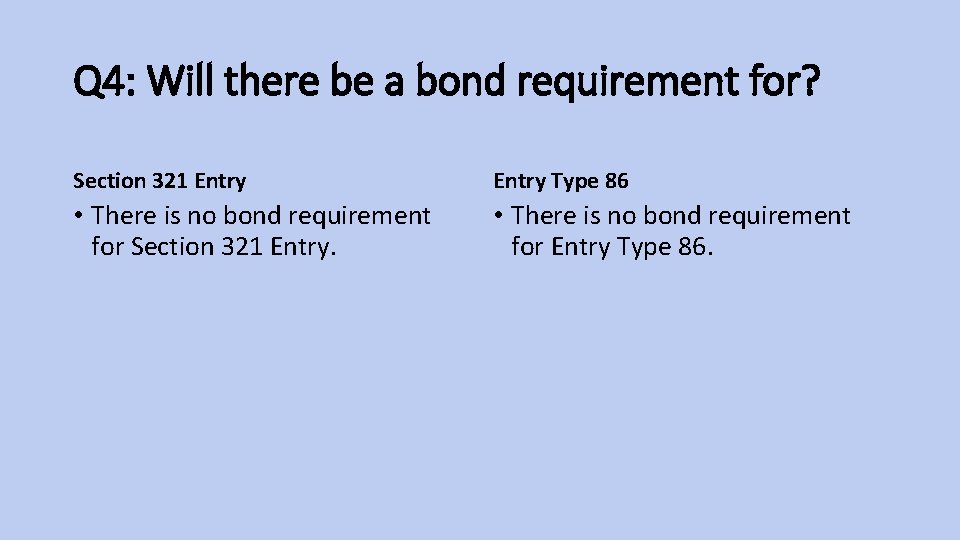
Q 4: Will there be a bond requirement for? Section 321 Entry Type 86 • There is no bond requirement for Section 321 Entry. • There is no bond requirement for Entry Type 86.
Q 5: Can Entry Type 86 be filed at any commercial port of entry? • Yes, remote location filing is permitted with National permit.
Q 6: How will one shipment, person, per day, not to exceed $800, be validated? • It is the responsibility of the filer to comply with this statutory limitation under 19 USC 1321.
Q 7: Can a shipment be broken up to take advantage of the $800 duty free treatment? • No. Pursuant to 19 C. F. R. § 10. 151, if a port director has reason to believe that a “shipment is one of several lots covered by a single order or contract and that it was sent separately for the express purpose of securing free entry, ” he must not accord duty free treatment to the shipment.
Q 8: Can multiple shipments be consolidated into one entry Type 86? • No, multiple shipments cannot be consolidated into one entry Type 86. Only a simple one master house or bill can be provided on an entry Type 86.
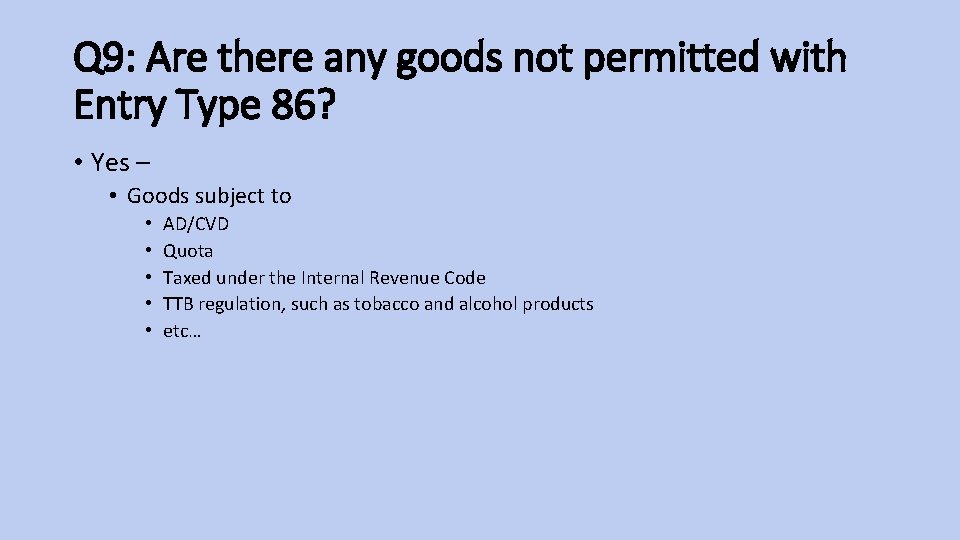
Q 9: Are there any goods not permitted with Entry Type 86? • Yes – • Goods subject to • • • AD/CVD Quota Taxed under the Internal Revenue Code TTB regulation, such as tobacco and alcohol products etc…
Q 10: Will an entry subject to Section 301 duties be allowed for entry Type 86? • Yes, an entry that is subject to 301 that meets de minimis requirements may currently be filed as a Type 86.
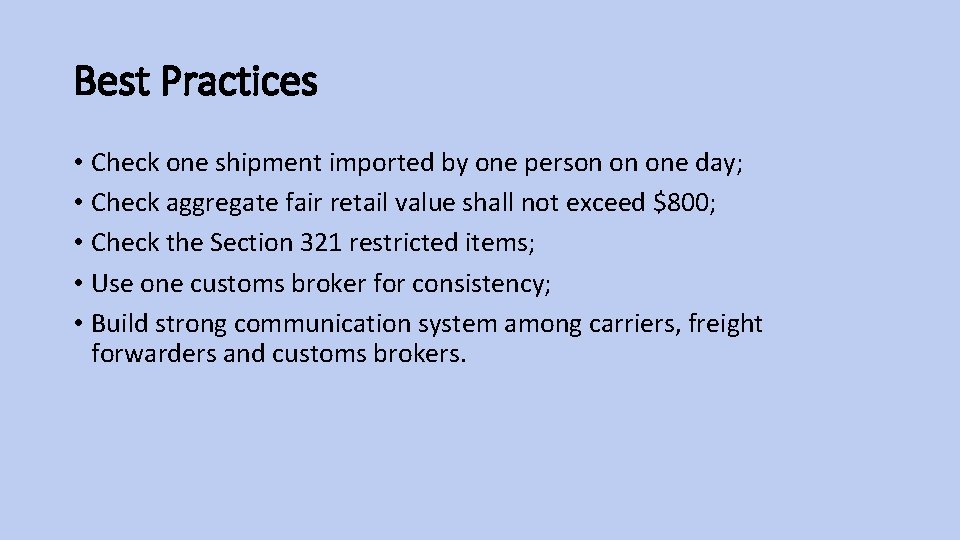
Best Practices • Check one shipment imported by one person on one day; • Check aggregate fair retail value shall not exceed $800; • Check the Section 321 restricted items; • Use one customs broker for consistency; • Build strong communication system among carriers, freight forwarders and customs brokers.
Thank You!
Contact Information Andrew Park Customs Broker Licensed by CBP LA총영사관 공익관세사 andrewpark@apchb. com