
Ecomedia Animal LocomotionAnimated Zoology Eadweard Muybridge Animal LocomotionAnimated

Eco/media
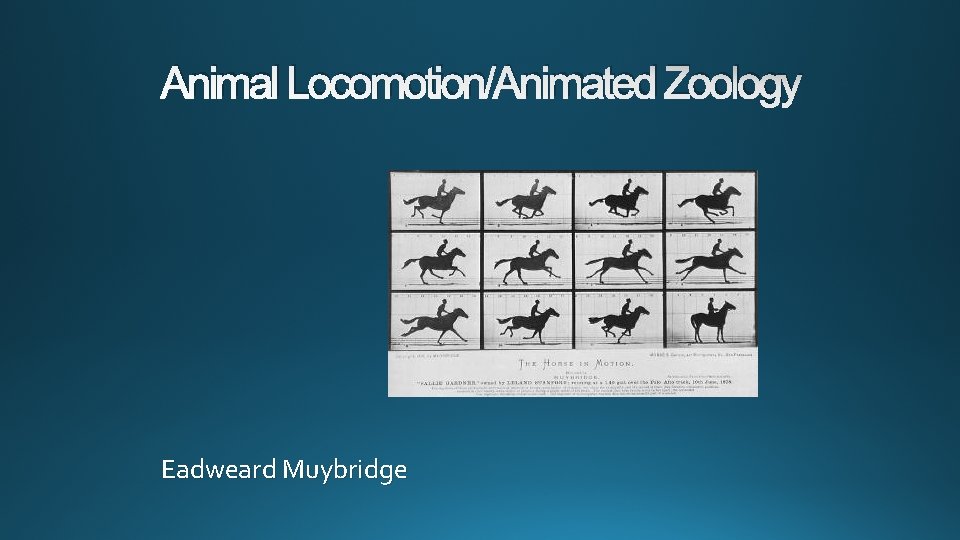
Animal Locomotion/Animated Zoology Eadweard Muybridge
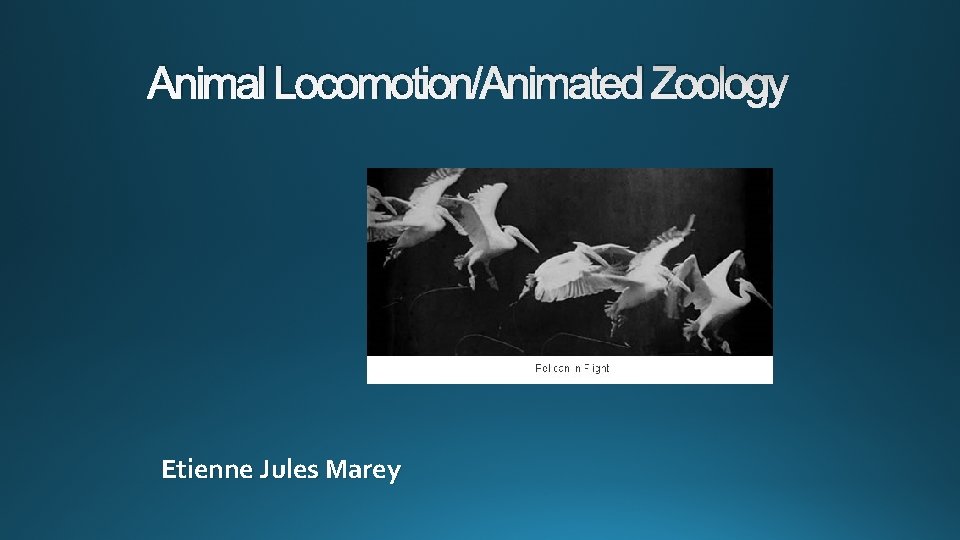
Animal Locomotion/Animated Zoology Etienne Jules Marey
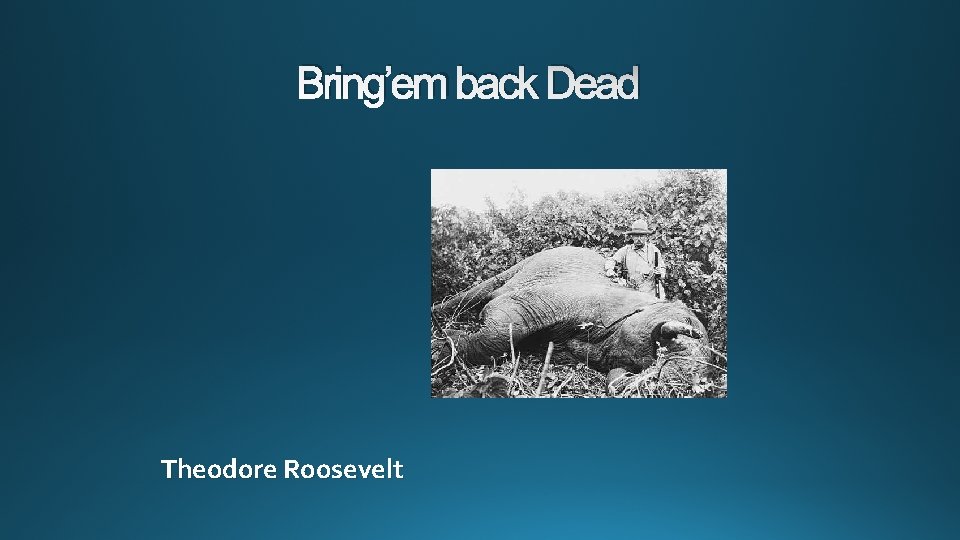
Bring’em back Dead Theodore Roosevelt
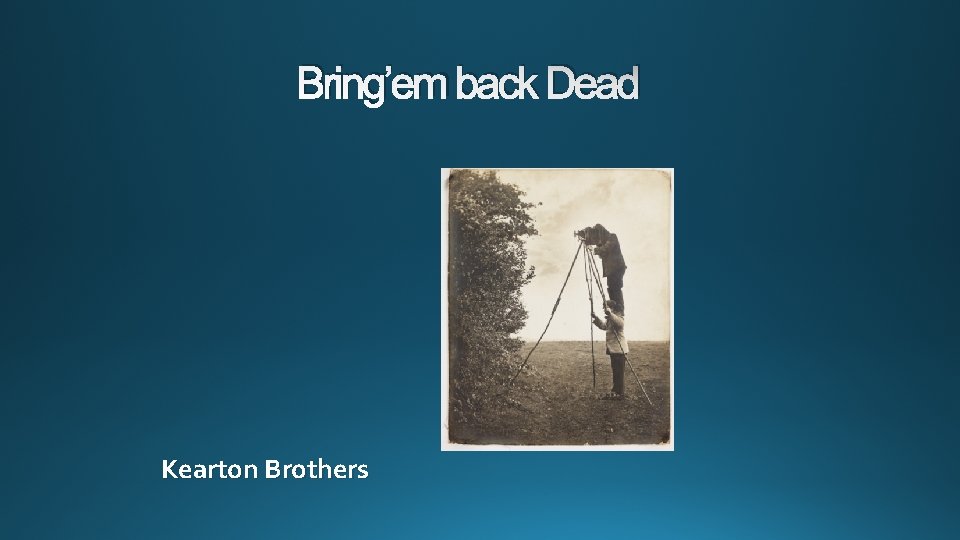
Bring’em back Dead Kearton Brothers
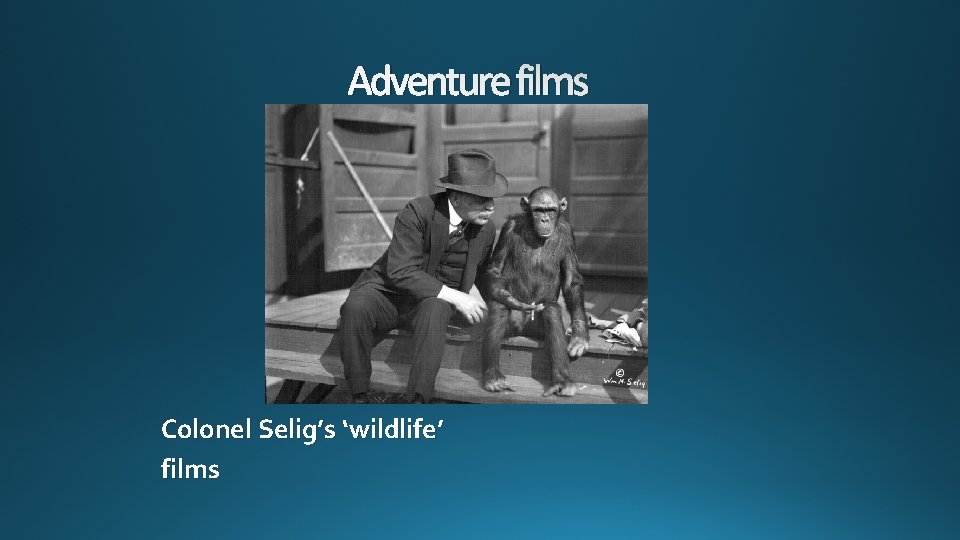
Adventure films Colonel Selig’s ‘wildlife’ films
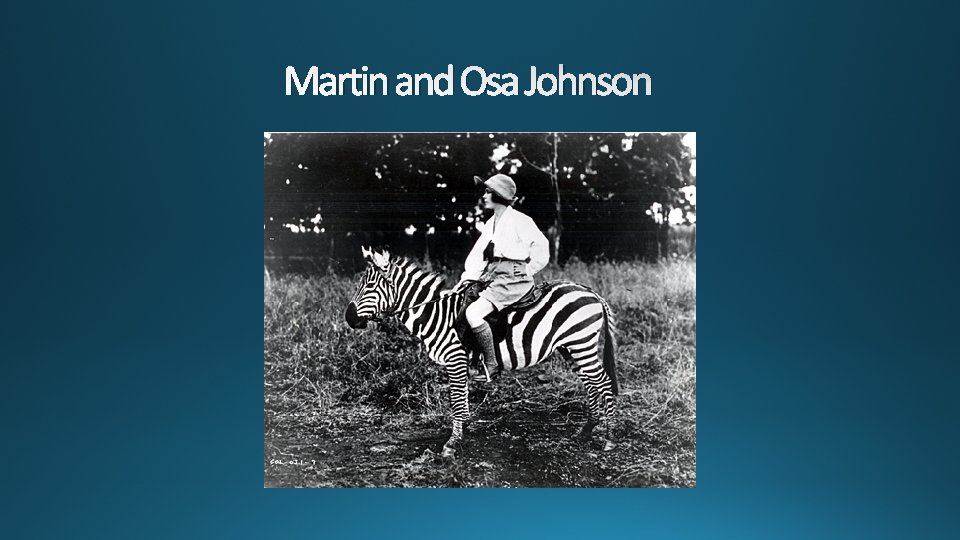
Martin and Osa Johnson
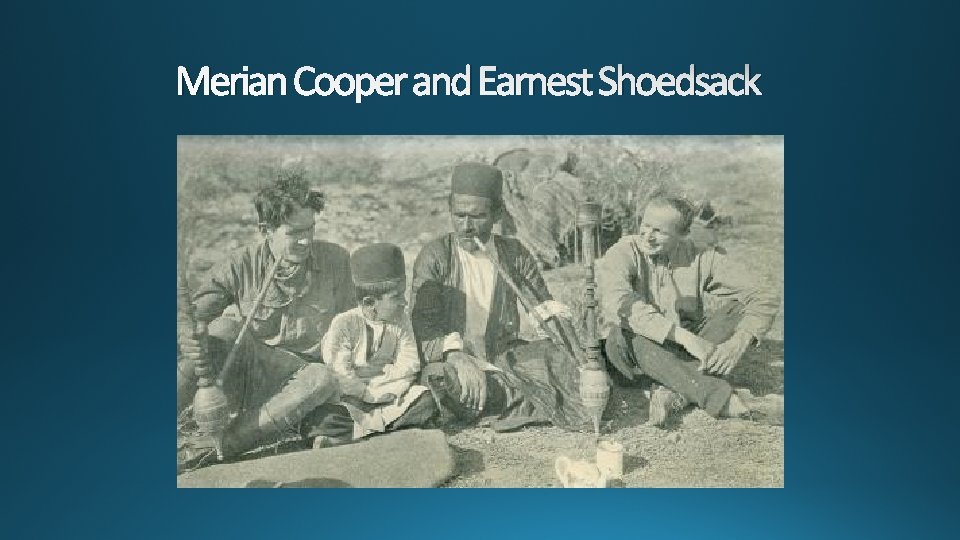
Merian Cooper and Earnest Shoedsack
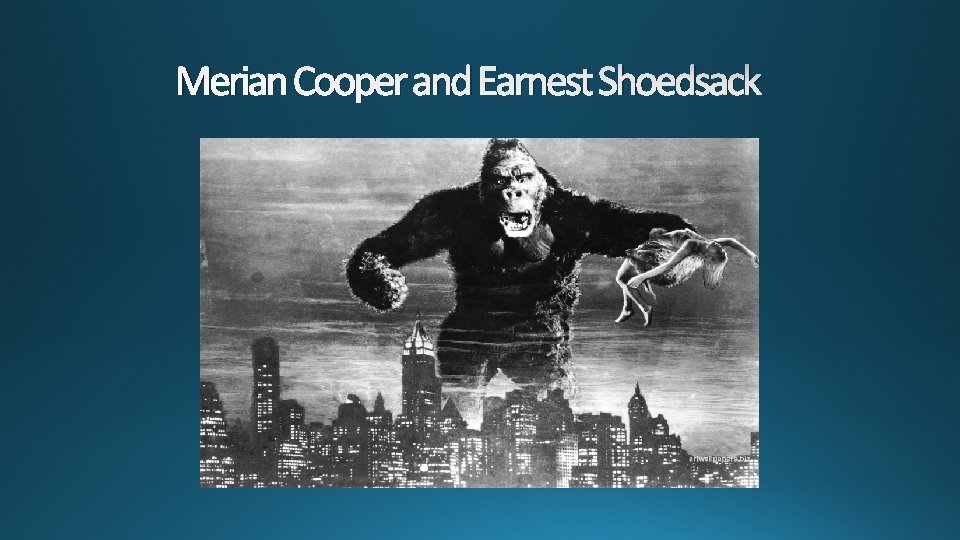
Merian Cooper and Earnest Shoedsack
Conservation, Ecology and Spiritual Restoration Incited by: diminishing wildlife and natural spaces trauma from World War II
Disney: True Life Adventures 1948 -1960
Disney: True Life Adventures Using wildlife in the service of dramatic fictional narratives rather than deriving inherent drama from ‘real’ events Constructing animals as protagonists with human characteristics – with storylines that focus on their biographies Keeping superficial aspects of documentary (location photography, voice-over narration)
Disney: True Life Adventures Typically opens in spring with a protagonist who is either orphaned, abandoned, or separated form family or community Faces a perilous journey to struggle to survive so lost unity of family can be regained This often takes the place of a family romance Themes of youthful initiation are usually pervasive
Disneyfication Nostalgia Naturalizing conservative human social forms North American location Nature as inherently and perenially ‘balanced’

Disneyfication
Suture
Score: Non-diegetic sound emotional motifs of theme music provided continuity - while variations on major musical themes were synchronized to actions on screen a technique borrowed from animated cartoons synching variations on major themes to action created comedy or otherwise emotionally charged associations that shaped the ‘animal protagonist’s’ adventures.
Blue Chip Documentaries 1. depiction of mega fauna 2. visual splendor 3. dramatic narrative 4. the absence of history and politics 5. the absence of people 6. the absence of science
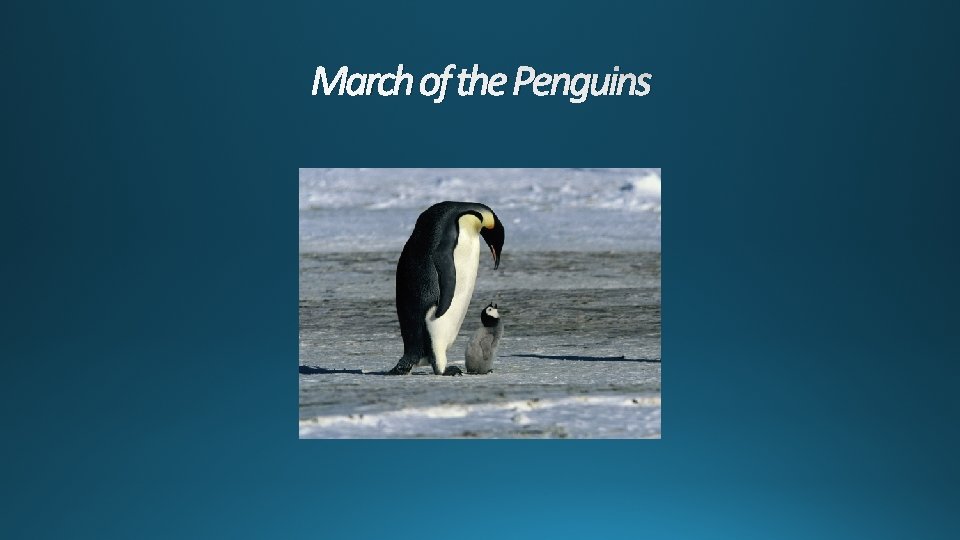
March of the Penguins
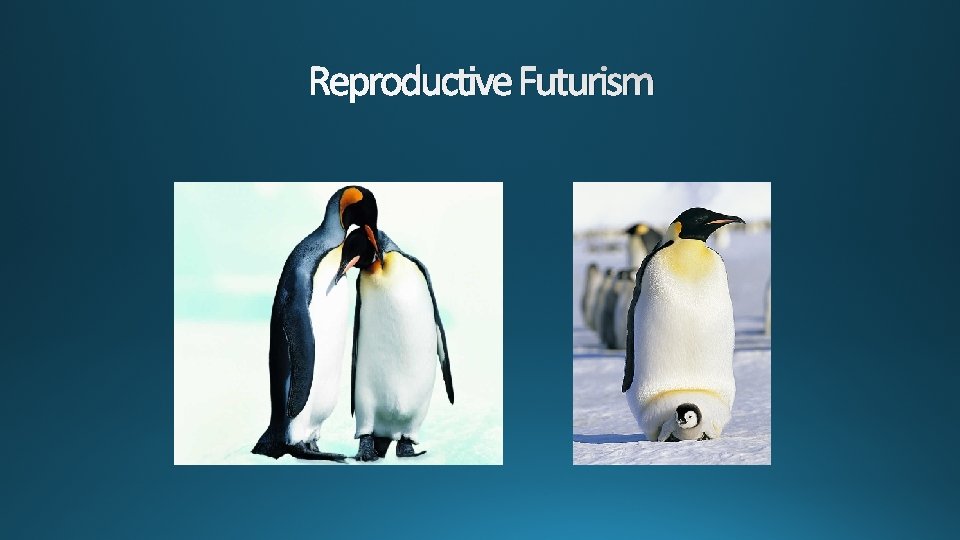
Reproductive Futurism
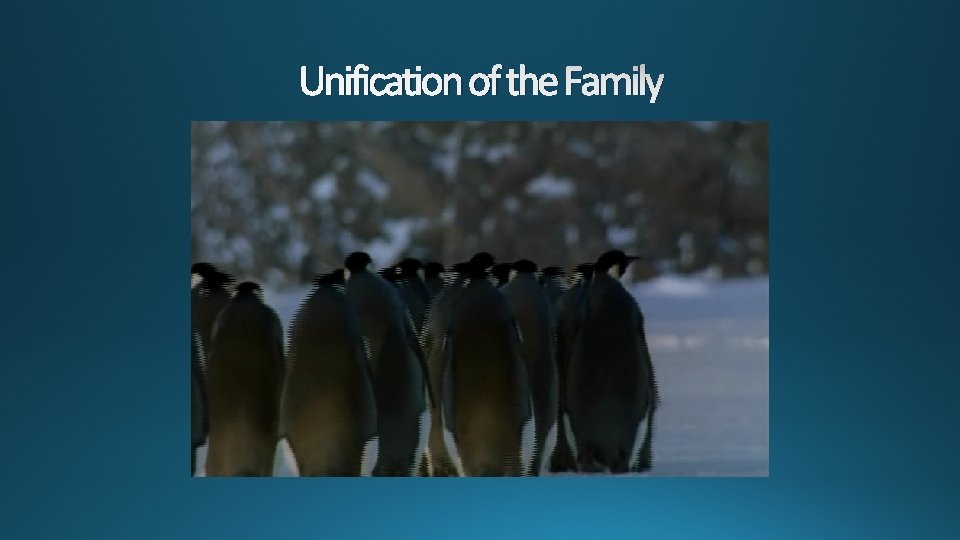
Unification of the Family
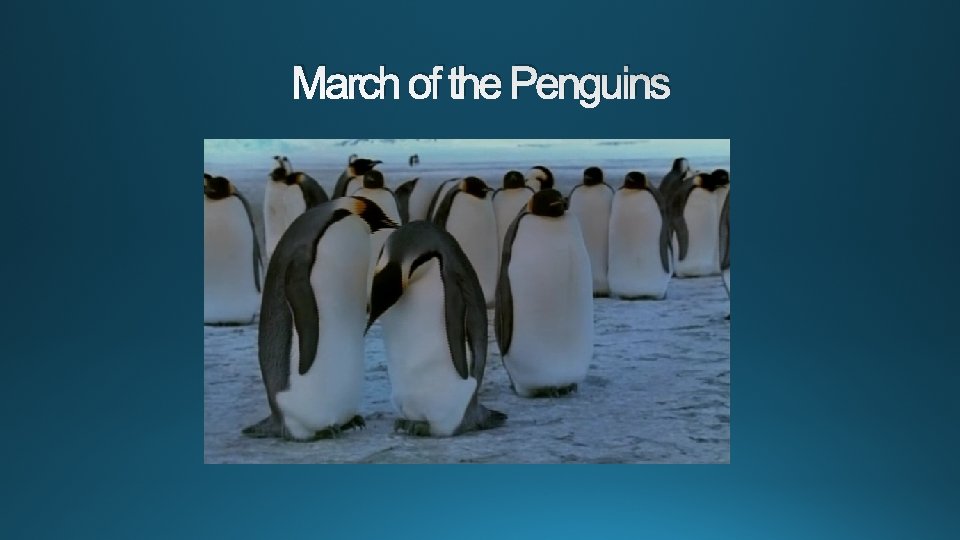
Halberstam It is easy, in fact, given the voice-over, to see the penguin world as made up of little heroic families striving to complete their natural and pre-given need to reproduce. The voice-over indeed, provides a beautiful but nonsensical narrative that remains resolutely human and refuses to ever see the ‘penguin logics’ that structure their frigid quest.
Halberstam When the penguins mass on the ice to find partners, we are asked to see a school prom with rejected and spurned partners on the edges of the dance floor and true romance and soulmates in its centre. When the mating rituals begin, we are told of elegant and balletic dances while we see awkward, difficult and undignified couplings. When the female penguin finally produces the valuable egg and must now pass the egg from her feet to the male’s feet in order to free herself to go and feed, the voice-over reaches hysteria pitch and sees sorrow and heartbreak in every unsuccessful transfer. We are never told how many penguins are successful in passing the egg, how many might decide not to be successful in order to save themselves the effort of a hard winter, how much of the transfer ritual might be accidental and so on. And so the narrative goes, ascribing stigma and envy to nonreproductive penguins, sacrifice and a Protestant work ethic to the reproducers and always seeing capitalist hetero-reproductive –family rather than the larger group. (2008: 270)
Halberstam
March of the Penguins how is the idea of family is deployed in contemporary popular culture? and why? Neo-liberalism? Does a premium on heteronormative nuclear families exact impose a problematic environmental burden? How might films like March of the Penguins express or intervene in a discourse about nature, family and resource use?
March of the Penguins
March of the Penguins Noel Sturgeon interesting contradictions –gendered division of labour
March of the Penguins Intelligent Design is “the allegedly scientific theory that a knowing designer created the universe, and all of its inhabitants, with a discernible purpose” (Wexler 2006: 273)
March of the Penguins Indexical imagery as a representation of a historical reality not a reproduction of it.
March of the Penguins
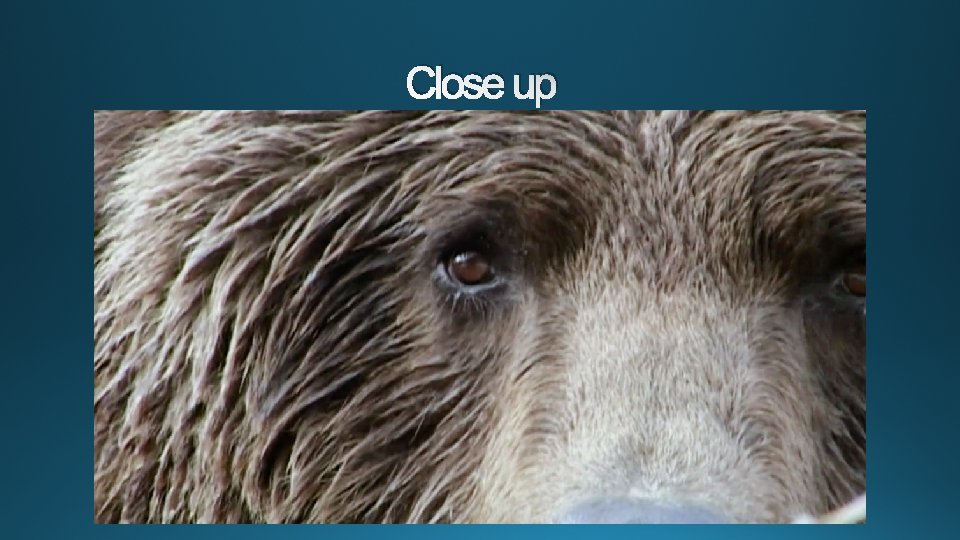
Close up Derek Bousé – false intimacy Béla Balázs – close ups reveal emotion and a character’s psychology.
Close up
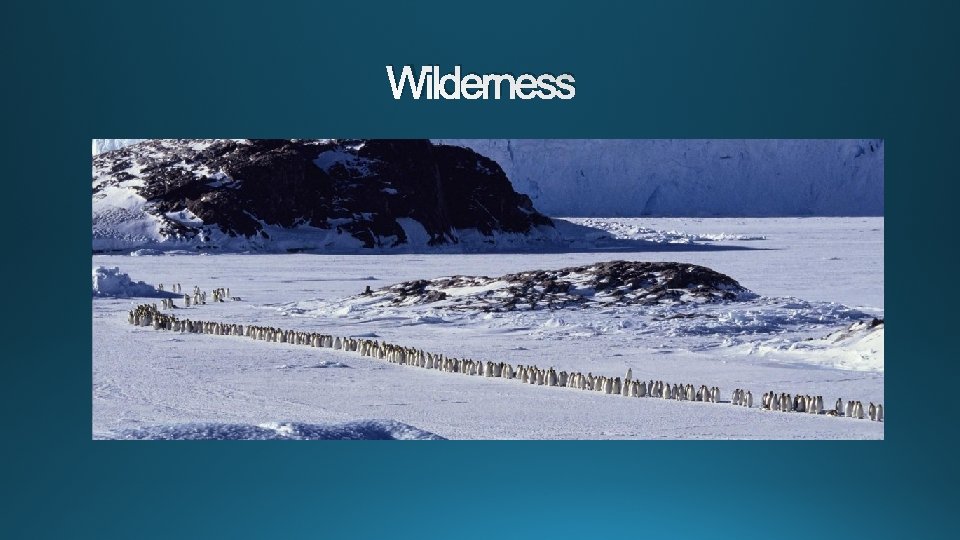
Wilderness
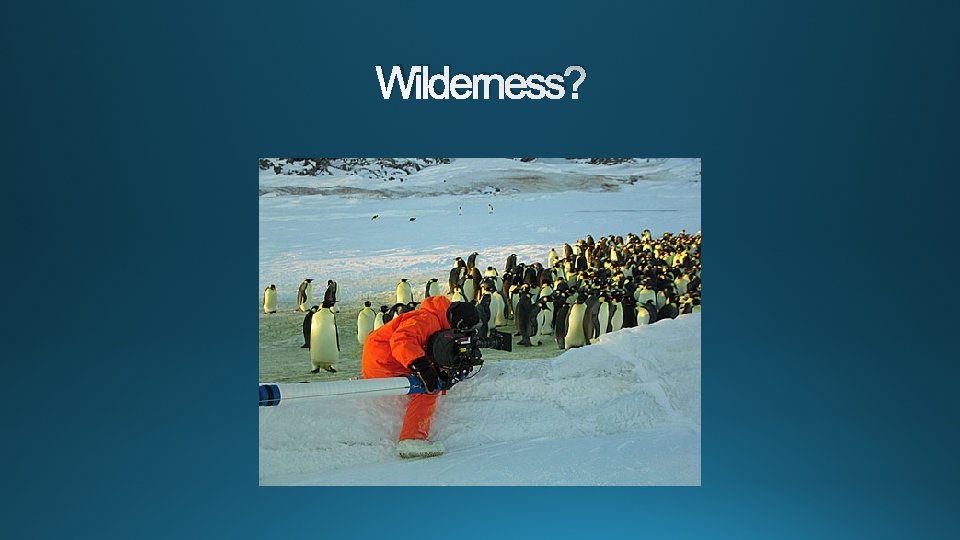
Wilderness?
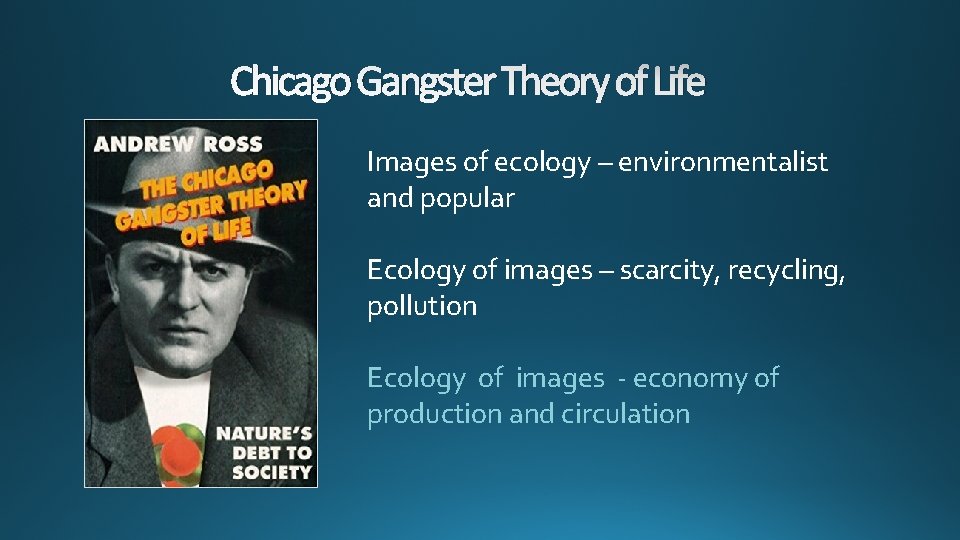
Chicago Gangster Theory of Life Images of ecology – environmentalist and popular Ecology of images – scarcity, recycling, pollution Ecology of images - economy of production and circulation
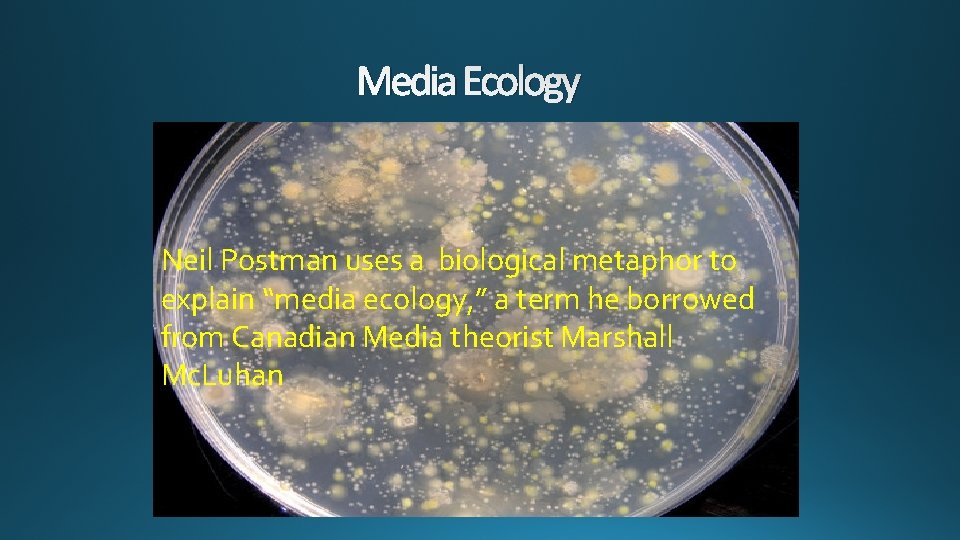
Media Ecology Neil Postman uses a biological metaphor to explain “media ecology, ” a term he borrowed from Canadian Media theorist Marshall Mc. Luhan
Media Ecology Media ecology focuses on media as environments, with an explicit concern for their evolution, effects, and forms. It looks at the complex interplay between humans, technology, media, and the environment Often media ecologists use ‘network analysis’ to map links between media and cultural agents Interdependencies might be defined by: contracts, copyright, cultural policies, trade agreements, and regulations
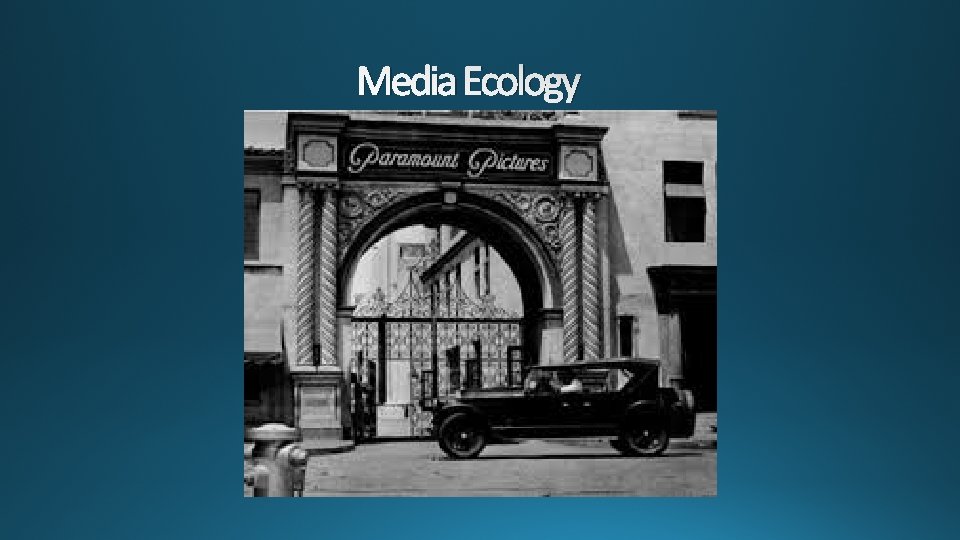
Media Ecology
Media Ecology
Media Ecology Distinct from communication studies More complex than ’political economy’ political economy focuses on social relations of media production, distribution and consumption Tends to pays attention to relations rather than signs, symbols and narrative of texts.
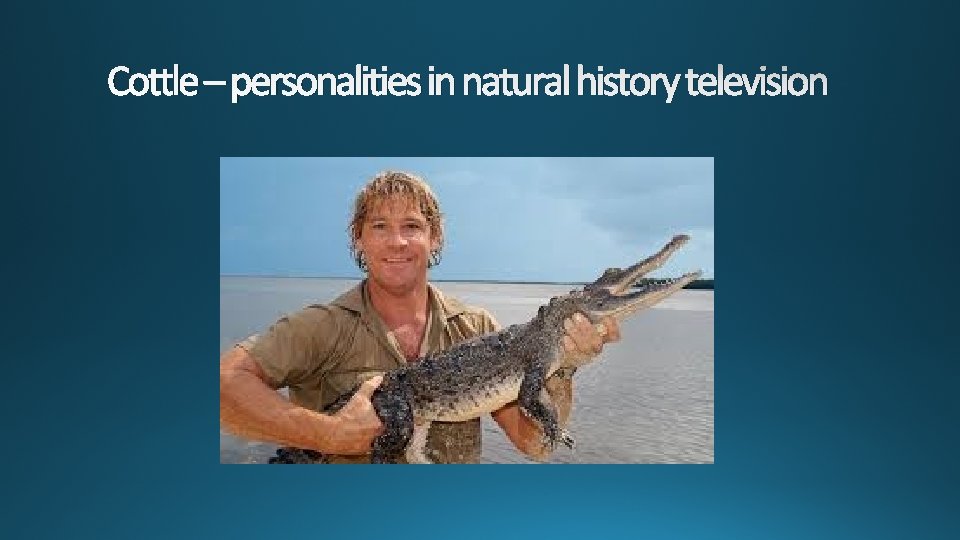
Cottle – personalities in natural history television
Crocodile Hunter

Simon Cottle The shift from ‘discourse’ and ‘text’, to ‘representation’ and ‘form’ is necessary and helps to broaden our focus to a consideration of the encompassing forms and appeals of media genres, their impact on media representations, as well as their determination at the moment of production. (Cottle 2004: 81)
Natural History Analogies Media environments as ecologies or habitats with material constraints, pressures.
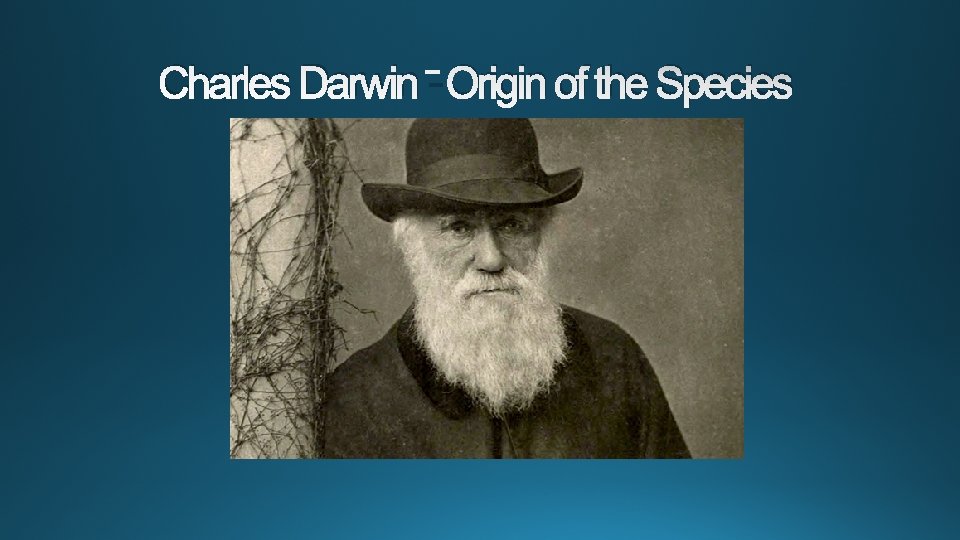
Charles Darwin – Origin of the Species
Natural Selection each individual organism is marked by subtle differences that distinguish it from its parents.
Natural Selection variations are random some of these variations convey distinct advantages in particular contexts
Natural Selection better chance of survival allows an organism more opportunity to breed and pass on these advantageous traits to a greater number of offspring.
Natural Selection Darwin’s model encourages us to consider environmental conditions what kinds of ‘pressures’ these conditions might exert how organisms or media respond and in what form
Simon Cottle new technologies (production and distribution) heightened economic competitiveness industrial centralisation fragmenting audiences internationalising markets
Simon Cottle “in response to strategies of self-interest and the imbalances of scale and market opportunity” (Cottle 2004: 82).
Changes in Natural History television: effects celebrity personalities more explicit and sensational violence among megafauna increasing emphasis upon melodrama and soap opera influenced narratives
Changes in Natural History television: causes a series of mergers and acquisitions in the UK a reduction in commissioning by European and Japanese broadcasters and an increasing reliance on co-productions.
- Slides: 57