
Ecology unit Vocabulary See Portfolio Slides to Introduce
Ecology unit Vocabulary See Portfolio Slides- to Introduce Unit
Ecology and Ecosystem � Ecology- the study of ecosystems. The study of relationships between organisms and their environments � Ecosystem- a system the comprises of both a community (of all biotic organisms) and their environment (of all abiotic factors)
Abiotic and biotic � Biotic- living things � Abiotic- nonliving things› examples include: �temperature, p. H, climate, weather, nutrient cycles, minerals, water, other resources and environmental factors-
Symbiosis and organismal Relationships Day 1 Vocabulary
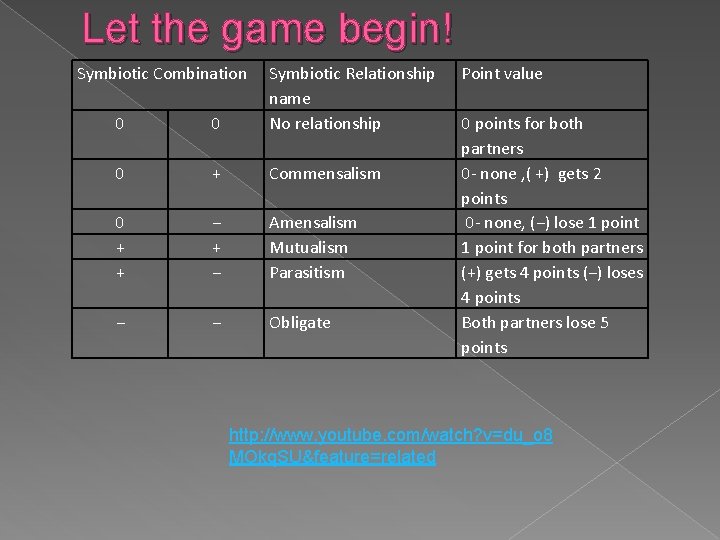
Let the game begin! Symbiotic Combination 0 0 Symbiotic Relationship name No relationship 0 + Commensalism 0 + + − Amensalism Mutualism Parasitism − − Obligate Point value 0 points for both partners 0 - none , ( +) gets 2 points 0 - none, (−) lose 1 point for both partners (+) gets 4 points (−) loses 4 points Both partners lose 5 points http: //www. youtube. com/watch? v=du_o 8 MOkq. SU&feature=related
Symbiotic Relationship �A relationship between two organisms/species where they are in close, long-term interactions with each other.
Mutualism �A symbiotic relationship in which both organisms benefit from the relationship � Examples: Ladybugs and sunflowers, E. Coli and humans, Rhizobium and legumes
Commensalism �A symbiotic relationship where one organism benefits from the relationship, and the other organisms is neither harmed, nor does it benefit � Examples: Cattle egrets and cows/horses, epiphytic plants and rainforest trees, or birds in a tree
Parasitism � A symbiotic relationship where one organism benefits from the relationship, and the other organism is harmed � Examples: any predator prey relationship: Lion and a gazelle, hawk and snake, fox and rabbit, aphids and sunflowers any act of parasitism: flea and dog, tape worm and humans fungus called lumpy jaw and cows
Predator-Prey Relationship �A relationship between two or more organisms in which one (the prey) is hunted, and the other (the predator) hunts for the other.
You aren’t responsible for these other 2 - just fyi � Obligate- when two species need their symbiotic relationship for survival › Example: lichen are an algal-fungi relationship › Viruses are all obligate to their hosts � Amensalism- symbiosis where one organism is not affected in anyway, and the other is harmed › Example: the black walnut secretes a secretion called juglone which is poisonous to some surrounding plants
Affecting Populations & population Ecology Day 2 Vocabulary
Carrying Capacity � The largest population that an environment can support › When a population grows larger than the carrying capacity individuals will die off or leave to find a new home that can sustain them (not enough resources to live)
Limiting Factors Any factor that limits the population growth & helps determine a carrying capacity � Density Dependent factor- depends on the density or the size of the population smaller populations are less affected � › Example: water, food, competition, predation � Density Independent factor- affects all equally not dependent on population size › Example- temperature, oxygen levels, earthquake
Energy in an Ecosystem Day 3 Vocabulary Forest imagine
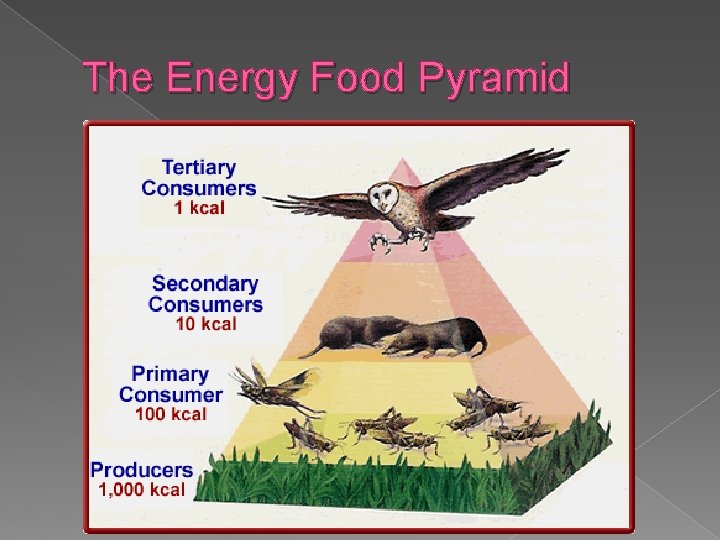
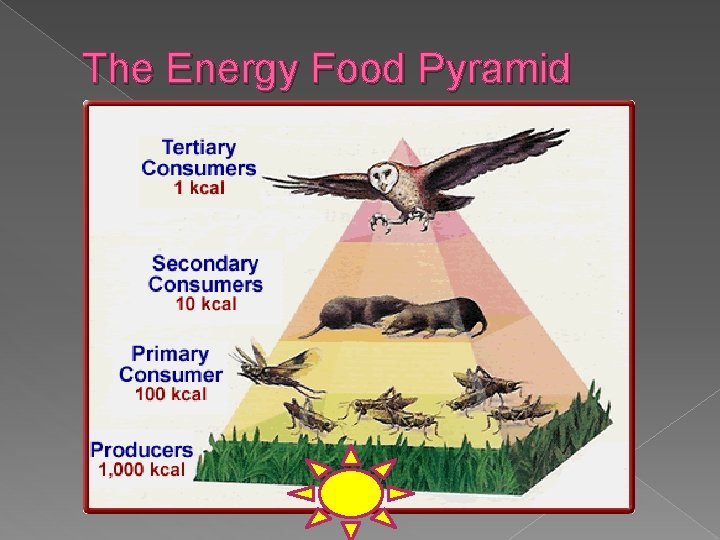
The Energy Food Pyramid
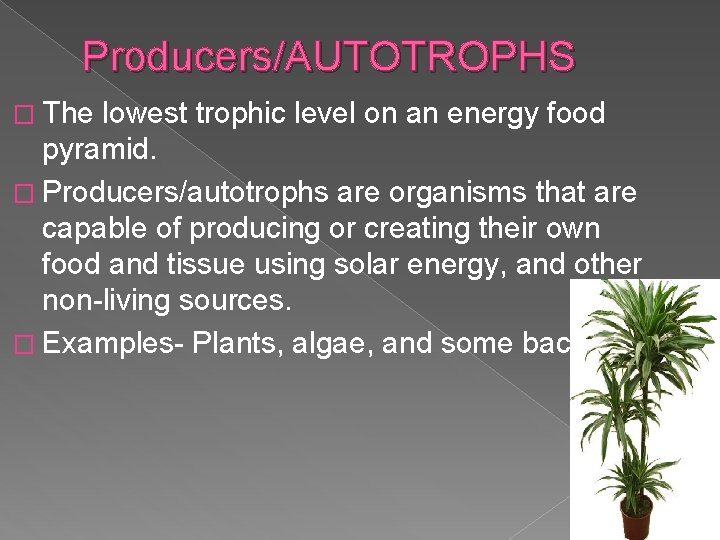
Producers/AUTOTROPHS � The lowest trophic level on an energy food pyramid. � Producers/autotrophs are organisms that are capable of producing or creating their own food and tissue using solar energy, and other non-living sources. � Examples- Plants, algae, and some bacteria
Consumer/HETEROTROPH � An organism that must consume or generally obtain food from an outside living source or other organism because it is incapable of creating its own energy source › Primary consumers- usually herbivores › Secondary consumers- omnivores or small carnivores › Tertiary consumers- carnivores that eat other carnivores
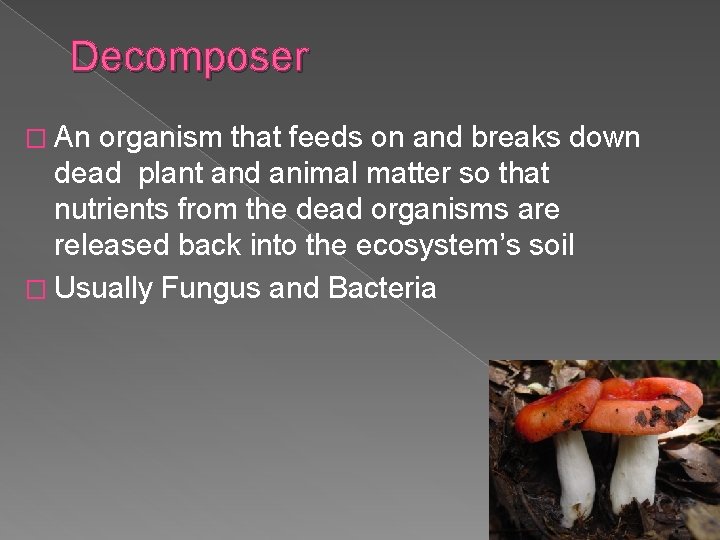
Decomposer � An organism that feeds on and breaks down dead plant and animal matter so that nutrients from the dead organisms are released back into the ecosystem’s soil � Usually Fungus and Bacteria
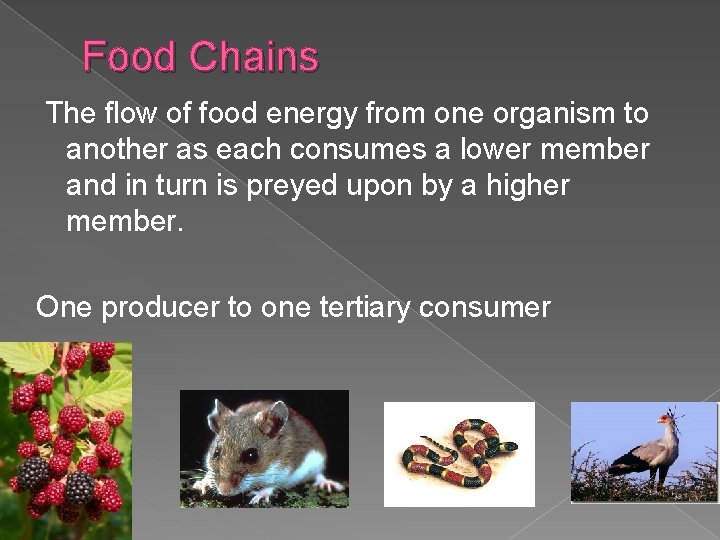
Food Chains The flow of food energy from one organism to another as each consumes a lower member and in turn is preyed upon by a higher member. One producer to one tertiary consumer
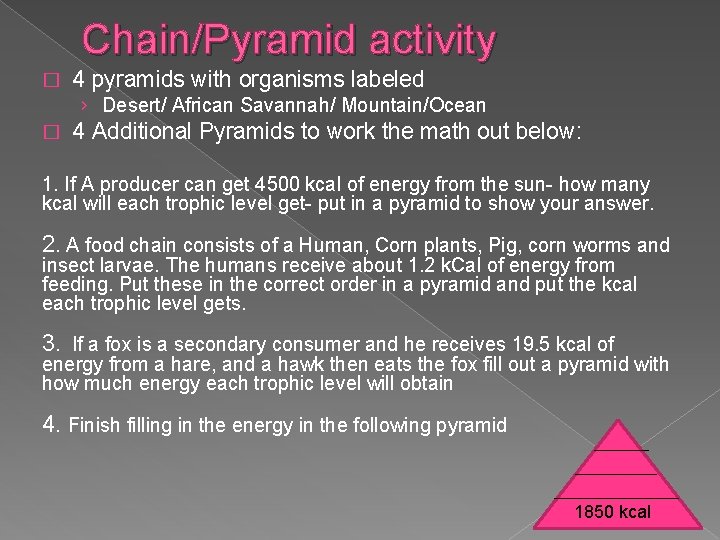
Chain/Pyramid activity � 4 pyramids with organisms labeled › Desert/ African Savannah/ Mountain/Ocean � 4 Additional Pyramids to work the math out below: 1. If A producer can get 4500 kcal of energy from the sun- how many kcal will each trophic level get- put in a pyramid to show your answer. 2. A food chain consists of a Human, Corn plants, Pig, corn worms and insect larvae. The humans receive about 1. 2 k. Cal of energy from feeding. Put these in the correct order in a pyramid and put the kcal each trophic level gets. 3. If a fox is a secondary consumer and he receives 19. 5 kcal of energy from a hare, and a hawk then eats the fox fill out a pyramid with how much energy each trophic level will obtain 4. Finish filling in the energy in the following pyramid 1850 kcal
The Energy Food Pyramid
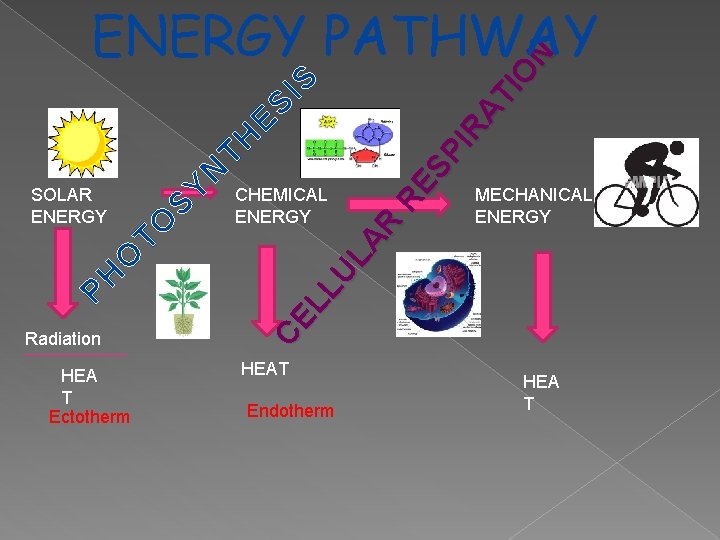
Radiation HEA T Ectotherm RE SP IR AT IO N CHEMICAL ENERGY CE LL UL AR S TO P H O SOLAR ENERGY Y N TH E S IS ENERGY PATHWAY HEAT Endotherm MECHANICAL ENERGY HEA T
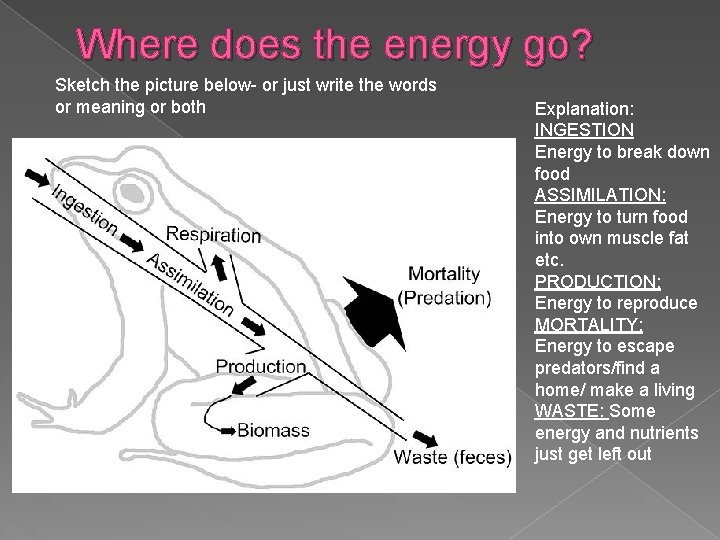
Where does the energy go? Sketch the picture below- or just write the words or meaning or both Explanation: INGESTION Energy to break down food ASSIMILATION: Energy to turn food into own muscle fat etc. PRODUCTION: Energy to reproduce MORTALITY: Energy to escape predators/find a home/ make a living WASTE: Some energy and nutrients just get left out
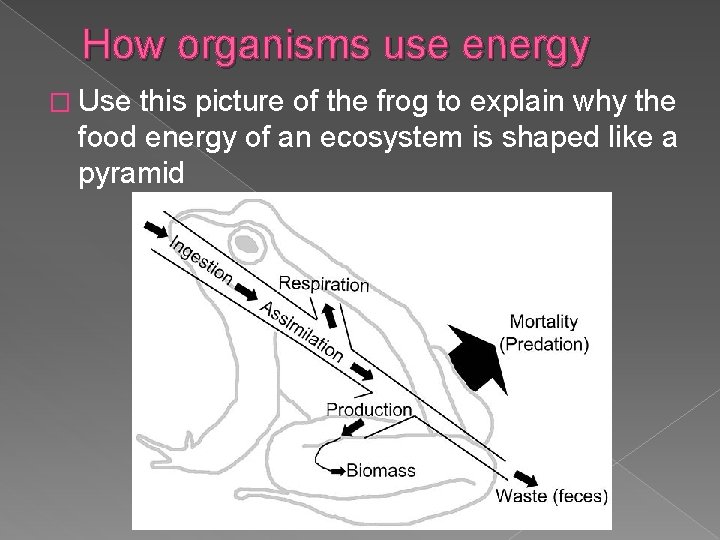
How organisms use energy � Use this picture of the frog to explain why the food energy of an ecosystem is shaped like a pyramid
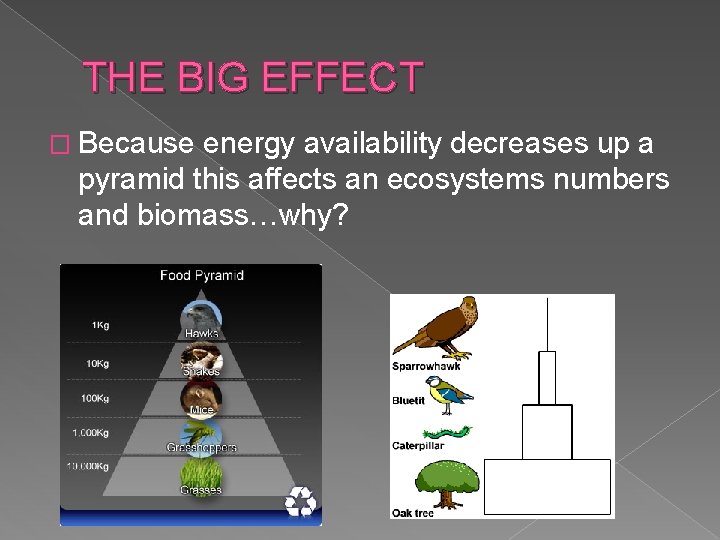
THE BIG EFFECT � Because energy availability decreases up a pyramid this affects an ecosystems numbers and biomass…why?
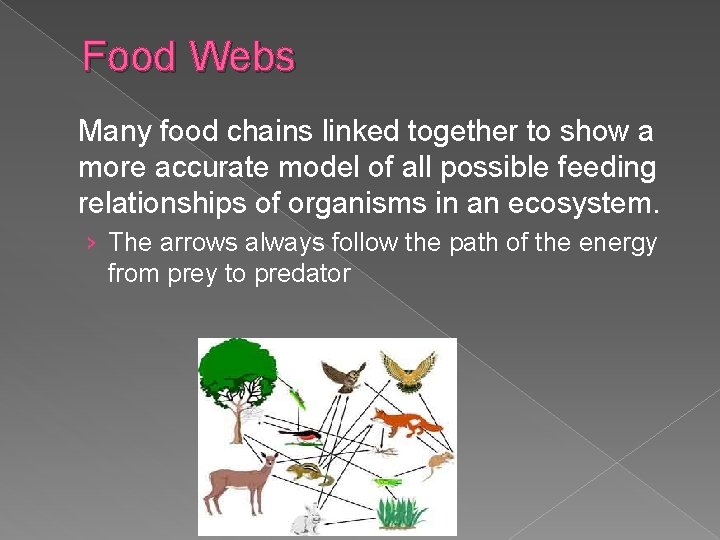
Food Webs Many food chains linked together to show a more accurate model of all possible feeding relationships of organisms in an ecosystem. › The arrows always follow the path of the energy from prey to predator
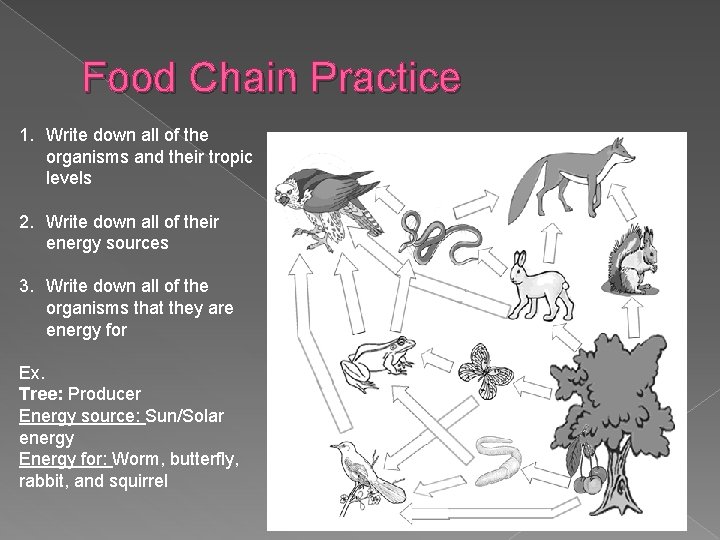
Food Chain Practice 1. Write down all of the organisms and their tropic levels 2. Write down all of their energy sources 3. Write down all of the organisms that they are energy for Ex. Tree: Producer Energy source: Sun/Solar energy Energy for: Worm, butterfly, rabbit, and squirrel
NUTRIENT CYCLES Includes for our class ~Water ~Carbon ~Nitrogen
Nutrient Cycle
Human Influence on the Ecosystem
Carrying Capacity � The largest population that an environment can support � When a population grows larger than the carrying capacity individuals must die off or leave � WHAT DOES CARRYING CAPACITY HAVE TO DO WITH OUR TERM 1 PROJECT? ?
Renewable Source �A natural Resource that can be replaced at the same rate that it is being consumed � Examples: Solar energy, wind energy, some trees � ARE RENEWABLE SOURCES INFINITE?
Non-Renewable Sources �A source that cannot be replaced at all, or if it can it takes thousands to millions of years � What do non-renewnable and renewable sources have to do with our term projects?
- Slides: 34