
Ecology Topic 5 1 5 3 Mrs Milam
- Slides: 28
Ecology Topic 5. 1 – 5. 3 Mrs. Milam Adapted from Ms. Davies
5. 1. 1 Define species, habitat, population, community, ecosystem and ecology. • Ecology: – Environment has 2 components: • weather, p. H) • life) : nonliving factors (soil, water, : living factors (all forms of
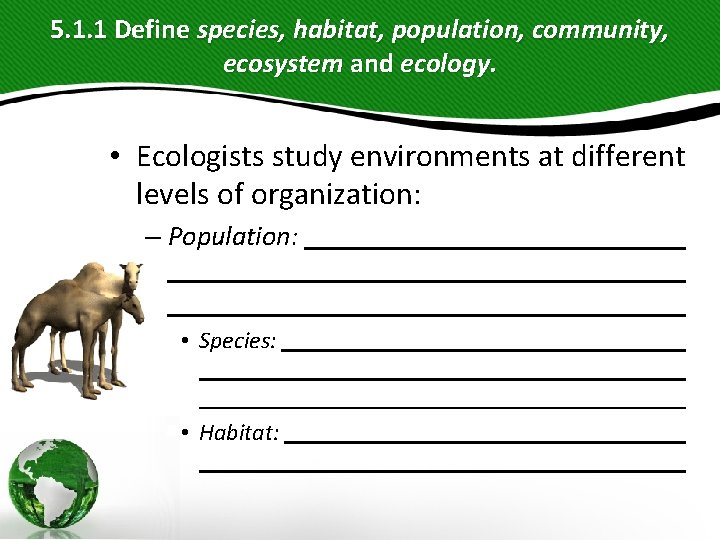
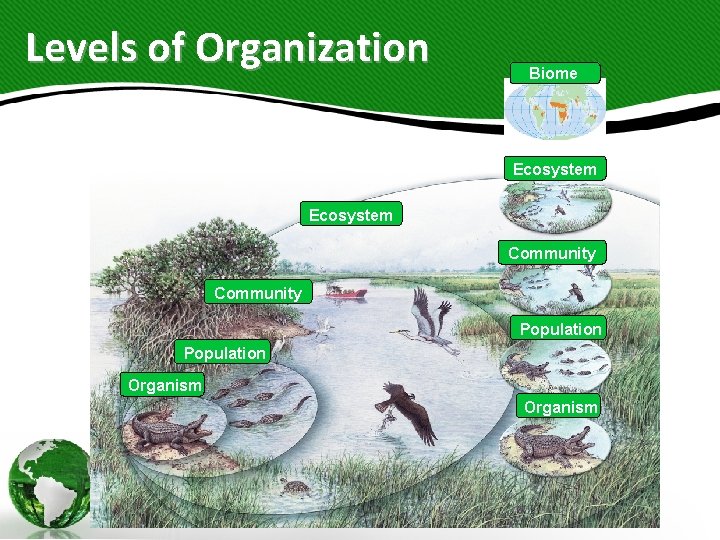
5. 1. 1 Define species, habitat, population, community, ecosystem and ecology. • Ecologists study environments at different levels of organization: – Population: • Species: • Habitat:
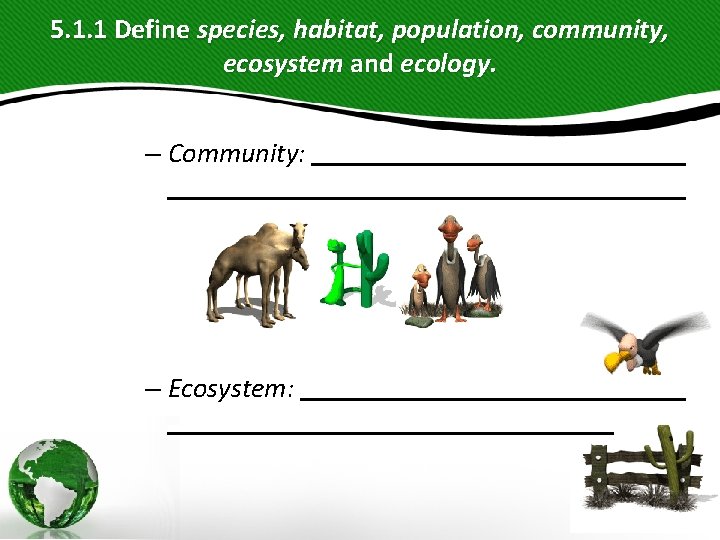
5. 1. 1 Define species, habitat, population, community, ecosystem and ecology. – Community: – Ecosystem:
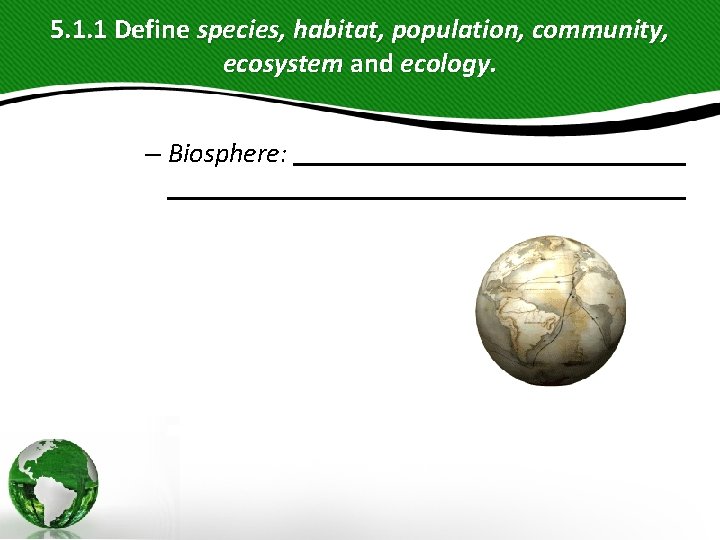
5. 1. 1 Define species, habitat, population, community, ecosystem and ecology. – Biosphere:
Levels of Organization Biome Ecosystem Community Population Organism
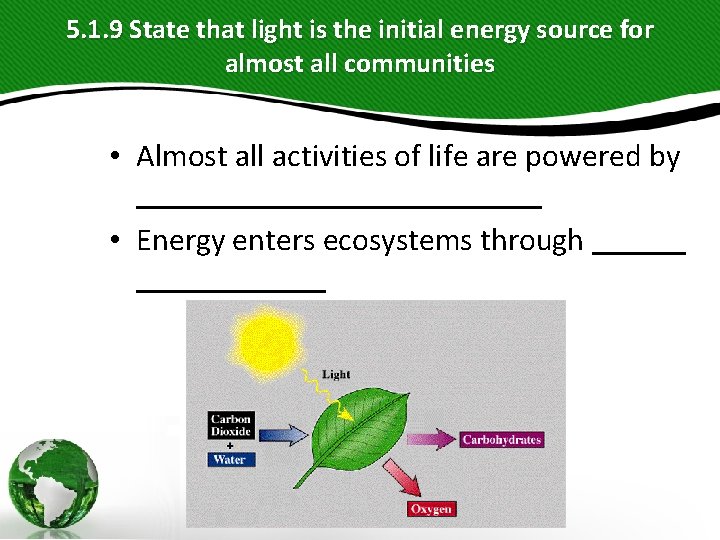
5. 1. 9 State that light is the initial energy source for almost all communities • Almost all activities of life are powered by • Energy enters ecosystems through
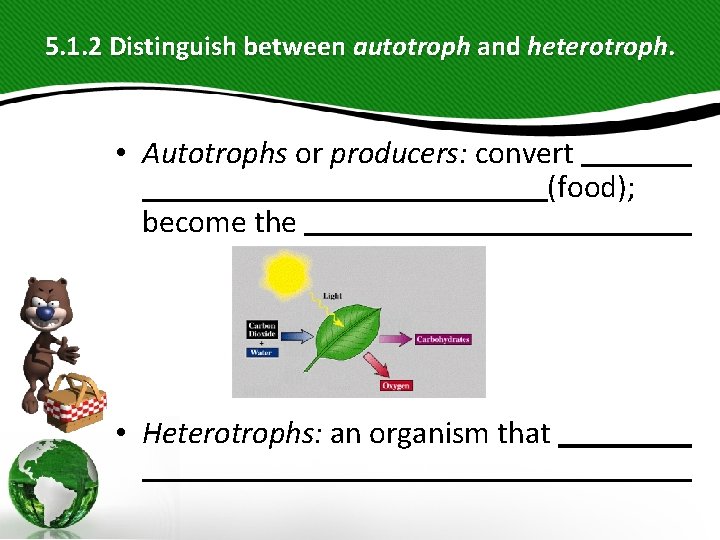
5. 1. 2 Distinguish between autotroph and heterotroph. • Autotrophs or producers: convert (food); become the • Heterotrophs: an organism that
5. 1. 3 Distinguish between consumers, detritivores and saprotrophs • Heterotrophs include: – Consumers: • Detritivores: organisms that maggots, slime molds) • Saprotrophs: (ex: earthworms, (ex: bacteria, fungi)
5. 1. 4 Describe what is meant by a food chain, giving three examples, each with at least three linkages (four organisms) • The feeding relationships between organisms can be organized into a food chain. – A food chain is a
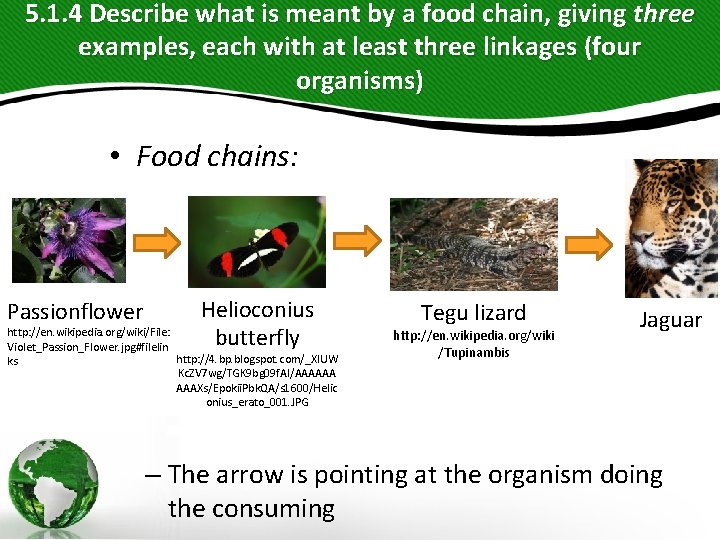
5. 1. 4 Describe what is meant by a food chain, giving three examples, each with at least three linkages (four organisms) • Food chains: Passionflower Helioconius butterfly http: //en. wikipedia. org/wiki/File: Violet_Passion_Flower. jpg#filelin http: //4. bp. blogspot. com/_Xl. UW ks Kc. ZV 7 wg/TGK 9 bg 09 f. AI/AAAAAA AAAXs/Epokii. Pbk. QA/s 1600/Helic onius_erato_001. JPG Tegu lizard http: //en. wikipedia. org/wiki /Tupinambis Jaguar – The arrow is pointing at the organism doing the consuming
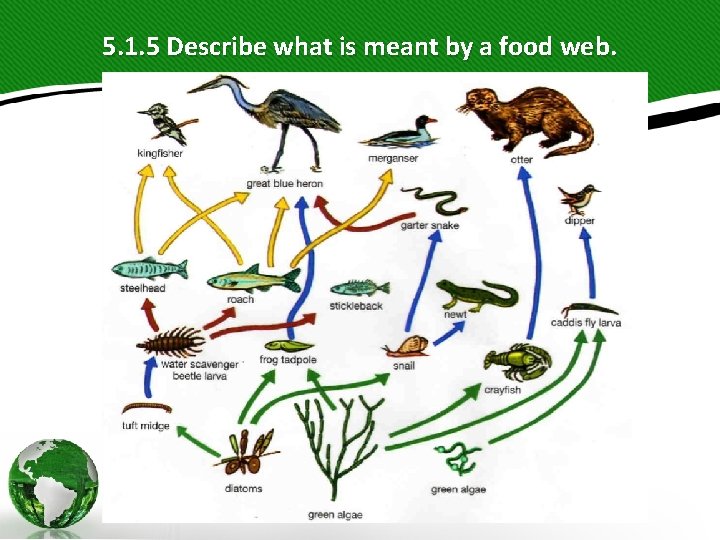
5. 1. 5 Describe what is meant by a food web. • Natural communities have food webs rather than simple food chains – A food web shows
5. 1. 5 Describe what is meant by a food web.
5. 1. 6 Define trophic level • An ecological niche is unique to each species and includes all aspects of it’s way of life: – Physical (range of temp it can withstand, p. H of soil, amount of moisture it needs, etc. ) – – trophic level – Organism’s role in ecosystem – it’s “occupation”
5. 1. 6 Define trophic level • Trophic levels represent • “Feeding level”: 1. 2. 3. – autotrophic organisms that make food – herbivores; eat producers – eat primary consumers & possibly producers 4. – eat secondary consumers & possibly primary consumers & producers 5. – eat tertiary consumers & possibly secondary & primary & producers *Top carnivore – top of the food chain
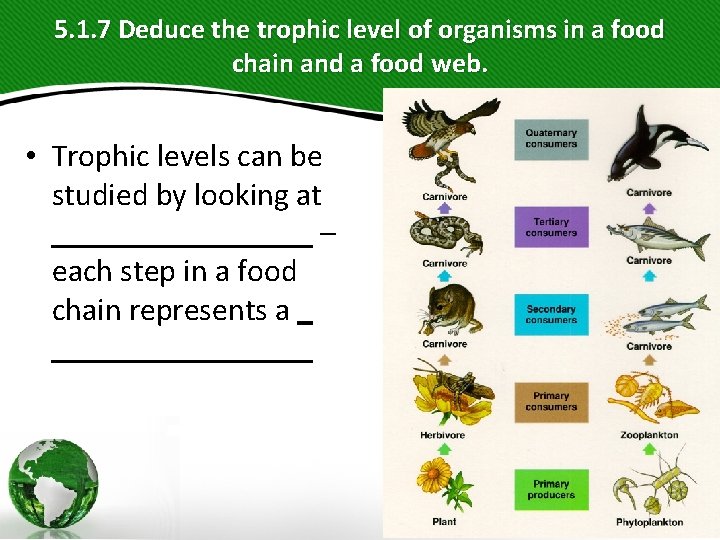
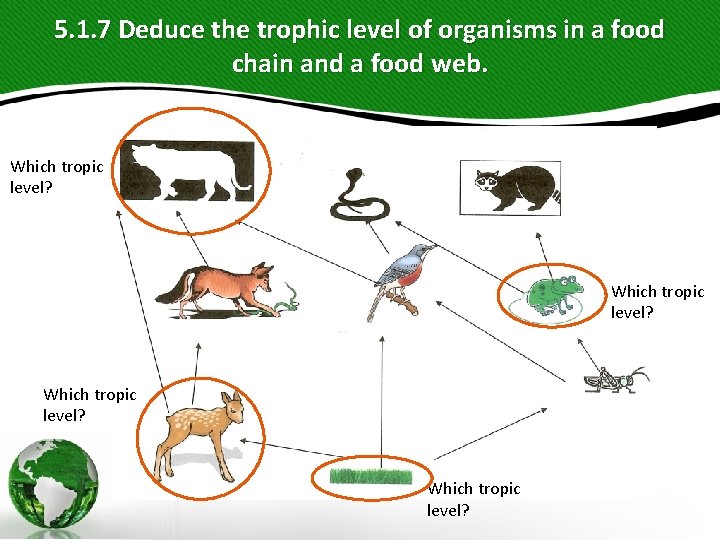
5. 1. 7 Deduce the trophic level of organisms in a food chain and a food web. • Trophic levels can be studied by looking at – each step in a food chain represents a
5. 1. 7 Deduce the trophic level of organisms in a food chain and a food web. Which tropic level?
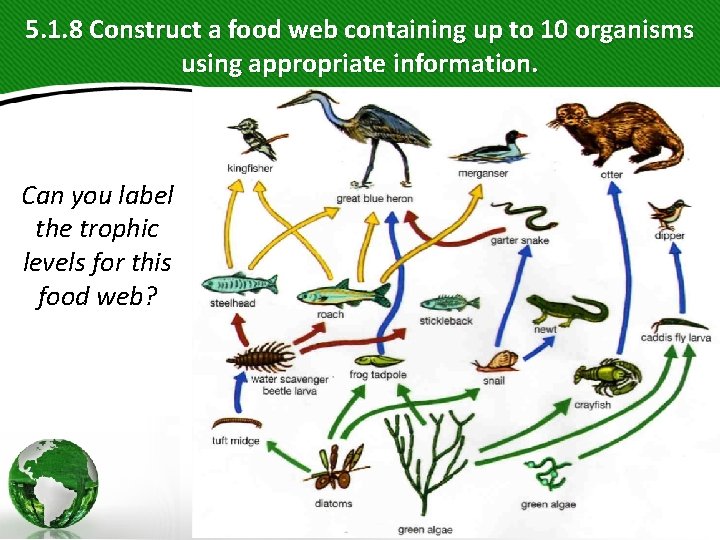
5. 1. 8 Construct a food web containing up to 10 organisms using appropriate information. Can you label the trophic levels for this food web?
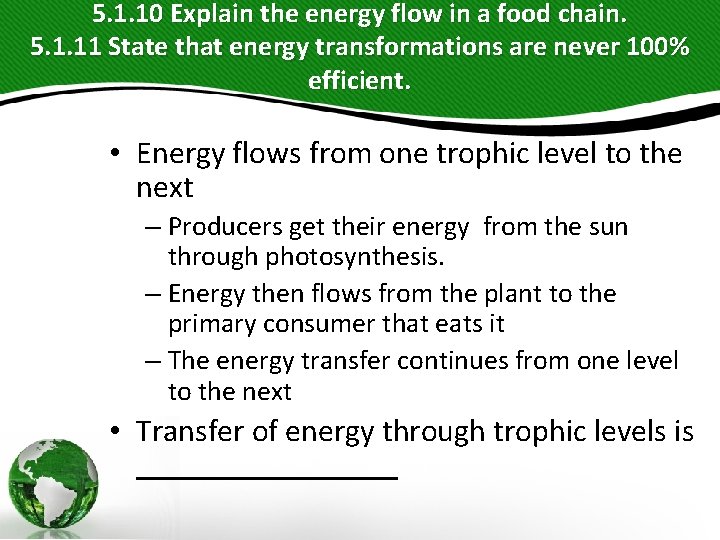
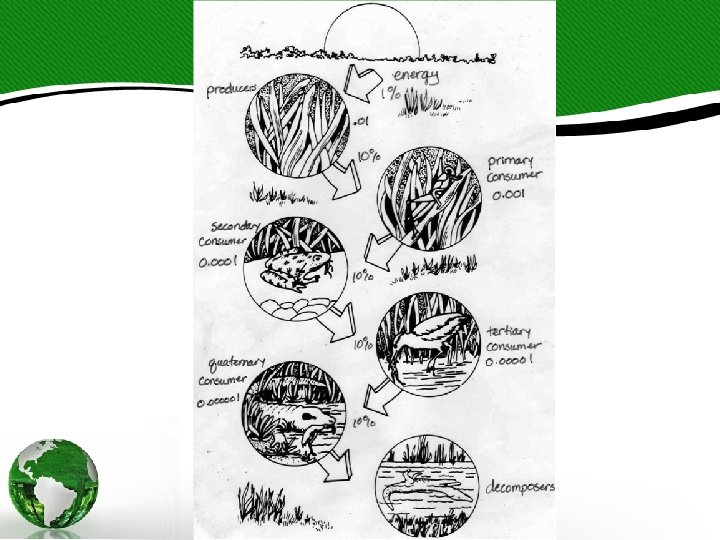
5. 1. 10 Explain the energy flow in a food chain. 5. 1. 11 State that energy transformations are never 100% efficient. • Energy flows from one trophic level to the next – Producers get their energy from the sun through photosynthesis. – Energy then flows from the plant to the primary consumer that eats it – The energy transfer continues from one level to the next • Transfer of energy through trophic levels is
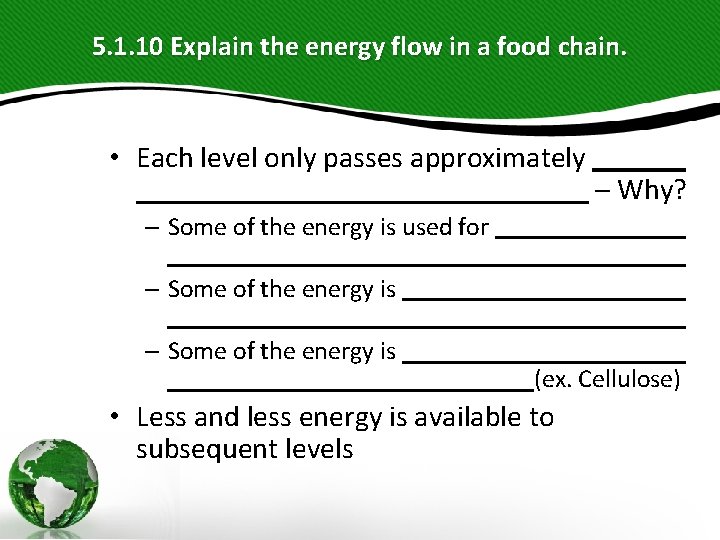
5. 1. 10 Explain the energy flow in a food chain. • Each level only passes approximately – Why? – Some of the energy is used for – Some of the energy is (ex. Cellulose) • Less and less energy is available to subsequent levels
food chain.
5. 1. 12 Explain reasons for the shape of pyramids of energy. • The amount of life an ecosystem can support depends on – Gross primary productivity – • Plants use 10 – 70% of their gross productivity for their own energy needs
5. 1. 12 Explain reasons for the shape of pyramids of energy. – Net primary productivity – • Measured in • Also measured in organic matter – dry weight of – Productivity of an ecosystem is influenced by many factors (amount of sun, water, temperature)
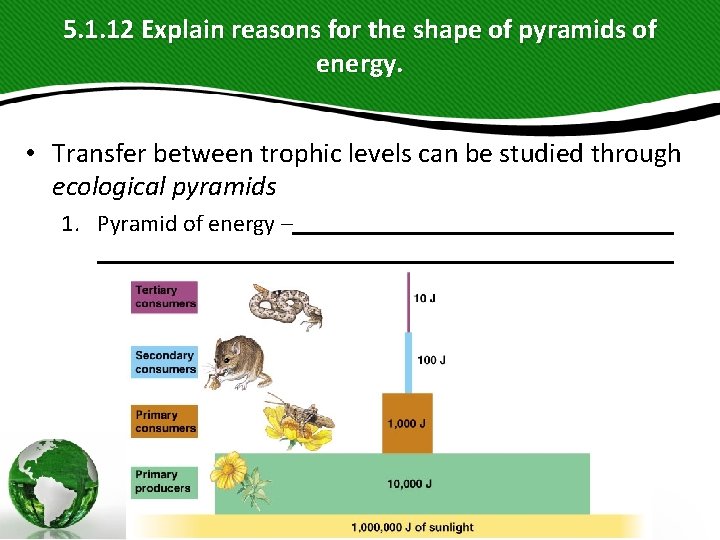
5. 1. 12 Explain reasons for the shape of pyramids of energy. • Transfer between trophic levels can be studied through ecological pyramids 1. Pyramid of energy –
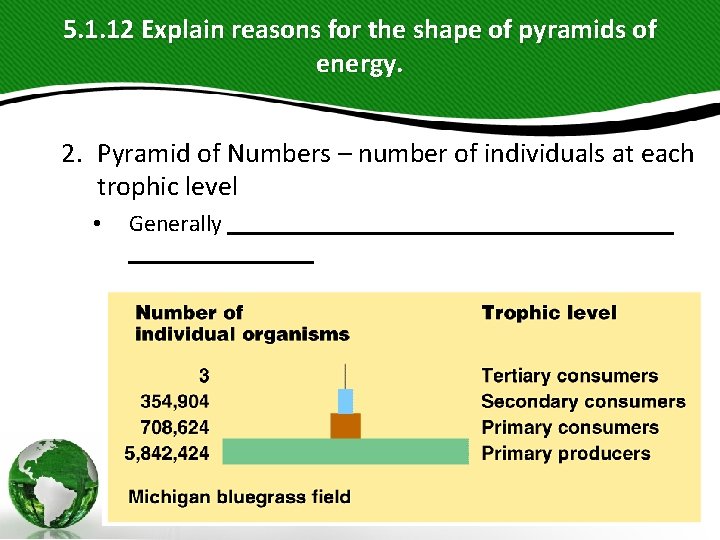
5. 1. 12 Explain reasons for the shape of pyramids of energy. 2. Pyramid of Numbers – number of individuals at each trophic level • Generally
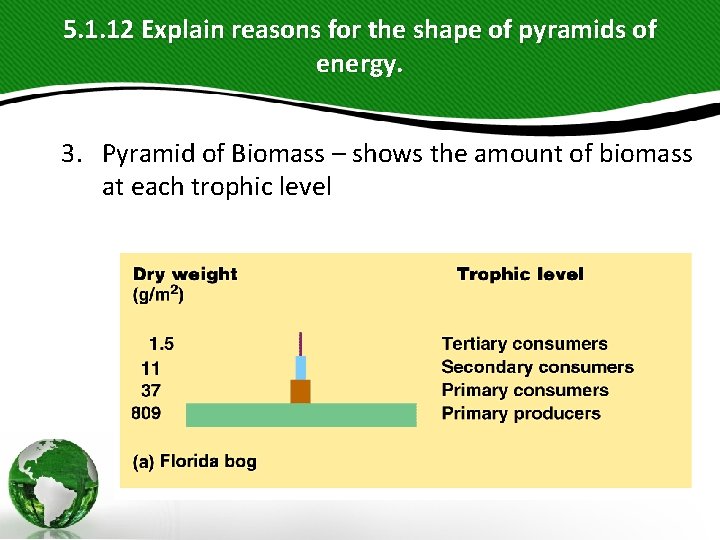
5. 1. 12 Explain reasons for the shape of pyramids of energy. 3. Pyramid of Biomass – shows the amount of biomass at each trophic level
5. 1. 13 Explain that energy enters and leaves ecosystems, but nutrients must be recycled • Energy moves through the communities of ecosystems in – Energy enters ecosystems as is , but is , .
5. 1. 13 Explain that energy enters and leaves ecosystems, but nutrients must be recycled 5. 1. 14 State that saprotrophic bacteria and fungi (decomposers) recycle nutrients. • Nutrients constantly – Nutrients – Saprotrophs (bacteria and fungi)