
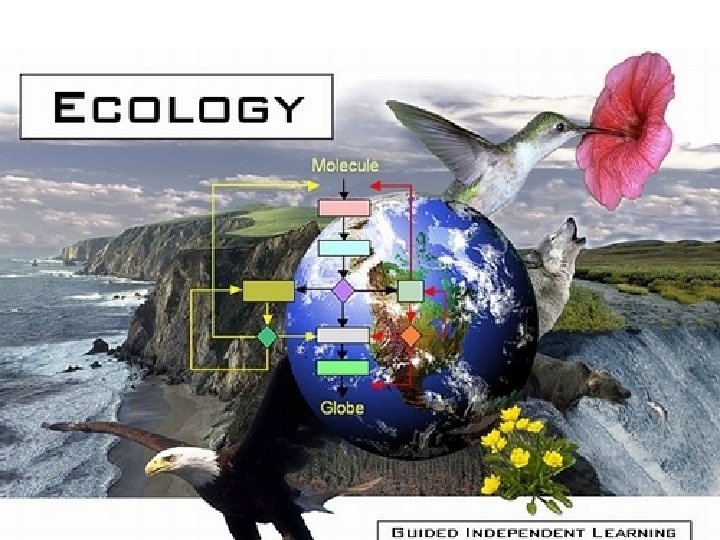
ECOLOGY The study of the interactions among organisms
- Slides: 159
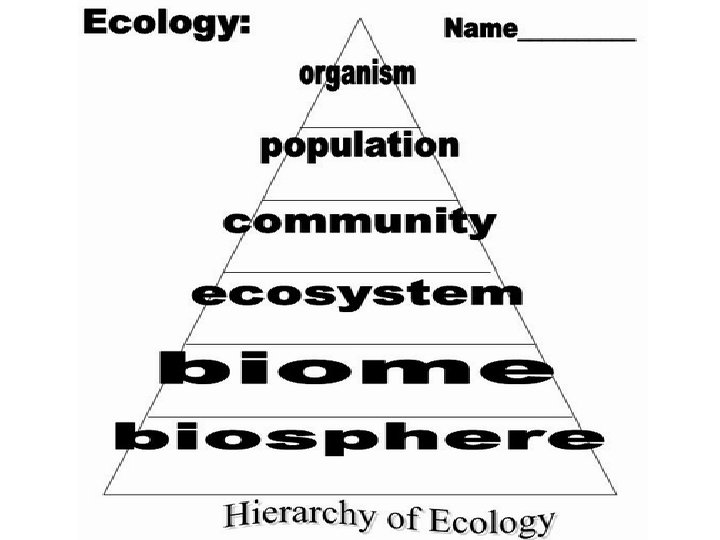
ECOLOGY The study of the interactions among organisms and their inter-relationship with in their physical environment.
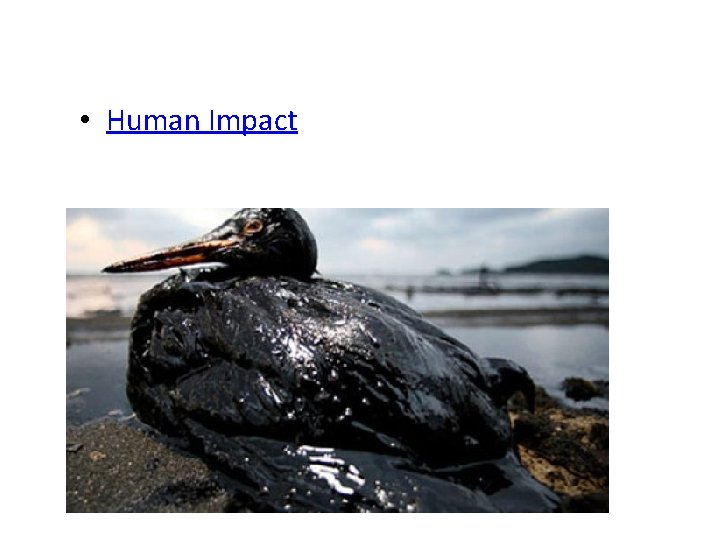
• Human Impact
Ecology Song
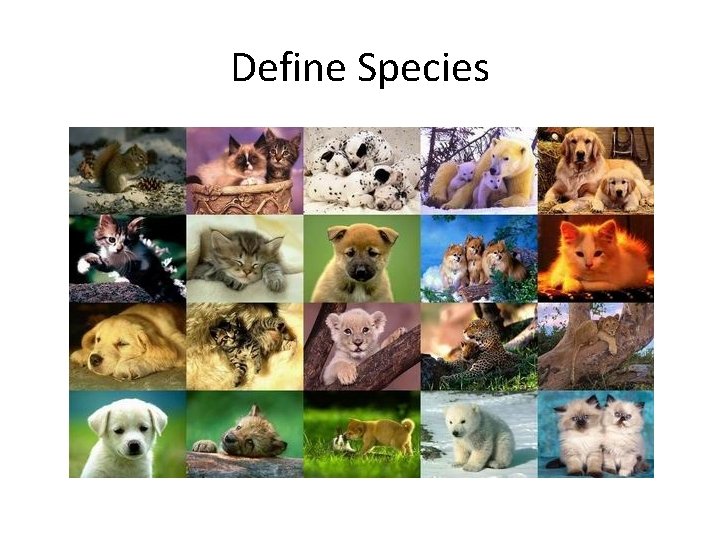
Define Species
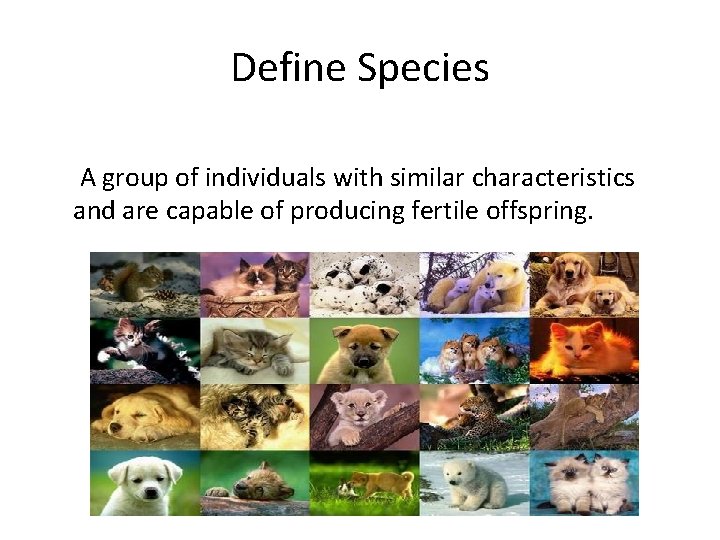
Define Species A group of individuals with similar characteristics and are capable of producing fertile offspring.
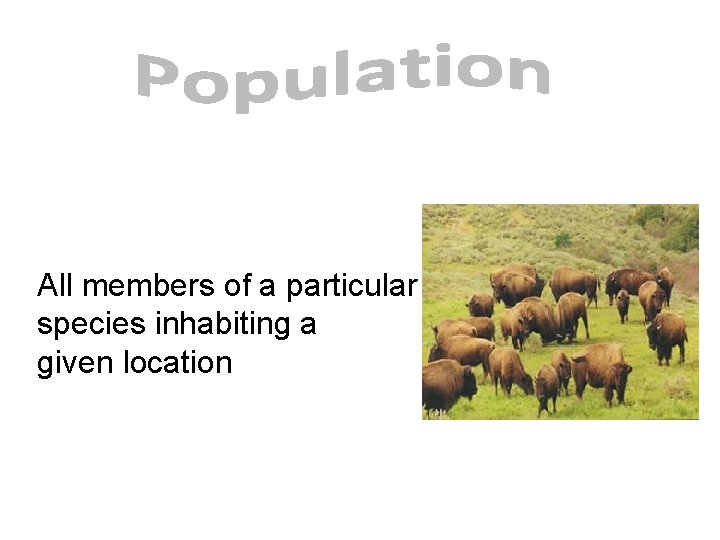
All members of a particular species inhabiting a given location
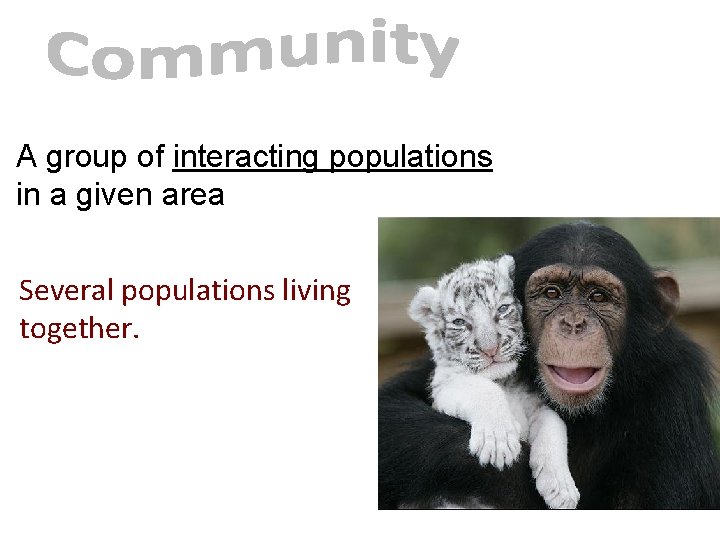
A group of interacting populations in a given area Several populations living together.
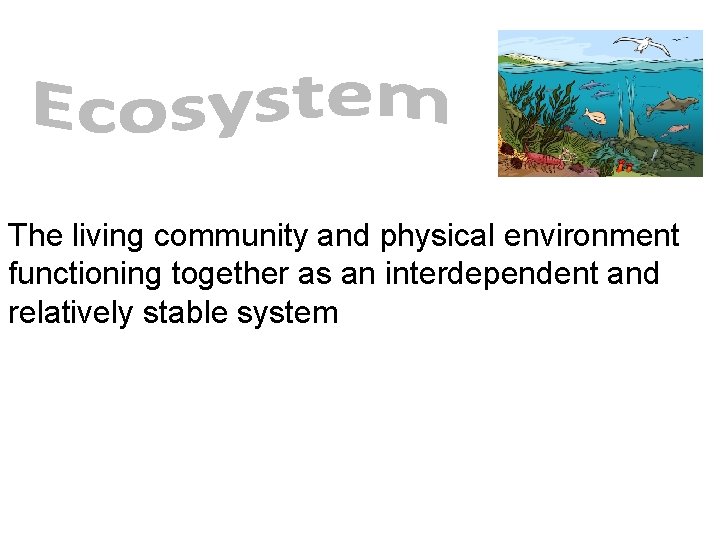
The living community and physical environment functioning together as an interdependent and relatively stable system
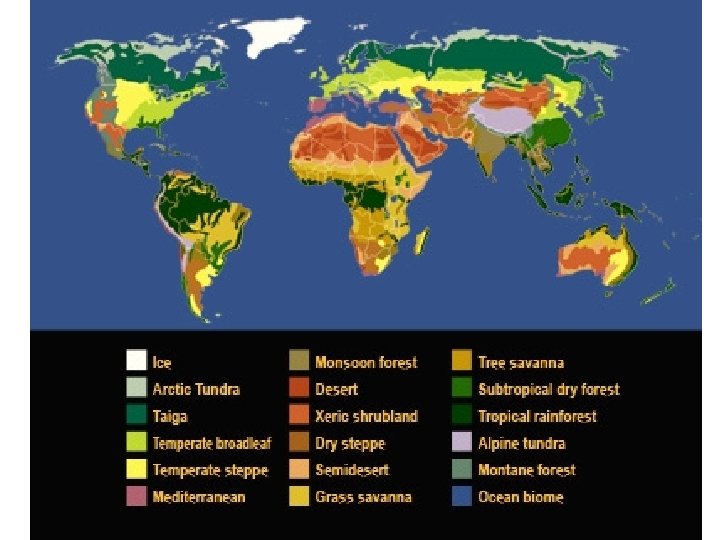
BIOME Large geographical region with a particular type of climax community. 3 Types: 1. Terrestrial – LAND – includes tundra, taiga, tropical rainforest, desert, temperate deciduous forest, grassland 2. Freshwater – AQUATIC – includes lakes and streams 3. Saltwater – AQUATIC – includes oceans
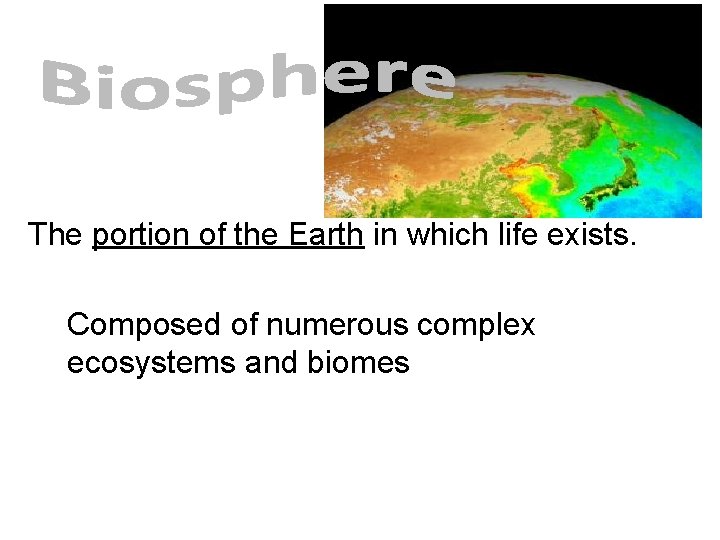
The portion of the Earth in which life exists. Composed of numerous complex ecosystems and biomes
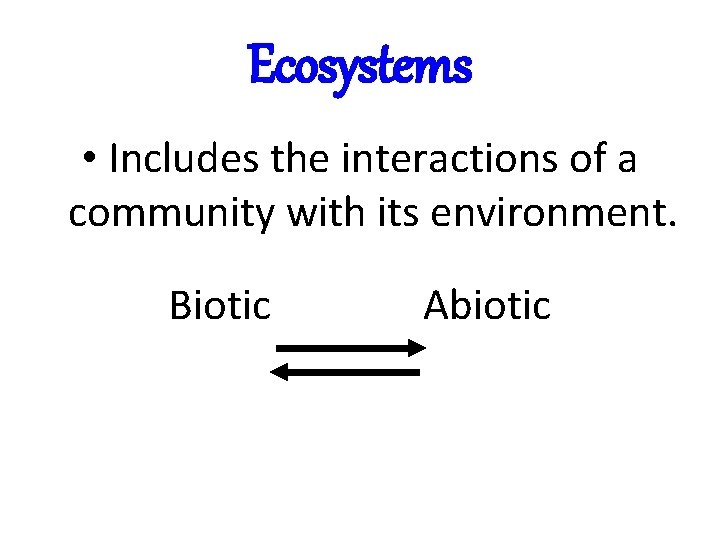
Ecosystems • Includes the interactions of a community with its environment. Biotic Abiotic
Ecosystem Is a self-sustaining unit when the following occurs: Constant source of energy and a living system capable to covert this energy into organic compounds A cycling of materials between organisms and their environment
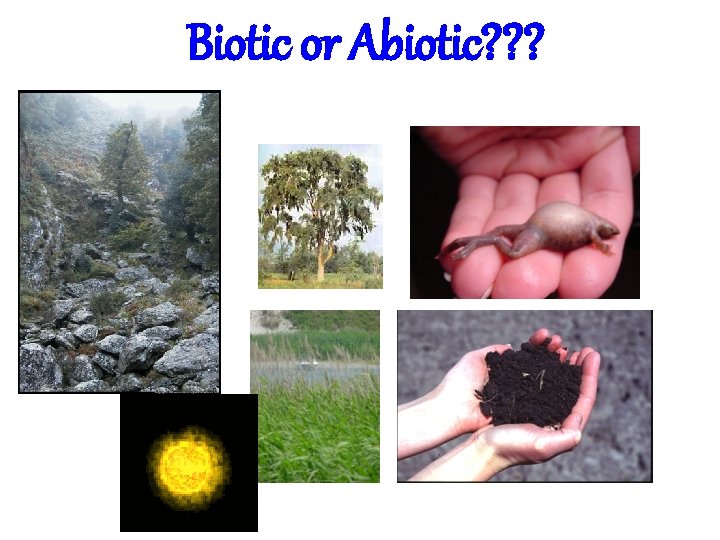
The Living & Nonliving • Biotic Factors : all LIVING things in an ecosystem. Including their wastes – Ex. Bacteria, Fungi, Plants, Animals • Abiotic Factors : all NONLIVING things in an ecosystem. Chemical and physical factors – Ex. Soil, water, space, energy, temperature, amount of light, p. H, salinity
Biotic or Abiotic? ? ?
3 Main Interactions in an Ecosystem 1. Organisms are affected by the environment. • availability of water, temperature, available light 2. The physical environment is affected by organisms. 3. Organisms are affected by other organisms. • competition
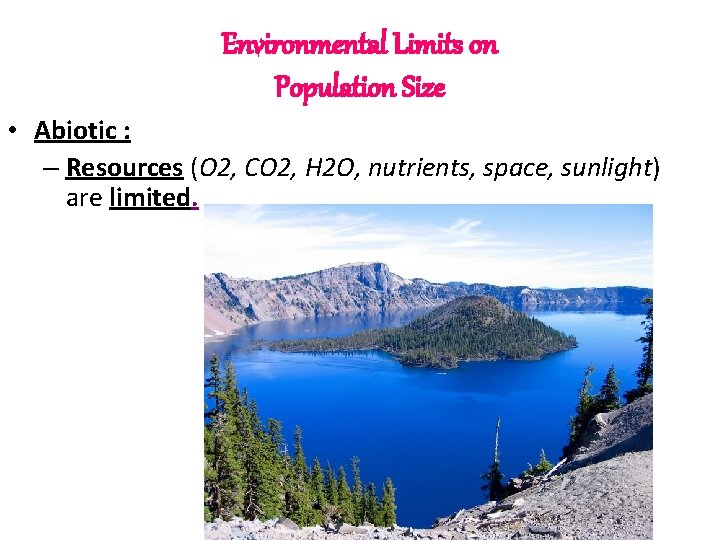
Environmental Limits on Population Size • Abiotic : – Resources (O 2, CO 2, H 2 O, nutrients, space, sunlight) are limited.
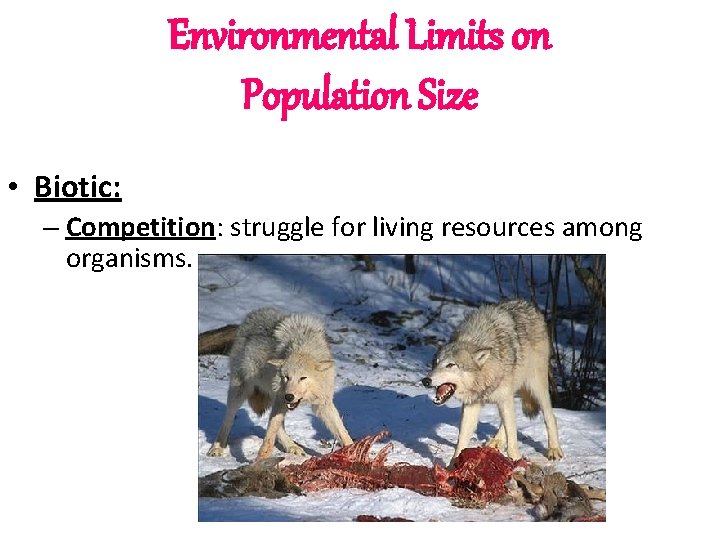
Environmental Limits on Population Size • Biotic: – Competition: struggle for living resources among organisms.
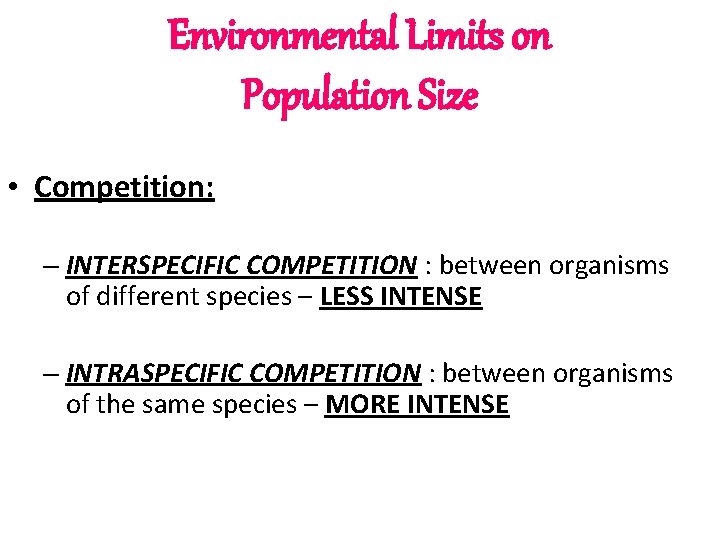
Environmental Limits on Population Size • Competition: – INTERSPECIFIC COMPETITION : between organisms of different species – LESS INTENSE – INTRASPECIFIC COMPETITION : between organisms of the same species – MORE INTENSE
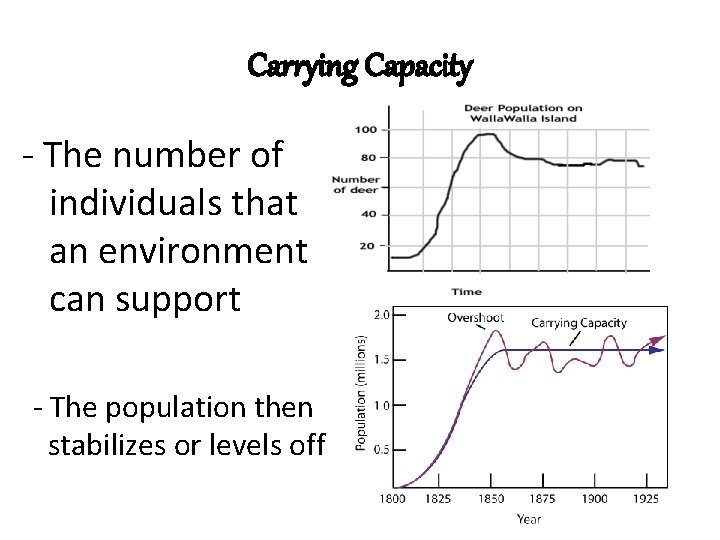
Carrying Capacity - The number of individuals that an environment can support - The population then stabilizes or levels off
Carrying Capacity Graph
Habitat • The specific environment that an organism calls “home”. • Examples: A field, a forest, an ocean, the desert.
Niche • The functional role an organism in the ecosystem. • Its “occupation” • If two species attempt to fill the same niche – competition occurs
Biodiversity • Measured by the number of communities in an ecosystem. The more species…… the greater the biodiversity • The more species in an ecosystem the more stable the ecosystem will be • A major decrease in the biodiversity will affect the ecosystem
Biodiversity We are all connected
They may be competitive, or cooperative!!!
Autotroph: organism that produces its own food by using the energy of the sun - photosynthesis It is also called a producer.
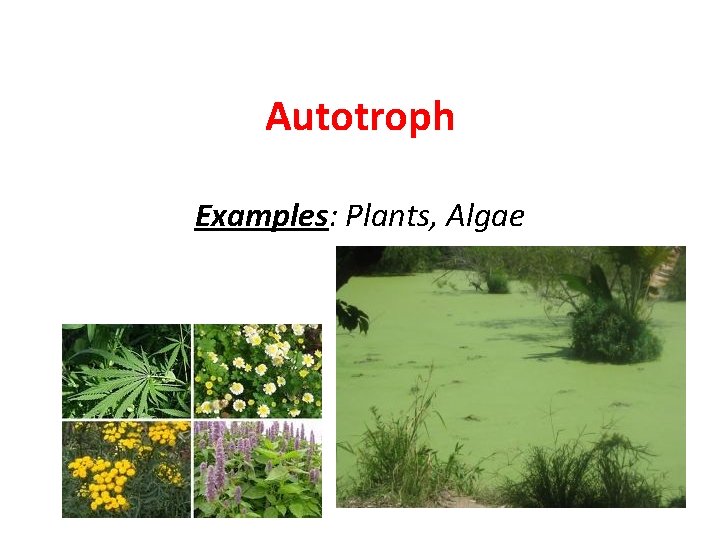
Autotroph Examples: Plants, Algae
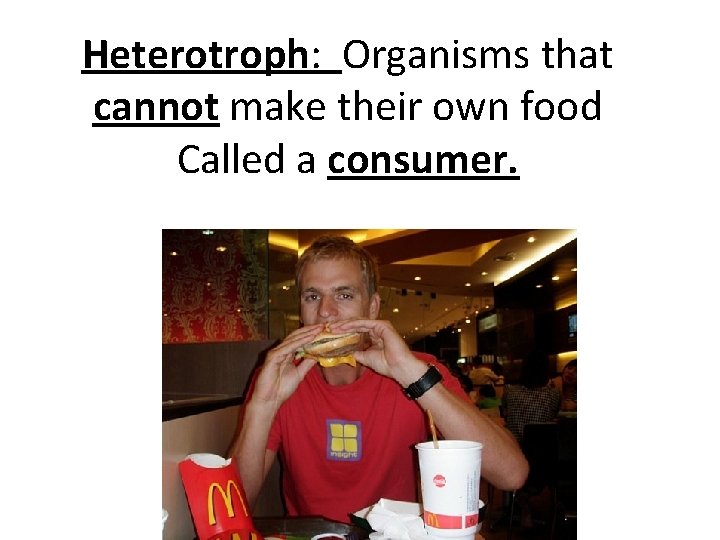
Heterotroph: Organisms that cannot make their own food Called a consumer.
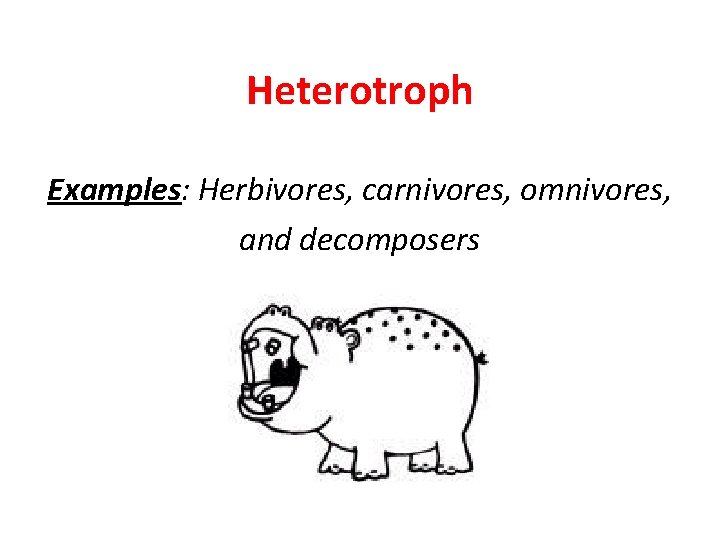
Heterotroph Examples: Herbivores, carnivores, omnivores, and decomposers
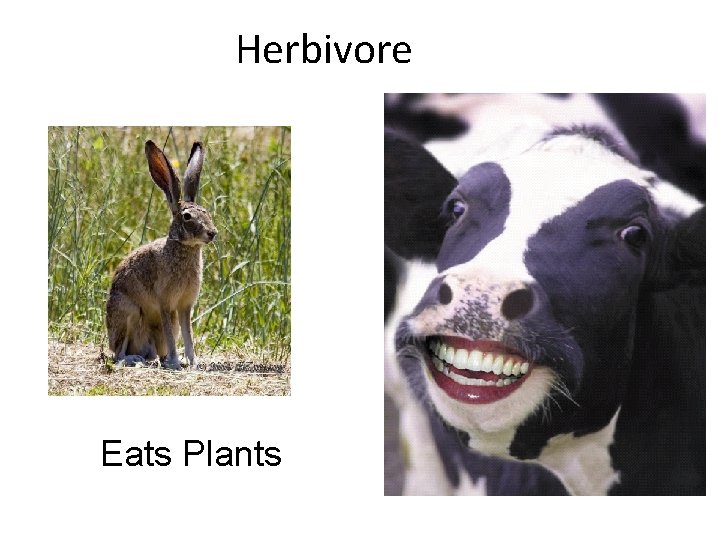
Herbivore Eats Plants
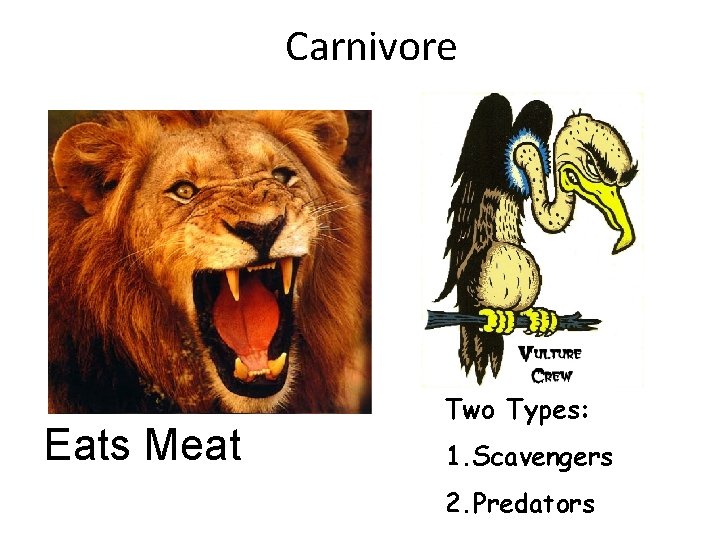
Carnivore Eats Meat Two Types: 1. Scavengers 2. Predators
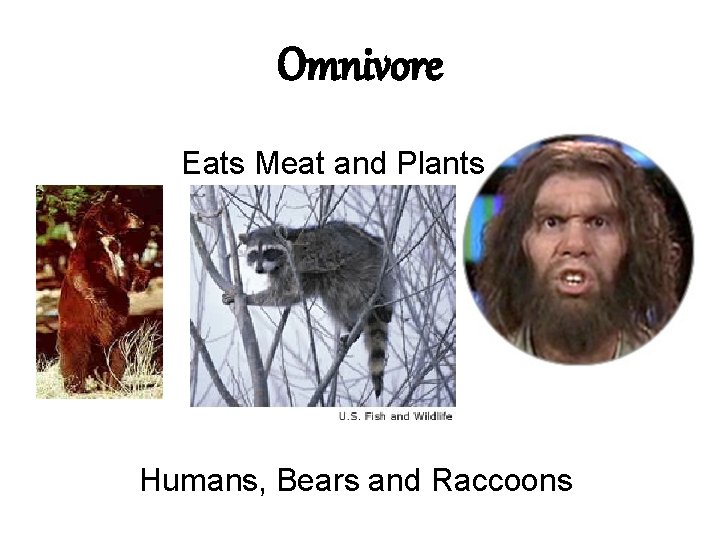
Omnivore Eats Meat and Plants Humans, Bears and Raccoons
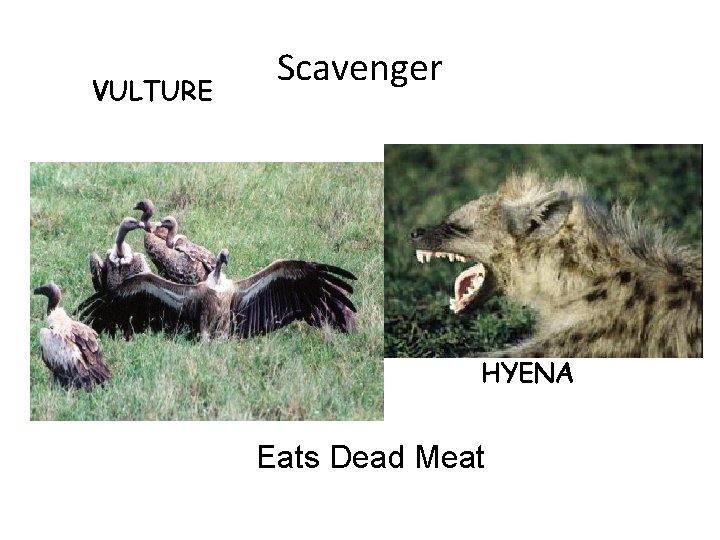
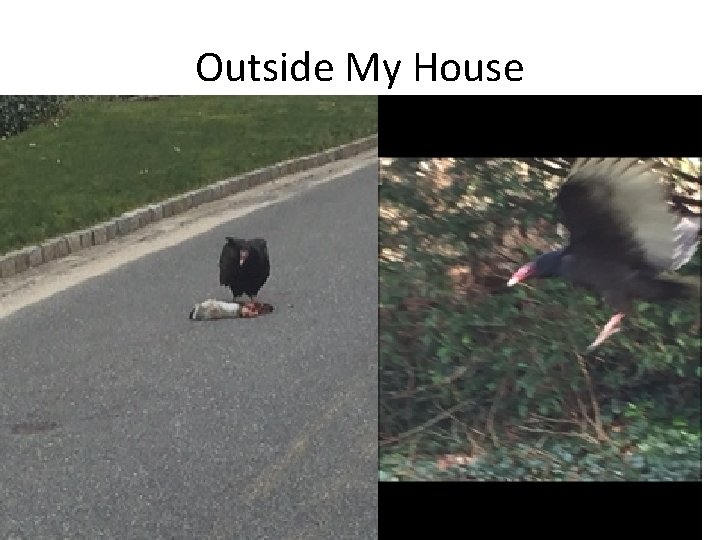
VULTURE Scavenger HYENA Eats Dead Meat
Outside My House
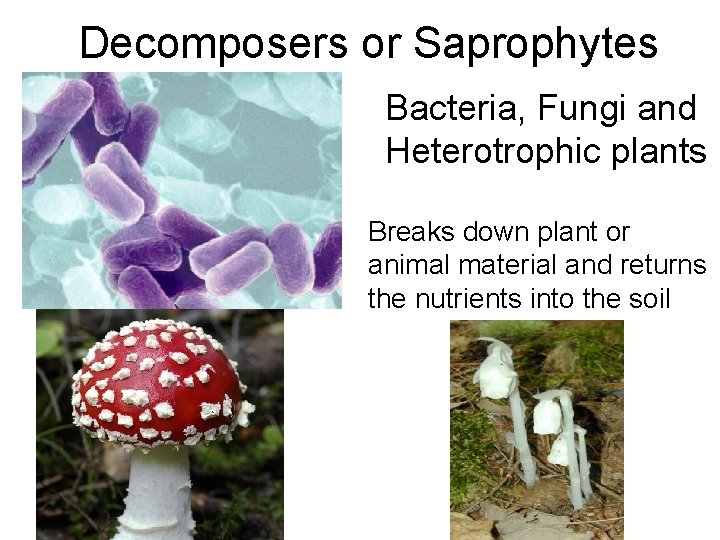
Decomposers or Saprophytes Bacteria, Fungi and Heterotrophic plants Breaks down plant or animal material and returns the nutrients into the soil
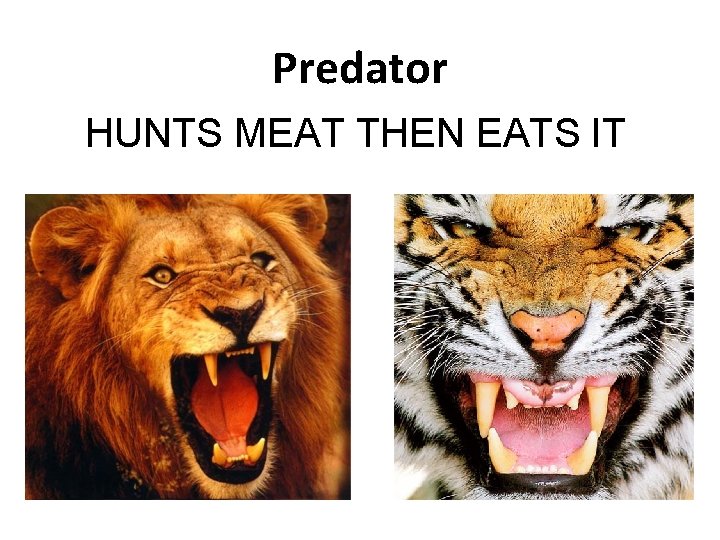
Predator HUNTS MEAT THEN EATS IT
3 Types of Symbiosis 1. Mutualism - both organisms benefit – “win-win” situation. (+, +) 2. Commensalism - one organism benefits, the other is unaffected. (+, 0) 3. Parasitism - one organism benefits, the other is harmed. (+, -)
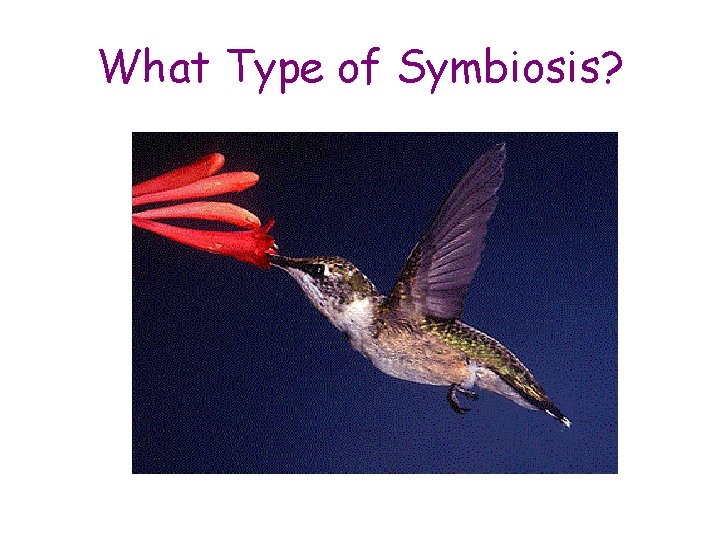
What Type of Symbiosis?
MUTUALISM Both the plant and the bird are benefiting from their relationship.
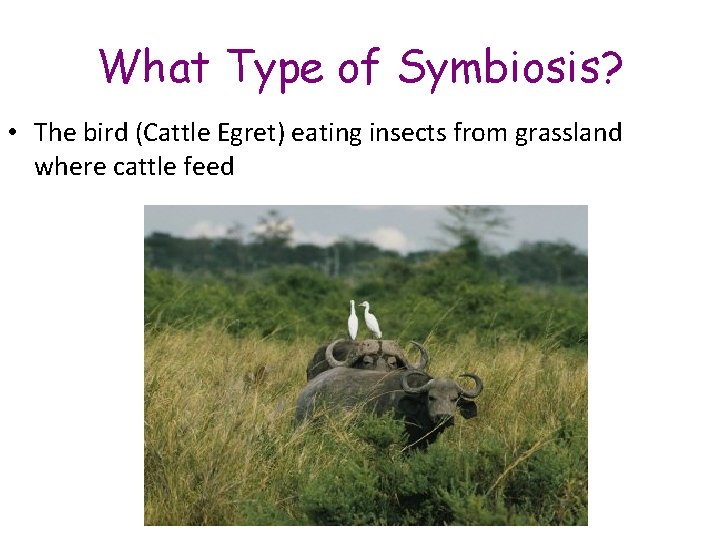
What Type of Symbiosis? • The bird (Cattle Egret) eating insects from grassland where cattle feed
COMMENSALISM The birds are benefiting, while the cattle is unaffected.
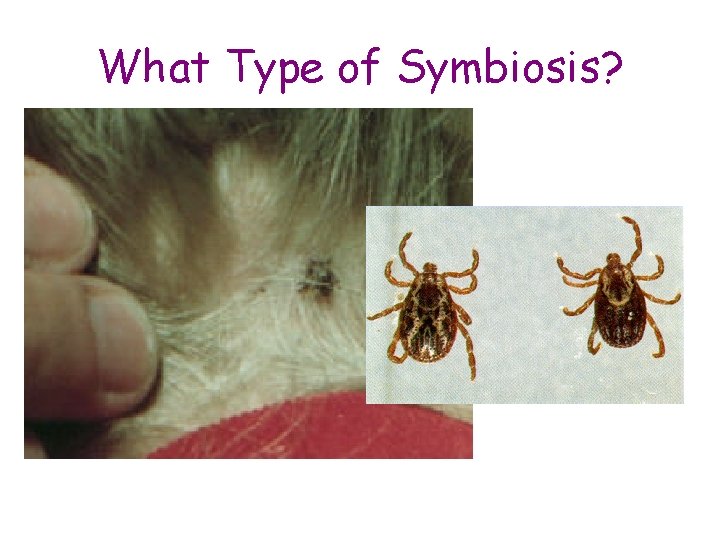
What Type of Symbiosis?
PARASITISM The tick is benefiting while the person is harmed from their relationship.
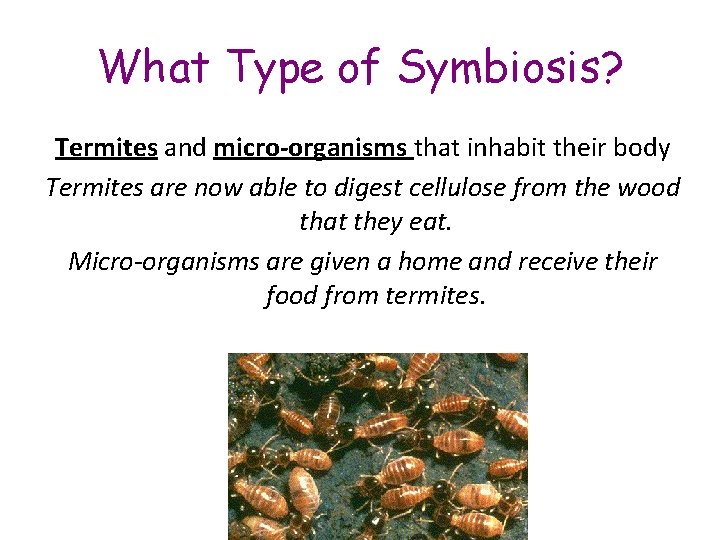
What Type of Symbiosis? Termites and micro-organisms that inhabit their body Termites are now able to digest cellulose from the wood that they eat. Micro-organisms are given a home and receive their food from termites.
MUTUALISM Both the termite and the micro-organism are benefiting from their relationship.
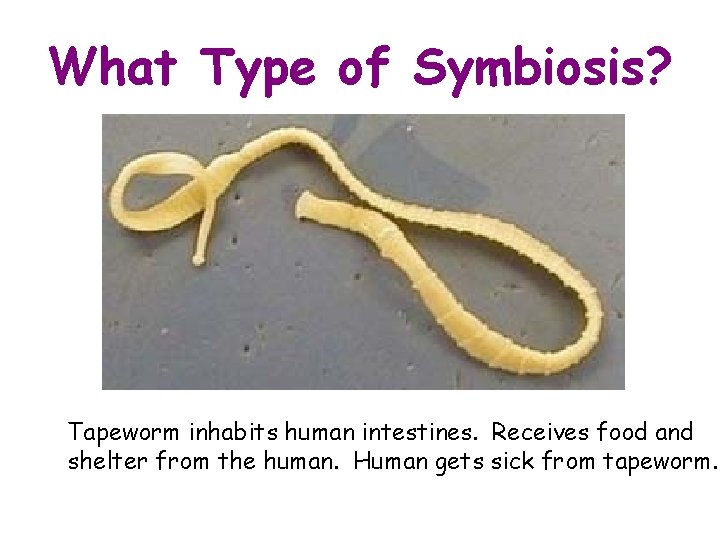
What Type of Symbiosis? Tapeworm inhabits human intestines. Receives food and shelter from the human. Human gets sick from tapeworm.
PARASITISM The tapeworm is benefiting while the person is harmed from their relationship.
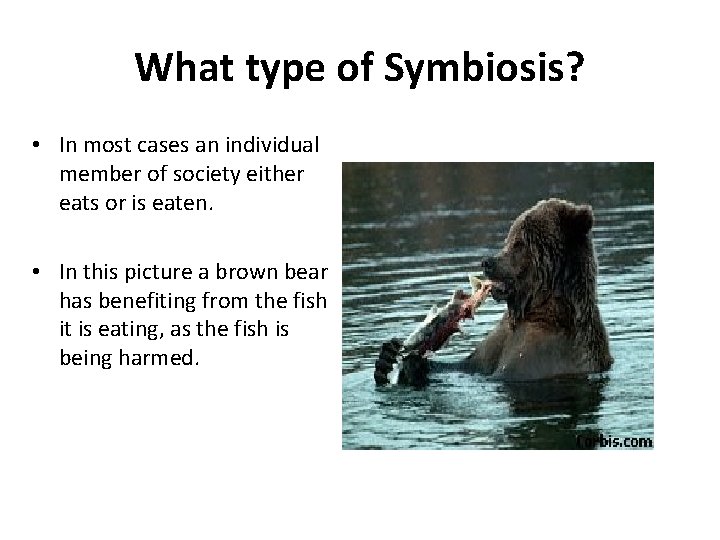
What type of Symbiosis? • In most cases an individual member of society either eats or is eaten. • In this picture a brown bear has benefiting from the fish it is eating, as the fish is being harmed.
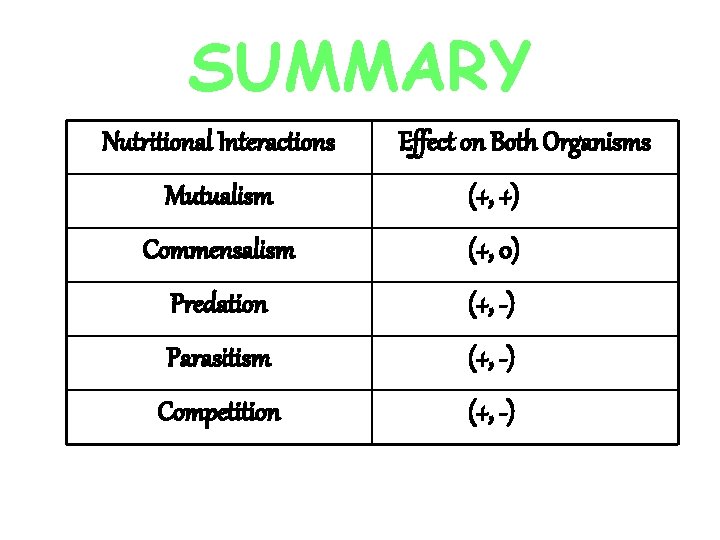
SUMMARY Nutritional Interactions Effect on Both Organisms Mutualism (+, +) Commensalism (+, 0) Predation (+, -) Parasitism (+, -) Competition (+, -)
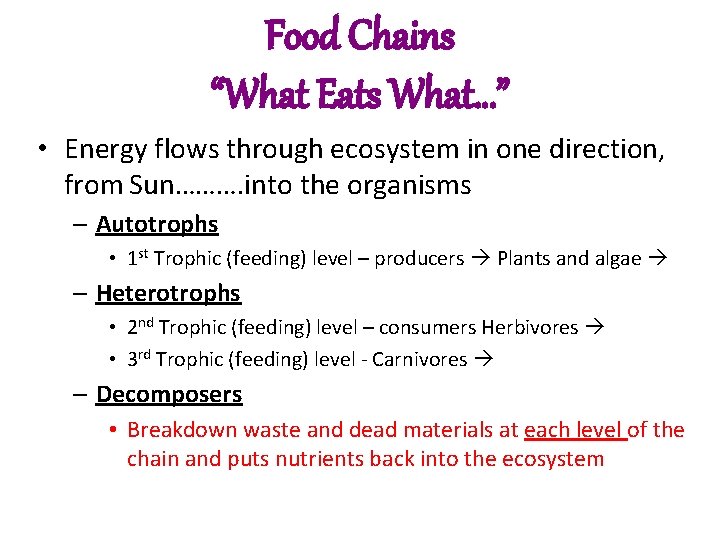
Food Chains “What Eats What…” • Energy flows through ecosystem in one direction, from Sun………. into the organisms – Autotrophs • 1 st Trophic (feeding) level – producers Plants and algae – Heterotrophs • 2 nd Trophic (feeding) level – consumers Herbivores • 3 rd Trophic (feeding) level - Carnivores – Decomposers • Breakdown waste and dead materials at each level of the chain and puts nutrients back into the ecosystem
Food Web • The Food Web Song
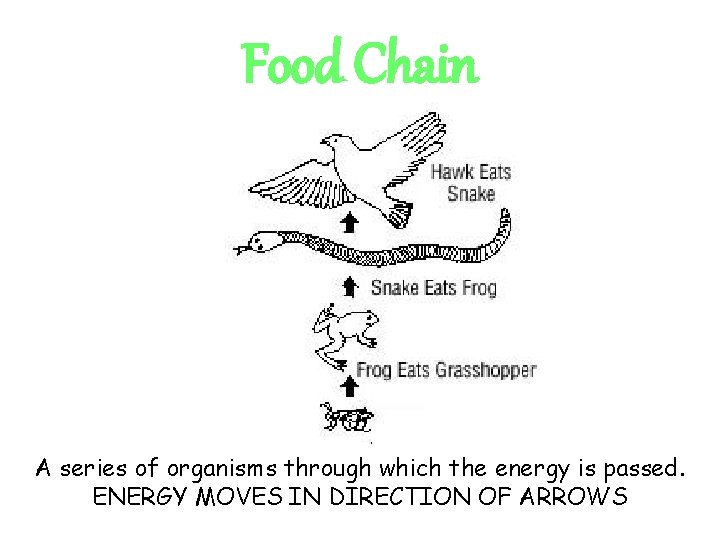
Food Chain A series of organisms through which the energy is passed. ENERGY MOVES IN DIRECTION OF ARROWS
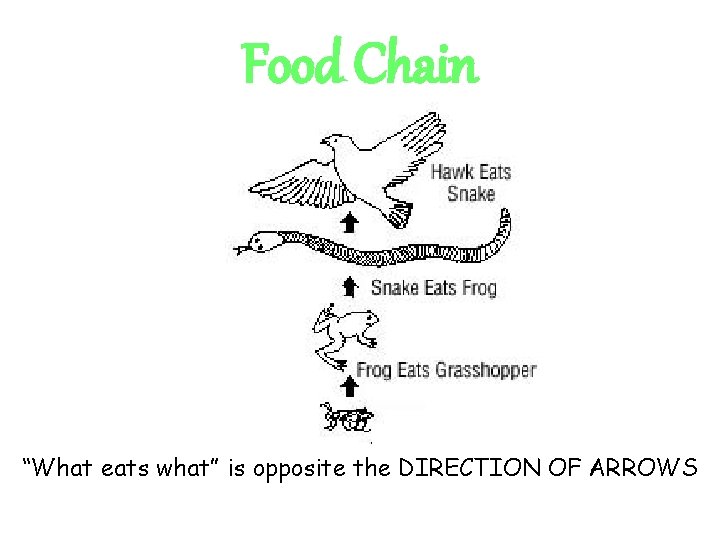
Food Chain “What eats what” is opposite the DIRECTION OF ARROWS
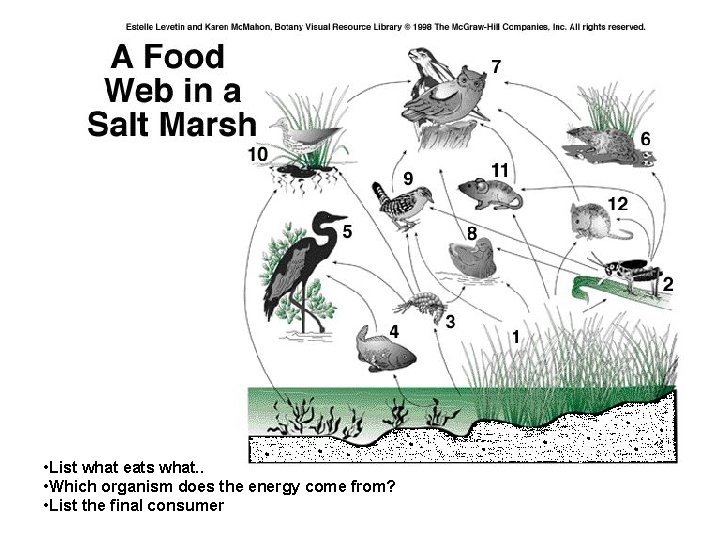
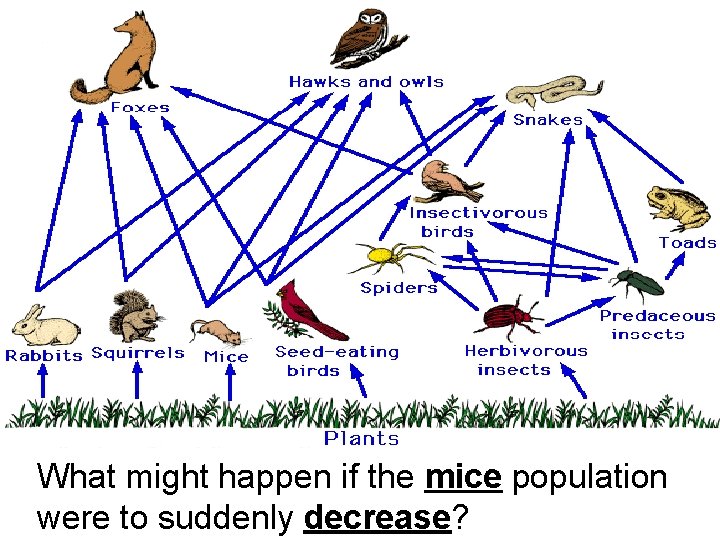
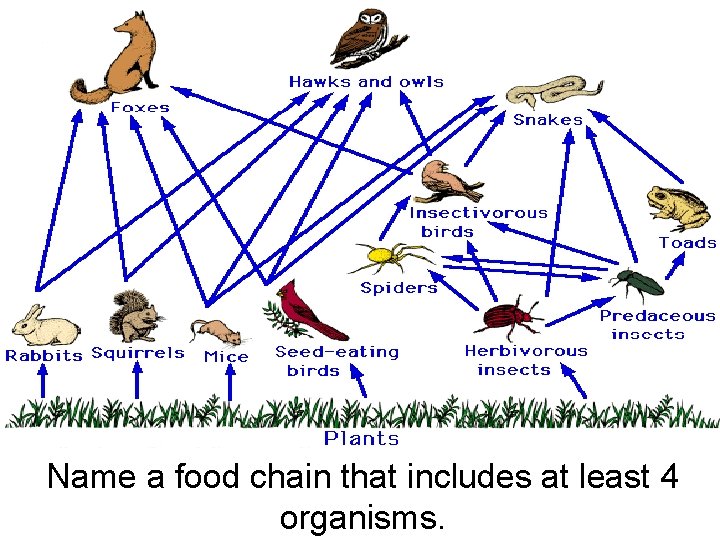
Food Web • Organisms have more than one food source – a chain is too simple. • Food web shows complex feeding relationships. • Food web is MANY food chains.
• List what eats what. . • Which organism does the energy come from? • List the final consumer
What might happen if the mice population were to suddenly decrease?
Name a food chain that includes at least 4 organisms.
Food Chain Game • http: //www. ecokids. ca/pub/eco_info/topics/f rogs/chain_reaction/index. cfm
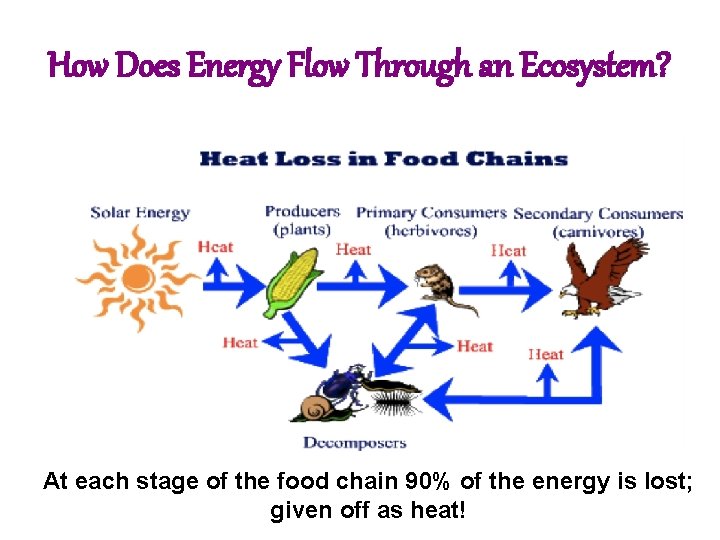
How Does Energy Flow Through an Ecosystem? At each stage of the food chain 90% of the energy is lost; given off as heat!
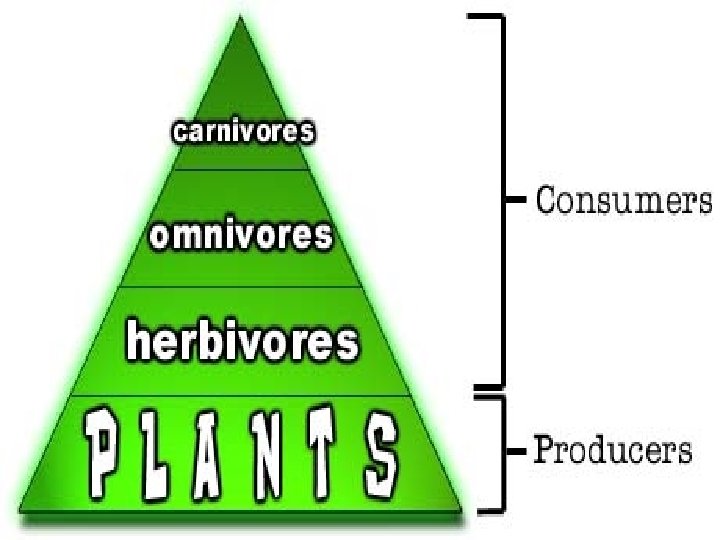
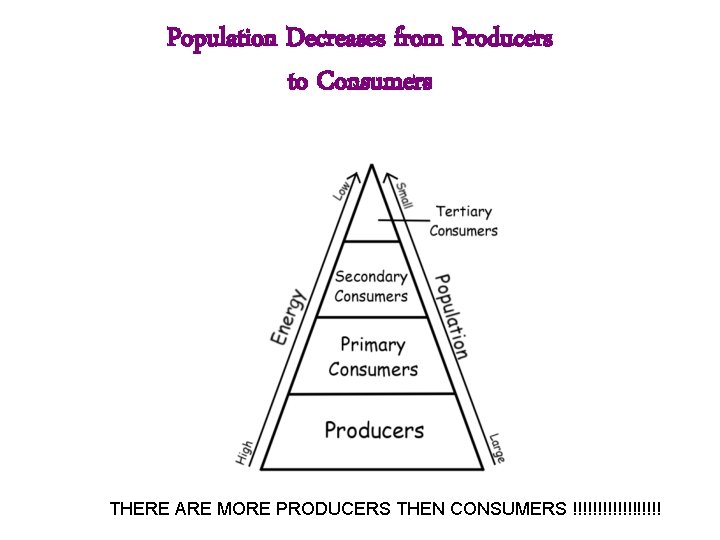
Energy/Food Pyramid • Shows transfer of energy through a chain or web. • Each block = amount of available energy. • Each level is smaller than the one below it due to energy lost as heat. • Sun is the ultimate source of energy for life on earth.
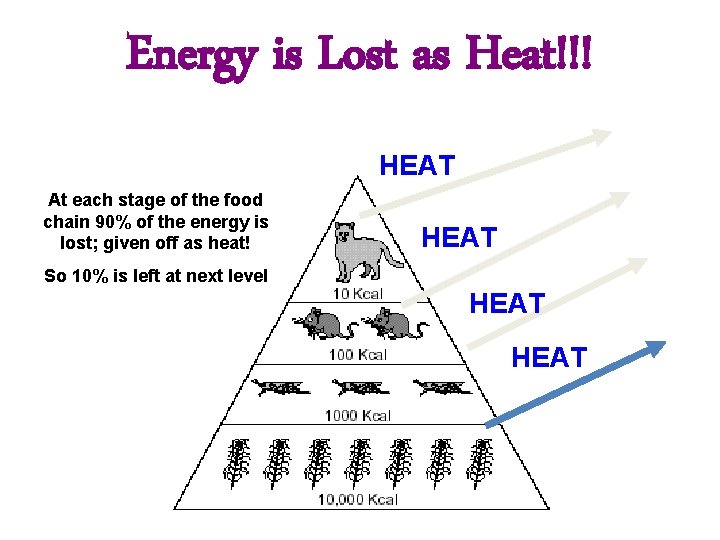
Energy is Lost as Heat!!! HEAT At each stage of the food chain 90% of the energy is lost; given off as heat! HEAT So 10% is left at next level HEAT
Population Decreases from Producers to Consumers THERE ARE MORE PRODUCERS THEN CONSUMERS !!!!!!!!!
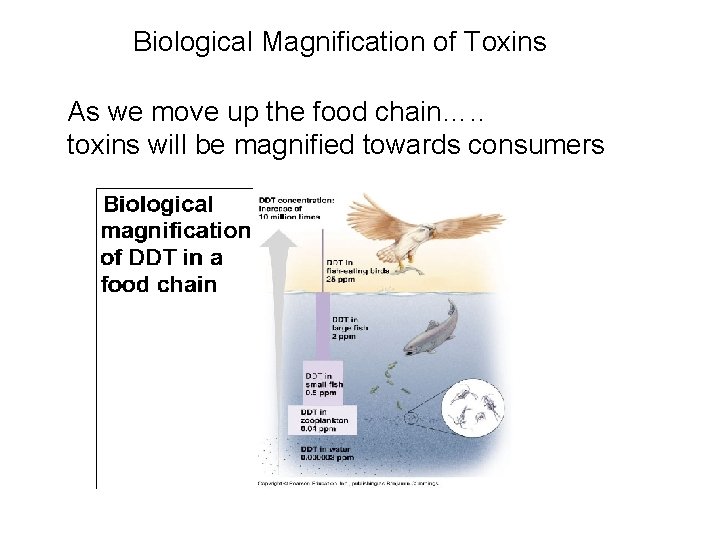
Biological Magnification of Toxins As we move up the food chain…. . toxins will be magnified towards consumers
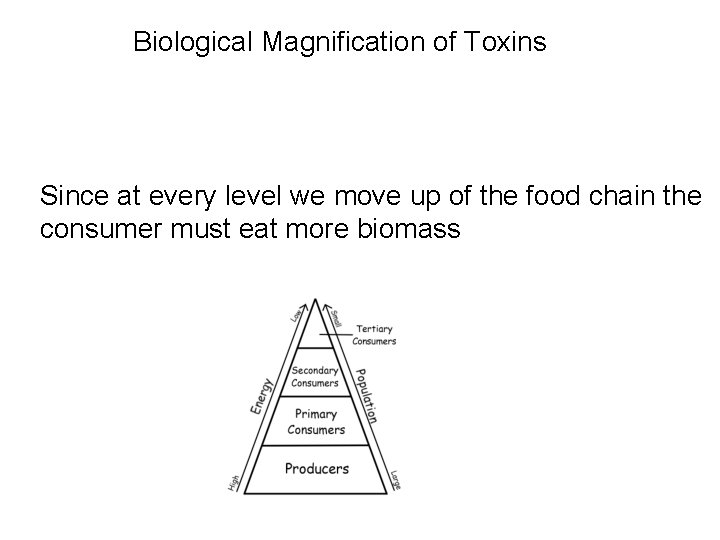
Biological Magnification of Toxins Since at every level we move up of the food chain the consumer must eat more biomass
Materials are Recycled and Reused in our Ecosystem
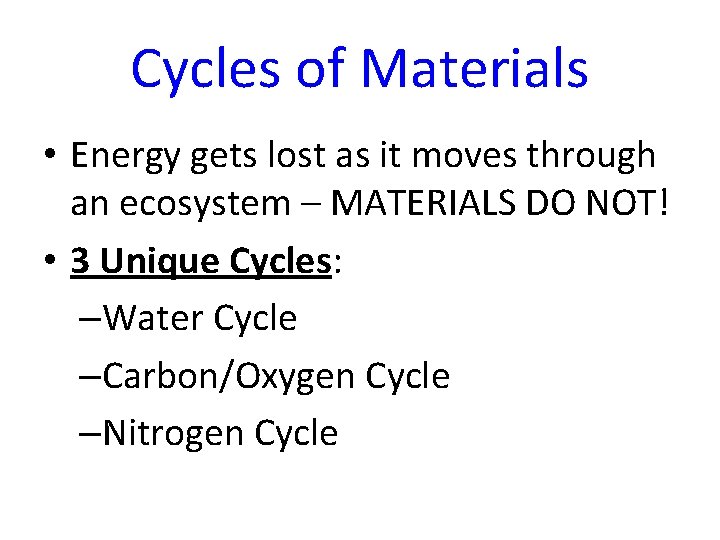
Cycles of Materials • Energy gets lost as it moves through an ecosystem – MATERIALS DO NOT! • 3 Unique Cycles: –Water Cycle –Carbon/Oxygen Cycle –Nitrogen Cycle
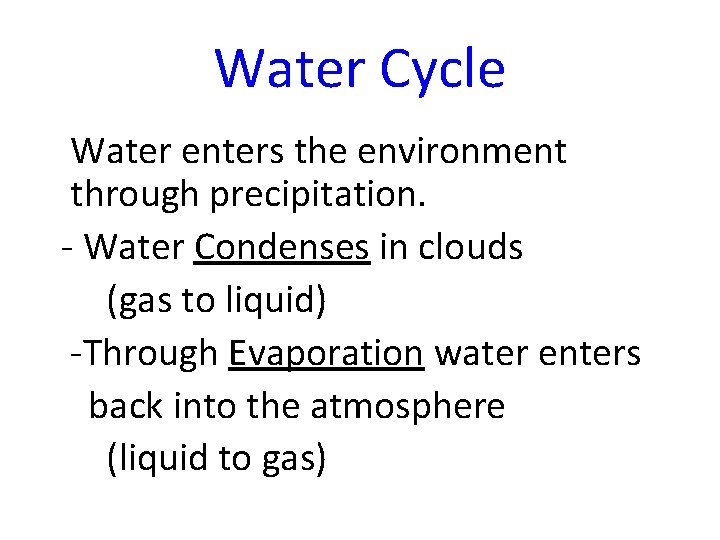
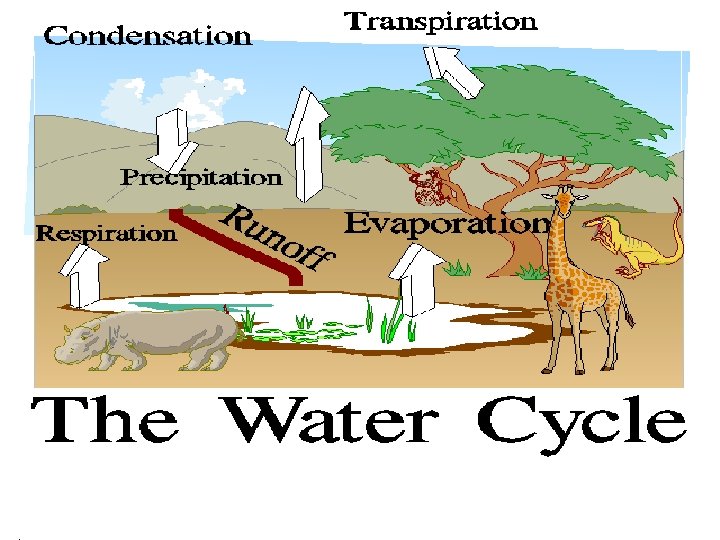
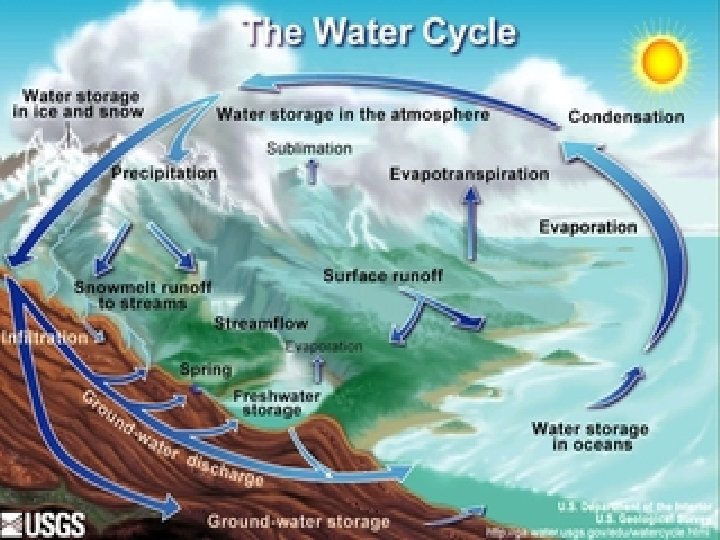
Water Cycle Water enters the environment through precipitation. - Water Condenses in clouds (gas to liquid) -Through Evaporation water enters back into the atmosphere (liquid to gas)
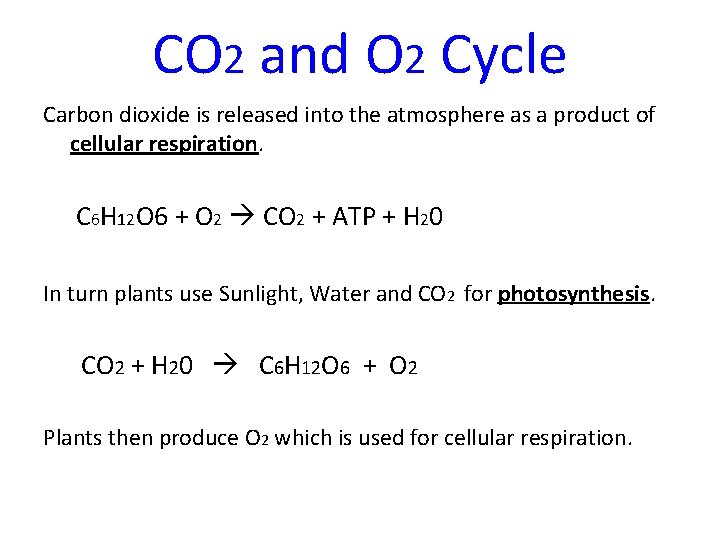
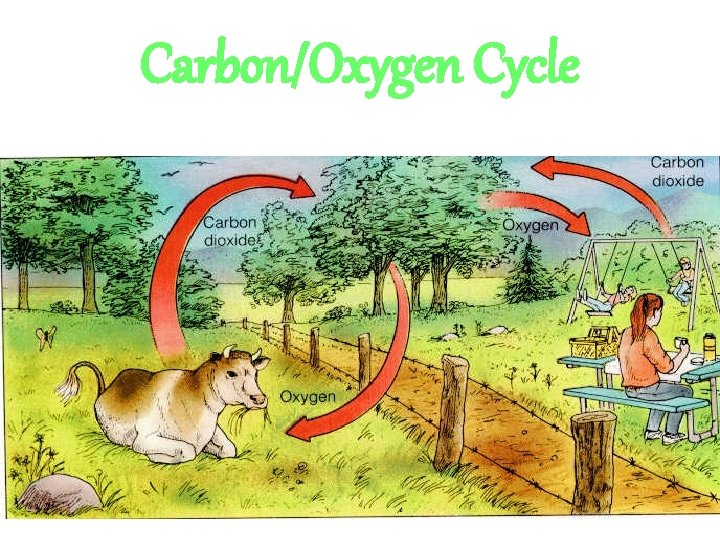
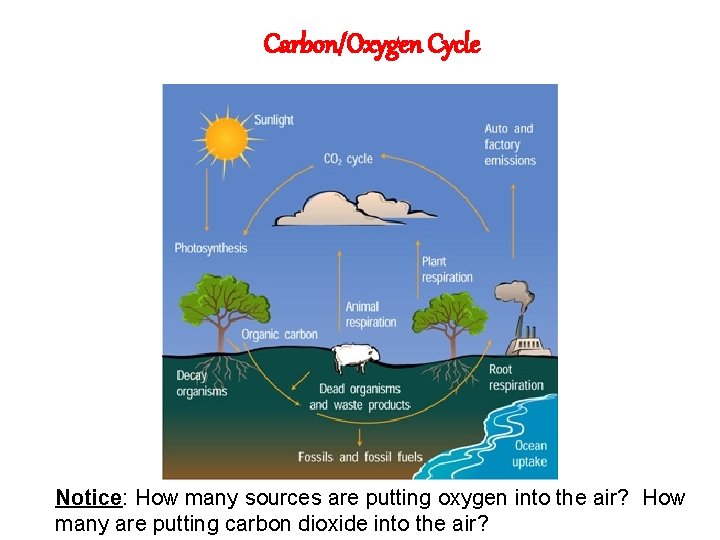
CO 2 and O 2 Cycle Carbon dioxide is released into the atmosphere as a product of cellular respiration. C 6 H 12 O 6 + O 2 CO 2 + ATP + H 20 In turn plants use Sunlight, Water and CO 2 for photosynthesis. CO 2 + H 20 C 6 H 12 O 6 + O 2 Plants then produce O 2 which is used for cellular respiration.
Carbon/Oxygen Cycle
Carbon/Oxygen Cycle Notice: How many sources are putting oxygen into the air? How many are putting carbon dioxide into the air?
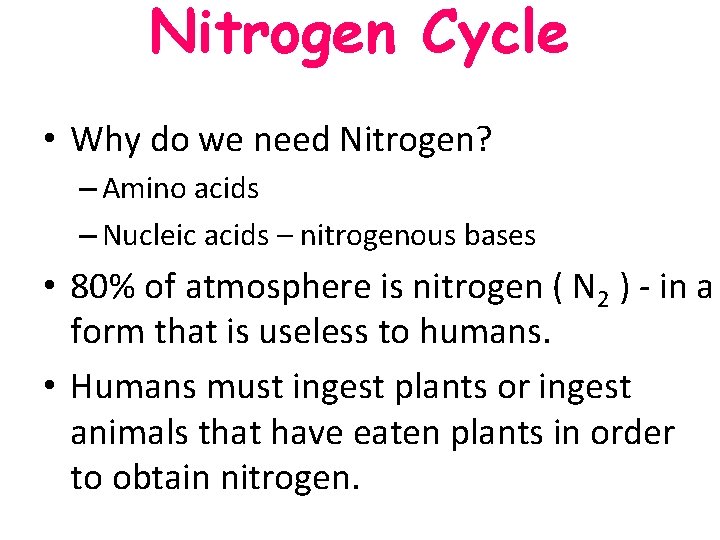
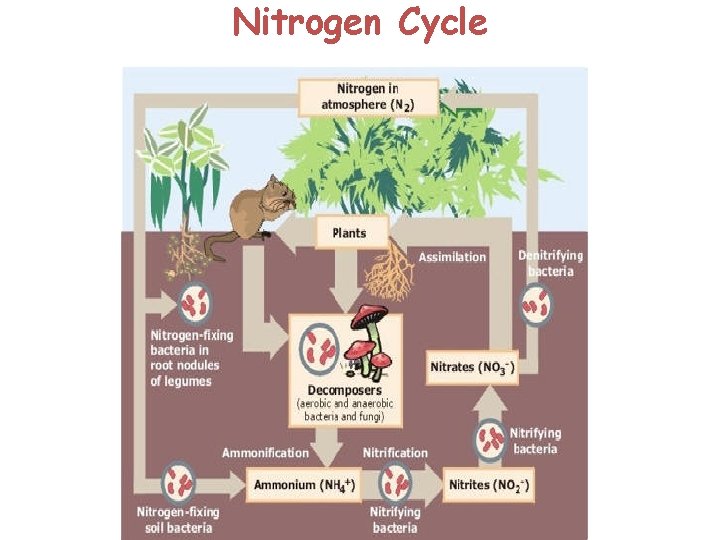
Nitrogen Cycle • Why do we need Nitrogen? – Amino acids – Nucleic acids – nitrogenous bases • 80% of atmosphere is nitrogen ( N 2 ) - in a form that is useless to humans. • Humans must ingest plants or ingest animals that have eaten plants in order to obtain nitrogen.
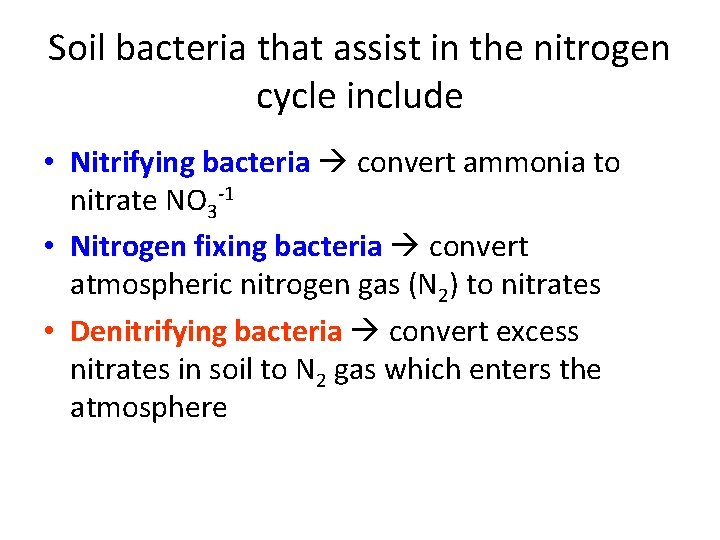
Soil bacteria that assist in the nitrogen cycle include • Nitrifying bacteria convert ammonia to bacteria nitrate NO 3 -1 • Nitrogen fixing bacteria convert bacteria atmospheric nitrogen gas (N 2) to nitrates • Denitrifying bacteria convert excess bacteria nitrates in soil to N 2 gas which enters the atmosphere
Nitrogen Cycle
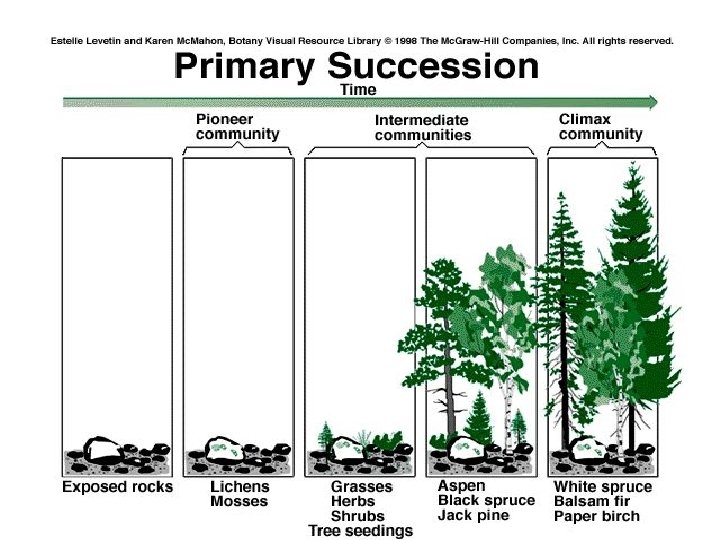
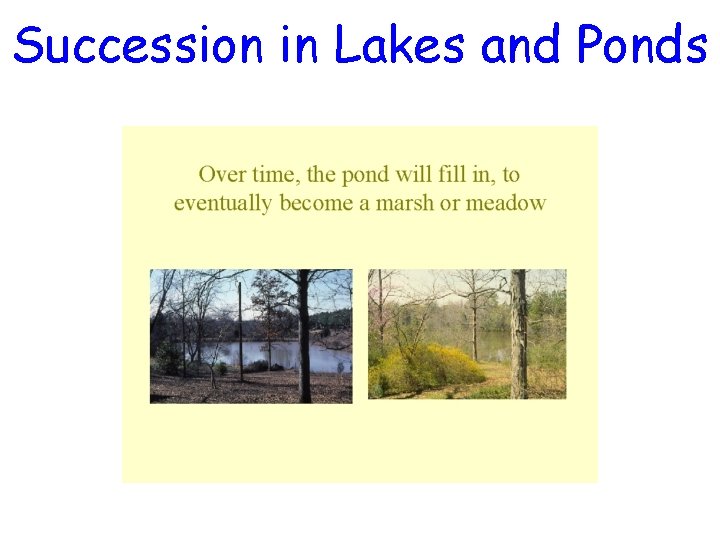
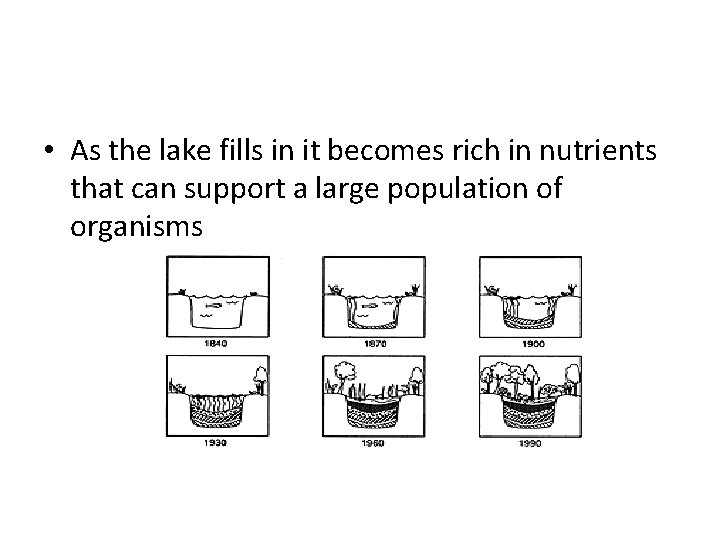
Ecological Succession • Series of changes in which one habitat changes into another. • May occur on land or in water (lakes & ponds)
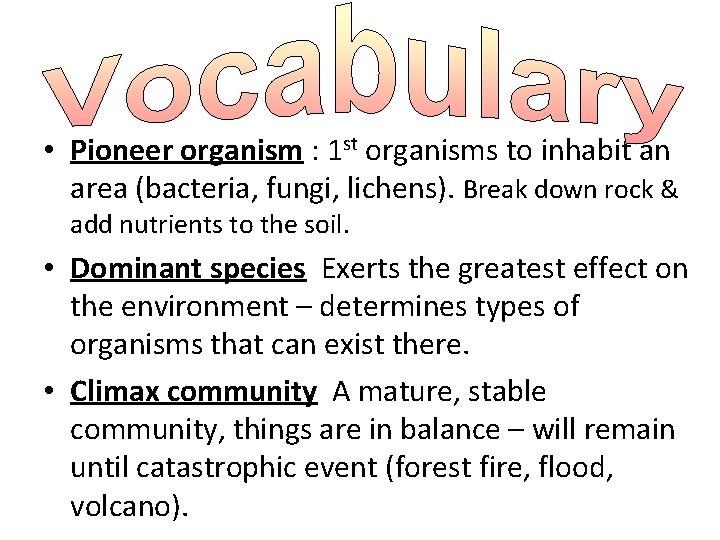
• Pioneer organism : 1 st organisms to inhabit an area (bacteria, fungi, lichens). Break down rock & add nutrients to the soil. • Dominant species Exerts the greatest effect on the environment – determines types of organisms that can exist there. • Climax community A mature, stable community, things are in balance – will remain until catastrophic event (forest fire, flood, volcano).
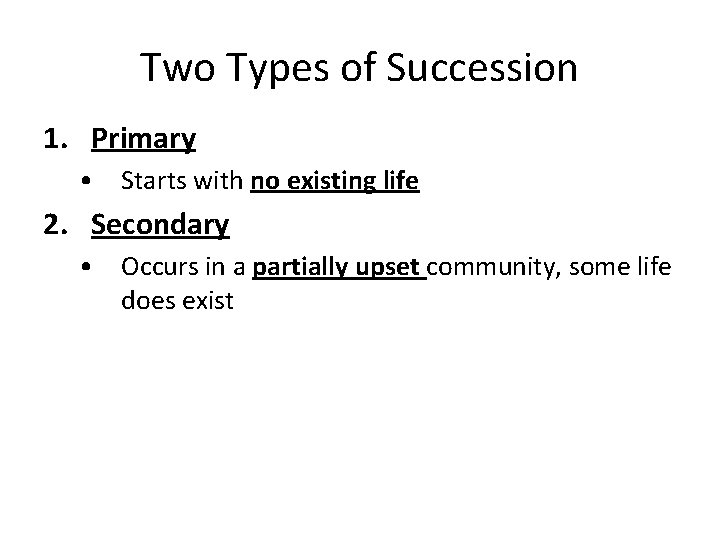
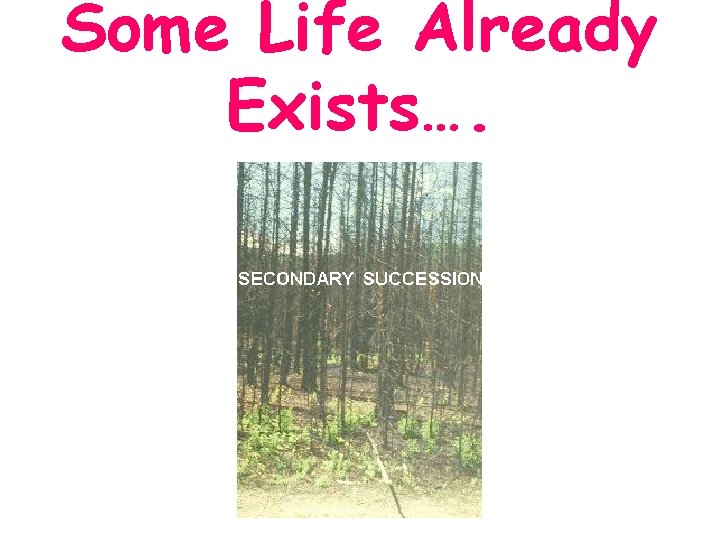
Two Types of Succession 1. Primary • Starts with no existing life 2. Secondary • Occurs in a partially upset community, some life does exist
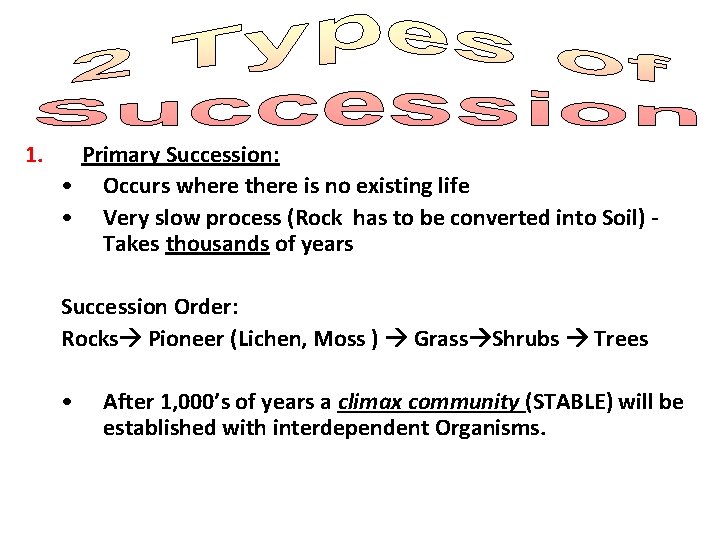
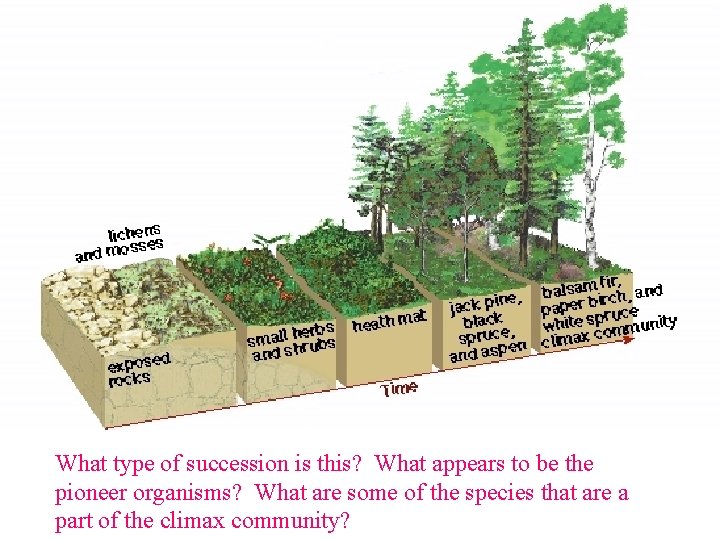
1. Primary Succession: • Occurs where there is no existing life • Very slow process (Rock has to be converted into Soil) Takes thousands of years Succession Order: Rocks Pioneer (Lichen, Moss ) Grass Shrubs Trees • After 1, 000’s of years a climax community (STABLE) will be established with interdependent Organisms.
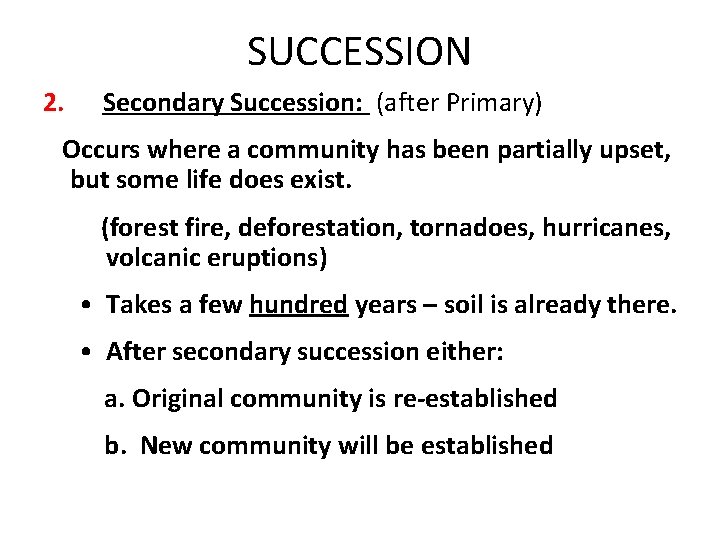
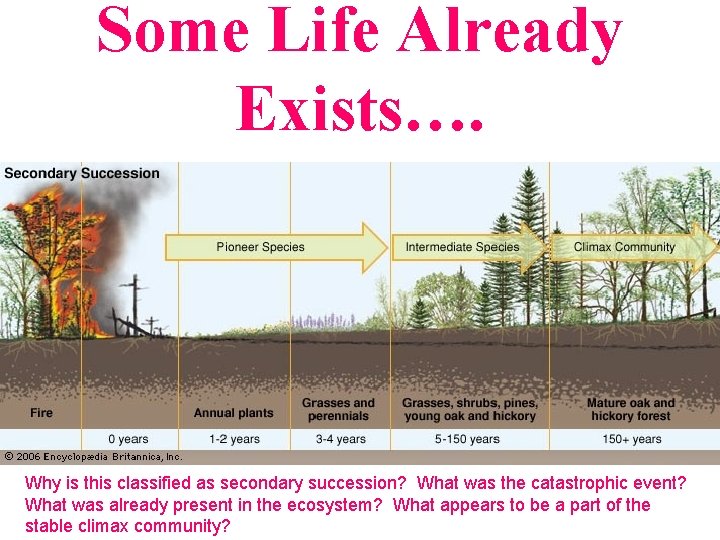
SUCCESSION 2. Secondary Succession: (after Primary) Occurs where a community has been partially upset, but some life does exist. (forest fire, deforestation, tornadoes, hurricanes, volcanic eruptions) • Takes a few hundred years – soil is already there. • After secondary succession either: a. Original community is re-established b. New community will be established
Some Life Already Exists….
Succession in Lakes and Ponds
• As the lake fills in it becomes rich in nutrients that can support a large population of organisms
What type of succession is this? What appears to be the pioneer organisms? What are some of the species that are a part of the climax community?
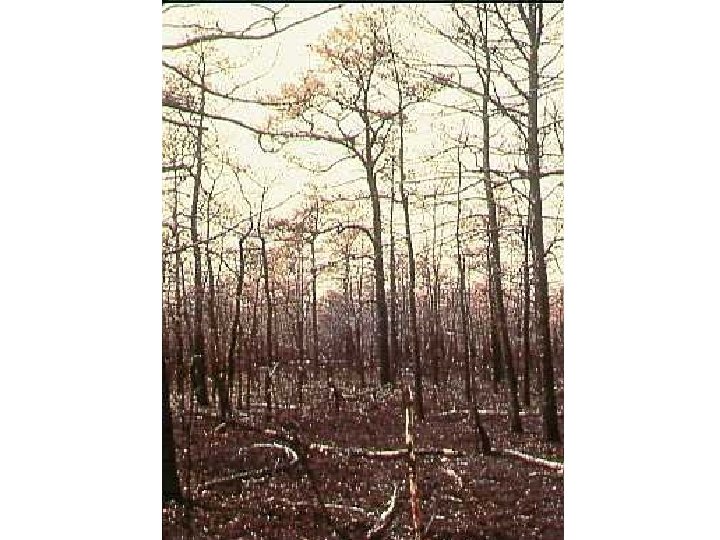
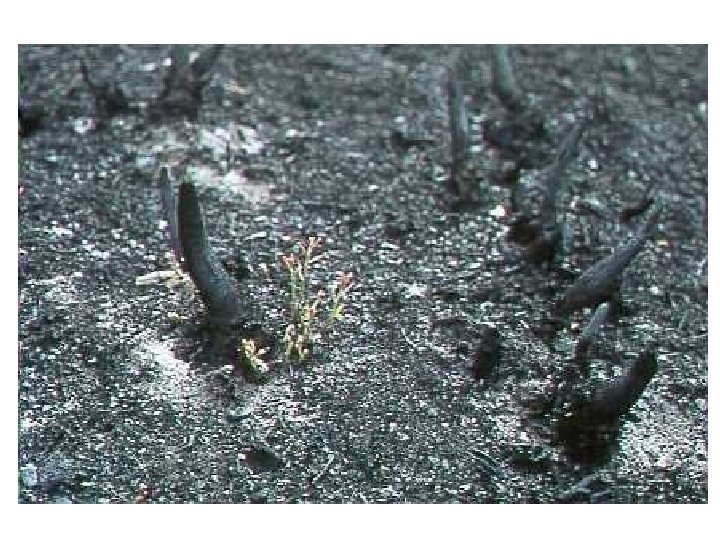
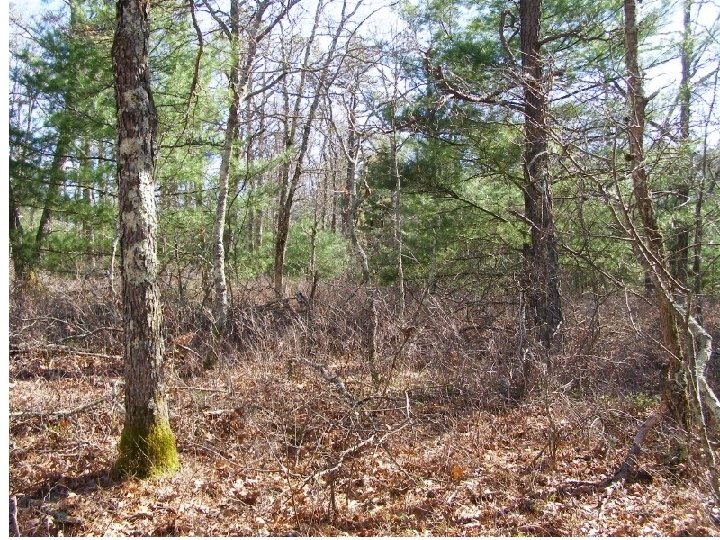
Some Life Already Exists…. Why is this classified as secondary succession? What was the catastrophic event? What was already present in the ecosystem? What appears to be a part of the stable climax community?
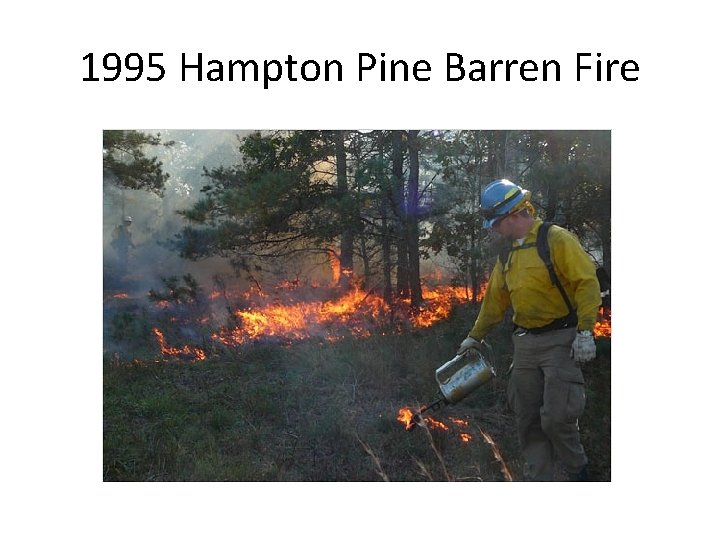
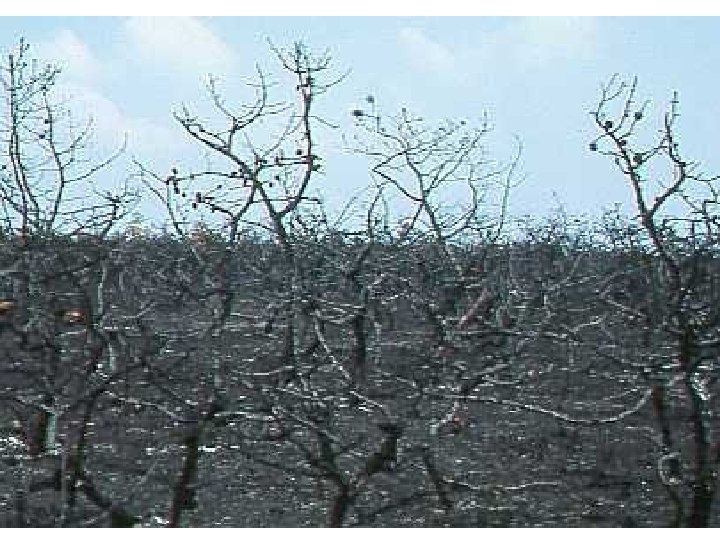
1995 Hampton Pine Barren Fire
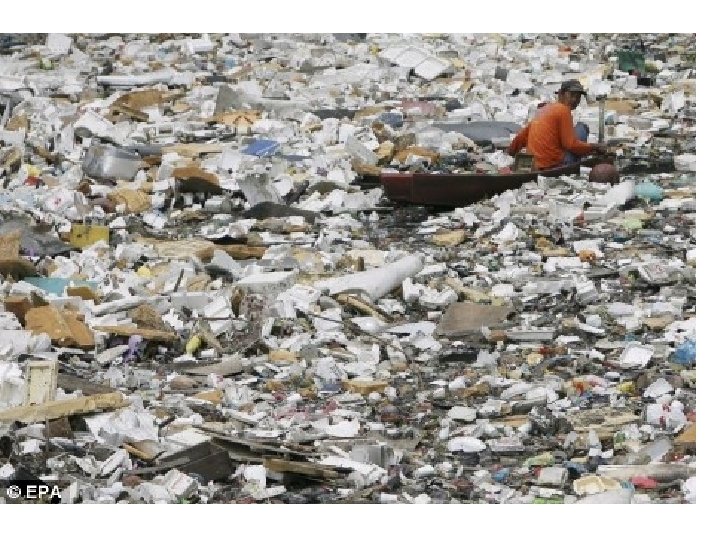
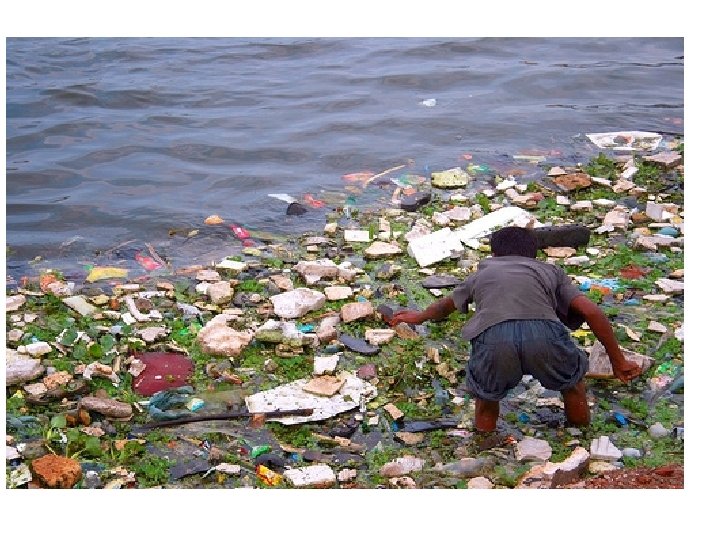
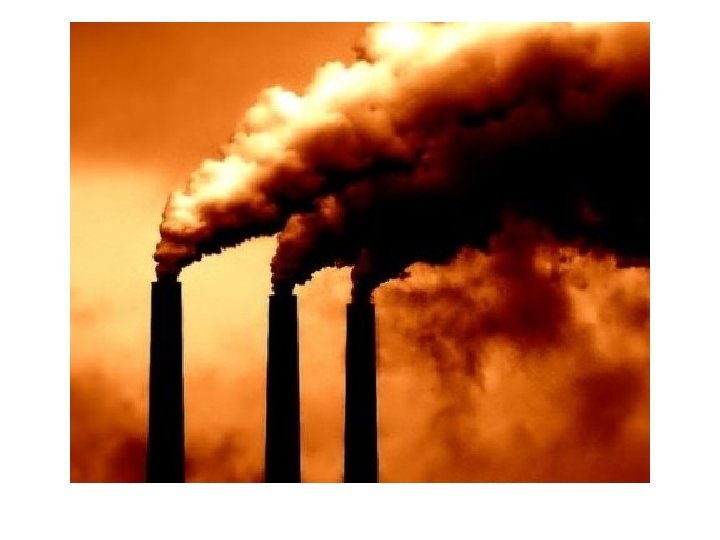
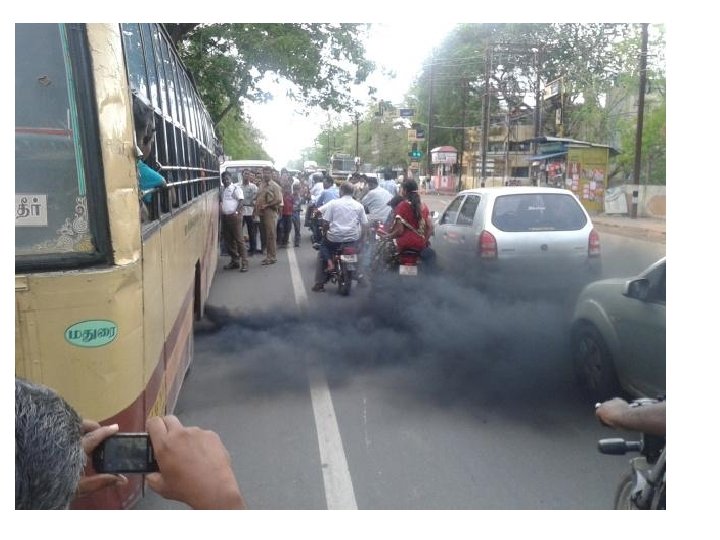
Aim: How has technology & industrialization negatively impacted the environment?
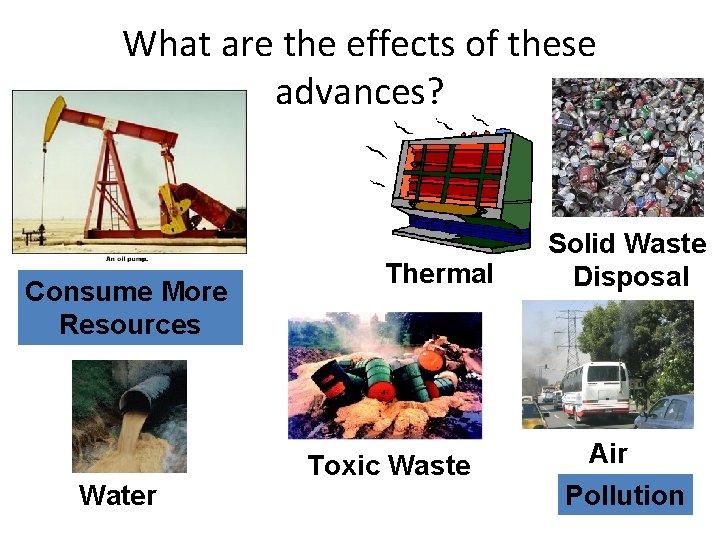
What are the effects of these advances? Consume More Resources Water Thermal Toxic Waste Solid Waste Disposal Air Pollution
Limited Resources • Earth has limited supply of resources • Some are renewable – plants, trees, animals, energy from sun • Some are non-renewable – Fossil Fuels (gas, coal), most metals
Limited Resources • Humans can Preserve Resources By: • Reduce: Avoid using resources by walking, biking or carpooling instead of driving. • Reuse: Use products more than once. • Recycle: Paper, metal, plastic and glass are easily recycled.
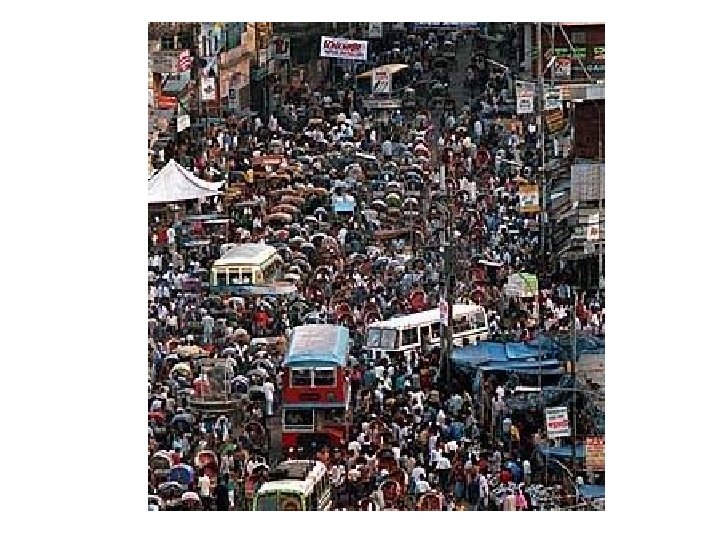
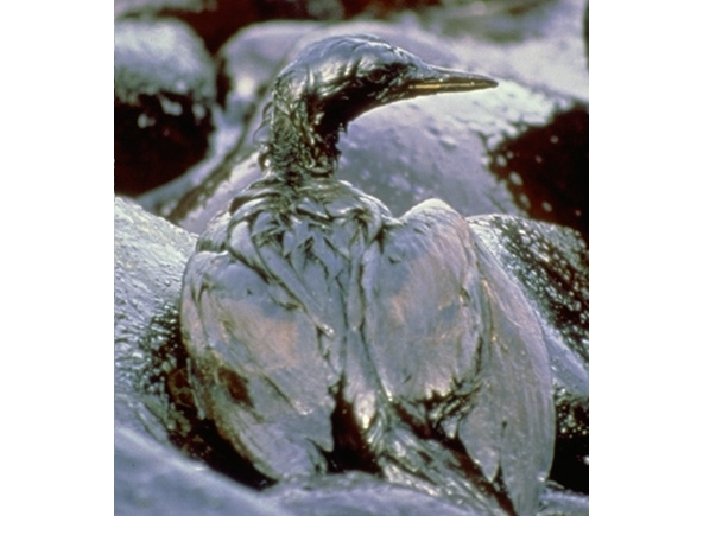
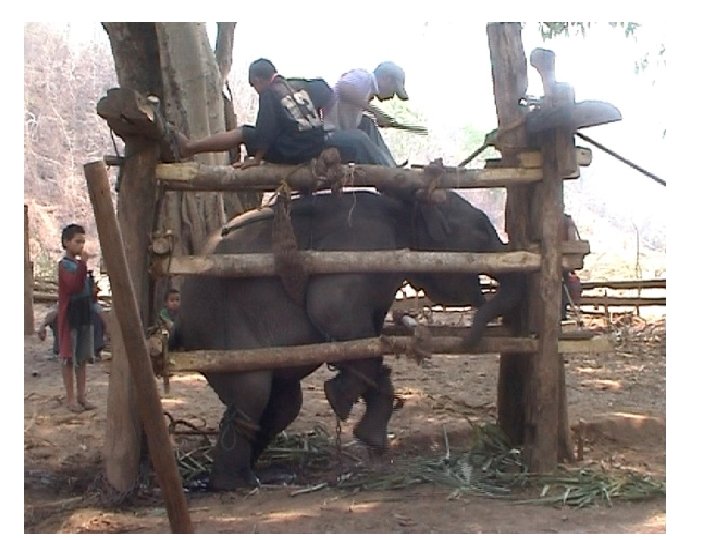
Human Impact on the Environment • Increased human population is depleting many of the Earth’s resources and putting stress on many communities • Natural ecosystems have natural processes to protect the environment • Human activities are changing many of these natural processes in a harmful way
• Harmful change in chemical makeup of soil, water, or air. • Threatens organisms that live in environment.
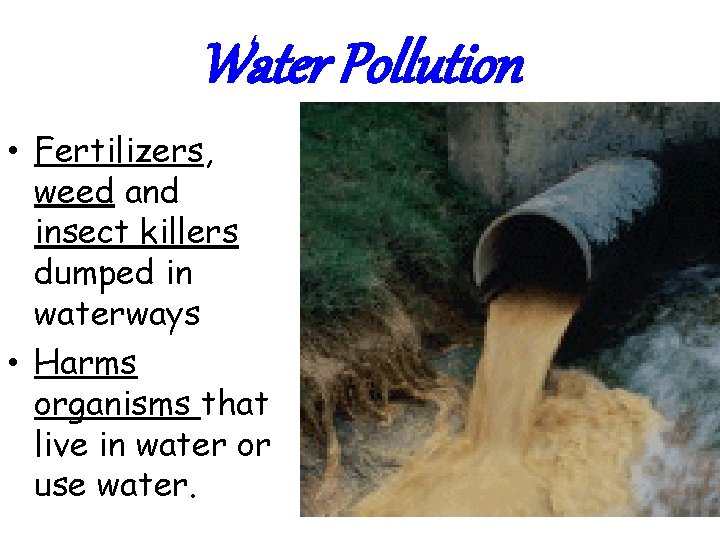
Water Pollution • Fertilizers, weed and insect killers dumped in waterways • Harms organisms that live in water or use water.
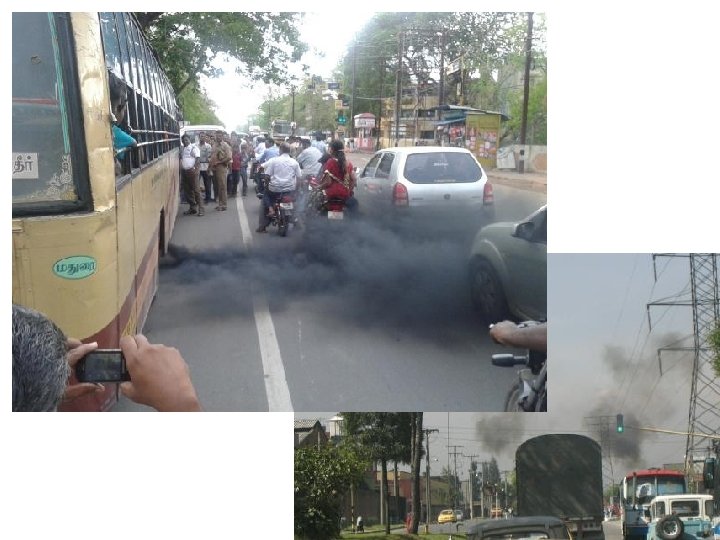
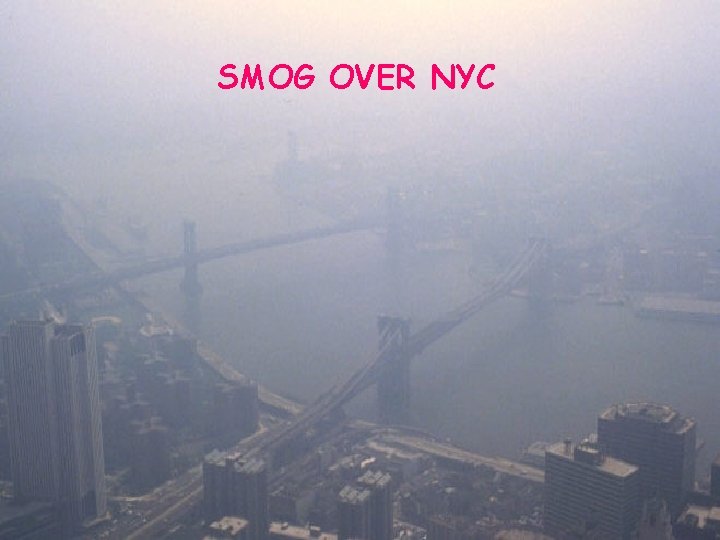
Air Pollution Cause: Industrialization • Burning fossil fuels (coal and gas) – releases CO 2, sulfur and nitrogen into air – creates Acid rain or Global Warming • Some air pollutants interact with sunlight and produce SMOG, brown-gray. Extremely harmful to those with respiratory problems.
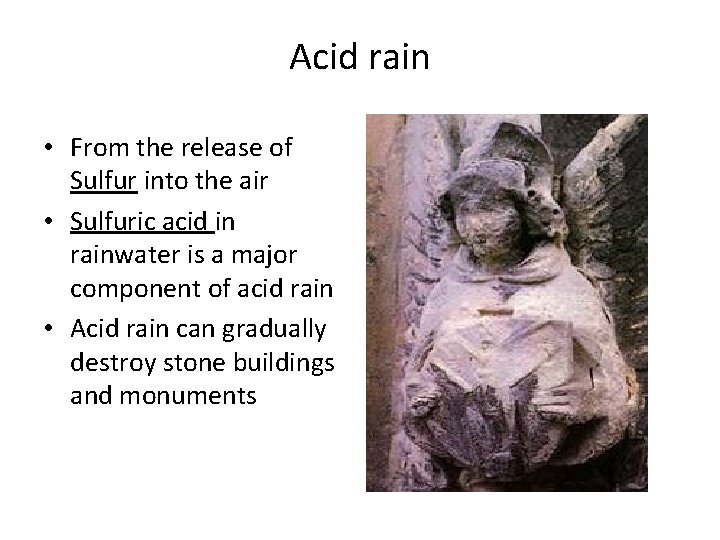
Acid rain • From the release of Sulfur into the air • Sulfuric acid in rainwater is a major component of acid rain • Acid rain can gradually destroy stone buildings and monuments
Acid Rain (cont) • Effect: Acid rain lowers the p. H of rivers, lakes and land soil. This kills producers (algae) and then consumers. Ecosystems are disrupted. • Correct Problem: Reduce the burning of fossil fuels or find alternatives.
SMOG OVER NYC
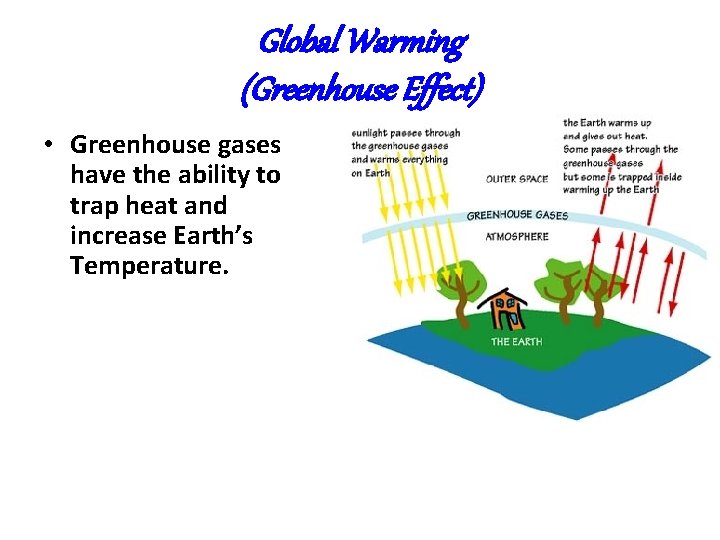
Global Warming (Greenhouse Effect) • Greenhouse gases have the ability to trap heat and increase Earth’s Temperature.
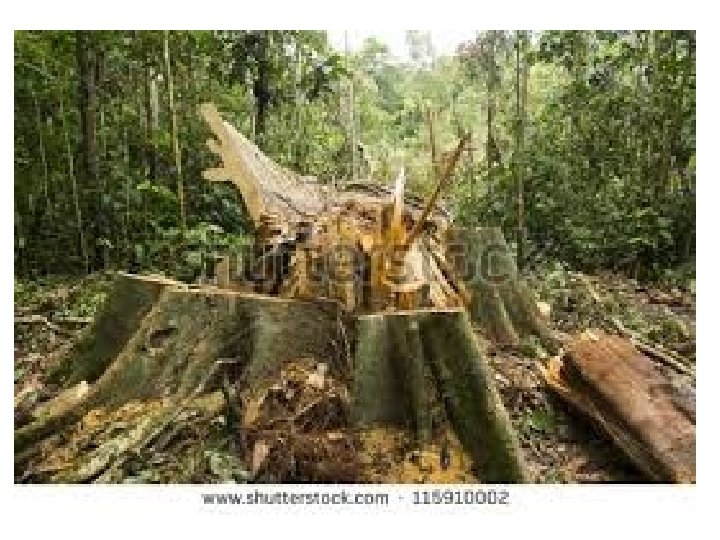
Global Warming (Greenhouse Effect) Cause: Increase in Carbon dioxide Water vapor, Nitrogen, Methane 1. Decrease in forests – By cutting down trees 2. Burning Fossil Fuels
Global Warming (Greenhouse Effect) • Effect: -The increase in Earth’s temperature leads to changing climate patterns which changes an ecosystems stability (species survival). -Melting of polar ice caps and rising sea level. • Correct Problem: -Reduce the amount of fossil fuels that are burned (find alternatives for energy). -Reduce Deforestation
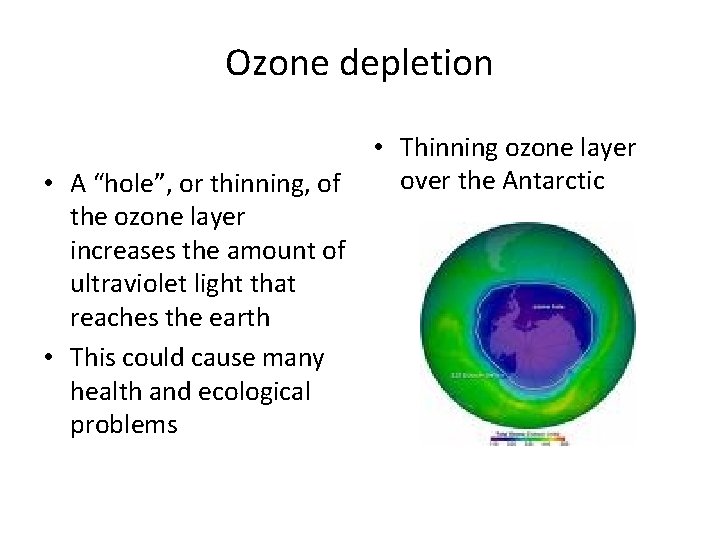
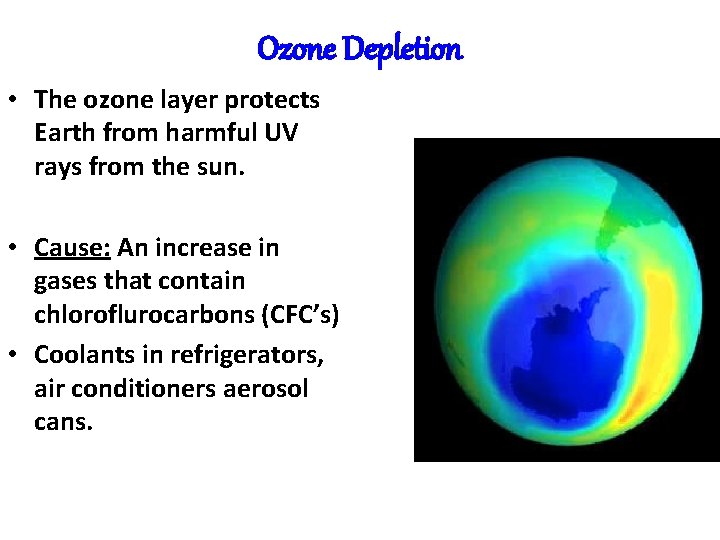
Ozone depletion • Thinning ozone layer over the Antarctic • A “hole”, or thinning, of the ozone layer increases the amount of ultraviolet light that reaches the earth • This could cause many health and ecological problems
Ozone Depletion • The ozone layer protects Earth from harmful UV rays from the sun. • Cause: An increase in gases that contain chloroflurocarbons (CFC’s) • Coolants in refrigerators, air conditioners aerosol cans.
Ozone Depeletion • Effect: An increase in skin cancer and cell mutations, and decrease in producers. *******Ecosystems are disrupted • Correct Problem: Find alternatives to aerosol cans, coolants in AC’s and refrigerators or reduce their usage.
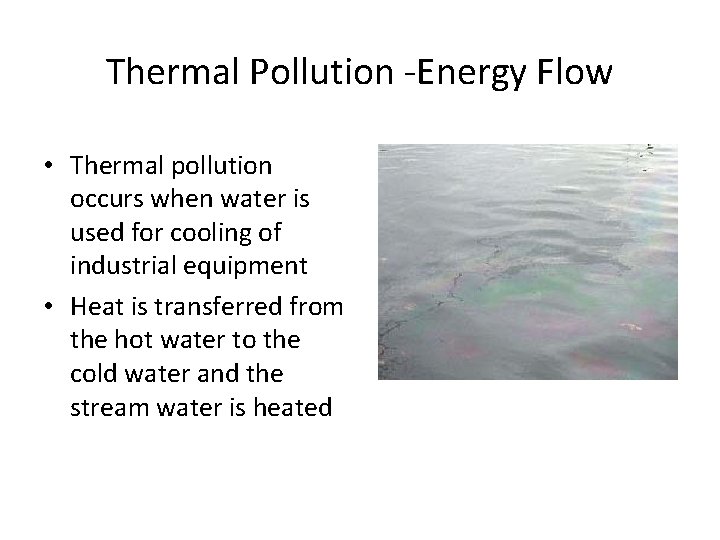
Thermal Pollution -Energy Flow • Thermal pollution occurs when water is used for cooling of industrial equipment • Heat is transferred from the hot water to the cold water and the stream water is heated
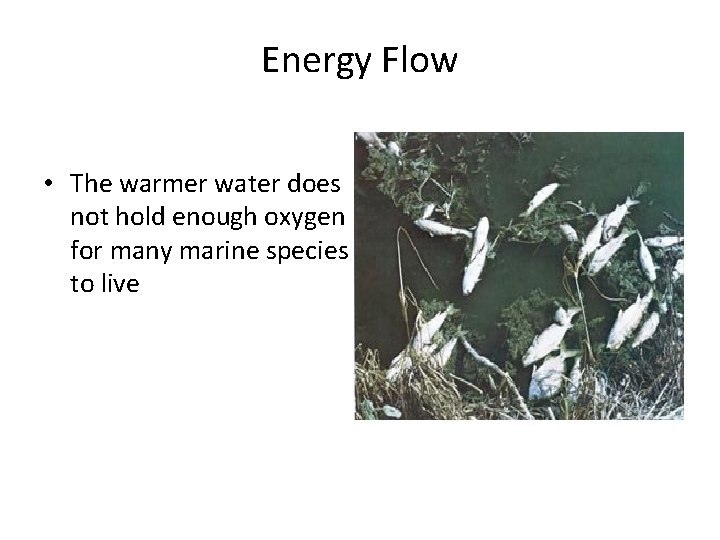
Energy Flow • The warmer water does not hold enough oxygen for many marine species to live
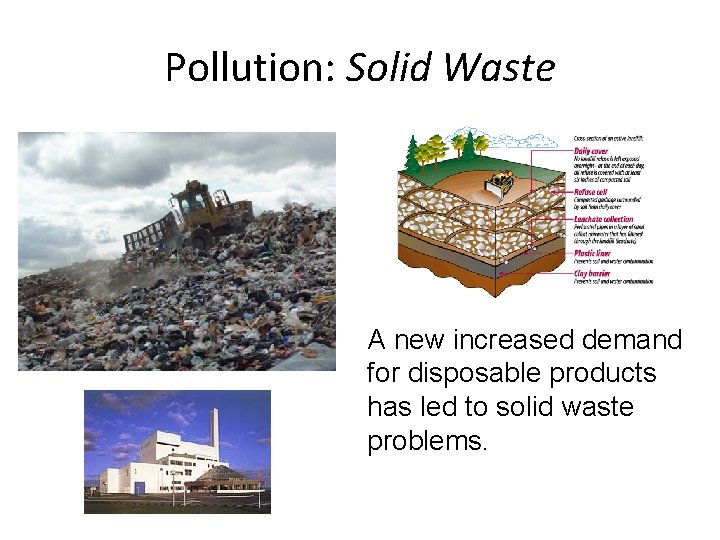
Pollution: Solid Waste A new increased demand for disposable products has led to solid waste problems.
How much trash does Elwood produce each year? The average U. S. citizen produces 4. 5 pounds of trash each day. How many pounds of trash does Elwood produce in one year? Elwood Population = 12, 500 Answer = 20, 531, 250 pounds
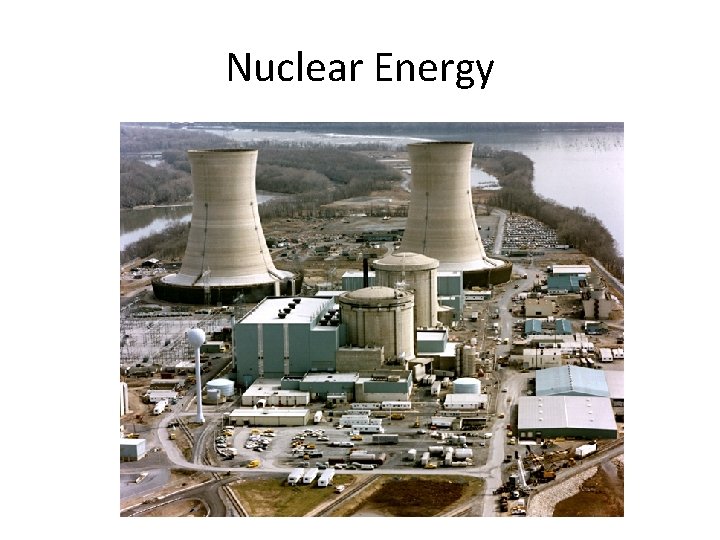
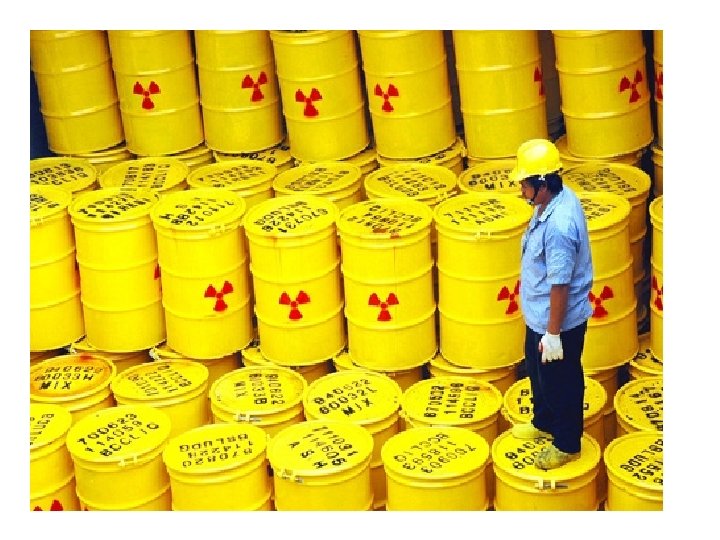
Nuclear Energy
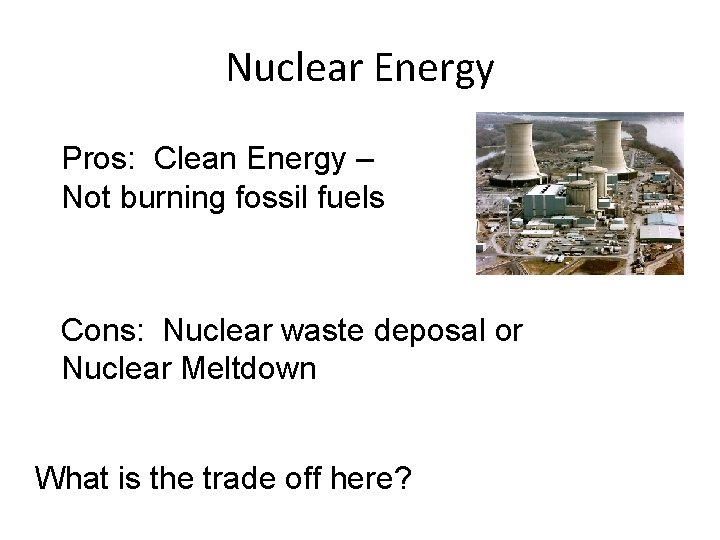
Nuclear Energy Pros: Clean Energy – Not burning fossil fuels Cons: Nuclear waste deposal or Nuclear Meltdown What is the trade off here?
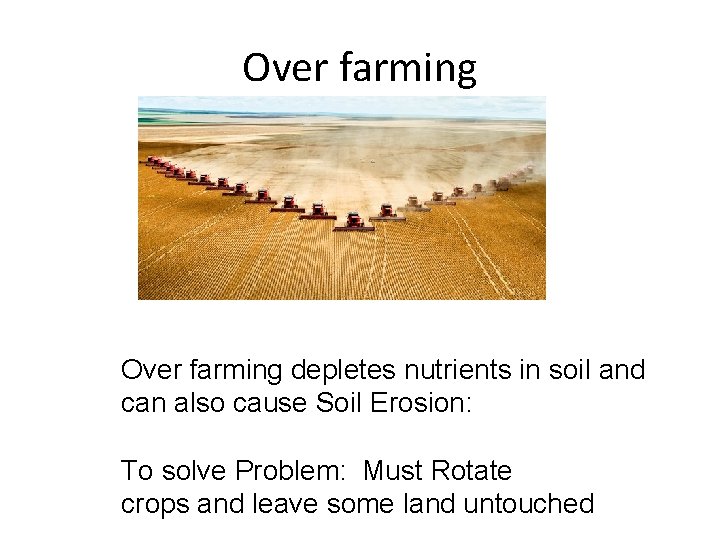
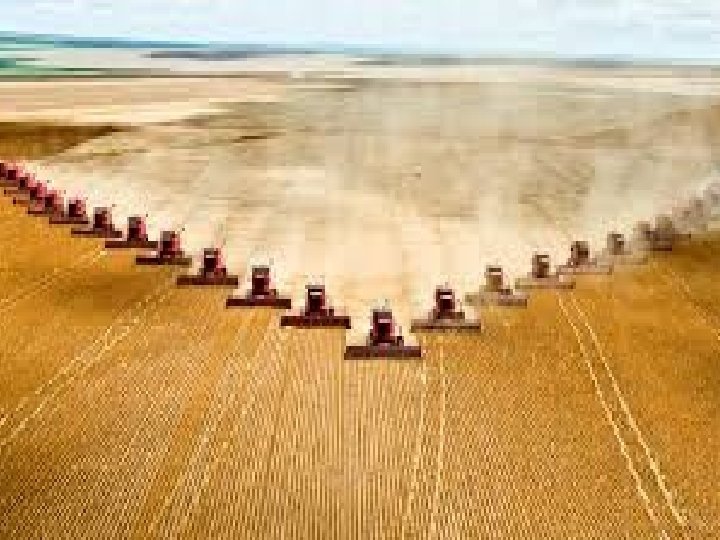
Over farming depletes nutrients in soil and can also cause Soil Erosion: To solve Problem: Must Rotate crops and leave some land untouched
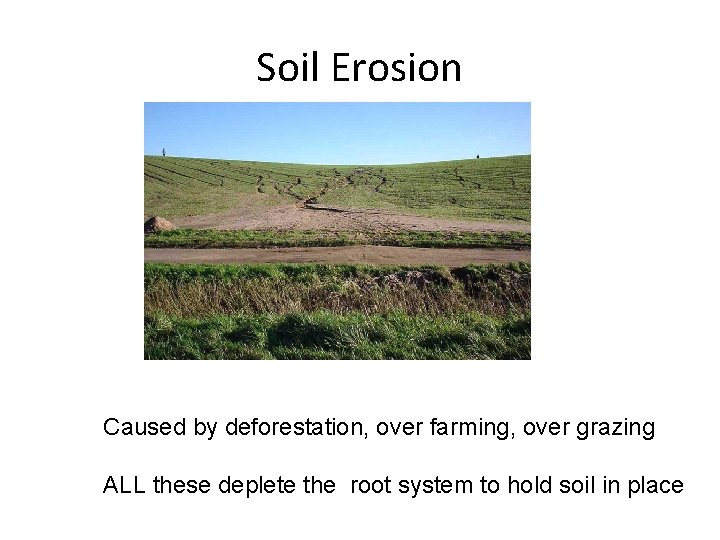
Soil Erosion Caused by deforestation, over farming, over grazing ALL these deplete the root system to hold soil in place
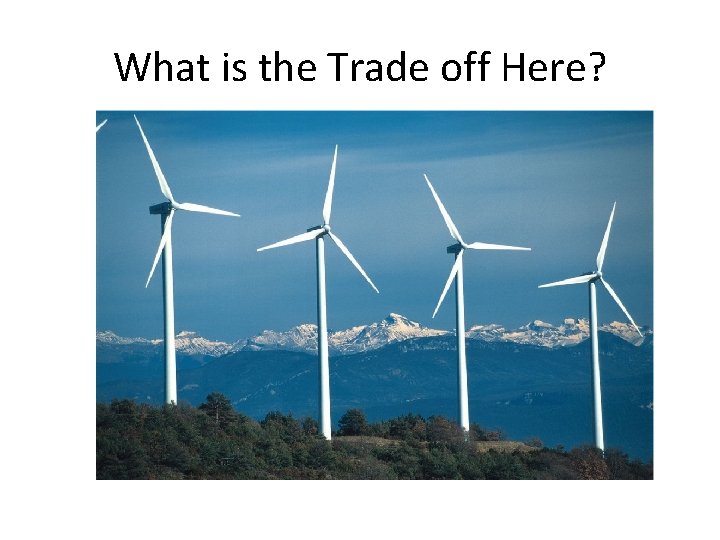
What is the Trade off Here?
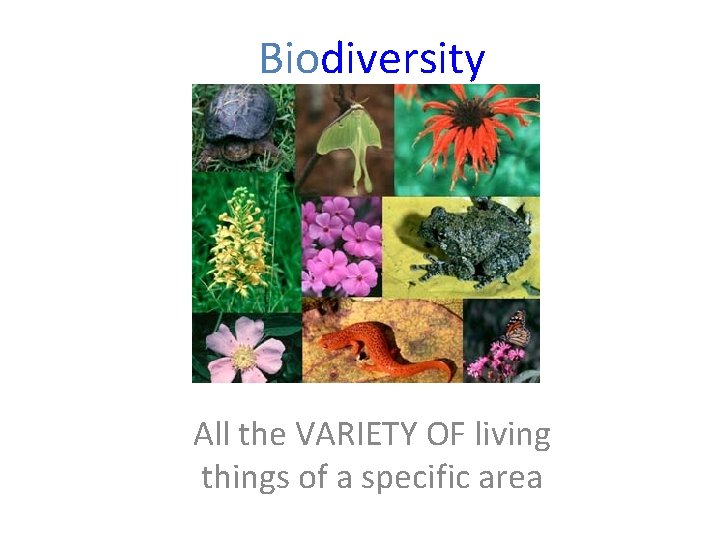
Biodiversity All the VARIETY OF living things of a specific area
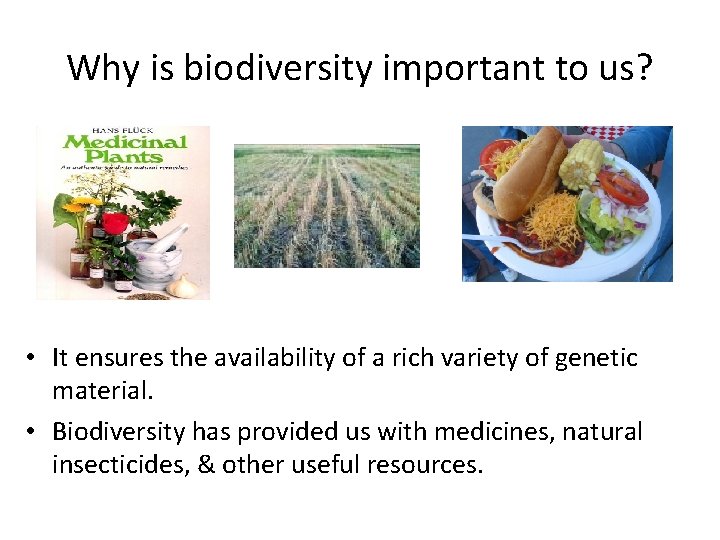
Why is biodiversity important to us? • It ensures the availability of a rich variety of genetic material. • Biodiversity has provided us with medicines, natural insecticides, & other useful resources.
Loss of Biodiversity • Human activities destroy habitats and degrade ecosystems by decreasing the Biodiversity 3 Processes that Decrease Biodiversity • Direct Harvesting • Habitat Destruction • Imported Species
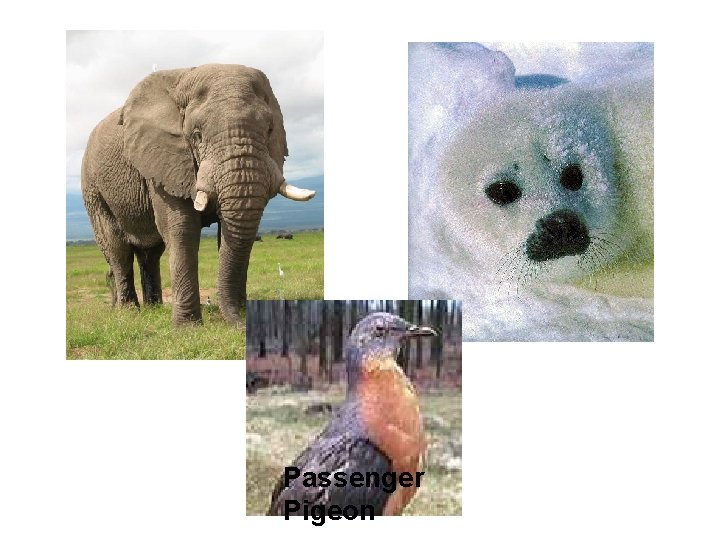
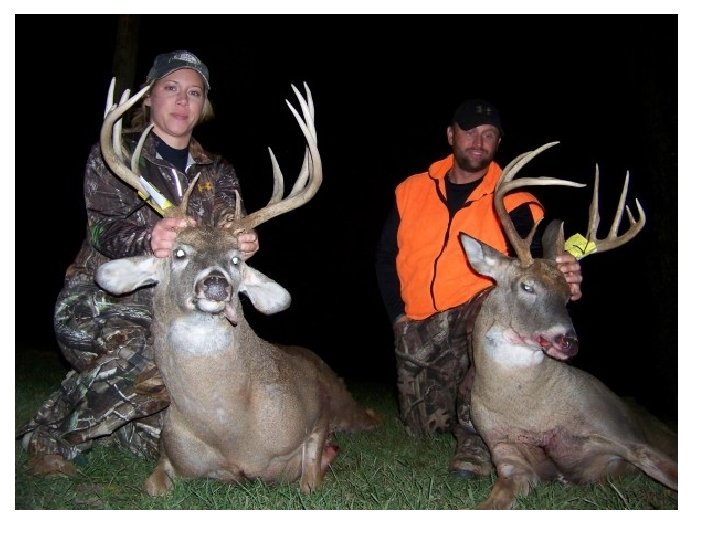
Direct Harvesting • The destruction or removal of species from their habitat. • Frequently sold as unusual pets, ornaments. • Harvested species can become endangered or go extinct. • Species that depend on the harvested species will be negatively affected & the ecosystem will be disrupted.
Passenger Pigeon
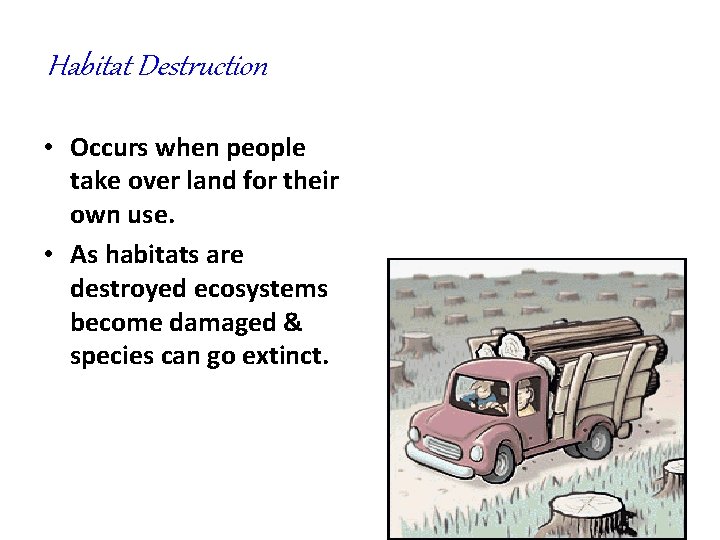
Habitat Destruction • Occurs when people take over land for their own use. • As habitats are destroyed ecosystems become damaged & species can go extinct.
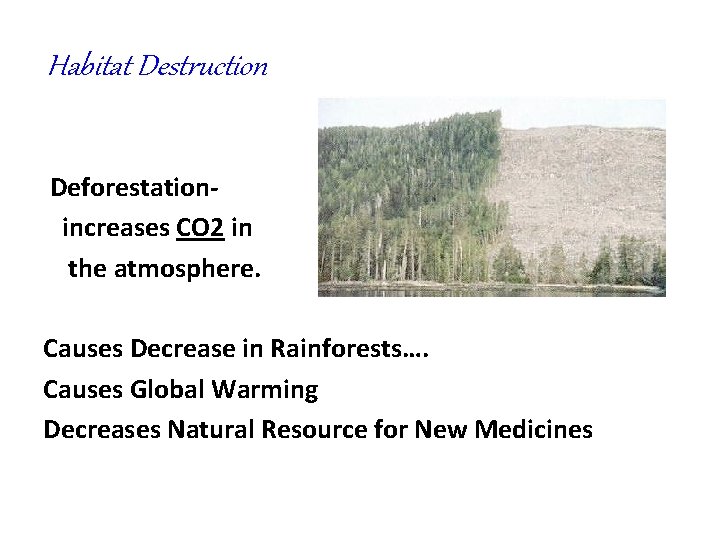
Habitat Destruction Deforestationincreases CO 2 in the atmosphere. Causes Decrease in Rainforests…. Causes Global Warming Decreases Natural Resource for New Medicines
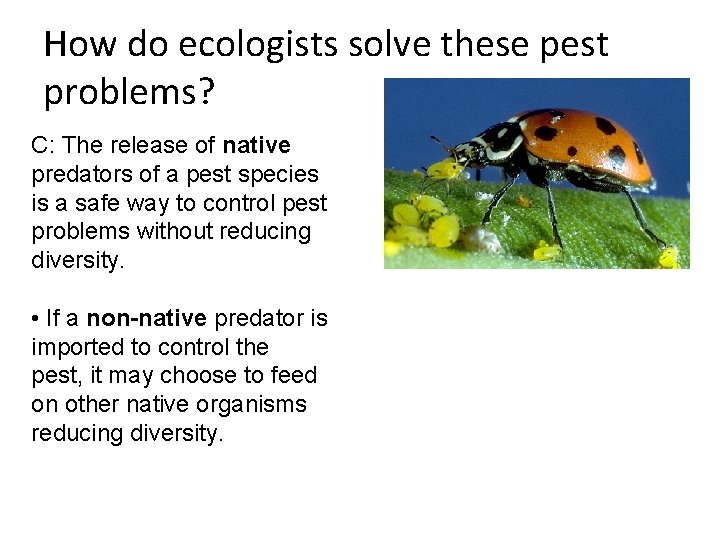
Imported Species • Sometimes species are imported (intentionally or unintentionally) and released into another environment as a predator to control the population of a prey species. Ex. Ladybugs were used to kill aphids that feed on grain crops- instead of pesticides. • Imported species may become pests themselves because there are no natural enemies to control their population. • Ecosystem may be disrupted.
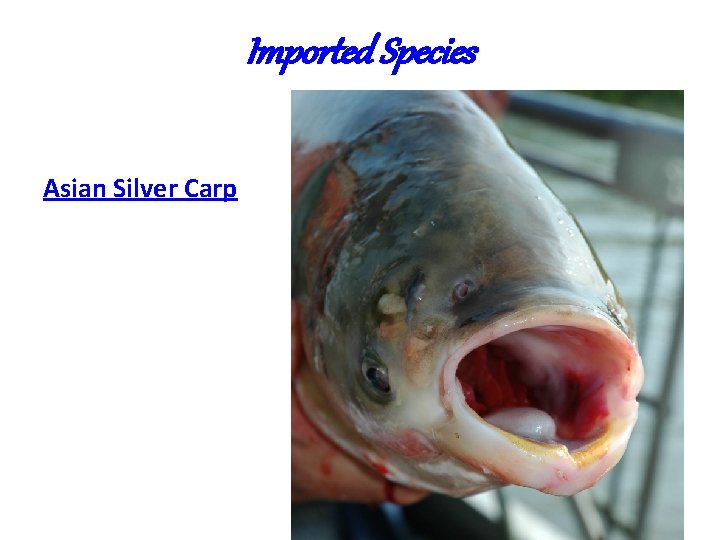
Imported Species Asian Silver Carp
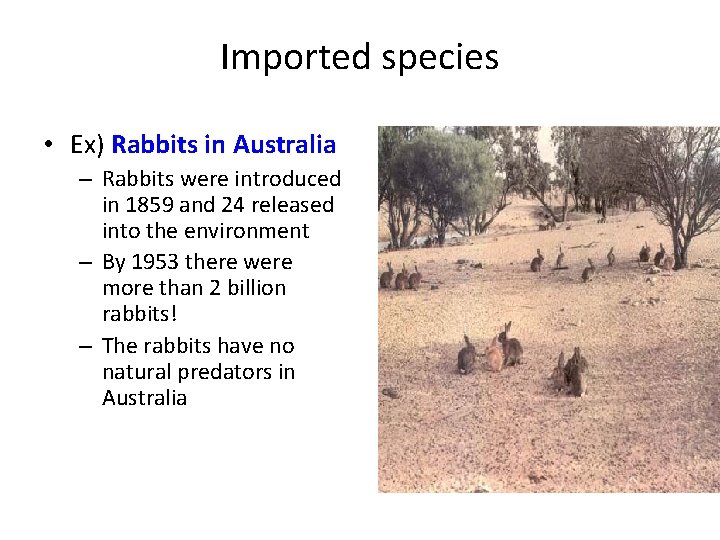
Imported species • Ex) Rabbits in Australia – Rabbits were introduced in 1859 and 24 released into the environment – By 1953 there were more than 2 billion rabbits! – The rabbits have no natural predators in Australia
Imported species • The effect of rabbits on the ecology of Australia has been devastating. • One eighth of all mammalian species in Australia are now extinct • Rabbits are also responsible for serious erosion problems. They eat plants which leaves the topsoil exposed and vulnerable to water and wind erosion
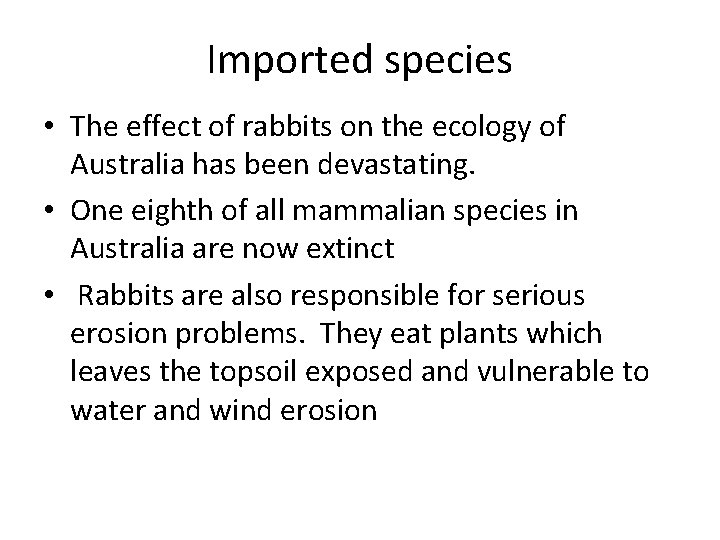
Attractive flower was used in landscaping Reproduces by cuttings, roots, and seeds. One plant can produce 300, 000 seeds in a year.
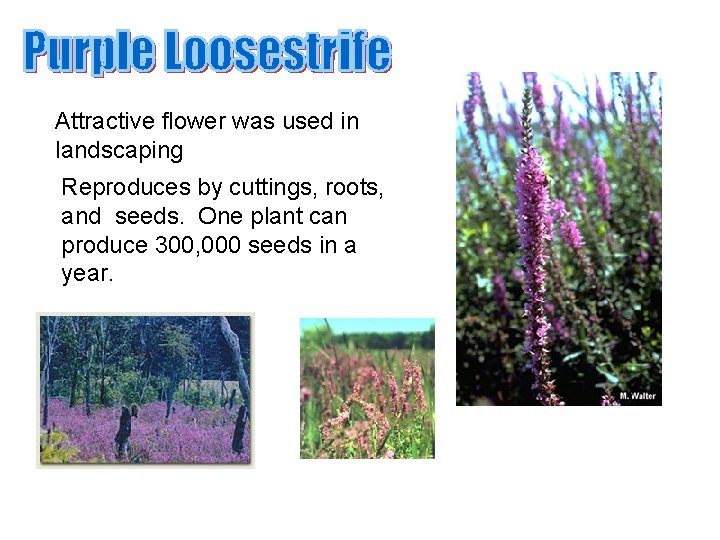
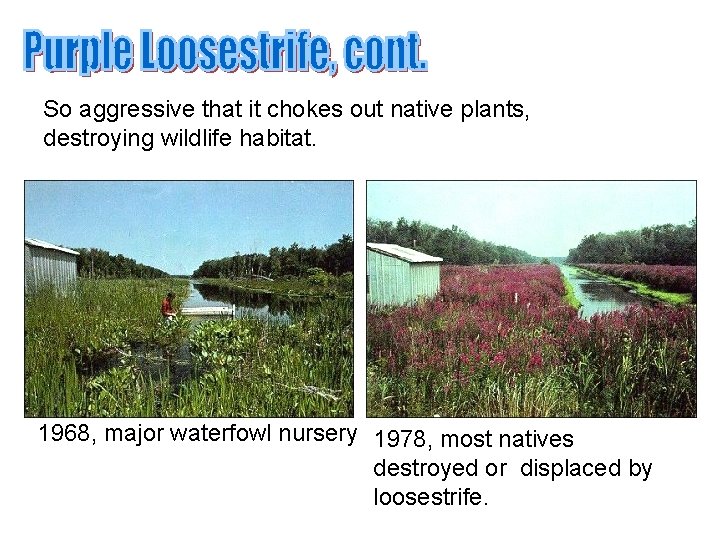
So aggressive that it chokes out native plants, destroying wildlife habitat. 1968, major waterfowl nursery 1978, most natives destroyed or displaced by loosestrife.
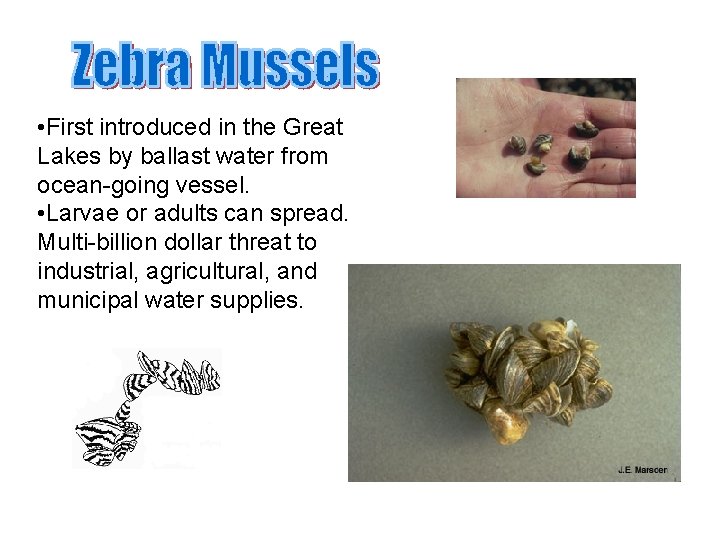
• First introduced in the Great Lakes by ballast water from ocean-going vessel. • Larvae or adults can spread. Multi-billion dollar threat to industrial, agricultural, and municipal water supplies.
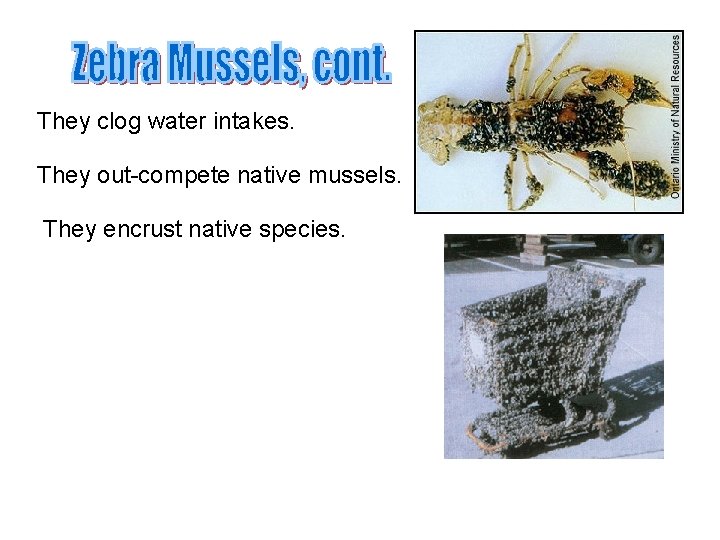
They clog water intakes. They out-compete native mussels. They encrust native species.
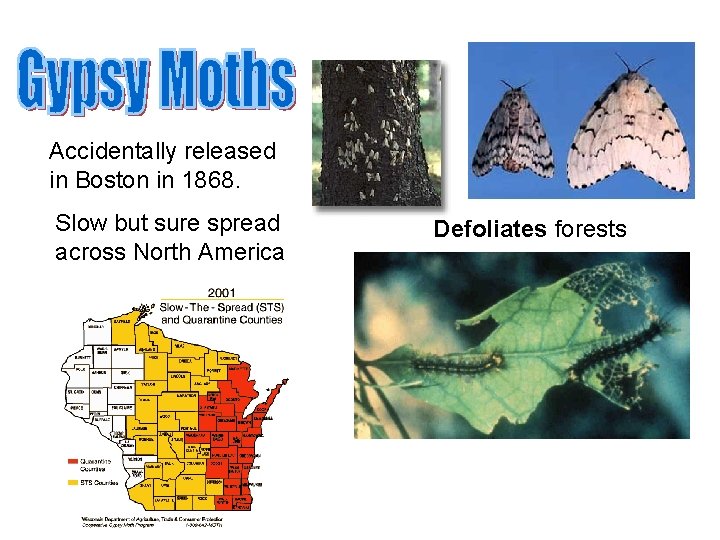
Accidentally released in Boston in 1868. Slow but sure spread across North America Defoliates forests
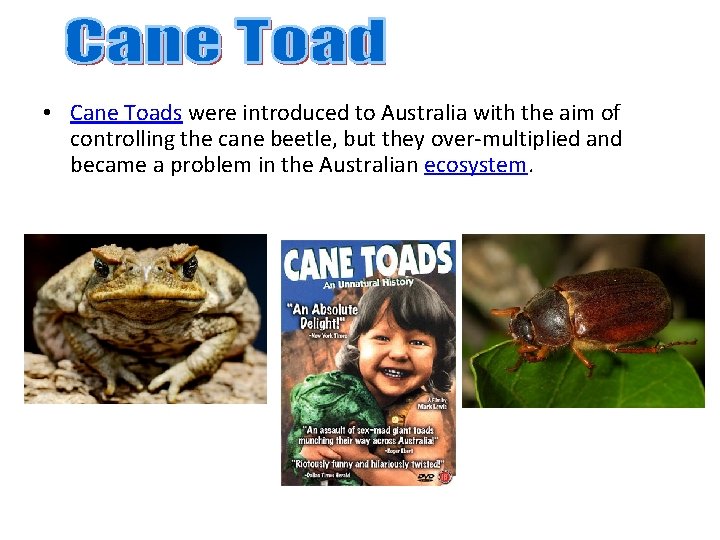
• Cane Toads were introduced to Australia with the aim of controlling the cane beetle, but they over-multiplied and became a problem in the Australian ecosystem.
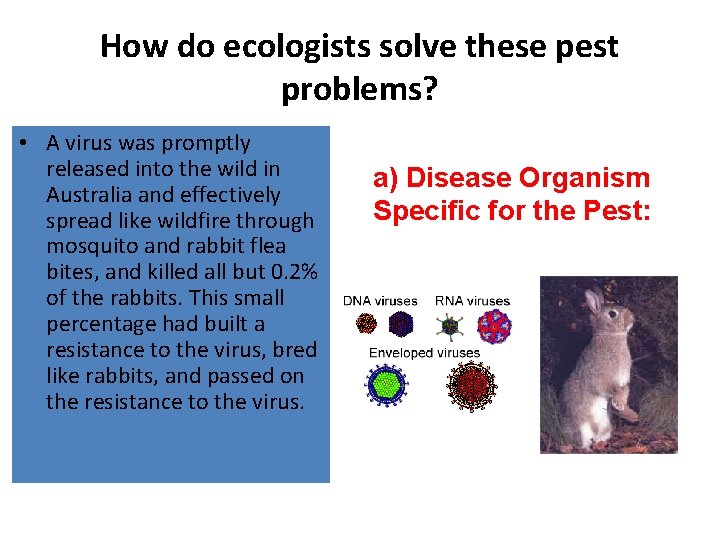
How do ecologists solve these pest problems? • A virus was promptly released into the wild in Australia and effectively spread like wildfire through mosquito and rabbit flea bites, and killed all but 0. 2% of the rabbits. This small percentage had built a resistance to the virus, bred like rabbits, and passed on the resistance to the virus. a) Disease Organism Specific for the Pest:
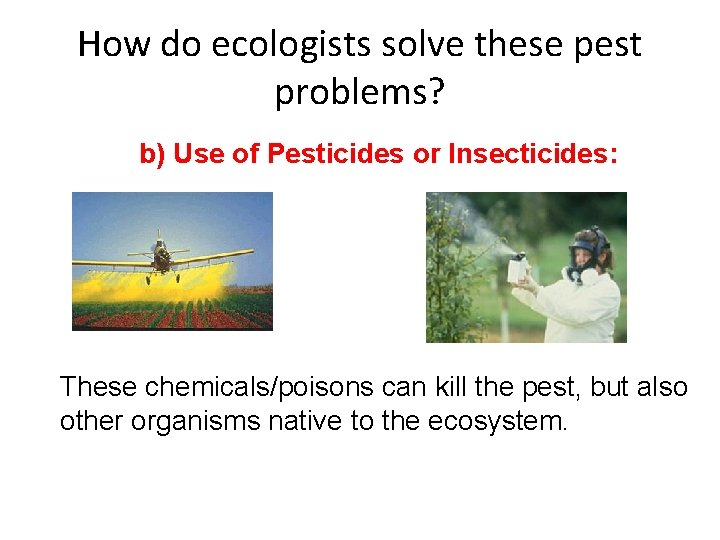
How do ecologists solve these pest problems? b) Use of Pesticides or Insecticides: These chemicals/poisons can kill the pest, but also other organisms native to the ecosystem.
How do ecologists solve these pest problems? C: The release of native predators of a pest species is a safe way to control pest problems without reducing diversity. • If a non-native predator is imported to control the pest, it may choose to feed on other native organisms reducing diversity.
Ecology Song