
Ecology The study of ecosystems the interactions between
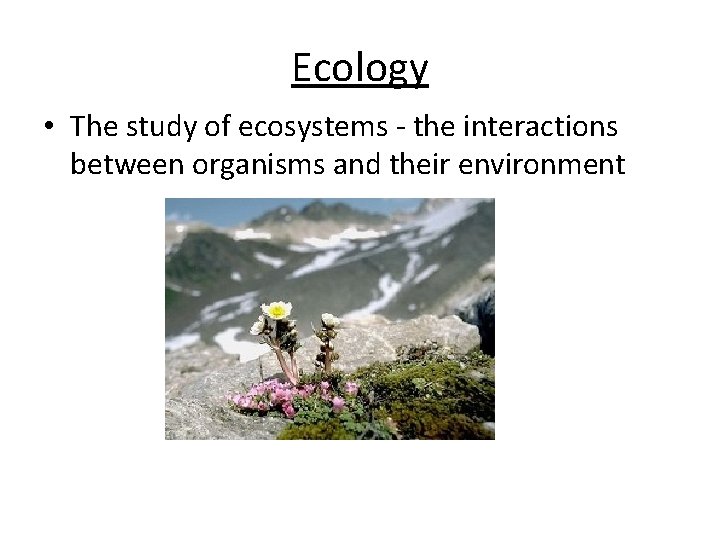
Ecology • The study of ecosystems - the interactions between organisms and their environment
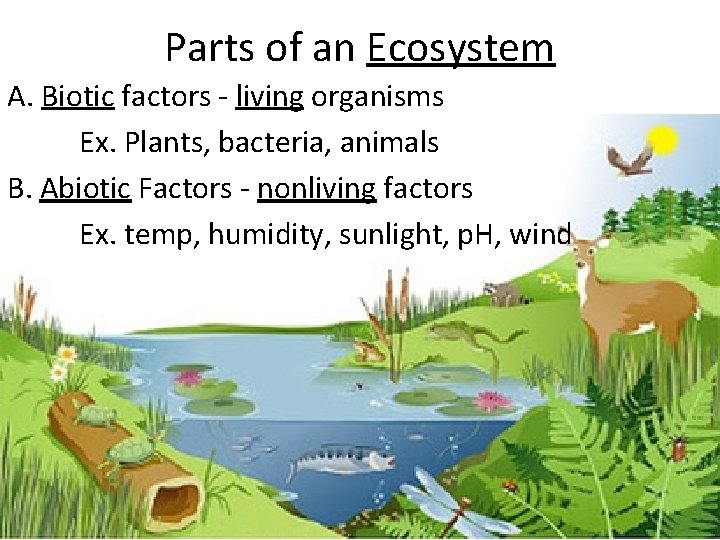
Parts of an Ecosystem A. Biotic factors - living organisms Ex. Plants, bacteria, animals B. Abiotic Factors - nonliving factors Ex. temp, humidity, sunlight, p. H, wind
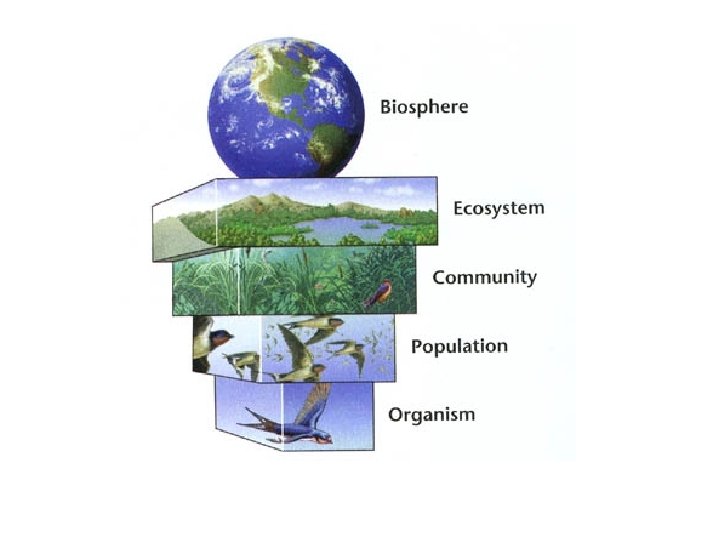
Ecological Organization: 1. Population: all the members of a species in a given area 2. Community: all the interacting populations in a given area 3. Ecosystem: the living community and the nonliving physical environment functioning together as an independent and relatively stable system
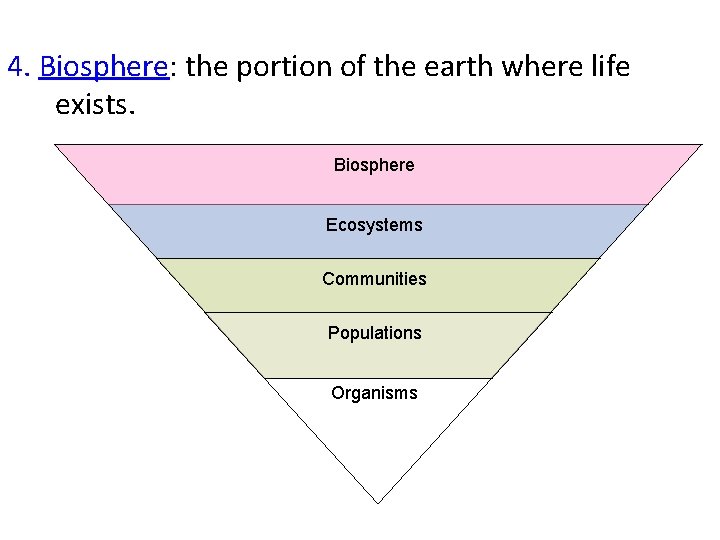
4. Biosphere: the portion of the earth where life exists. Biosphere Ecosystems Communities Populations Organisms
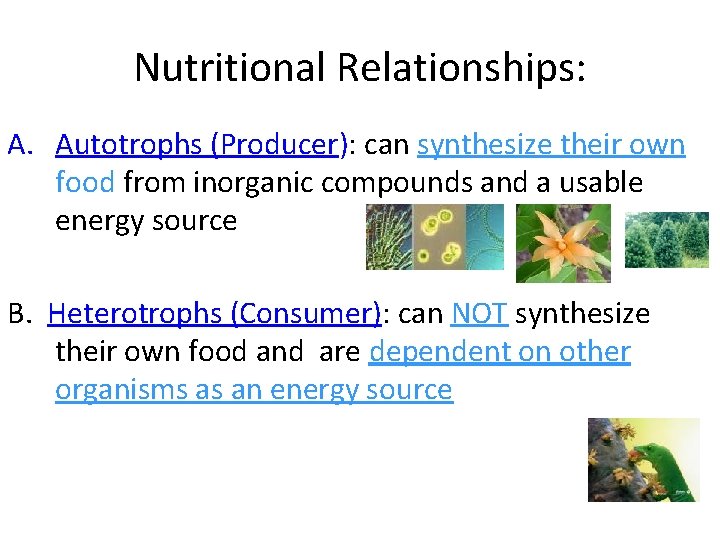
Nutritional Relationships: A. Autotrophs (Producer): can synthesize their own food from inorganic compounds and a usable energy source B. Heterotrophs (Consumer): can NOT synthesize their own food and are dependent on other organisms as an energy source
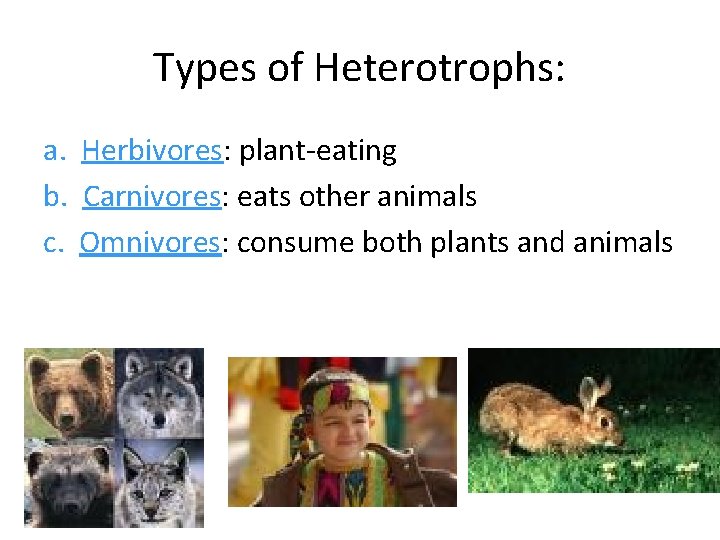
Types of Heterotrophs: a. Herbivores: plant-eating b. Carnivores: eats other animals c. Omnivores: consume both plants and animals
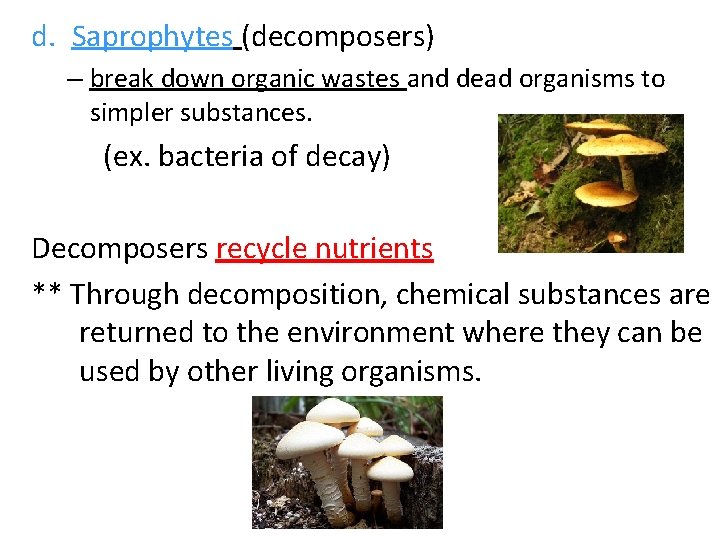
d. Saprophytes (decomposers) – break down organic wastes and dead organisms to simpler substances. (ex. bacteria of decay) Decomposers recycle nutrients ** Through decomposition, chemical substances are returned to the environment where they can be used by other living organisms.
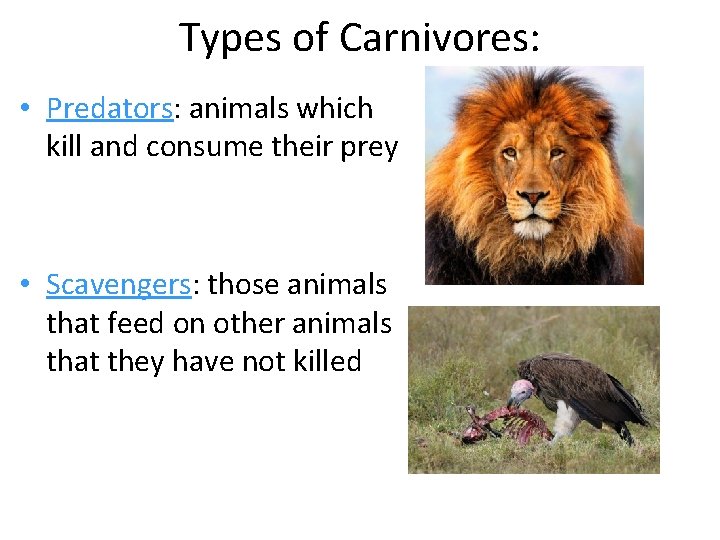
Types of Carnivores: • Predators: animals which kill and consume their prey • Scavengers: those animals that feed on other animals that they have not killed
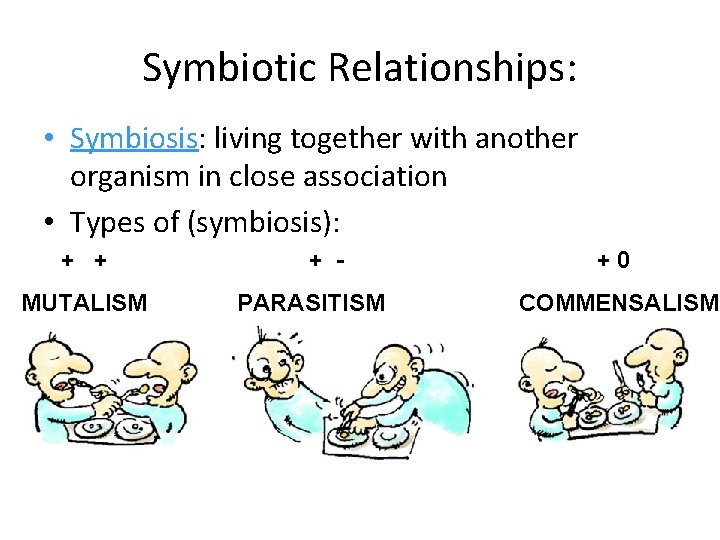
Symbiotic Relationships: • Symbiosis: living together with another organism in close association • Types of (symbiosis): + + MUTALISM + PARASITISM +0 COMMENSALISM
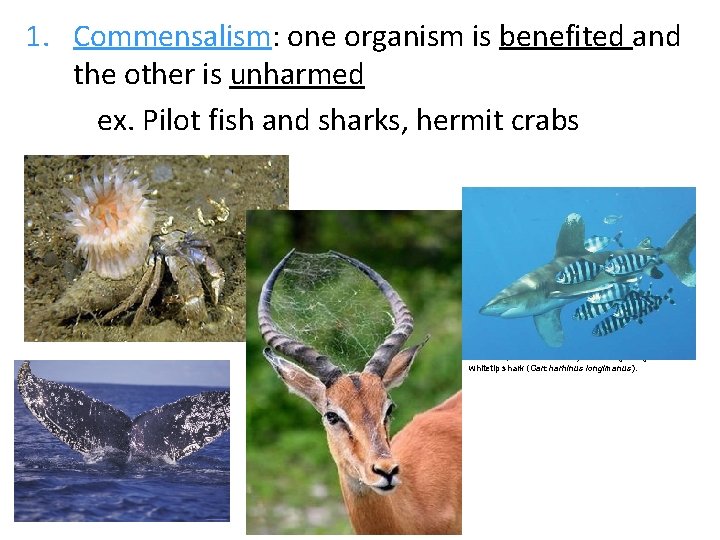
1. Commensalism: one organism is benefited and the other is unharmed ex. Pilot fish and sharks, hermit crabs Pilot fish (Naucrates ductor) swimming alongside a whitetip shark (Carcharhinus longimanus).
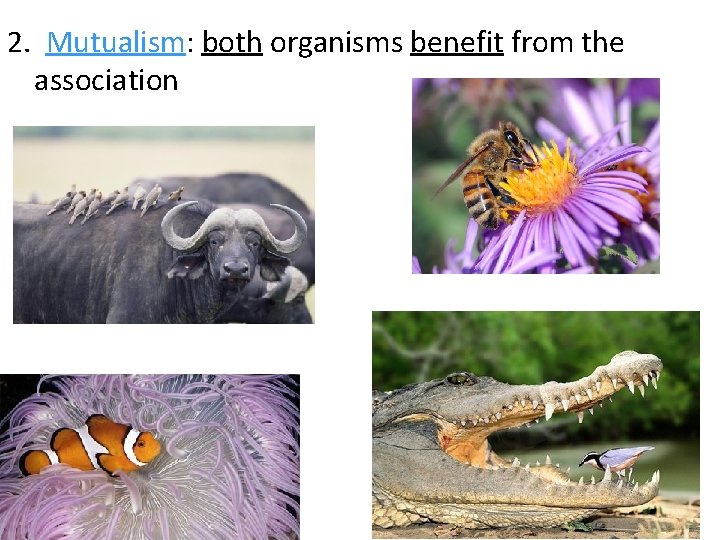
2. Mutualism: both organisms benefit from the association
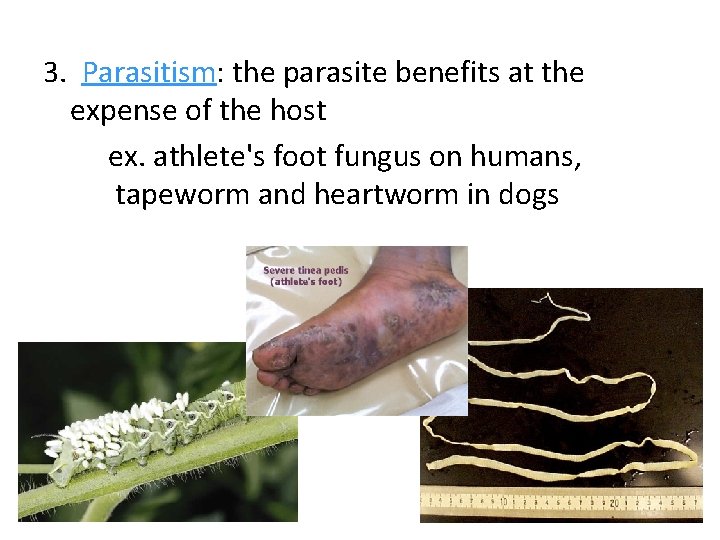
3. Parasitism: the parasite benefits at the expense of the host ex. athlete's foot fungus on humans, tapeworm and heartworm in dogs
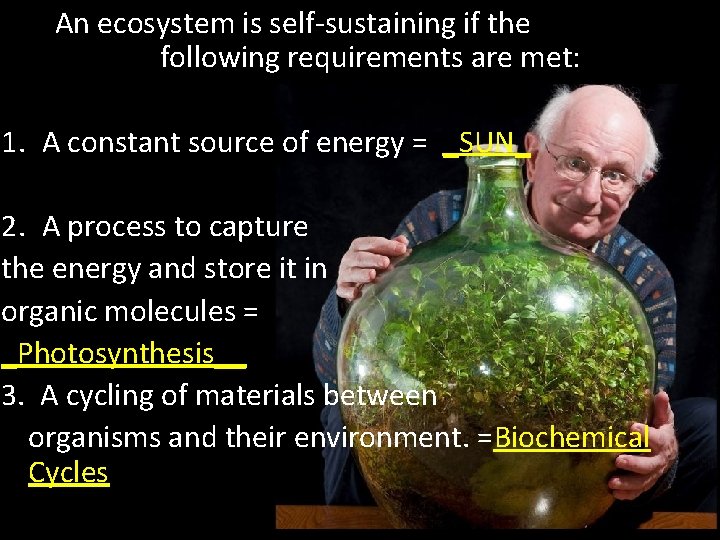
An ecosystem is self-sustaining if the following requirements are met: 1. A constant source of energy = _SUN_ 2. A process to capture the energy and store it in organic molecules = _Photosynthesis__ 3. A cycling of materials between organisms and their environment. =Biochemical Cycles
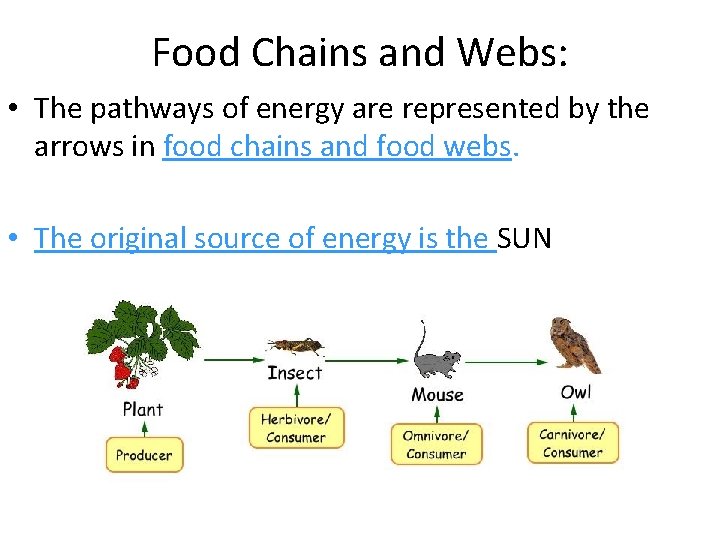
Food Chains and Webs: • The pathways of energy are represented by the arrows in food chains and food webs. • The original source of energy is the SUN
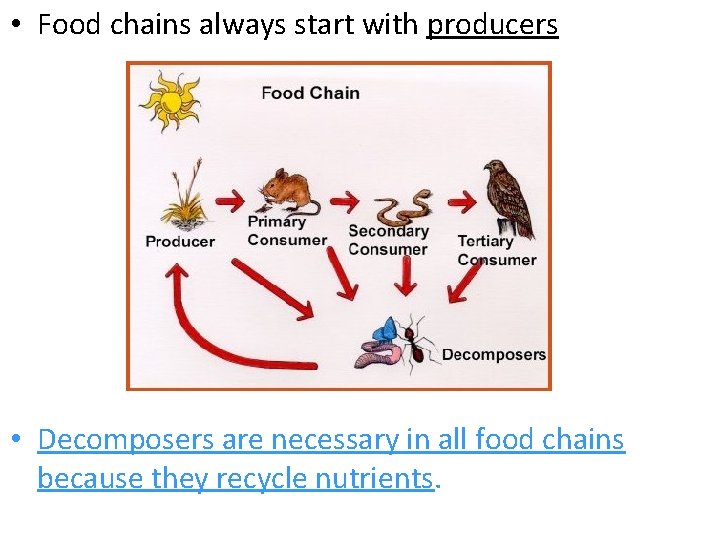
• Food chains always start with producers • Decomposers are necessary in all food chains because they recycle nutrients.
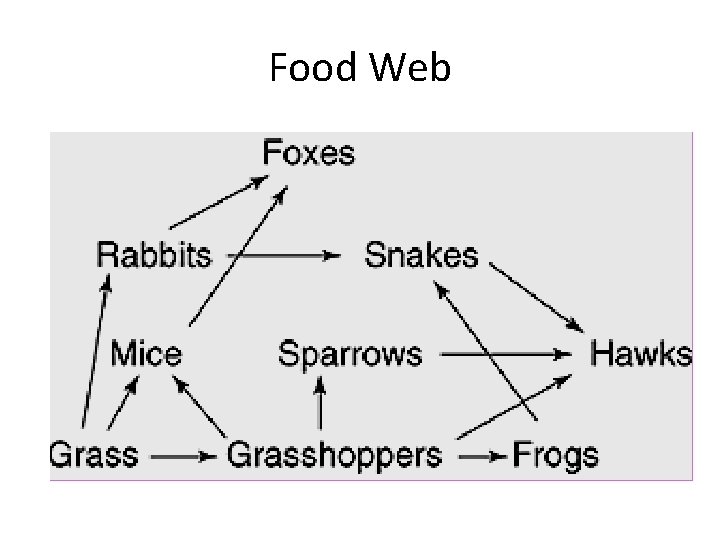
Food Web
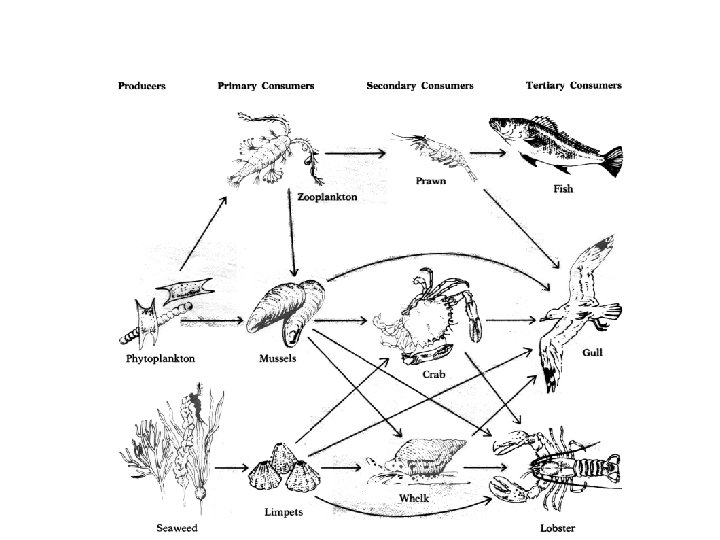
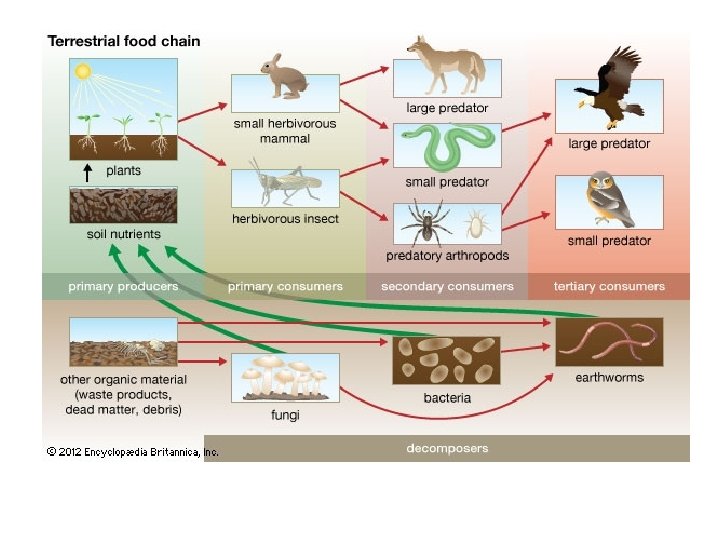
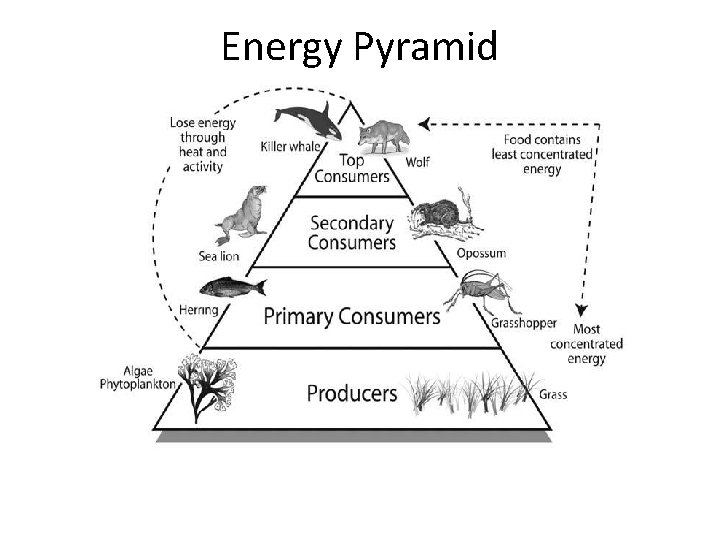
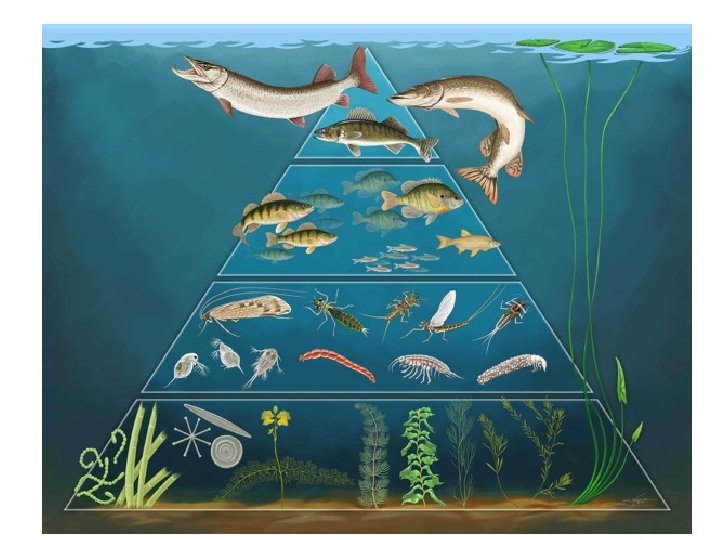
Energy Pyramid
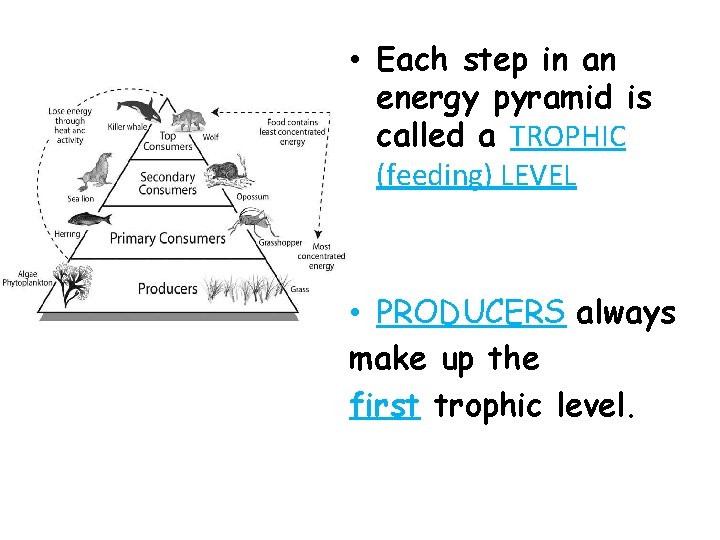
• Each step in an energy pyramid is called a TROPHIC (feeding) LEVEL • PRODUCERS always make up the first trophic level.
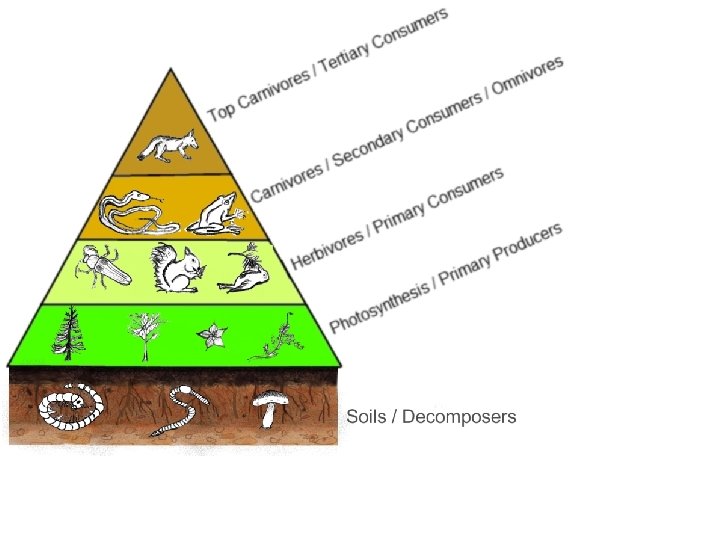

Start here per 1
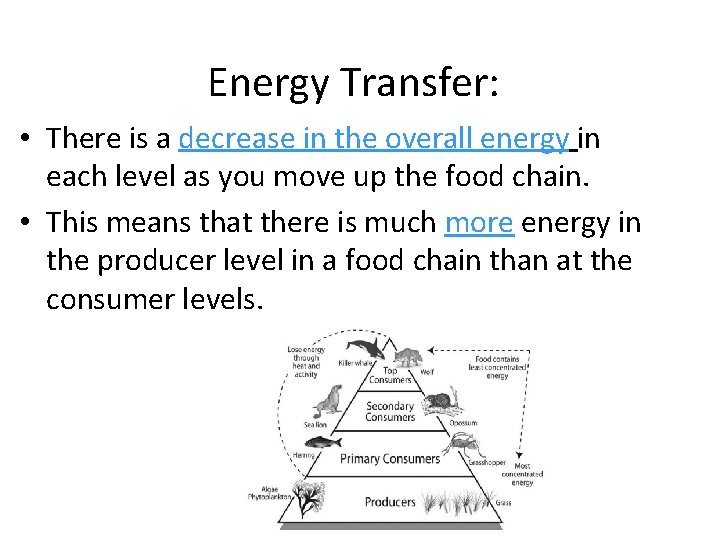
Energy Transfer: • There is a decrease in the overall energy in each level as you move up the food chain. • This means that there is much more energy in the producer level in a food chain than at the consumer levels.
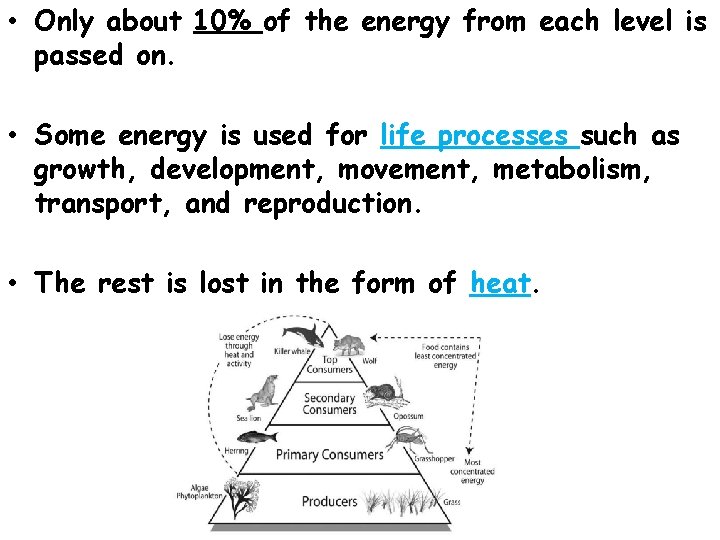
• Only about 10% of the energy from each level is passed on. • Some energy is used for life processes such as growth, development, movement, metabolism, transport, and reproduction. • The rest is lost in the form of heat.
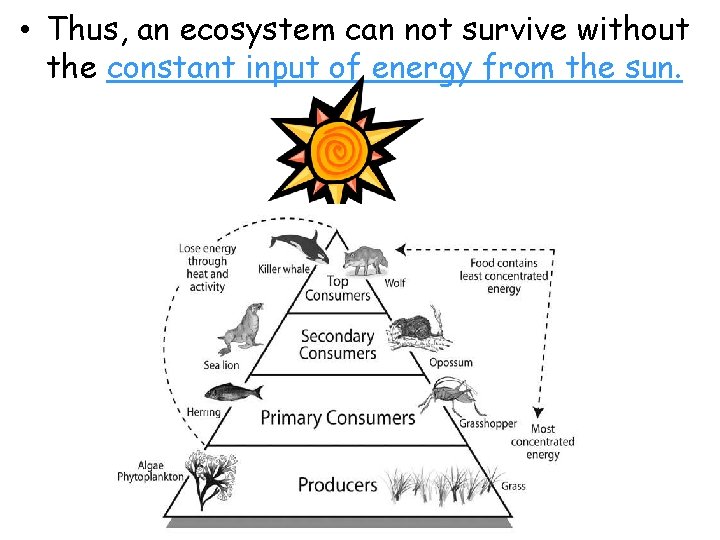
• Thus, an ecosystem can not survive without the constant input of energy from the sun.
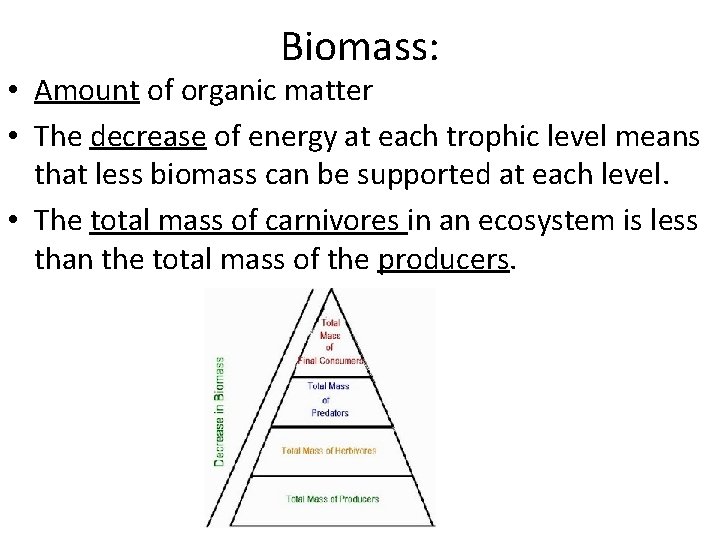
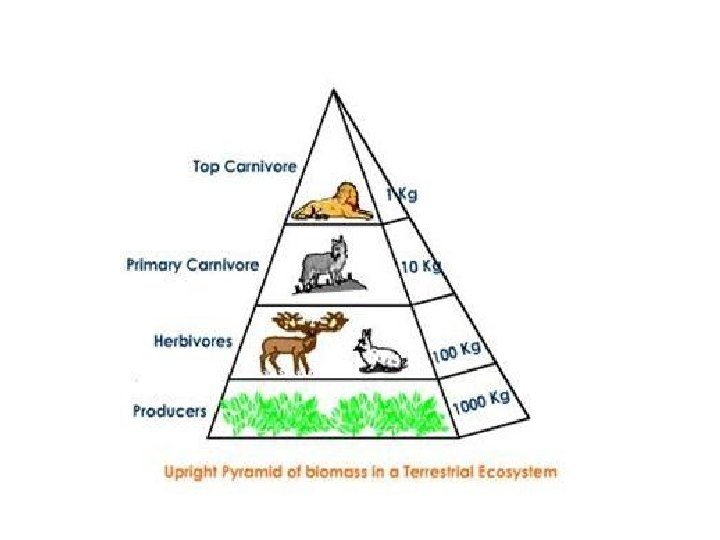
Biomass: • Amount of organic matter • The decrease of energy at each trophic level means that less biomass can be supported at each level. • The total mass of carnivores in an ecosystem is less than the total mass of the producers.
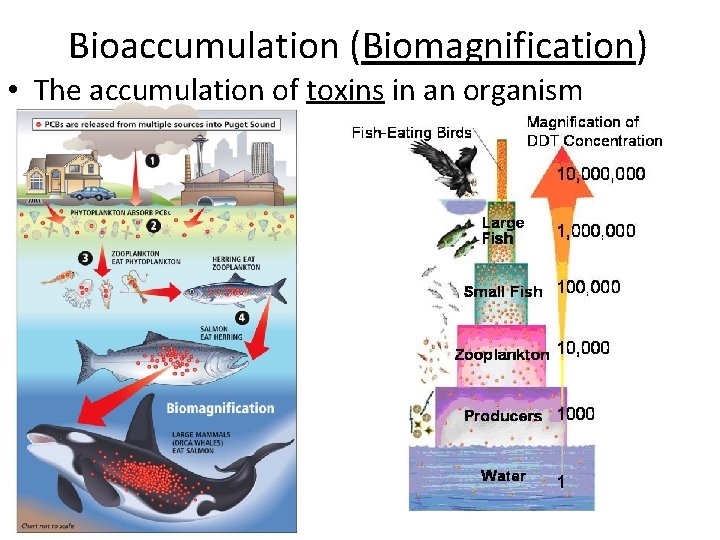
Bioaccumulation (Biomagnification) • The accumulation of toxins in an organism
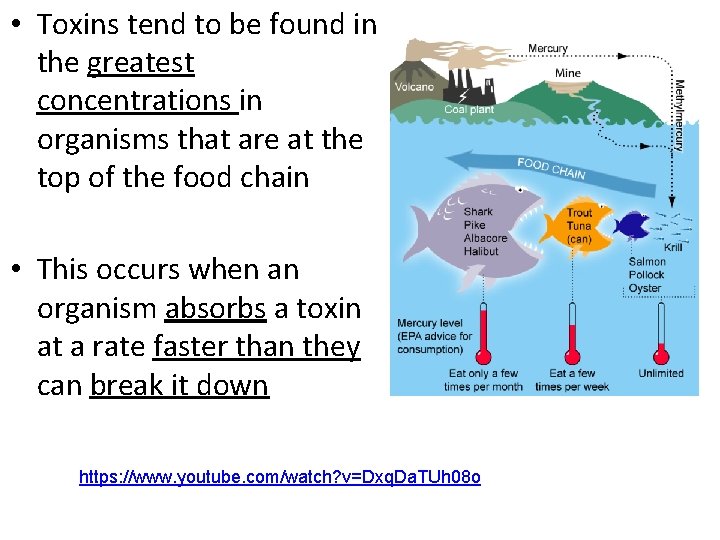
• Toxins tend to be found in the greatest concentrations in organisms that are at the top of the food chain • This occurs when an organism absorbs a toxin at a rate faster than they can break it down https: //www. youtube. com/watch? v=Dxq. Da. TUh 08 o
- Slides: 32