
Ecology The study of connections in nature between
Ecology: The study of connections in nature between biotic (living) and abiotic (nonliving) components
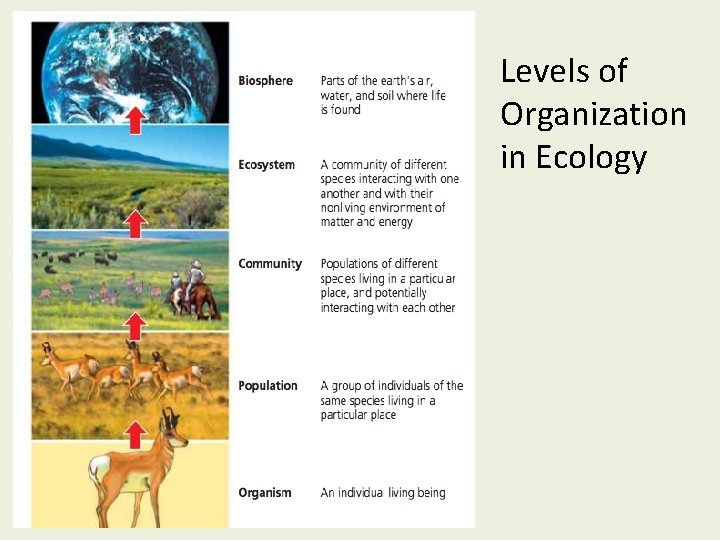
Levels of Organization in Ecology
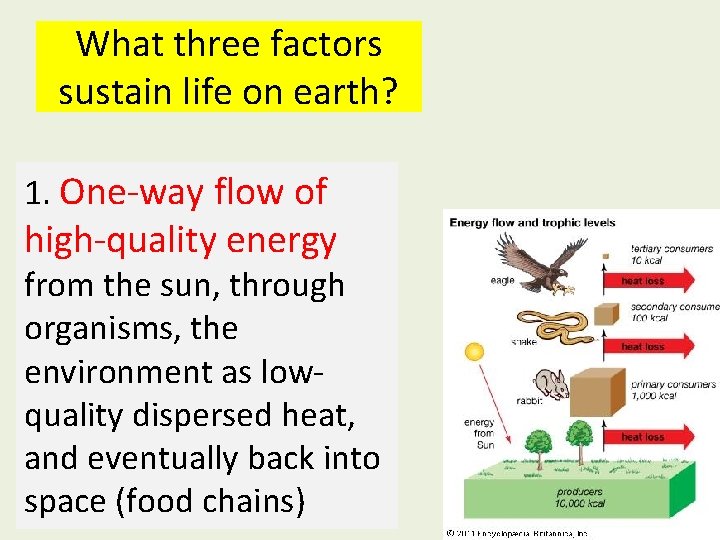
What three factors sustain life on earth? 1. One-way flow of high-quality energy from the sun, through organisms, the environment as lowquality dispersed heat, and eventually back into space (food chains)
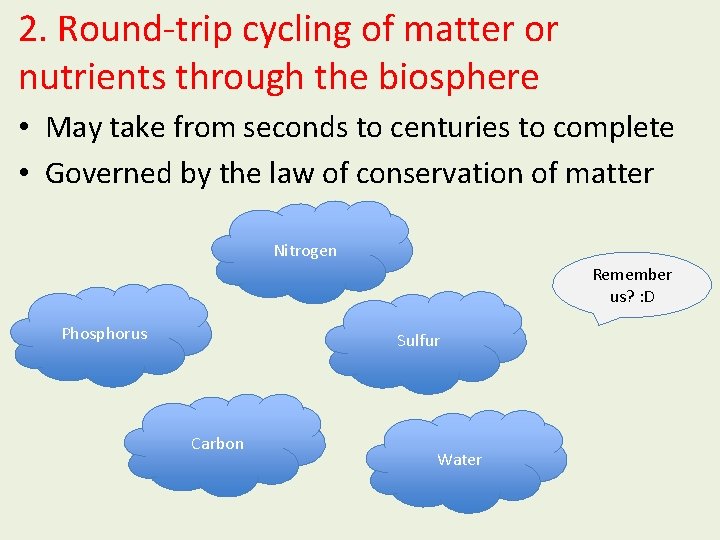
2. Round-trip cycling of matter or nutrients through the biosphere • May take from seconds to centuries to complete • Governed by the law of conservation of matter Nitrogen Remember us? : D Phosphorus Sulfur Carbon Water
3. Gravity, which allows the planet to hold onto its atmosphere and helps to enable the movement and cycling of chemicals through the air, water, soil, and organisms. • Holds onto atmosphere • Allows for the nutrient cycles
Biotic: Could be living or once living, or parts of organisms (shells, sticks, leaves, bones, fur, feathers) or waste products Abiotic: Physical (wind, waves, sunlight, temperature, rocks, etc. ) or chemical (nutrients, gases, p. H, etc. )
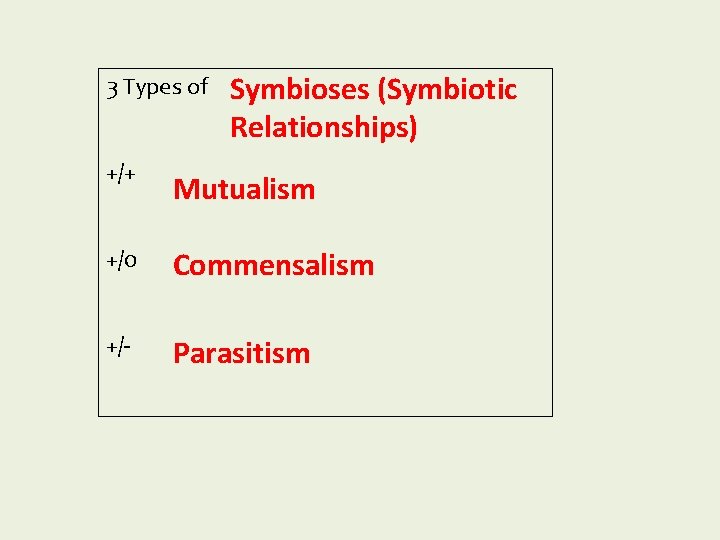
3 Types of Symbioses (Symbiotic Relationships) +/+ Mutualism +/0 Commensalism +/- Parasitism
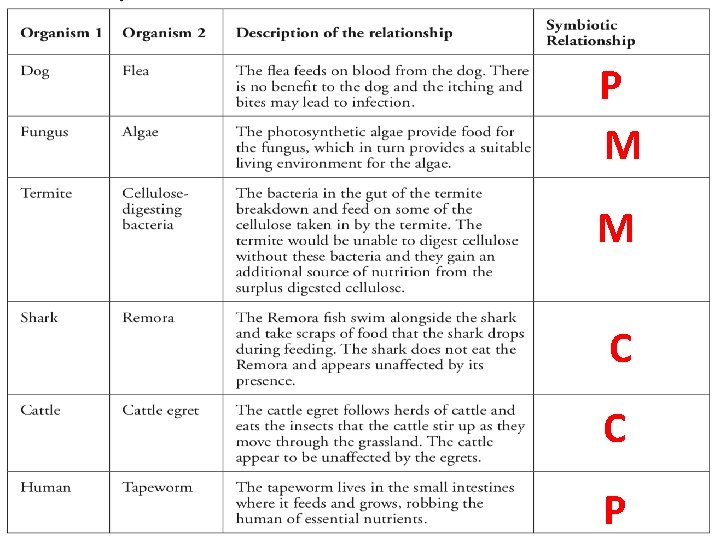
P M M C C P
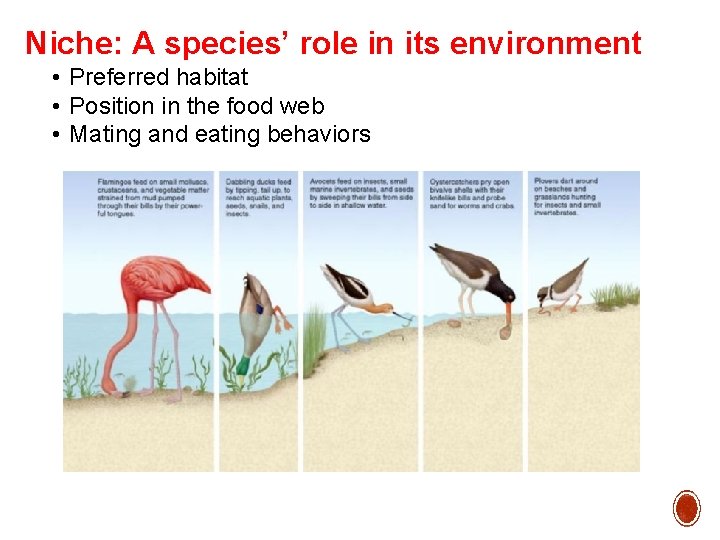
Niche: A species’ role in its environment • Preferred habitat • Position in the food web • Mating and eating behaviors
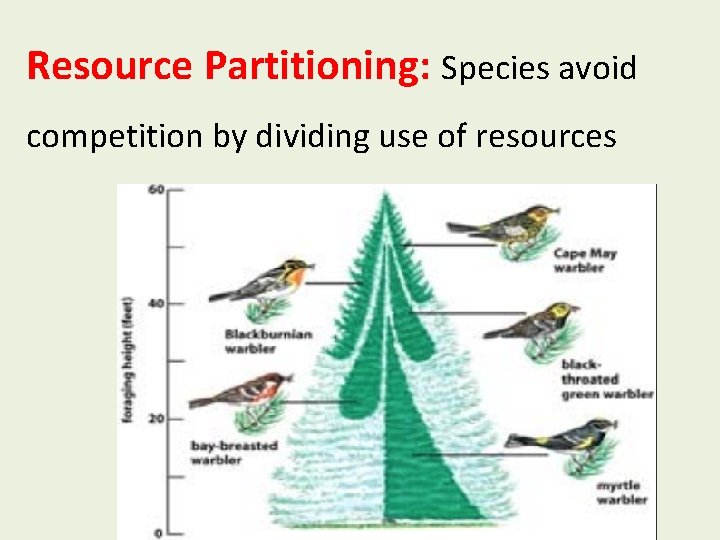
Resource Partitioning: Species avoid competition by dividing use of resources
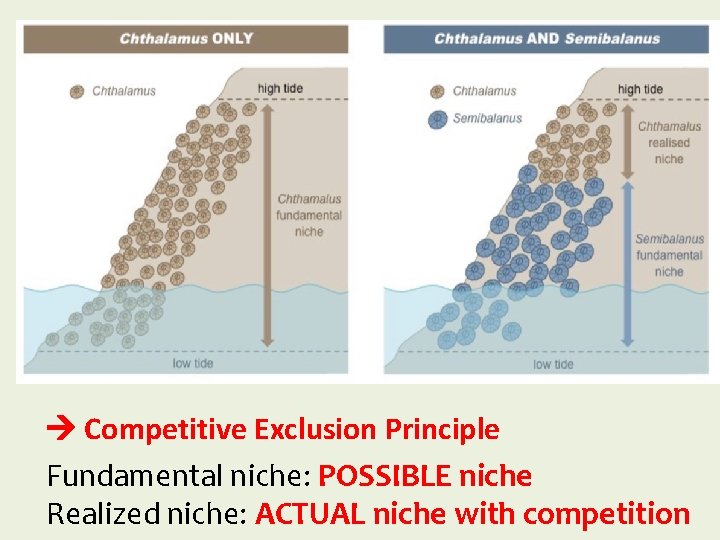
Competitive Exclusion Principle Fundamental niche: POSSIBLE niche Realized niche: ACTUAL niche with competition
- Slides: 11