
Ecology study of the interactions of organisms with
- Slides: 19
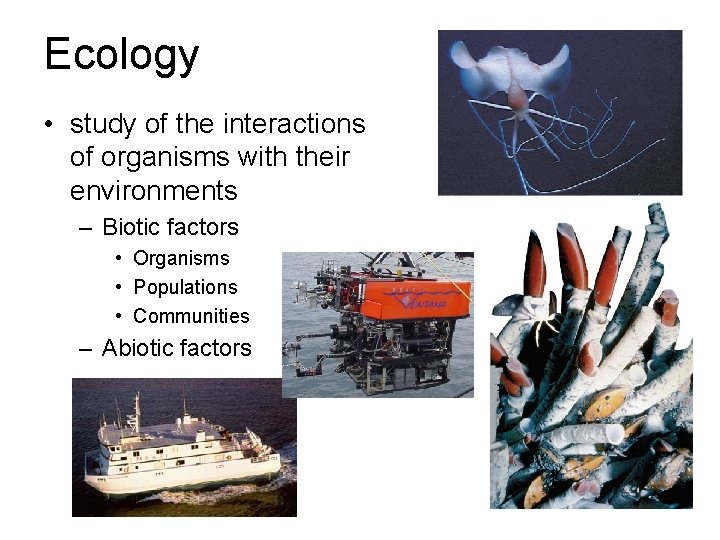
Ecology • study of the interactions of organisms with their environments – Biotic factors • Organisms • Populations • Communities – Abiotic factors
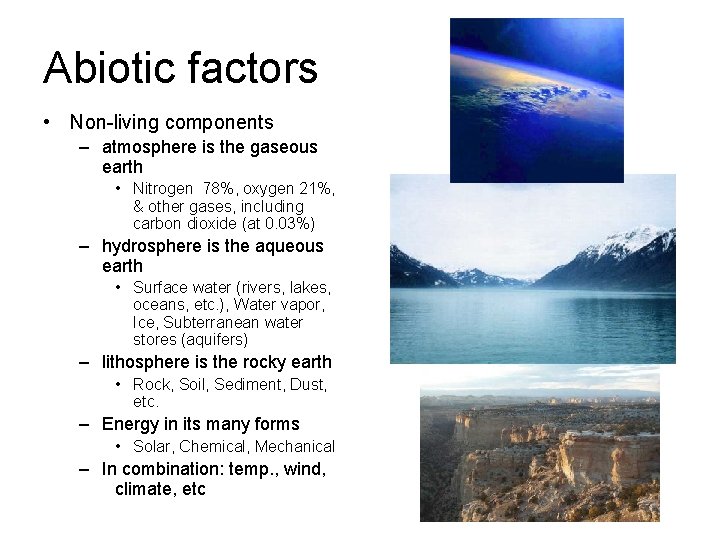
Abiotic factors • Non-living components – atmosphere is the gaseous earth • Nitrogen 78%, oxygen 21%, & other gases, including carbon dioxide (at 0. 03%) – hydrosphere is the aqueous earth • Surface water (rivers, lakes, oceans, etc. ), Water vapor, Ice, Subterranean water stores (aquifers) – lithosphere is the rocky earth • Rock, Soil, Sediment, Dust, etc. – Energy in its many forms • Solar, Chemical, Mechanical – In combination: temp. , wind, climate, etc
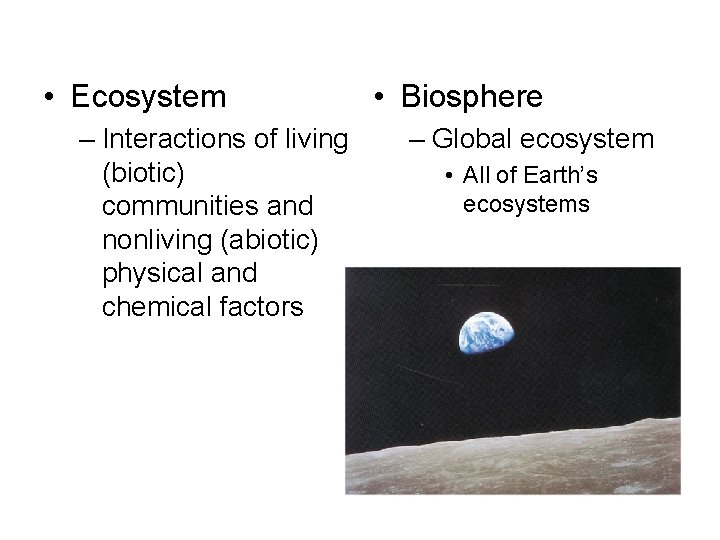
• Ecosystem – Interactions of living (biotic) communities and nonliving (abiotic) physical and chemical factors • Biosphere – Global ecosystem • All of Earth’s ecosystems
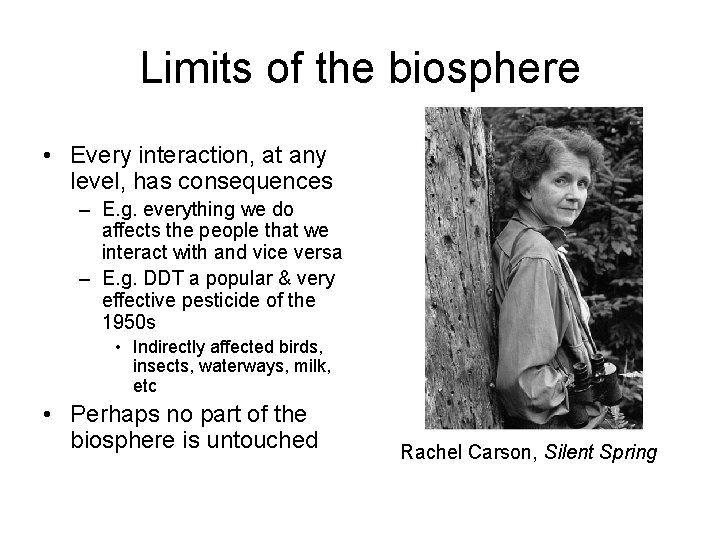
Limits of the biosphere • Every interaction, at any level, has consequences – E. g. everything we do affects the people that we interact with and vice versa – E. g. DDT a popular & very effective pesticide of the 1950 s • Indirectly affected birds, insects, waterways, milk, etc • Perhaps no part of the biosphere is untouched Rachel Carson, Silent Spring
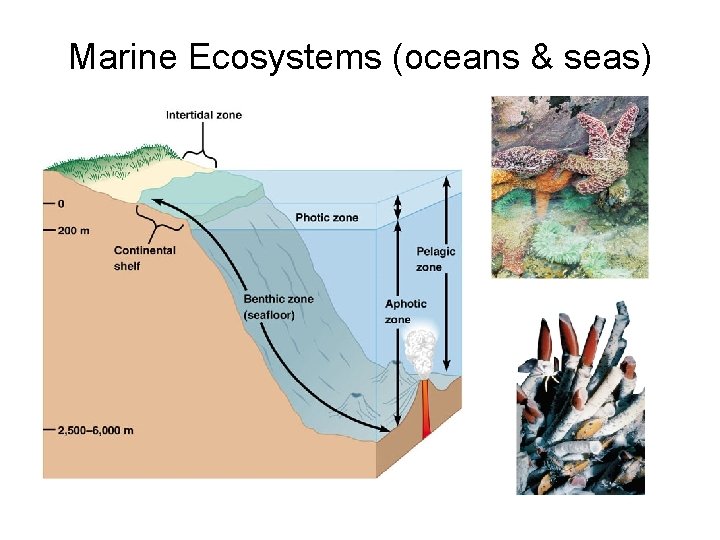
Marine Ecosystems (oceans & seas)
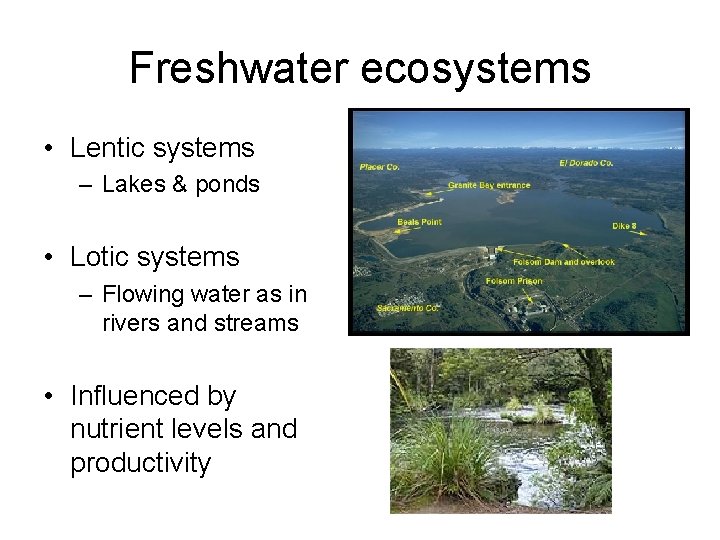
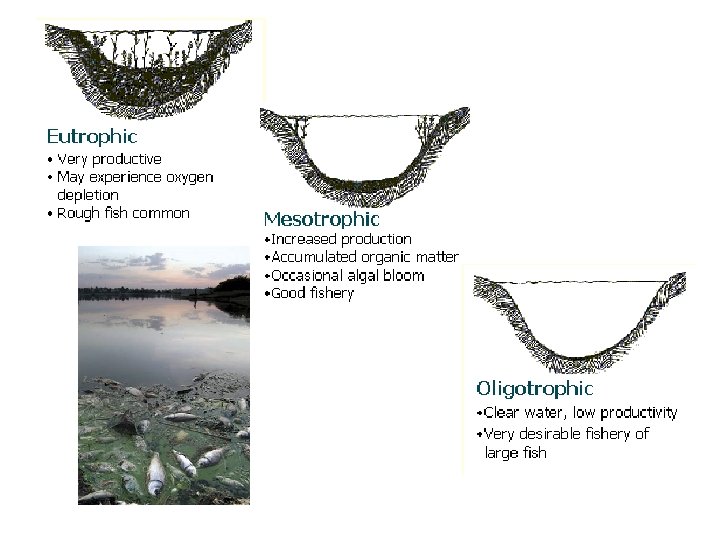
Freshwater ecosystems • Lentic systems – Lakes & ponds • Lotic systems – Flowing water as in rivers and streams • Influenced by nutrient levels and productivity
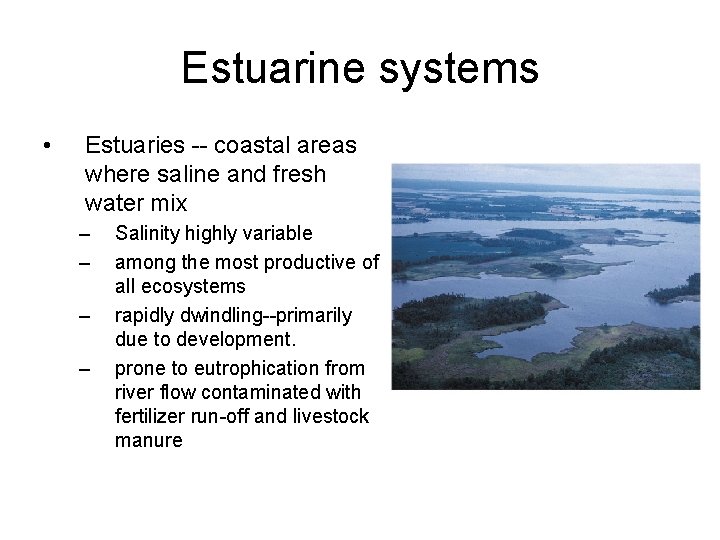
Estuarine systems • Estuaries -- coastal areas where saline and fresh water mix – – Salinity highly variable among the most productive of all ecosystems rapidly dwindling--primarily due to development. prone to eutrophication from river flow contaminated with fertilizer run-off and livestock manure
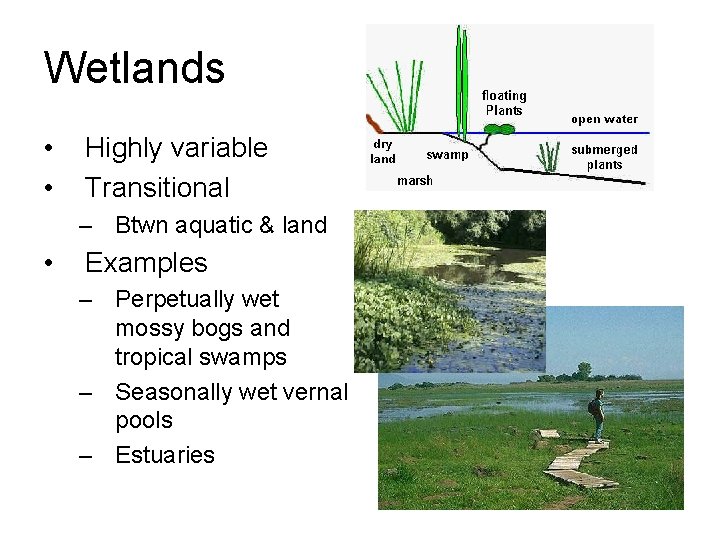
Wetlands • • Highly variable Transitional – Btwn aquatic & land • Examples – Perpetually wet mossy bogs and tropical swamps – Seasonally wet vernal pools – Estuaries
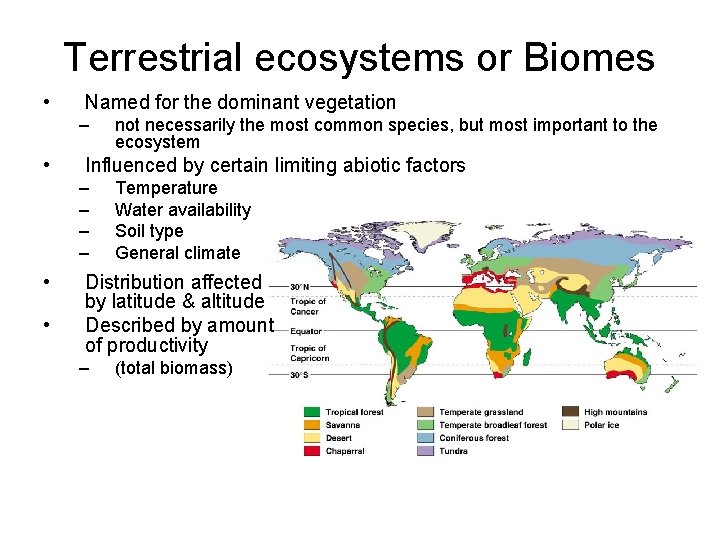
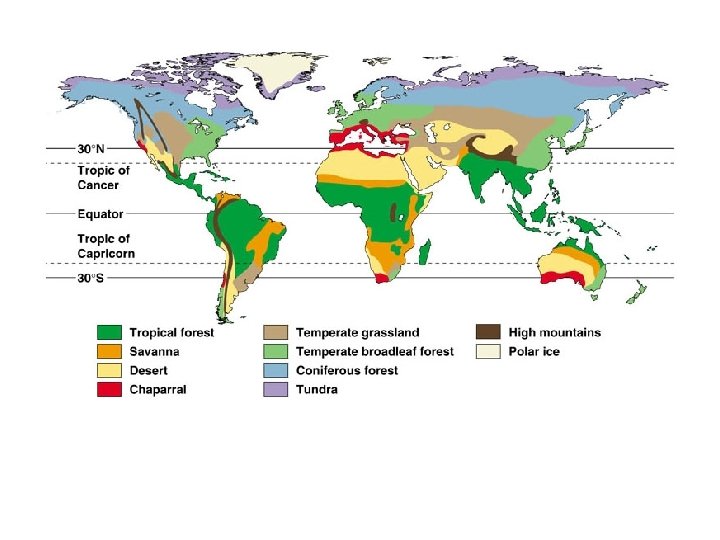
Terrestrial ecosystems or Biomes • Named for the dominant vegetation – • Influenced by certain limiting abiotic factors – – • • not necessarily the most common species, but most important to the ecosystem Temperature Water availability Soil type General climate Distribution affected by latitude & altitude Described by amount of productivity – (total biomass)
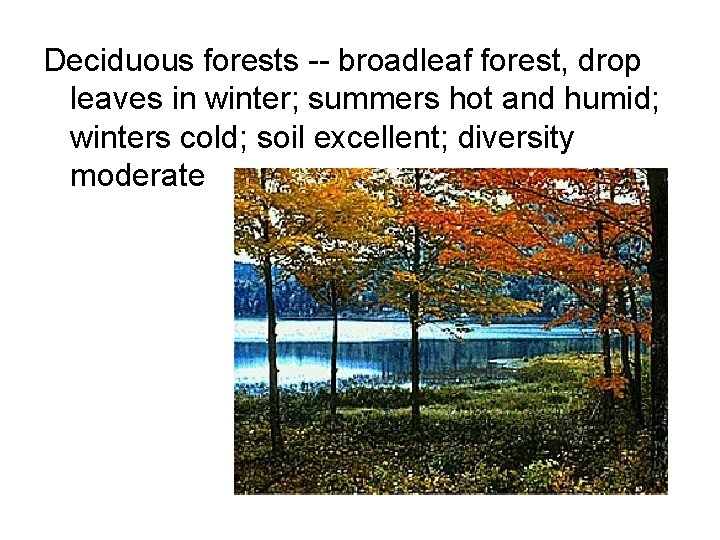
Deciduous forests -- broadleaf forest, drop leaves in winter; summers hot and humid; winters cold; soil excellent; diversity moderate
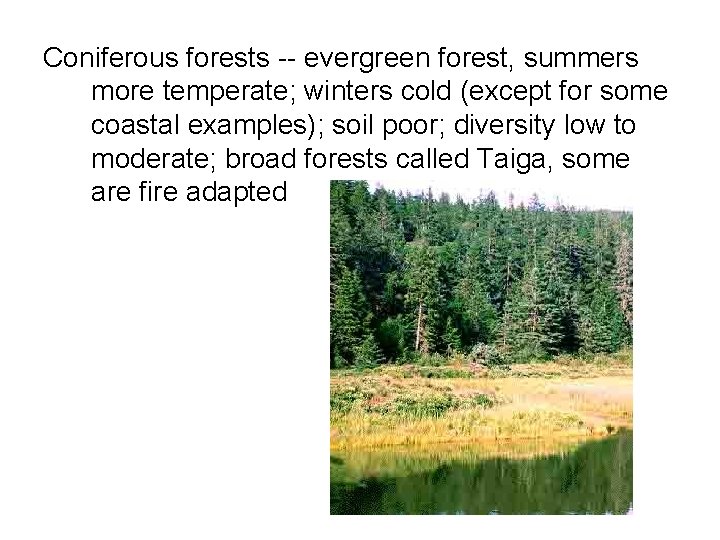
Coniferous forests -- evergreen forest, summers more temperate; winters cold (except for some coastal examples); soil poor; diversity low to moderate; broad forests called Taiga, some are fire adapted
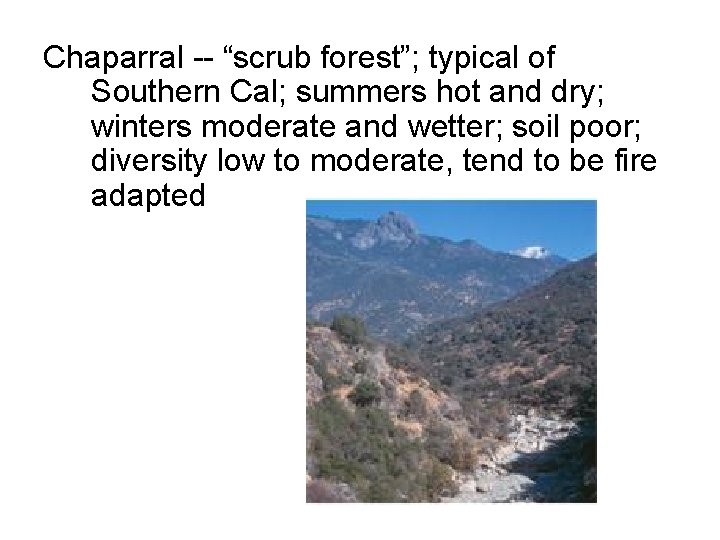
Chaparral -- “scrub forest”; typical of Southern Cal; summers hot and dry; winters moderate and wetter; soil poor; diversity low to moderate, tend to be fire adapted
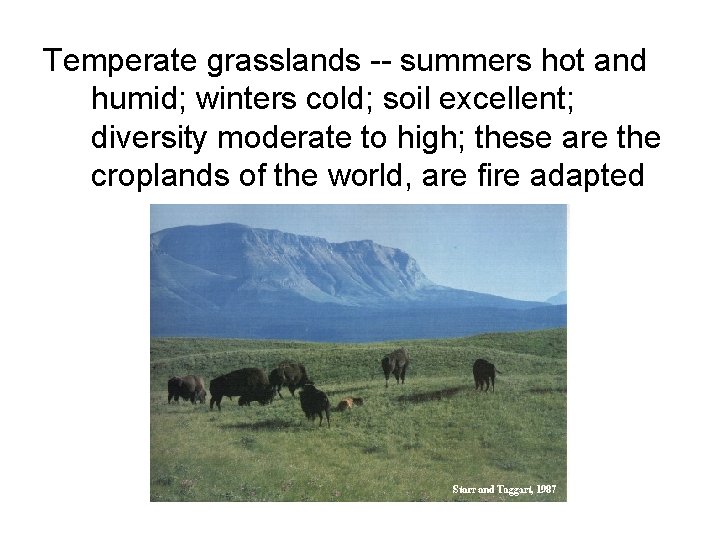
Temperate grasslands -- summers hot and humid; winters cold; soil excellent; diversity moderate to high; these are the croplands of the world, are fire adapted
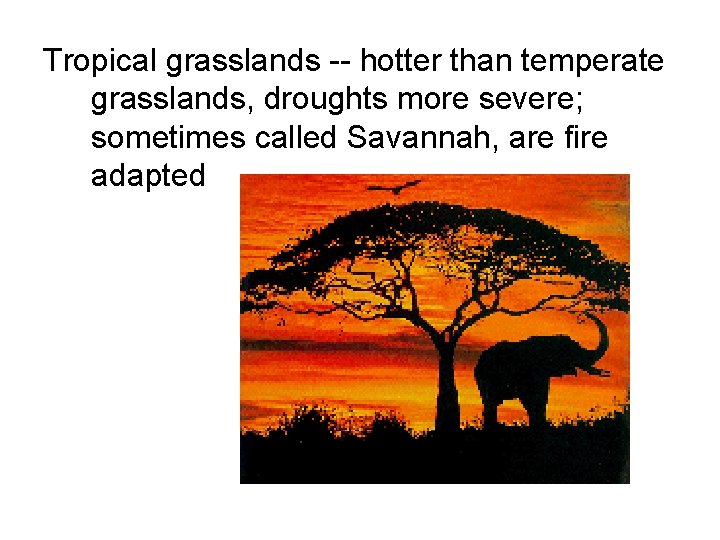
Tropical grasslands -- hotter than temperate grasslands, droughts more severe; sometimes called Savannah, are fire adapted
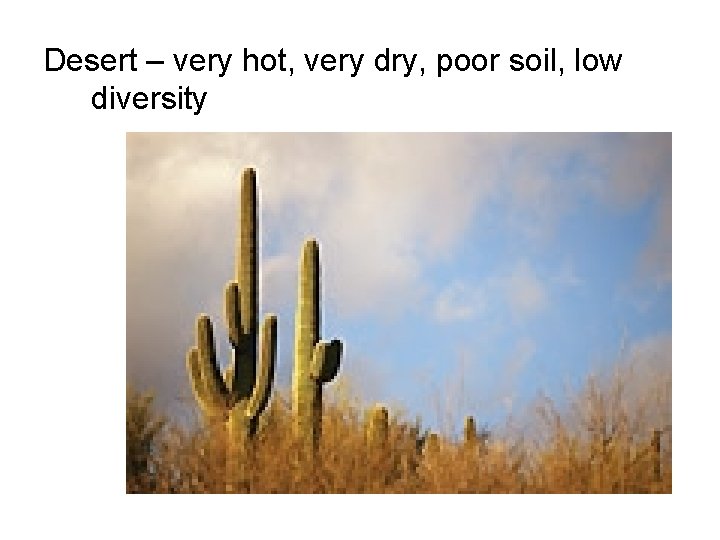
Desert – very hot, very dry, poor soil, low diversity
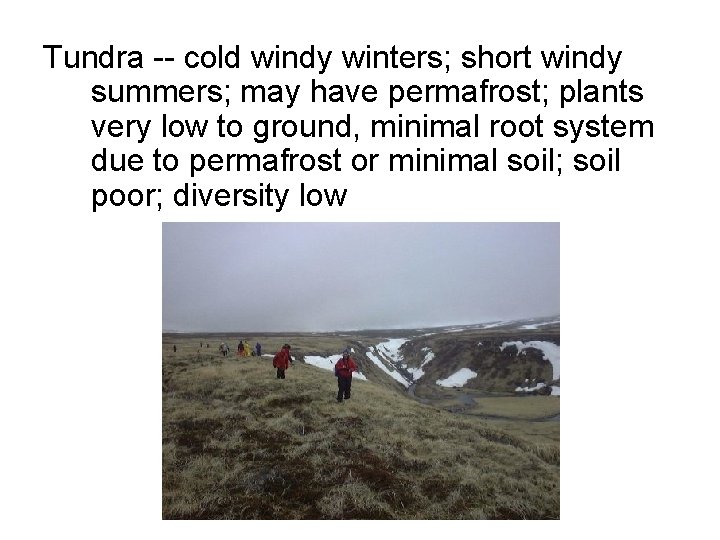
Tundra -- cold windy winters; short windy summers; may have permafrost; plants very low to ground, minimal root system due to permafrost or minimal soil; soil poor; diversity low
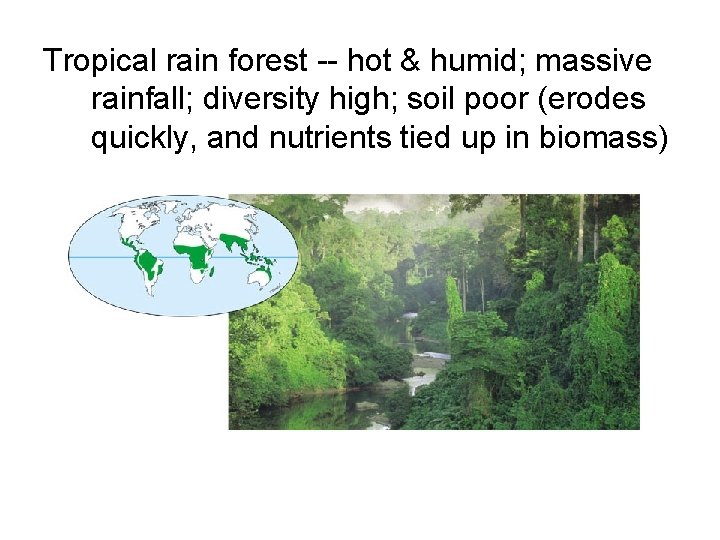
Tropical rain forest -- hot & humid; massive rainfall; diversity high; soil poor (erodes quickly, and nutrients tied up in biomass)