
Ecology Roles and Relationships Between Organisms and their

Ecology Roles and Relationships Between Organisms and their Environments
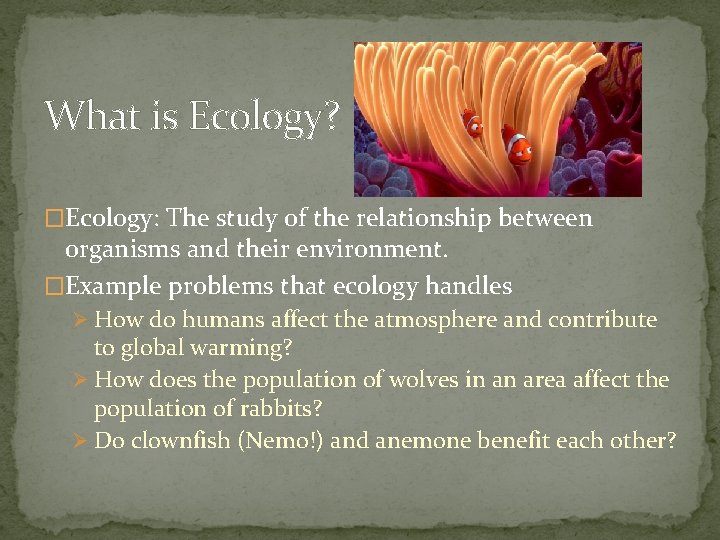
What is Ecology? �Ecology: The study of the relationship between organisms and their environment. �Example problems that ecology handles Ø How do humans affect the atmosphere and contribute to global warming? Ø How does the population of wolves in an area affect the population of rabbits? Ø Do clownfish (Nemo!) and anemone benefit each other?
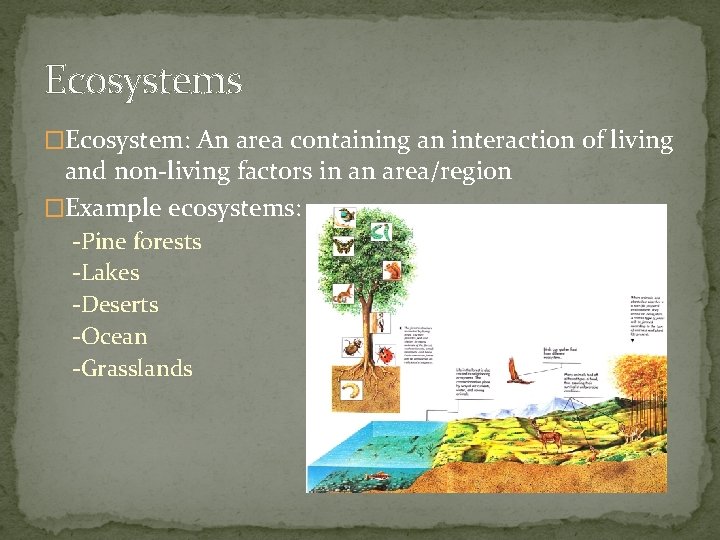
Ecosystems �Ecosystem: An area containing an interaction of living and non-living factors in an area/region �Example ecosystems: -Pine forests -Lakes -Deserts -Ocean -Grasslands
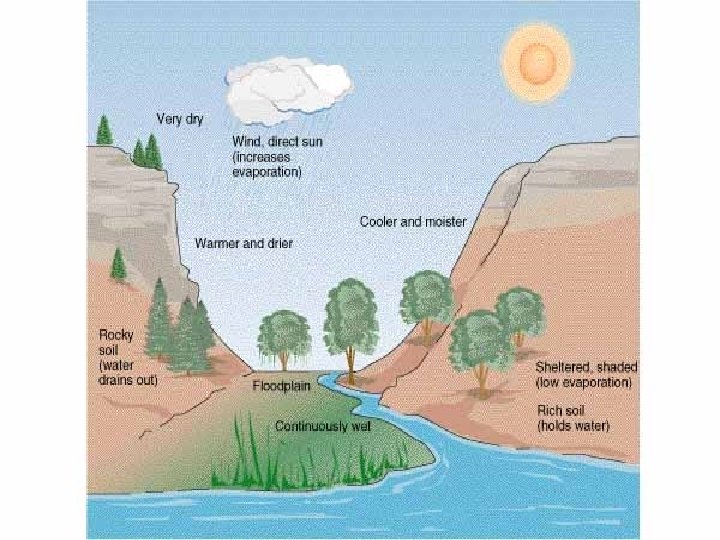
What is in an Ecosystem? �Non-Living (Abiotic)-rocks, soil, temperature, gases in the air and light. �Living (Biotic)-plants, animals, bacteria and fungus o Producers-use light to make their own energy o Consumers-eat other organisms to obtain energy o Decomposers-break down dead organisms for energy
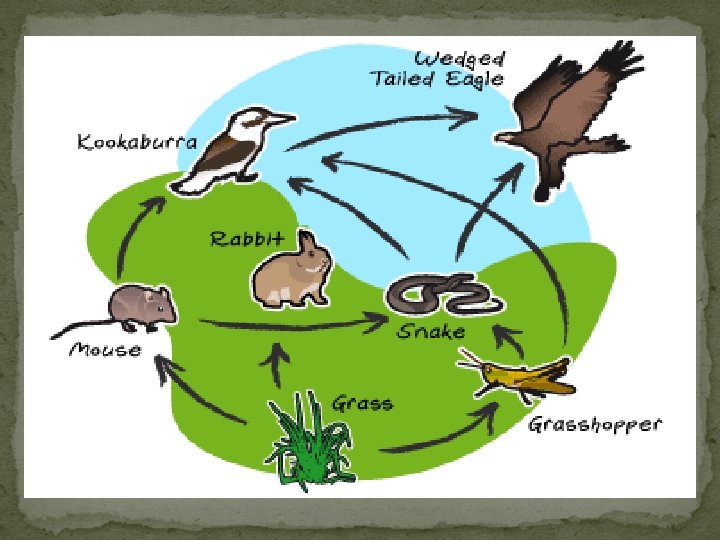
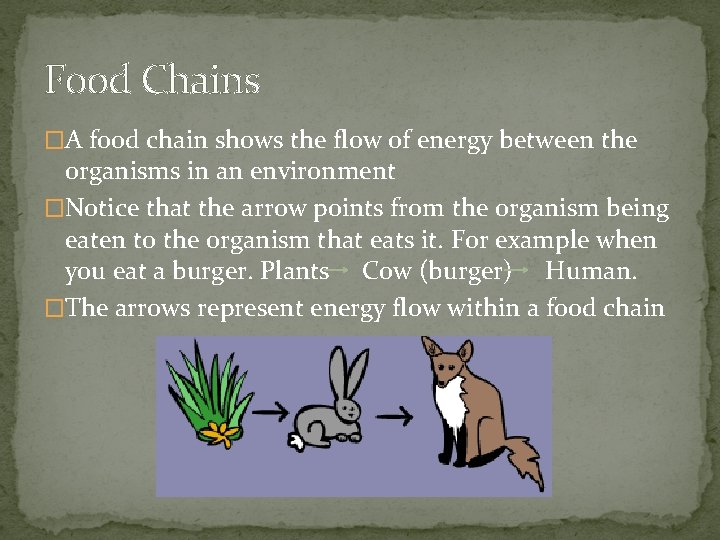
Food Chains �A food chain shows the flow of energy between the organisms in an environment �Notice that the arrow points from the organism being eaten to the organism that eats it. For example when you eat a burger. Plants Cow (burger) Human. �The arrows represent energy flow within a food chain
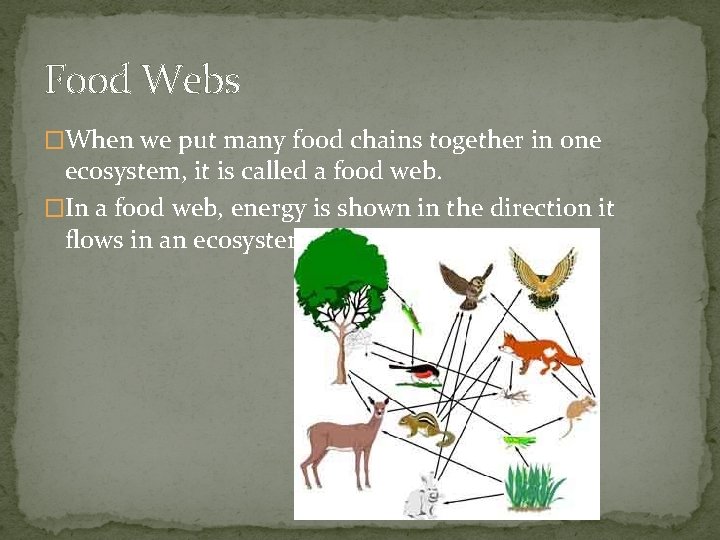
Food Webs �When we put many food chains together in one ecosystem, it is called a food web. �In a food web, energy is shown in the direction it flows in an ecosystem.
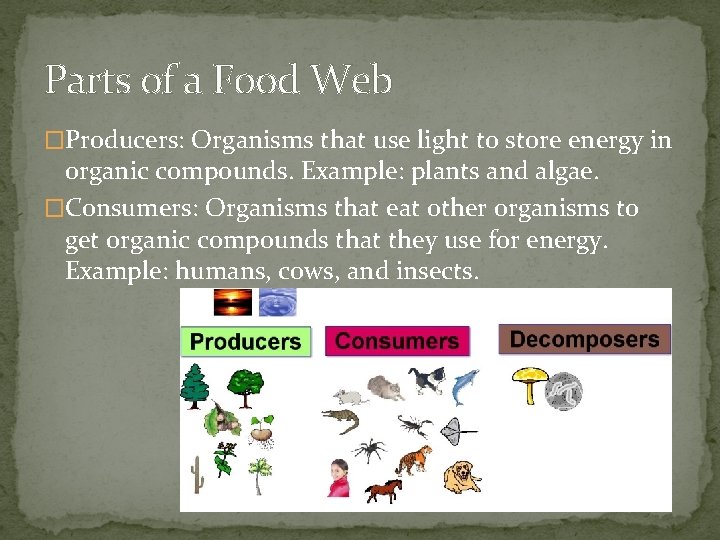
Parts of a Food Web �Producers: Organisms that use light to store energy in organic compounds. Example: plants and algae. �Consumers: Organisms that eat other organisms to get organic compounds that they use for energy. Example: humans, cows, and insects.
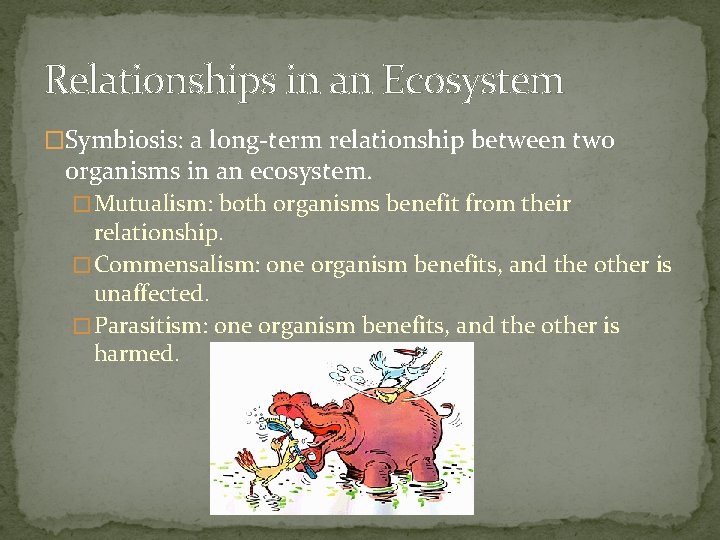
Relationships in an Ecosystem �Symbiosis: a long-term relationship between two organisms in an ecosystem. � Mutualism: both organisms benefit from their relationship. � Commensalism: one organism benefits, and the other is unaffected. � Parasitism: one organism benefits, and the other is harmed.
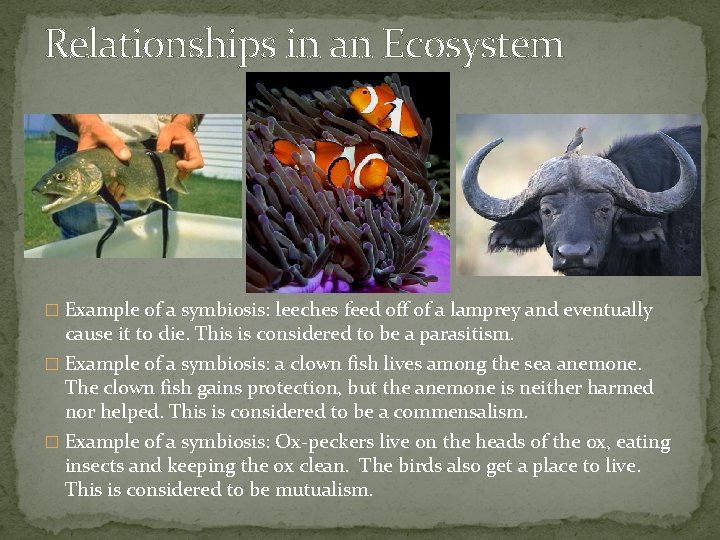
Relationships in an Ecosystem � Example of a symbiosis: leeches feed off of a lamprey and eventually cause it to die. This is considered to be a parasitism. � Example of a symbiosis: a clown fish lives among the sea anemone. The clown fish gains protection, but the anemone is neither harmed nor helped. This is considered to be a commensalism. � Example of a symbiosis: Ox-peckers live on the heads of the ox, eating insects and keeping the ox clean. The birds also get a place to live. This is considered to be mutualism.

Population Growth and Overpopulation �Population: the number of organism from one species that live in a specific area � Examples: the human population in different cities, the squirrel population in a forest, the grass population in a meadow. Populations are affected by many resources. These include: �The amount of food available in an area �The amount of sunlight (if it is a plant population) �The amount of water �The competition for food/shelter �The predators in an area

Population Growth and Overpopulation �Carrying Capacity: the maximum number of organisms in a population that are supported by the environment. �Populations are typically limited by resources � They reach carrying capacity when there aren’t enough resources to keep growing.
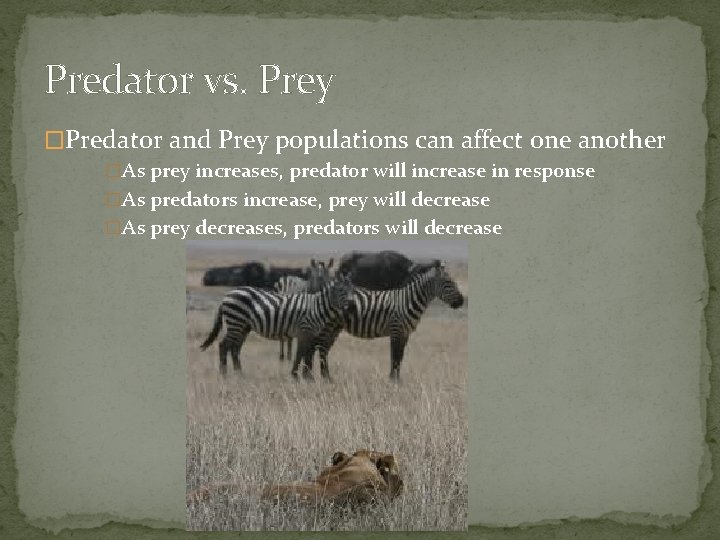
Predator vs. Prey �Predator and Prey populations can affect one another �As prey increases, predator will increase in response �As predators increase, prey will decrease �As prey decreases, predators will decrease
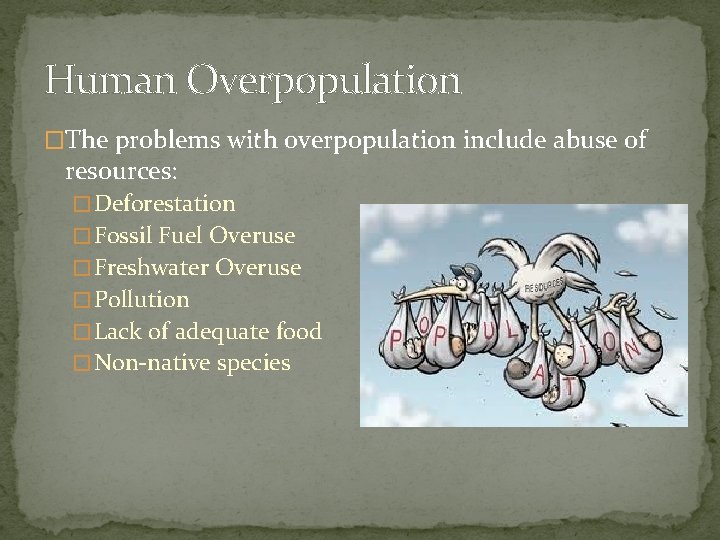
Human Overpopulation �The problems with overpopulation include abuse of resources: � Deforestation � Fossil Fuel Overuse � Freshwater Overuse � Pollution � Lack of adequate food � Non-native species
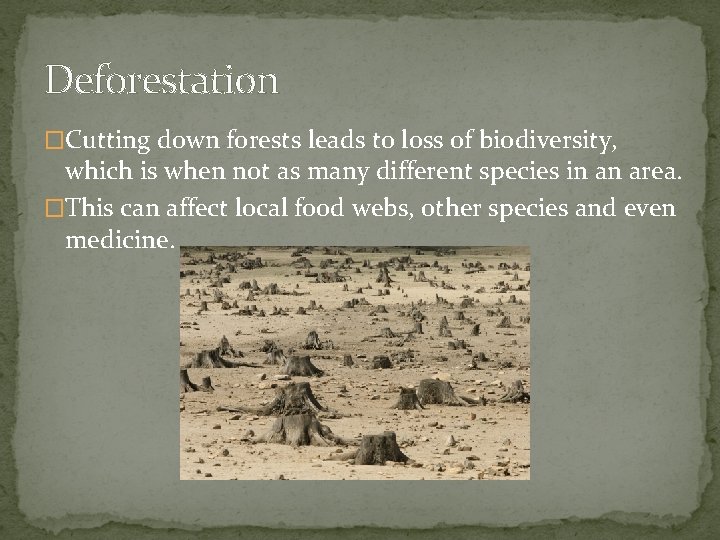
Deforestation �Cutting down forests leads to loss of biodiversity, which is when not as many different species in an area. �This can affect local food webs, other species and even medicine.
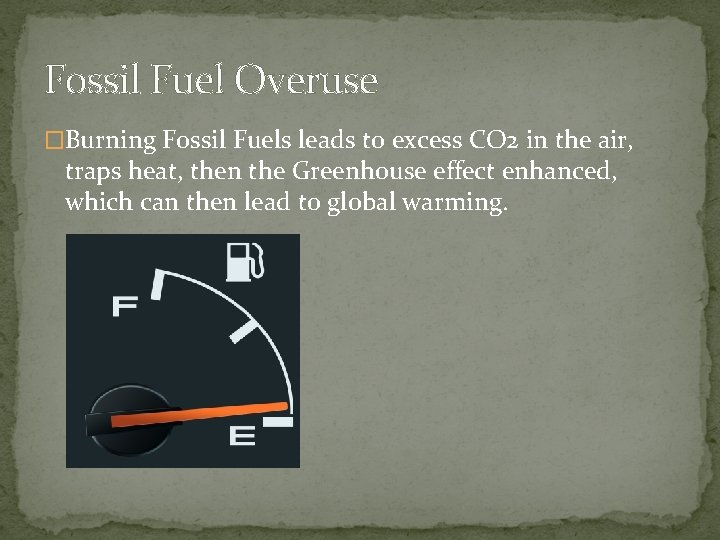
Fossil Fuel Overuse �Burning Fossil Fuels leads to excess CO 2 in the air, traps heat, then the Greenhouse effect enhanced, which can then lead to global warming.
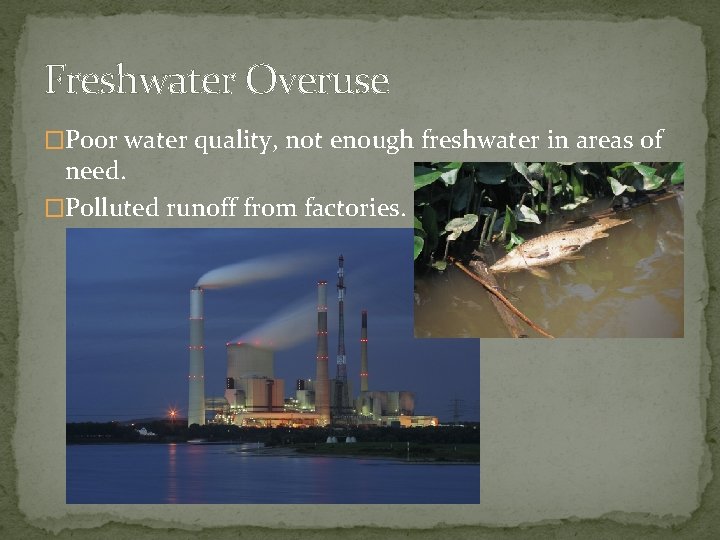
Freshwater Overuse �Poor water quality, not enough freshwater in areas of need. �Polluted runoff from factories.
Pollution Acid rain: � From sulfur and nitrogen gases released from factories into the air. � Falls in rain drops, slowly impacts p. H of water, soil and etc. Ozone Layer Destruction �CFCs: chlorofluorocarbons-released into the air through old refrigerator and spray cans, destroy ozone layer. �Low ozone: leads to high UV radiation. �UV radiation: can cause skin cancer through mutation. This is why we wear sun screen.
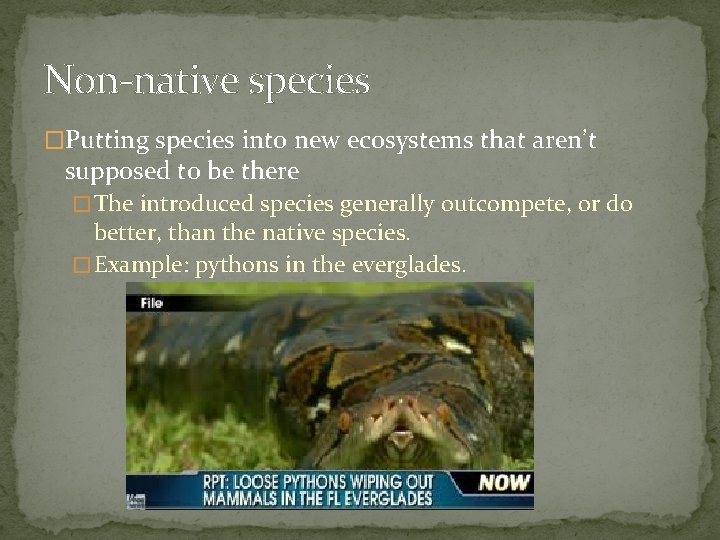
Non-native species �Putting species into new ecosystems that aren’t supposed to be there � The introduced species generally outcompete, or do better, than the native species. � Example: pythons in the everglades.
What can we do? � Use renewable resources for energy �Water, wind, solar and geothermal energy � Reduce carbon dioxide emissions � Reduce water waste � Investigate factories and their pollution levels � Increase public awareness of the issues � Promote sustainable practices �Using renewable energy, rotating crops, avoiding pesticides and toxins, making sure we keep fishing populations high, conserve resources.
- Slides: 21