
Ecology Primer Biological Interactions An Optional Graphic can
Ecology Primer: Biological Interactions An Optional Graphic can go here l l l Nicklaus Kruger NISL nicklaus@webmail. co. za Available at http: //planet. uwc. ac. za/nisl/Eco_people/Presentations /
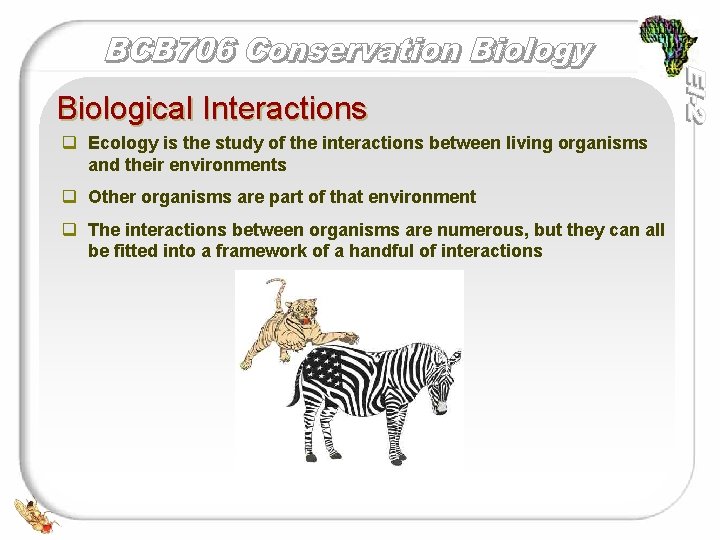
Biological Interactions q Ecology is the study of the interactions between living organisms and their environments q Other organisms are part of that environment q The interactions between organisms are numerous, but they can all be fitted into a framework of a handful of interactions
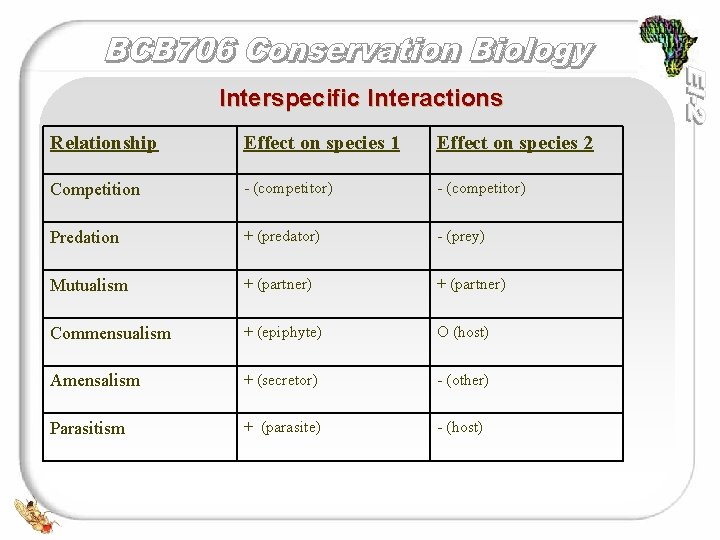
Interspecific Interactions Relationship Effect on species 1 Effect on species 2 Competition - (competitor) Predation + (predator) - (prey) Mutualism + (partner) Commensualism + (epiphyte) O (host) Amensalism + (secretor) - (other) Parasitism + (parasite) - (host)
Competition q The concept of competition is fundamental to the science of ecology q Competition occurs when two (or more) organisms require the same limiting resource q Intraspecific competition refers to competition between conspecifics q Interspecific competition refers to competition between members of different species q The more similar the fundamental niche of two organisms, the more potential for competition between them
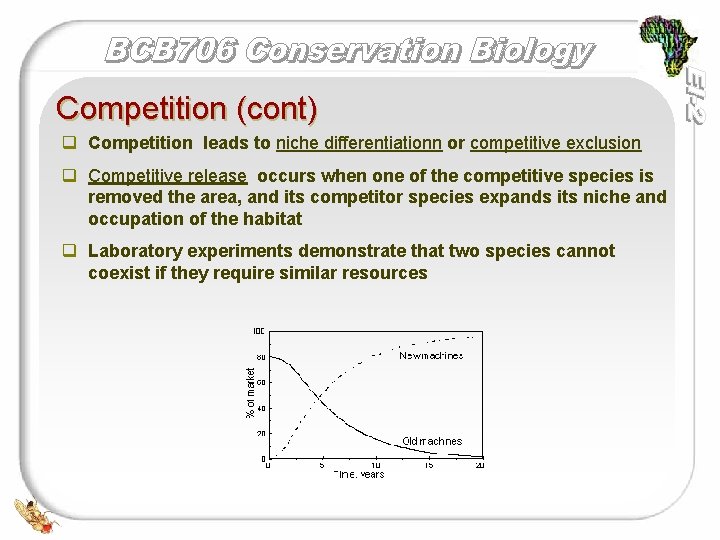
Competition (cont) q Competition leads to niche differentiationn or competitive exclusion q Competitive release occurs when one of the competitive species is removed the area, and its competitor species expands its niche and occupation of the habitat q Laboratory experiments demonstrate that two species cannot coexist if they require similar resources
Competition (cont…) q Closely related species rarely coexist for long in the laboratory q If two species are forced to live off the same resource, inevitably one persists and the other dies out q The competitive exclusion principle holds that two species cannot coexist on the same limiting resource q Only resources that limit population growth can provide the basis for competition q Non-limiting resources are superabundant compared to the needs of organisms
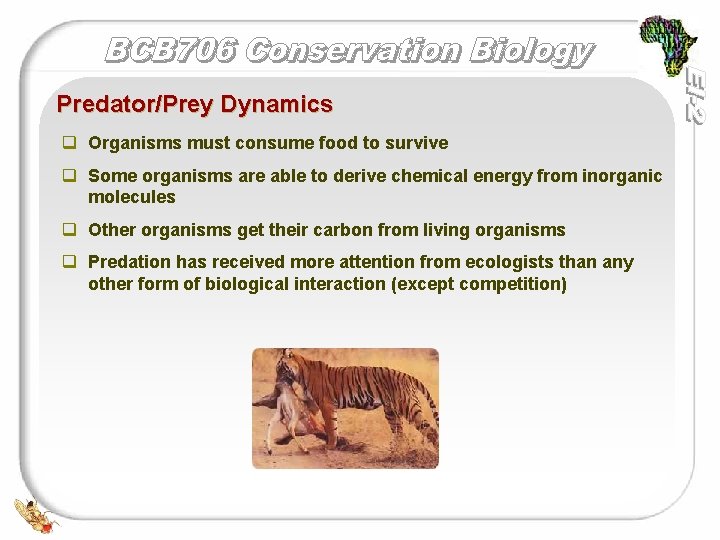
Predator/Prey Dynamics q Organisms must consume food to survive q Some organisms are able to derive chemical energy from inorganic molecules q Other organisms get their carbon from living organisms q Predation has received more attention from ecologists than any other form of biological interaction (except competition)
Predator/Prey Dynamics q When prey is plentiful, predator numbers can increase q But predators have an obvious adverse effect on prey population numbers q Ecologists debate whether ecosystems are regulated more by the dynamics within predator populations, or the dynamics within the populations of their prey q Individual predators tend to be larger than their prey, and also less abundant
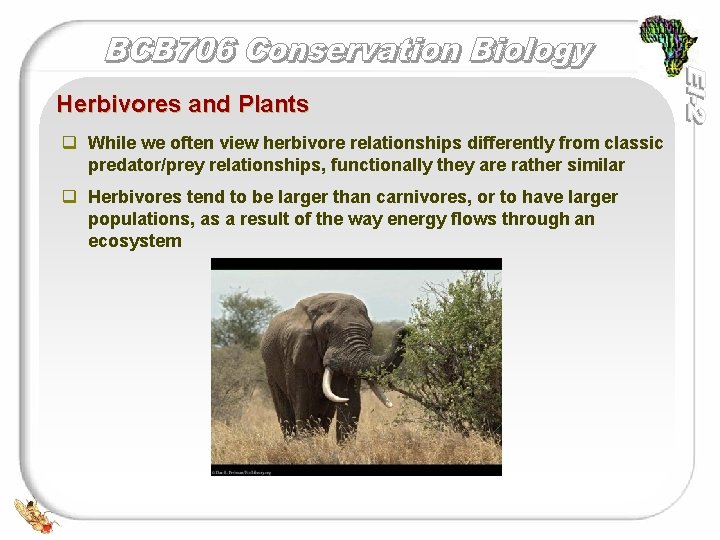
Herbivores and Plants q While we often view herbivore relationships differently from classic predator/prey relationships, functionally they are rather similar q Herbivores tend to be larger than carnivores, or to have larger populations, as a result of the way energy flows through an ecosystem
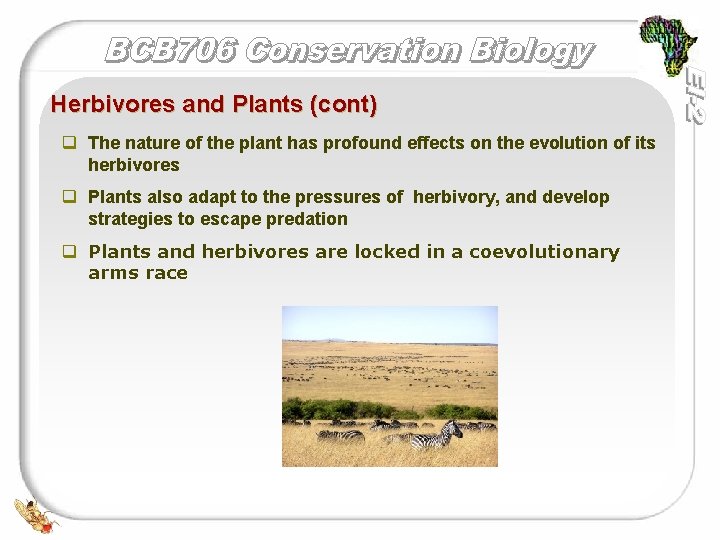
Herbivores and Plants (cont) q The nature of the plant has profound effects on the evolution of its herbivores q Plants also adapt to the pressures of herbivory, and develop strategies to escape predation q Plants and herbivores are locked in a coevolutionary arms race
Parasitism q Parasitism is similar to predation, except that the parasite tends not to kill its host as swiftly (if at all) q Endoparasites live within the tissues or their hosts q Ectoparasites live outside the tissues of their hosts, but attached to them q Epiparasites are parasites that parasitise parasites q Social parasites exploit the interactions between members of their host species
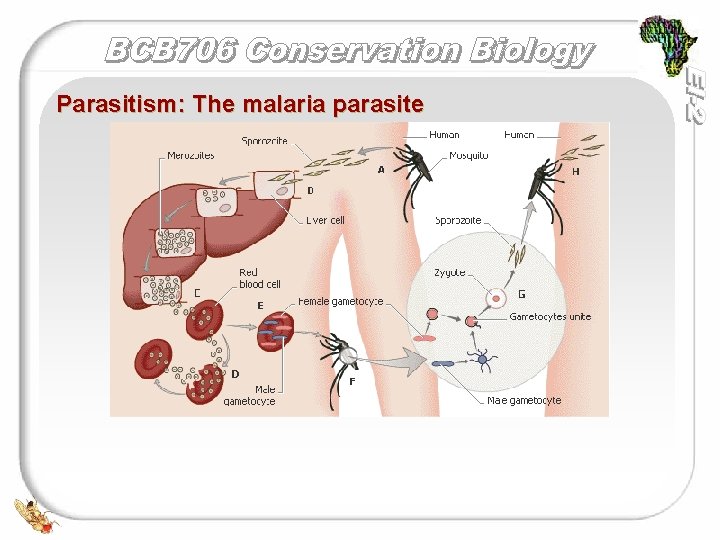
Parasitism: The malaria parasite
Mutualism q In mutualism, both of the interacting species benefit q When the species form a lifelong association in close physical and biochemical content, this form of mutualism is known as symbiosis q Obligate mutualism occurs when both species are dependent on their partners, and cannot survive without them q Facultative mutualism occurs when the partners are capable of surviving separately under certain conditions
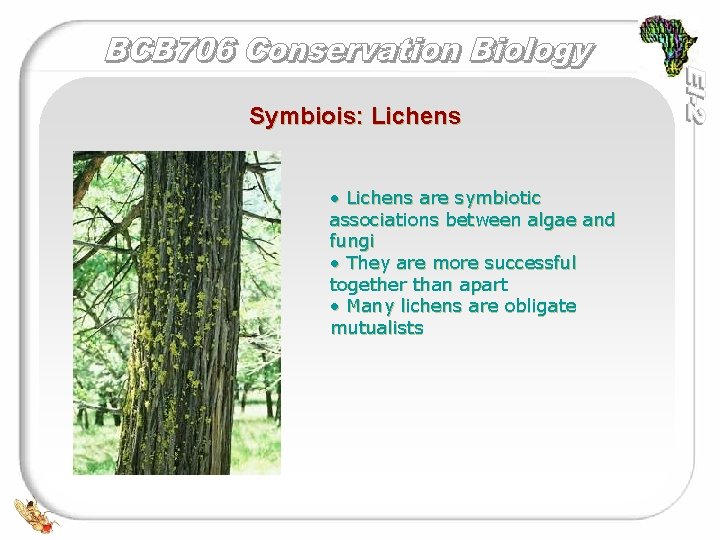
Symbiois: Lichens • Lichens are symbiotic associations between algae and fungi • They are more successful together than apart • Many lichens are obligate mutualists
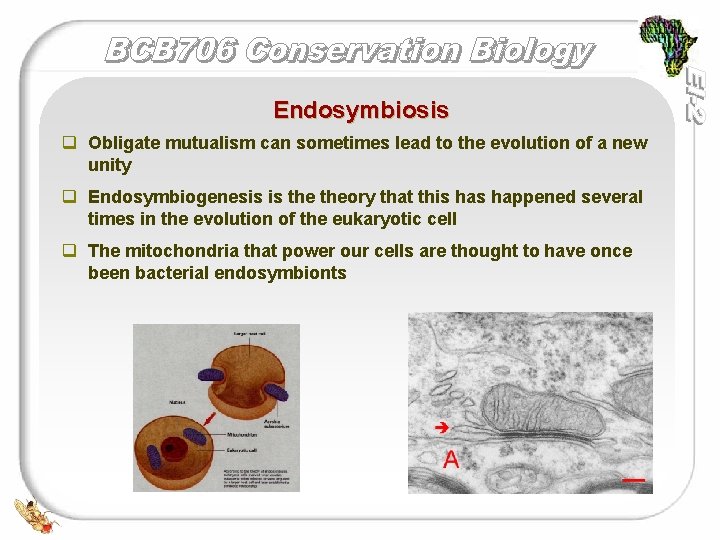
Endosymbiosis q Obligate mutualism can sometimes lead to the evolution of a new unity q Endosymbiogenesis is theory that this happened several times in the evolution of the eukaryotic cell q The mitochondria that power our cells are thought to have once been bacterial endosymbionts
Commensalism q In this form of interaction, one species benefits, while the other is not affected at all q Real and well-attested examples of commensalism are hard to come by q Certain epiphytes are thought to be involved in commensal relationships with their hosts (algae covering barnacles, for example)
Coevolution q Co-evolution is the mutual evolutionary influence between two or more species q In a co-evolutionary relationship, organisms exert selective pressure on one another q Effectively, co-evolution refers to biological interactions on an evolutionary timescale
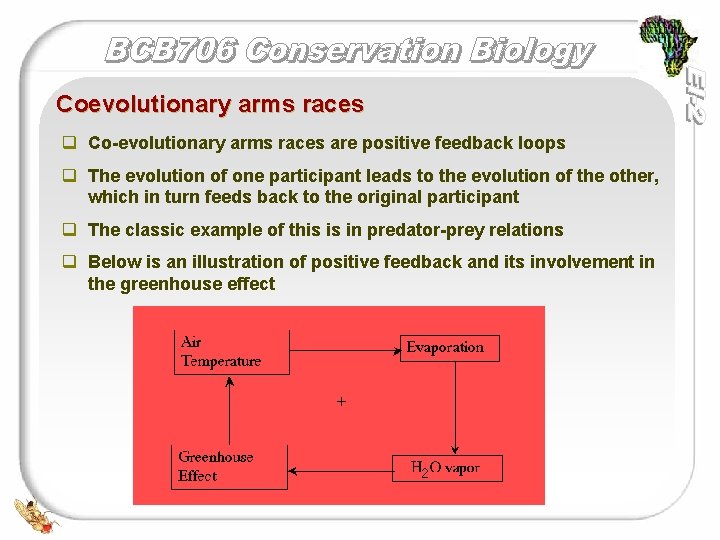
Coevolutionary arms races q Co-evolutionary arms races are positive feedback loops q The evolution of one participant leads to the evolution of the other, which in turn feeds back to the original participant q The classic example of this is in predator-prey relations q Below is an illustration of positive feedback and its involvement in the greenhouse effect
Bibliography q Dark green font Arial at least 18 point this colour is 70 70 0 q Use animation and the effects of BLINDS for TEXT and DISSOLVE for IMAGES– they are quick and effective and bring in by paragraph and then dim after mouse click to a mid grey colour 150 150 q Give your presentation a header … there is space in the top and it also uses the colour 150, 150 this uses Word Art and can be stretched. Use VIEW / MASTER/ SLIDE MASTER to access q If you need to hyperlink such as this is the URL for NISL if you use this as a template the colour is already set and is 96 132 113. For a visited Hyperlink use this colour which is 204 102 0 q Keep within the frame … this ensures it will not get clipped when projecting. q Use Bullet Points as indicated (Square colour is 128 0 )
- Slides: 19