
Ecology Part I ECOLOGY What is ecology The

- Slides: 39
Ecology Part I
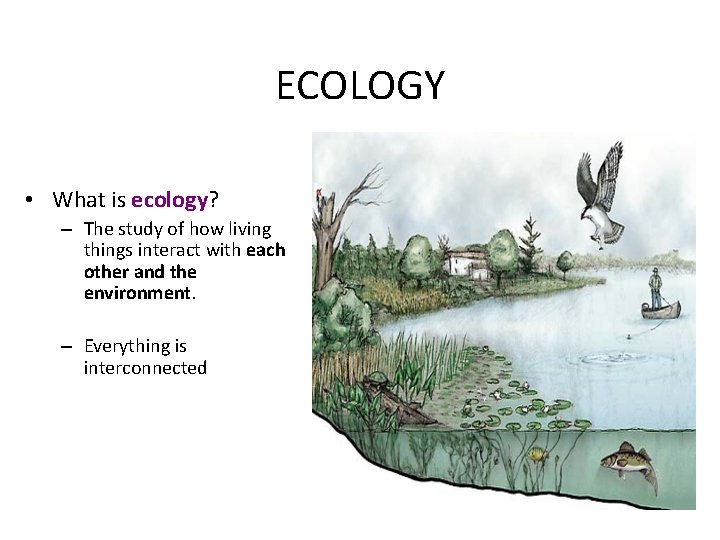
ECOLOGY • What is ecology? – The study of how living things interact with each other and the environment. – Everything is interconnected
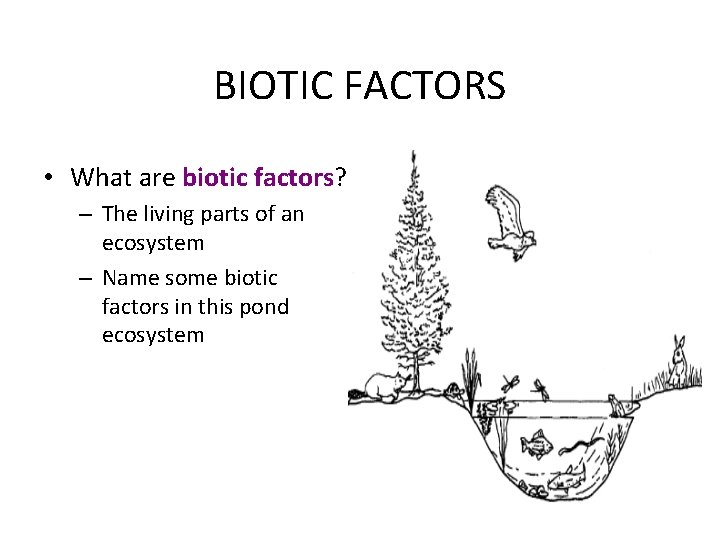
BIOTIC FACTORS • What are biotic factors? – The living parts of an ecosystem – Name some biotic factors in this pond ecosystem
ABIOTIC FACTORS • What are abiotic factors? – The nonliving parts of an ecosystem – Abiotic factors include; water, sunlight, air, wind, clouds, temperature, ph (acidity level), soil, and minerals.
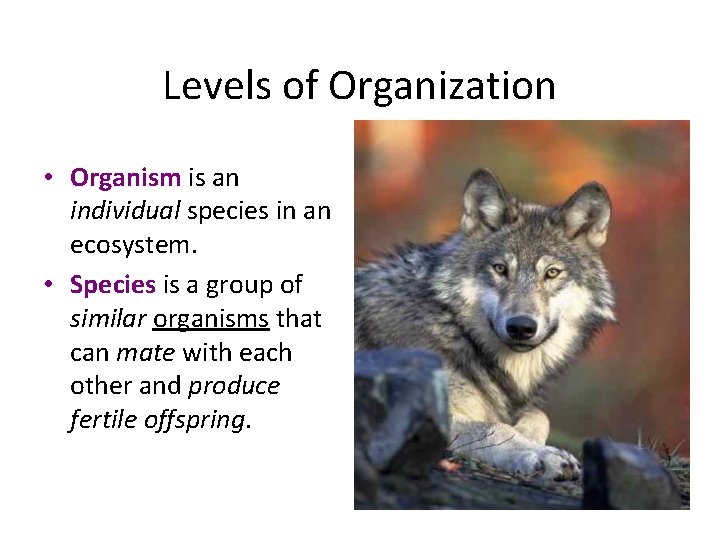
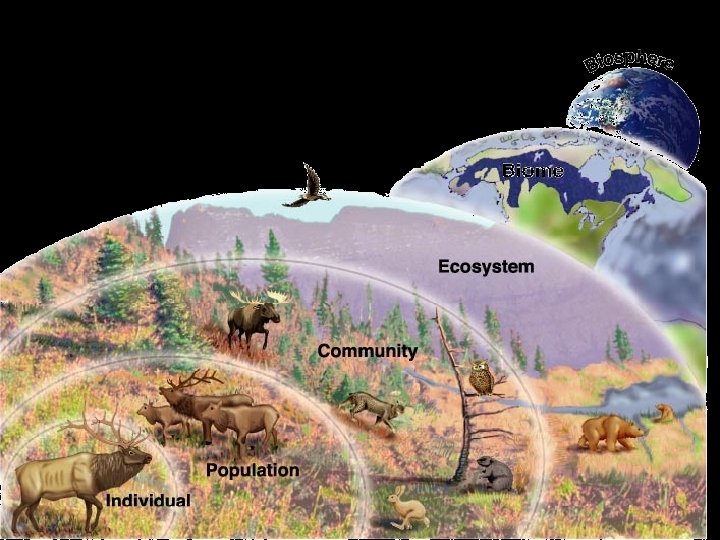
Levels of Organization • Organism is an individual species in an ecosystem. • Species is a group of similar organisms that can mate with each other and produce fertile offspring.
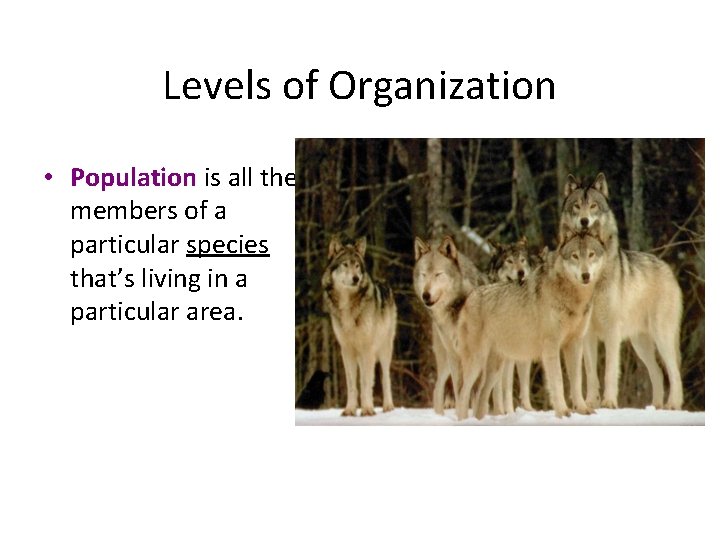
Levels of Organization • Population is all the members of a particular species that’s living in a particular area.
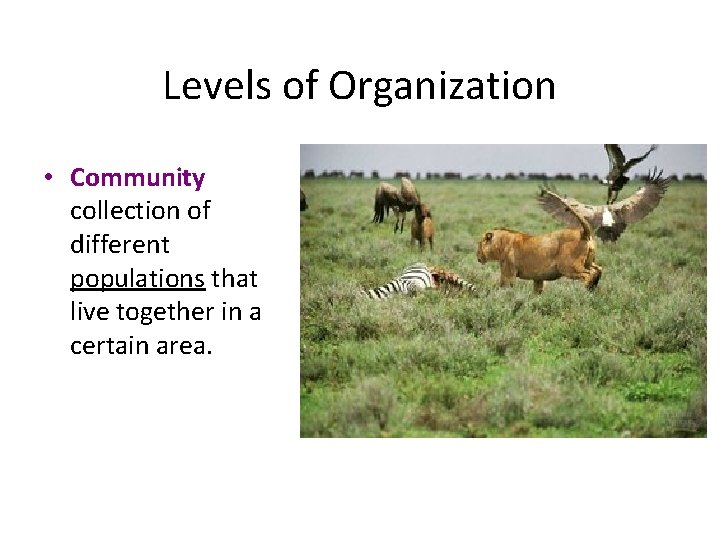
Levels of Organization • Community collection of different populations that live together in a certain area.
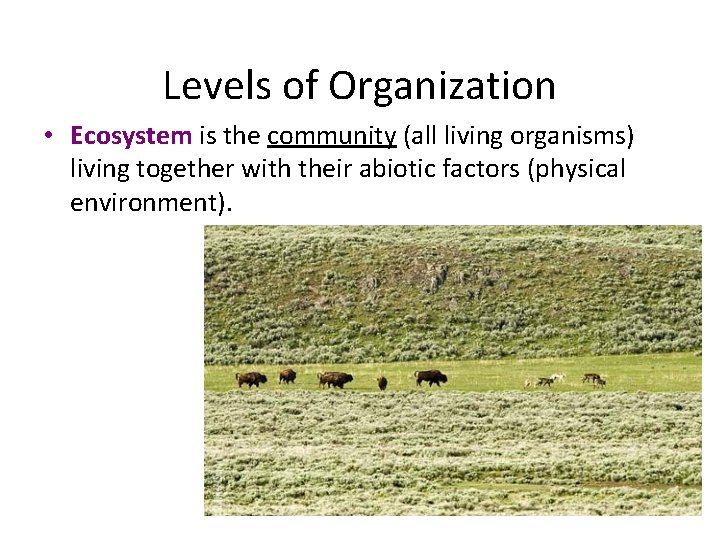
Levels of Organization • Ecosystem is the community (all living organisms) living together with their abiotic factors (physical environment).
Levels of Organization • Biome group of ecosystems that have the same climate and dominant communities • Biosphere group of ecosystems that have the same climate and dominant communities (ALL organisms found here)
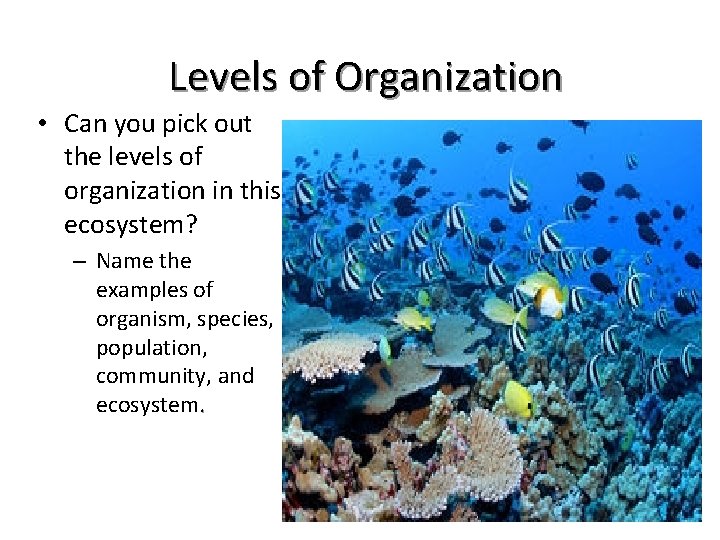
Levels of Organization • Can you pick out the levels of organization in this ecosystem? – Name the examples of organism, species, population, community, and ecosystem.
Habitat versus Niche • Habitat = where a species lives – ALL physical and biological resources available to a species – Different than an ecosystem • Niche = role a species plays in the ecosystem – Ex: how it uses its resources – Ex: number of offspring – Ex: time of activity (nocturnal, diurnal
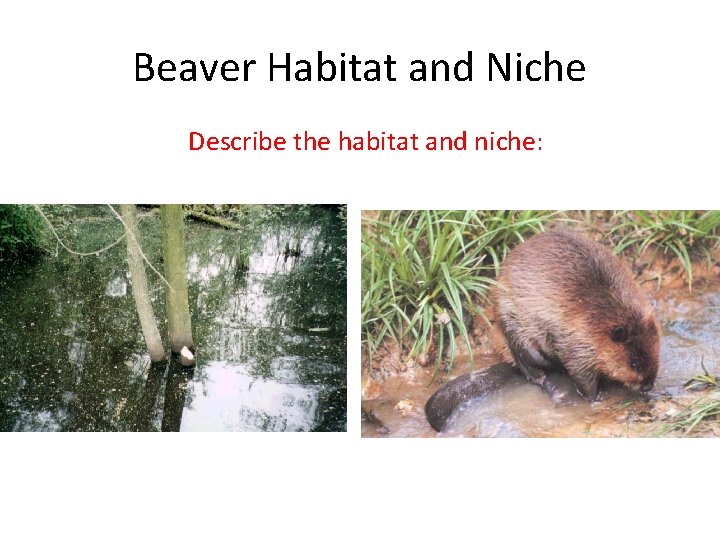
Beaver Habitat and Niche Describe the habitat and niche:
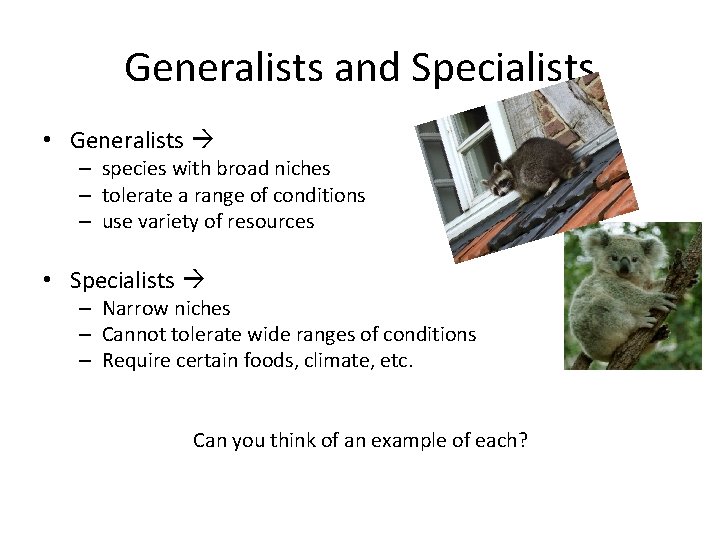
Generalists and Specialists • Generalists – species with broad niches – tolerate a range of conditions – use variety of resources • Specialists – Narrow niches – Cannot tolerate wide ranges of conditions – Require certain foods, climate, etc. Can you think of an example of each?
Energy Transfer in Ecosystems • All organisms need a constant supply of energy to survive! • Energy flows in ecosystems! • Amount of energy an ecosystem receives and the amount transferred from organism to organism effects an ecosystem’s structure
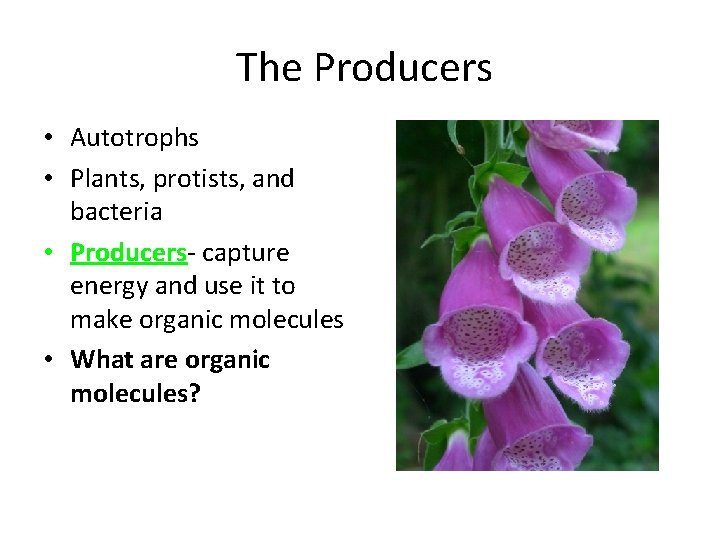
The Producers • Autotrophs • Plants, protists, and bacteria • Producers- capture energy and use it to make organic molecules • What are organic molecules?
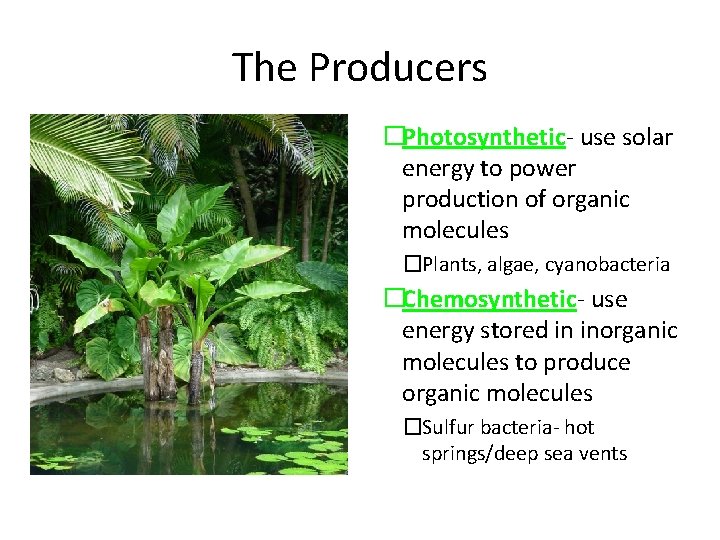
The Producers �Photosynthetic- use solar energy to power production of organic molecules �Plants, algae, cyanobacteria �Chemosynthetic- use energy stored in inorganic molecules to produce organic molecules �Sulfur bacteria- hot springs/deep sea vents
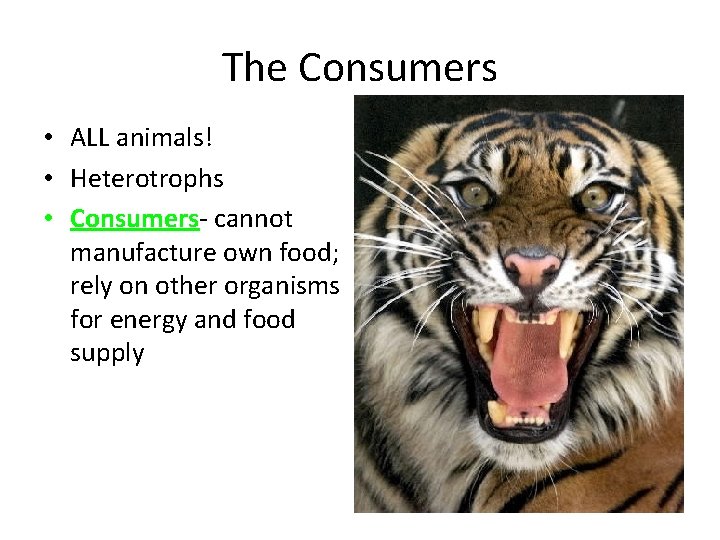
The Consumers • ALL animals! • Heterotrophs • Consumers- cannot manufacture own food; rely on other organisms for energy and food supply
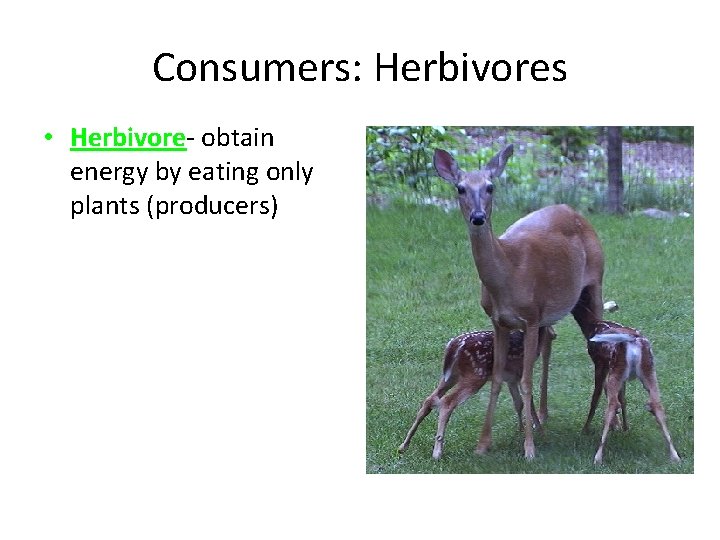
Consumers: Herbivores • Herbivore- obtain energy by eating only plants (producers)
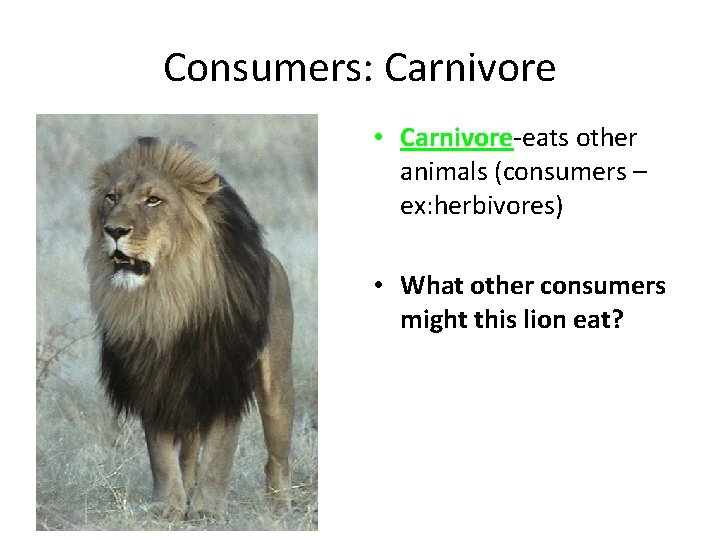
Consumers: Carnivore • Carnivore-eats other animals (consumers – ex: herbivores) • What other consumers might this lion eat?
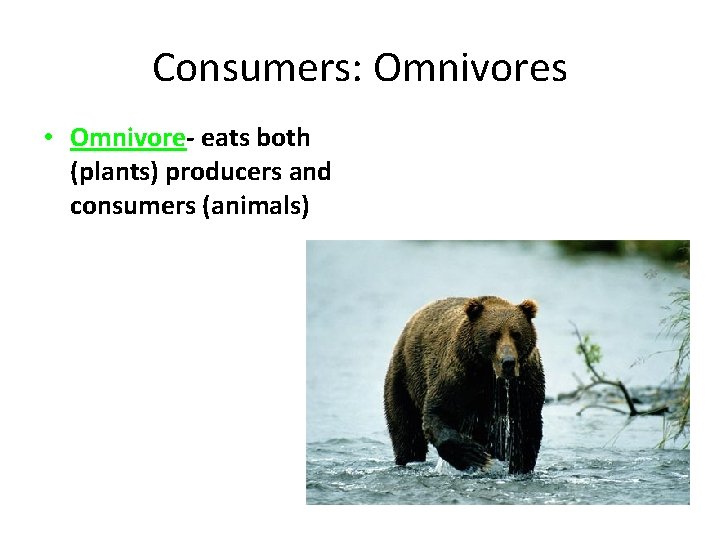
Consumers: Omnivores • Omnivore- eats both (plants) producers and consumers (animals)
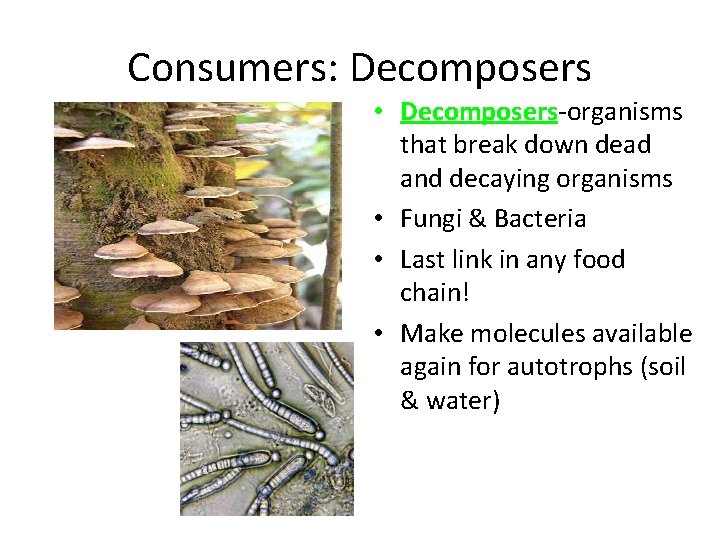
Consumers: Decomposers • Decomposers-organisms that break down dead and decaying organisms • Fungi & Bacteria • Last link in any food chain! • Make molecules available again for autotrophs (soil & water)
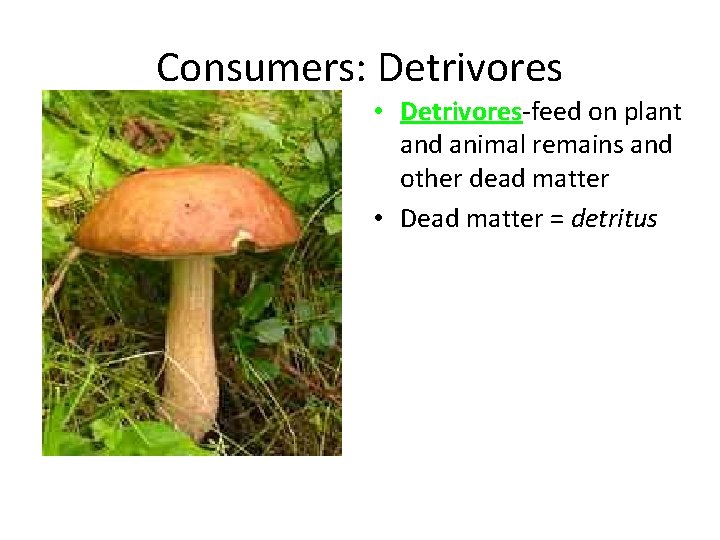
Consumers: Detrivores • Detrivores-feed on plant and animal remains and other dead matter • Dead matter = detritus
Energy Flow • One organism eats another, molecules are metabolized, and energy is transferred • Energy is non-cyclic, unidirectional flow • Organisms are grouped in an ecosystem according to how they obtain energy • Sun/inorganic cmpds autotrophs (producers) heterotrophs (consumers)
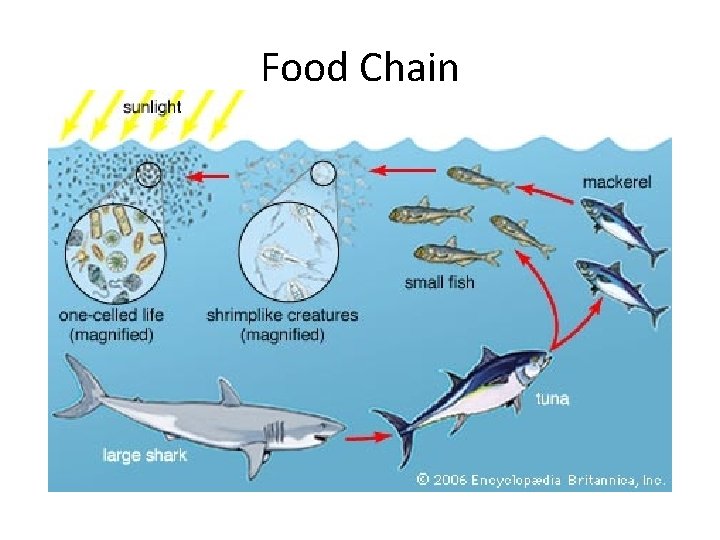
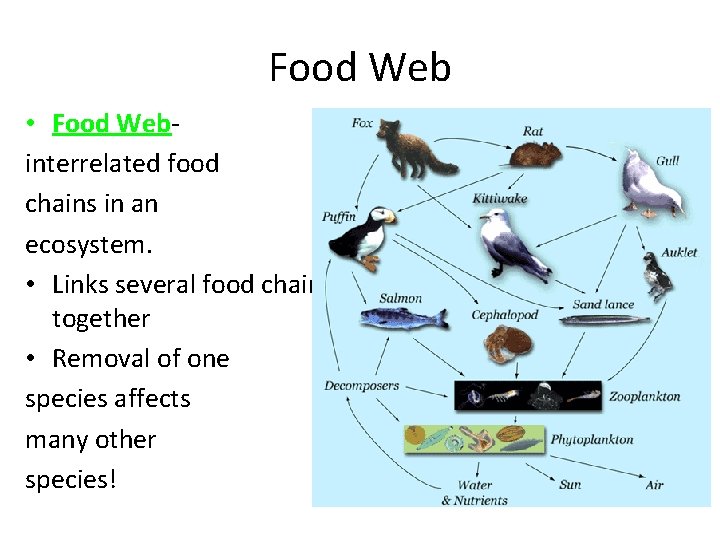
Food Chains • Food Chain-single pathway of feeding relationships among organisms in an ecosystem that result in energy transfer. • Feeding relationships in a real ecosystem are too complex! • Consumers eat more than one type of food! • More than one species may eat the same organism!
Food Chain
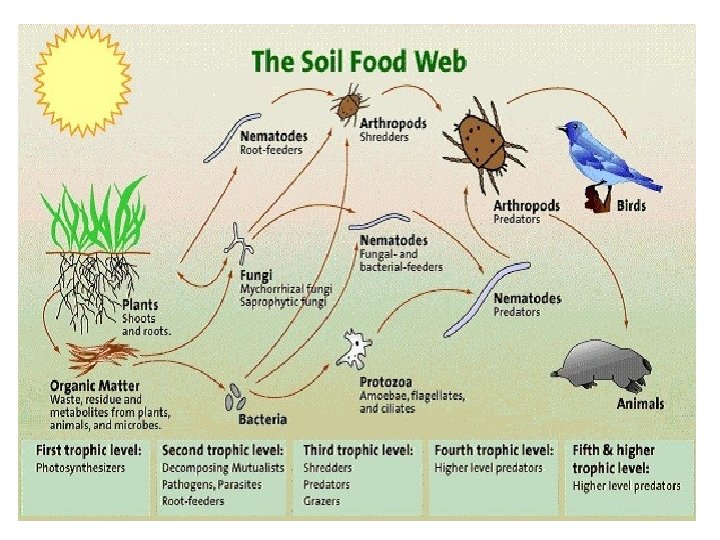
Food Web • Food Webinterrelated food chains in an ecosystem. • Links several food chains together • Removal of one species affects many other species!
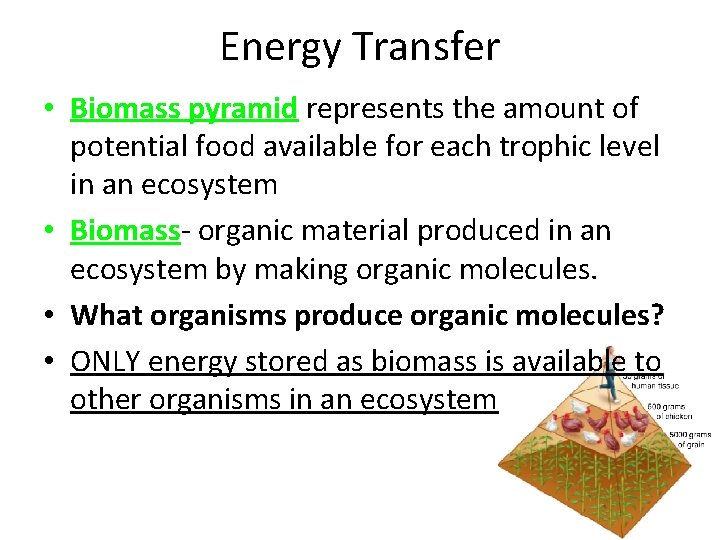
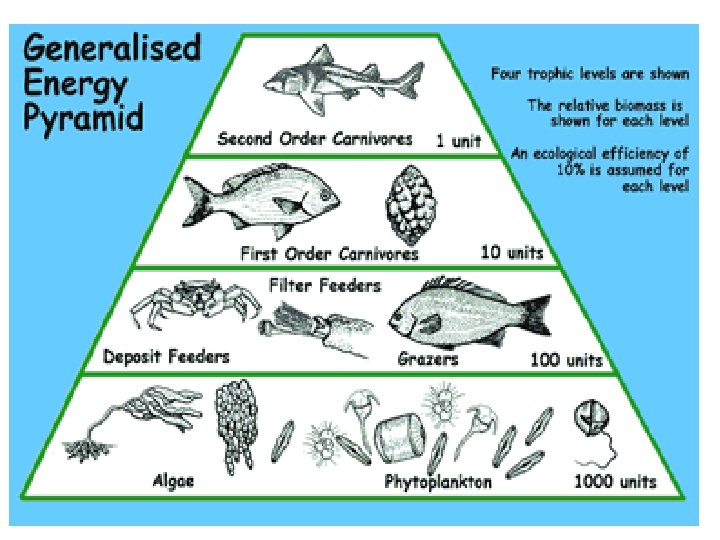
Energy Transfer • Biomass pyramid represents the amount of potential food available for each trophic level in an ecosystem • Biomass- organic material produced in an ecosystem by making organic molecules. • What organisms produce organic molecules? • ONLY energy stored as biomass is available to other organisms in an ecosystem
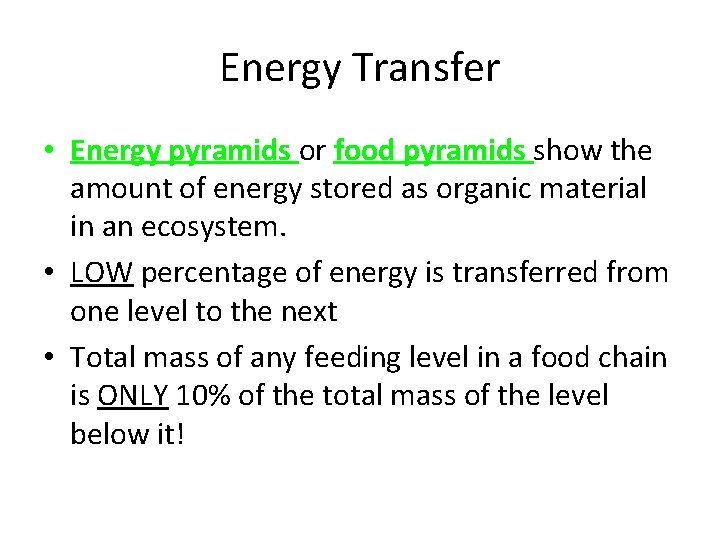
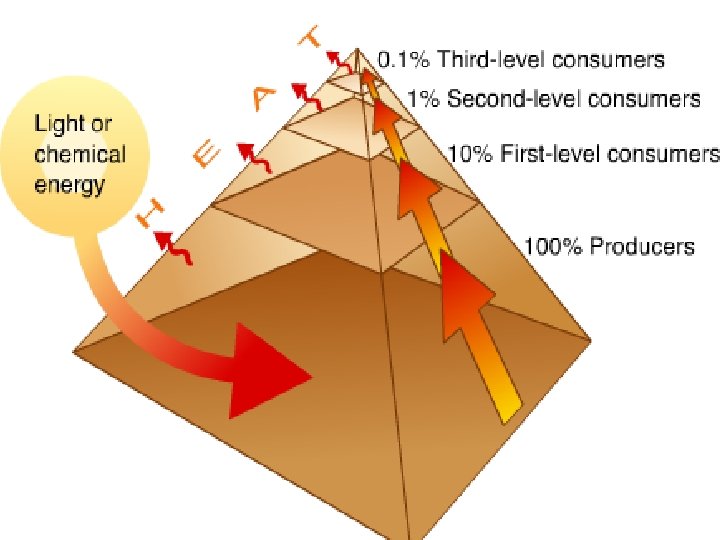
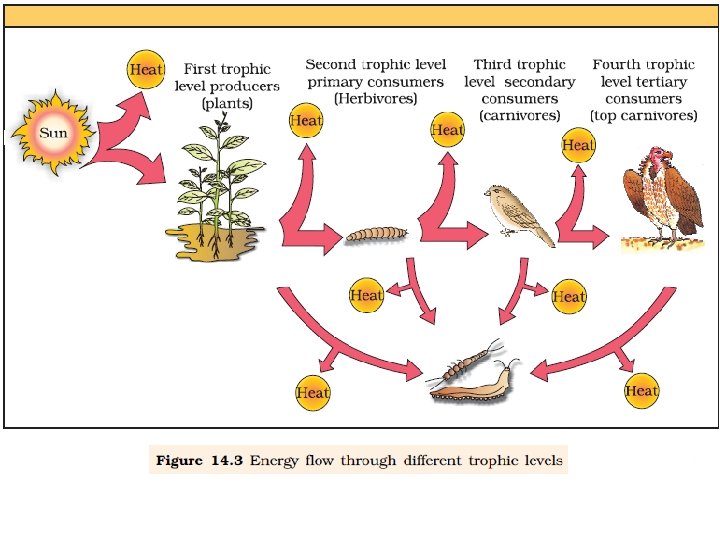
Energy Transfer • Energy pyramids or food pyramids show the amount of energy stored as organic material in an ecosystem. • LOW percentage of energy is transferred from one level to the next • Total mass of any feeding level in a food chain is ONLY 10% of the total mass of the level below it!
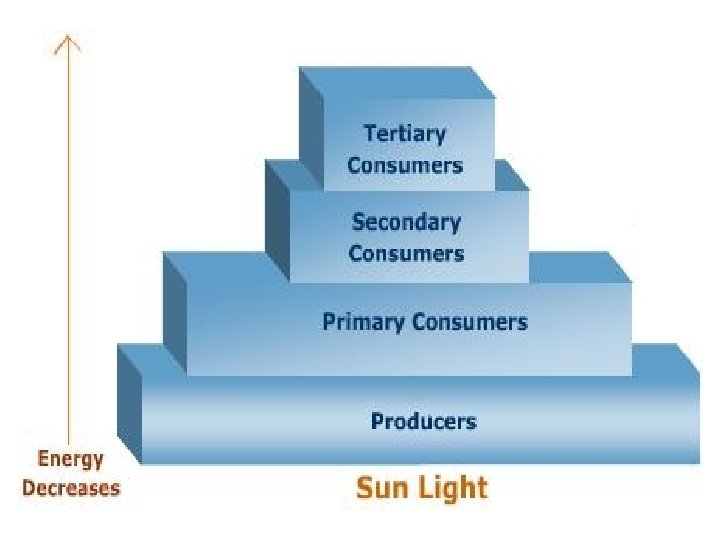
Energy Transfer • Each step in food chain/web/pyramid = trophic level • Producers 1 st level • Consumers 2 nd , 3 rd , or higher trophic levels – Consumers depend on the tropic level below it for energy – Ultimate source of energy = SUN
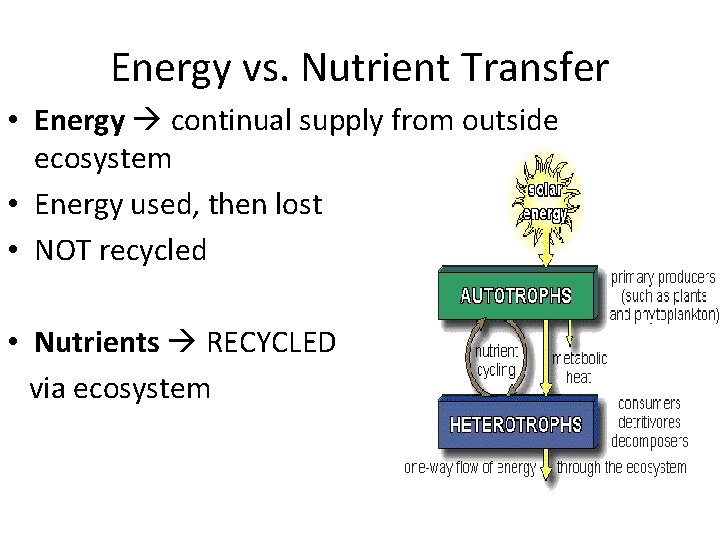
Energy vs. Nutrient Transfer • Energy continual supply from outside ecosystem • Energy used, then lost • NOT recycled • Nutrients RECYCLED via ecosystem
Why is Energy Decreasing? • Some organisms escape without being eaten • When an organism is eaten, some molecules will be found in a form that consumers cannot use • NO transfer of energy is 100% efficient! • Some energy will be lost as heat
Measuring Productivity • Gross Primary Productivity- rate at which producers in an ecosystem capture the energy of sunlight by producing organic compounds. • Photosynthetic producers use energy and carbon dioxide to make sugars • Use these sugars as food source and to store energy in a form that they can use • What might the producers need energy for?
Measuring Productivity • Net Primary Productivity- ecologists measure the rate at which biomass accumulates • Gross Primary Productivity – Rate of Respiration= Net Primary Productivity • Vary between ecosystems • Variations in light, temperature, precipitation, and availability of nutrients affect productivity • Increase in variable will cause an increase in productivity