
Ecology of Living Things Biology for Majors What
Ecology of Living Things Biology for Majors
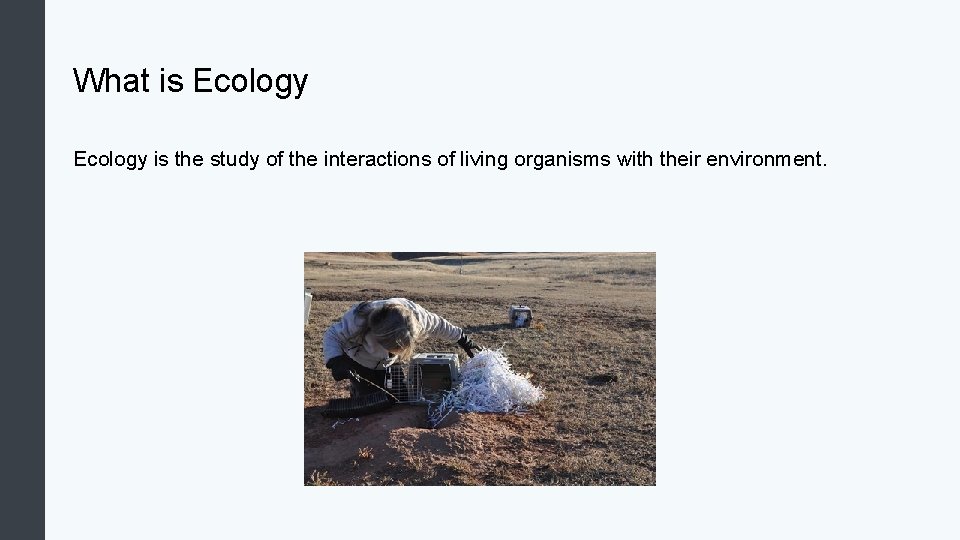
What is Ecology is the study of the interactions of living organisms with their environment.
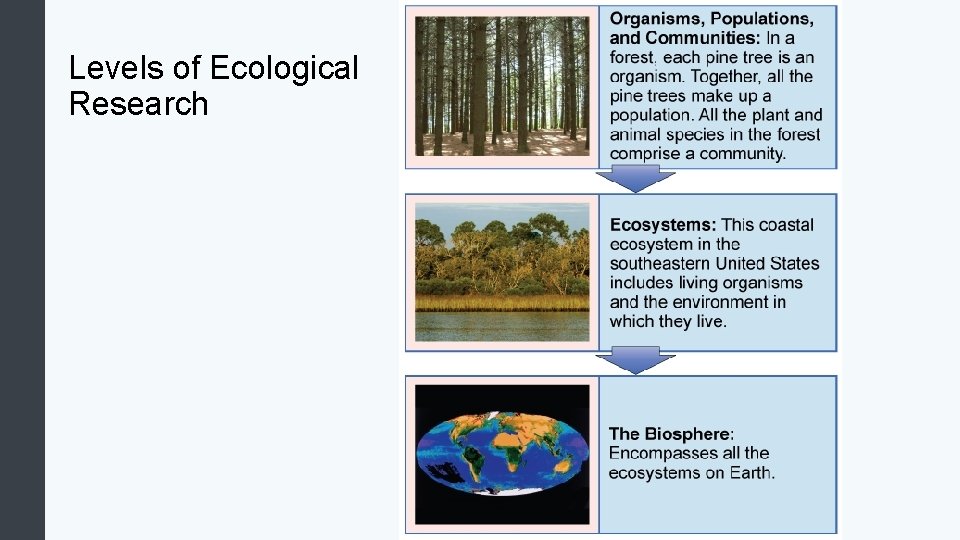
Levels of Ecological Research
Ecology can be classified based on: • • • the primary kinds of organism under study (e. g. animal ecology, plant ecology, insect ecology) the biomes principally studied (e. g. forest ecology, grassland ecology, desert ecology, benthic ecology, marine ecology, urban ecology) the geographic or climatic area (e. g. arctic ecology, tropical ecology) the spatial scale under consideration (e. g. macroecology, landscape ecology) the philosophical approach (e. g. systems ecology which adopts a holistic approach) the methods used (e. g. molecular ecology)
The Biosphere The biosphere is all of the parts of Earth inhabited by life. The biosphere extends into the atmosphere and into the depths of the oceans. Many abiotic (non-living) forces influence where life can exist and the types of organisms found in different parts of the biosphere.
Biogeography is the study of the geographic distribution of living things and the abiotic factors (such as temperature or rainfall) that affect their distribution.
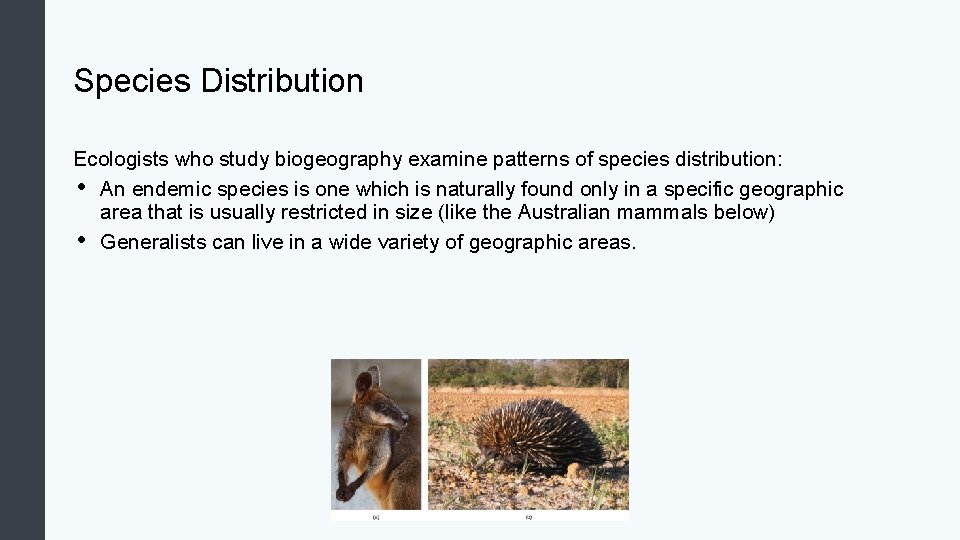
Species Distribution Ecologists who study biogeography examine patterns of species distribution: • An endemic species is one which is naturally found only in a specific geographic area that is usually restricted in size (like the Australian mammals below) • Generalists can live in a wide variety of geographic areas.
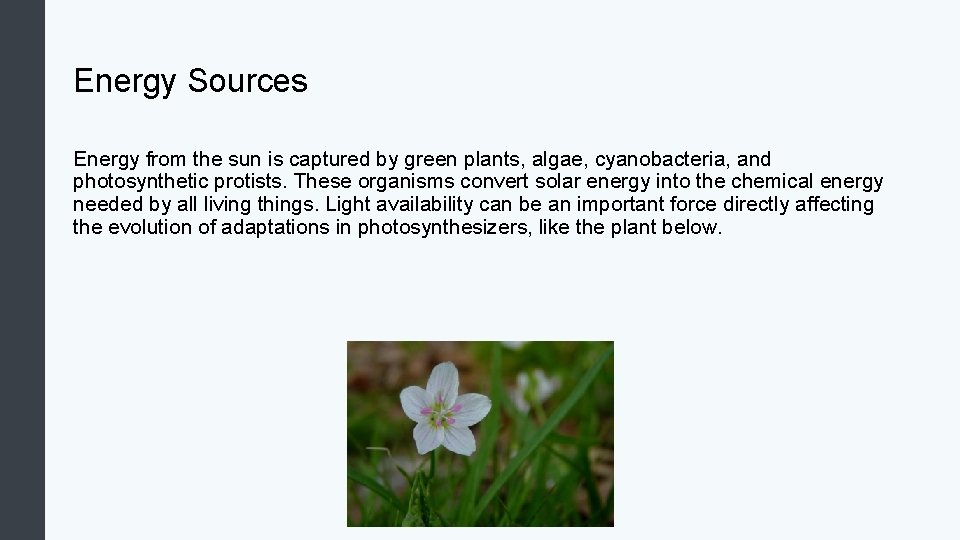
Energy Sources Energy from the sun is captured by green plants, algae, cyanobacteria, and photosynthetic protists. These organisms convert solar energy into the chemical energy needed by all living things. Light availability can be an important force directly affecting the evolution of adaptations in photosynthesizers, like the plant below.
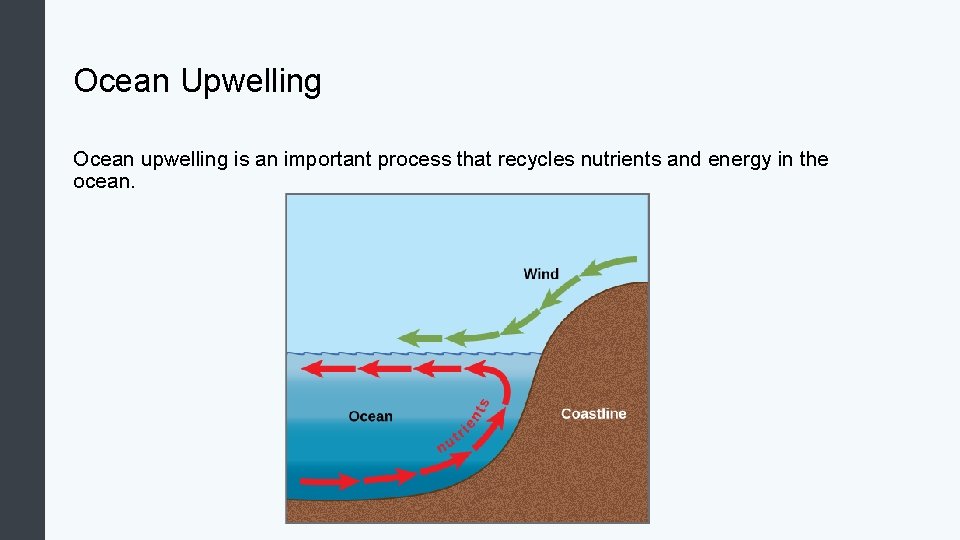
Ocean Upwelling Ocean upwelling is an important process that recycles nutrients and energy in the ocean.
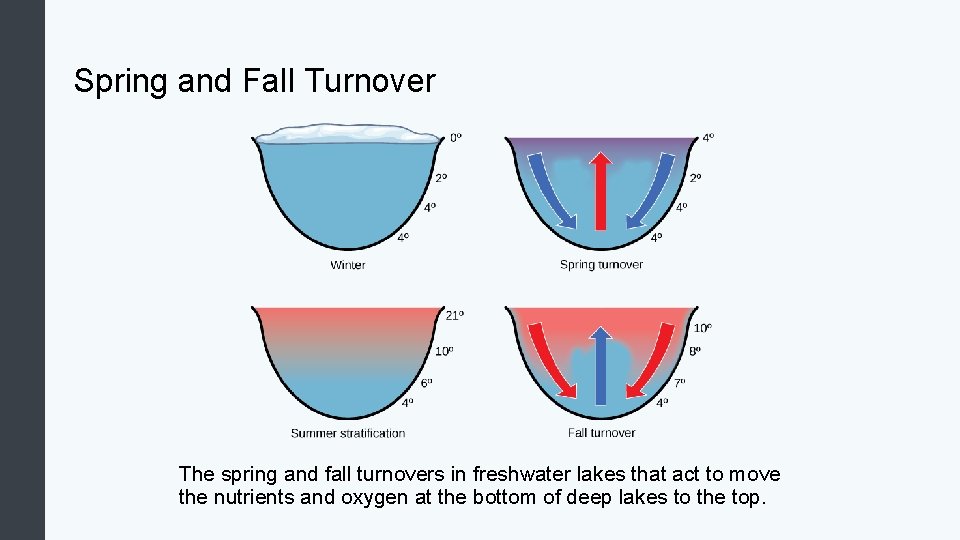
Spring and Fall Turnover The spring and fall turnovers in freshwater lakes that act to move the nutrients and oxygen at the bottom of deep lakes to the top.
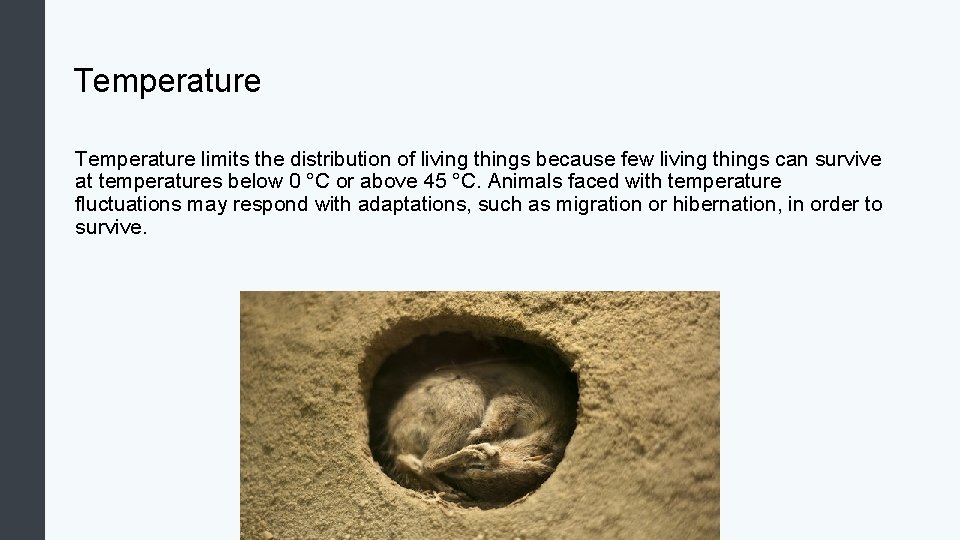
Temperature limits the distribution of living things because few living things can survive at temperatures below 0 °C or above 45 °C. Animals faced with temperature fluctuations may respond with adaptations, such as migration or hibernation, in order to survive.
Abiotic Factors that Influence Plant Growth Temperature, moisture, soil nutrients, and light are important influences on plant production (primary productivity) and the amount of organic matter available as food (net primary productivity). Net primary productivity is an estimation of all of the organic matter available as food; it is calculated as the total amount of carbon fixed per year minus the amount that is oxidized during cellular respiration. In terrestrial environments, net primary productivity is estimated by measuring the aboveground biomass per unit area, which is the total mass of living plants, excluding roots.
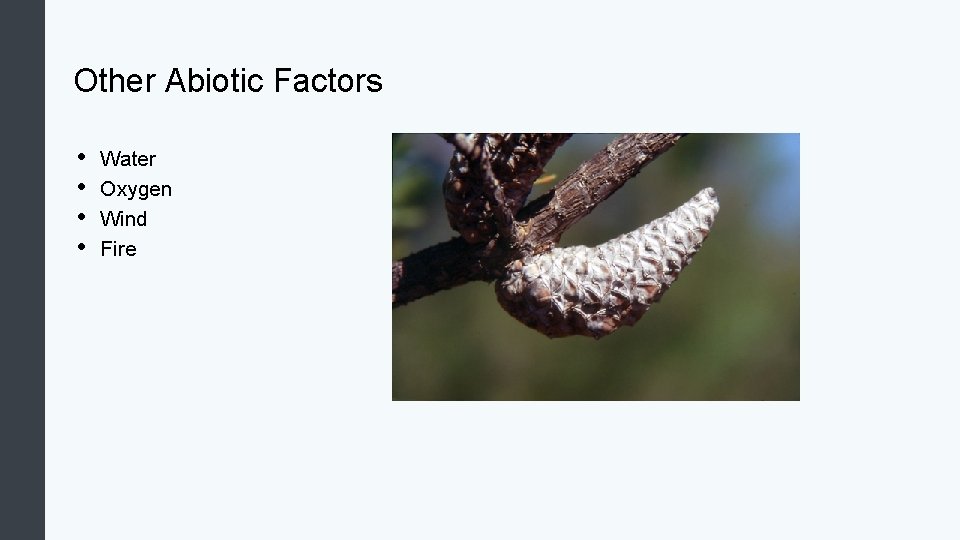
Other Abiotic Factors • • Water Oxygen Wind Fire
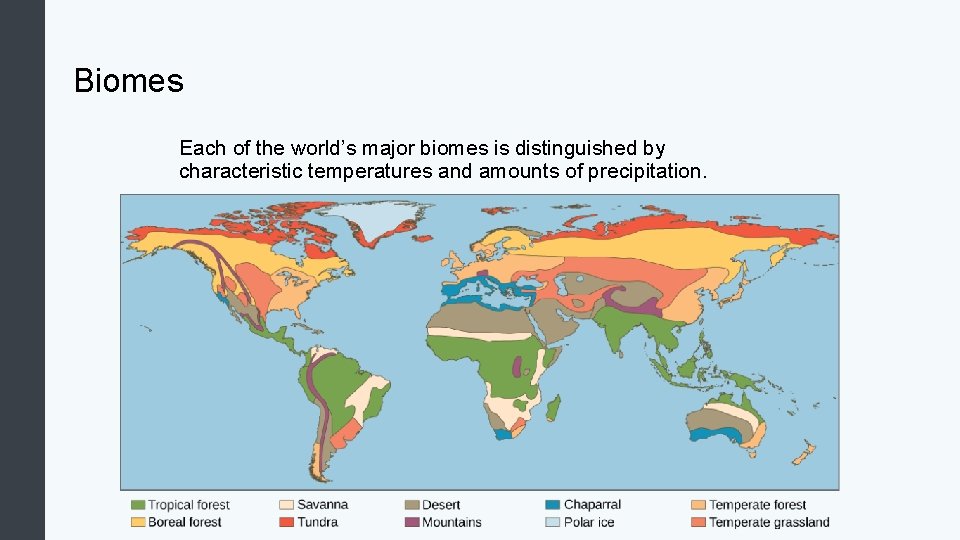
Biomes Each of the world’s major biomes is distinguished by characteristic temperatures and amounts of precipitation.
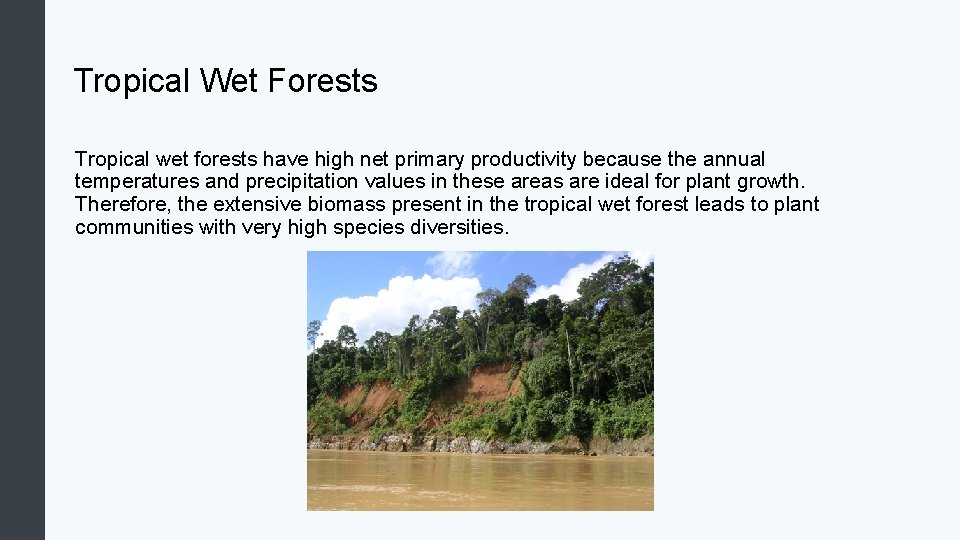
Tropical Wet Forests Tropical wet forests have high net primary productivity because the annual temperatures and precipitation values in these areas are ideal for plant growth. Therefore, the extensive biomass present in the tropical wet forest leads to plant communities with very high species diversities.
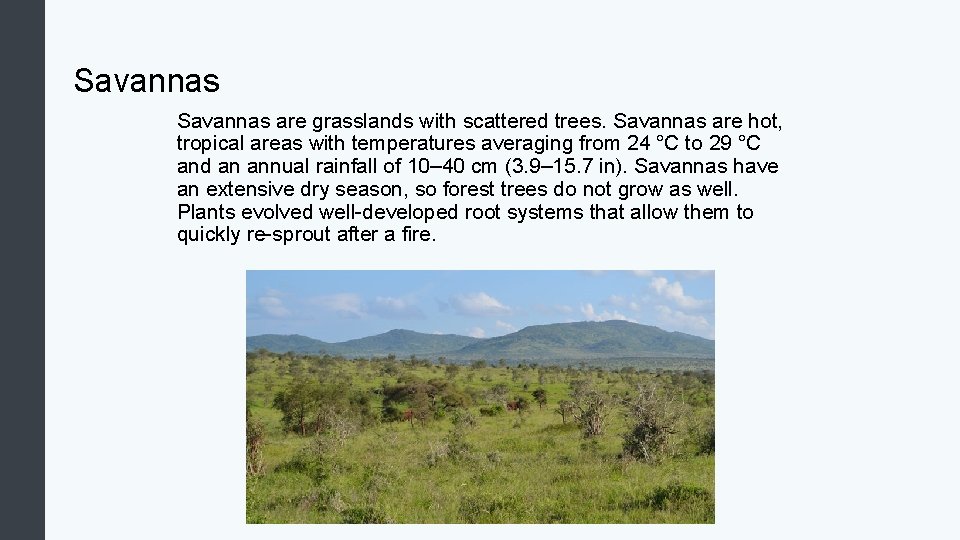
Savannas are grasslands with scattered trees. Savannas are hot, tropical areas with temperatures averaging from 24 °C to 29 °C and an annual rainfall of 10– 40 cm (3. 9– 15. 7 in). Savannas have an extensive dry season, so forest trees do not grow as well. Plants evolved well-developed root systems that allow them to quickly re-sprout after a fire.
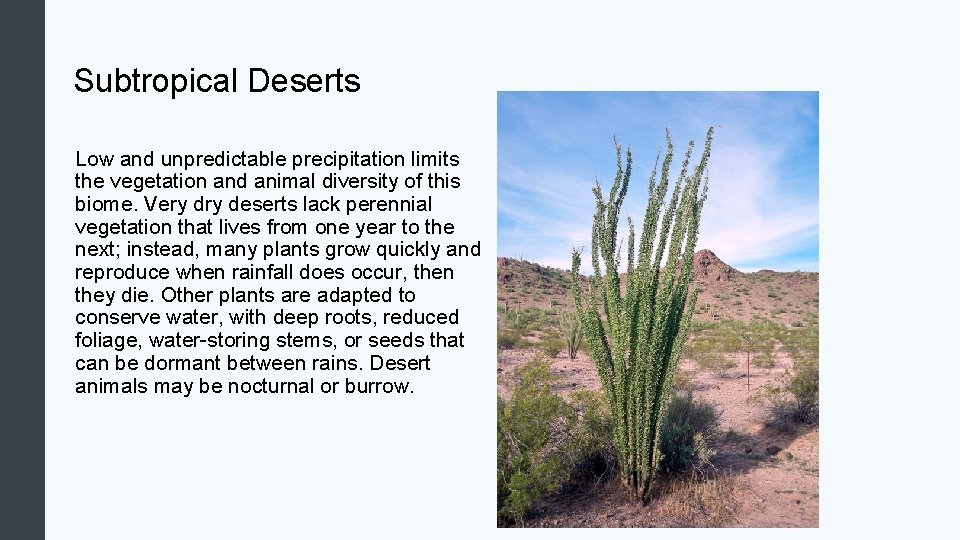
Subtropical Deserts Low and unpredictable precipitation limits the vegetation and animal diversity of this biome. Very deserts lack perennial vegetation that lives from one year to the next; instead, many plants grow quickly and reproduce when rainfall does occur, then they die. Other plants are adapted to conserve water, with deep roots, reduced foliage, water-storing stems, or seeds that can be dormant between rains. Desert animals may be nocturnal or burrow.
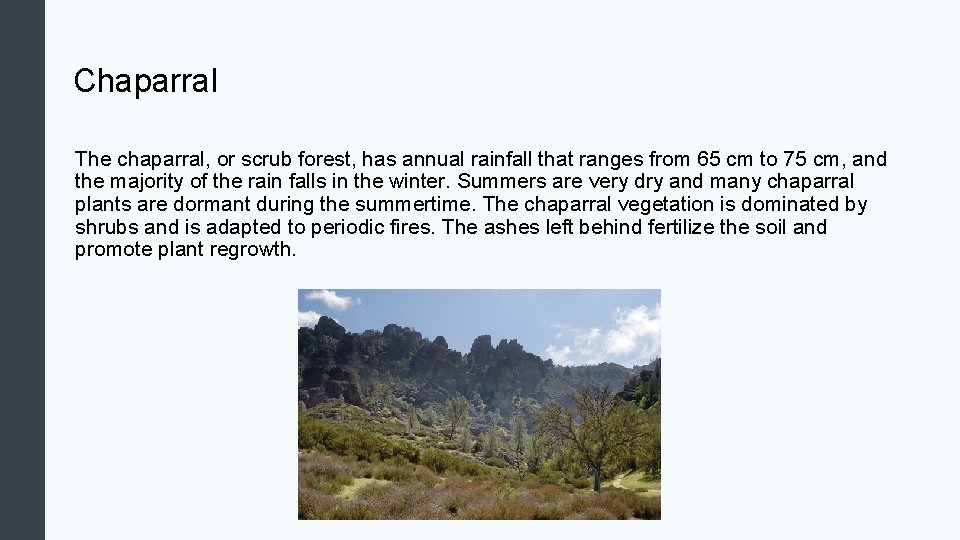
Chaparral The chaparral, or scrub forest, has annual rainfall that ranges from 65 cm to 75 cm, and the majority of the rain falls in the winter. Summers are very dry and many chaparral plants are dormant during the summertime. The chaparral vegetation is dominated by shrubs and is adapted to periodic fires. The ashes left behind fertilize the soil and promote plant regrowth.
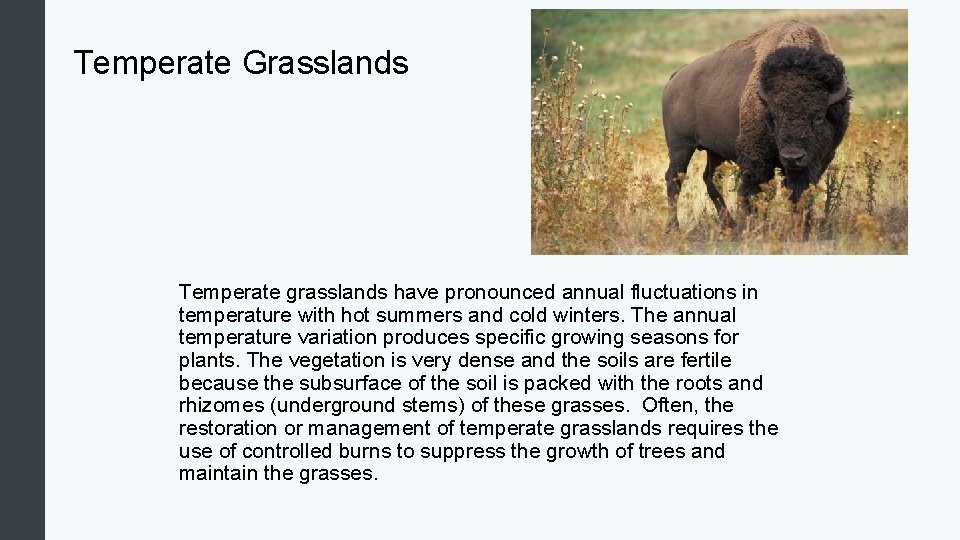
Temperate Grasslands Temperate grasslands have pronounced annual fluctuations in temperature with hot summers and cold winters. The annual temperature variation produces specific growing seasons for plants. The vegetation is very dense and the soils are fertile because the subsurface of the soil is packed with the roots and rhizomes (underground stems) of these grasses. Often, the restoration or management of temperate grasslands requires the use of controlled burns to suppress the growth of trees and maintain the grasses.
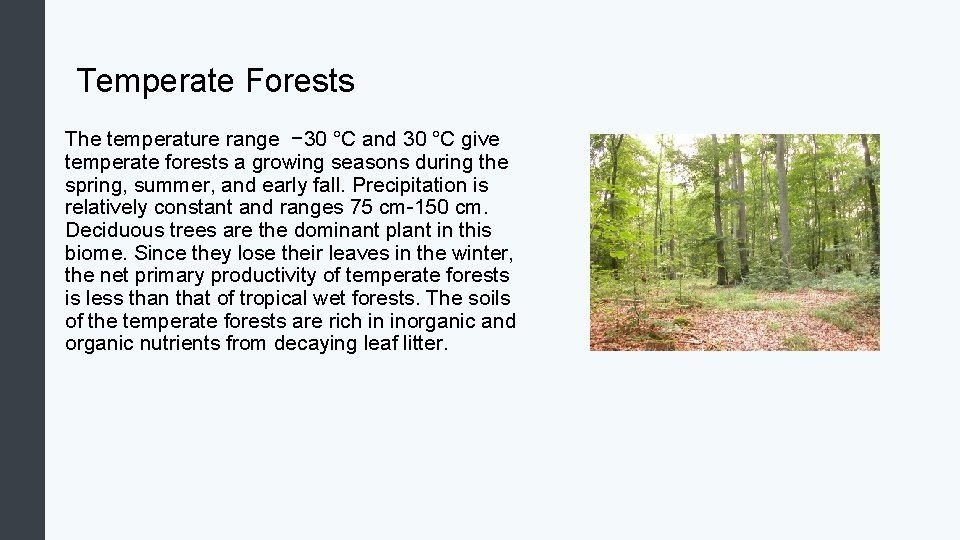
Temperate Forests The temperature range − 30 °C and 30 °C give temperate forests a growing seasons during the spring, summer, and early fall. Precipitation is relatively constant and ranges 75 cm-150 cm. Deciduous trees are the dominant plant in this biome. Since they lose their leaves in the winter, the net primary productivity of temperate forests is less than that of tropical wet forests. The soils of the temperate forests are rich in inorganic and organic nutrients from decaying leaf litter.
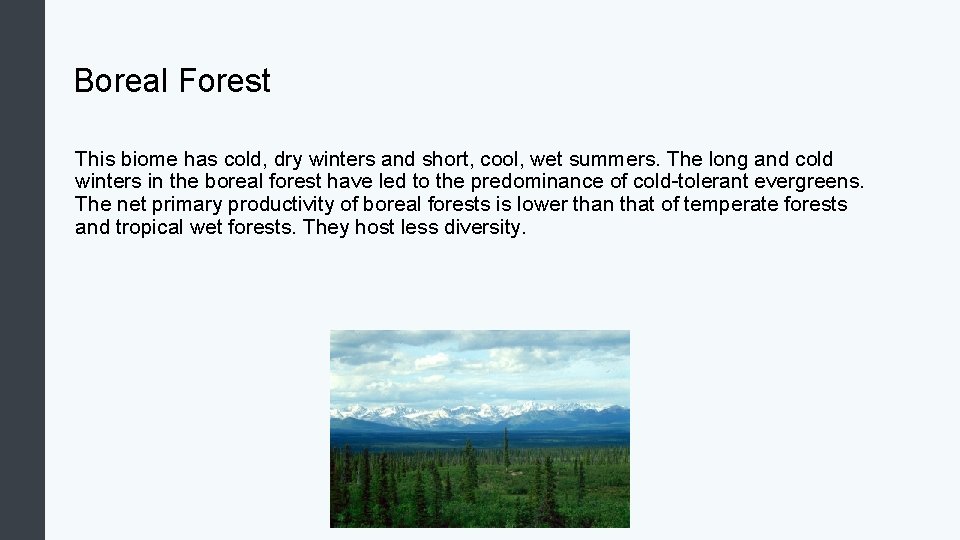
Boreal Forest This biome has cold, dry winters and short, cool, wet summers. The long and cold winters in the boreal forest have led to the predominance of cold-tolerant evergreens. The net primary productivity of boreal forests is lower than that of temperate forests and tropical wet forests. They host less diversity.
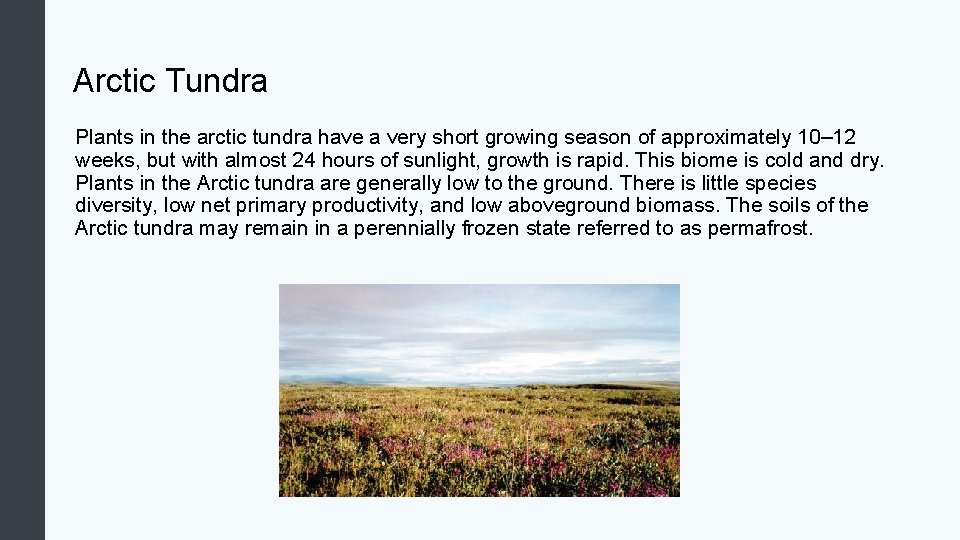
Arctic Tundra Plants in the arctic tundra have a very short growing season of approximately 10– 12 weeks, but with almost 24 hours of sunlight, growth is rapid. This biome is cold and dry. Plants in the Arctic tundra are generally low to the ground. There is little species diversity, low net primary productivity, and low aboveground biomass. The soils of the Arctic tundra may remain in a perennially frozen state referred to as permafrost.
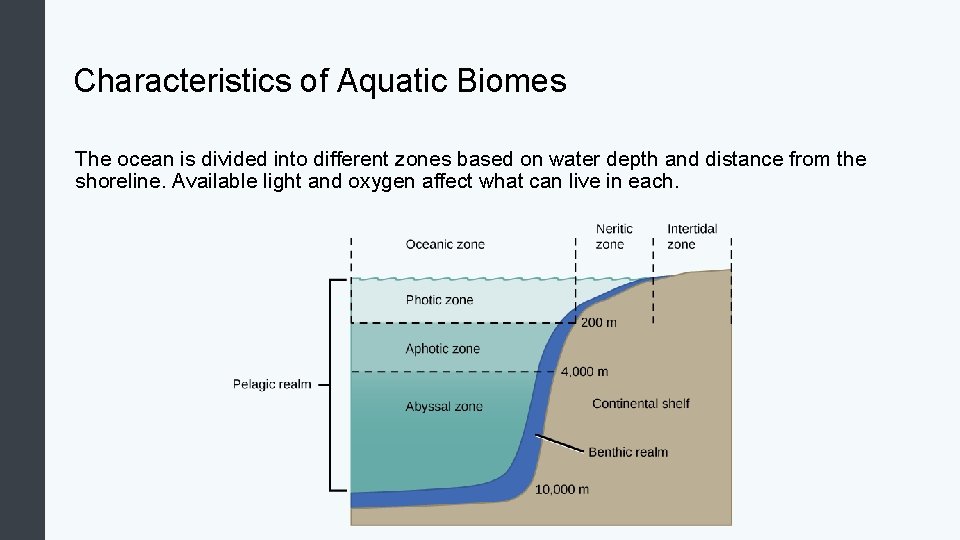
Characteristics of Aquatic Biomes The ocean is divided into different zones based on water depth and distance from the shoreline. Available light and oxygen affect what can live in each.
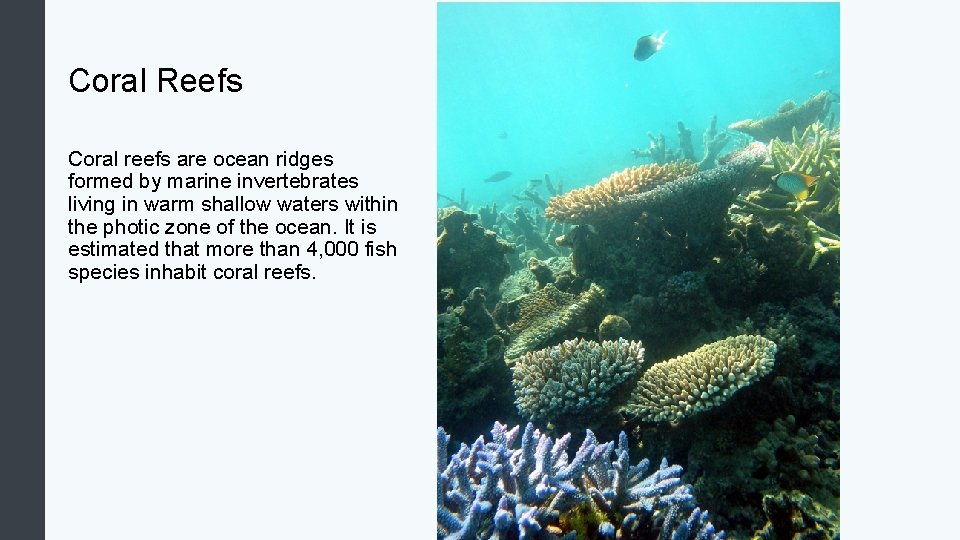
Coral Reefs Coral reefs are ocean ridges formed by marine invertebrates living in warm shallow waters within the photic zone of the ocean. It is estimated that more than 4, 000 fish species inhabit coral reefs.
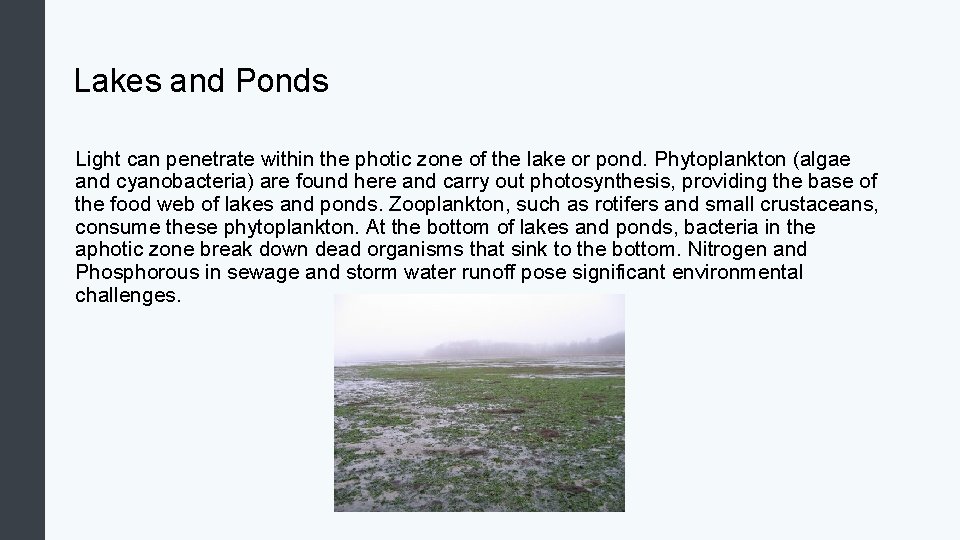
Lakes and Ponds Light can penetrate within the photic zone of the lake or pond. Phytoplankton (algae and cyanobacteria) are found here and carry out photosynthesis, providing the base of the food web of lakes and ponds. Zooplankton, such as rotifers and small crustaceans, consume these phytoplankton. At the bottom of lakes and ponds, bacteria in the aphotic zone break down dead organisms that sink to the bottom. Nitrogen and Phosphorous in sewage and storm water runoff pose significant environmental challenges.
Rivers and Streams Rivers and streams are continuously moving bodies of water that carry large amounts of water from the source, or headwater, to a lake or ocean. Abiotic features of rivers and streams vary along the length of the river or stream. Near the headwaters, water is fast-moving and clear. Closer to the lake or ocean it is murkier and slower moving. Different organism are adapted to these parts of the river.
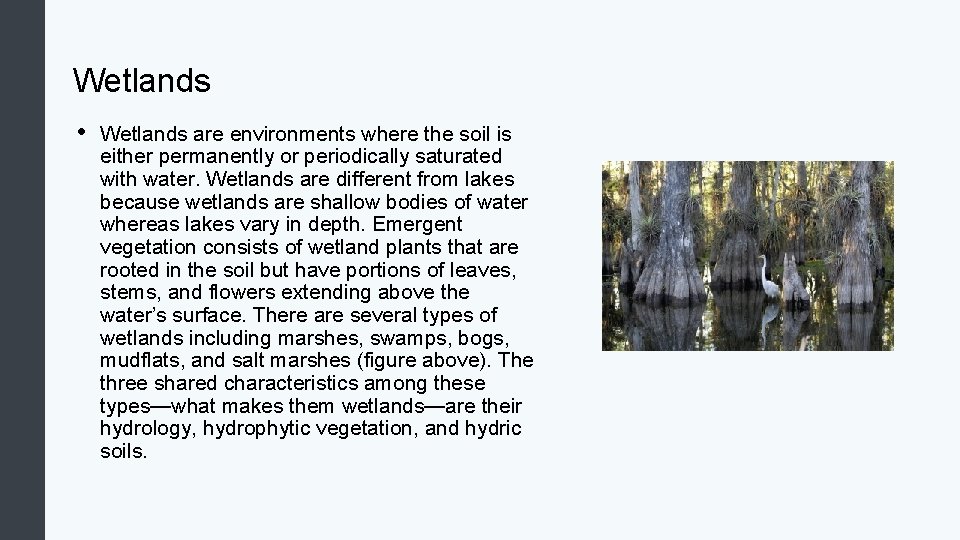
Wetlands • Wetlands are environments where the soil is either permanently or periodically saturated with water. Wetlands are different from lakes because wetlands are shallow bodies of water whereas lakes vary in depth. Emergent vegetation consists of wetland plants that are rooted in the soil but have portions of leaves, stems, and flowers extending above the water’s surface. There are several types of wetlands including marshes, swamps, bogs, mudflats, and salt marshes (figure above). The three shared characteristics among these types—what makes them wetlands—are their hydrology, hydrophytic vegetation, and hydric soils.
Estuaries are biomes that occur where a source of fresh water, such as a river, meets the ocean. Therefore, both fresh water and salt water are found in the same vicinity; mixing results in a diluted (brackish) saltwater. Estuaries form protected areas where many of the young offspring of crustaceans, mollusks, and fish begin their lives. Salinity is a very important factor that influences the organisms and the adaptations of the organisms found in estuaries.
Population Demography Populations are dynamic entities. Populations consist all of the species living within a specific area, and populations fluctuate based on a number of factors: seasonal and yearly changes in the environment, natural disasters such as forest fires and volcanic eruptions, and competition for resources between and within species. The statistical study of population dynamics, demography, uses a series of mathematical tools to investigate how populations respond to changes in their biotic and abiotic environments.
Population Size and Density Within a particular habitat, a population can be characterized by its population size (N), the total number of individuals, and its population density, the number of individuals within a specific area or volume. Population size and density are the two main characteristics used to describe and understand populations. For example, populations with more individuals may be more stable than smaller populations based on their genetic variability, and thus their potential to adapt to the environment.
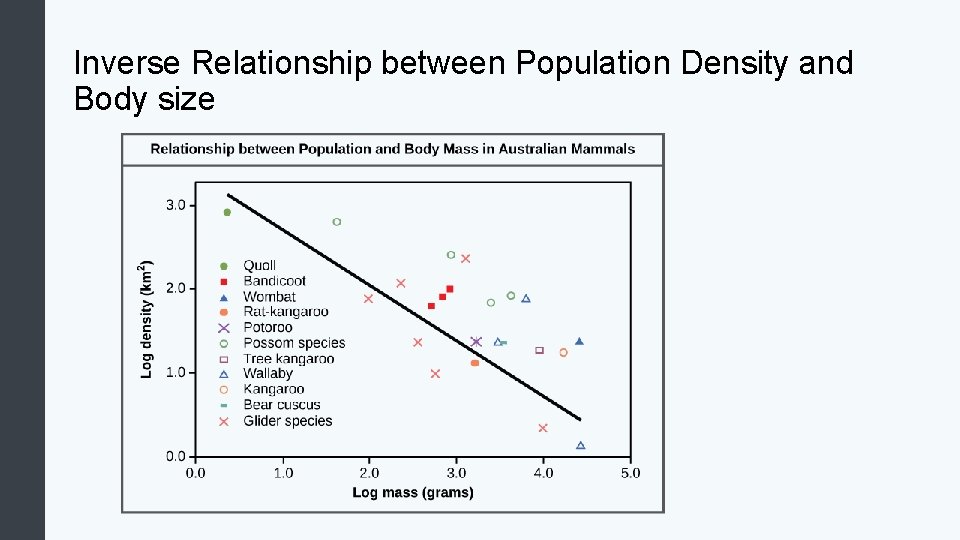
Inverse Relationship between Population Density and Body size
Population Research Methods Scientists usually study populations by sampling a representative portion of each habitat and using this data to make inferences about the habitat as a whole.
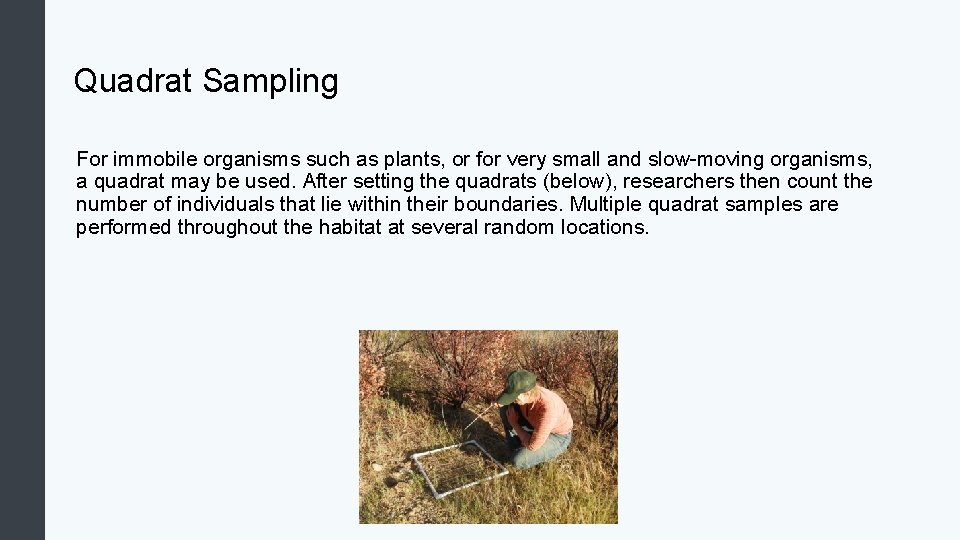
Quadrat Sampling For immobile organisms such as plants, or for very small and slow-moving organisms, a quadrat may be used. After setting the quadrats (below), researchers then count the number of individuals that lie within their boundaries. Multiple quadrat samples are performed throughout the habitat at several random locations.
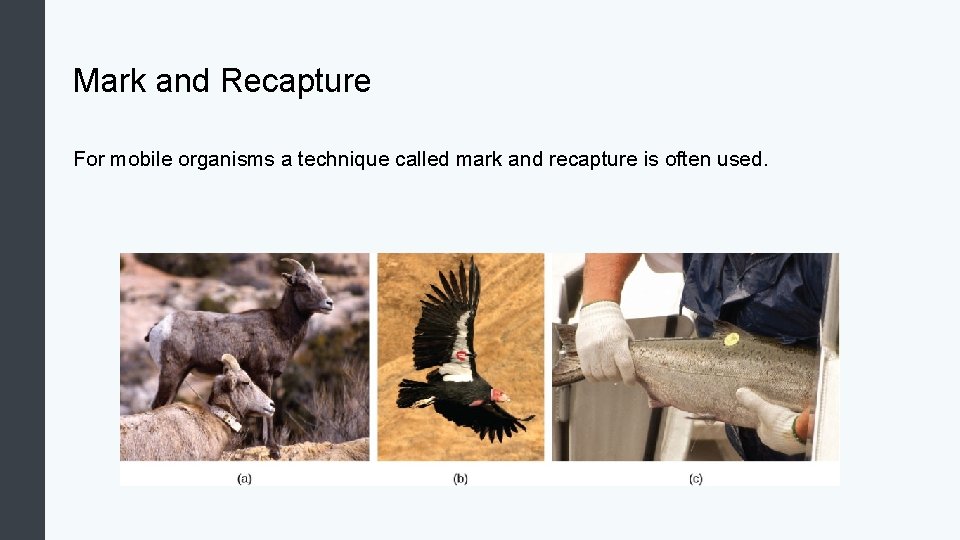
Mark and Recapture For mobile organisms a technique called mark and recapture is often used.
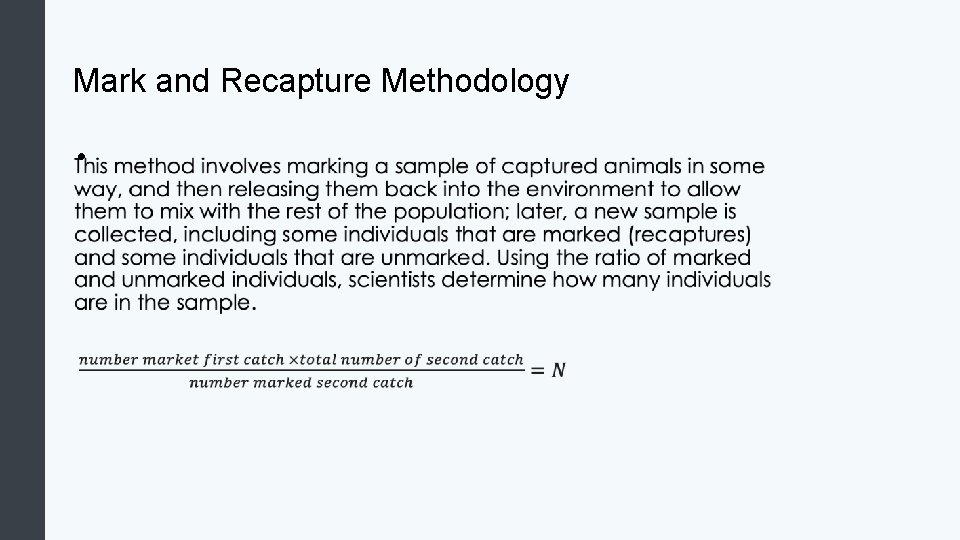
Mark and Recapture Methodology •
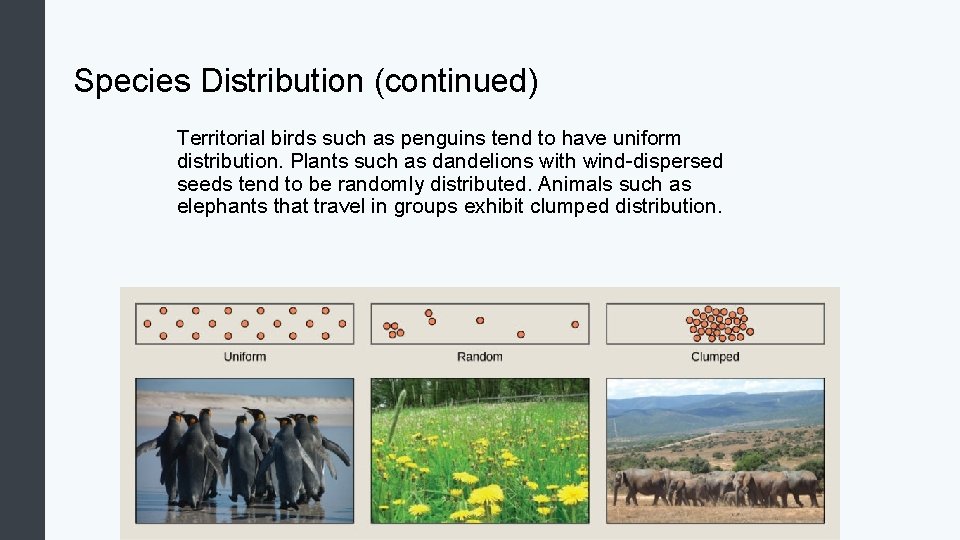
Species Distribution (continued) Territorial birds such as penguins tend to have uniform distribution. Plants such as dandelions with wind-dispersed seeds tend to be randomly distributed. Animals such as elephants that travel in groups exhibit clumped distribution.
Demography is the statistical study of population changes over time: birth rates, death rates, and life expectancies. Life tables provide important information about the life history of an organism. Life tables divide the population into age groups and often sexes, and show long a member of that group is likely to live. Life tables may include the probability of individuals dying before their next birthday (i. e. , their mortality rate), the percentage of surviving individuals dying at a particular age interval, and their life expectancy at each interval.
Survivorship Curve Survivorship curve, which is a graph of the number of individuals surviving at each age interval plotted versus time (usually with data compiled from a life table). These curves allow us to compare the life histories of different populations.
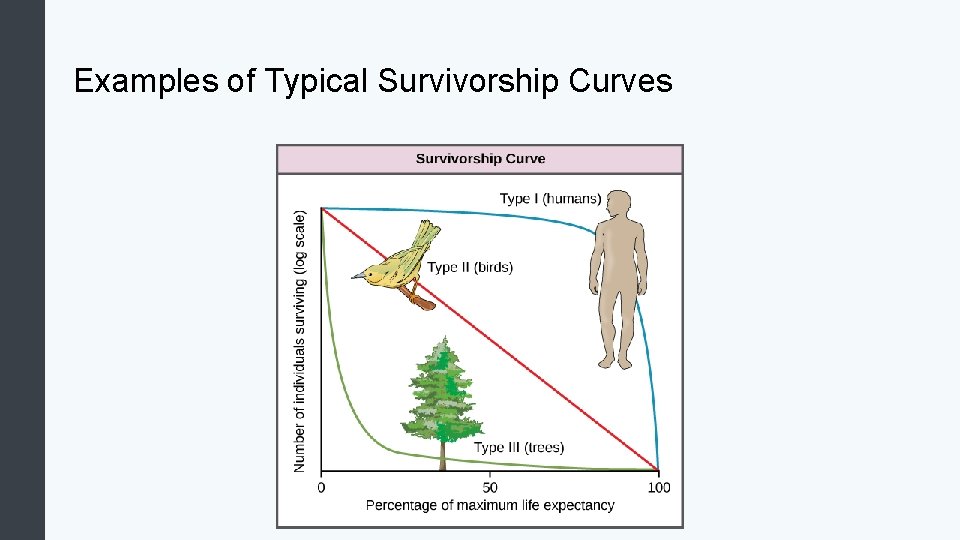
Examples of Typical Survivorship Curves
Life Histories and Natural Selection All species have evolved a pattern of living, called a life history strategy, in which they partition energy for growth, maintenance, and reproduction. These patterns evolve through natural selection; they allow species to adapt to their environment to obtain the resources they need to successfully reproduce. There is an inverse relationship between fecundity and parental care. A species may reproduce early in life to ensure surviving to a reproductive age or reproduce later in life to become larger and healthier and better able to give parental care. A species may reproduce once (semelparity) or many times (iteroparity) in its life.
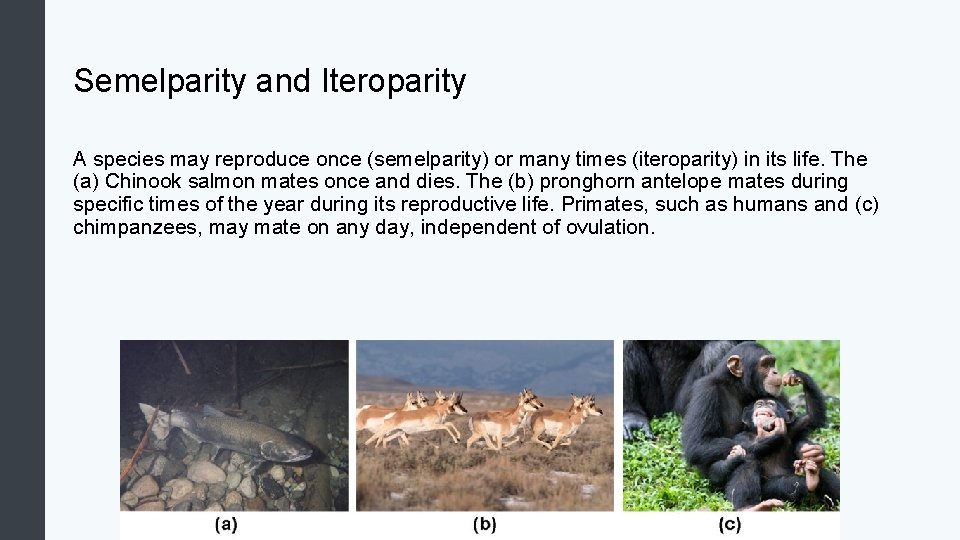
Semelparity and Iteroparity A species may reproduce once (semelparity) or many times (iteroparity) in its life. The (a) Chinook salmon mates once and dies. The (b) pronghorn antelope mates during specific times of the year during its reproductive life. Primates, such as humans and (c) chimpanzees, may mate on any day, independent of ovulation.
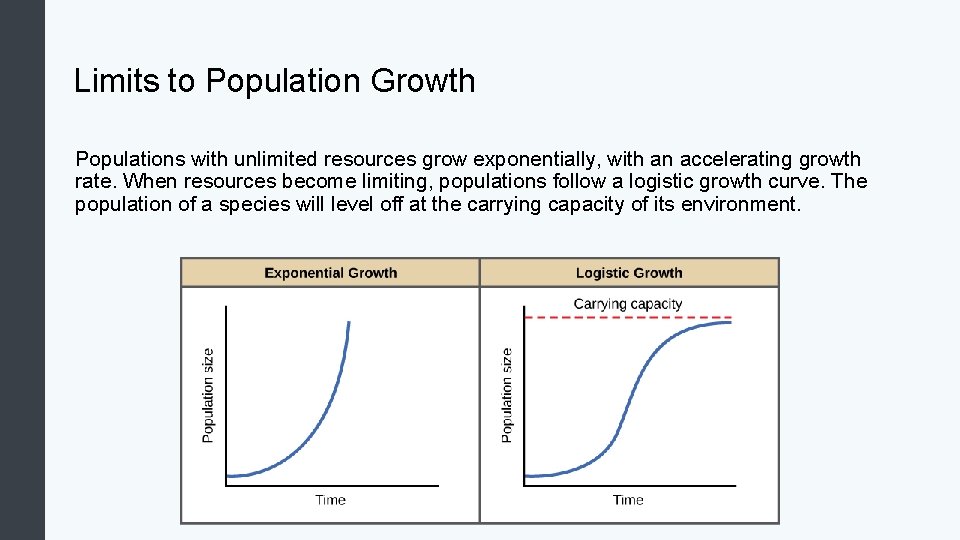
Limits to Population Growth Populations with unlimited resources grow exponentially, with an accelerating growth rate. When resources become limiting, populations follow a logistic growth curve. The population of a species will level off at the carrying capacity of its environment.
Population Dynamics The logistic model of population growth is a simplification of real-world population dynamics. Implicit in the model is that the carrying capacity of the environment does not change, which is not the case. Carrying capacity can vary with season and from year to year. Additionally, populations do not usually exist in isolation. They engage in interspecific competition: that is, they share the environment with other species, competing with them for the same resources.
Regulation Nature regulates population growth in a variety of ways. These are grouped into density -dependent factors, in which the density of the population at a given time affects growth rate and mortality, and density-independent factors, which influence mortality in a population regardless of population density.
Density Dependent Factors Most density-dependent factors are biological in nature (biotic), and include predation, inter- and intraspecific competition, accumulation of waste, and diseases such as those caused by parasites. Usually, the denser a population is, the greater its mortality rate. For example, during intra- and interspecific competition, the reproductive rates of the individuals will usually be lower, reducing their population’s rate of growth. In addition, low prey density increases the mortality of its predator because it has more difficulty locating its food source.
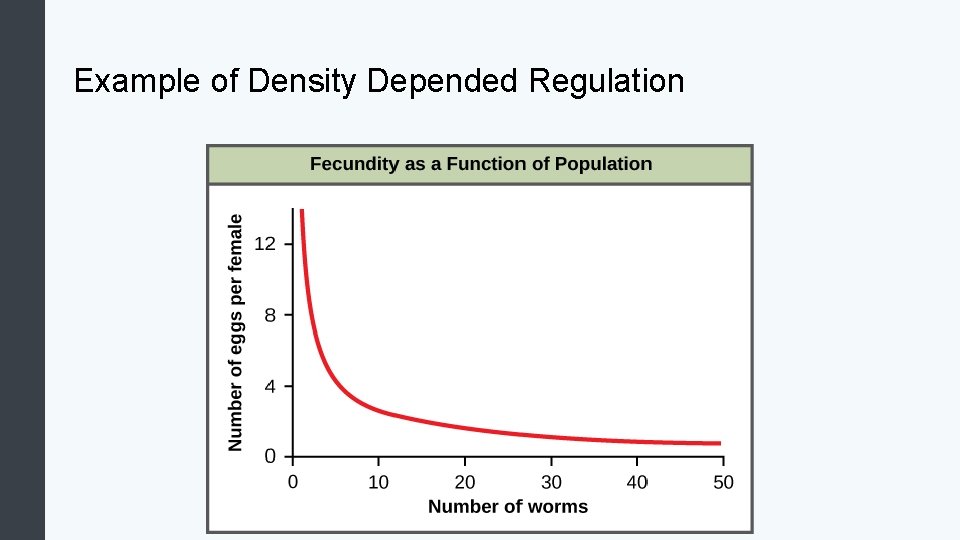
Example of Density Depended Regulation
Density-Independent Regulation Many factors, typically physical or chemical in nature (abiotic), influence the mortality of a population regardless of its density, including weather, natural disasters, and pollution. In real-life situations, population regulation is very complicated and density-dependent and independent factors can interact. A dense population that is reduced in a densityindependent manner by some environmental factor(s) will be able to recover differently than a sparse population.
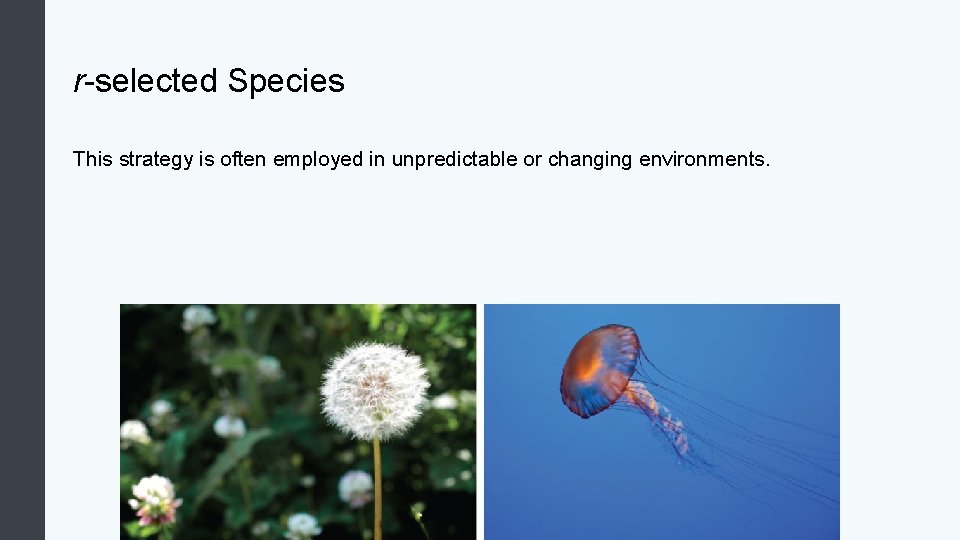
r-selected Species This strategy is often employed in unpredictable or changing environments.
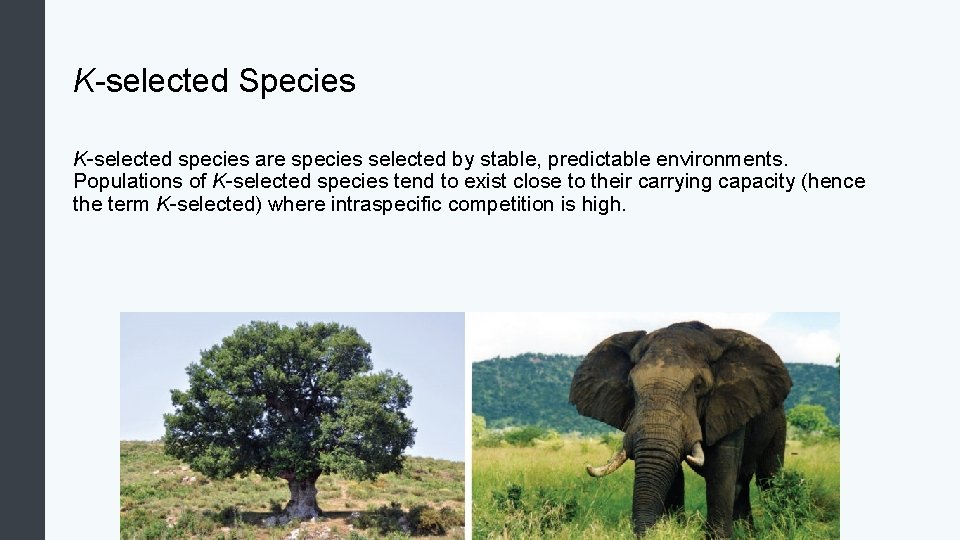
K-selected Species K-selected species are species selected by stable, predictable environments. Populations of K-selected species tend to exist close to their carrying capacity (hence the term K-selected) where intraspecific competition is high.
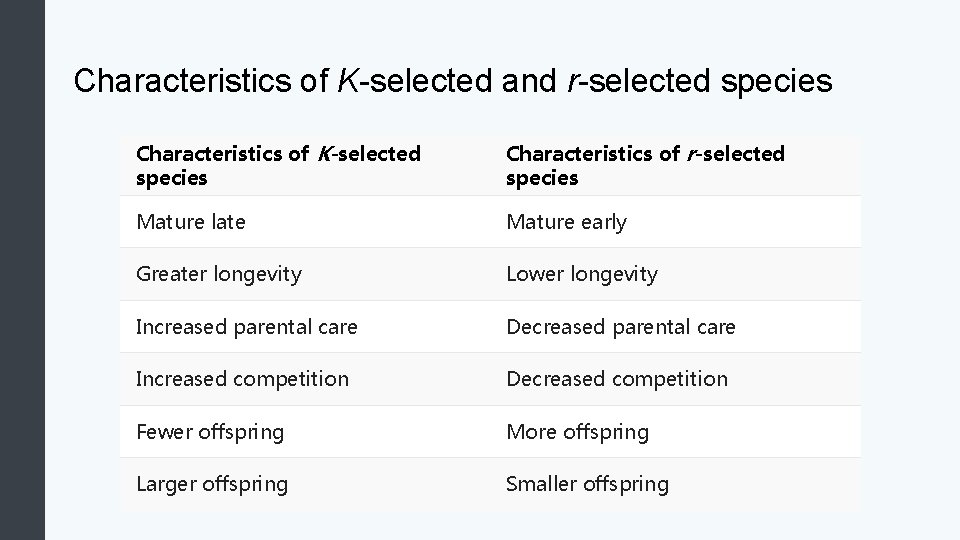
Characteristics of K-selected and r-selected species Characteristics of K-selected species Characteristics of r-selected species Mature late Mature early Greater longevity Lower longevity Increased parental care Decreased parental care Increased competition Decreased competition Fewer offspring More offspring Larger offspring Smaller offspring
Criticism of r and K Selection Theory It ignores the age-specific mortality of the populations which scientists now know is very important. New demographic-based models of life history evolution have been developed which incorporate many ecological concepts included in r– and K-selection theory as well as population age structure and mortality factors.
Applying Population Ecology to Humans Earth’s human population is growing rapidly, to the extent that some worry about the ability of the earth’s environment to sustain this population, as long-term exponential growth carries the potential risks of famine, disease, and large-scale death. Although humans have increased the carrying capacity of their environment, the technologies used to achieve this transformation have caused unprecedented changes to Earth’s environment, altering ecosystems to the point where some may be in danger of collapse.
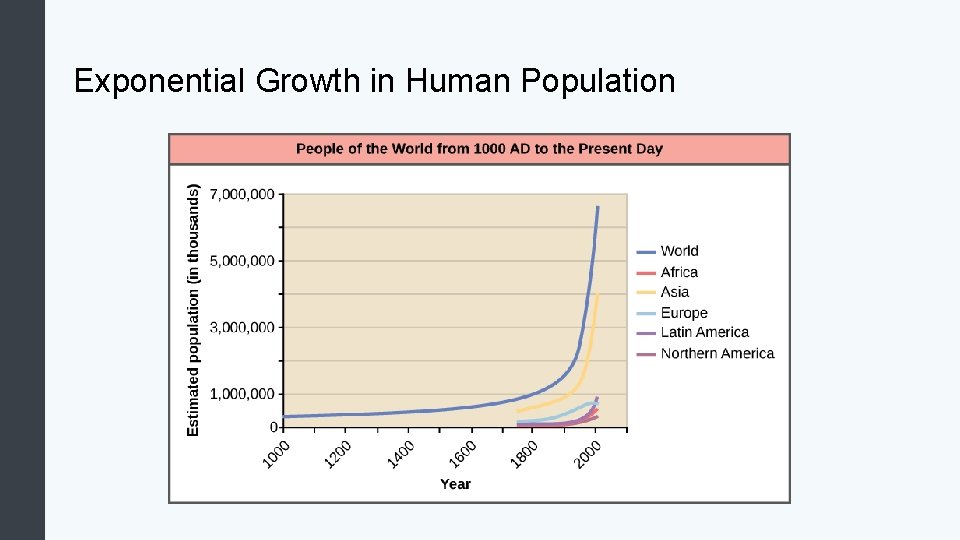
Exponential Growth in Human Population
Community Ecology Populations rarely, if ever, live in isolation from populations of other species. The interactions between these populations play a major role in regulating population growth and abundance. All populations occupying the same habitat form a community: populations inhabiting a specific area at the same time. The number of species occupying the same habitat and their relative abundance is known as species diversity. Ecology is studied at the community level to understand how species interact with each other and compete for the same resources.
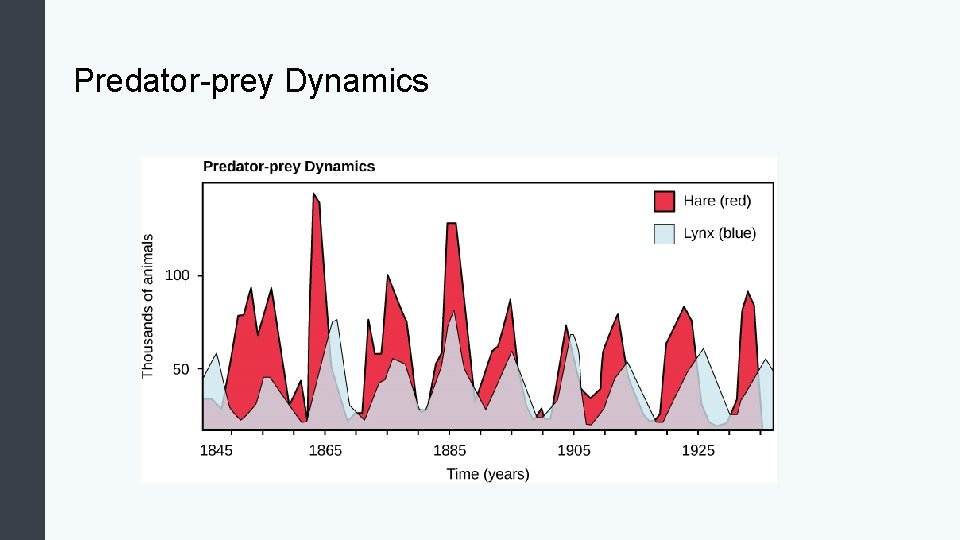
Predator-prey Dynamics
Defenses Against Predation and Herbivory Species have evolved numerous mechanisms to escape predation and herbivory. These defenses may be mechanical, chemical, physical, or behavioral. Mechanical defenses, such as the presence of thorns on plants or the hard shell on turtles, discourage animal predation and herbivory by causing physical pain to the predator or by physically preventing the predator from being able to eat the prey. Chemical defenses are produced by many animals as well as plants, such as the foxglove which is extremely toxic when eaten. The millipede curls into a defensive ball, a behavioral adaptation.
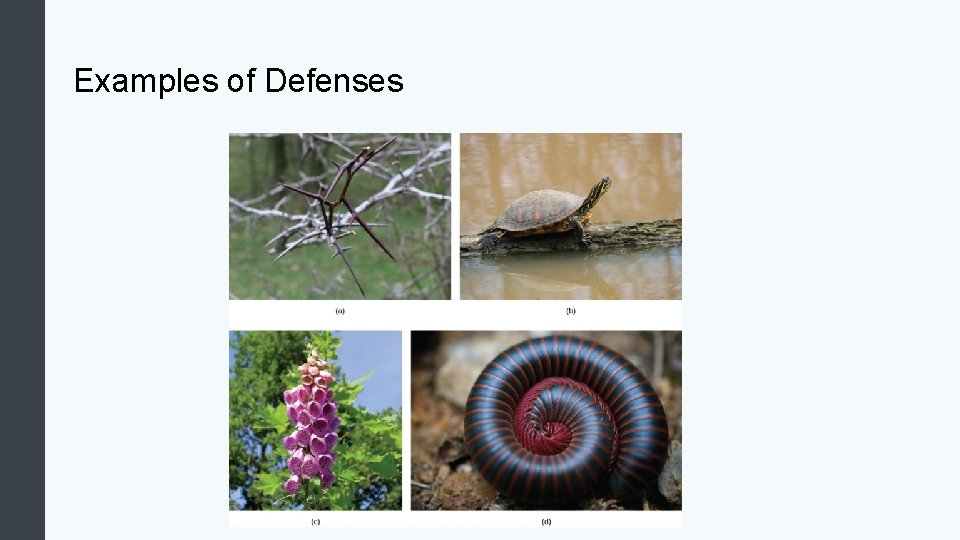
Examples of Defenses
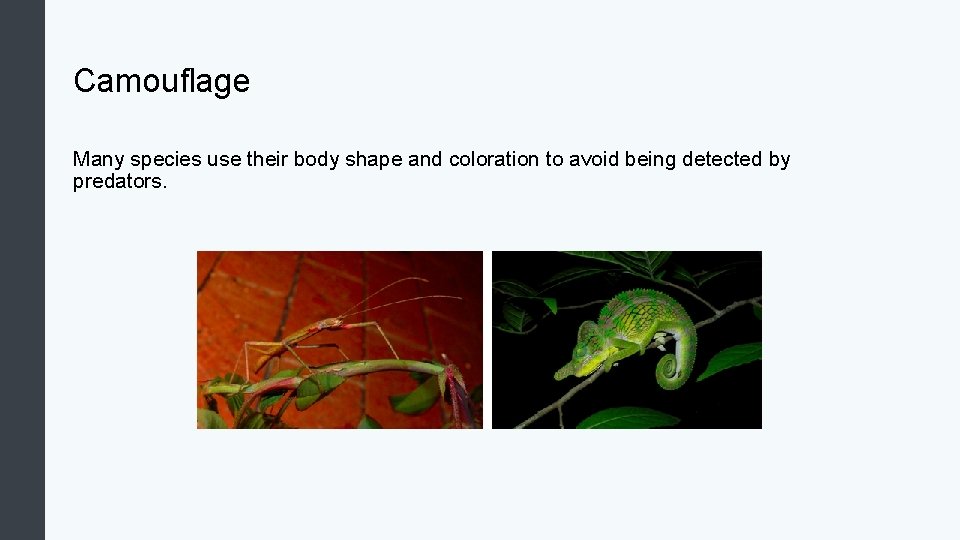
Camouflage Many species use their body shape and coloration to avoid being detected by predators.
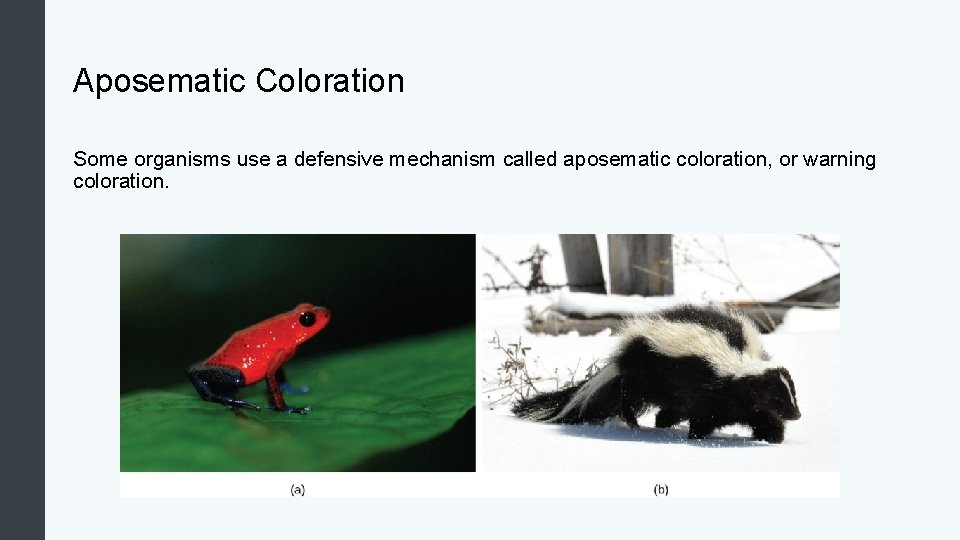
Aposematic Coloration Some organisms use a defensive mechanism called aposematic coloration, or warning coloration.
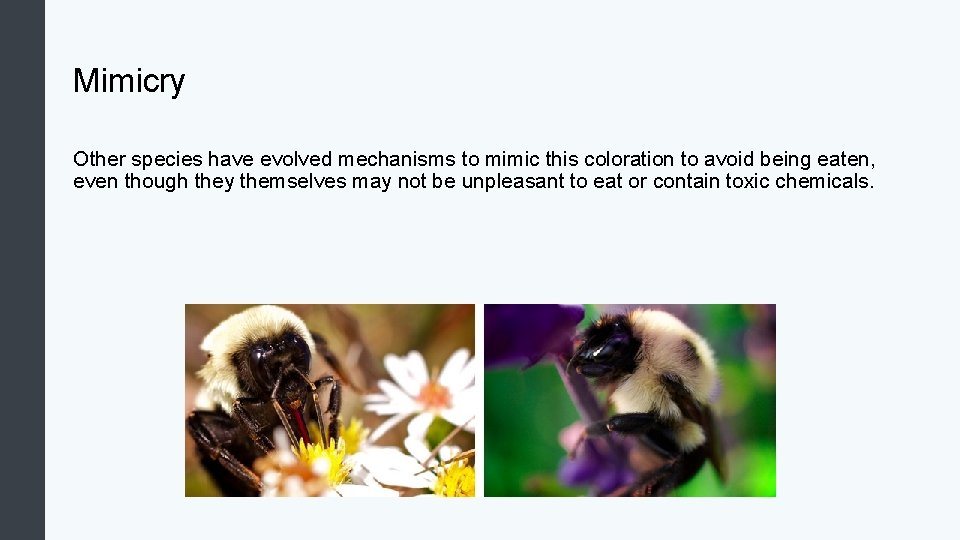
Mimicry Other species have evolved mechanisms to mimic this coloration to avoid being eaten, even though they themselves may not be unpleasant to eat or contain toxic chemicals.
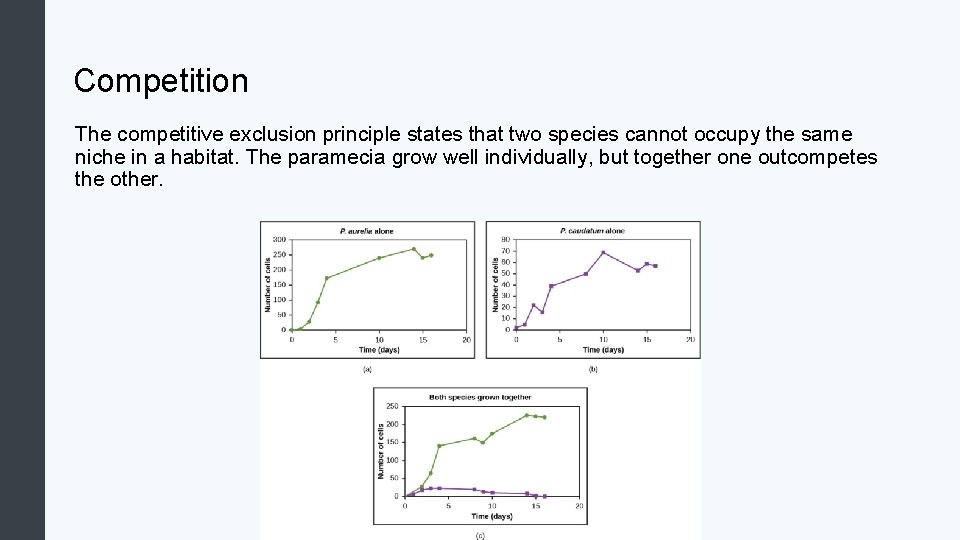
Competition The competitive exclusion principle states that two species cannot occupy the same niche in a habitat. The paramecia grow well individually, but together one outcompetes the other.
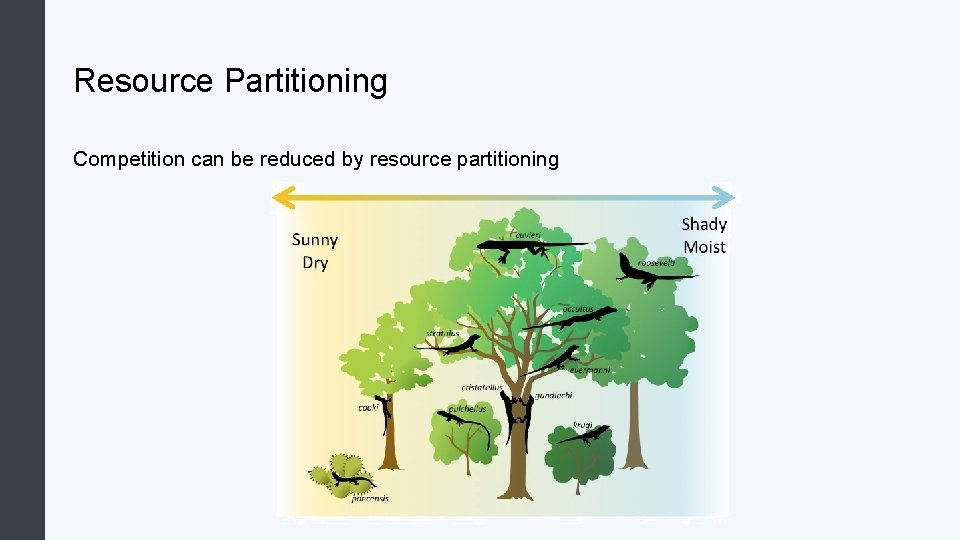
Resource Partitioning Competition can be reduced by resource partitioning
Symbioses Symbiotic relationships, or symbioses (plural), are close interactions between individuals of different species over an extended period of time which impact the abundance and distribution of the associating populations.
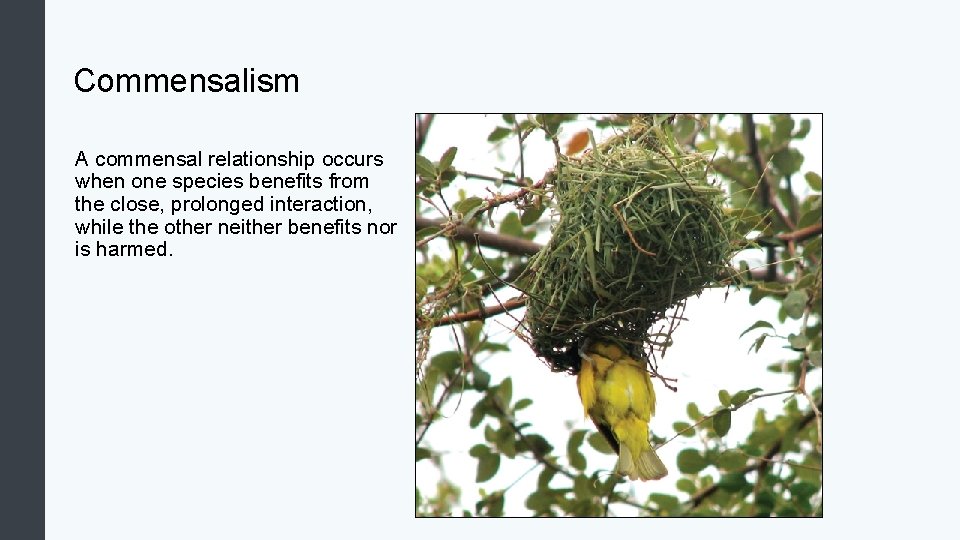
Commensalism A commensal relationship occurs when one species benefits from the close, prolonged interaction, while the other neither benefits nor is harmed.
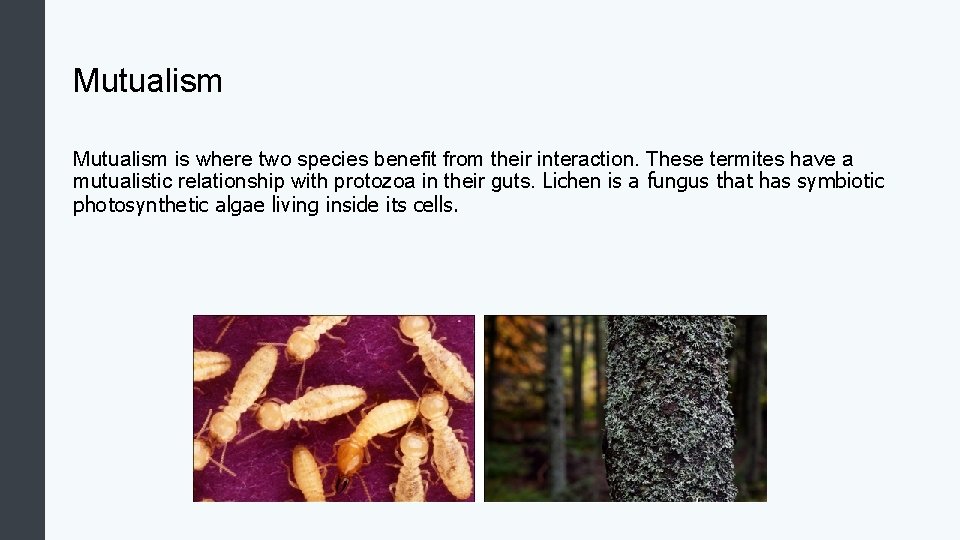
Mutualism is where two species benefit from their interaction. These termites have a mutualistic relationship with protozoa in their guts. Lichen is a fungus that has symbiotic photosynthetic algae living inside its cells.
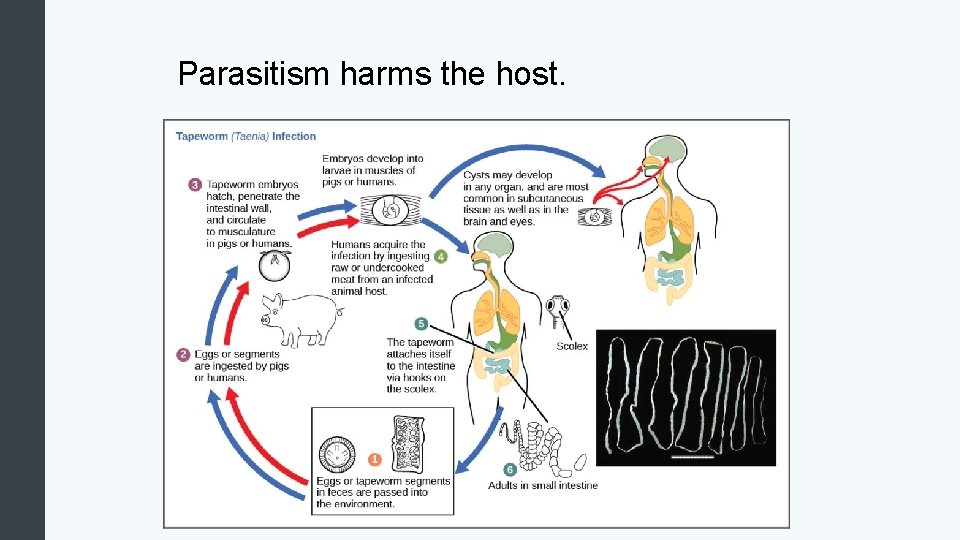
Parasitism harms the host.
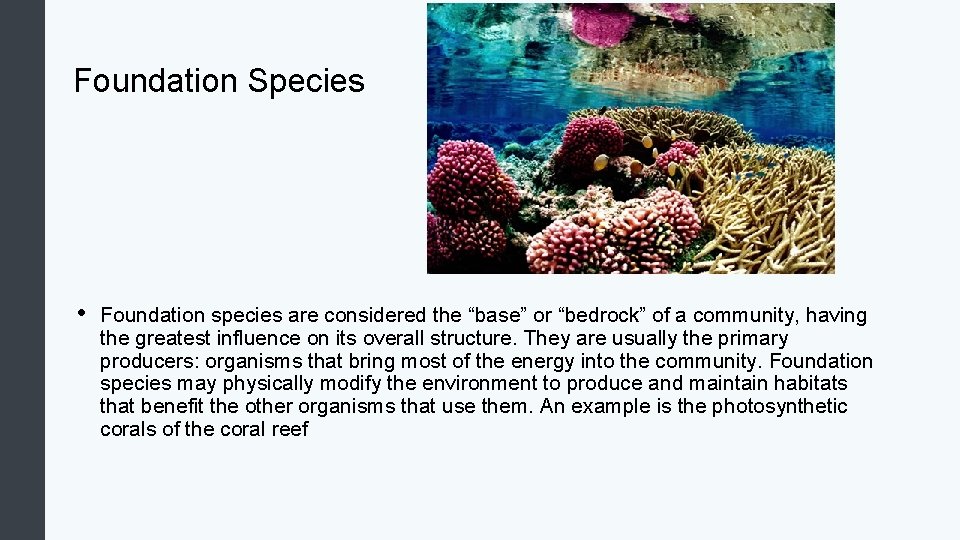
Foundation Species • Foundation species are considered the “base” or “bedrock” of a community, having the greatest influence on its overall structure. They are usually the primary producers: organisms that bring most of the energy into the community. Foundation species may physically modify the environment to produce and maintain habitats that benefit the other organisms that use them. An example is the photosynthetic corals of the coral reef
Biodiversity, Species Richness, and Relative Species Abundance Species richness is the term that is used to describe the number of species living in a habitat or biome. The study of island biogeography attempts to explain the relatively high species richness found in certain isolated island chains. Relative species abundance is the number of individuals in a species relative to the total number of individuals in all species within a habitat, ecosystem, or biome.
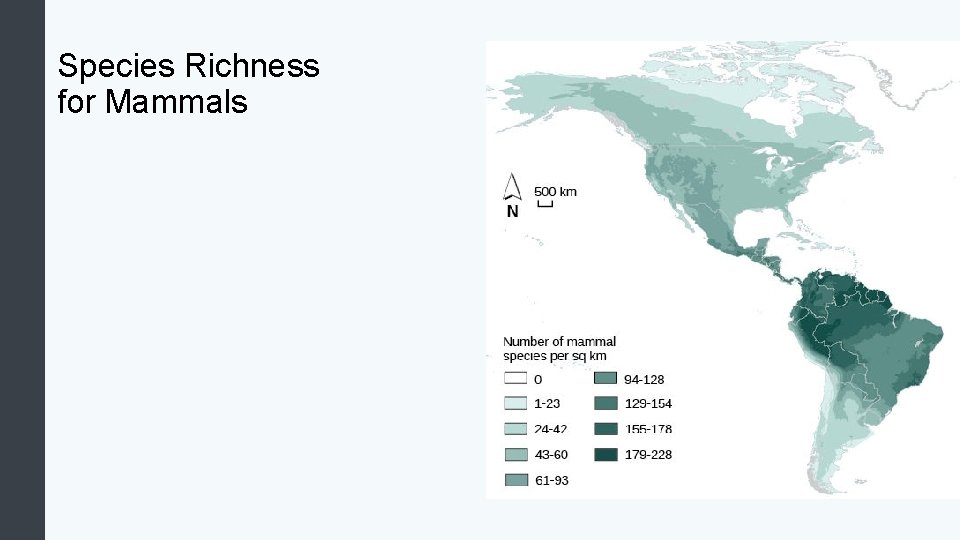
Species Richness for Mammals
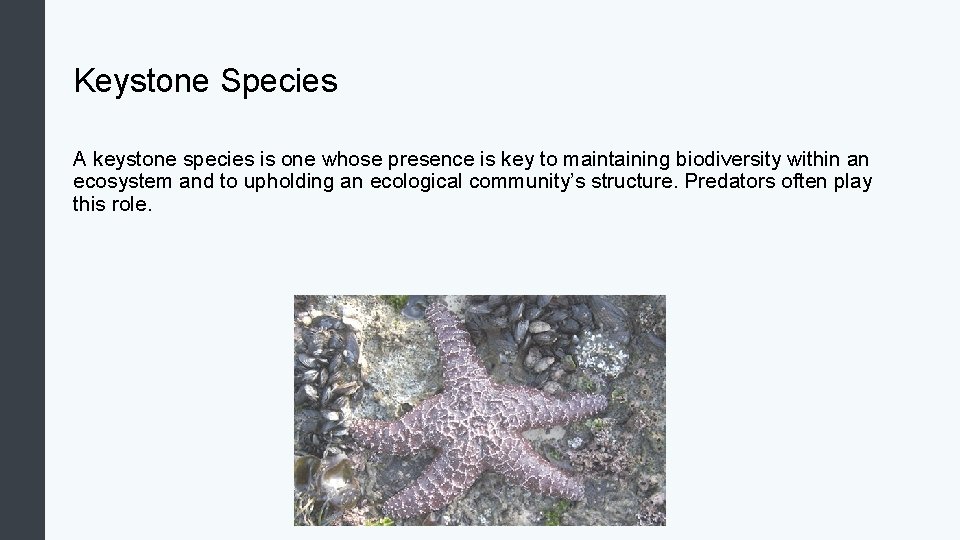
Keystone Species A keystone species is one whose presence is key to maintaining biodiversity within an ecosystem and to upholding an ecological community’s structure. Predators often play this role.
Community Dynamics Community dynamics are the changes in community structure and composition over time. Sometimes these changes are induced by environmental disturbances such as volcanoes, earthquakes, storms, fires, and climate change. Communities with a stable structure are said to be at equilibrium. Succession describes the sequential appearance and disappearance of species in a community over time. In primary succession, newly exposed or newly formed land is colonized by living things; in secondary succession, part of an ecosystem is disturbed and remnants of the previous community remain.
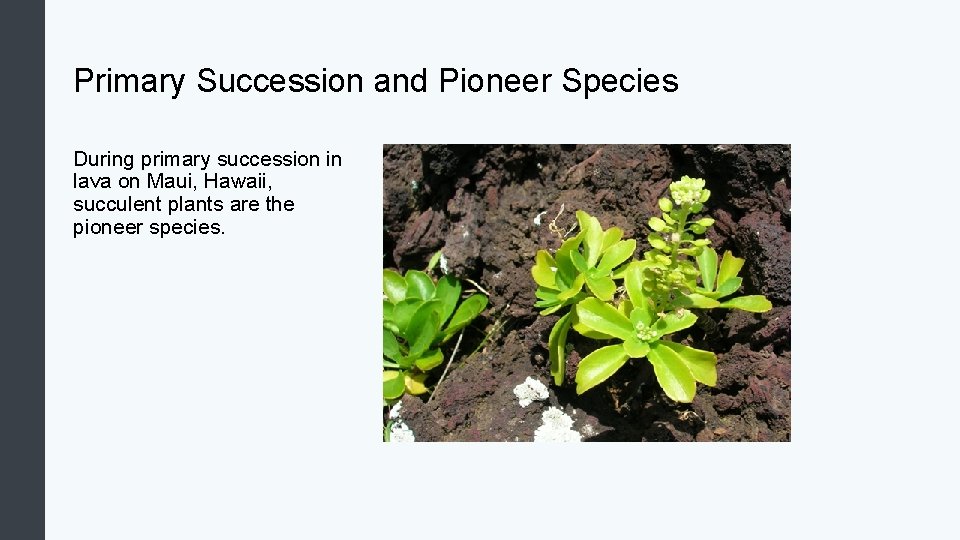
Primary Succession and Pioneer Species During primary succession in lava on Maui, Hawaii, succulent plants are the pioneer species.
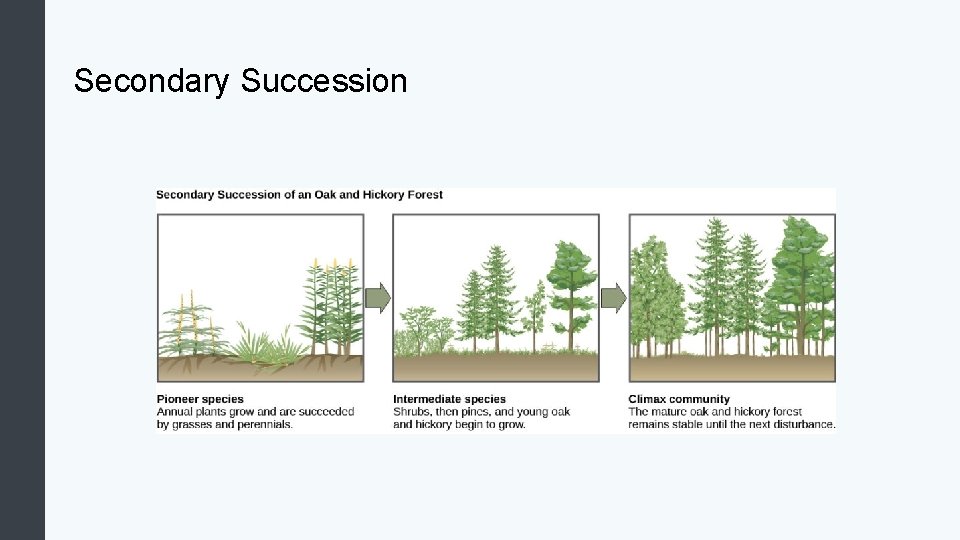
Secondary Succession
Behavior is the change in activity of an organism in response to a stimulus. Behavioral biology is the study of the biological and evolutionary bases for such changes. • Innate behavior, or instinct, is important because there is no risk of an incorrect behavior being learned. They are “hard wired” into the system. • On the other hand, learned behaviors, although riskier, are flexible, dynamic, and can be altered according to changes in the environment.
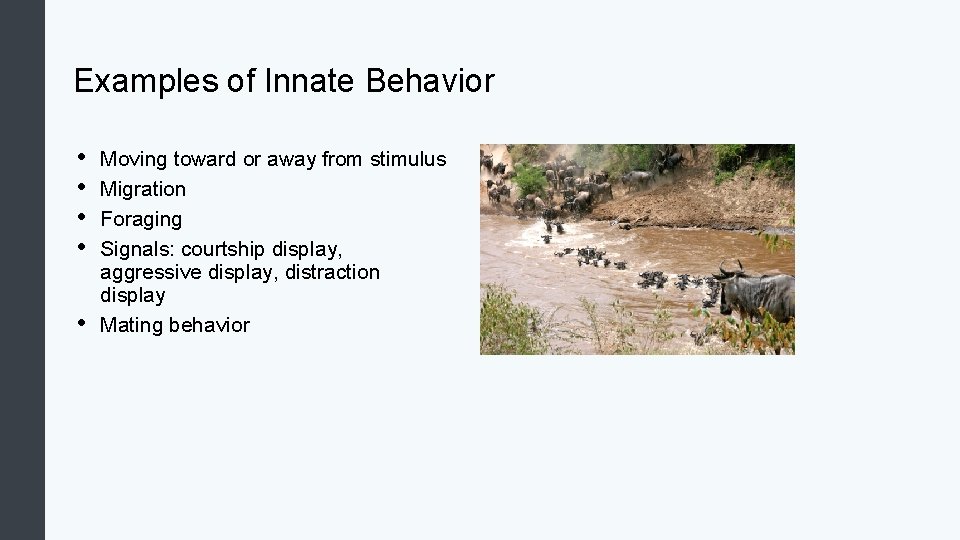
Examples of Innate Behavior • • • Moving toward or away from stimulus Migration Foraging Signals: courtship display, aggressive display, distraction display Mating behavior
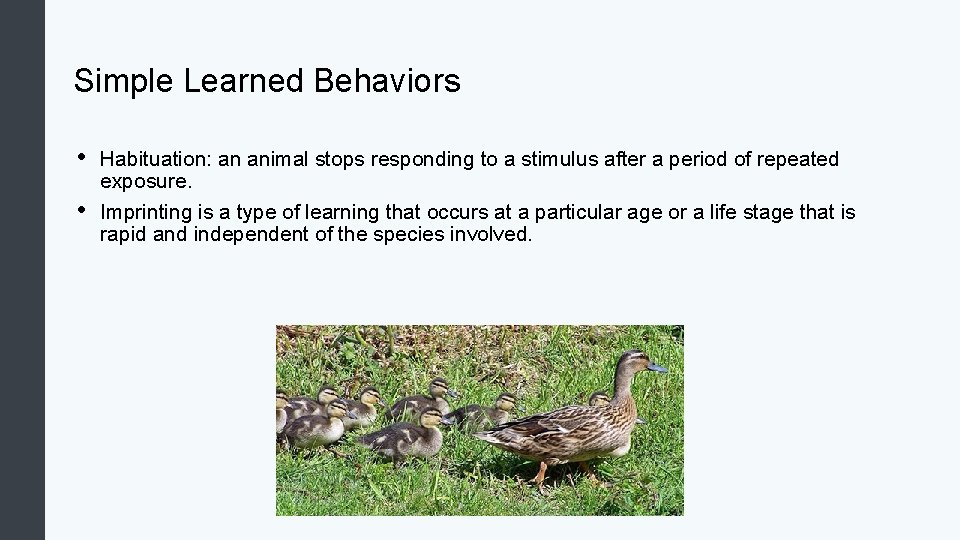
Simple Learned Behaviors • • Habituation: an animal stops responding to a stimulus after a period of repeated exposure. Imprinting is a type of learning that occurs at a particular age or a life stage that is rapid and independent of the species involved.
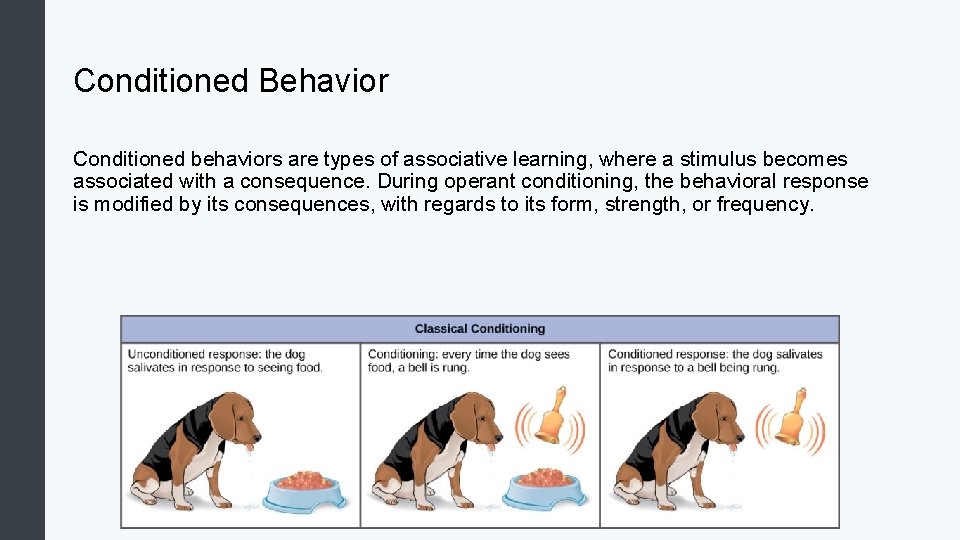
Conditioned Behavior Conditioned behaviors are types of associative learning, where a stimulus becomes associated with a consequence. During operant conditioning, the behavioral response is modified by its consequences, with regards to its form, strength, or frequency.
Cognitive Learning • • • The development of complex language by humans has made cognitive learning, the manipulation of information using the mind, the most prominent method of human learning. Chimpanzees can learn how to solve a puzzle. Rats make mental maps of mazes.
Practice Question Early settlers of European ancestry thought the great plains must not have good soil since there were so few trees. Explain why the great plains have great soil and why presence or absence of trees isn’t a good way to judge soil quality.
Quick Review • • • What is the scope of ecology? What is the difference between abiotic and biotic components of the environment? What are the different biomes of our world? What is the scope and study of population ecology? What is the scope and study of community ecology?
- Slides: 80