
Ecology Notes Habitat The environment that provides everything
Ecology Notes
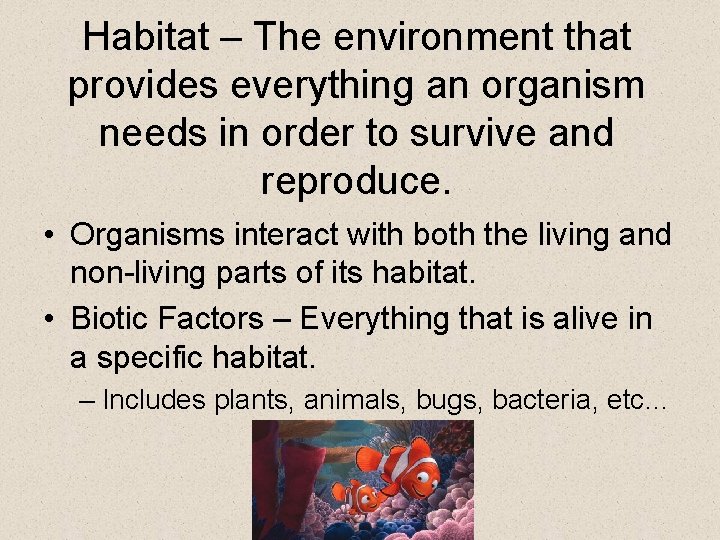
Habitat – The environment that provides everything an organism needs in order to survive and reproduce. • Organisms interact with both the living and non-living parts of its habitat. • Biotic Factors – Everything that is alive in a specific habitat. – Includes plants, animals, bugs, bacteria, etc…

Abiotic factors – The non-living parts of a habitat. • Includes: – Landforms (mountains, canyons, rivers, etc…) – Water – Precipitation (rain, snow, etc…) – Sunlight, oxygen, and temperature. – Soil (soil contains millions of microscopic organisms)
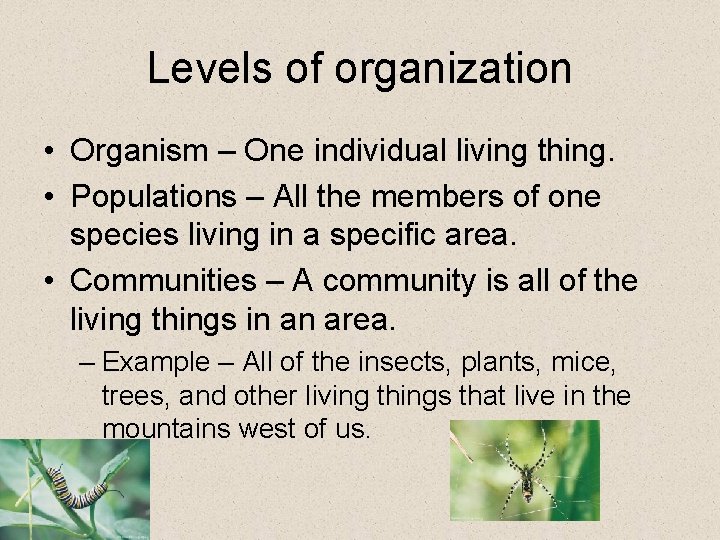
Levels of organization • Organism – One individual living thing. • Populations – All the members of one species living in a specific area. • Communities – A community is all of the living things in an area. – Example – All of the insects, plants, mice, trees, and other living things that live in the mountains west of us.
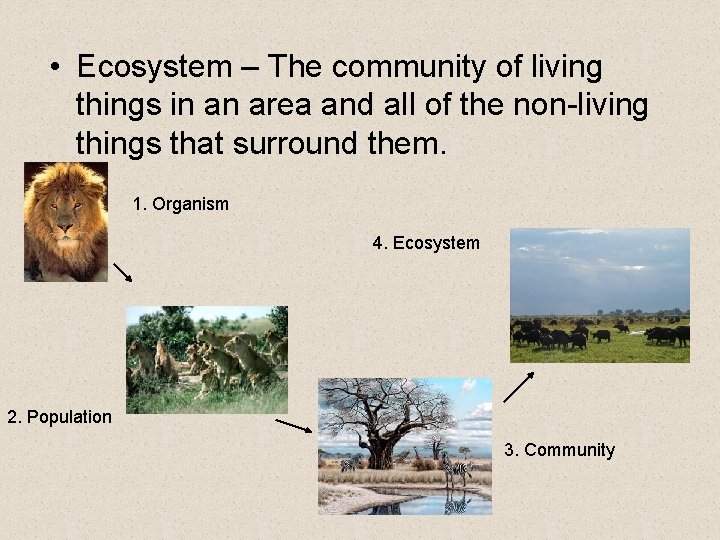
• Ecosystem – The community of living things in an area and all of the non-living things that surround them. 1. Organism 4. Ecosystem 2. Population 3. Community
Chapter 1 – sections 2, 3
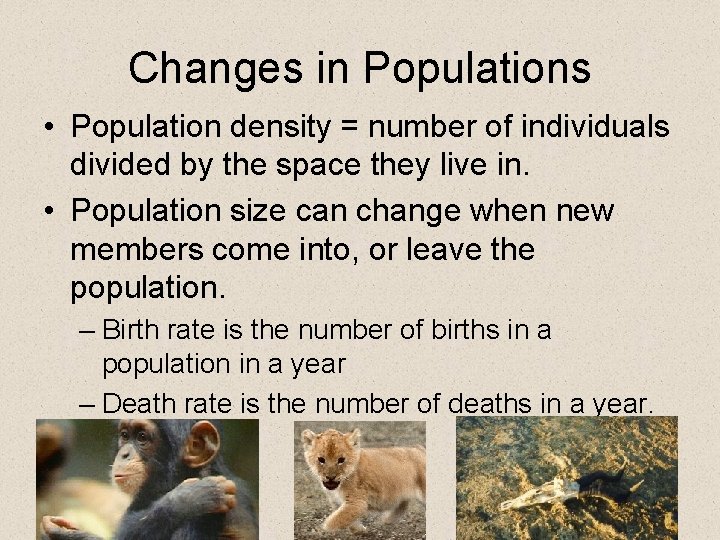
Changes in Populations • Population density = number of individuals divided by the space they live in. • Population size can change when new members come into, or leave the population. – Birth rate is the number of births in a population in a year – Death rate is the number of deaths in a year.

– If birth rate is more than death rate then the population is growing. – If death rate is more than birth rate then population is shrinking. – Immigration (into) and emigration (exit) also affect population size.
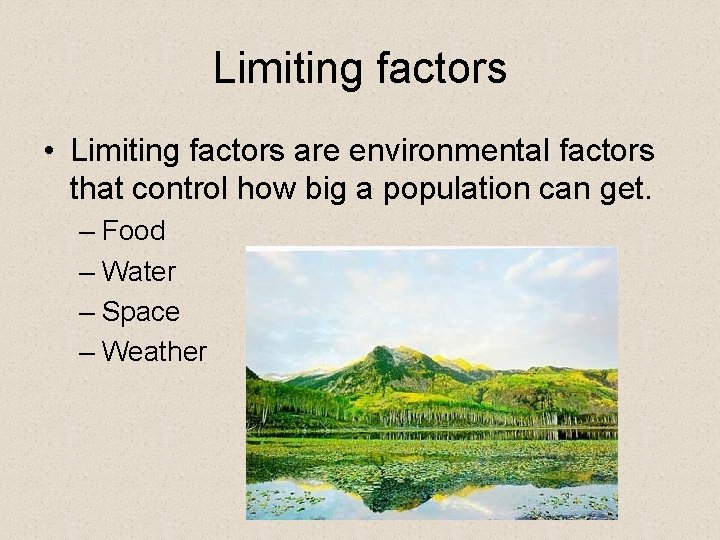
Limiting factors • Limiting factors are environmental factors that control how big a population can get. – Food – Water – Space – Weather
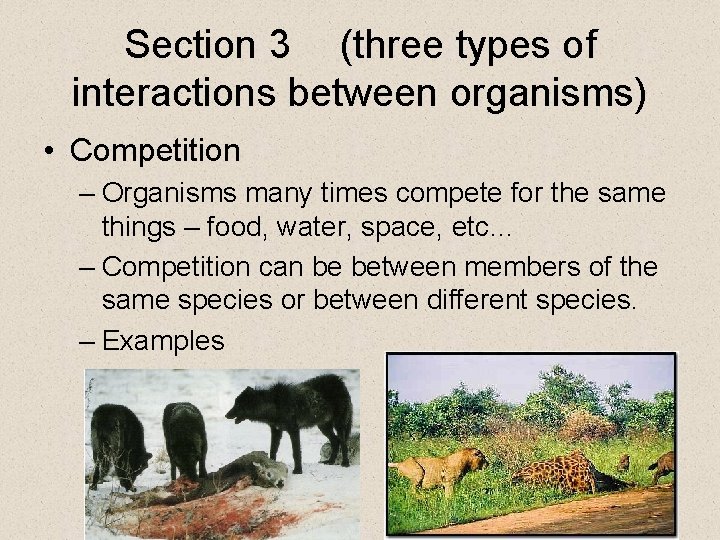
Section 3 (three types of interactions between organisms) • Competition – Organisms many times compete for the same things – food, water, space, etc… – Competition can be between members of the same species or between different species. – Examples
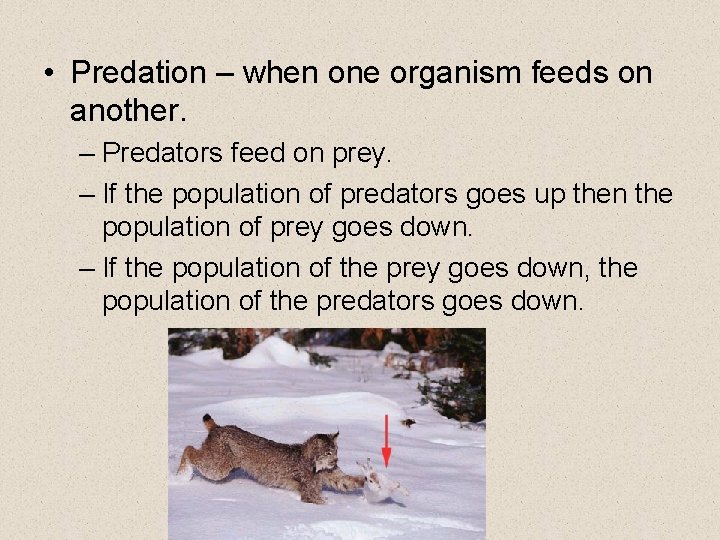
• Predation – when one organism feeds on another. – Predators feed on prey. – If the population of predators goes up then the population of prey goes down. – If the population of the prey goes down, the population of the predators goes down.
• Predators are constantly adapting (changing) to be able to capture prey. • The prey also adapts to try and escape the predators.
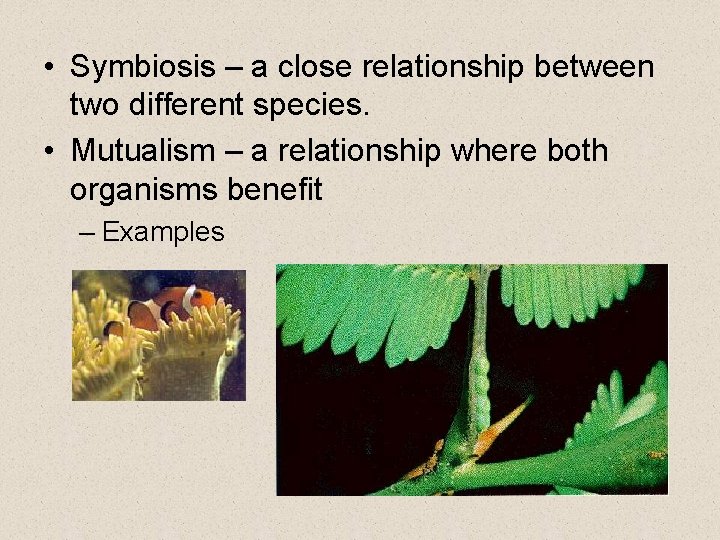
• Symbiosis – a close relationship between two different species. • Mutualism – a relationship where both organisms benefit – Examples
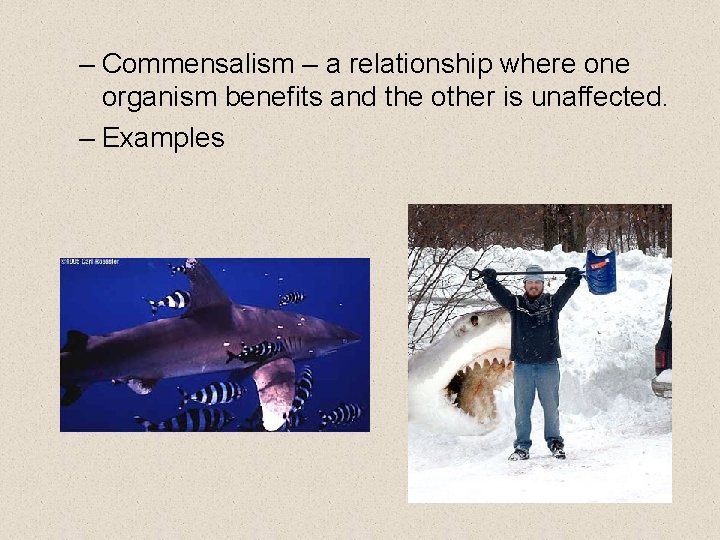
– Commensalism – a relationship where one organism benefits and the other is unaffected. – Examples
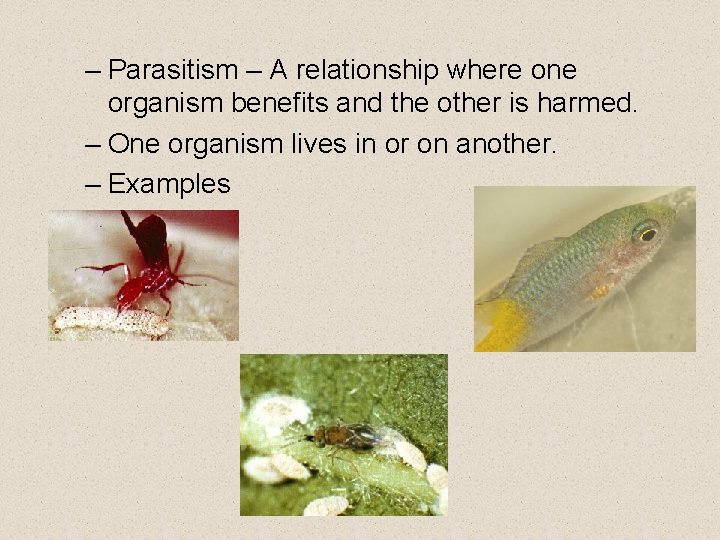
– Parasitism – A relationship where one organism benefits and the other is harmed. – One organism lives in or on another. – Examples
- Slides: 15