
Ecology Media Presentation By Hayden Esarte and John
Ecology Media Presentation By: Hayden Esarte and John Jetton
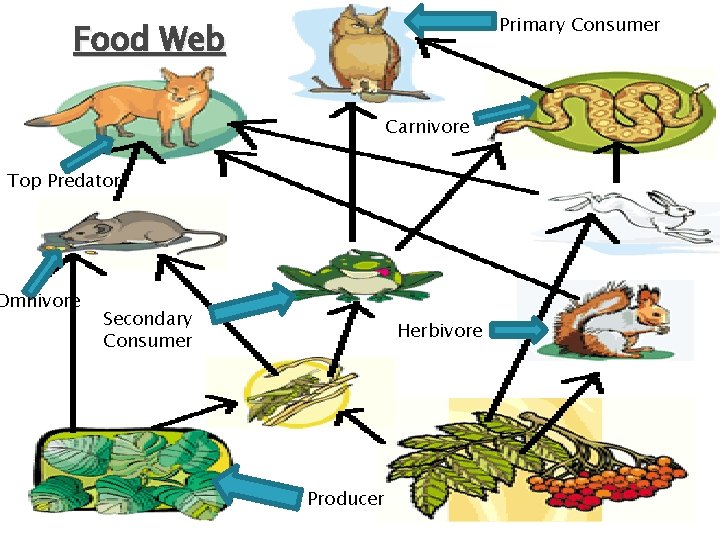
Primary Consumer Food Web Carnivore Top Predator Omnivore Secondary Consumer Herbivore Producer
Synonyms for heterotroph and autotroph � Heterotroph� Autotroph- An organism or being An autotrophic organism
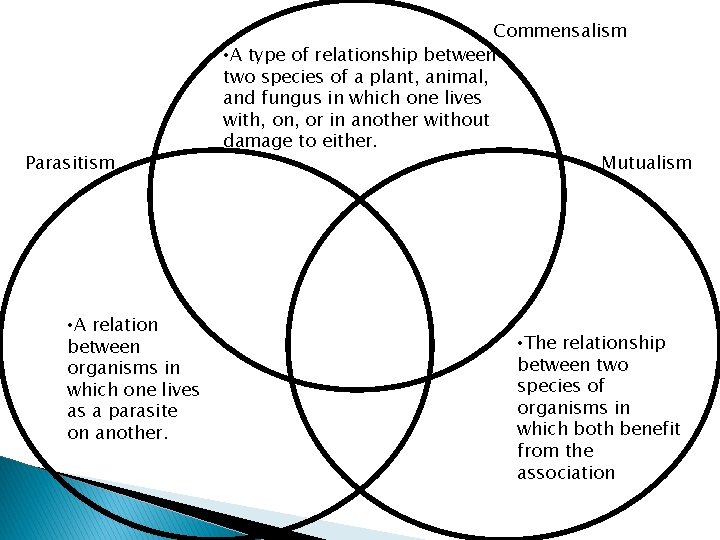
Parasitism • A relation between organisms in which one lives as a parasite on another. Commensalism • A type of relationship between two species of a plant, animal, and fungus in which one lives with, on, or in another without damage to either. Mutualism • The relationship between two species of organisms in which both benefit from the association
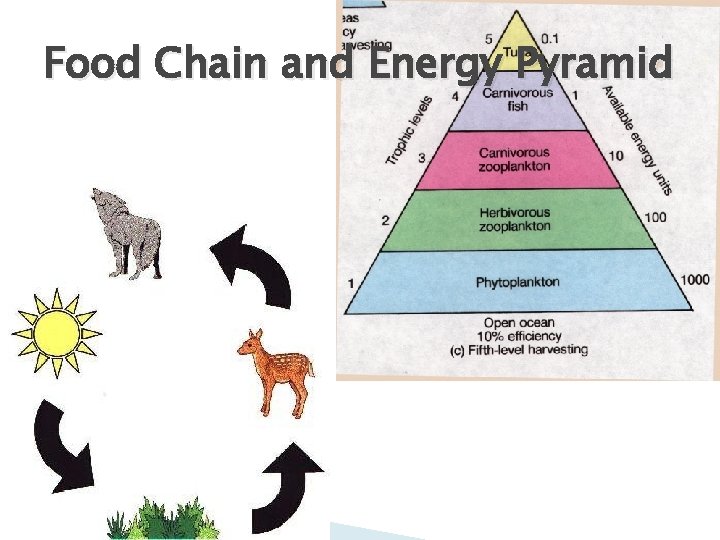
Food Chain and Energy Pyramid
Differences between a predator/prey relationship and a symbiotic relationship �A symbiotic relationship two species living together and includes mutualism, commensalism, and parasitism. � In a predator-prey relationship, most often one group must die for the other to benefit.
Coyote competing for biotic and abiotic factors � Sunlight- Coyotes live in warm environments and always get sunlight. � Water- Coyotes live in dry environments and get little water nearby. � Soil Nutrients- Coyotes survive in very dry and poor soil because the roots are able to absorb all the water. � Living Space- Coyotes will maintain a territory in a large environment around them. � Biotic Factors- Coyotes eat small mammals such as rabbits, mice, voles, and shrews. Coyotes also eat birds, frogs, skunks, berries, insects , beaver, and road-killed deer.
Define a Limiting Factor �A Limiting factor is an environmental factor that tends to limit population size.
Water Ecosystem � Biotic factors- marine organisms, algae, fungi, and seaweed � Abiotic factors- sunlight, water, soil, temperature, and oxygen � The difference between a biotic and biotic factors in a ecosystem is that one gets their food from the abiotic factors while the other helps the other one live.
Canadian squirrels’ mating season changing � As the spring arrives earlier and lasts longer in northern latitudes, animals that adapt their schedules stand a better chance of seeing their genetic information passed on to later generations, leading to a change within populations.
Effects as pesticides move up the food chain � The effect of pesticides is that it kills organisms of a food chain. It starts at the consumer moves up the food chain and eventually kills the top predator making an increase in population of the prey organisms. As a result of biomagnification, organisms at the top of the food chain generally suffer greater harm from a persistent toxin or pollutant than those at lower levels.
how human activities have harmed the ocean � Our human activities have harmed the oceans by our pollution and waste thrown into the oceans harming marine animals. � 1. Nearby factories travel near oceans and pollute the waters. � 2. Trash is dumped from carless people and carried in the wind into the ocean. � 3. Oil spills from oil rigs making marine animals suffer the toxic waste.
- Slides: 12