
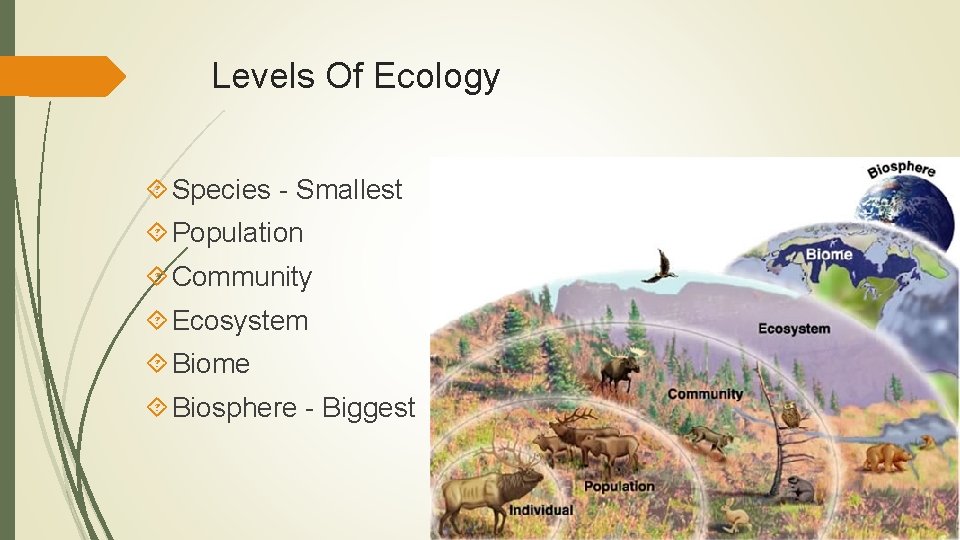
Ecology Levels Of Ecology Species Smallest Population Community

- Slides: 20
Ecology
Levels Of Ecology Species - Smallest Population Community Ecosystem Biome Biosphere - Biggest
Trophic Levels Producers-Make their own food Primary Consumers-Eat Producers Secondary Consumers-Eat Producers or Primary Consumers Tertiary Consumers-Eat Producers, Primary Consumers or Secondary Consumers
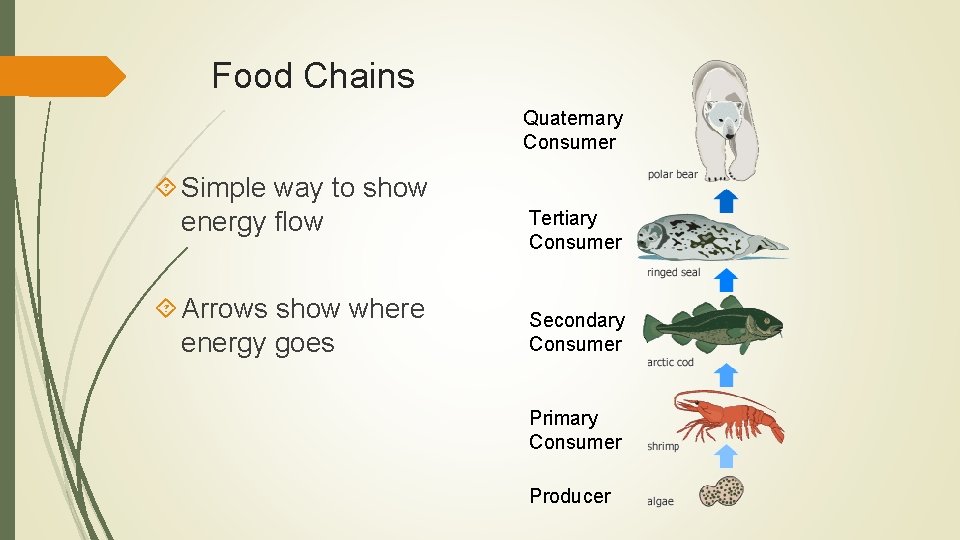
Food Chains Quaternary Consumer Simple way to show energy flow Arrows show where energy goes Tertiary Consumer Secondary Consumer Primary Consumer Producer
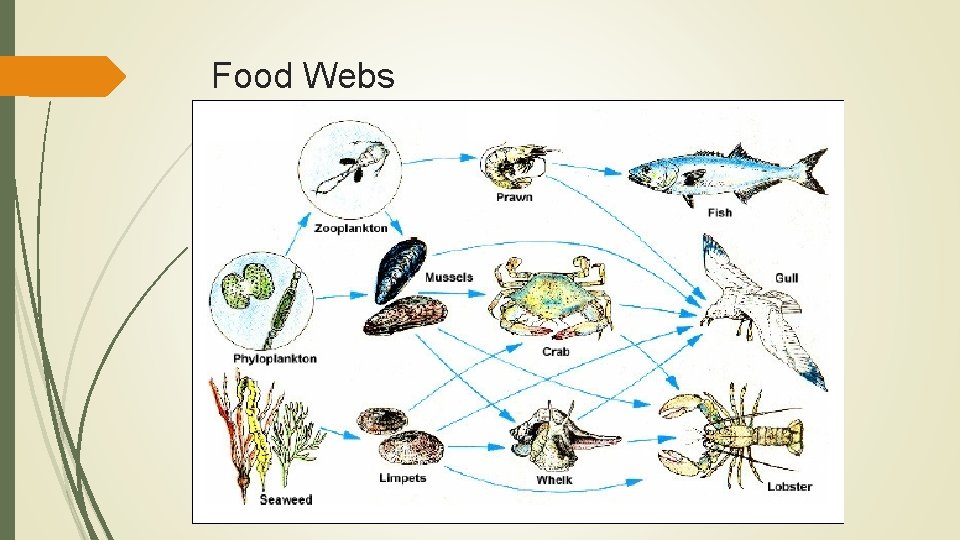
Food Webs Show complexity more accurately Arrows represent where the energy is going Carnivore-obtain energy from eating animals Herbivore-obtain energy from eating plants Omnivore-obtain energy from eating both
Food Webs
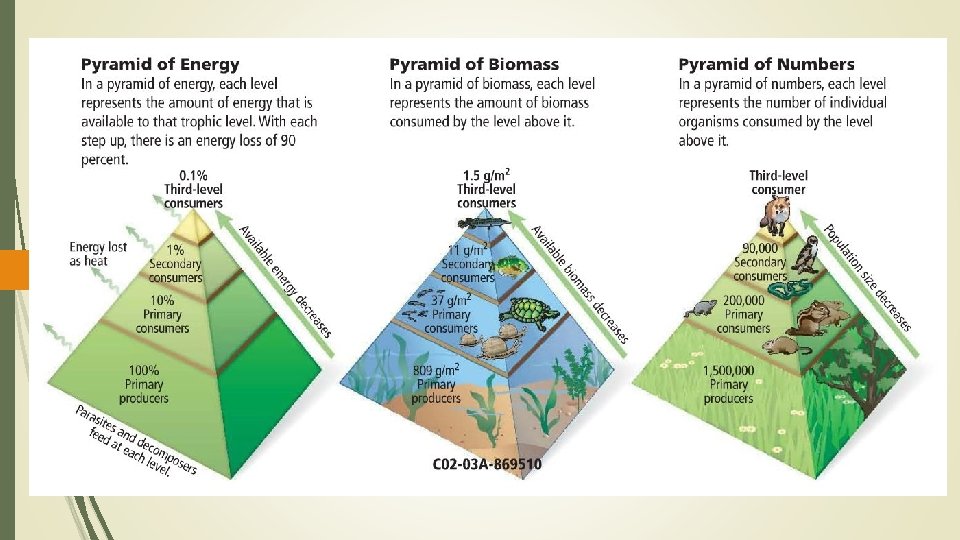
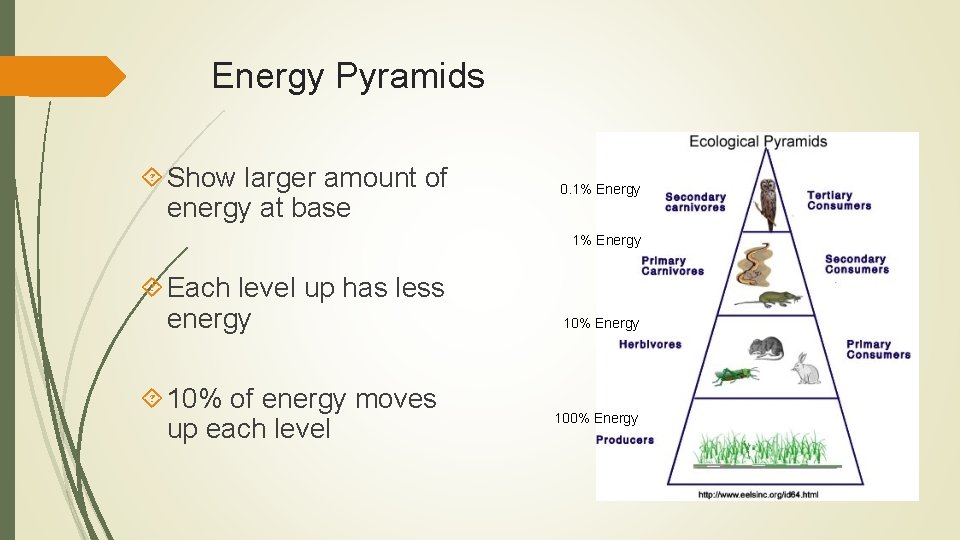
Energy Pyramids Show larger amount of energy at base 0. 1% Energy Each level up has less energy 10% of energy moves up each level 10% Energy 100% Energy
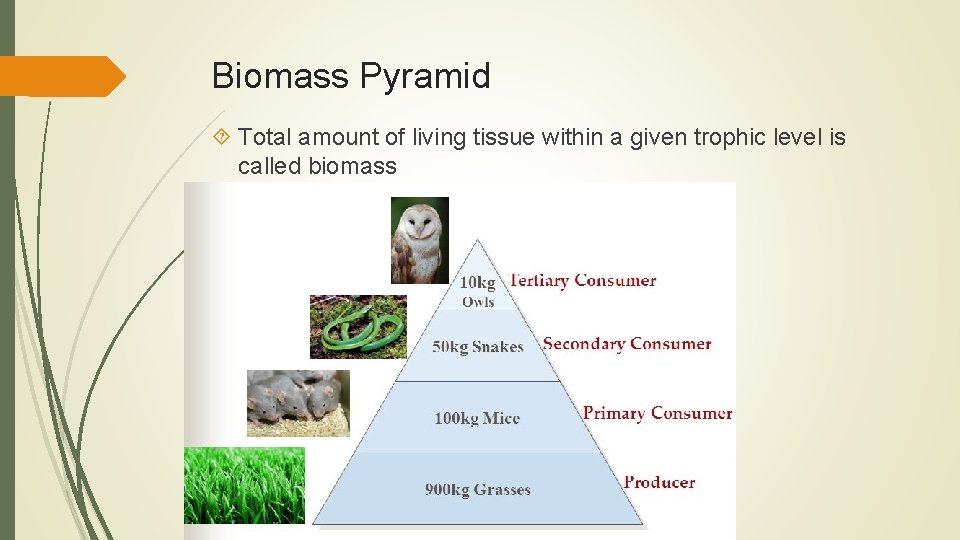
Biomass Pyramid Total amount of living tissue within a given trophic level is called biomass
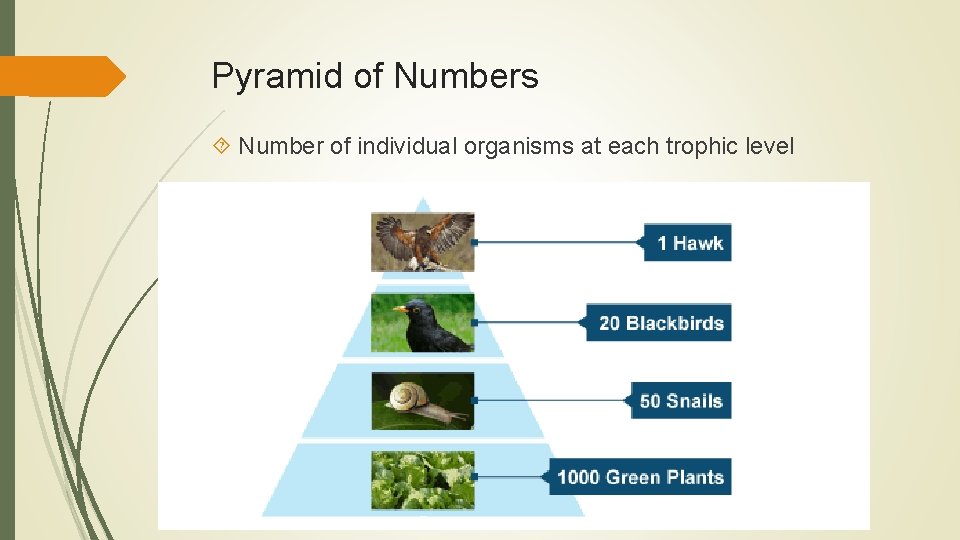
Pyramid of Numbers Number of individual organisms at each trophic level
Habitat vs. Niche Habitat-where an organism lives Could be considered an organism’s home Niche-the role an organism plays in its habitat Could be considered an organism’s job Fill In Activity
Organism Interactions Predation-organisms capture and feed on another organisms Organisms that does the killing and eating called the predator and the food is the prey Competition-organisms of the same or different species compete for a resource in the same place at the same time.
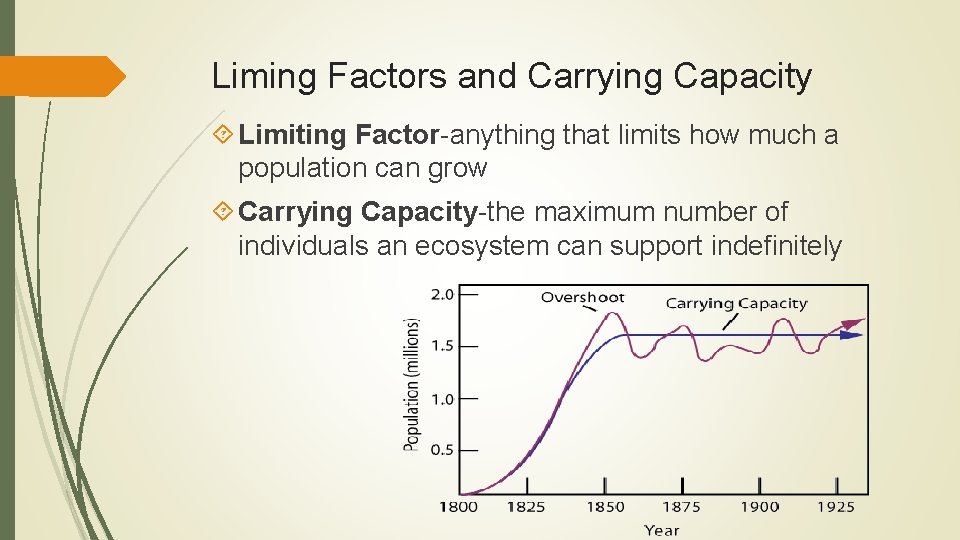
Liming Factors and Carrying Capacity Limiting Factor-anything that limits how much a population can grow Carrying Capacity-the maximum number of individuals an ecosystem can support indefinitely
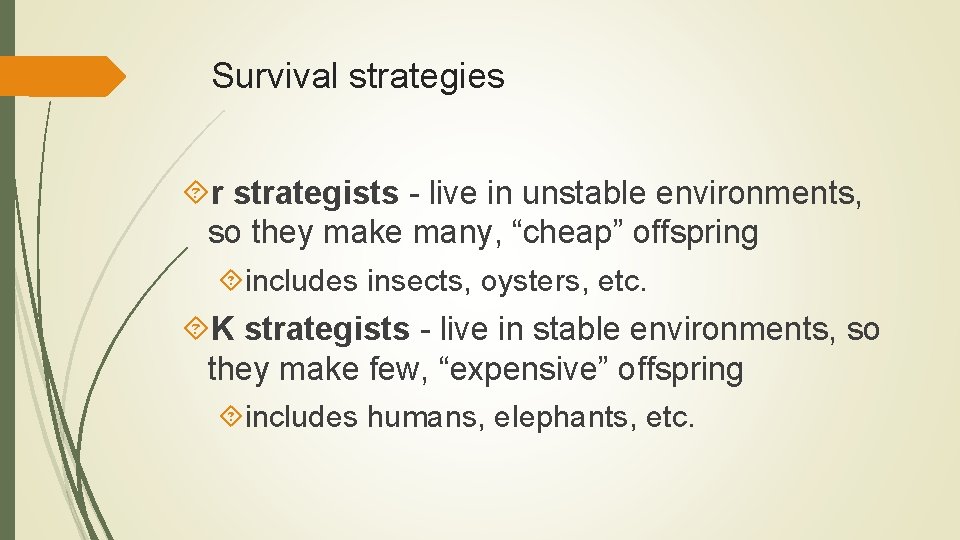
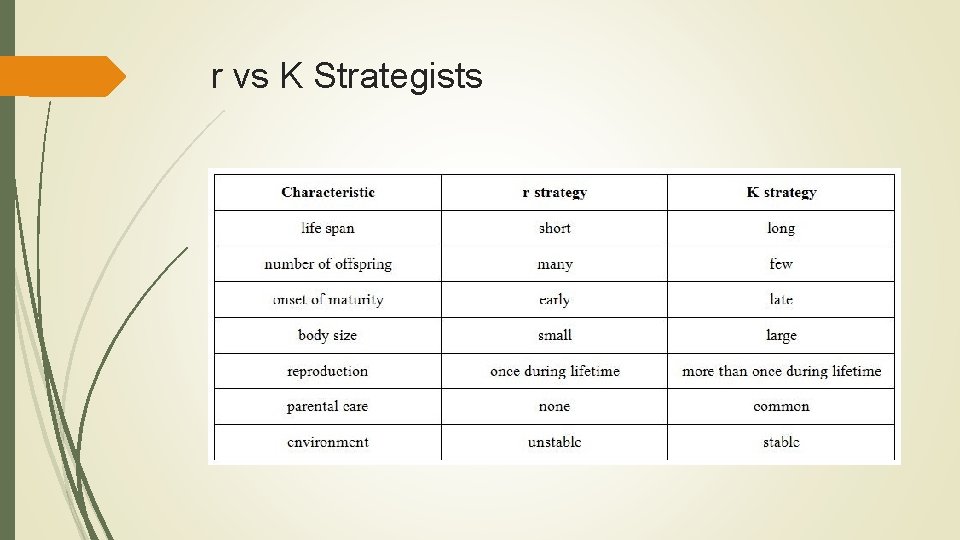
Survival strategies r strategists - live in unstable environments, so they make many, “cheap” offspring includes insects, oysters, etc. K strategists - live in stable environments, so they make few, “expensive” offspring includes humans, elephants, etc.
r vs K Strategists
Symbiosis-any relationship in which two species live closely together Mutualism-both species benefit from the relationship Commensalism-one member benefits and nothing happens to the other Parasitism-one organisms lives on or inside another organism and harms it Examples?
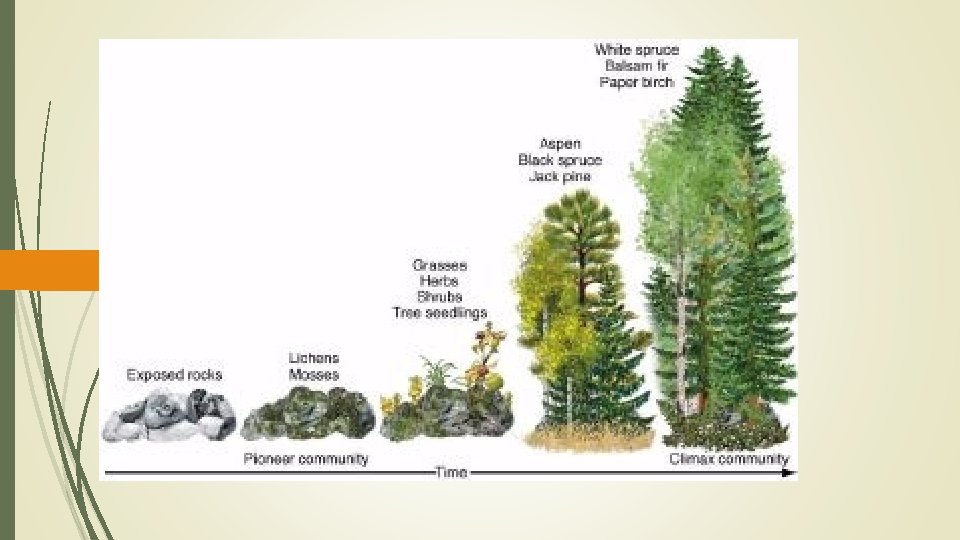
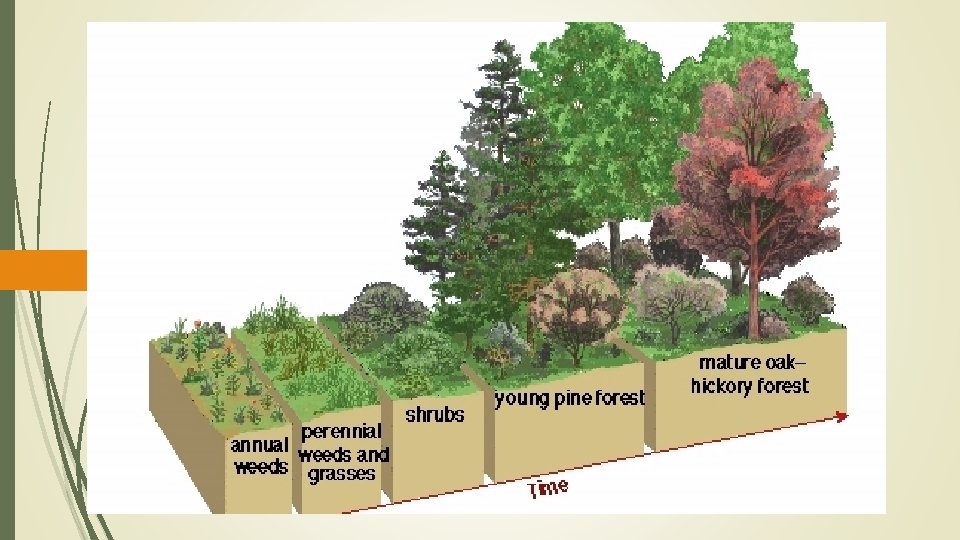
Succession-changes in an ecosystem over time Primary: succession that occurs on surfaces where no soil exists Secondary: after a disturbance, community interactions tend to restore the ecosystem to its original condition
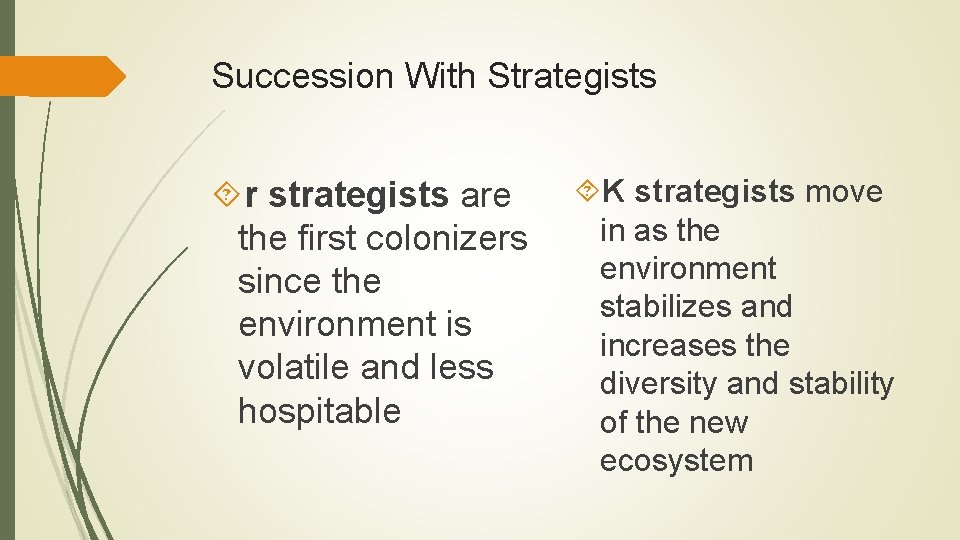
Succession With Strategists r strategists are the first colonizers since the environment is volatile and less hospitable K strategists move in as the environment stabilizes and increases the diversity and stability of the new ecosystem