
Ecology Lab Population Estimation Week 1 Population Estimation
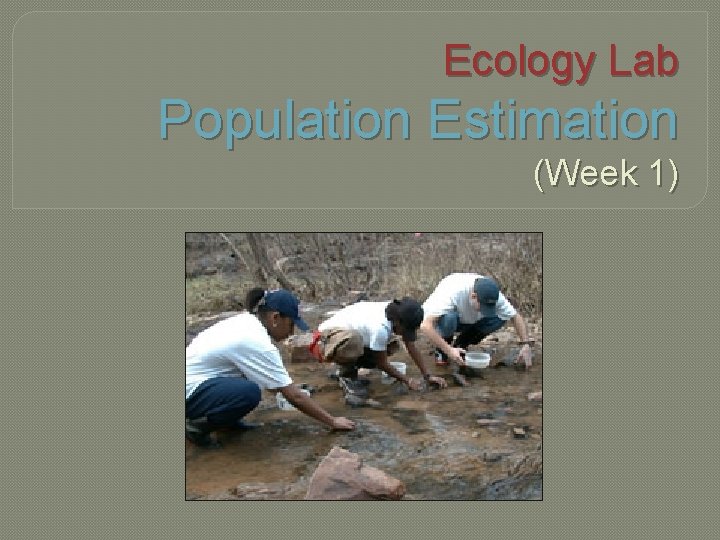
Ecology Lab Population Estimation (Week 1)
Population Estimation PURPOSE: • To compare three different population estimation methods Enumeration Mark/Recapture Depletion HYPOTHESES: • Null (H 0): Enumeration = Mark/Recap = Depletion • Alternative (HA): Enumeration ≠ Mark/Recap ≠ Depletion
Method 1: Enumeration P = sum of all individuals • MINIMUM estimation Assumptions • All individuals are captured • Removal of individuals did not attract others into study area (vacuum effect) • No births or deaths during the study
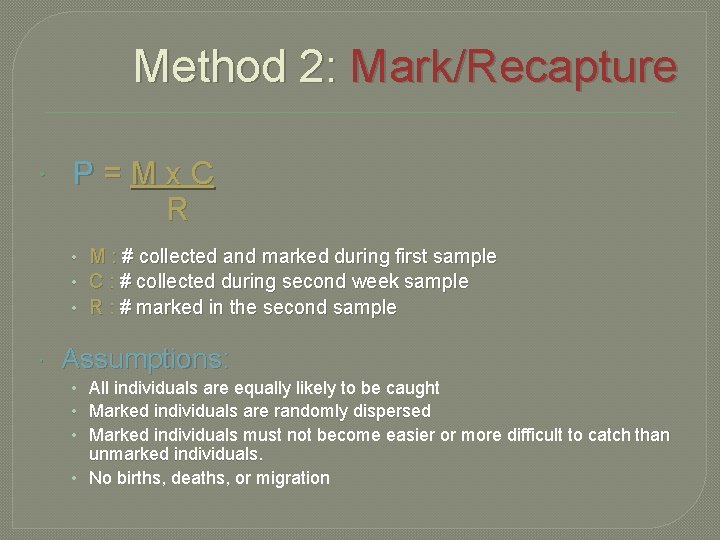
Method 2: Mark/Recapture P=Mx. C R • M : # collected and marked during first sample • C : # collected during second week sample • R : # marked in the second sample Assumptions: • All individuals are equally likely to be caught • Marked individuals are randomly dispersed • Marked individuals must not become easier or more difficult to catch than unmarked individuals. • No births, deaths, or migration
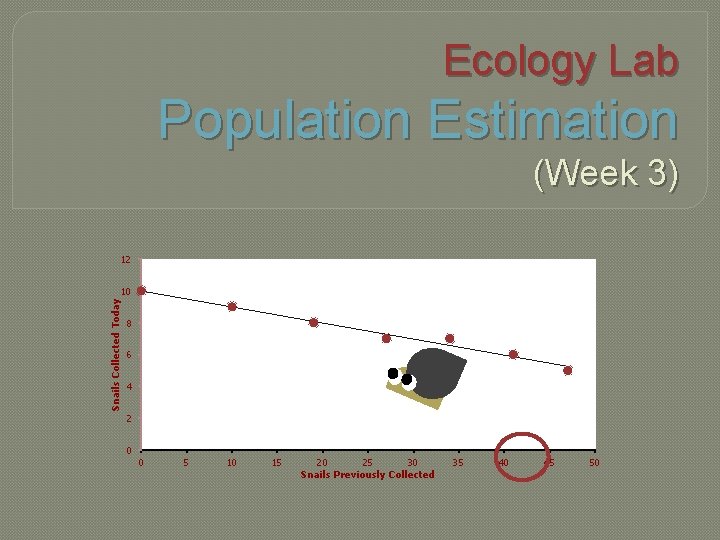
Method 3: Depletion Collect and remove (a constant fraction of the remaining population is taken with each sample) Apply a trendline and predict total population P = where the trendline crosses the x-axis Assumptions • • • No births, deaths, or migration Probability of capture does not change Probability of capture is the same for each individual
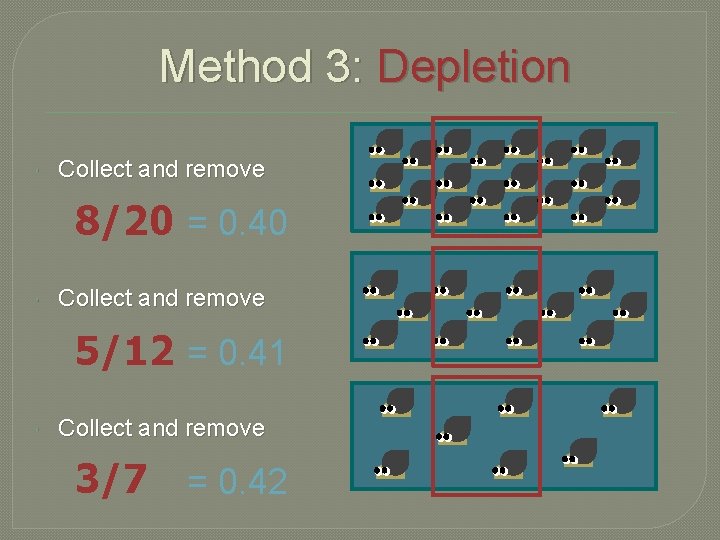
Method 3: Depletion Collect and remove 8/20 = 0. 40 Collect and remove 5/12 = 0. 41 Collect and remove 3/7 = 0. 42
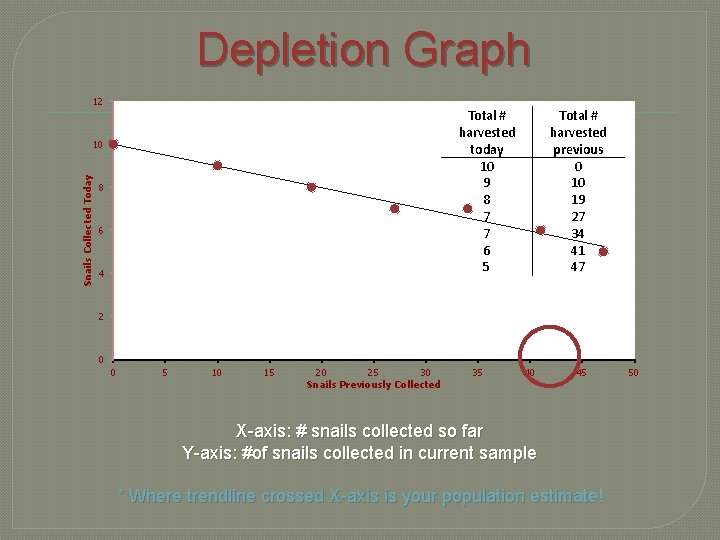
Depletion Graph 12 Total # harvested today 10 9 8 7 7 6 5 Snails Collected Today 10 8 6 4 Total # harvested previous 0 10 19 27 34 41 47 2 0 0 5 10 15 20 25 30 Snails Previously Collected 35 40 45 X-axis: # snails collected so far Y-axis: #of snails collected in current sample * Where trendline crossed X-axis is your population estimate! 50
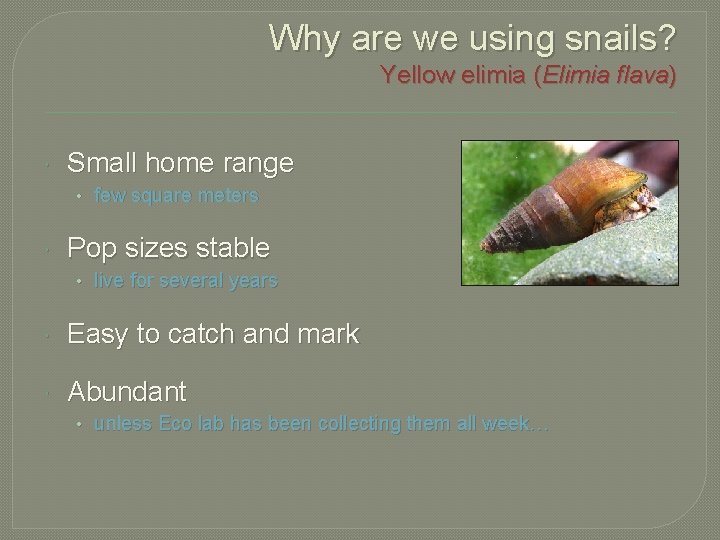
Why are we using snails? Yellow elimia (Elimia flava) Small home range • few square meters Pop sizes stable • live for several years Easy to catch and mark Abundant • unless Eco lab has been collecting them all week…
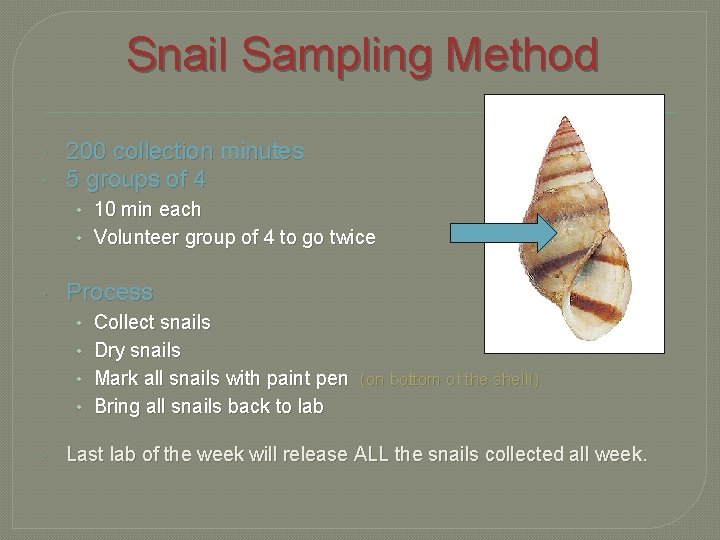
Snail Sampling Method 200 collection minutes 5 groups of 4 • 10 min each • Volunteer group of 4 to go twice Process • Collect snails • Dry snails • Mark all snails with paint pen (on bottom of the shell!) • Bring all snails back to lab Last lab of the week will release ALL the snails collected all week.
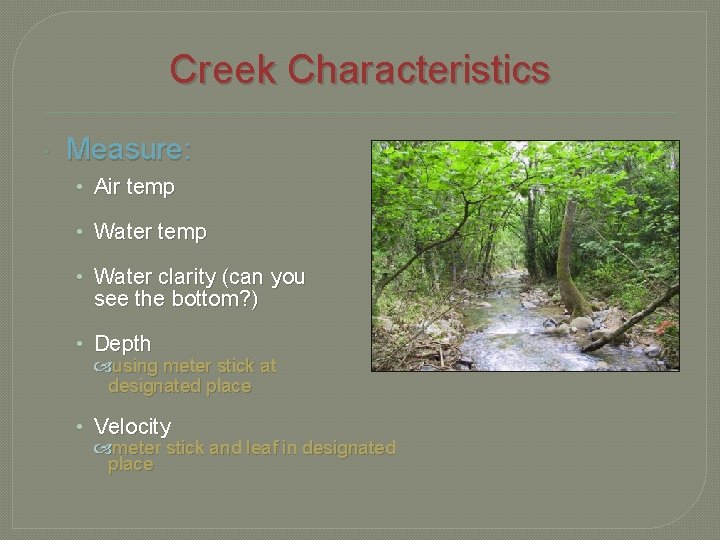
Creek Characteristics Measure: • Air temp • Water clarity (can you see the bottom? ) • Depth using meter stick at designated place • Velocity meter stick and leaf in designated place

Week Two Methods Same as week 1 except: • No marking snails • Keep track of: # marked (and what color) # unmarked • 200 minutes of search time outside study area (to test for emigration): 10 people search upstream for 10 minutes 10 people search downstream for 10 minutes Bring all snails from study plot back to lab (but only the marked migrants!) for Friday release!
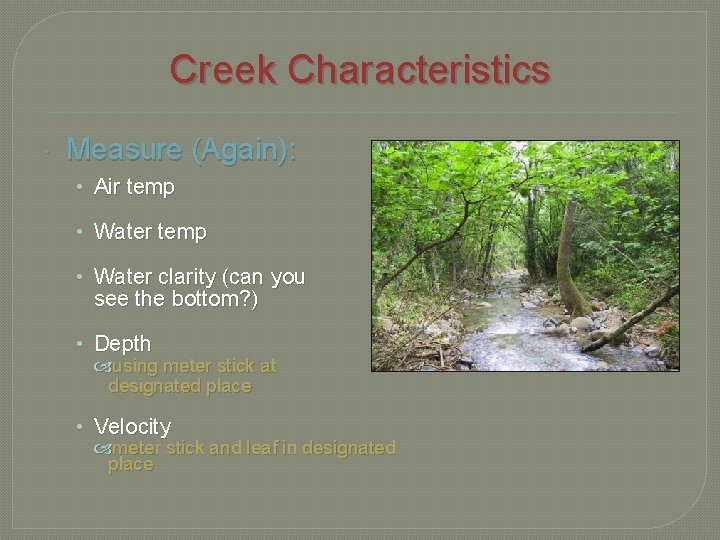
Creek Characteristics Measure (Again): • Air temp • Water clarity (can you see the bottom? ) • Depth using meter stick at designated place • Velocity meter stick and leaf in designated place
Ecology Lab Population Estimation (Week 3) 12 Snails Collected Today 10 8 6 4 2 0 0 5 10 15 20 25 30 Snails Previously Collected 35 40 45 50
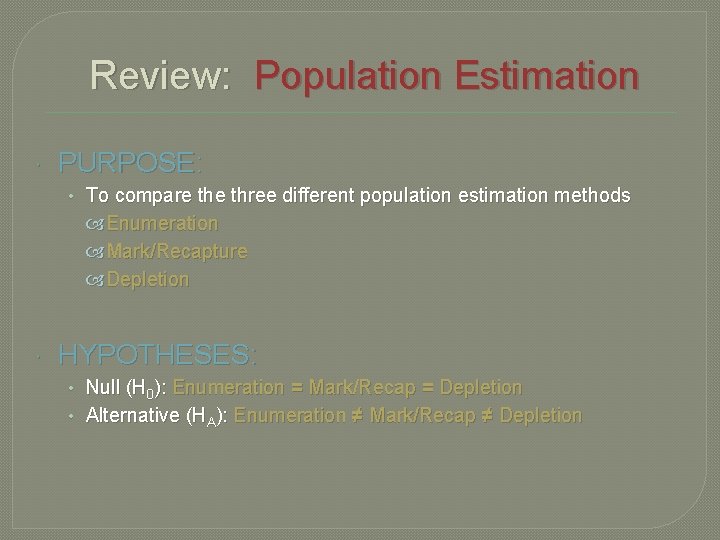
Review: Population Estimation PURPOSE: • To compare three different population estimation methods Enumeration Mark/Recapture Depletion HYPOTHESES: • Null (H 0): Enumeration = Mark/Recap = Depletion • Alternative (HA): Enumeration ≠ Mark/Recap ≠ Depletion
Why estimate population size? How is this tool valuble? Can be an indicator of: • species health • habitat quality • ecosystem or community health If done repeatedly over time, changes in population and its surroundings can be tracked • especially threatened/endangered species Used in management decisions • Hunting/fishing licenses • How areas are used in state/national parks
Method 1: Enumeration P = sum of all individuals • MINIMUM estimation Assumptions • All individuals are captured • Removal of individuals did not attract others into study area (vacuum effect) • No births or deaths during the study
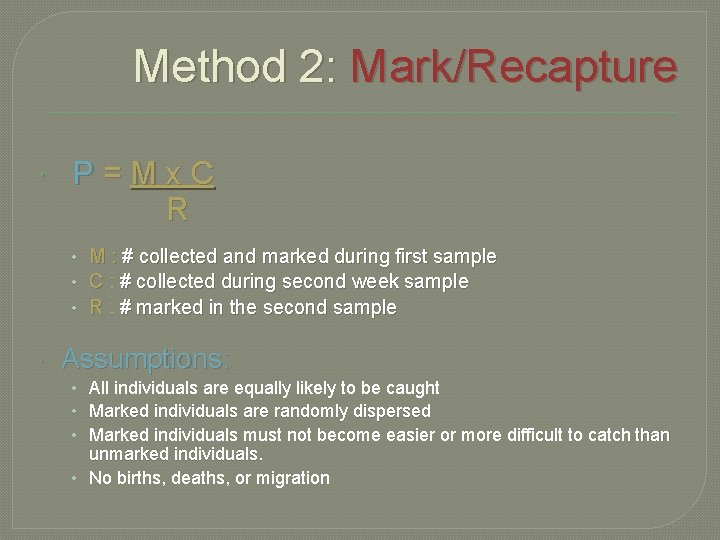
Method 2: Mark/Recapture P=Mx. C R • M : # collected and marked during first sample • C : # collected during second week sample • R : # marked in the second sample Assumptions: • All individuals are equally likely to be caught • Marked individuals are randomly dispersed • Marked individuals must not become easier or more difficult to catch than unmarked individuals. • No births, deaths, or migration
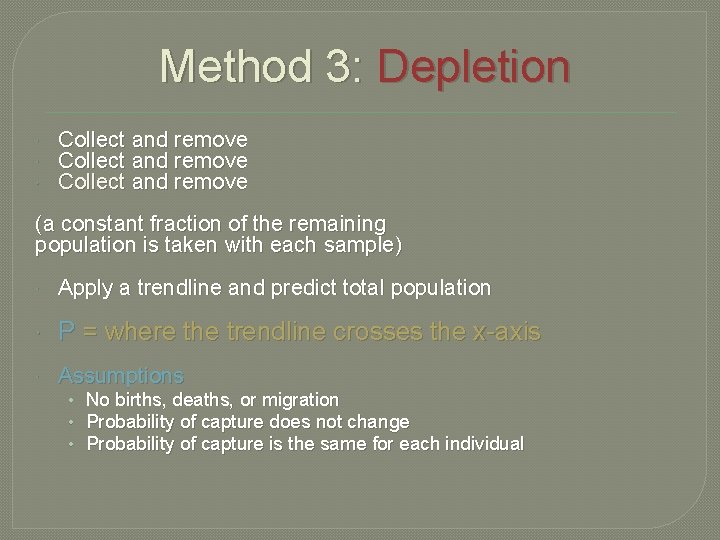
Method 3: Depletion Collect and remove (a constant fraction of the remaining population is taken with each sample) Apply a trendline and predict total population P = where the trendline crosses the x-axis Assumptions • • • No births, deaths, or migration Probability of capture does not change Probability of capture is the same for each individual
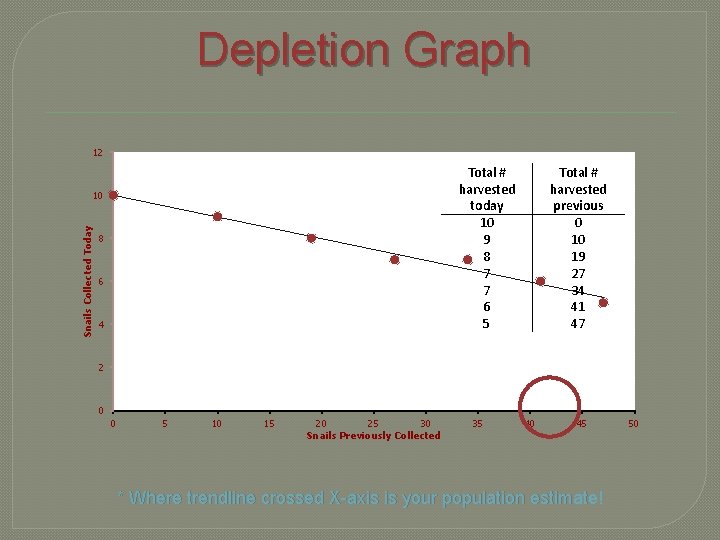
Depletion Graph 12 Total # harvested today 10 9 8 7 7 6 5 Snails Collected Today 10 8 6 4 Total # harvested previous 0 10 19 27 34 41 47 2 0 0 5 10 15 20 25 30 Snails Previously Collected 35 40 45 * Where trendline crossed X-axis is your population estimate! 50
- Slides: 20