
Ecology Jeopardy Vocabulary Invasive Species Food Webs 100
Ecology Jeopardy Vocabulary Invasive Species Food Webs 100 100 100 200 200 200 300 300 300 400 400 400 500 500 500 Carrying Capacity Surprise
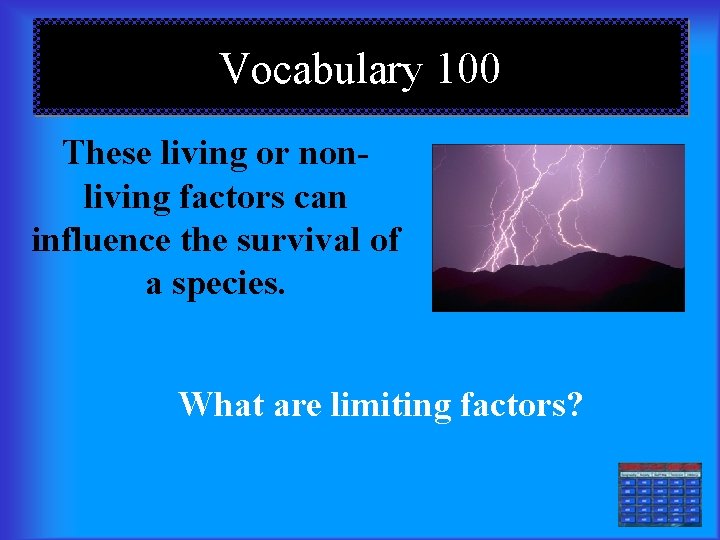
Vocabulary 100 These living or nonliving factors can influence the survival of a species. What are limiting factors?
Vocabulary 200 The interactions between biotic and abiotic factors in an environment What is ecosystem?
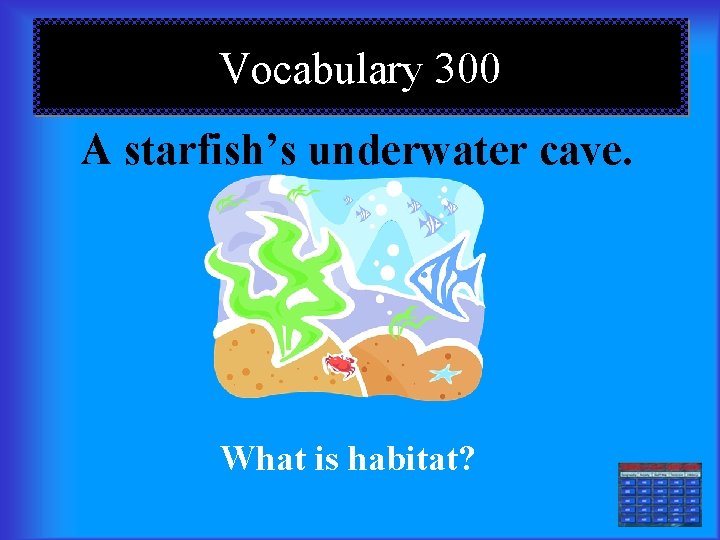
Vocabulary 300 A starfish’s underwater cave. What is habitat?
Vocabulary 400 An owl eating rodents at night. What is a niche?
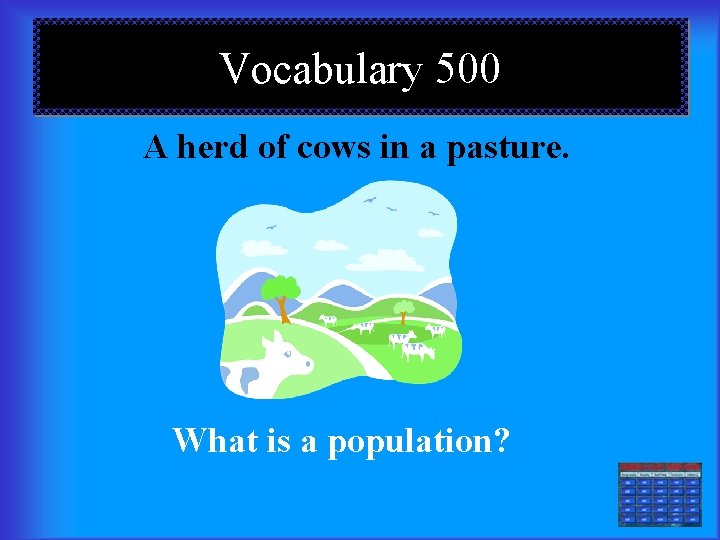
Vocabulary 500 A herd of cows in a pasture. What is a population?
Invasive Species 100 Invasive species tend to do so well in their new environment because of a lack of _______. What is predators?
Invasive Species 200 One famous story of an invasive species is that of the Nile Perch. What are some of the tradeoffs that Lake Victoria experienced due to the introduction of the Nile Perch? Negative- ate cichlids (caused many species to go extinct) lack of oxygen=dead zones Local fishermen were no longer able to use their boats and nets to catch the new larger fish Positives- more fish to catch, more jobs, more food
Invasive Species 300 When you were younger, you received a pet turtle as a birthday gift. Now that you are older, you no longer have time to care for your pet. You’ve noticed turtles living in a pond near your house. Should you let your turtle go live with the other turtles? Why or Why Not? What is no, because the pet turtle may not be native to the area so the impact of letting the turtle on the ecosystem go is unknown?
Invasive Species 400 True or False. Introduced Species are ALWAYS bad to an ecosystem. Explain and give 2 examples. False, Sometimes introduced species have no effect at all (lawn daisies) or can be helpful (after lots of research is done) or they may not be able to survive at all (a tropical fish that is let go in the Puget Sound…it is just to cold for it to survive at all)

Invasive Species 500 What are 3 synonyms for “invasive species” What is non-native, exotic, introduced, non-indigenous, alien, transplants?
Food Webs 100 All energy in a food web originally comes from _____. What is the sun?
Food Webs 200 Food Webs show _________ through an ecosystem. What is the flow of energy?
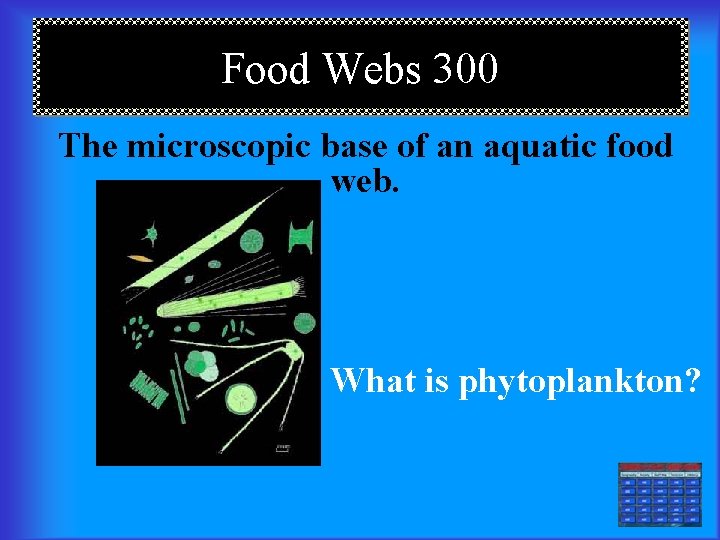
Food Webs 300 The microscopic base of an aquatic food web. What is phytoplankton?
Food Webs 400 Organism that gets food by breaking down dead organisms into nutrients. What are decomposers?
Food Webs 500 Define tertiary consumer and give an example of a simple food chain and tell which organism is the tertiary consumer. The third consumer Many examples possible: Grass, mouse, barn owl, great horned owl. The great horned owl is the tertiary consumer.
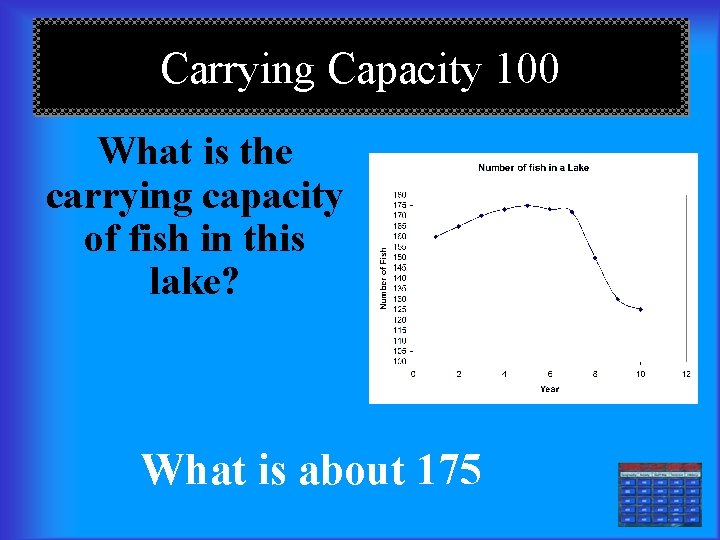
Carrying Capacity 100 What is the carrying capacity of fish in this lake? What is about 175
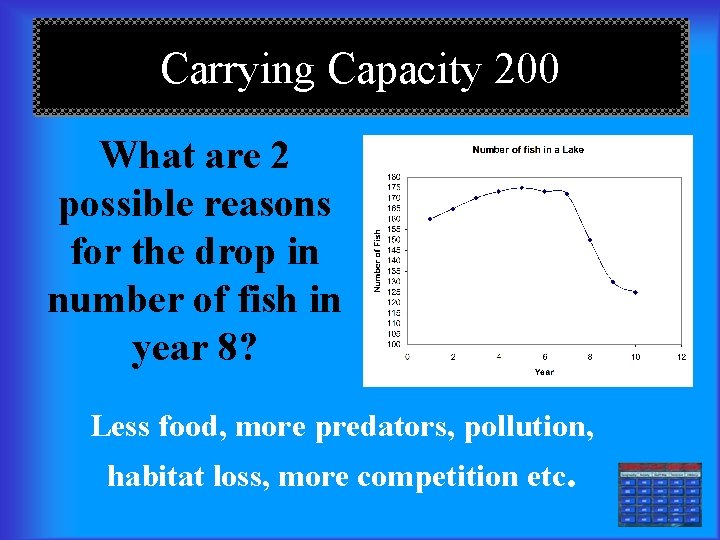
Carrying Capacity 200 What are 2 possible reasons for the drop in number of fish in year 8? Less food, more predators, pollution, habitat loss, more competition etc.
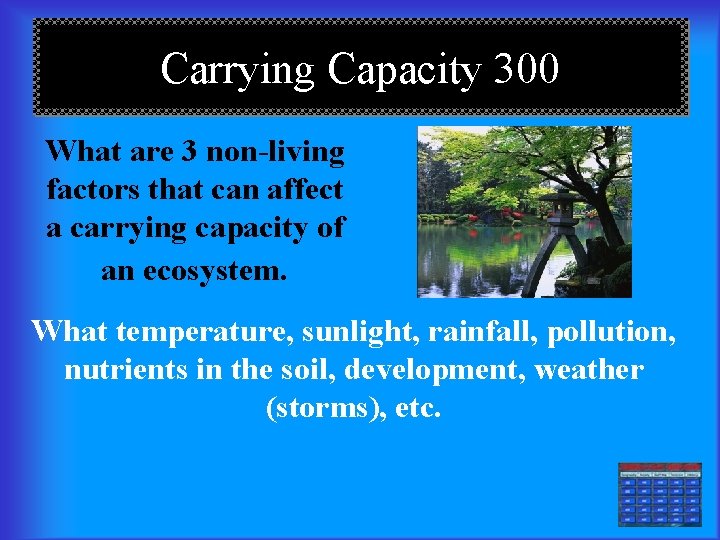
Carrying Capacity 300 What are 3 non-living factors that can affect a carrying capacity of an ecosystem. What temperature, sunlight, rainfall, pollution, nutrients in the soil, development, weather (storms), etc.
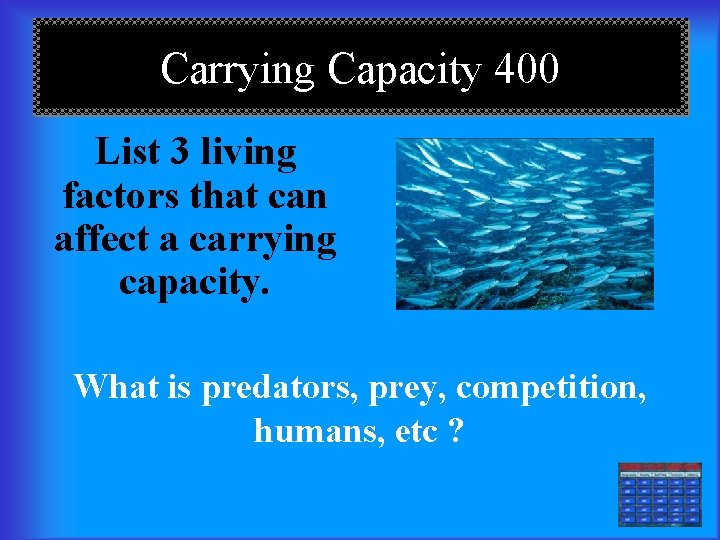
Carrying Capacity 400 List 3 living factors that can affect a carrying capacity. What is predators, prey, competition, humans, etc ?
Carrying Capacity 500 Define: Carrying Capacity What is the maximum number of organisms ecosystem can sustain?
Surprise 100 Definition of Producer. Example. What is make it’s own food by photosynthesis? Example: plant, algae, euglena, etc.
Surprise 200 Definition of Consumer. Example. What is an organism that needs to eat other things to get energy? Example: humans, amoeba, cat, etc.
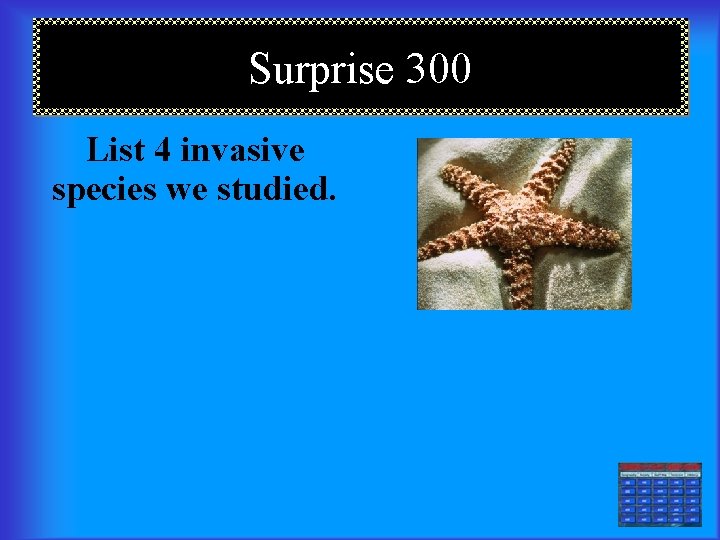
Surprise 300 List 4 invasive species we studied.
Surprise 400 Why is an energy pyramid shaped like a pyramid? The number of organisms decreases towards the top and less energy is available to be passed on to the next level.
Surprise 500 Why does it take more energy from the ecosystem to eat a steak, rather than beans and rice? Because you are eating from a higher trophic level, more energy has gone into growing the meat, than has gone into growing the beans and rice.
- Slides: 28