
ECOLOGY Interactions between organisms and their environment Populations
ECOLOGY Interactions between organisms and their environment
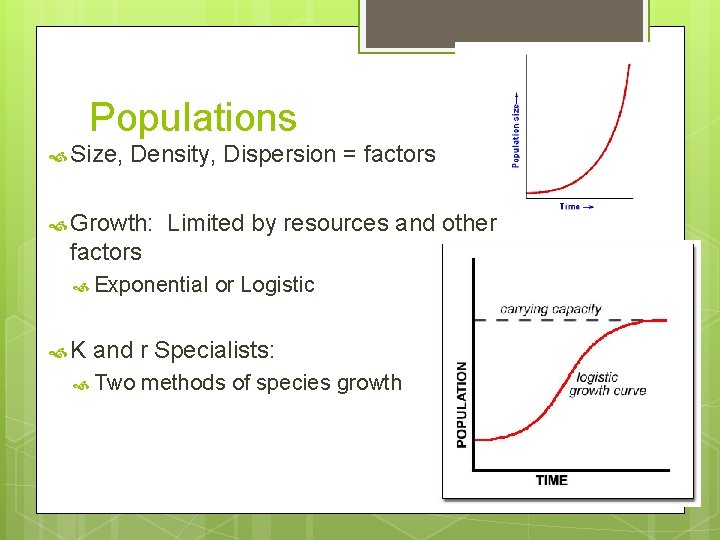
Populations Size, Density, Dispersion = factors Growth: Limited by resources and other factors Exponential K or Logistic and r Specialists: Two methods of species growth
Ecosystem Structure Abiotic vs. Biotic Factors: Fungi, bacteria, animals, plants… Weather, water, p. H, temp, soil, air Organism, Population, Community, Ecosystem, Biome, Earth (small to largest!) Habitat vs. Niche
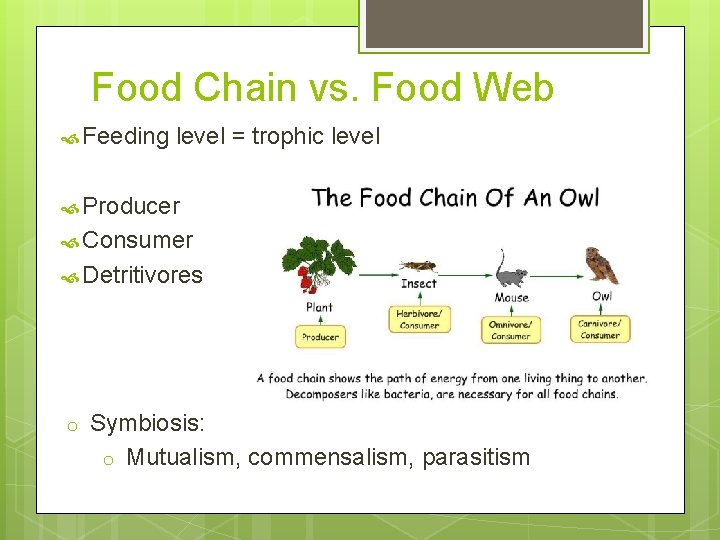
Food Chain vs. Food Web Feeding level = trophic level Producer Consumer Detritivores o Symbiosis: o Mutualism, commensalism, parasitism
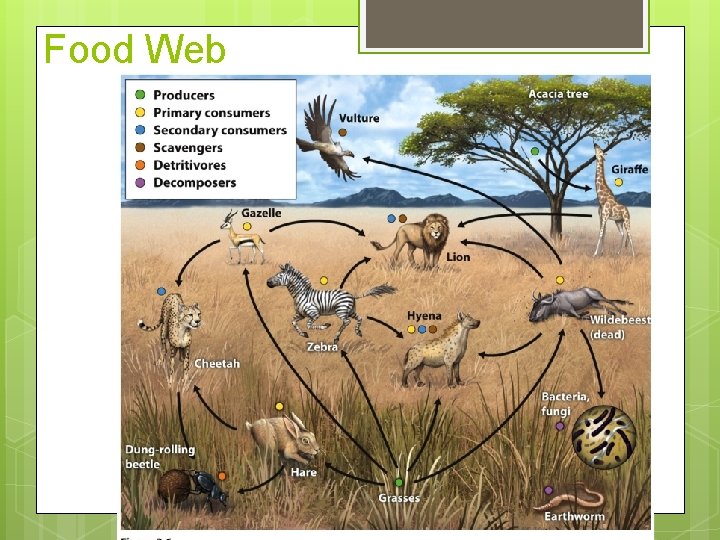
Food Web
Relationships in Ecosystems Autotrophs vs. Heterotrophs Photosynthesis and cellular respiration Primary Producer (autotrophs) Primary Consumer (heterotrophs) (herbivore) Secondary/Tertiary/Quaternary (carnivores, Detritivore category! Consumer omnivores, scavengers) aka. Decomposer – in their own
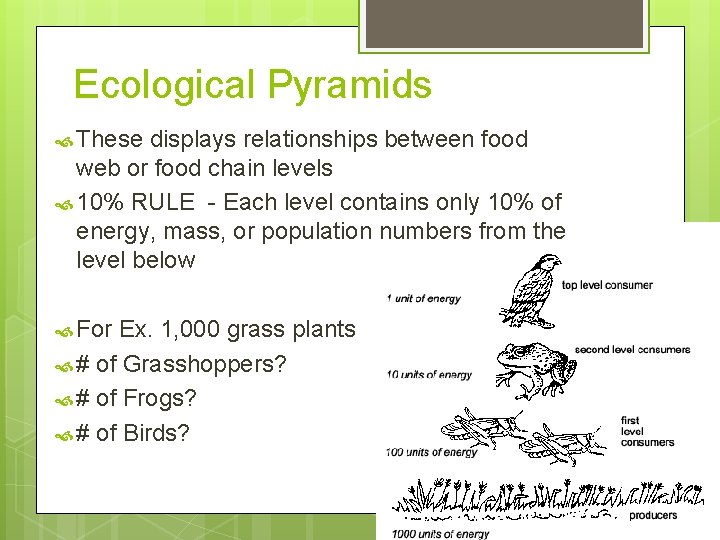
Ecological Pyramids These displays relationships between food web or food chain levels 10% RULE - Each level contains only 10% of energy, mass, or population numbers from the level below For Ex. 1, 000 grass plants # of Grasshoppers? # of Frogs? # of Birds?
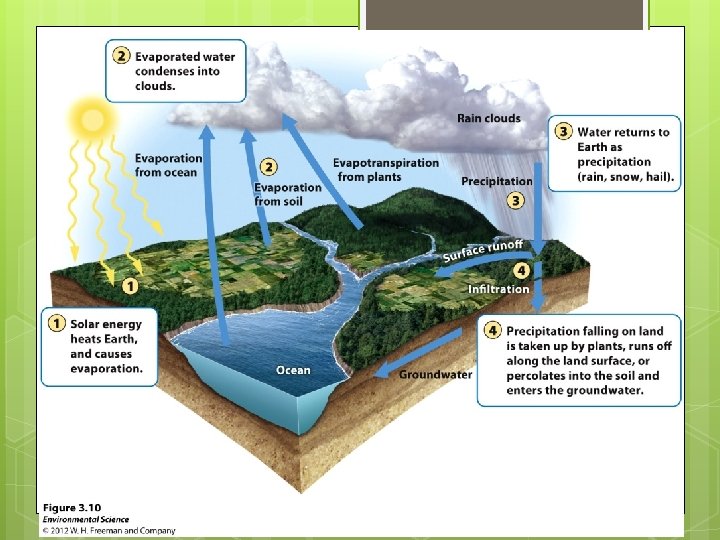
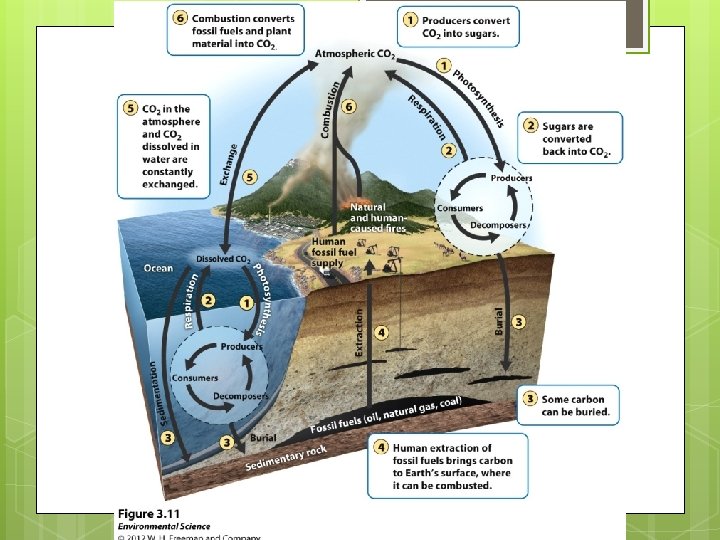
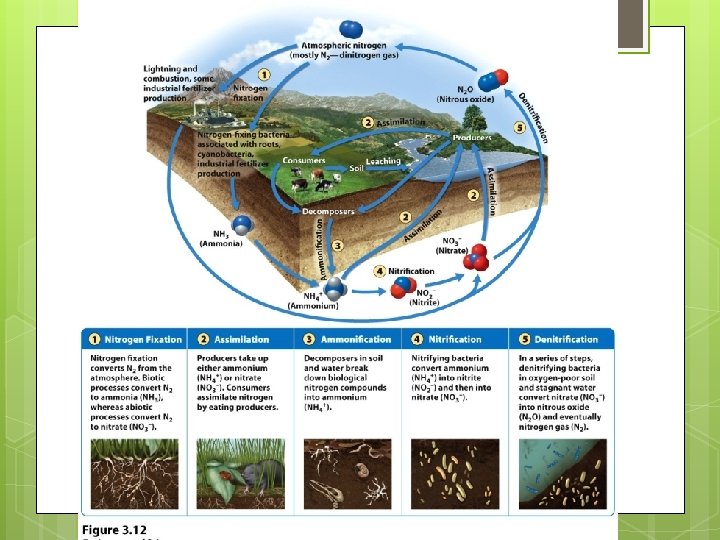
Biogeochemical Cycles Carbon, Hydrogen, Nitrogen, Oxygen, Phosphorus, Sulfur = CHNOPS! Focus: Cycles Main Water (H 20), Carbon/Oxygen and Nitrogen Idea: Abiotic/Biotic factors NEED these elements, so they must be MOVED AND EXCHANGED over time throughout ecosystems
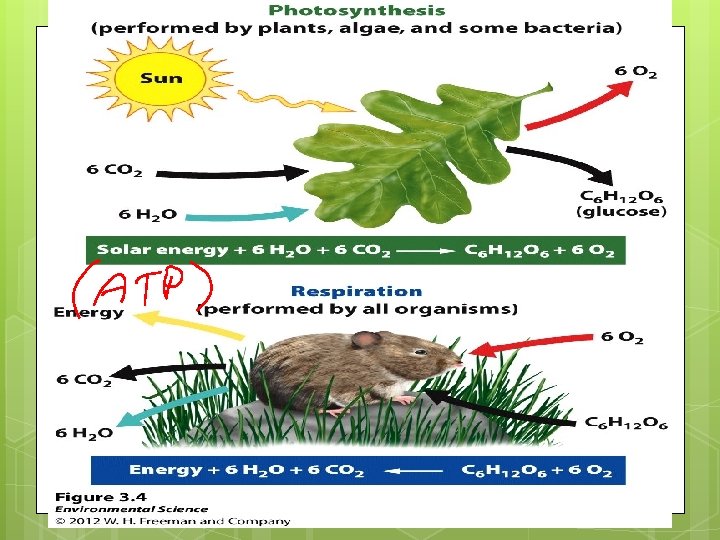
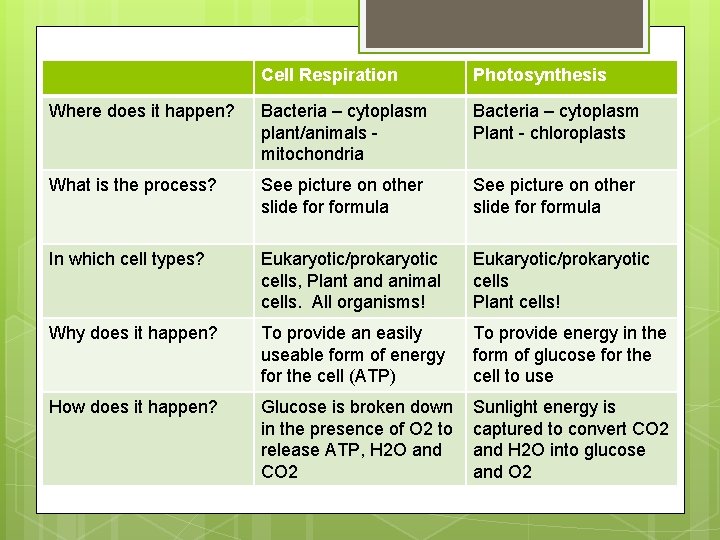
Cell Respiration Photosynthesis Where does it happen? Bacteria – cytoplasm plant/animals mitochondria Bacteria – cytoplasm Plant - chloroplasts What is the process? See picture on other slide for formula In which cell types? Eukaryotic/prokaryotic cells, Plant and animal cells. All organisms! Eukaryotic/prokaryotic cells Plant cells! Why does it happen? To provide an easily useable form of energy for the cell (ATP) To provide energy in the form of glucose for the cell to use How does it happen? Glucose is broken down in the presence of O 2 to release ATP, H 2 O and CO 2 Sunlight energy is captured to convert CO 2 and H 2 O into glucose and O 2
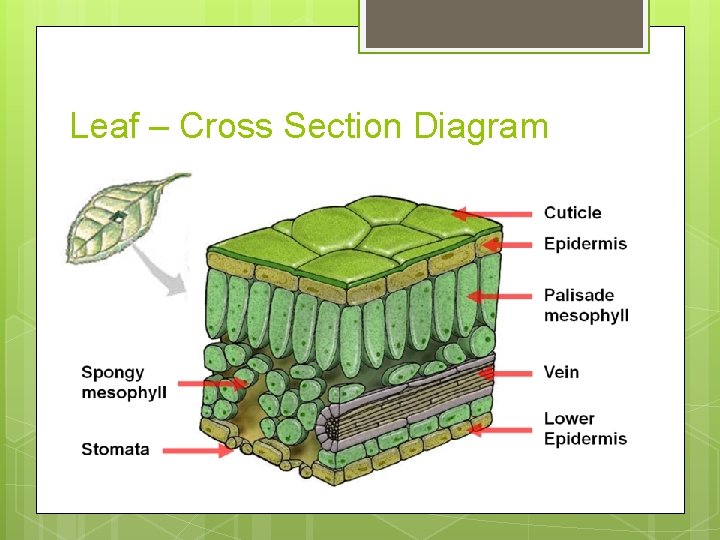
Leaf – Cross Section Diagram
- Slides: 15