
Ecology Energy Flow Food Chain A visual representation
- Slides: 22
Ecology Energy Flow
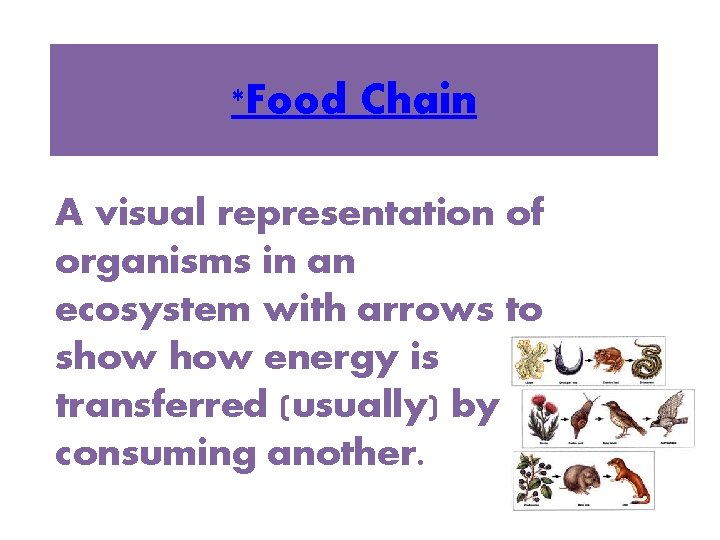
*Food Chain A visual representation of organisms in an ecosystem with arrows to show energy is transferred (usually) by consuming another.
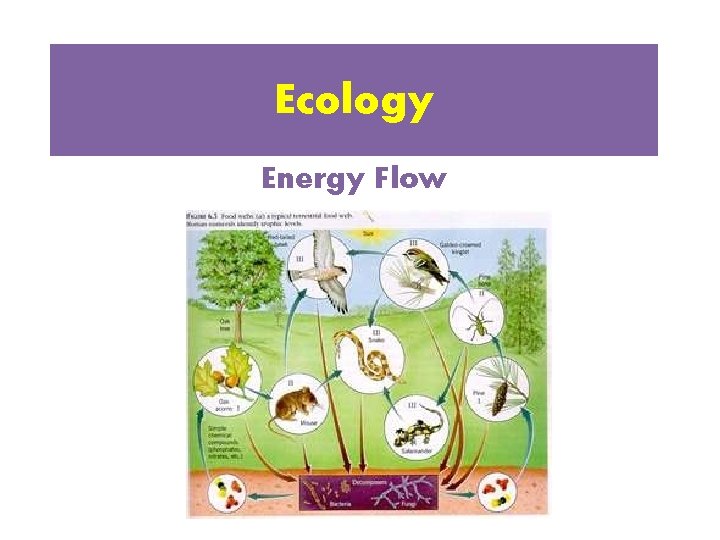
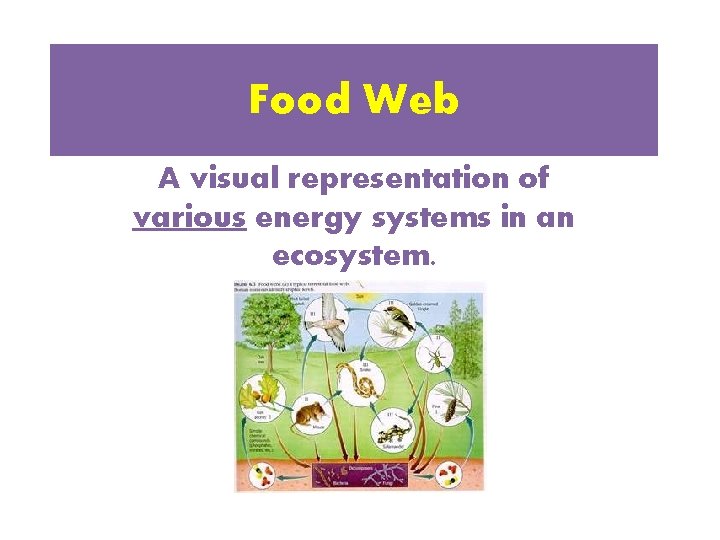
Food Web A visual representation of various energy systems in an ecosystem.
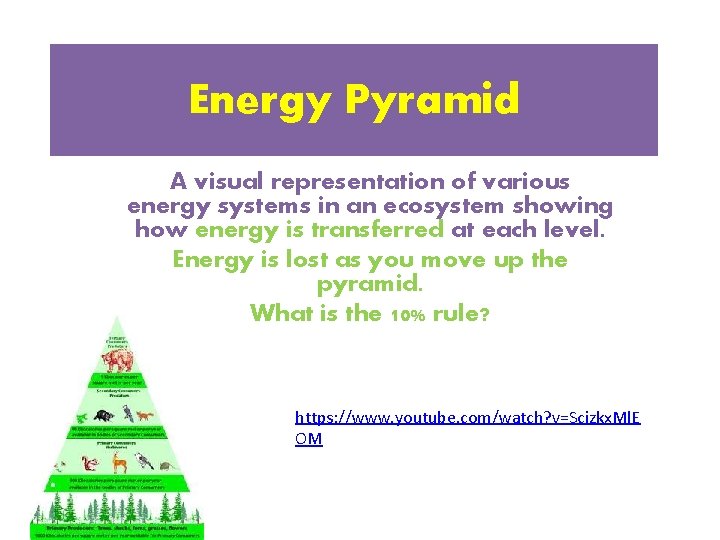
Energy Pyramid A visual representation of various energy systems in an ecosystem showing how energy is transferred at each level. Energy is lost as you move up the pyramid. What is the 10% rule? https: //www. youtube. com/watch? v=Scizkx. Ml. E OM
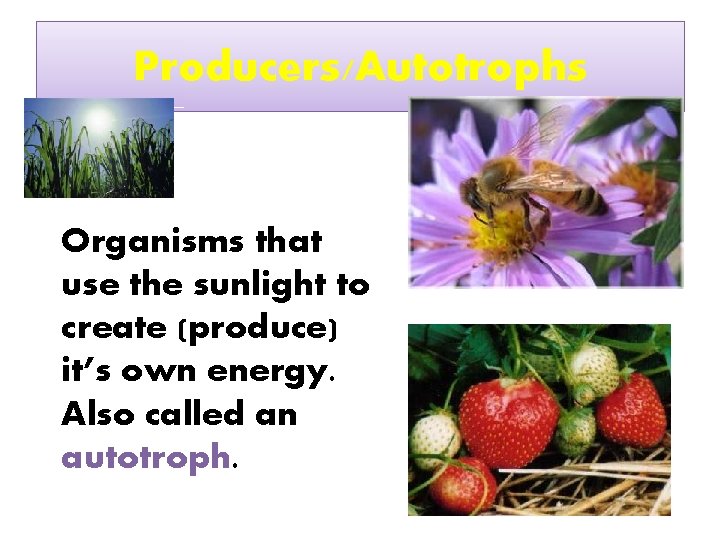
Producers/Autotrophs Organisms that use the sunlight to create (produce) it’s own energy. Also called an autotroph.
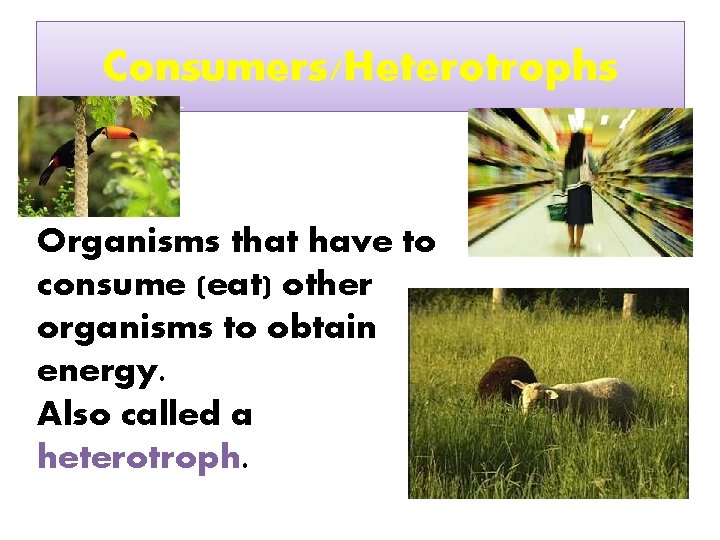
Consumers/Heterotrophs Organisms that have to consume (eat) other organisms to obtain energy. Also called a heterotroph.
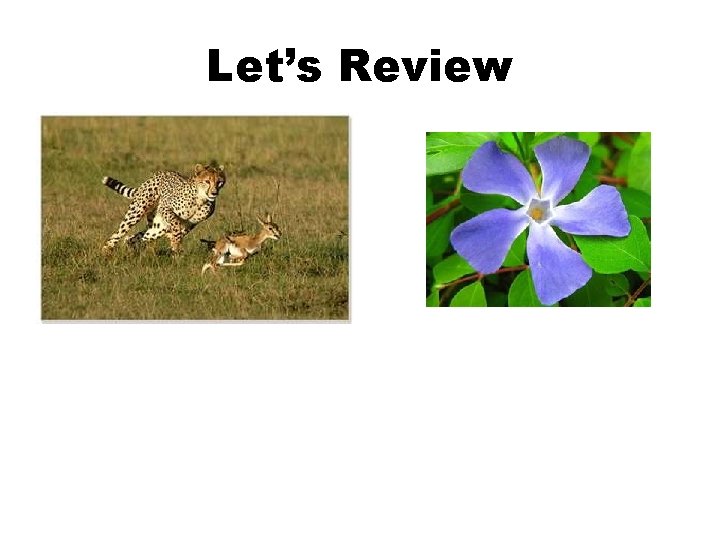
Let’s Review
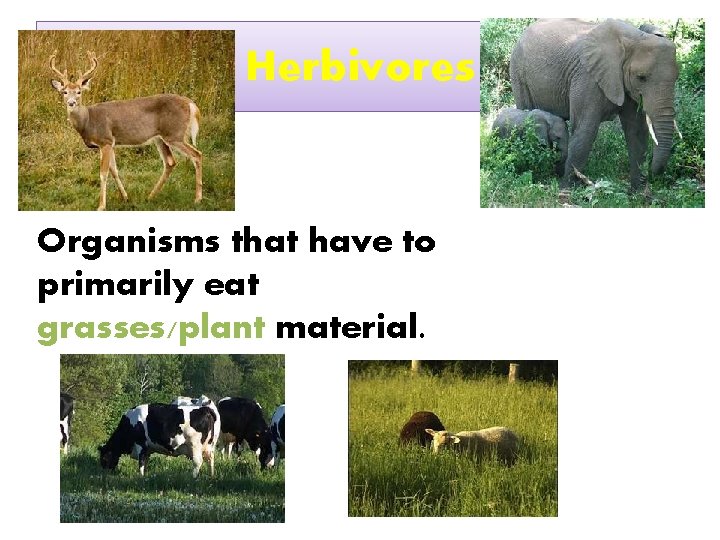
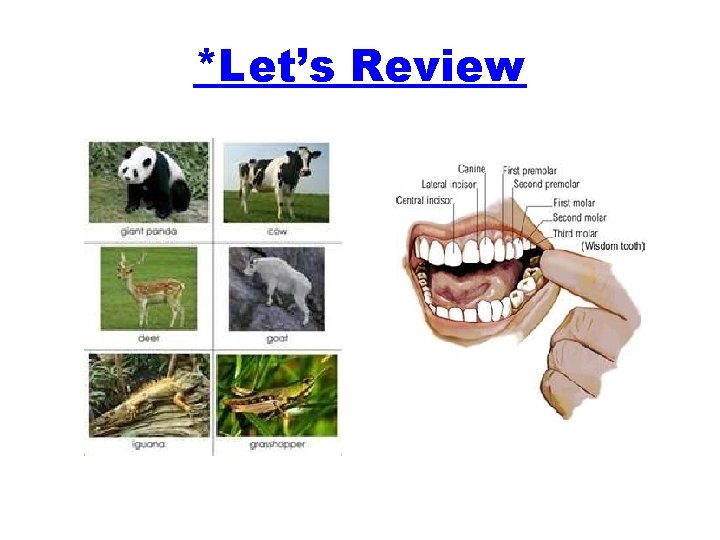
Herbivores Organisms that have to primarily eat grasses/plant material.
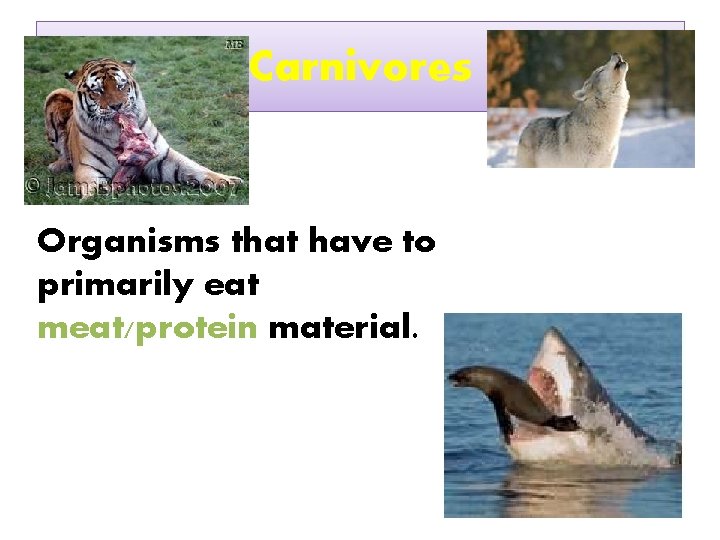
Carnivores Organisms that have to primarily eat meat/protein material.
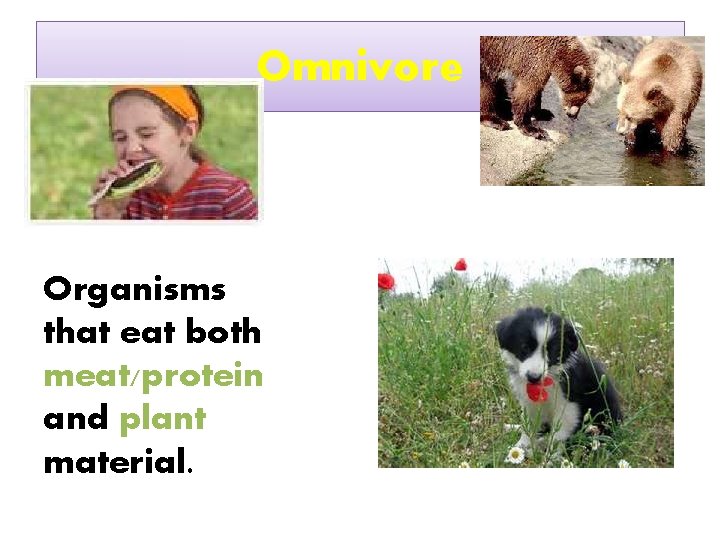
Omnivore Organisms that eat both meat/protein and plant material.
*Let’s Review
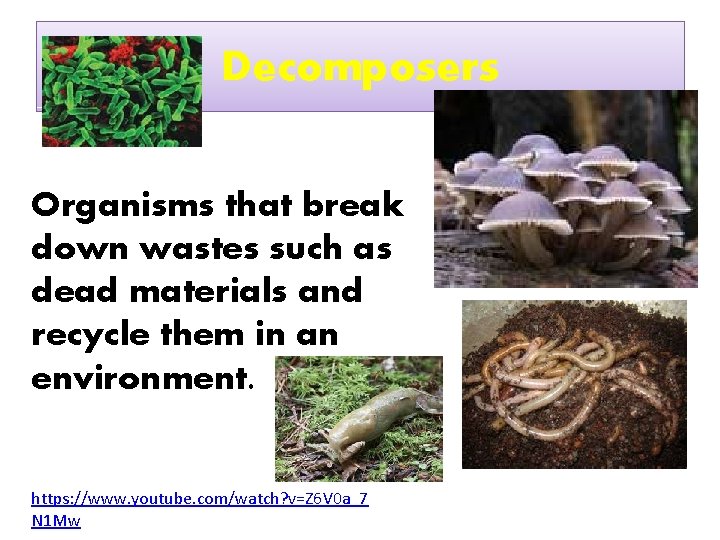
Decomposers Organisms that break down wastes such as dead materials and recycle them in an environment. https: //www. youtube. com/watch? v=Z 6 V 0 a_7 N 1 Mw
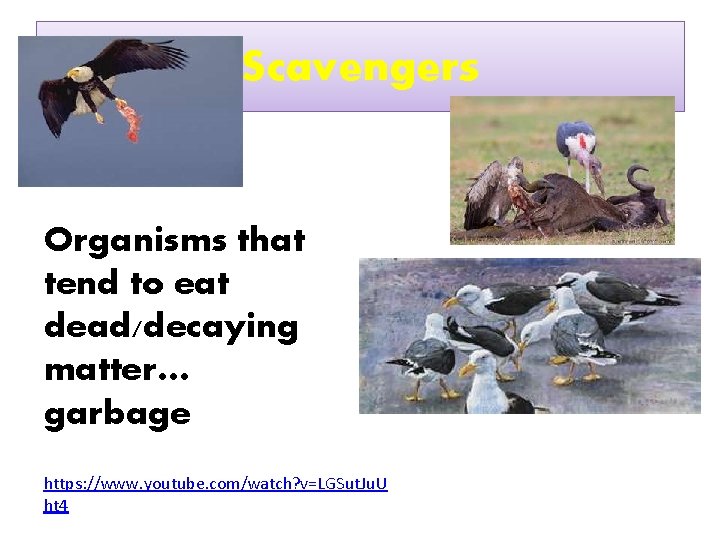
Scavengers Organisms that tend to eat dead/decaying matter… garbage https: //www. youtube. com/watch? v=LGSut. Ju. U ht 4
Ecological Succession • Predictable changes that occur in an ecological system after a disturbance. • Primary succession-rebuild of the ecological system; no soil present (rock, ash, etc. ) • Pioneer species- first to arrive on the scene! Lichens break down on rocks so that soil can form. • Secondary succession-rebuild of the ecological system once soil is present to build upon.
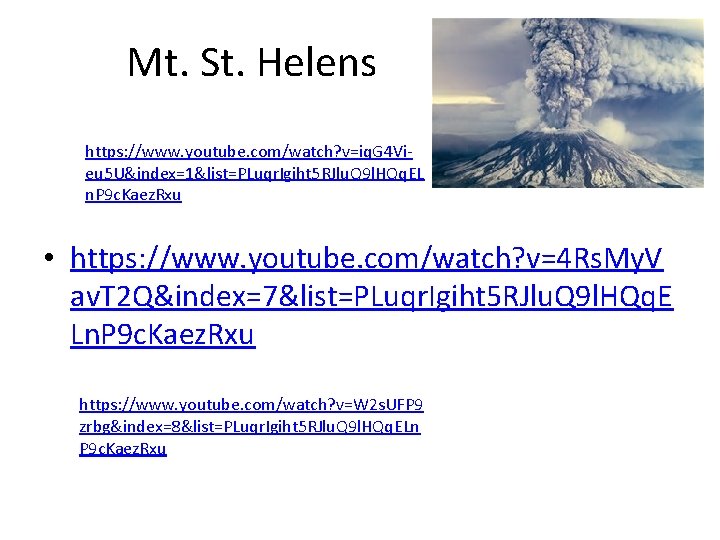
Mt. St. Helens https: //www. youtube. com/watch? v=iq. G 4 Vieu 5 U&index=1&list=PLuqr. Igiht 5 RJlu. Q 9 l. HQq. EL n. P 9 c. Kaez. Rxu • https: //www. youtube. com/watch? v=4 Rs. My. V av. T 2 Q&index=7&list=PLuqr. Igiht 5 RJlu. Q 9 l. HQq. E Ln. P 9 c. Kaez. Rxu https: //www. youtube. com/watch? v=W 2 s. UFP 9 zrbg&index=8&list=PLuqr. Igiht 5 RJlu. Q 9 l. HQq. ELn P 9 c. Kaez. Rxu
Relationships between species I. Competition II. Predation III. Symbiosis
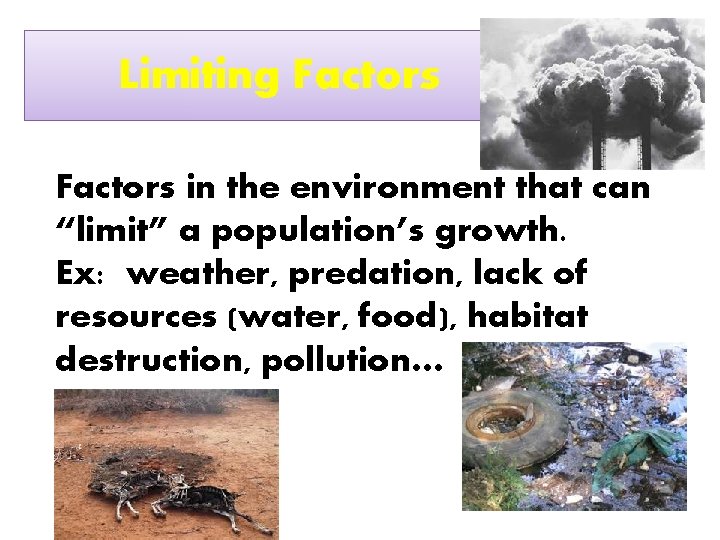
Limiting Factors in the environment that can “limit” a population’s growth. Ex: weather, predation, lack of resources (water, food), habitat destruction, pollution…
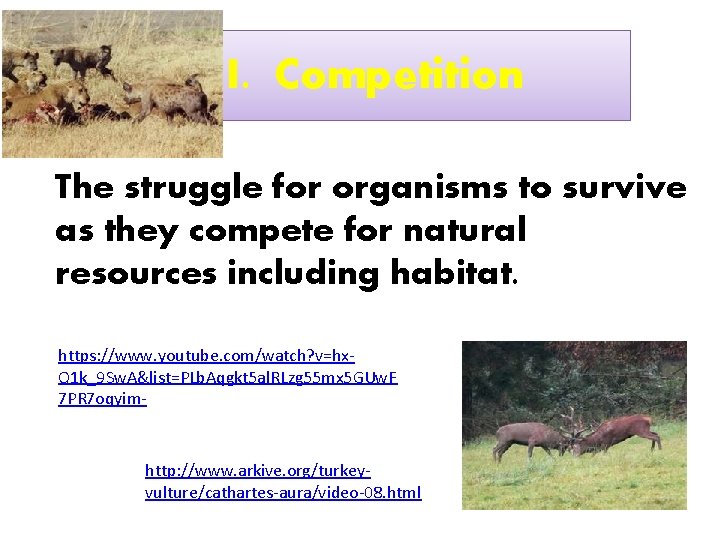
I. Competition The struggle for organisms to survive as they compete for natural resources including habitat. https: //www. youtube. com/watch? v=hx. Q 1 k_9 Sw. A&list=PLb. Aqgkt 5 al. RLzg 55 mx 5 GUw. F 7 PR 7 oqyim- http: //www. arkive. org/turkeyvulture/cathartes-aura/video-08. html
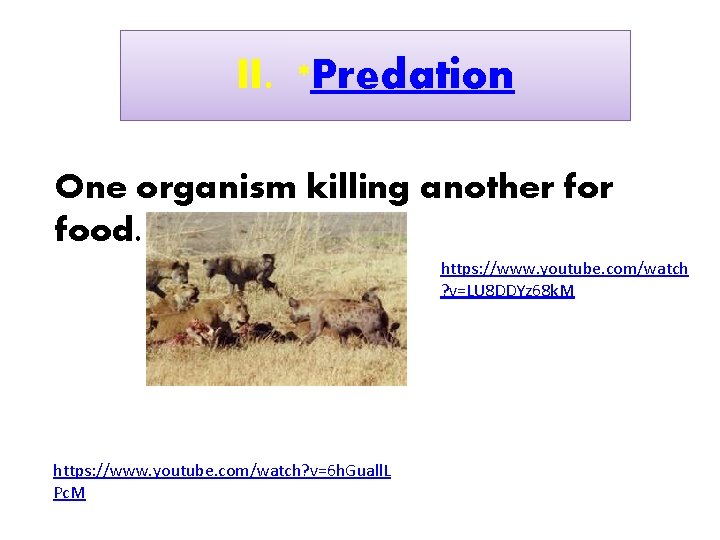
II. *Predation One organism killing another food. https: //www. youtube. com/watch ? v=LU 8 DDYz 68 k. M https: //www. youtube. com/watch? v=6 h. Guall. L Pc. M
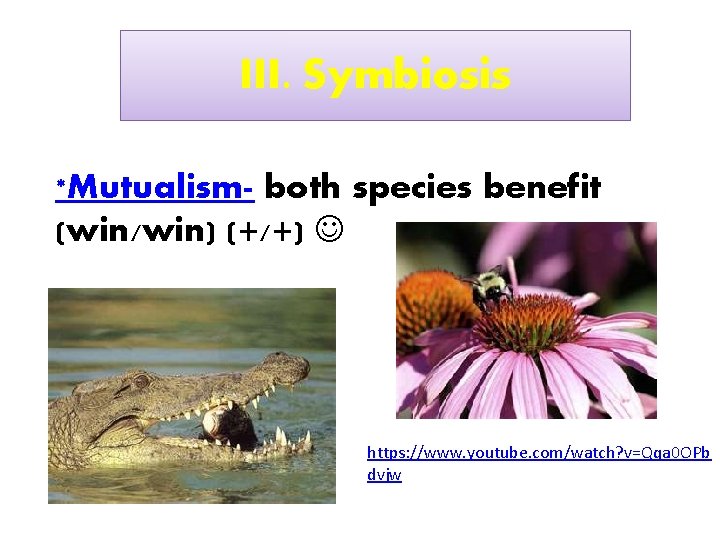
III. Symbiosis *Mutualism- both species benefit (win/win) (+/+) https: //www. youtube. com/watch? v=Qqa 0 OPb dvjw
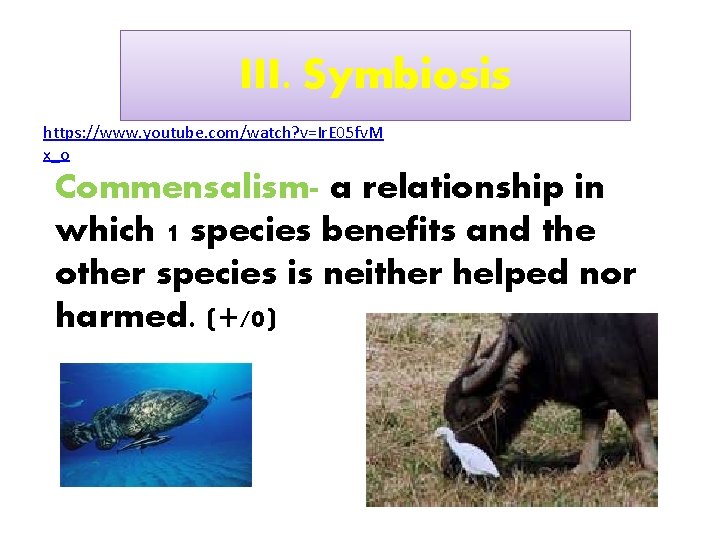
III. Symbiosis https: //www. youtube. com/watch? v=Ir. E 05 fv. M x_o Commensalism- a relationship in which 1 species benefits and the other species is neither helped nor harmed. (+/0)
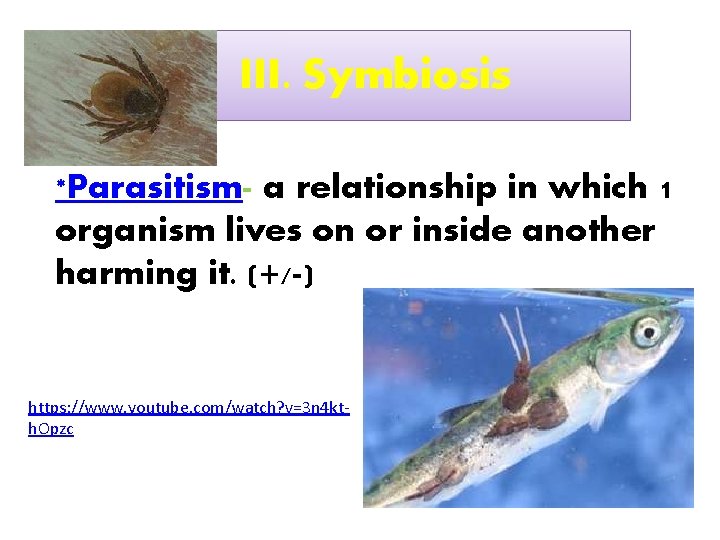
III. Symbiosis *Parasitism- a relationship in which 1 organism lives on or inside another harming it. (+/-) https: //www. youtube. com/watch? v=3 n 4 kth. Opzc