
ECOLOGY Ecology is the study of homes The






- Slides: 69
ECOLOGY • Ecology is the study of homes. • The average number of organisms that can be sustained in an ecosystem is known as carrying capacity. • Food, water, and shelter are known as limiting factors.
ECOLOGY • Tolerance is the ability of a population to withstand fluctuations of biotic and abiotic factors. • Abiotic – All of the non-living elements in an ecosystem like air, water, and temperature. • Biotic – All of the living elements in an ecosystem.
ECOLOGY • Biodiversity is the number and variety of organisms found within a specified region. • Extinction is when a species is no longer in existence. • Endangered means a species is in danger of extinction throughout all of a significant portion of its range.
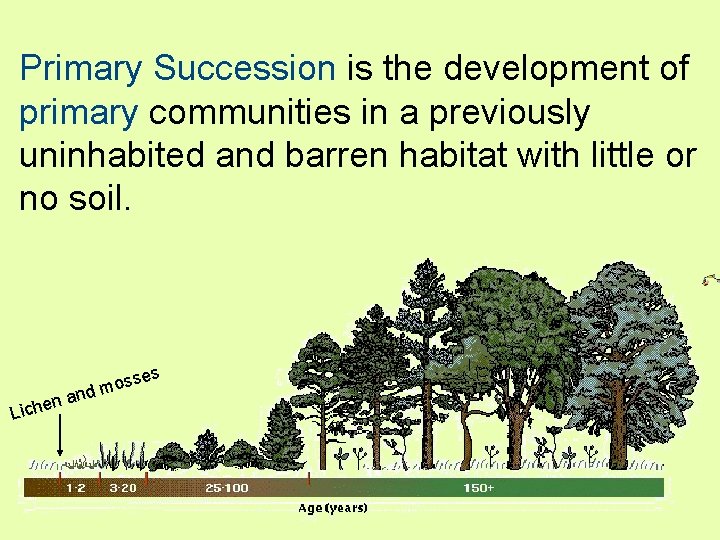
Primary Succession is the development of primary communities in a previously uninhabited and barren habitat with little or no soil. e Lich n sse o m and s
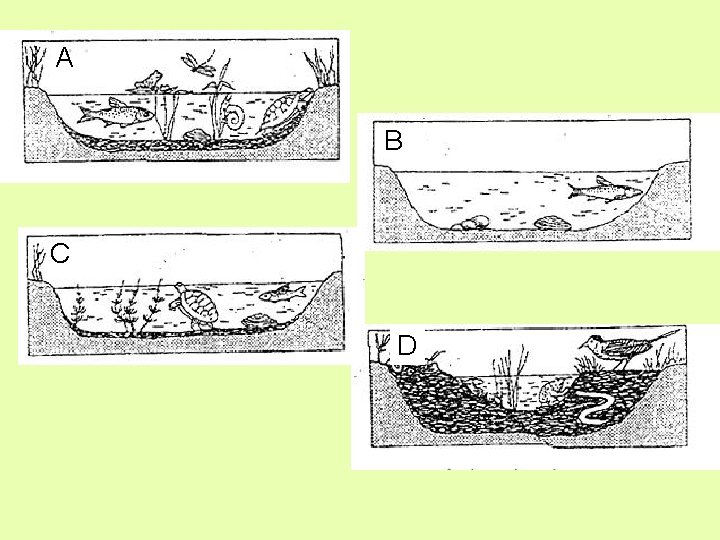
A B C D
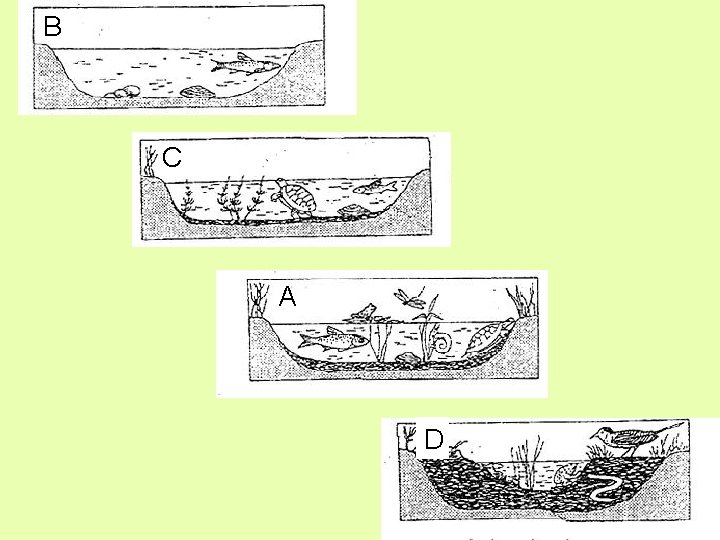
B C A D
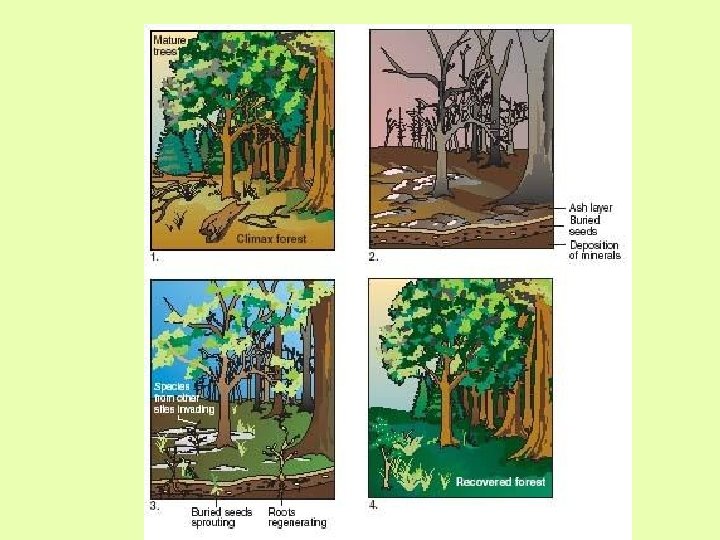
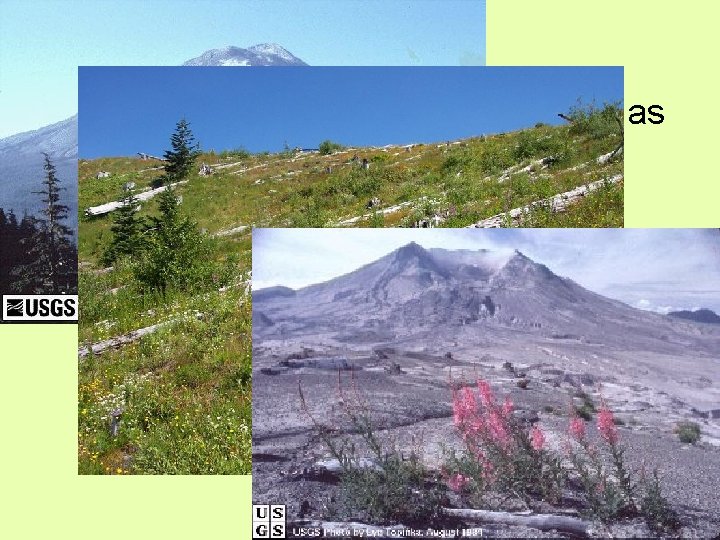
Secondary Succession is the reestablishment of a community that has been destroyed by a natural disaster.
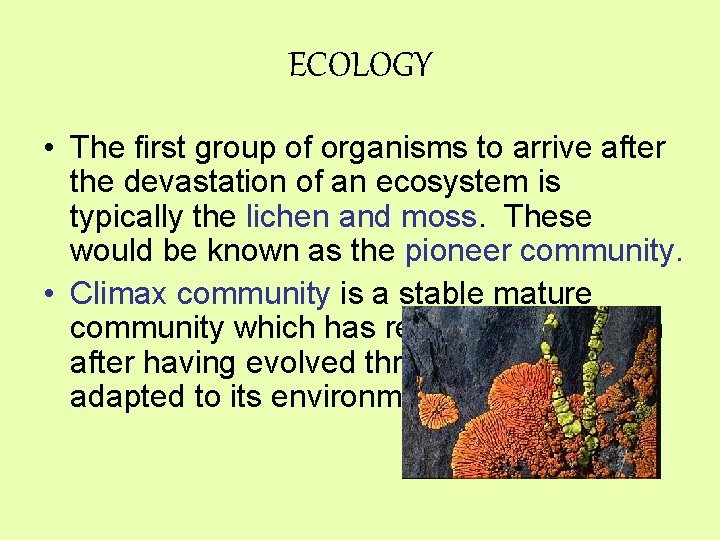
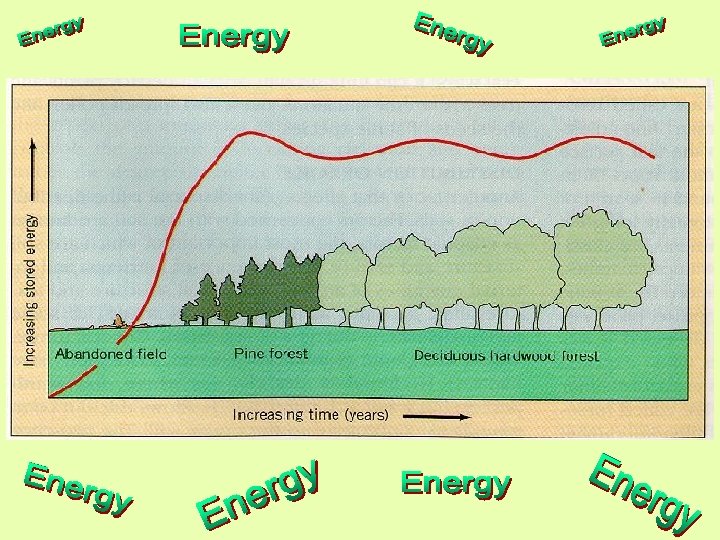
ECOLOGY • The first group of organisms to arrive after the devastation of an ecosystem is typically the lichen and moss. These would be known as the pioneer community. • Climax community is a stable mature community which has reached equilibrium after having evolved through stages and adapted to its environment.
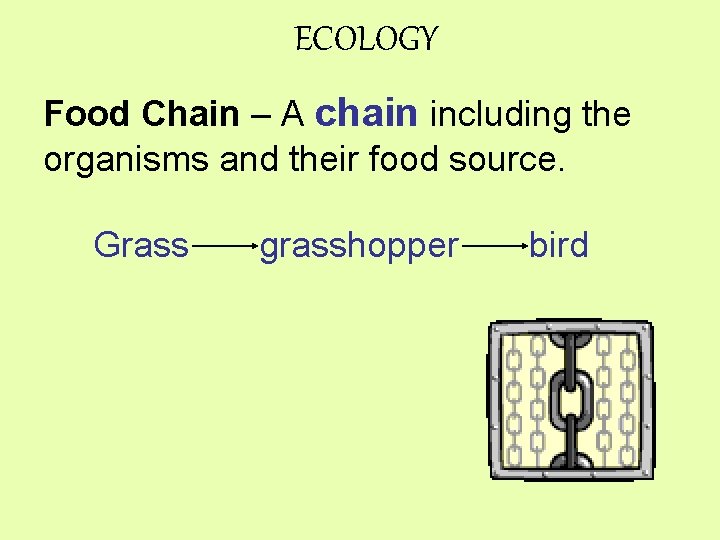
ECOLOGY Food Chain – A chain including the organisms and their food source. Grass grasshopper bird
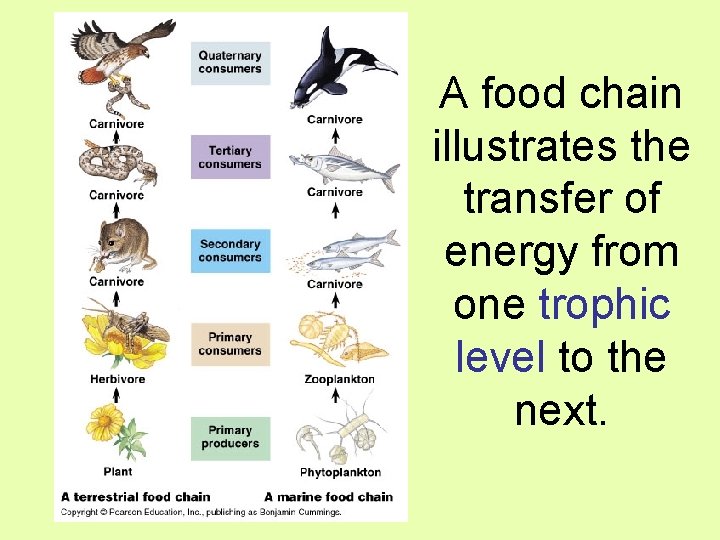
A food chain illustrates the transfer of energy from one trophic level to the next.
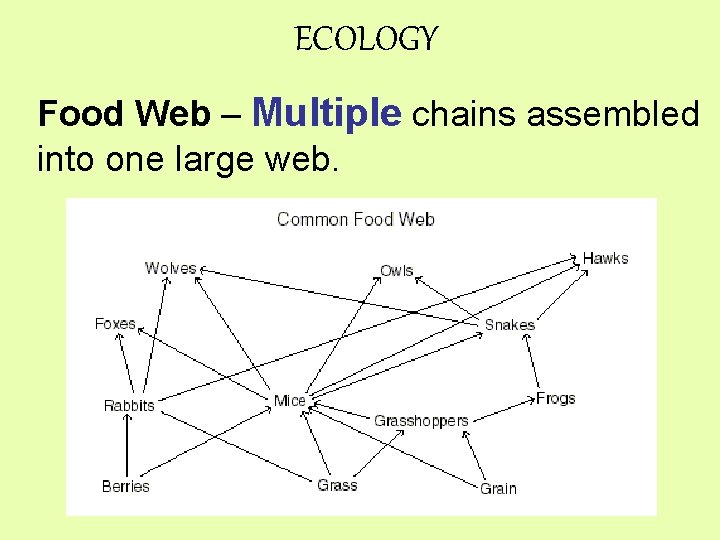
ECOLOGY Food Web – Multiple chains assembled into one large web.
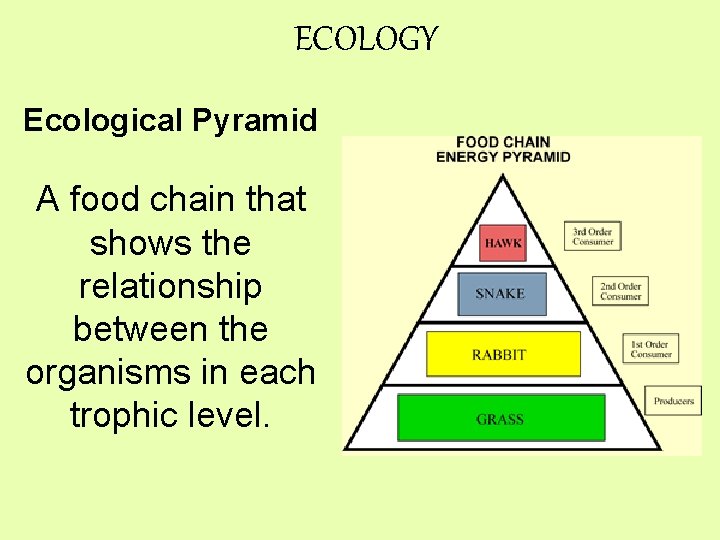
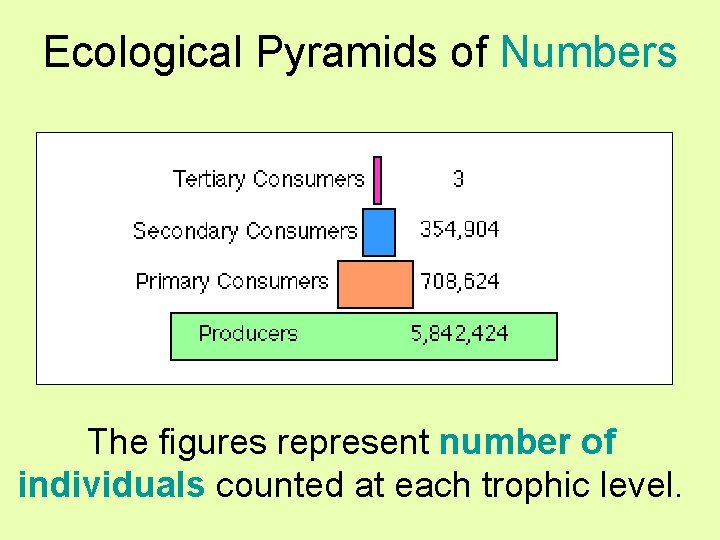
ECOLOGY Ecological Pyramid A food chain that shows the relationship between the organisms in each trophic level.
Ecological Pyramids of Numbers The figures represent number of individuals counted at each trophic level.
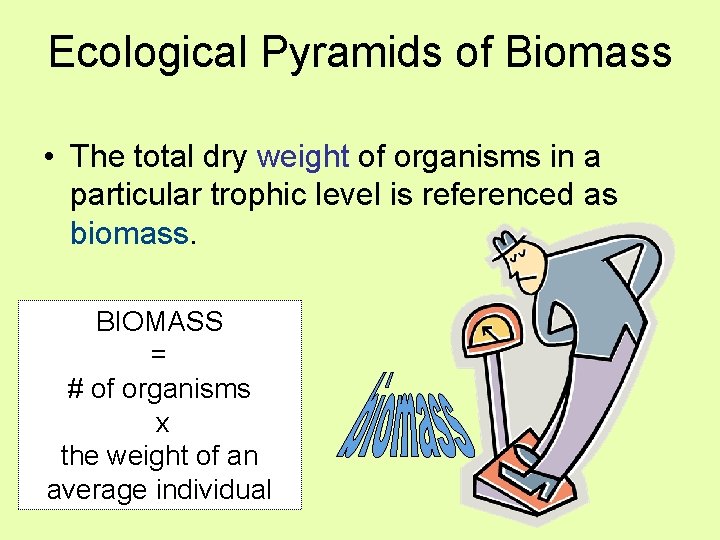
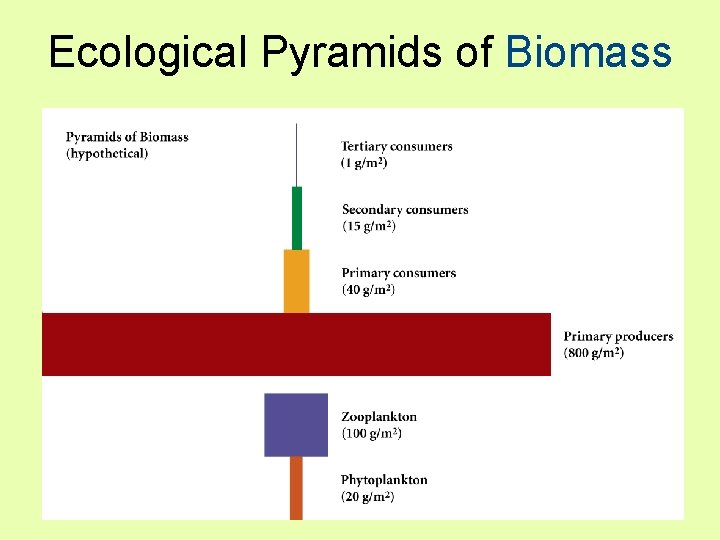
Ecological Pyramids of Biomass • The total dry weight of organisms in a particular trophic level is referenced as biomass. BIOMASS = # of organisms x the weight of an average individual
Ecological Pyramids of Biomass
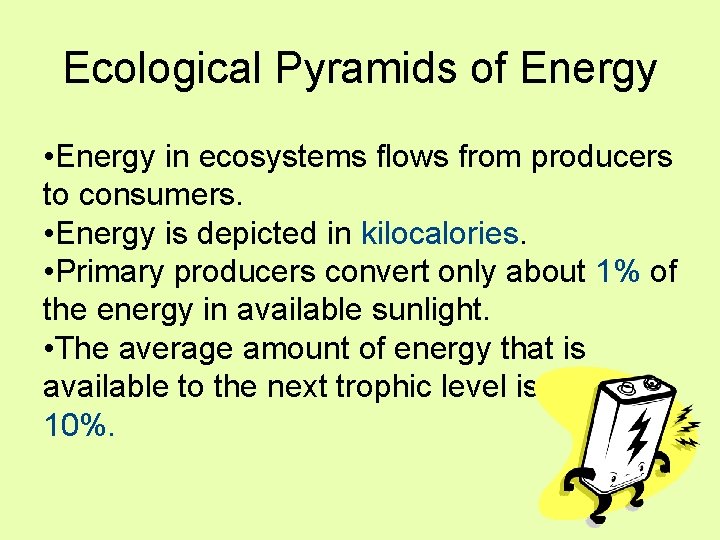
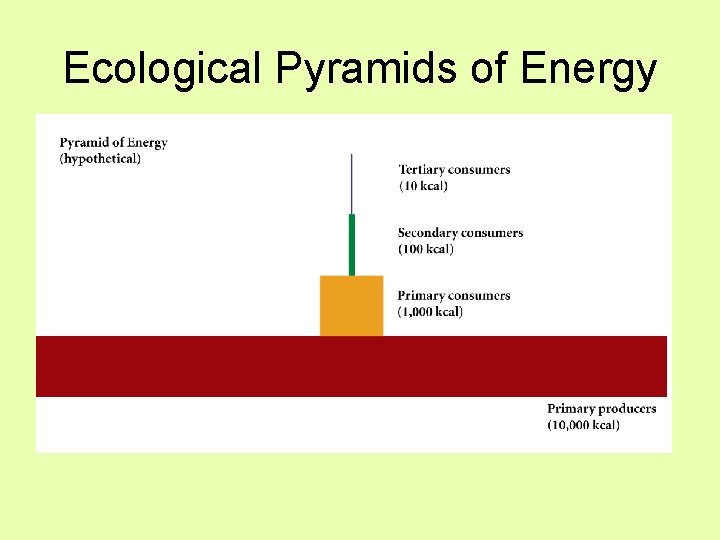
Ecological Pyramids of Energy • Energy in ecosystems flows from producers to consumers. • Energy is depicted in kilocalories. • Primary producers convert only about 1% of the energy in available sunlight. • The average amount of energy that is available to the next trophic level is about 10%.
Ecological Pyramids of Energy
Rootbeer Activity
Plant
Mouse
Hawk
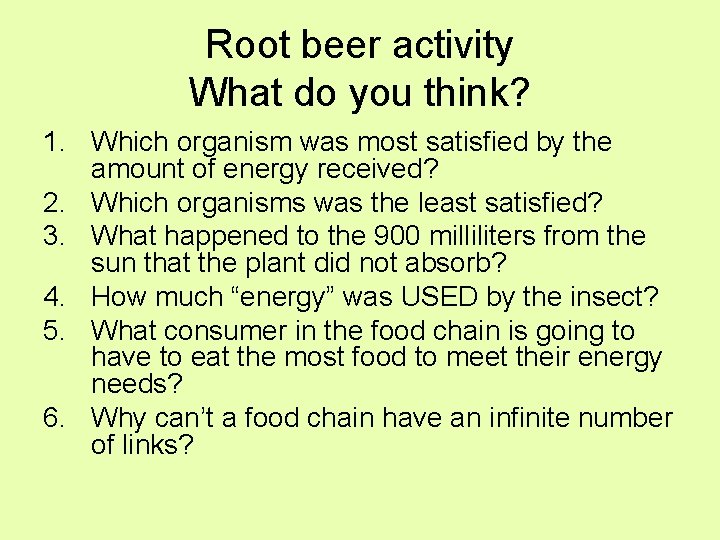
Root beer activity What do you think? 1. Which organism was most satisfied by the amount of energy received? 2. Which organisms was the least satisfied? 3. What happened to the 900 milliliters from the sun that the plant did not absorb? 4. How much “energy” was USED by the insect? 5. What consumer in the food chain is going to have to eat the most food to meet their energy needs? 6. Why can’t a food chain have an infinite number of links?
pre. AP : Calculating Kcals from Calories Carbohydrates gram = 4 Kcal Protein gram = 4 Kcal Fat gram = 9 Kcal Limit to 30%
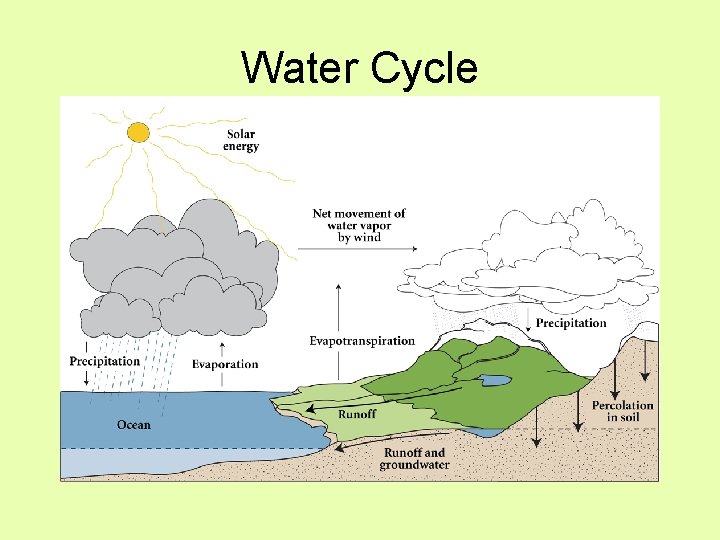
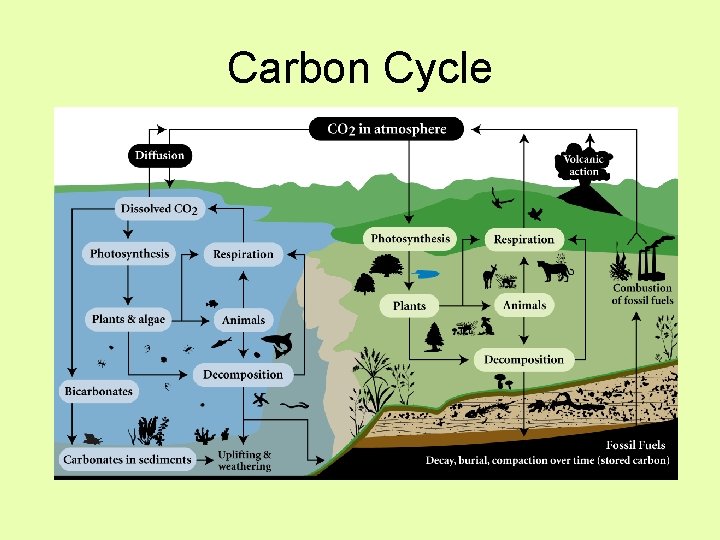
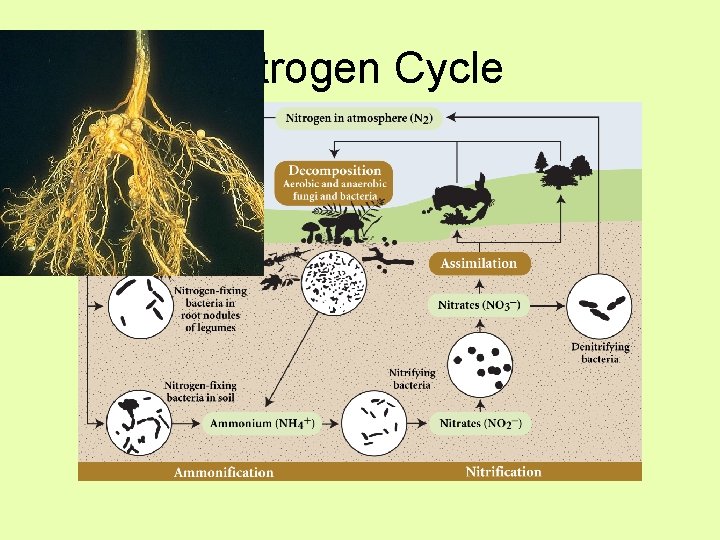
Cycles • Cycling of materials between the environment and organisms • Chemical and biological processes • Examples – Water cycle – Nitrogen cycle – Carbon cycle Plants obtain nitrogen from nitrogen-fixing bacteria and pass it to other organisms through the food chain
Water Cycle
Carbon Cycle
Nitrogen Cycle
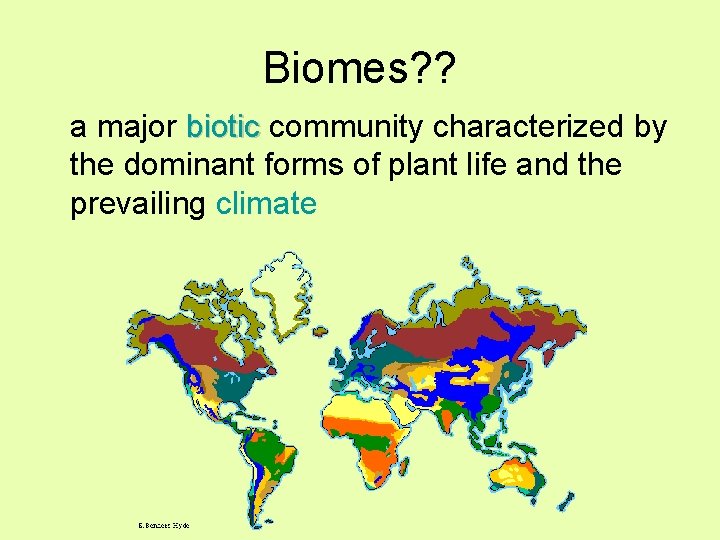
Biomes? ? a major biotic community characterized by biotic the dominant forms of plant life and the prevailing climate
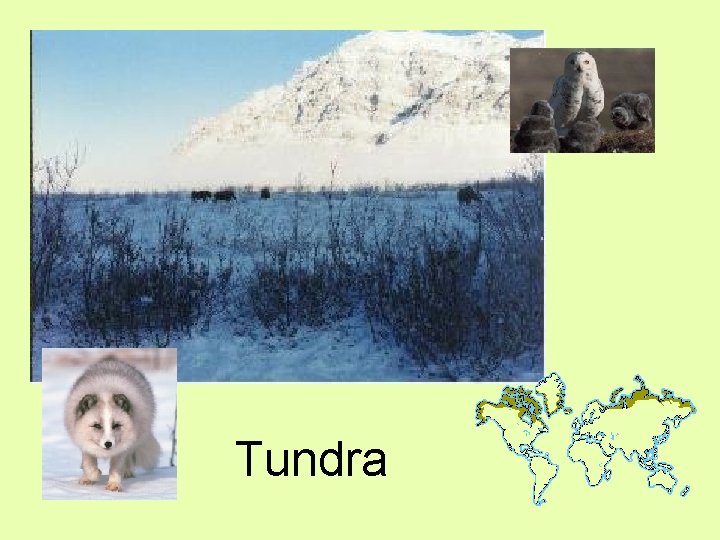
Tundra
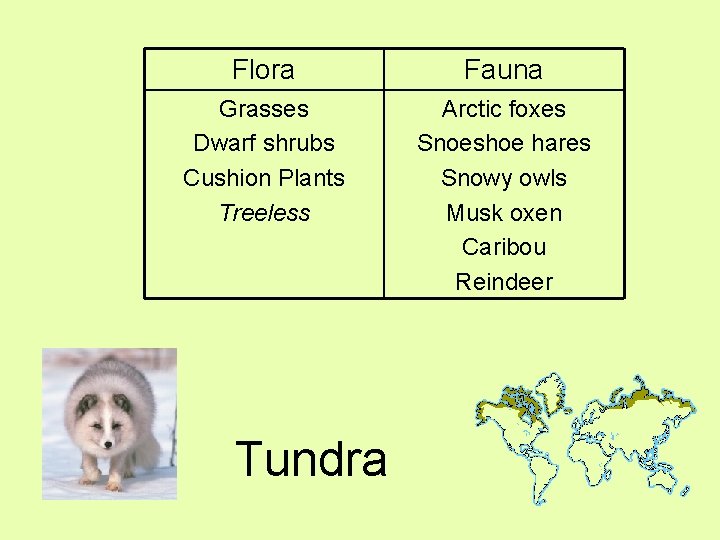
Flora Fauna Grasses Dwarf shrubs Cushion Plants Treeless Arctic foxes Snoeshoe hares Snowy owls Musk oxen Caribou Reindeer Tundra
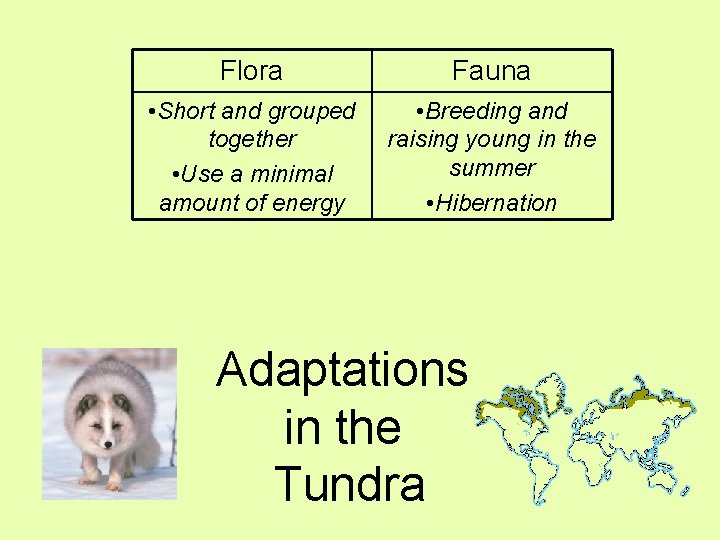
Flora Fauna • Short and grouped together • Use a minimal amount of energy • Breeding and raising young in the summer • Hibernation Adaptations in the Tundra
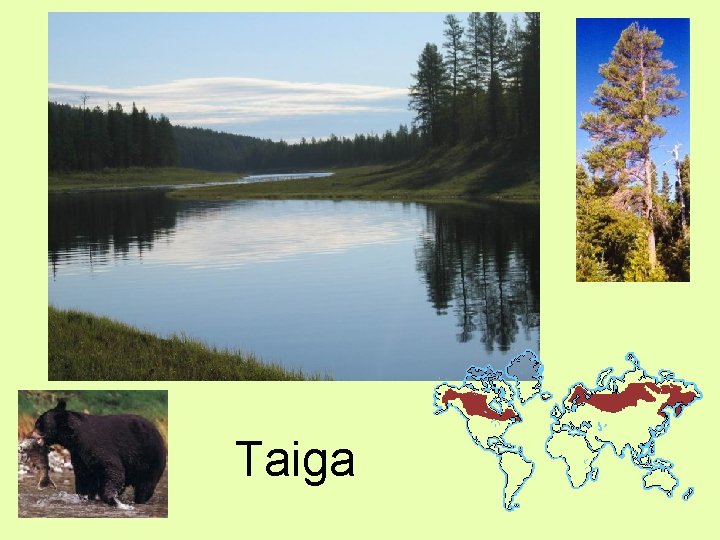
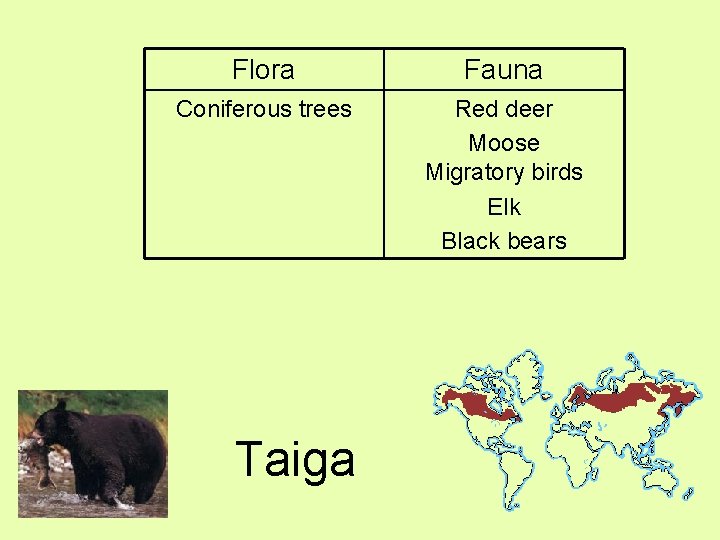
Taiga
Flora Fauna Coniferous trees Red deer Moose Migratory birds Elk Black bears Taiga
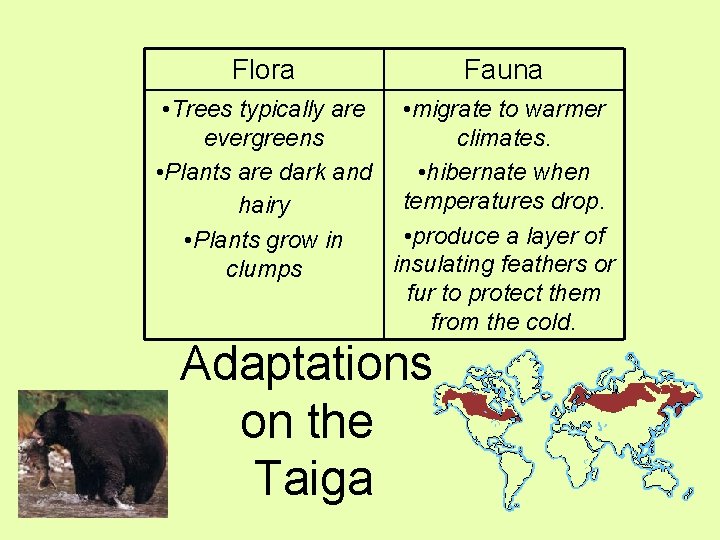
Flora Fauna • Trees typically are • migrate to warmer evergreens climates. • Plants are dark and • hibernate when temperatures drop. hairy • produce a layer of • Plants grow in insulating feathers or clumps fur to protect them from the cold. Adaptations on the Taiga
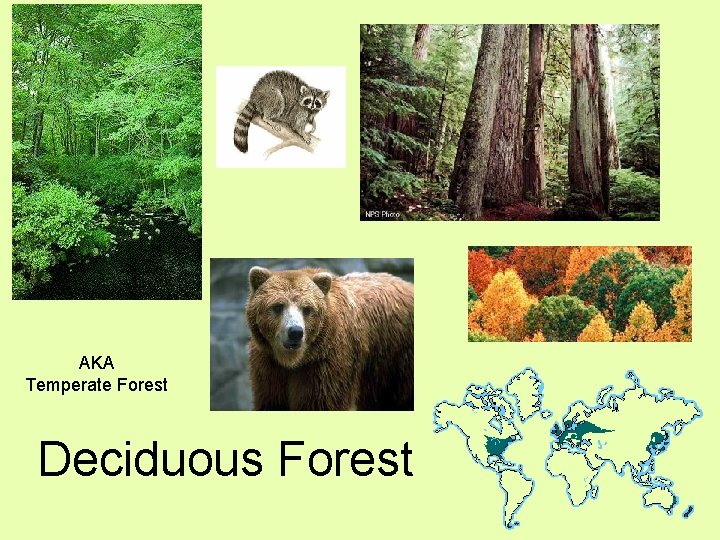
AKA Temperate Forest Deciduous Forest
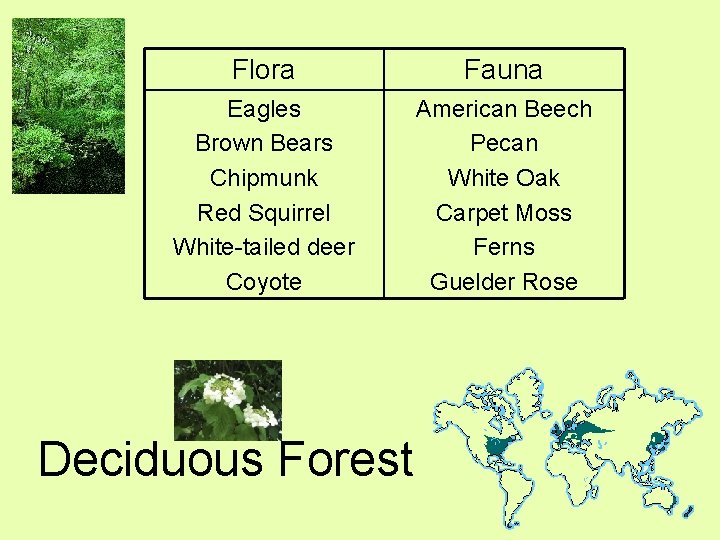
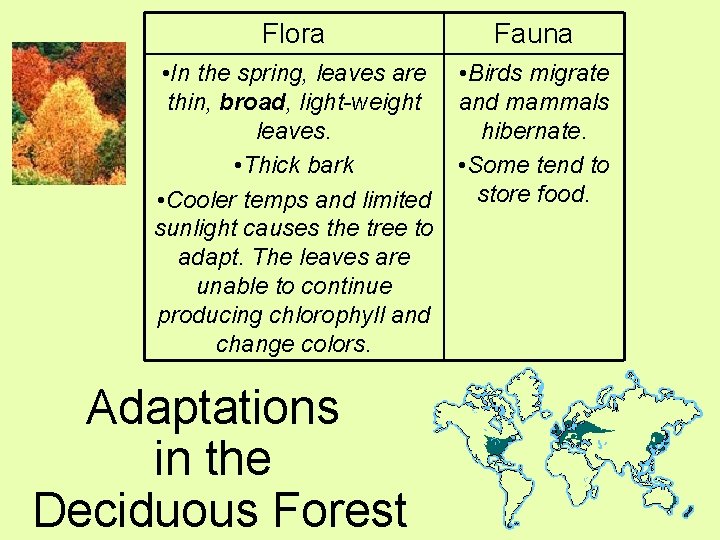
Flora Fauna Eagles Brown Bears Chipmunk Red Squirrel White-tailed deer Coyote American Beech Pecan White Oak Carpet Moss Ferns Guelder Rose Deciduous Forest
Flora Fauna • In the spring, leaves are thin, broad, light-weight leaves. • Thick bark • Cooler temps and limited sunlight causes the tree to adapt. The leaves are unable to continue producing chlorophyll and change colors. • Birds migrate and mammals hibernate. • Some tend to store food. Adaptations in the Deciduous Forest
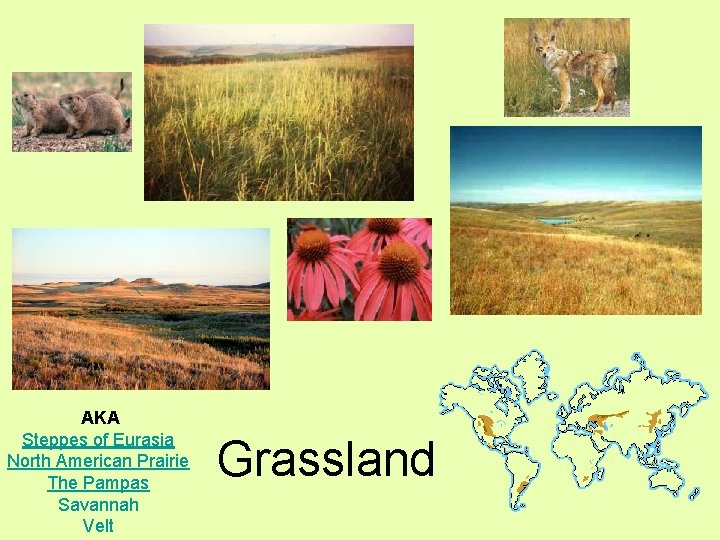
AKA Steppes of Eurasia North American Prairie The Pampas Savannah Velt Grassland
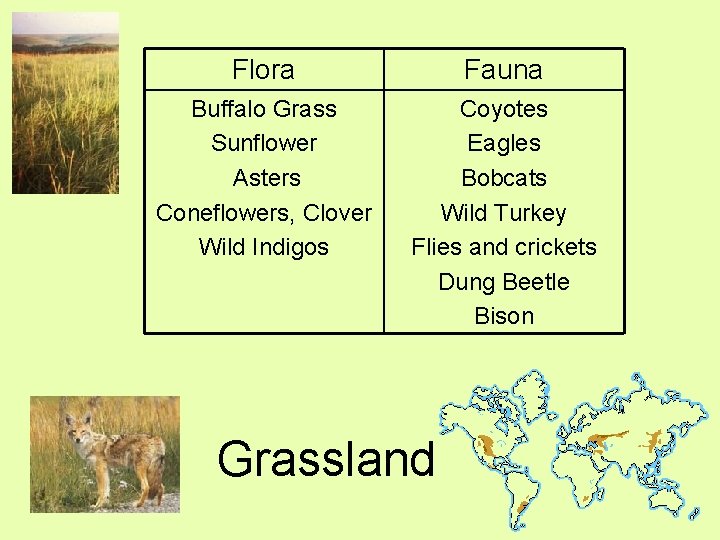
Flora Fauna Buffalo Grass Sunflower Asters Coneflowers, Clover Wild Indigos Coyotes Eagles Bobcats Wild Turkey Flies and crickets Dung Beetle Bison Grassland
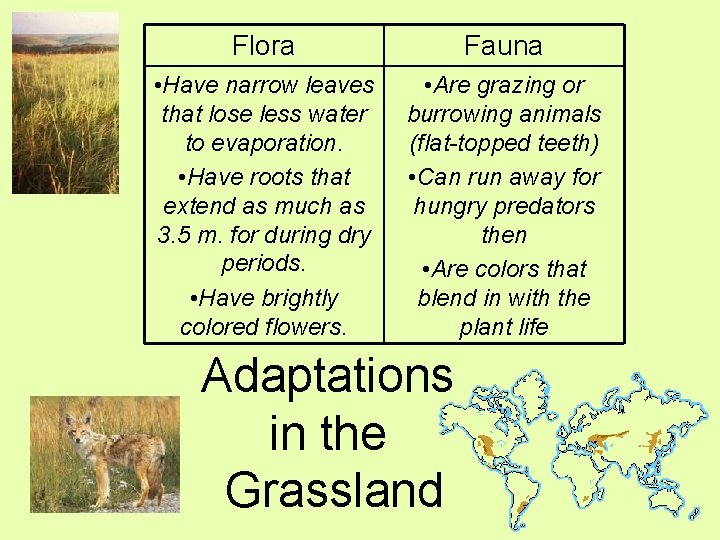
Flora Fauna • Have narrow leaves that lose less water to evaporation. • Have roots that extend as much as 3. 5 m. for during dry periods. • Have brightly colored flowers. • Are grazing or burrowing animals (flat-topped teeth) • Can run away for hungry predators then • Are colors that blend in with the plant life Adaptations in the Grassland
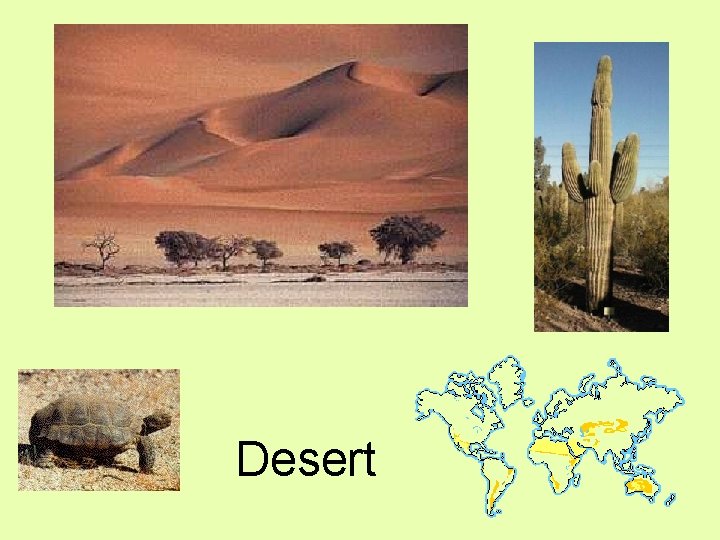
Desert
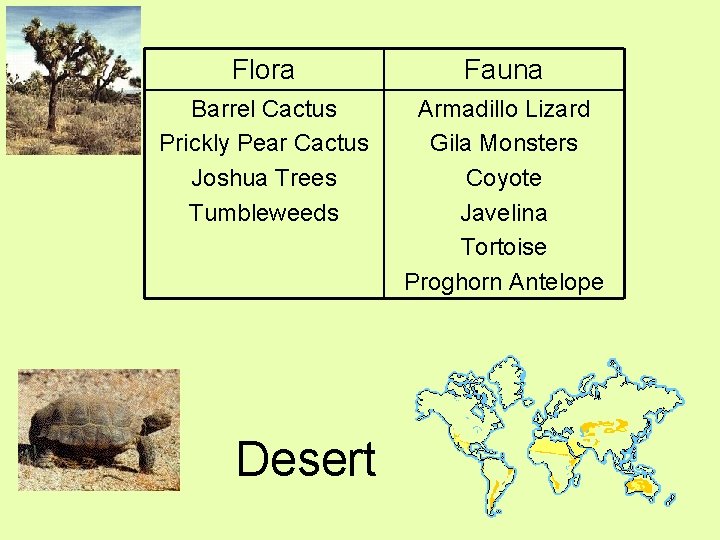
Flora Fauna Barrel Cactus Prickly Pear Cactus Joshua Trees Tumbleweeds Armadillo Lizard Gila Monsters Coyote Javelina Tortoise Proghorn Antelope Desert
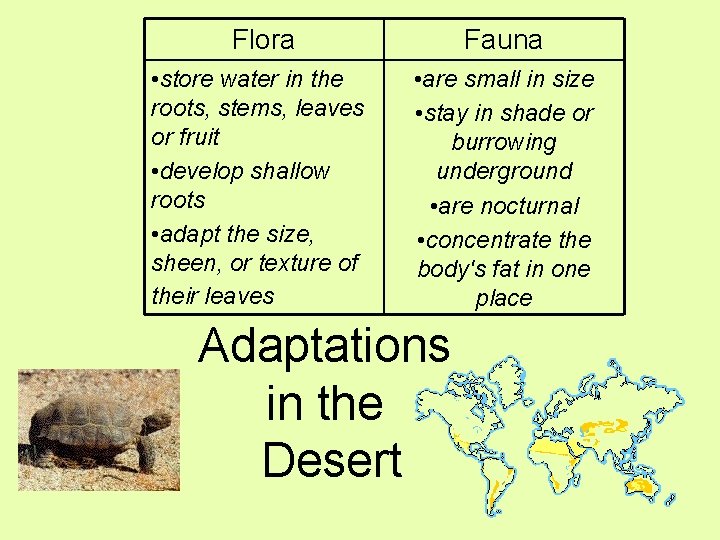
Flora Fauna • store water in the roots, stems, leaves or fruit • develop shallow roots • adapt the size, sheen, or texture of their leaves • are small in size • stay in shade or burrowing underground • are nocturnal • concentrate the body's fat in one place Adaptations in the Desert
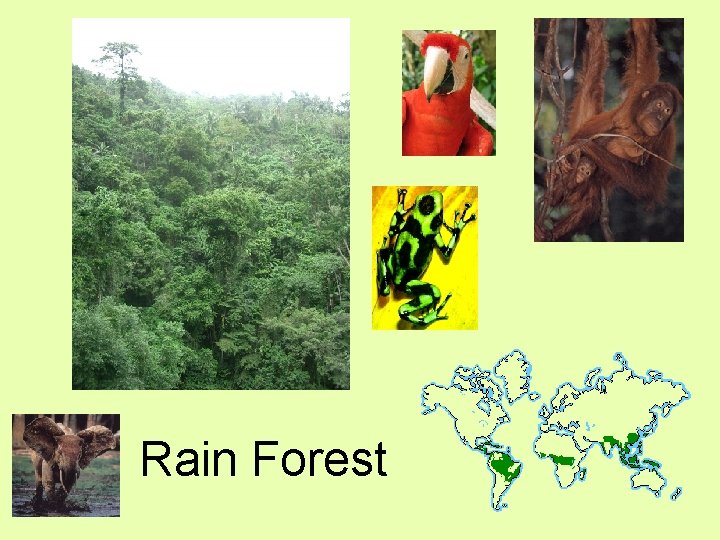
Rain Forest
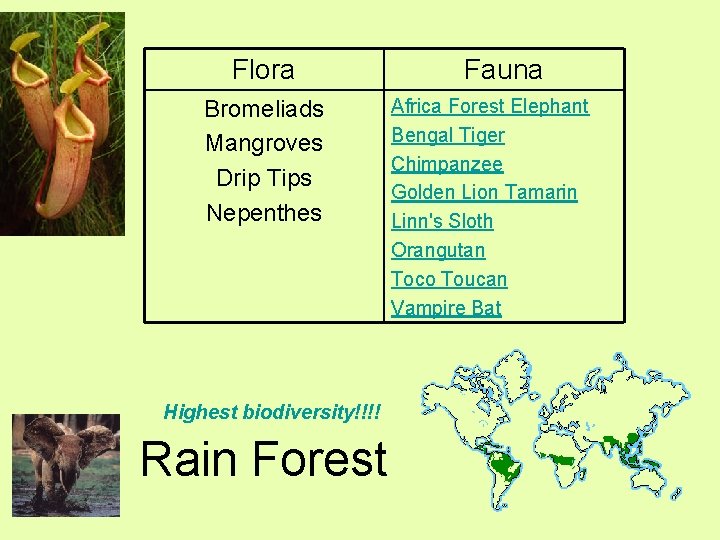
Flora Bromeliads Mangroves Drip Tips Nepenthes Highest biodiversity!!!! Rain Forest Fauna Africa Forest Elephant Bengal Tiger Chimpanzee Golden Lion Tamarin Linn's Sloth Orangutan Toco Toucan Vampire Bat
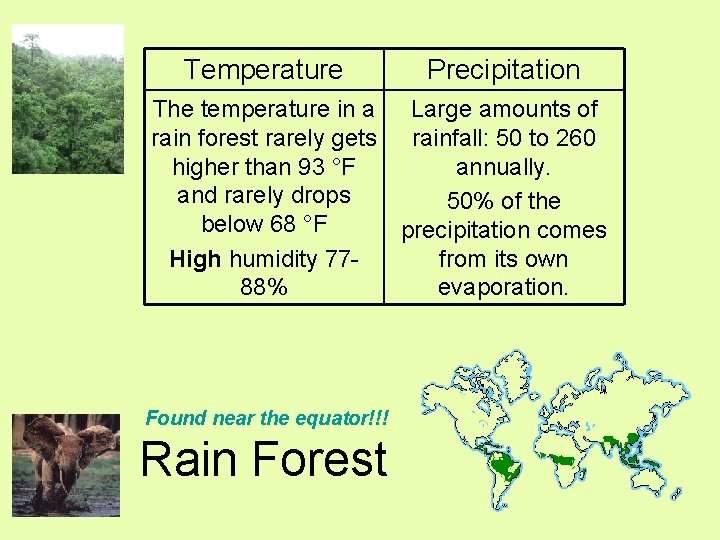
Temperature Precipitation The temperature in a Large amounts of rain forest rarely gets rainfall: 50 to 260 higher than 93 °F annually. and rarely drops 50% of the below 68 °F precipitation comes High humidity 77 from its own 88% evaporation. Found near the equator!!! Rain Forest
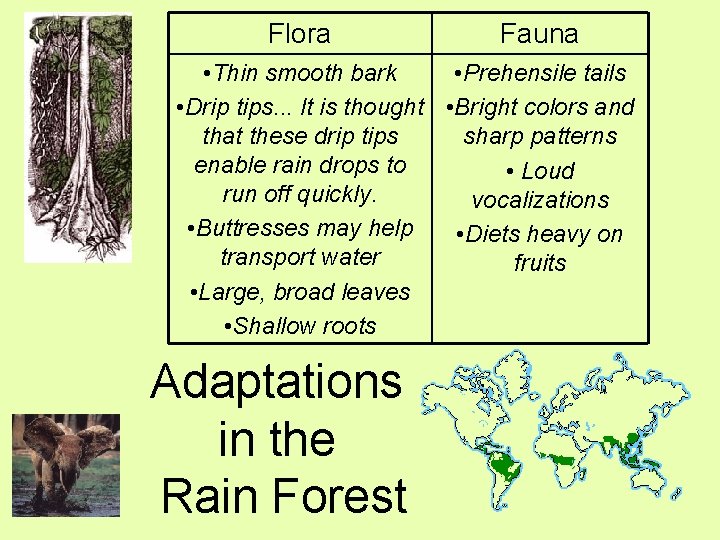
Flora Fauna • Thin smooth bark • Prehensile tails • Drip tips. . . It is thought • Bright colors and that these drip tips sharp patterns enable rain drops to • Loud run off quickly. vocalizations • Buttresses may help • Diets heavy on transport water fruits • Large, broad leaves • Shallow roots Adaptations in the Rain Forest
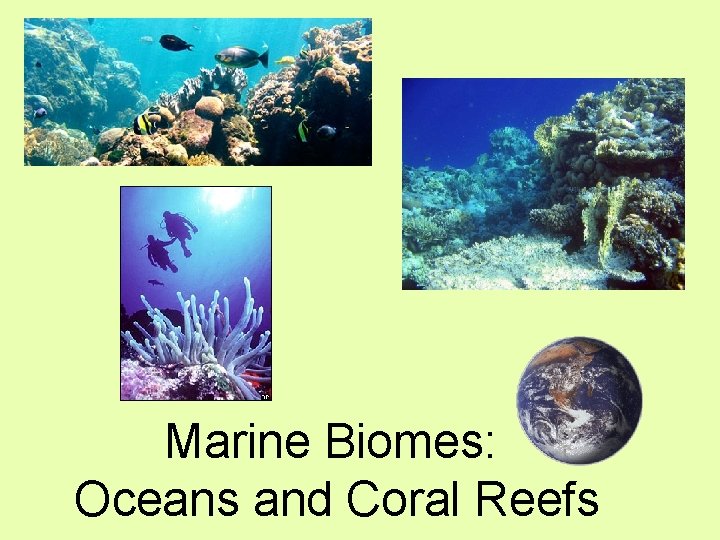
Marine Biomes: Oceans and Coral Reefs
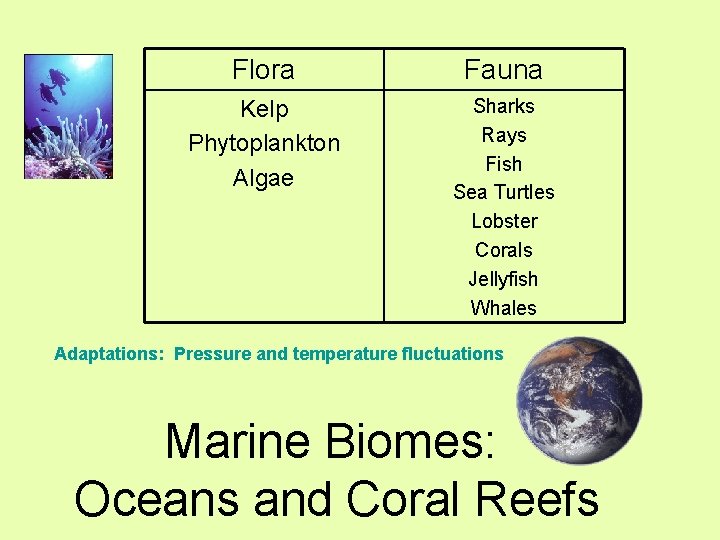
Flora Fauna Kelp Phytoplankton Algae Sharks Rays Fish Sea Turtles Lobster Corals Jellyfish Whales Adaptations: Pressure and temperature fluctuations Marine Biomes: Oceans and Coral Reefs
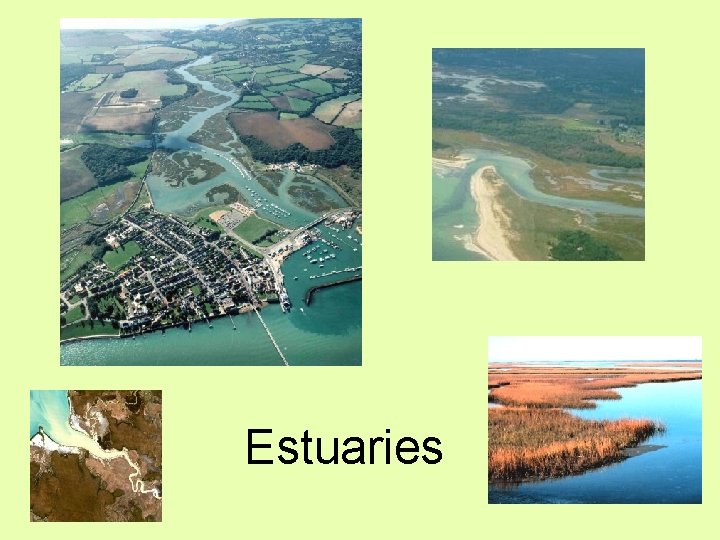
Estuaries
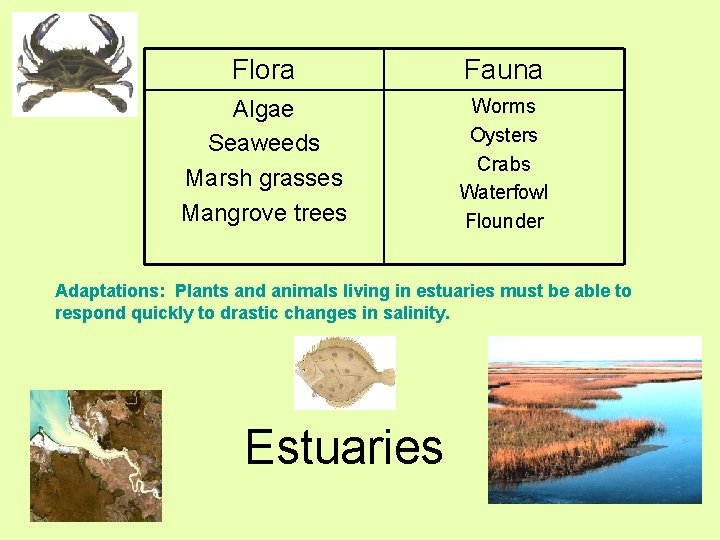
Flora Fauna Algae Seaweeds Marsh grasses Mangrove trees Worms Oysters Crabs Waterfowl Flounder Adaptations: Plants and animals living in estuaries must be able to respond quickly to drastic changes in salinity. Estuaries
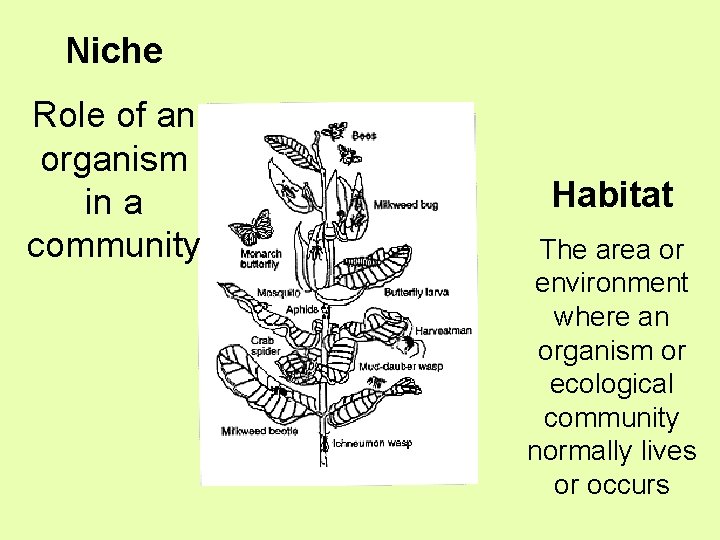
Niche Role of an organism in a community Habitat The area or environment where an organism or ecological community normally lives or occurs
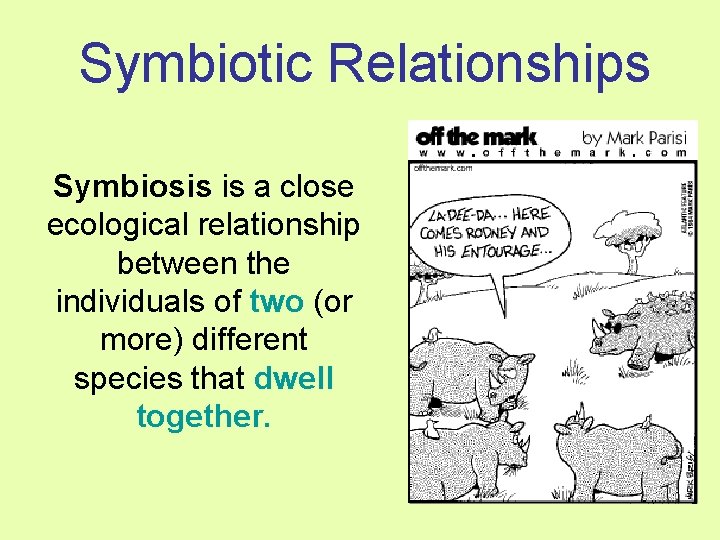
Symbiotic Relationships Symbiosis is a close ecological relationship between the individuals of two (or more) different species that dwell together.
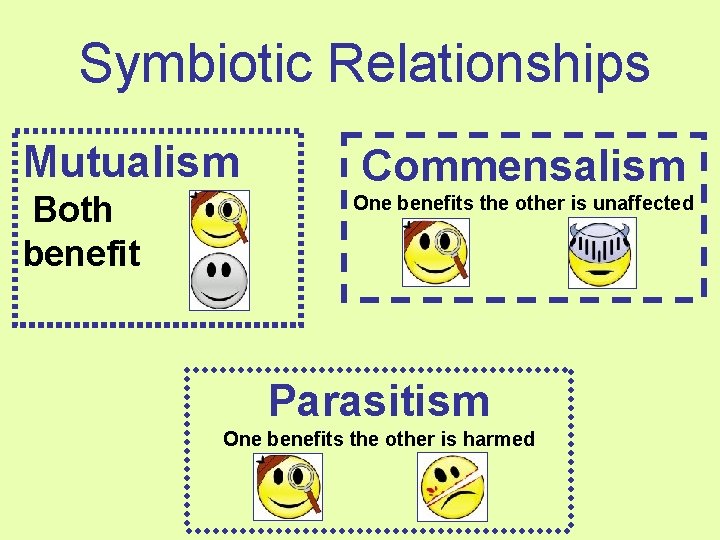
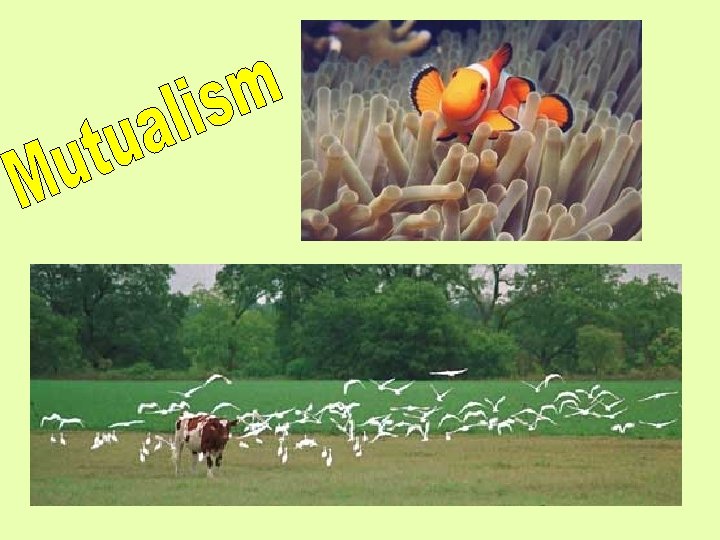
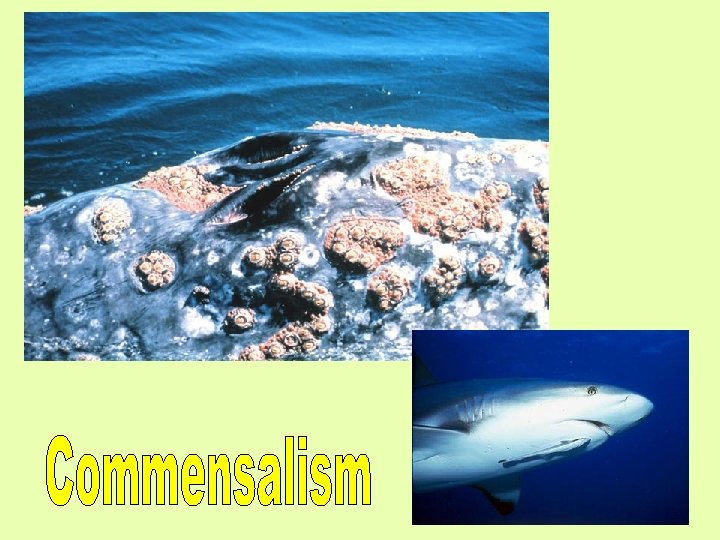
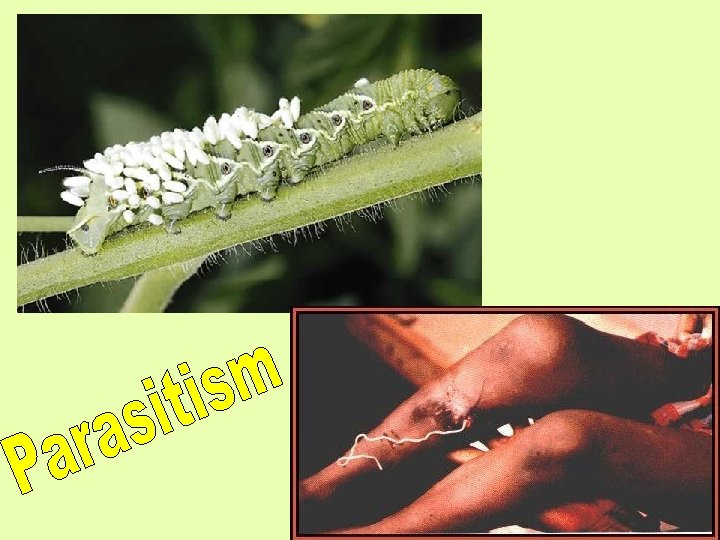
Symbiotic Relationships Mutualism Both benefit Commensalism One benefits the other is unaffected Parasitism One benefits the other is harmed
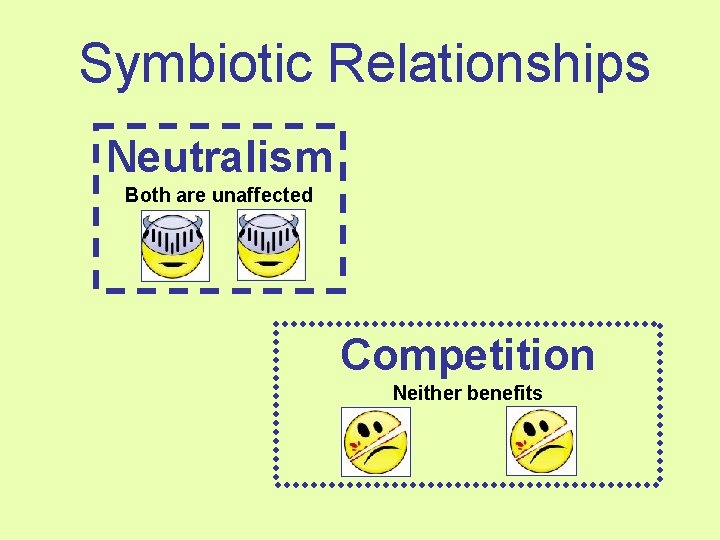
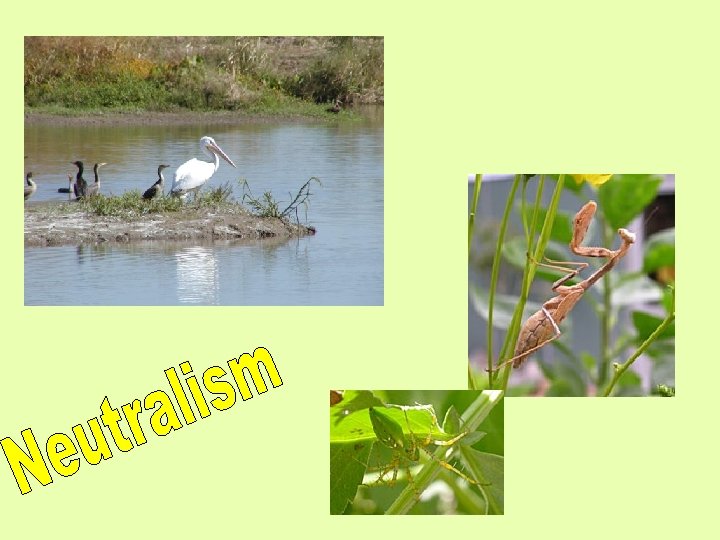
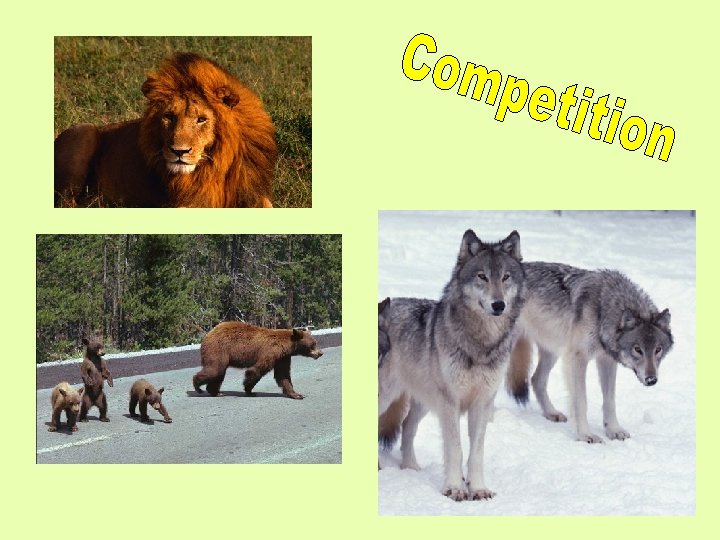
Symbiotic Relationships Neutralism Both are unaffected Competition Neither benefits
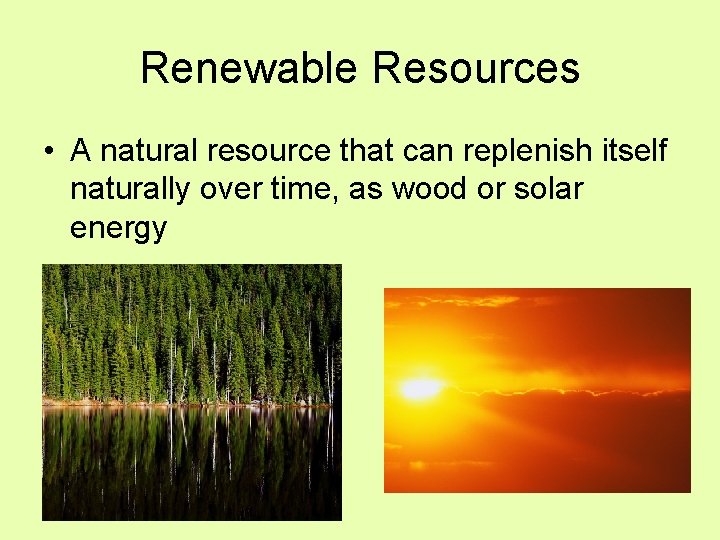
Renewable Resources • A natural resource that can replenish itself naturally over time, as wood or solar energy
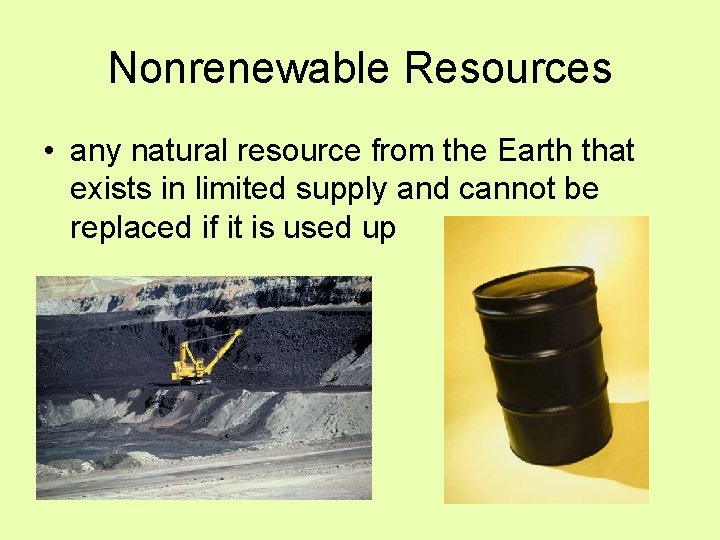
Nonrenewable Resources • any natural resource from the Earth that exists in limited supply and cannot be replaced if it is used up
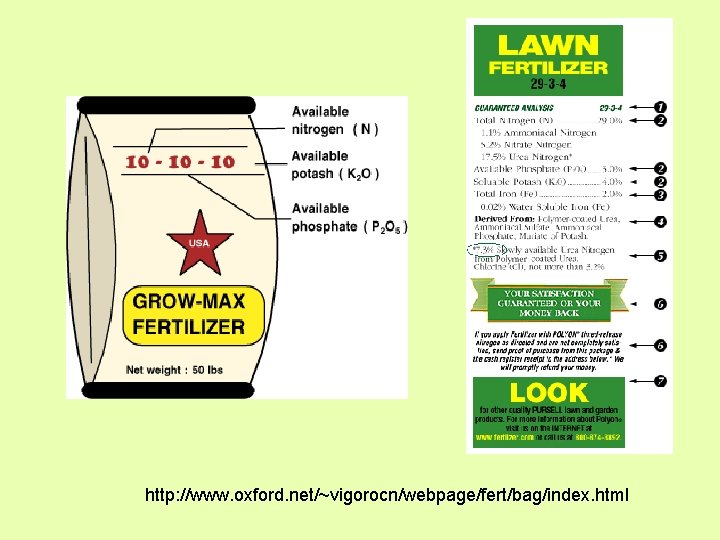
http: //www. oxford. net/~vigorocn/webpage/fert/bag/index. html