
Ecology Decomposers Review Producers Producers are organisms that
- Slides: 25
Ecology Decomposers
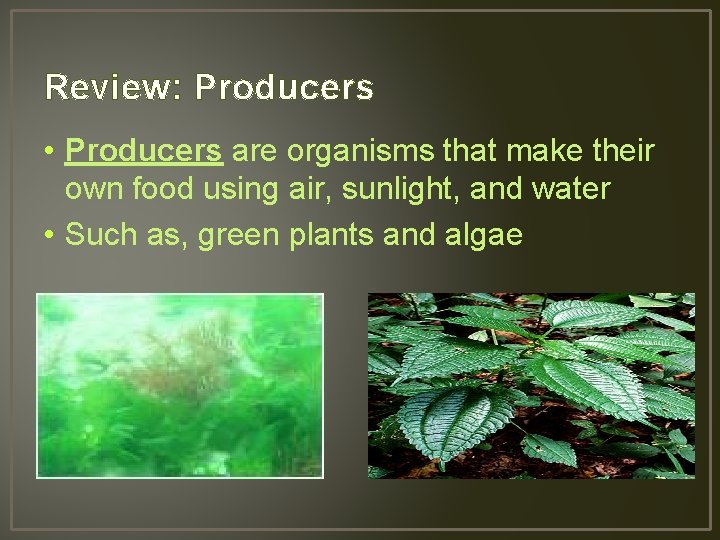
Review: Producers • Producers are organisms that make their own food using air, sunlight, and water • Such as, green plants and algae
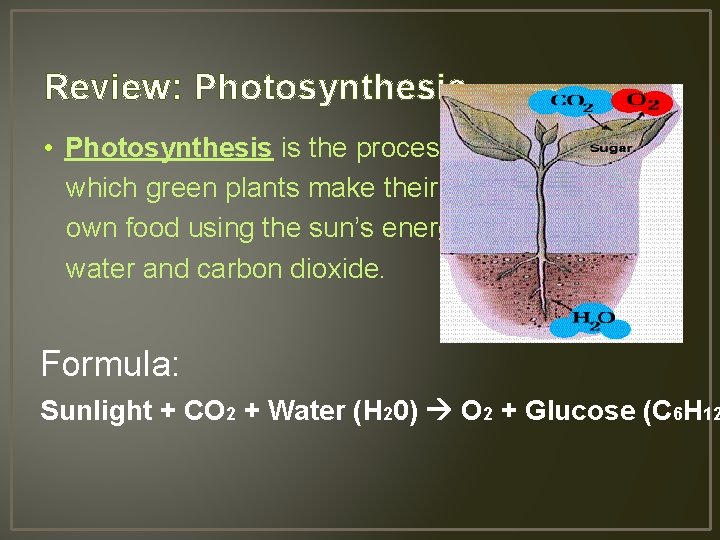
Review: Photosynthesis • Photosynthesis is the process by which green plants make their own food using the sun’s energy, water and carbon dioxide. Formula: Sunlight + CO 2 + Water (H 20) O 2 + Glucose (C 6 H 12
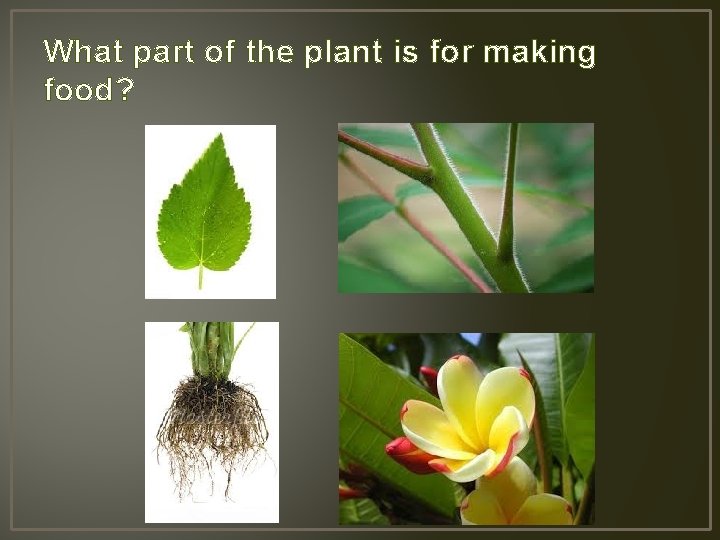
What part of the plant is for making food?
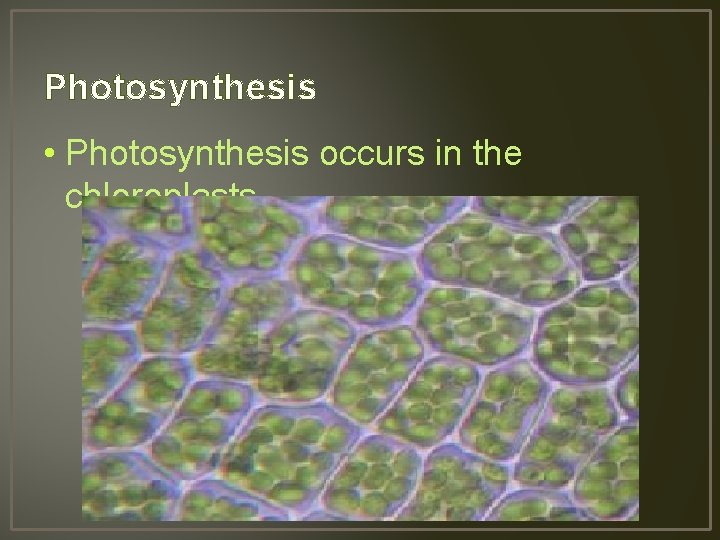
Photosynthesis • Photosynthesis occurs in the chloroplasts
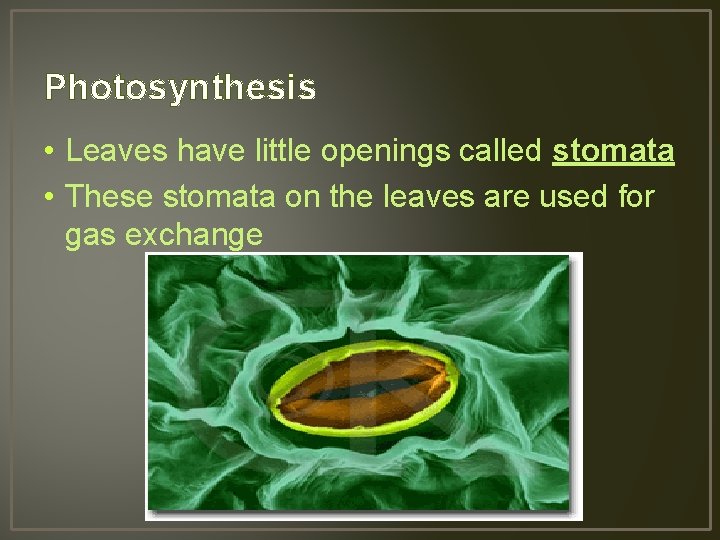
Photosynthesis • Leaves have little openings called stomata • These stomata on the leaves are used for gas exchange
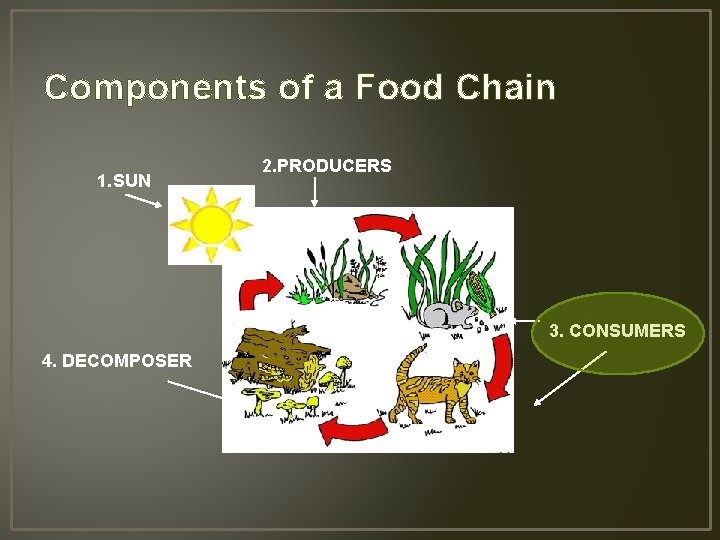
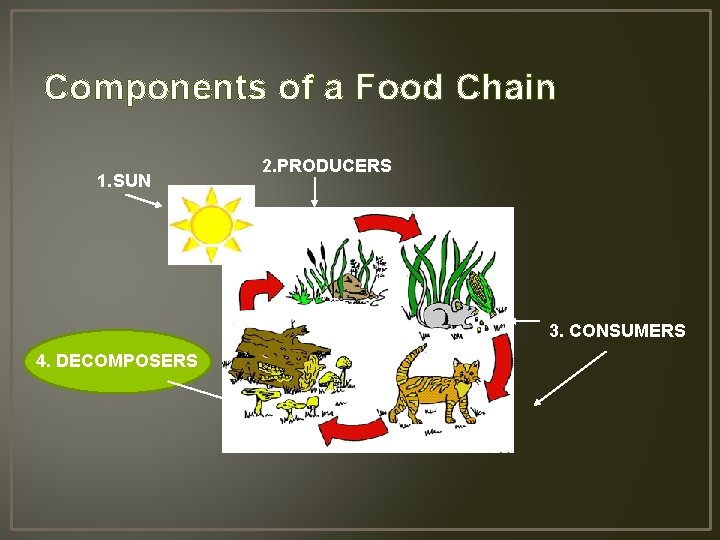
Components of a Food Chain 1. SUN 2. PRODUCERS 3. CONSUMERS 4. DECOMPOSER
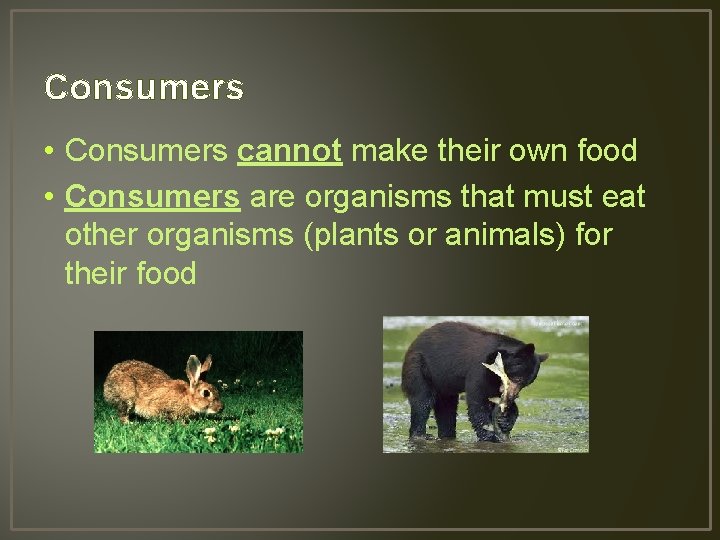
Consumers • Consumers cannot make their own food • Consumers are organisms that must eat other organisms (plants or animals) for their food
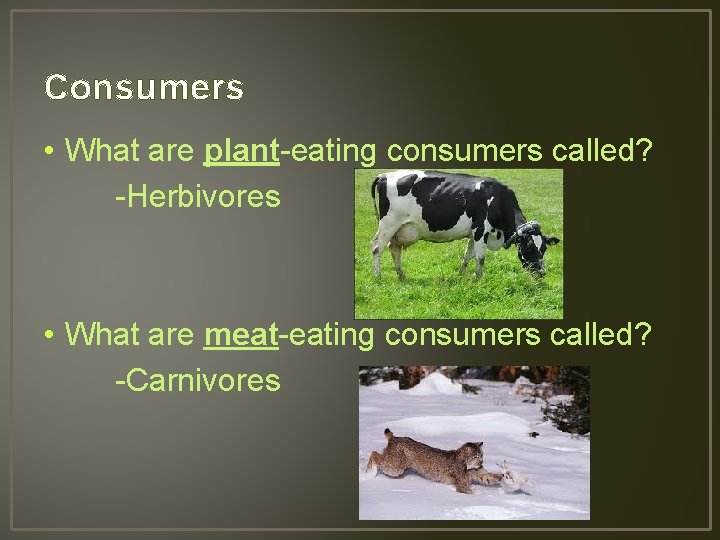
Consumers • What are plant-eating consumers called? -Herbivores • What are meat-eating consumers called? -Carnivores
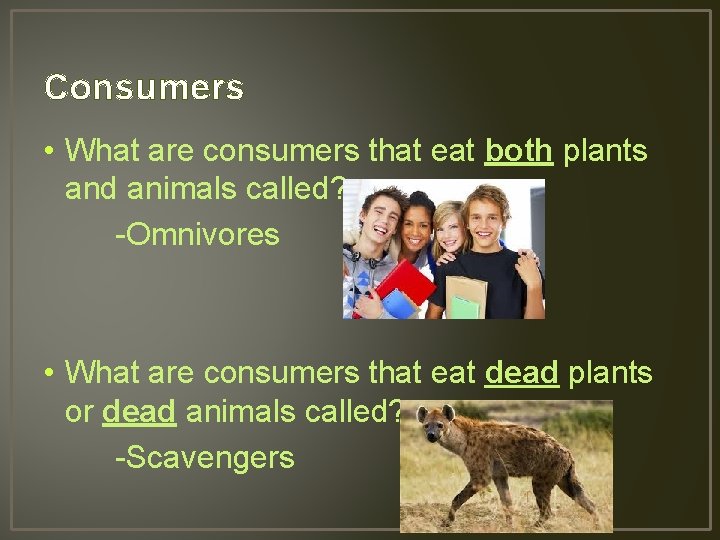
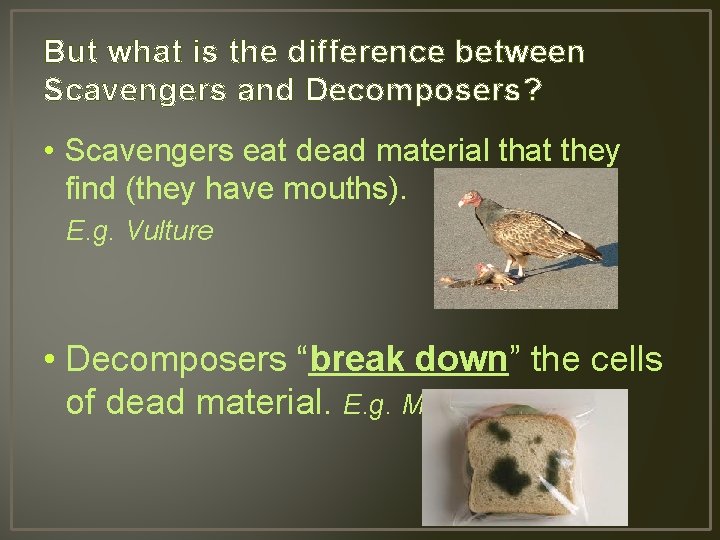
Consumers • What are consumers that eat both plants and animals called? -Omnivores • What are consumers that eat dead plants or dead animals called? -Scavengers
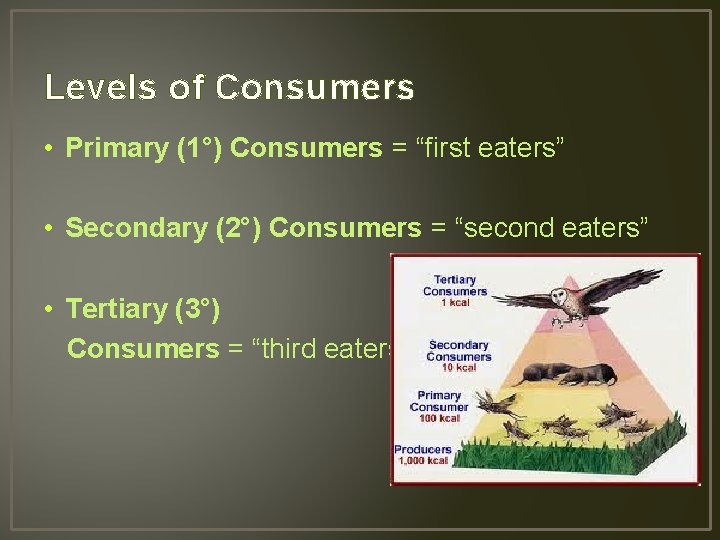
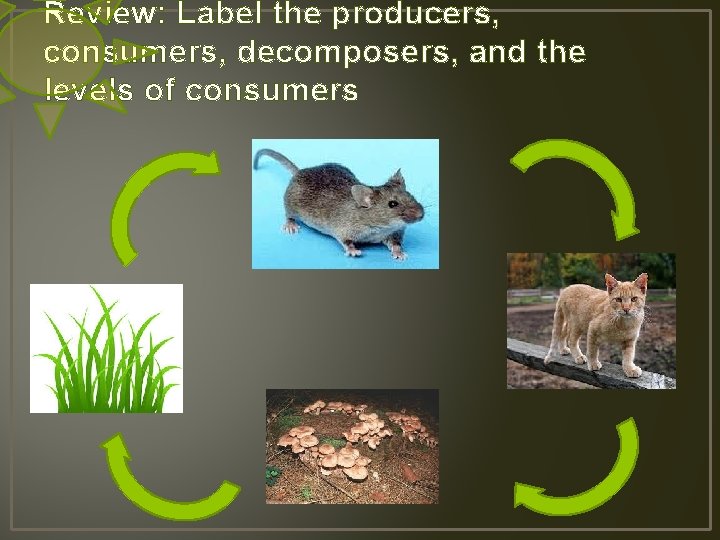
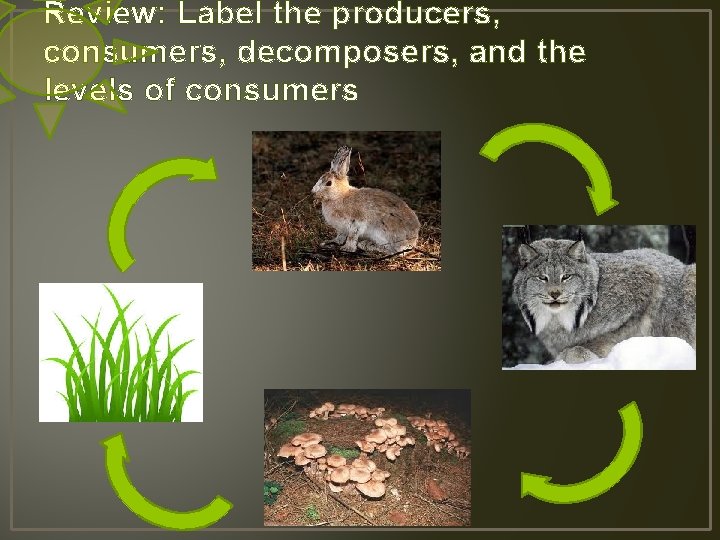
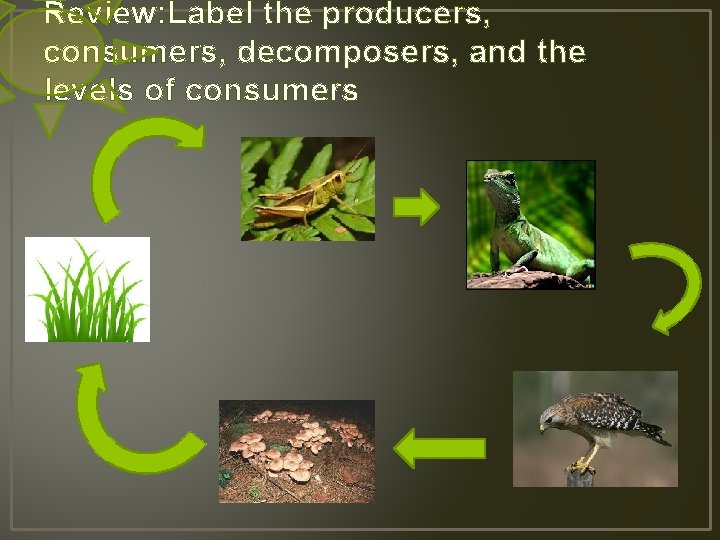
Levels of Consumers • Primary (1°) Consumers = “first eaters” • Secondary (2°) Consumers = “second eaters” • Tertiary (3°) Consumers = “third eaters”
Components of a Food Chain 1. SUN 2. PRODUCERS 3. CONSUMERS 4. DECOMPOSERS
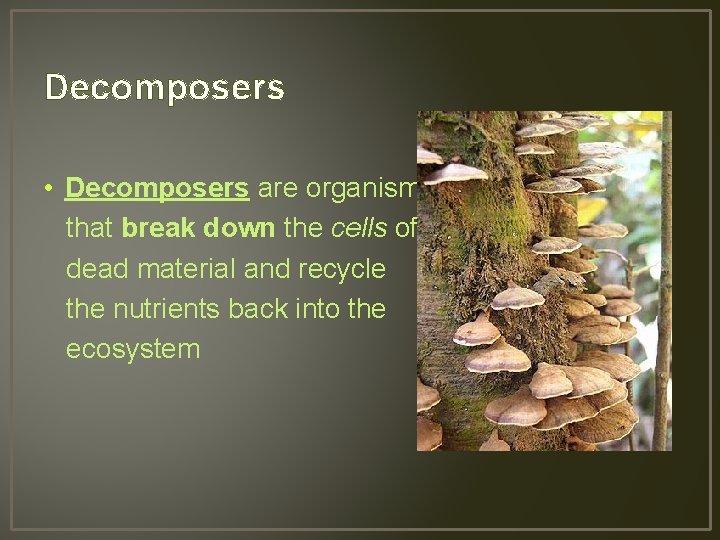
Decomposers • Decomposers are organisms that break down the cells of dead material and recycle the nutrients back into the ecosystem
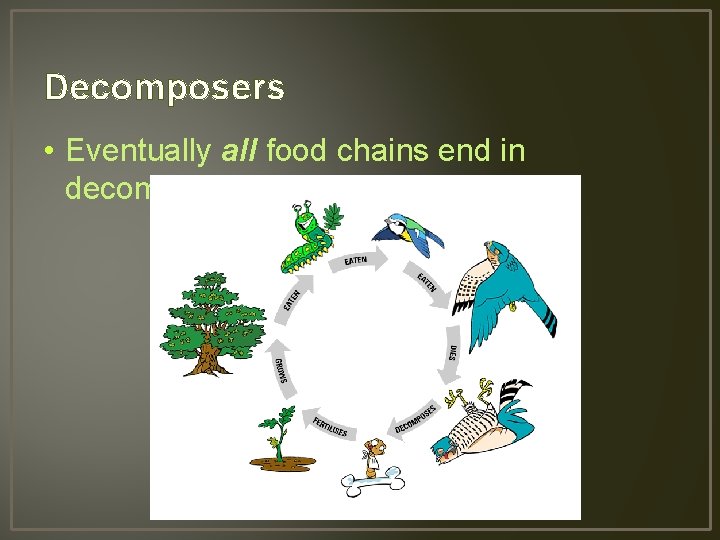
Decomposers • Eventually all food chains end in decomposers
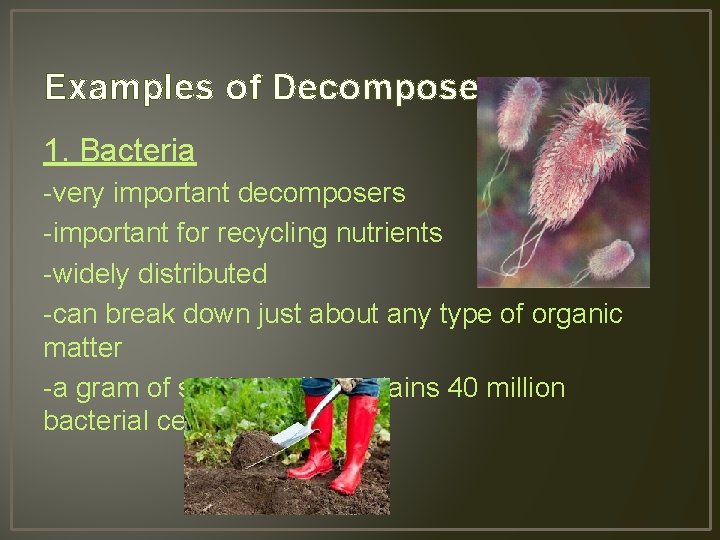
Examples of Decomposers 1. Bacteria -very important decomposers -important for recycling nutrients -widely distributed -can break down just about any type of organic matter -a gram of soil typically contains 40 million bacterial cells!
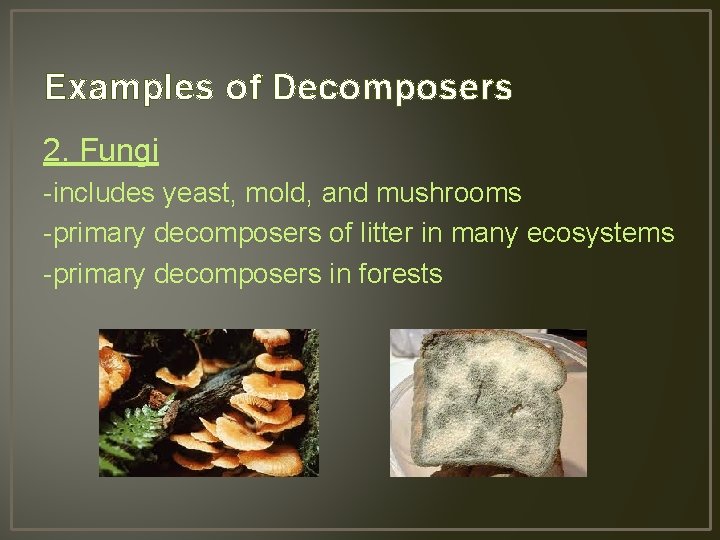
Examples of Decomposers 2. Fungi -includes yeast, mold, and mushrooms -primary decomposers of litter in many ecosystems -primary decomposers in forests
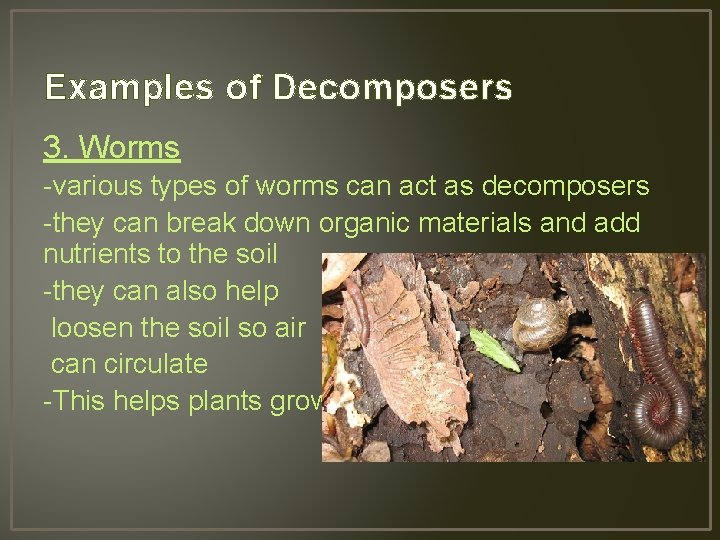
Examples of Decomposers 3. Worms -various types of worms can act as decomposers -they can break down organic materials and add nutrients to the soil -they can also help loosen the soil so air can circulate -This helps plants grow!
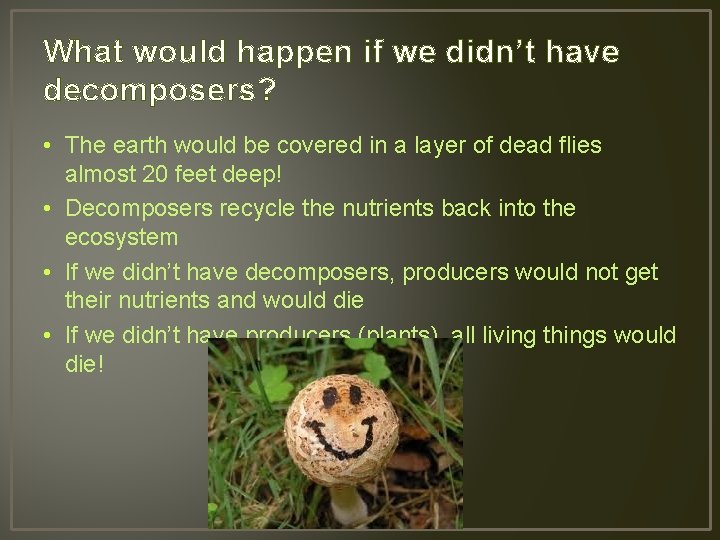
What would happen if we didn’t have decomposers? • The earth would be covered in a layer of dead flies almost 20 feet deep! • Decomposers recycle the nutrients back into the ecosystem • If we didn’t have decomposers, producers would not get their nutrients and would die • If we didn’t have producers (plants), all living things would die!
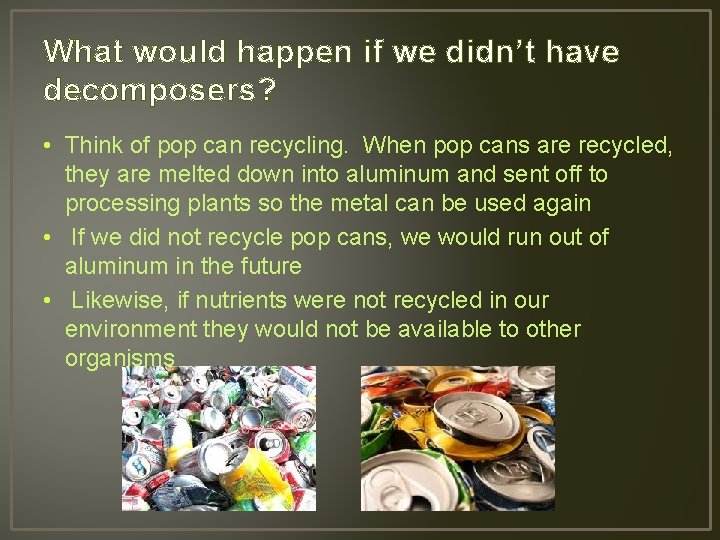
What would happen if we didn’t have decomposers? • Think of pop can recycling. When pop cans are recycled, they are melted down into aluminum and sent off to processing plants so the metal can be used again • If we did not recycle pop cans, we would run out of aluminum in the future • Likewise, if nutrients were not recycled in our environment they would not be available to other organisms
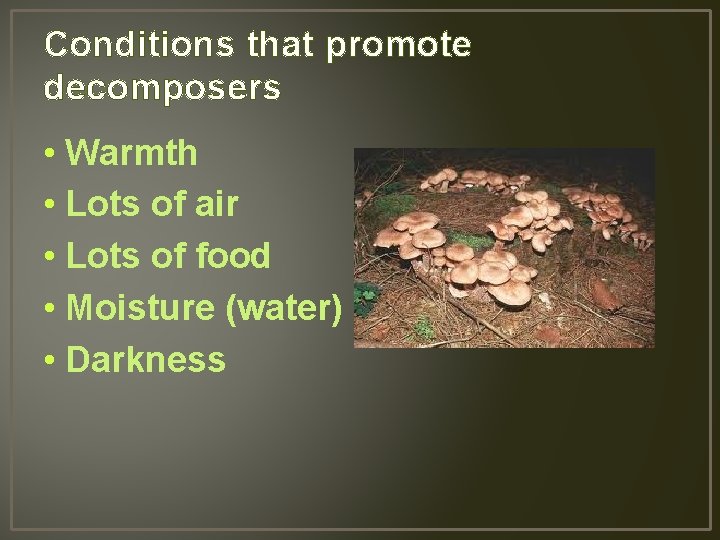
Conditions that promote decomposers • Warmth • Lots of air • Lots of food • Moisture (water) • Darkness
But what is the difference between Scavengers and Decomposers? • Scavengers eat dead material that they find (they have mouths). E. g. Vulture • Decomposers “break down” the cells of dead material. E. g. Mold
Review: Label the producers, consumers, decomposers, and the levels of consumers
Review: Label the producers, consumers, decomposers, and the levels of consumers
Review: Label the producers, consumers, decomposers, and the levels of consumers
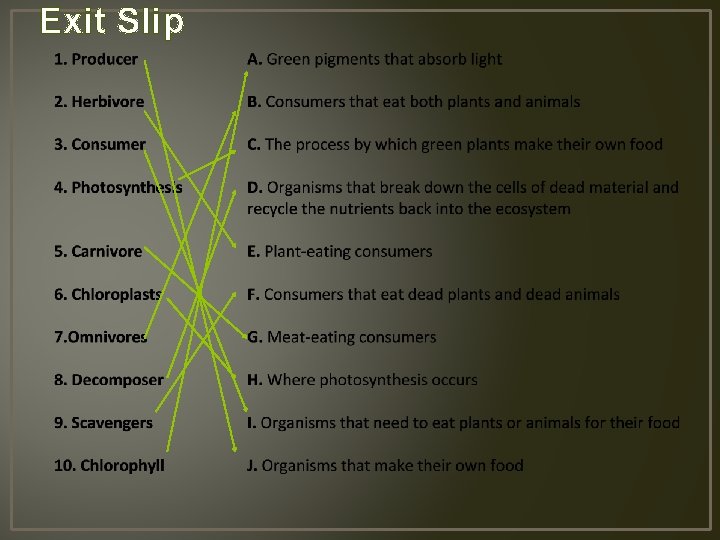
Exit Slip