
Ecology Biomes and Ecosystems Areas with the same
Ecology Biomes and Ecosystems Areas with the same kind of abiotic and biotic factors spread over a large area, creating a typical ecosystem over that area. Such major Ecosystems are called Biomes
Question Put these in order from largest to smallest unit of life: • Biome, population, community, cell, organism, biosphere, ecosystem, organ system, tissue • Biosphere Biome Ecosystem Community Population Organism Organ System Tissue Organ Cell 2
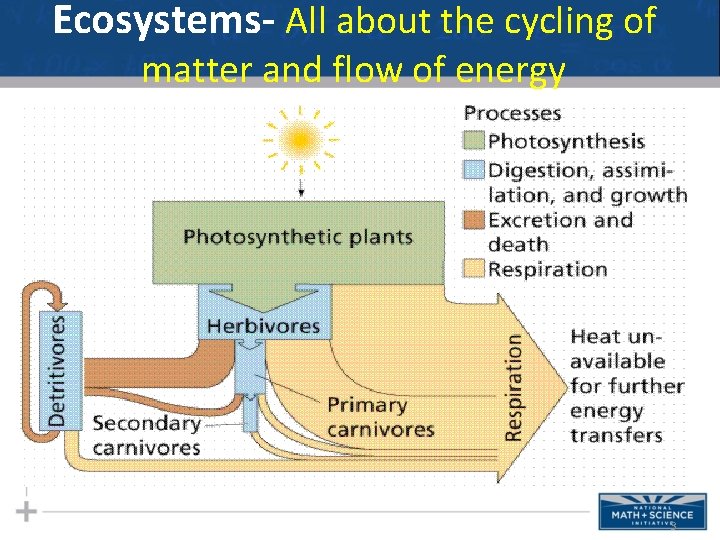
Ecosystems- All about the cycling of matter and flow of energy 3
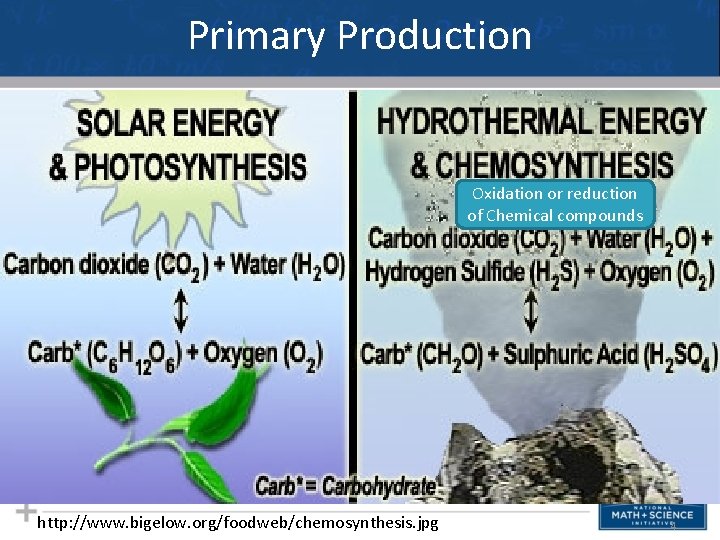
Primary Production Oxidation or reduction of Chemical compounds http: //www. bigelow. org/foodweb/chemosynthesis. jpg 4
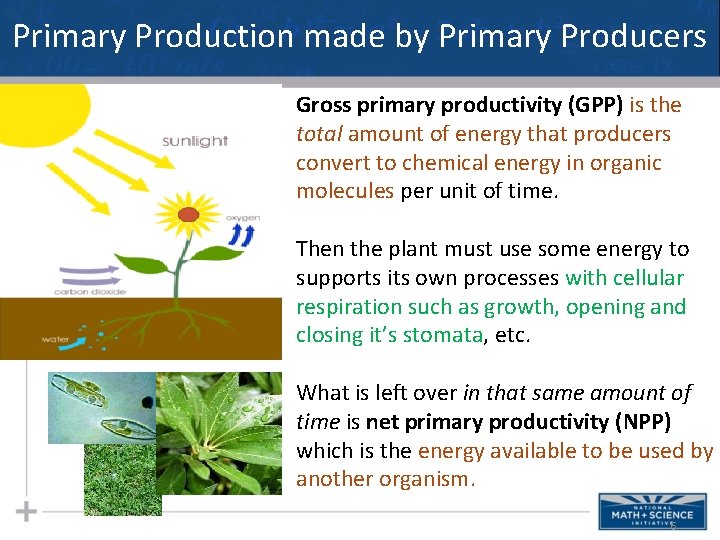
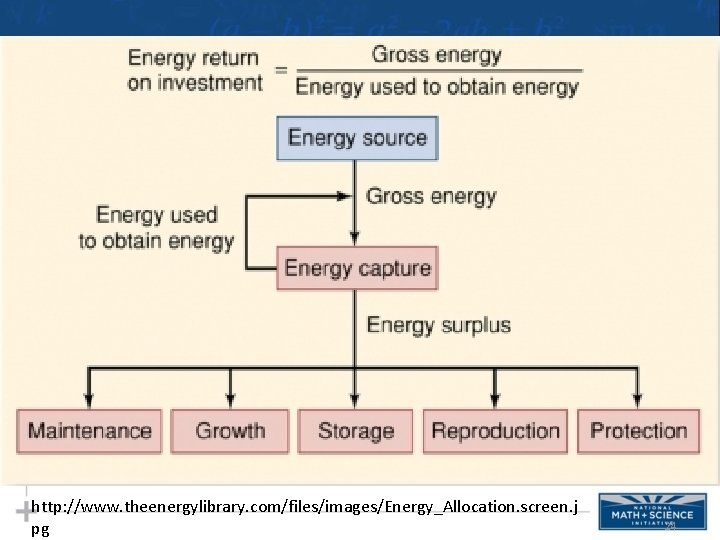
Primary Production made by Primary Producers Gross primary productivity (GPP) is the total amount of energy that producers convert to chemical energy in organic molecules per unit of time. Then the plant must use some energy to supports its own processes with cellular respiration such as growth, opening and closing it’s stomata, etc. What is left over in that same amount of time is net primary productivity (NPP) which is the energy available to be used by another organism. 6
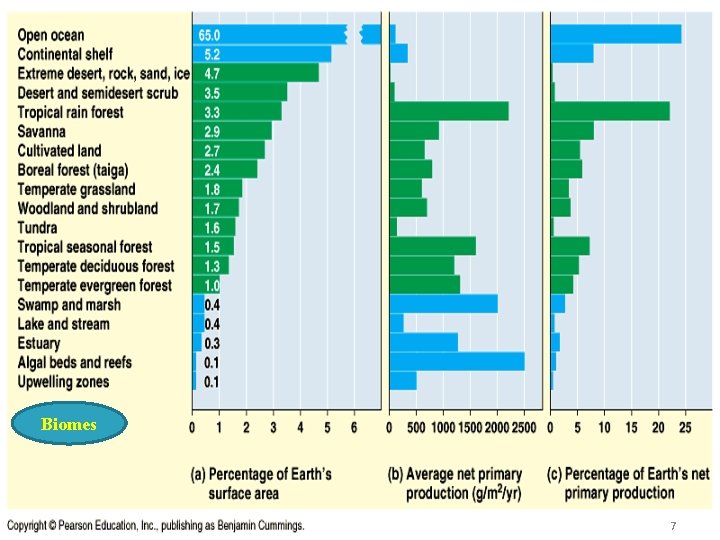
Primary Production Biomes 7
Populations & Energy availability w e N e d Sli • Changes in energy availability can result in changes in population size. • Changes in energy availability can result in disruptions to an ecosystem – A change in energy resources such as sunlight can affect the number and size of the trophic levels. – A change in the producer level can affect the number and size of other trophic levels. 8
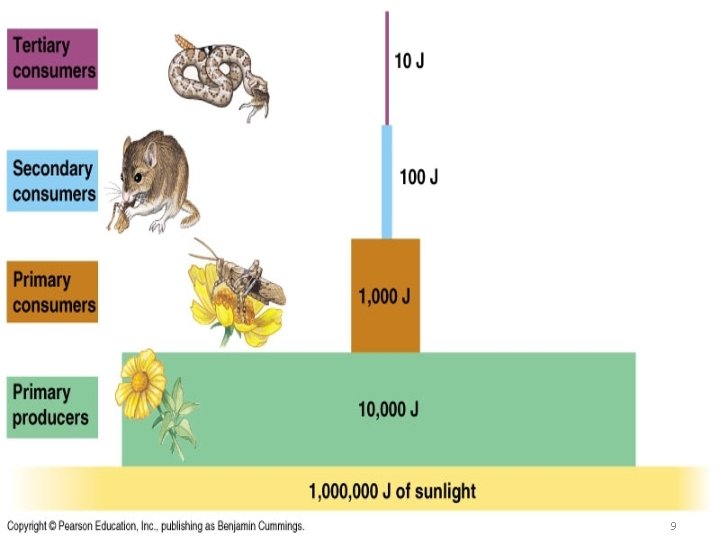
Net Product Pyramid 9
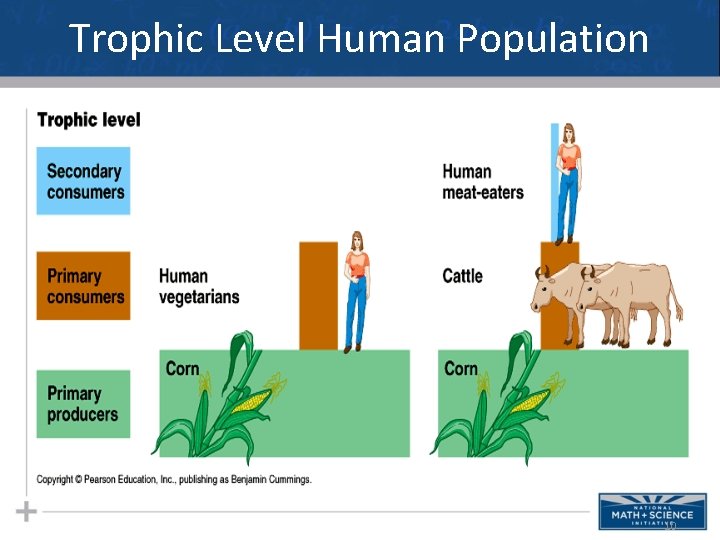
Trophic Level Human Population 10
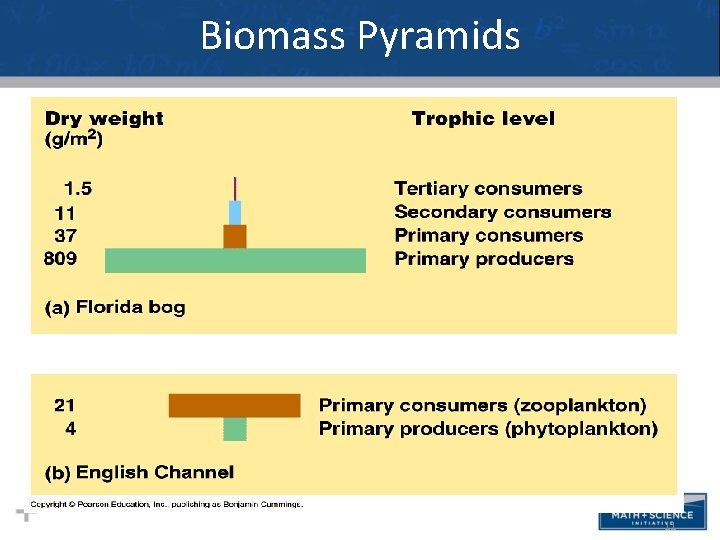
Biomass Pyramids • I think this slide should go up with the other pyramid slides even though it’s about populations 11
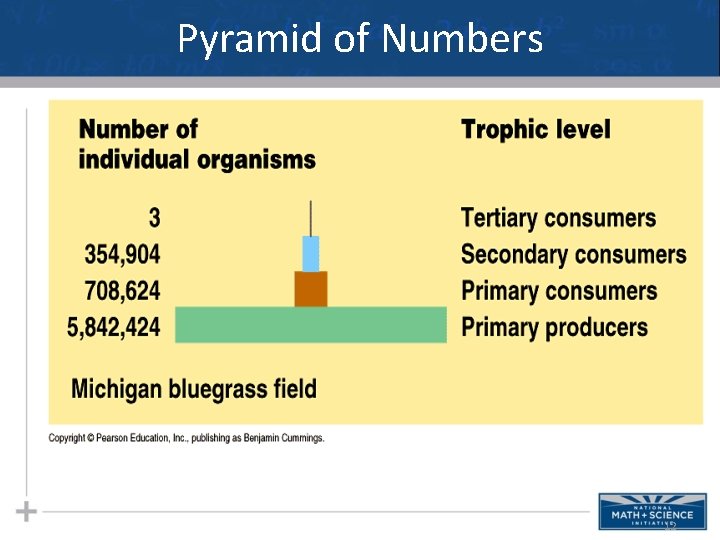
Pyramid of Numbers 12
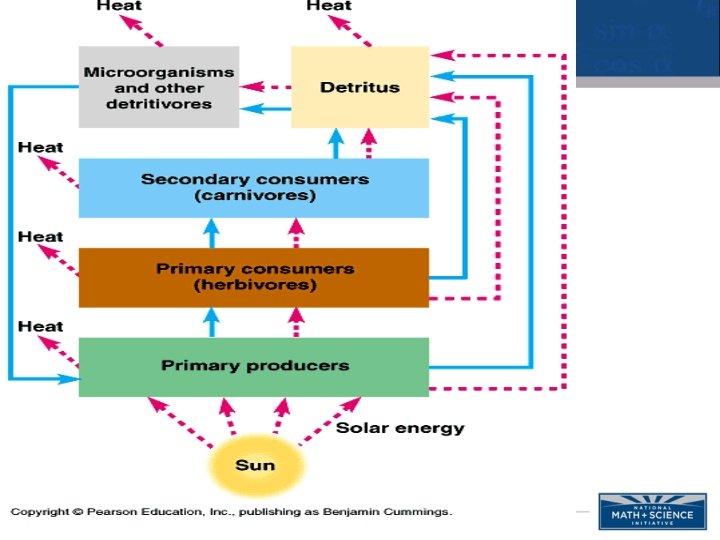
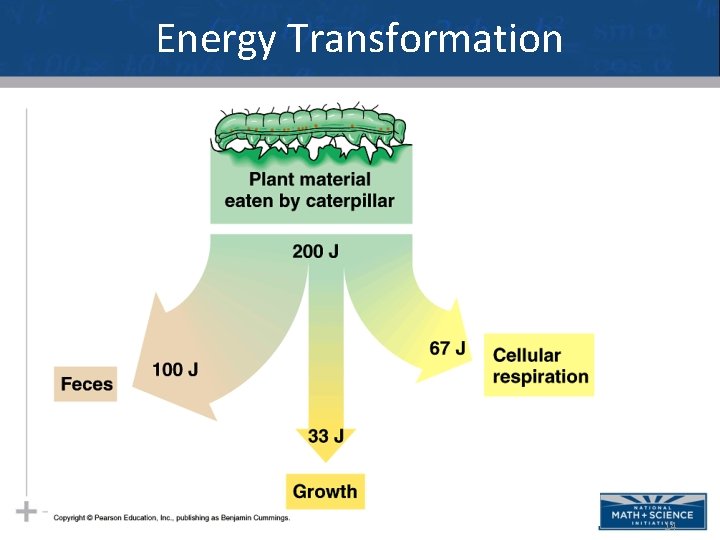
Energy Transformation 14
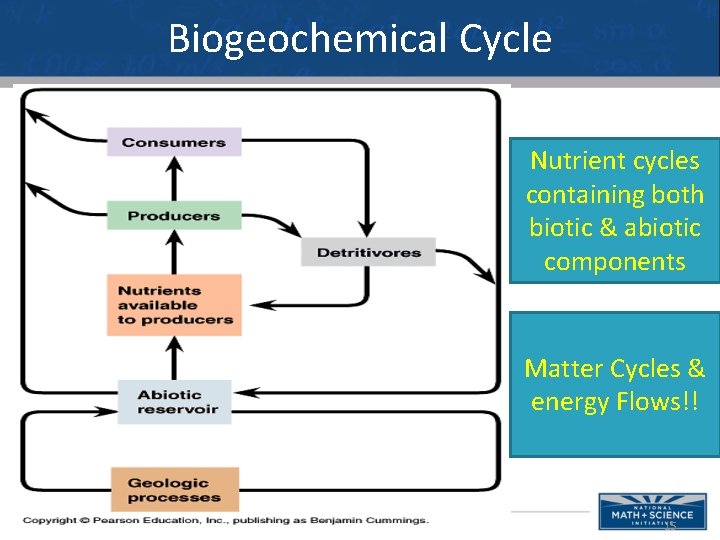
Biogeochemical Cycle Nutrient cycles containing both biotic & abiotic components Matter Cycles & energy Flows!! 15
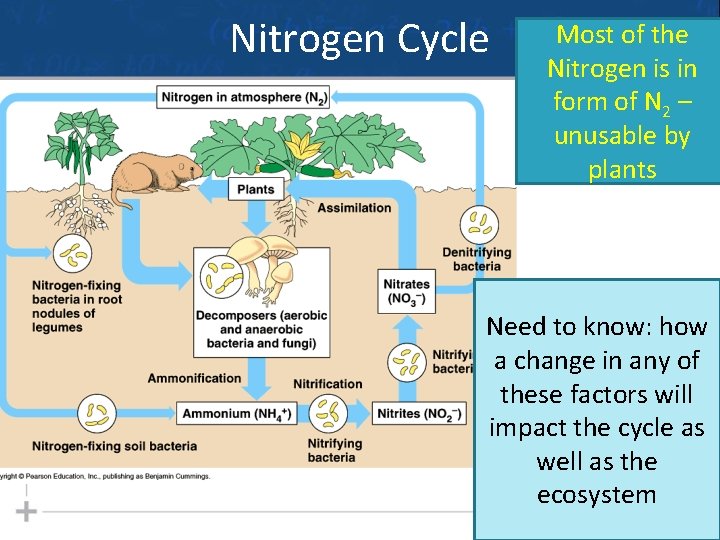
Nitrogen Cycle Most of the Nitrogen is in form of N 2 – unusable by plants Need to know: how Nitrogen Fixation a change in any ofof – conversion these factors will to N 2 by bacteria impact the usable cycle asby a form well as the plants ecosystem 16
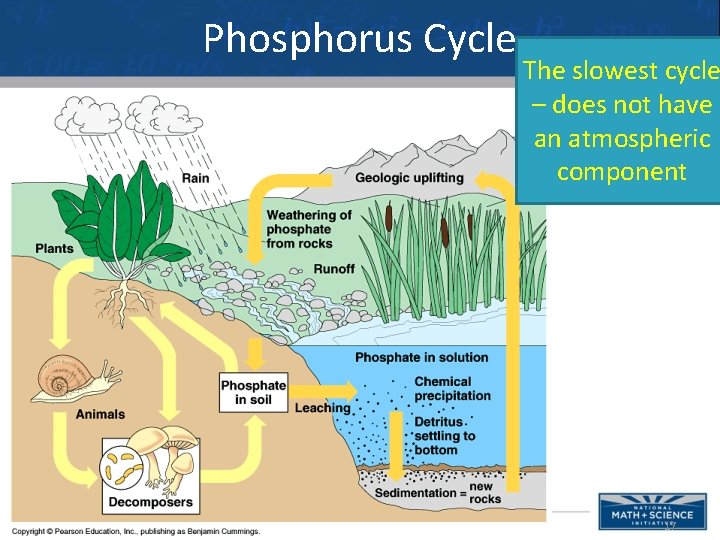
Phosphorus Cycle The slowest cycle – does not have an atmospheric component 17
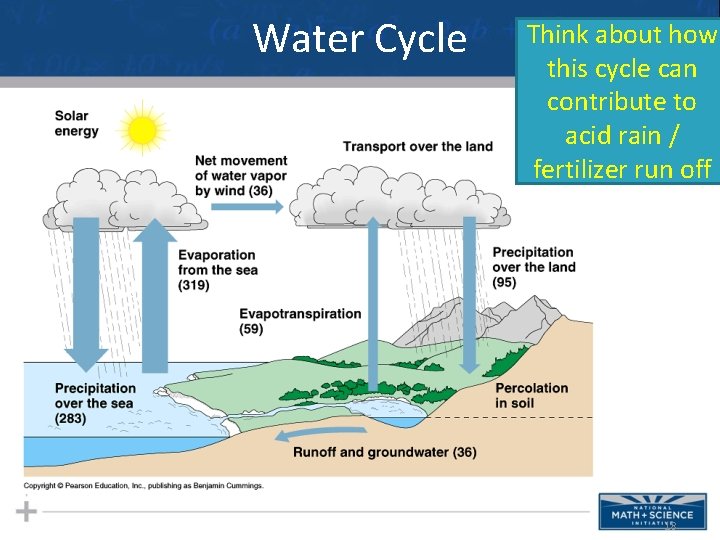
Water Cycle Think about how this cycle can contribute to acid rain / fertilizer run off 18
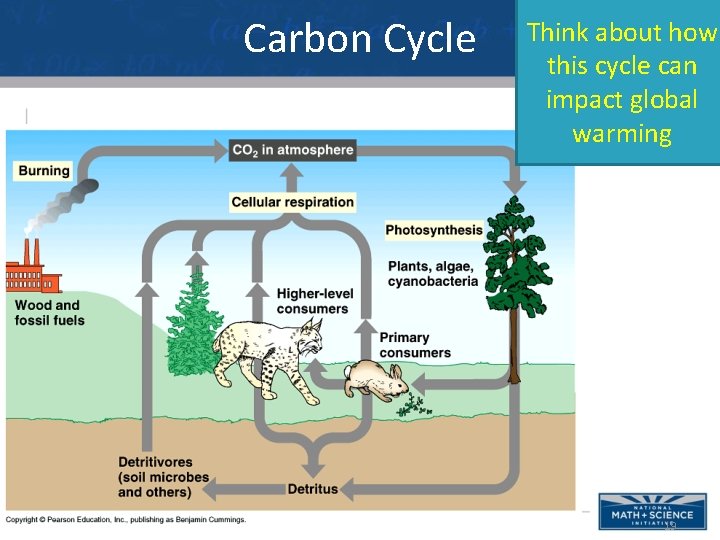
Carbon Cycle Think about how this cycle can impact global warming 19
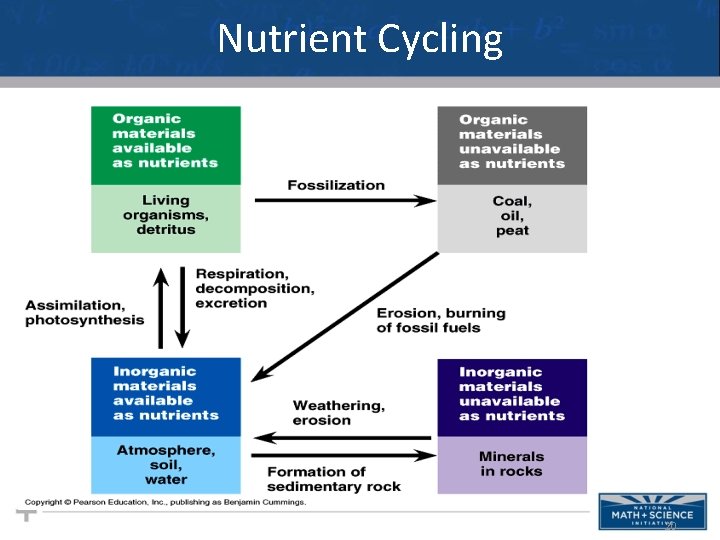
Nutrient Cycling 20
21
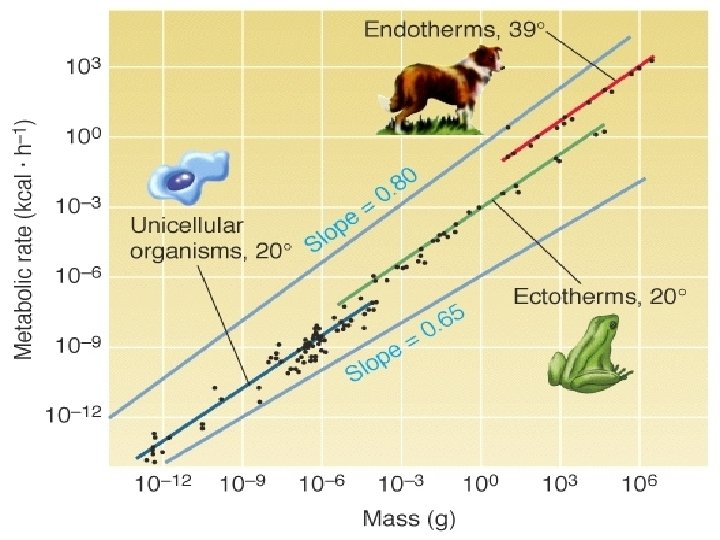
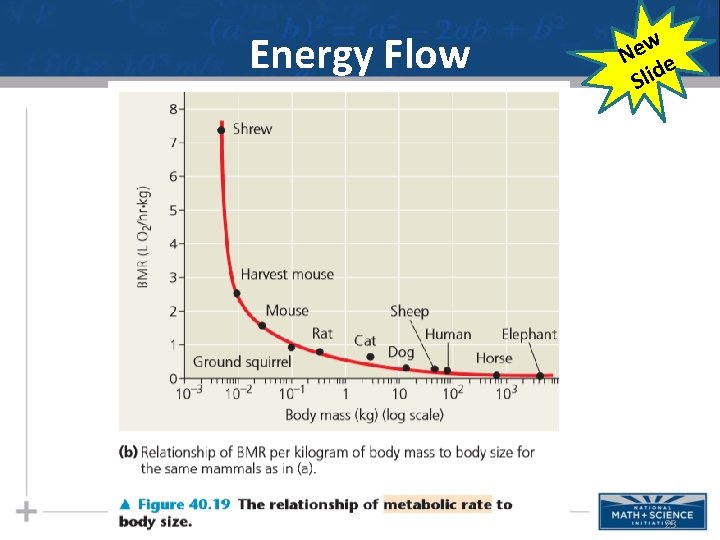
Energy Flow w e N e Slid • There is a relationship between metabolic rate per unit body mass and the size of multicellular organisms — – generally, the smaller the organism, the higher the metabolic rate. • The energy it takes to maintain each gram of body mass is inversely related to body size. • A net gain in energy results in energy storage or the growth of an organism. • A net loss of energy results in loss of mass and, ultimately, the death of an organism. 22
Energy Flow w e N e Slid 23
http: //www. theenergylibrary. com/files/images/Energy_Allocation. screen. j pg 24
Zonation Marine Zonation Lake Zonation 28
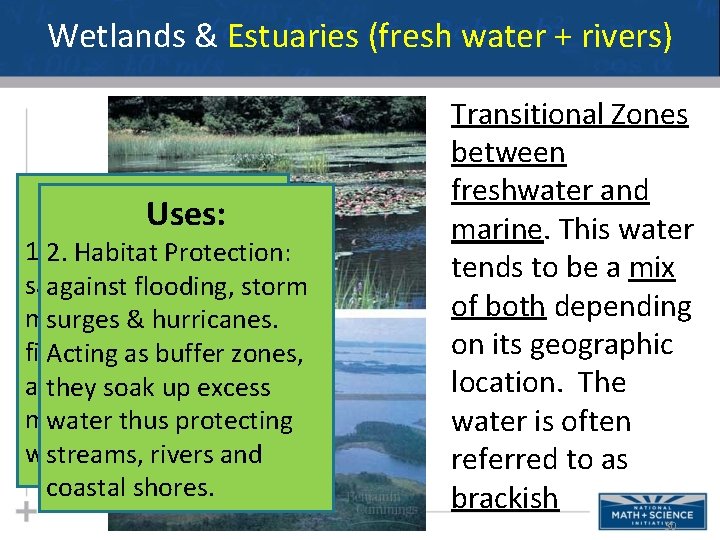
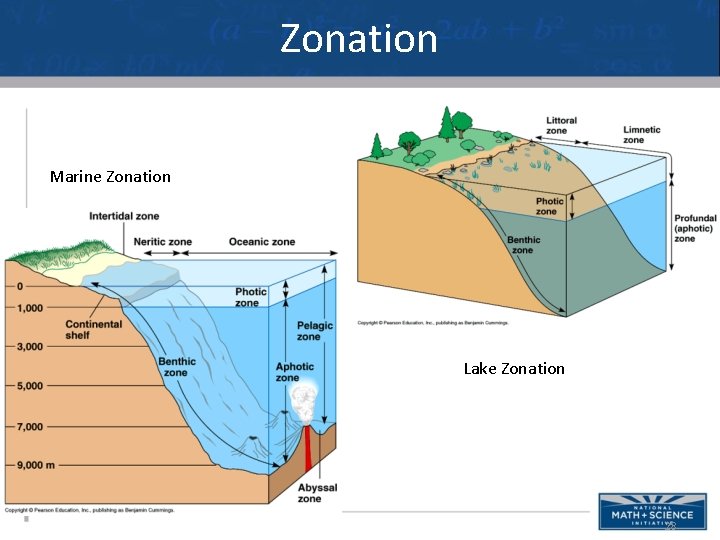
Wetlands & Estuaries (fresh water + rivers) Uses: 1. 2. Habitat filtration: Habitat Protection: salt marshes & against flooding, storm mangrove surges &forests hurricanes. filter pollutants such Acting as buffer zones, asthey herbicides heavy soak up&excess metals ofprotecting the waterout thus water streams, rivers and coastal shores. Transitional Zones between freshwater and marine. This water tends to be a mix of both depending on its geographic location. The water is often referred to as brackish 30
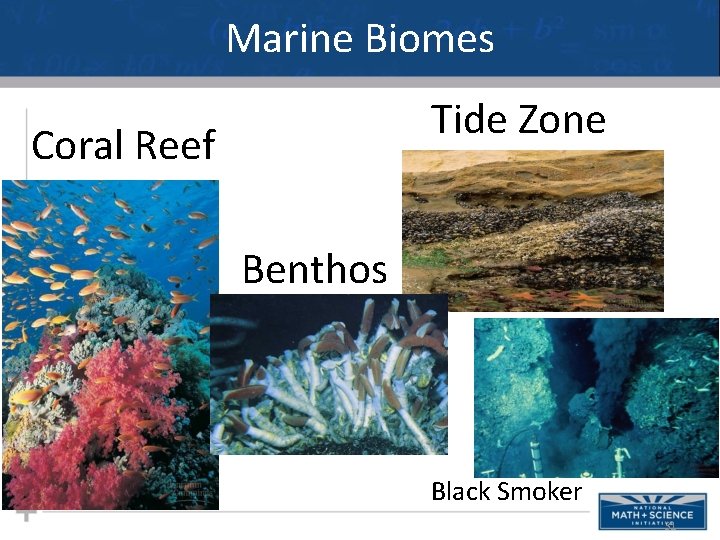
Marine Biomes Tide Zone Coral Reef Benthos Black Smoker 31
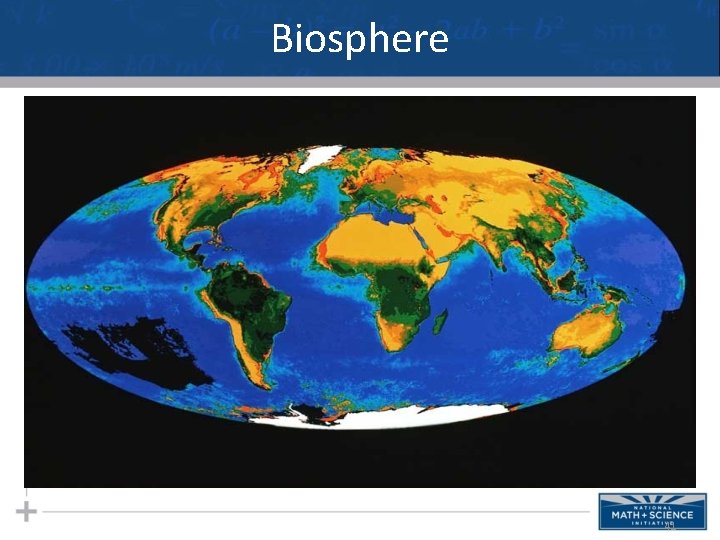
Biosphere 41
What happens when a cycle is out of balance? Cycles can have an anthropogenic (man-made) or a nonanthropogenic (natural phenomena) impact that causes a cycle to become unbalanced. Additionally, this may just be the natural state of that ecosystem as a consequence of the availability of nutrients. Two examples involving imbalanced freshwater habitats include: Oligotrophic waters - low primary productivity Eutrophic waters - high primary productivity 42
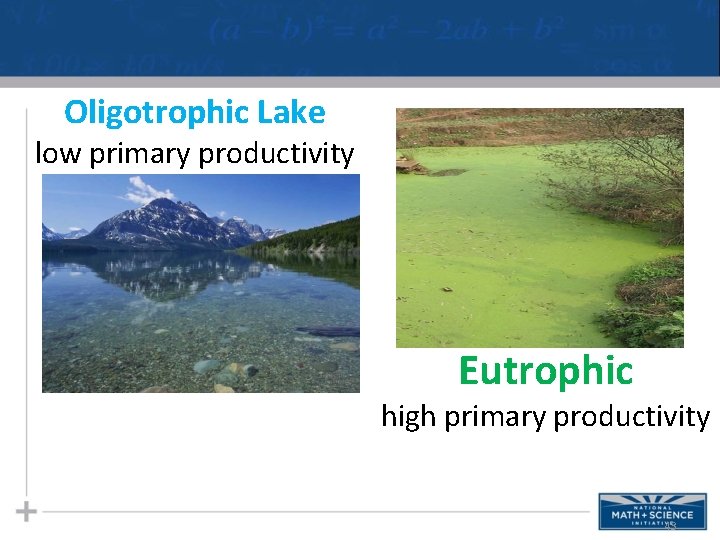
Oligotrophic Lake low primary productivity Eutrophic high primary productivity 43
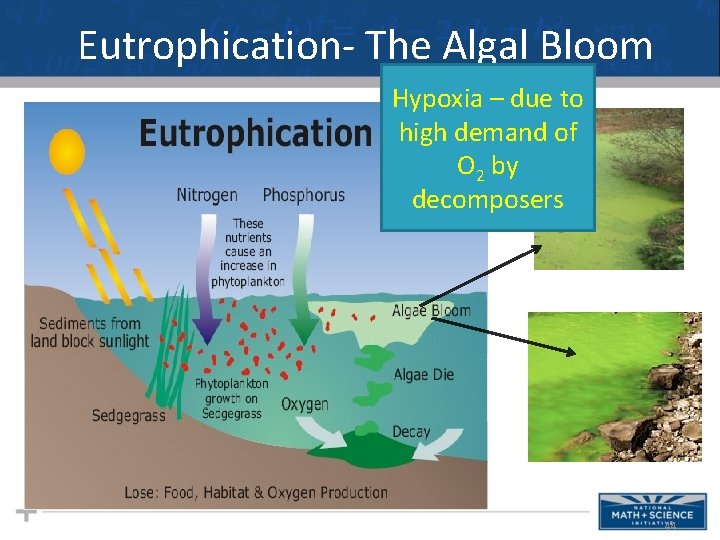
Eutrophication- The Algal Bloom Hypoxia – due to high demand of O 2 by decomposers 44
Ecosystem Distribution w e N e Slid • The distribution of local and global ecosystems changes over time. • Human impact accelerates change at local and global levels. – The introduction of new diseases can devastate native species. – Habitat change can occur because of human activity. 45
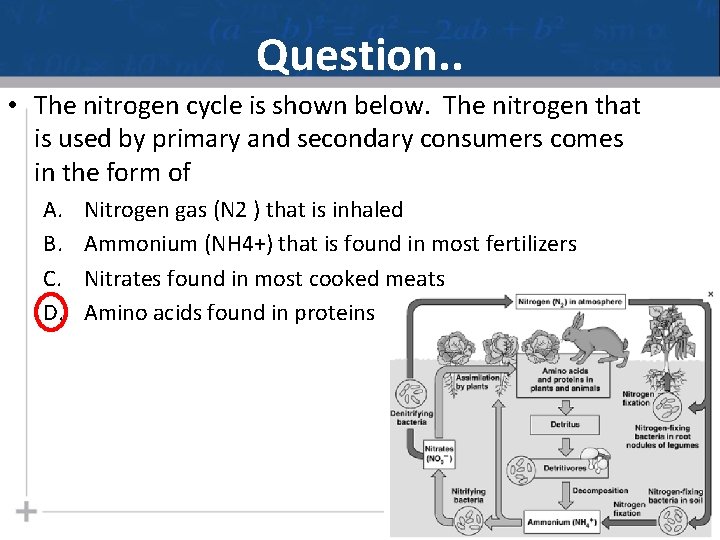
Question. . • The nitrogen cycle is shown below. The nitrogen that is used by primary and secondary consumers comes in the form of A. B. C. D. Nitrogen gas (N 2 ) that is inhaled Ammonium (NH 4+) that is found in most fertilizers Nitrates found in most cooked meats Amino acids found in proteins
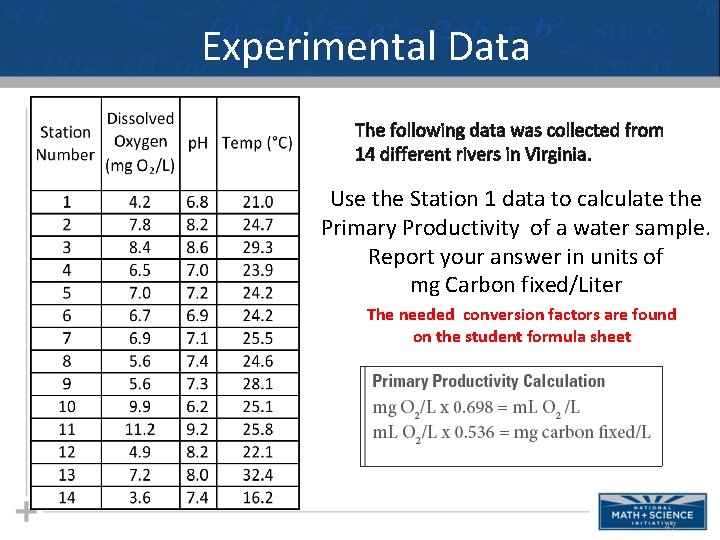
Experimental Data The following data was collected from 14 different rivers in Virginia. Use the Station 1 data to calculate the Primary Productivity of a water sample. Report your answer in units of mg Carbon fixed/Liter The needed conversion factors are found on the student formula sheet 47

Created by: Susan Ramsey VASS Notable contributions by S. Meister
- Slides: 34